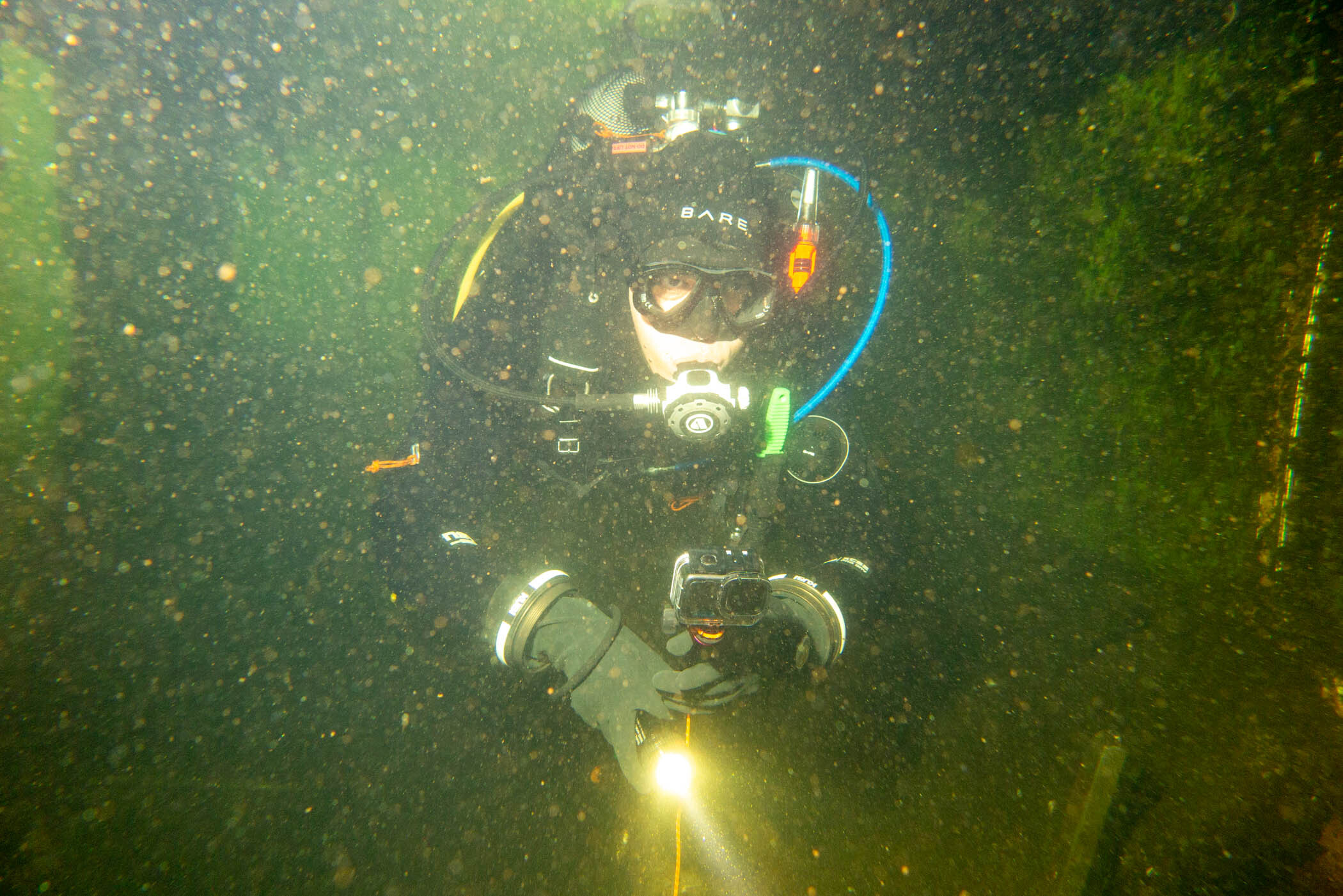
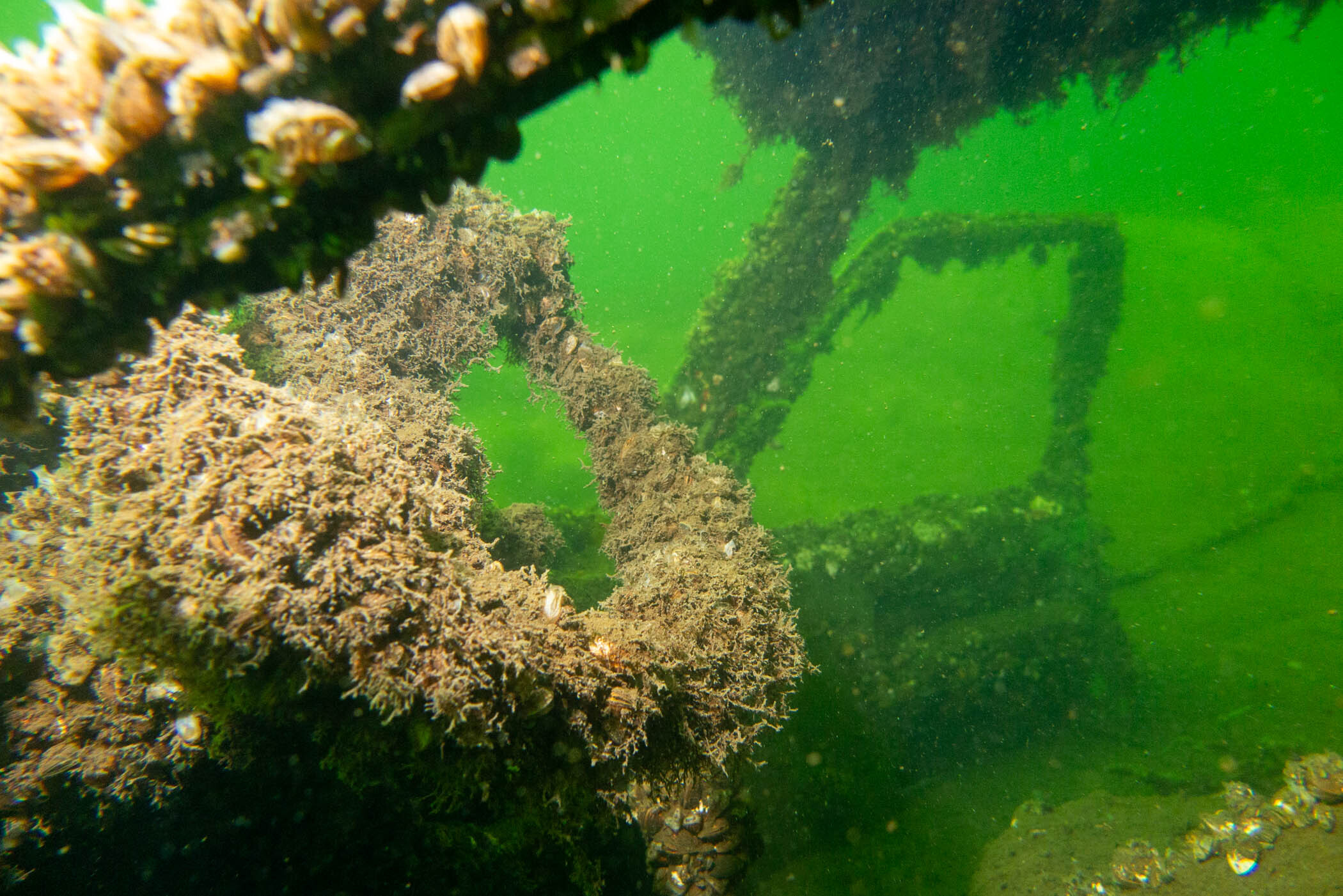
The regulator is a key piece of the diver's gear. Like my instructors used to repeat relentlessly "Air is life", and the regulator bring breathable air to your mouth. The main function of a regulator is fairly simple:
- Adjust the air pressure (from the tank pressure to the environment pressure)
- Enable inhale and exhale of the air
The classic regulator is composed of 2 stages. The first stage mounts right on the tank and will adapt the tank's air pressure to the environment. Standard 1st stage regulators also include a high-pressure plug to connect to the manometer and get a direct reading to the tank's pressure (and letting you know hom much air you've got left).
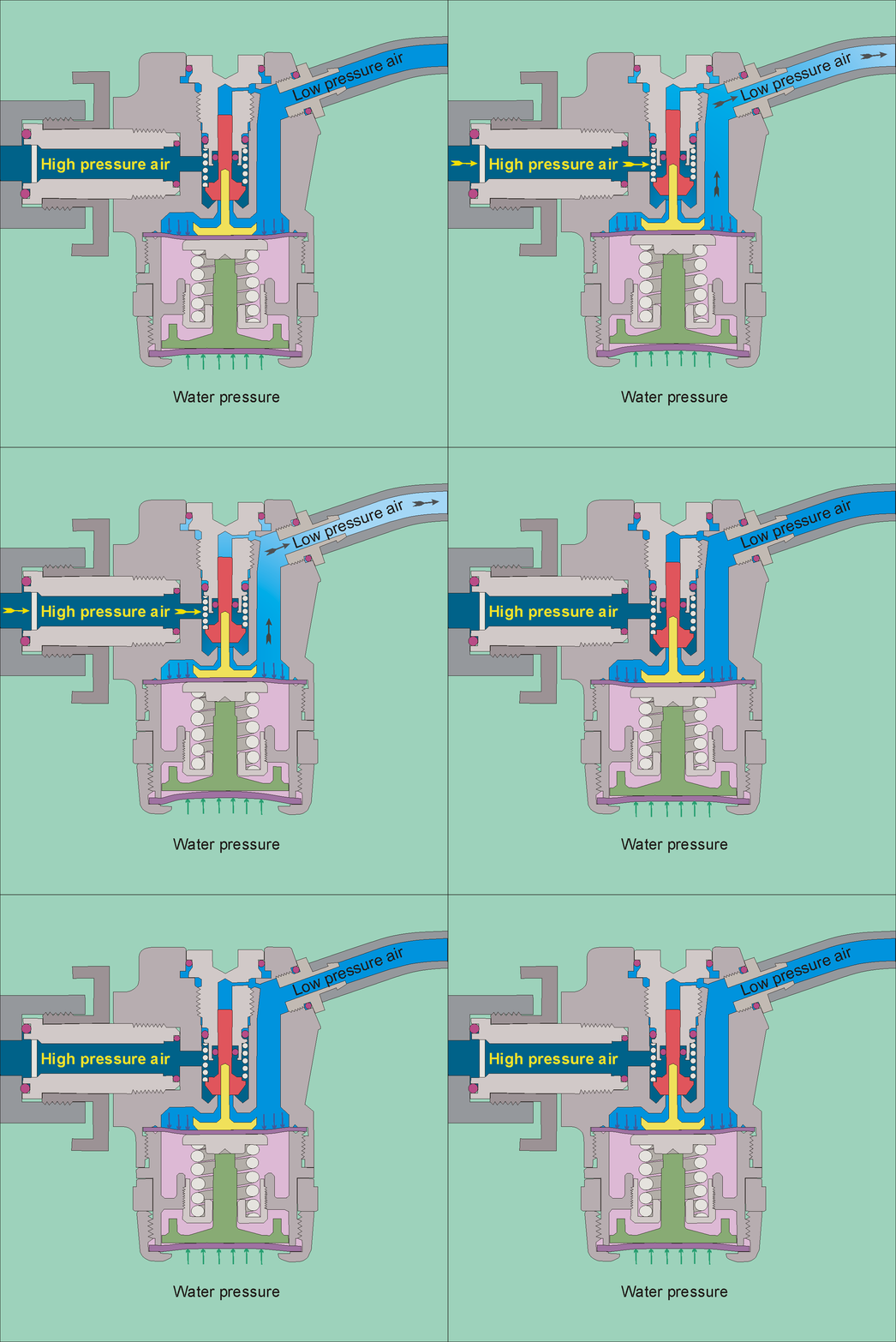
A 1st stage regulator works as described in the scheme below : Water and low pressure air fight agains a membrane. On the upper side of the membrane, the high-pressure air can move to the low pressure area as long as the low pressure area's pressure is lower than the water pressure. As soon as this condition is not met anymore, the low pressure air will push on the membrane, pulling the piston and locking up the high-pressure air... until pressure in the low-pressure air section drops.
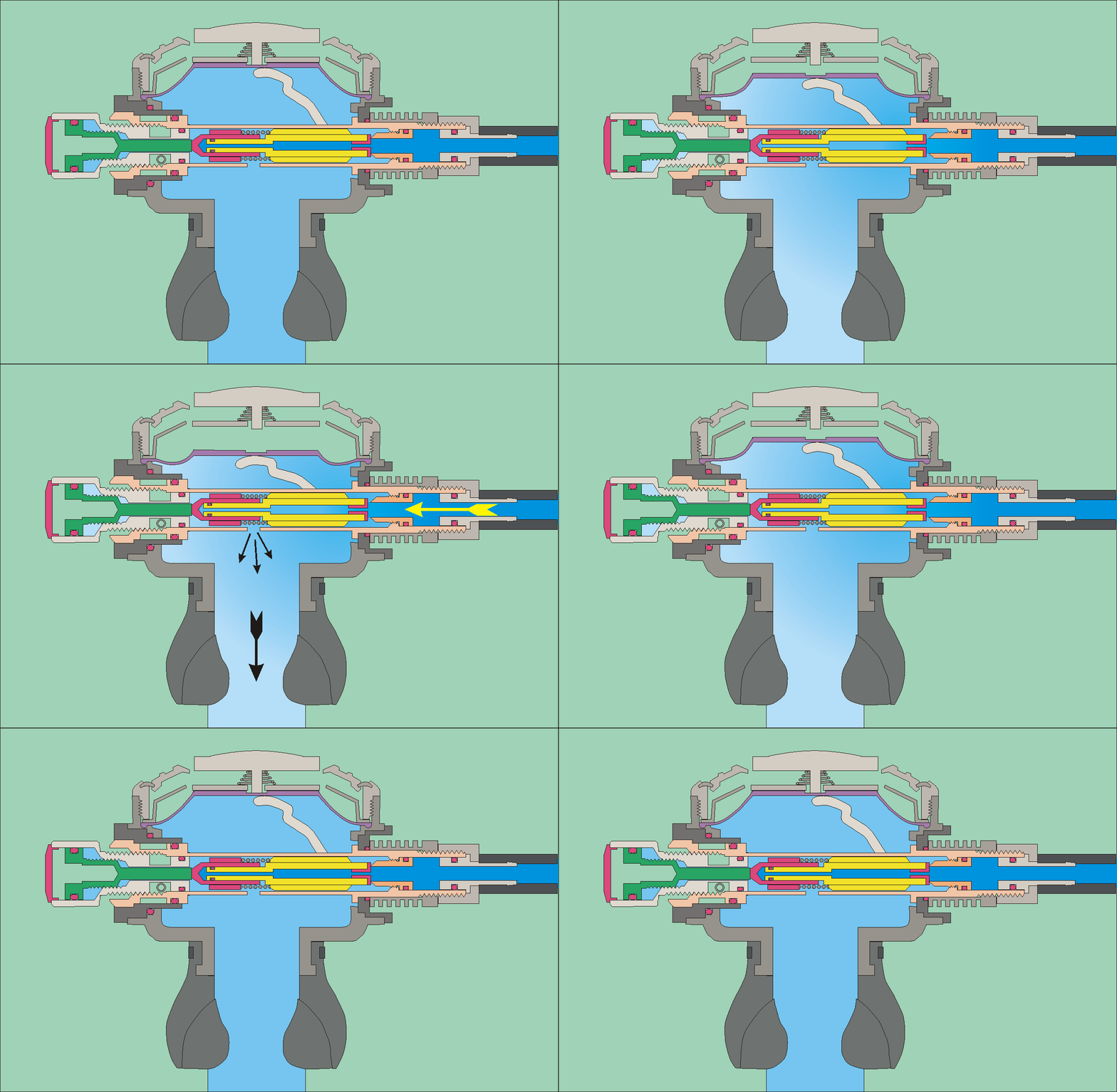
In the diver's mouth, the second stage regulator functions in a similar way. When inhaling, the pressure in the mouth drops, thus letting air flow from the low-pressur air to the mouth until balance is restored and piston locks the air in the low pressure tube again.
You may have read while looking to buy new gear that some regulators are better suited for ice diving than others. That's because of the adiabatic expansion of gas. If you recall some college-grade thermo dynamics we have for a perfect gas :
P*V = n*R*T Which means that since pressure is dropping from high to low, temperature needs to drop likewise. As a consequence if your diving in icy water, i.e under than 5ºC, ice may form inside the regulator thus preventing the valve to close and letting high-pressure air out. Some regulators using teflon coating and preferring plastics to metal are thus better suited for ice-diving.
Also it's important to note that you should revise your regulator yearly. Moisture can cause the internals to grip and may lead to deadly consequences. Revision can be expensive (~100 eur) so think carefully before buying your gear, if you're a recreational diver doing a couple dives a year, renting may be a better option.
If you want to dig this subject even deeper , check out the wikipedia page
About the author:

-
 Ksso
-
 CMAS 3* VDST / N4
-
Qualifications:
PADI Ice Diver, CMAS Nitrox 1, Photography -
Dived in: French Polynesia, Honduras, Jamaica, Netherlands Antilles, United States, Mexico, Portugal, Spain, Dominican Republic, Egypt, Thailand, Greece, Cyprus, France, Indonesia

Share your experiences, thoughts, or ask a question |
| WRITE A POST |
Latest Questions
- 100th Dive Traidition
by Stein Castillo on February 12, 2011 - Padi Master Scuba Diver Fee 2017
by Stein Castillo on February 12, 2011 - Diving Mid May In Lake Malawi Visibility?
by Jmdelane on February 12, 2011 - Layang Layang In 2016
by Liloulivi on February 12, 2011 - Scuba Diving Trip To Key Largo In February
by Pilotaids on February 12, 2011
Join Diveboard

Categories
Latest Posts
 Help Test The New Diveboard And Raise More Funds!
by Ksso on April 25, 2023 Getting Ready For Diveboard V2 Join Our Discord
by Ksso on September 08, 2021 Scorpion Fish Identification: Stonefish Vs Devil Vs Scorpionfish
by The Smiling Seahorse on February 08, 2021 Best Online Ressource For Fish & Critters Identification
by The Smiling Seahorse on October 05, 2020 Try Out The Beta Android App
by Ksso on August 28, 2020
Older Posts
- April 2023 (1)
- September 2021 (1)
- February 2021 (1)
- October 2020 (1)
- August 2020 (1)
- November 2018 (1)
- June 2017 (1)
- May 2017 (3)
- April 2017 (2)
- March 2017 (1)
- May 2016 (1)
- April 2016 (1)
- February 2016 (1)
- January 2016 (1)
- December 2015 (1)
- November 2015 (2)
- July 2015 (1)
- June 2015 (4)
- May 2015 (2)
- April 2015 (3)
- February 2015 (1)
- January 2015 (2)
- December 2014 (1)
- November 2014 (1)
- October 2014 (5)
- September 2014 (5)
- August 2014 (2)
- July 2014 (2)
- June 2014 (5)
- May 2014 (6)
- April 2014 (5)
- March 2014 (7)
- February 2014 (1)
- January 2014 (5)
- December 2013 (2)
- November 2013 (5)
- October 2013 (2)
- September 2013 (5)
- August 2013 (7)
- July 2013 (7)
- June 2013 (10)
- May 2013 (1)
- April 2013 (3)
- March 2013 (1)
- February 2013 (2)
- January 2013 (5)
- December 2012 (2)
- November 2012 (8)
- September 2012 (1)
- August 2012 (2)
- July 2012 (3)
- June 2012 (1)
- May 2012 (3)
- April 2012 (1)
- March 2012 (7)
- February 2012 (1)
- January 2012 (5)
- December 2011 (3)
- November 2011 (3)
- October 2011 (8)
- September 2011 (3)
- August 2011 (11)
- July 2011 (4)
- June 2011 (8)
- May 2011 (13)
- April 2011 (6)
- March 2011 (10)
- February 2011 (15)
- January 2011 (9)
BCommunity Feed
Community blog posts rRSS feed
 We are participating today in the startup contest Techcrunch Disrupt. Support Diveboard by voting for us!