


 Jyore
Jyore

 United States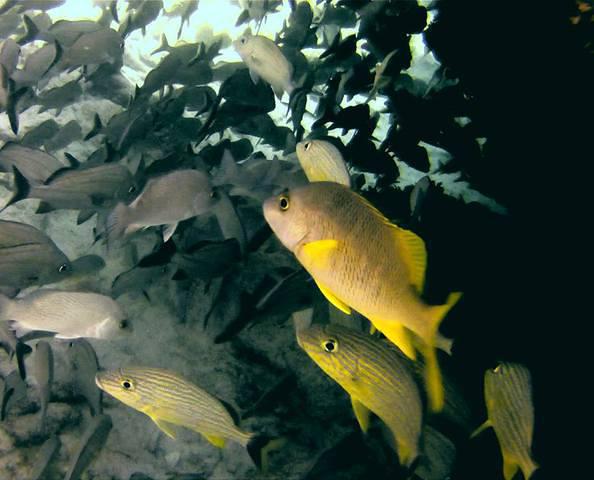
-
Nº1
 Date: 2014-07-09 - 16:20
-
 Max Depth: 10.7m Duration: 50mins
Dive Location

- Surface interval:30 mins
- Dive type : Recreational, Reef, Photo
- Visibility: Good Water: Salt
Specific gear used
- Weights: 4.5 kg
Dive reviews
| Overall review | ||
| Dive difficulty | ||
| Marine life quality |
Dive Shop & Buddies
 Dive with Captains Corner Dive Center
 Dive buddies:
Laura
Dive buddies:
Laura

Link to this spot:
- Spot:
- Country:
- Area:
- Body of water:
Dive Profile
Data provided by EOL.org



Species Identified
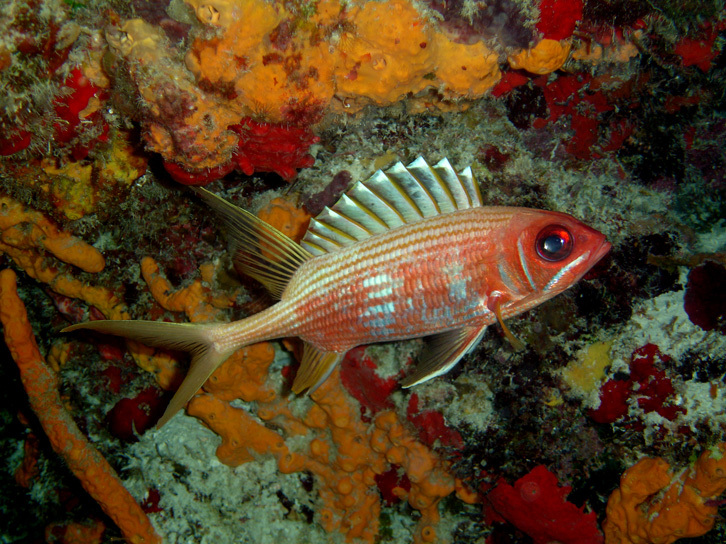
Holocentrus rufus (Walbaum, 1792) (Miss darlington)
Nocturnal , inhabits clear reefs . Found near mouths of caves and holes ; at night they usually move to sandy areas and grass beds to feed on crabs, shrimps, gastropods and brittle stars . Marketed fresh but not popular as a food fish .
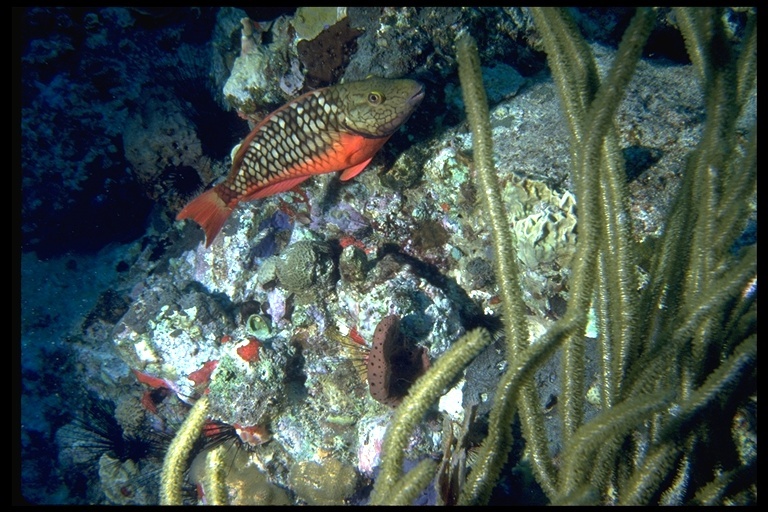
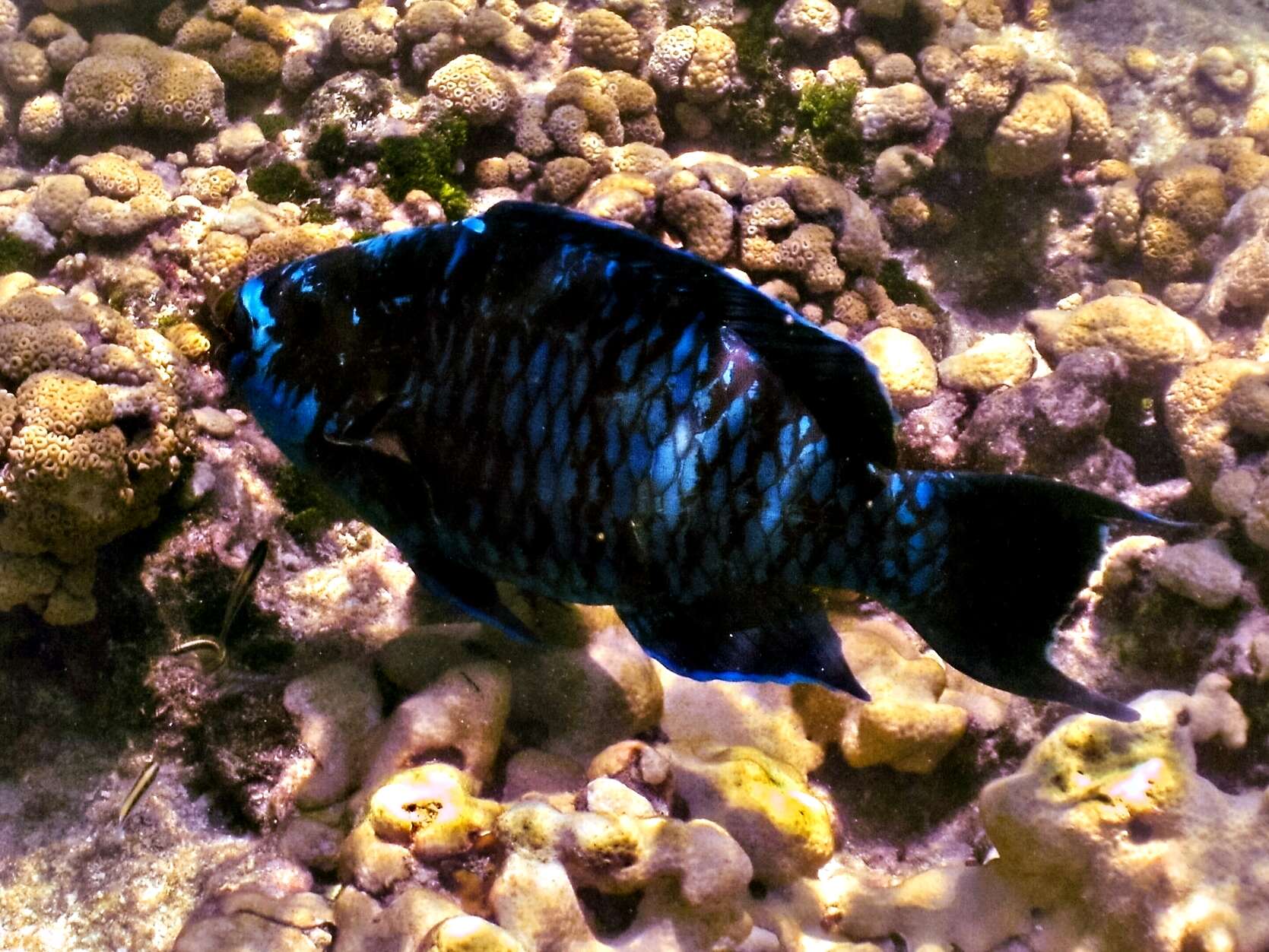
Sparisoma viride (Bonnaterre, 1788) (Dark green parrotfish)
Inhabits coral reefs with clear water . Young may be found in seagrass beds and other heavily vegetated bottoms. Feeds mainly on soft algae, but has been observed to graze on live corals like, Montastraea annularis . Pr...
Read More
Read More
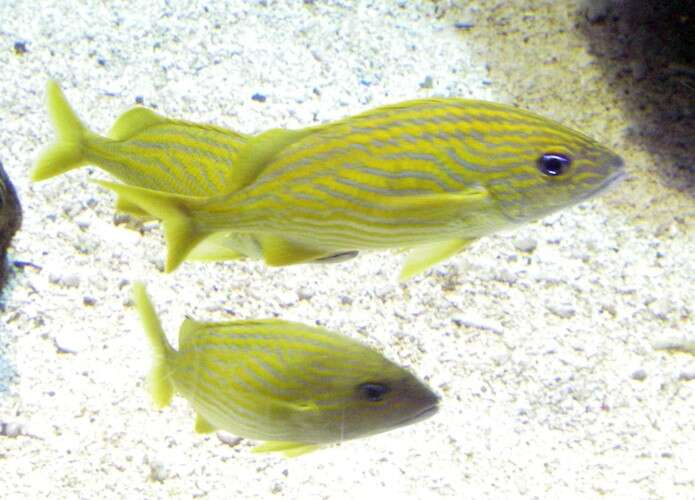
Haemulon flavolineatum (Desmarest, 1823) (French grunt)
Occurs in large schools on rocky and coral reefs, often under ledges or close to elkhorn coral . Juveniles abundant in near-shore seagrass beds . Feeds mainly on small crustaceans . Marketed fresh .
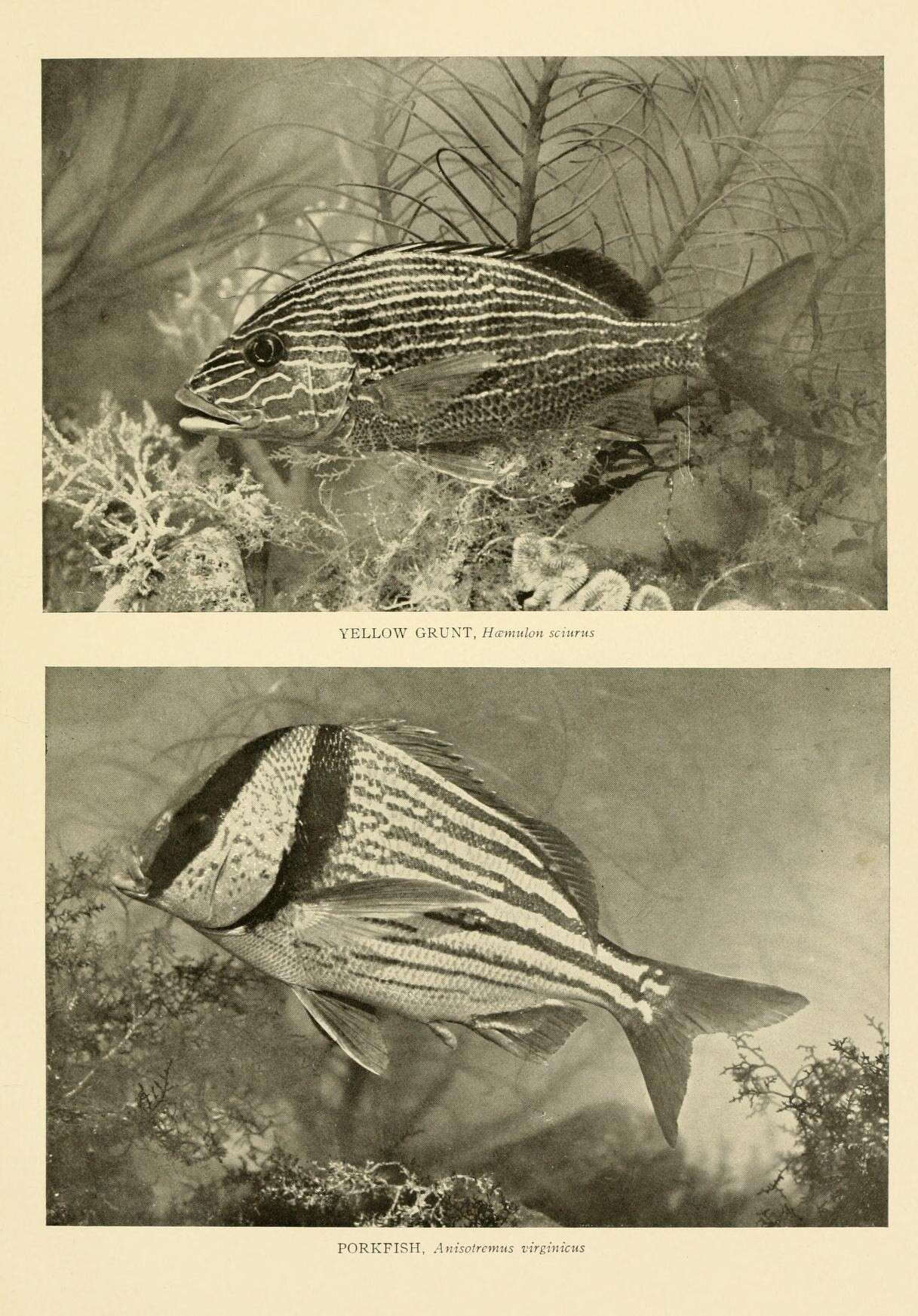
Haemulon sciurus (Shaw, 1803) (Blue striped grunt)
Found in small groups over coral and rocky reefs and drop-offs . Juveniles are abundant in Thalassia beds . Feeds on crustaceans, bivalves, and occasionally on small fishes. Marketed fresh.
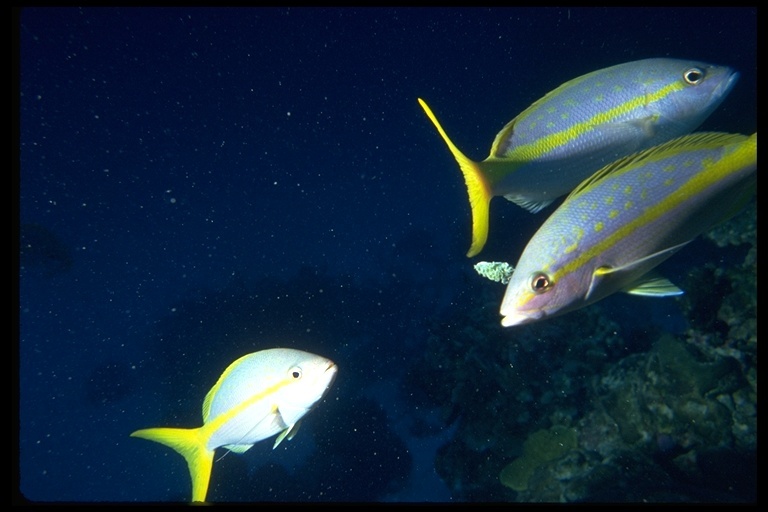
Ocyurus chrysurus (Bloch, 1791) (yellowtail snapper)
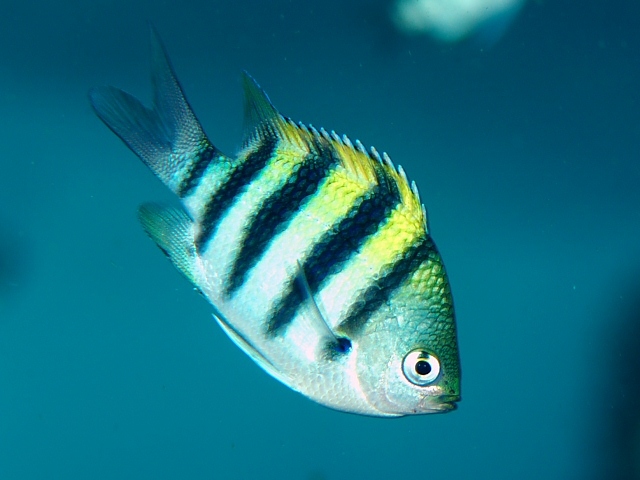
Abudefduf vaigiensis (Quoy and Gaimard, 1825) (Five finger)
Adults inhabit upper edge of outer reef slopes and inshore rocky reefs. Juveniles associated with drifting seaweed . Benthopelagic . Feed on zooplankton, benthic algae, and small invertebrates . Often in aggregations ...
Read More
Read More
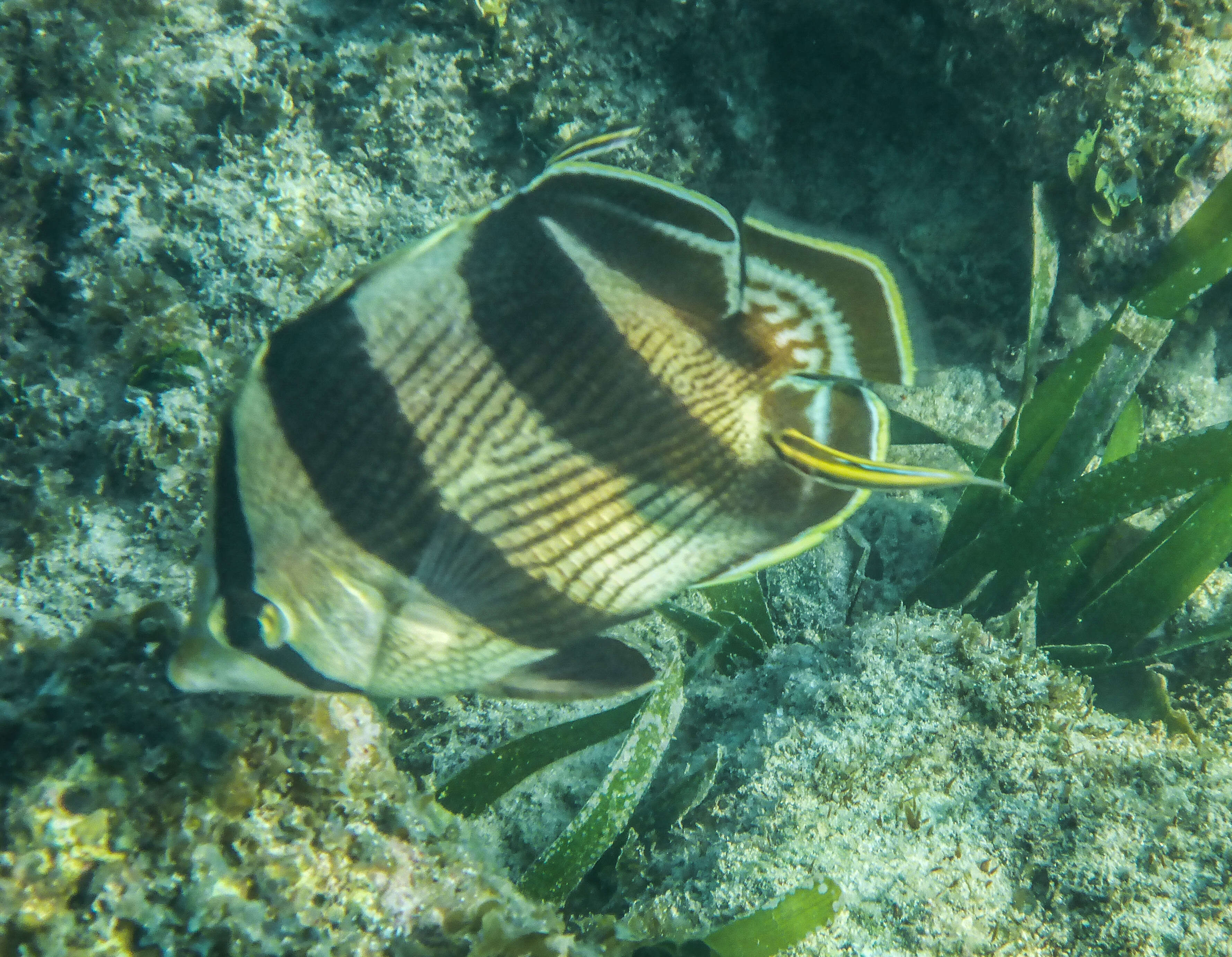
Chaetodon striatus Linnaeus, 1758 (Butterbun)
Inhabit coral reefs. Occur singly or in pairs. Feed on polychaete worms, coral polyps, crustaceans and mollusk eggs. Oviparous , monogamous . Form pairs during breeding . Adults may form plankton-feeding aggregations ...
Read More
Read More
Scarus coelestinus Valenciennes, 1840 (Nightowl parrot)
Occurs from rocky coastal reefs to seaward reefs . Often in schools, feeding with surgeonfishes by scraping off algae from rocks or dead coral . Marketed fresh and salted .
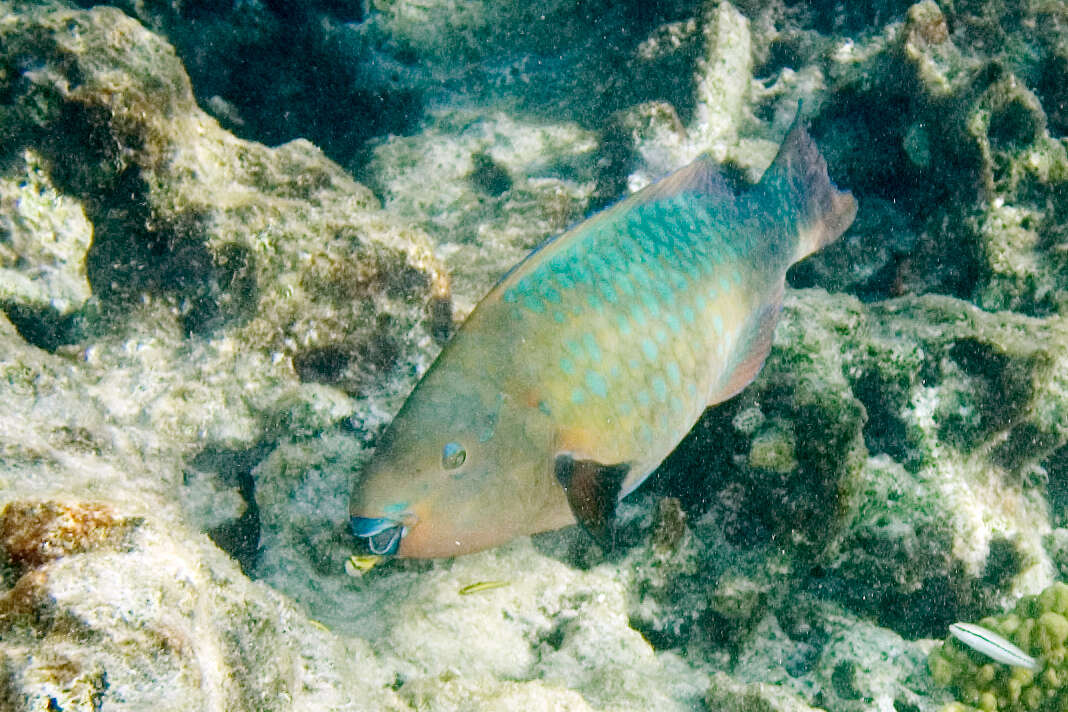
Scarus guacamaia Cuvier, 1829 (Blue rainbow)
This herbivorous fish uses its strong beak-like mouthparts to scrape algae and other plant matter from the surface of the coral . This maintains the health of the reef by keeping algae in check, which could otherwise overw...
Read More
Read More
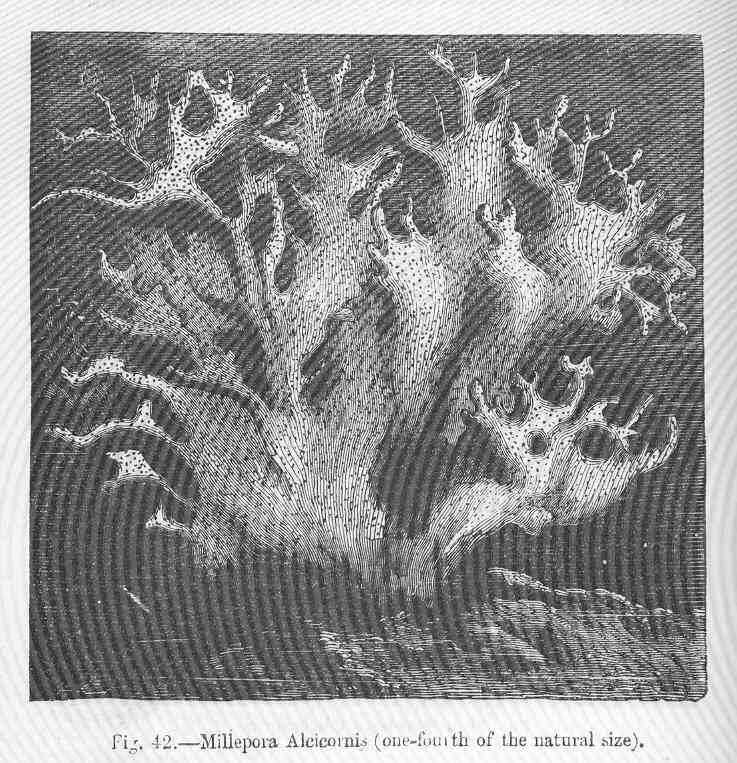
Millepora alcicornis Linnaeus, 1758 (fire coral)
colonial, calcareous skeleton
Mycteroperca microlepis (Goode & Bean, 1879) (Gag grouper)
Juveniles occur in estuaries and seagrass beds; adults are usually found offshore on rocky bottom , occasionally inshore on rocky or grassy bottom. It is the most common grouper on rocky ledges in the eastern Gulf of Mexi...
Read More
Read More
Stephanocoenia intersepta (Lamarck, 1816) (blushing star coral)
zooxanthellate
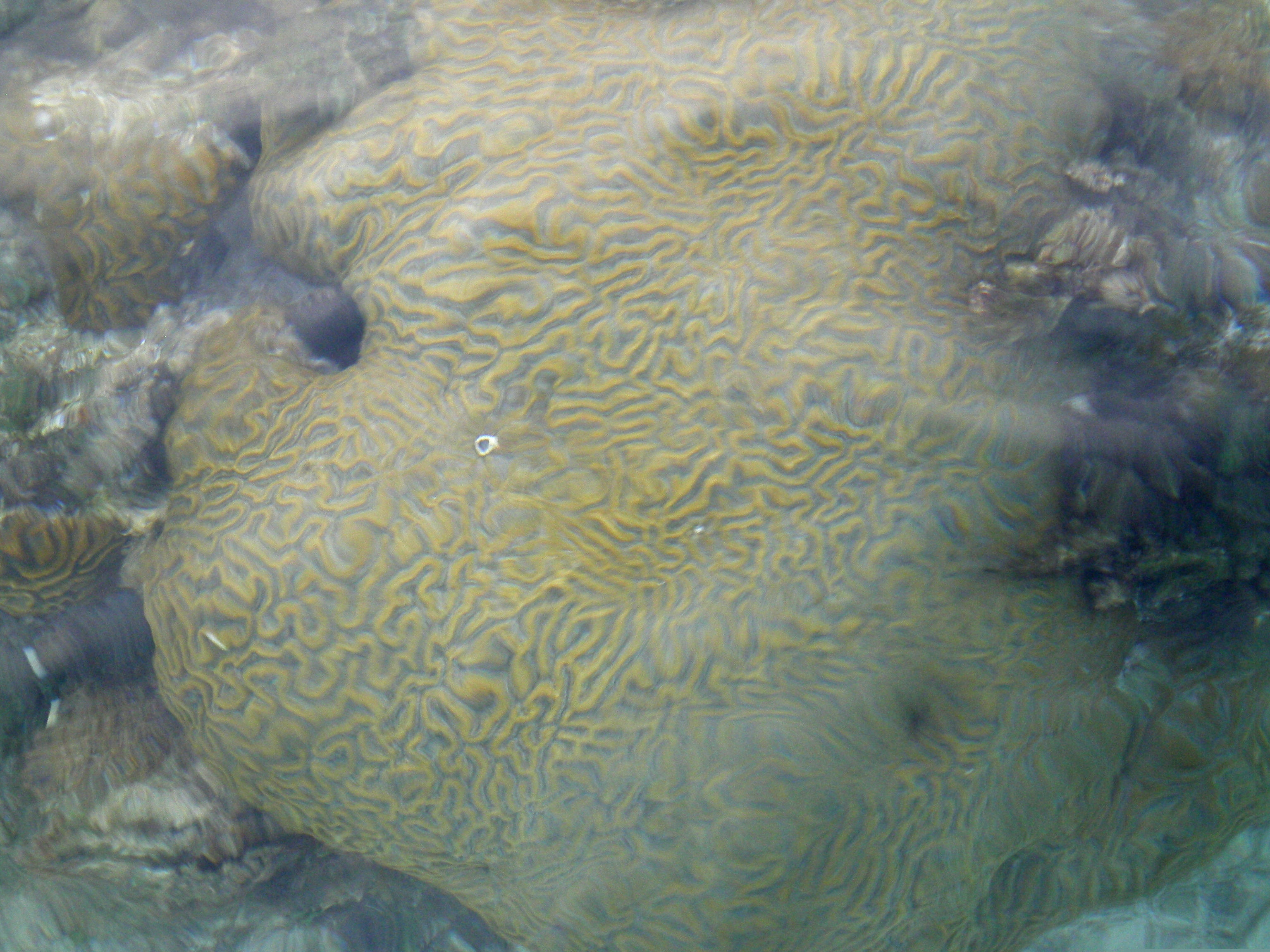
Colpophyllia natans (Houttuyn, 1772) (boulder brain coral)
zooxanthellate
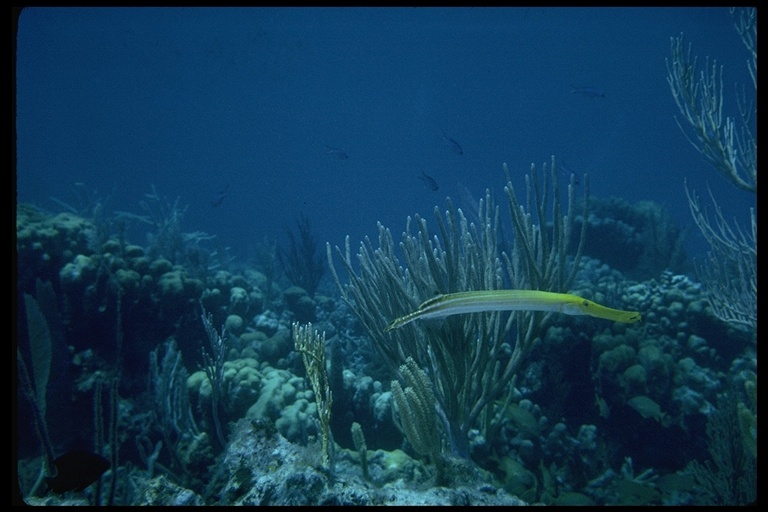
Aulostomus maculatus Valenciennes, 1841 (Caribbean trumpetfish)
Commonly found in weedy areas and especially around reefs, where they usually swim snout-down among sea whips . A solitary ambusher of small fishes and crustaceans that lurk among branching coral or gorgonians. Often swi...
Read More
Read More
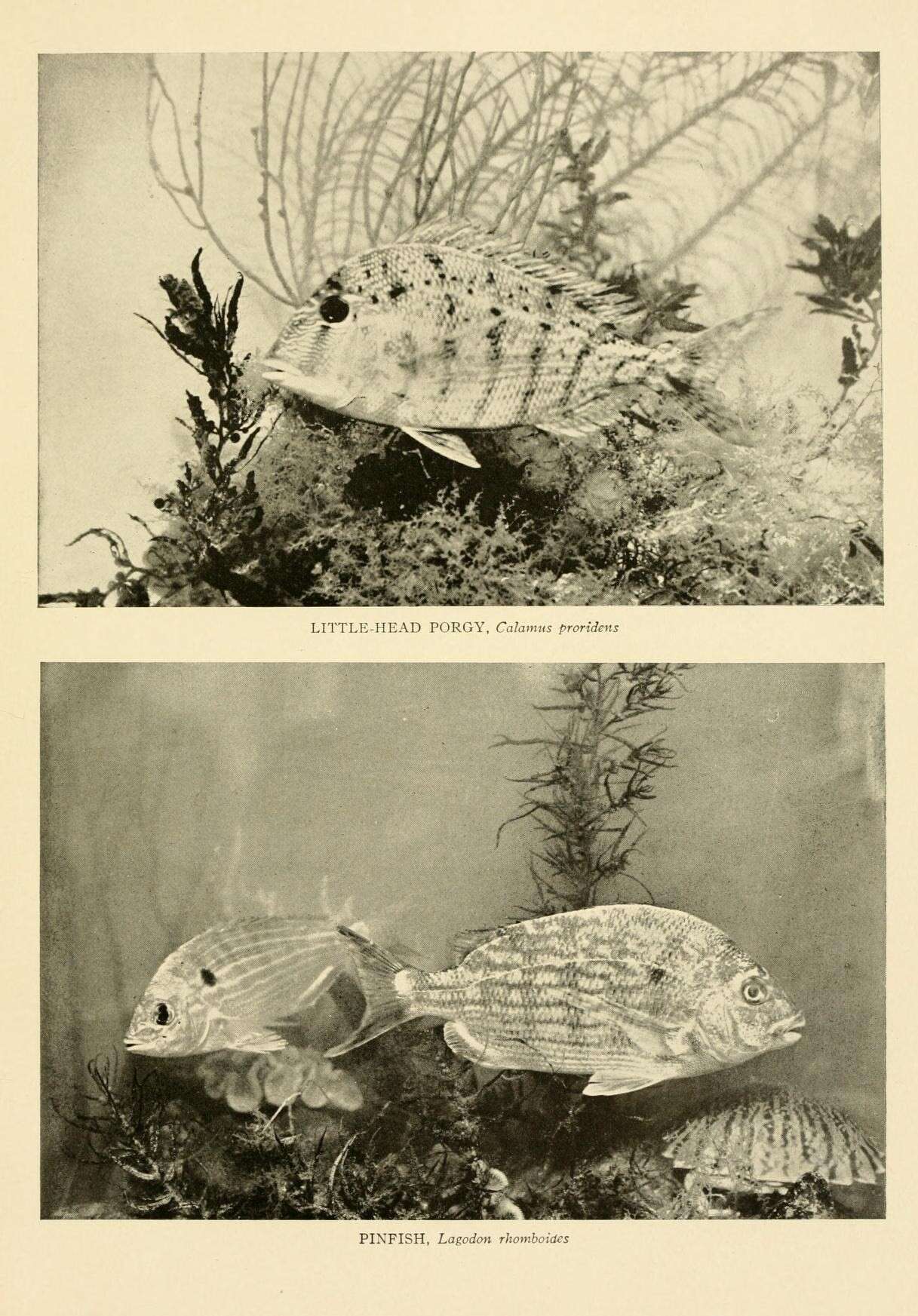
Lagodon rhomboides (Linnaeus, 1766) (Porgy)
Sparisoma chrysopterum (Bloch and Schneider, 1801) (Blisterside)
Occurs in coral reefs and adjacent habitats, the young especially in seagrass beds. Juveniles or primary-phase adults rapidly assume a mottled pattern with which they blend with the substratum when they come to rest on the bottom. Feeds on benthic algae and seagrasses.
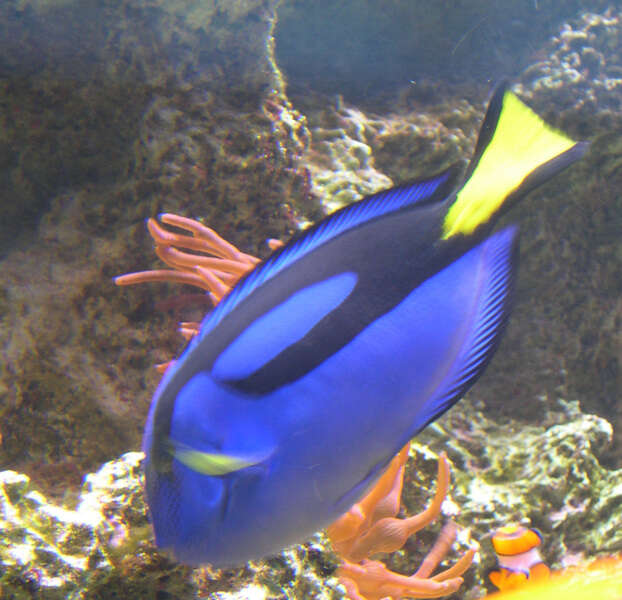
Paracanthurus hepatus (Linnaeus, 1766) (Palette surgeonfish)
Occur in clear, current-swept terraces of seaward reefs. Observed in loose aggregations 1 or 2 meters above the bottom; juveniles and subadults typical in groups near isolated Pocillopora eydouxi coral heads and when alar...
Read More
Read More
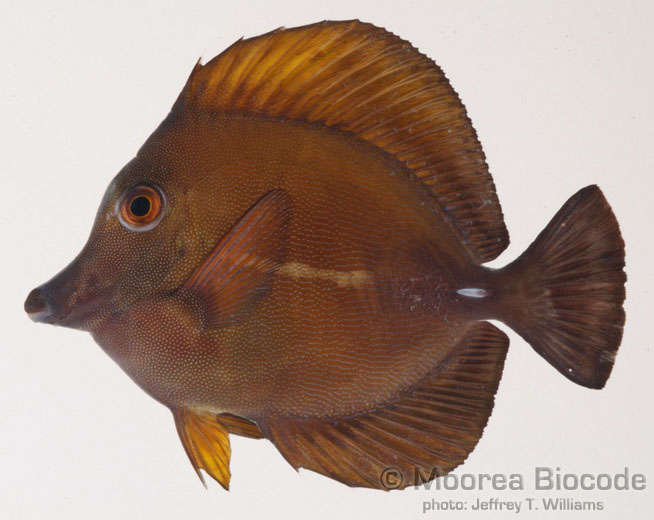
Zebrasoma scopas (Cuvier, 1829) (Twotone tang)
Occurs in coral-rich areas of lagoon and seaward reefs. Graze on algae, usually in groups of 20 individuals . Adults usually in small groups and sometimes schooling. Juveniles solitary and usually among corals . Its num...
Read More
Read More
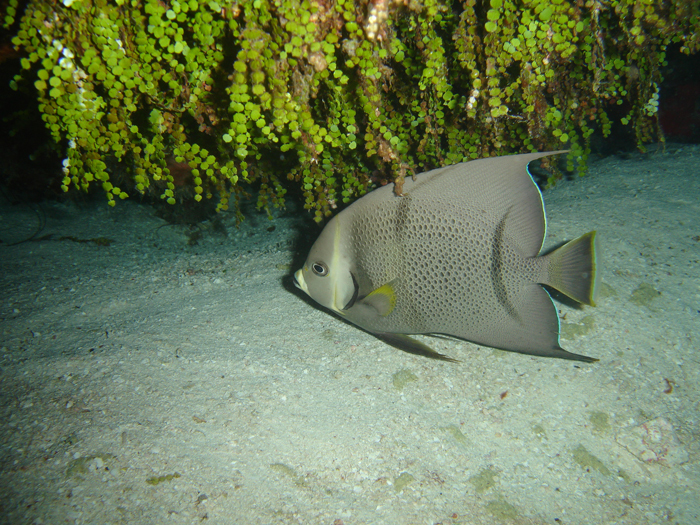
Pomacanthus arcuatus (Linnaeus, 1758) (Grey angelfish)
Common in coral reefs, usually solitary, occasionally in pairs. Juveniles are part-time cleaners. Feed mainly on sponges, but also takes tunicates, algae, zoantharians, gorgonians, hydroids, bryozoans, and seagrasses. O...
Read More
Read More
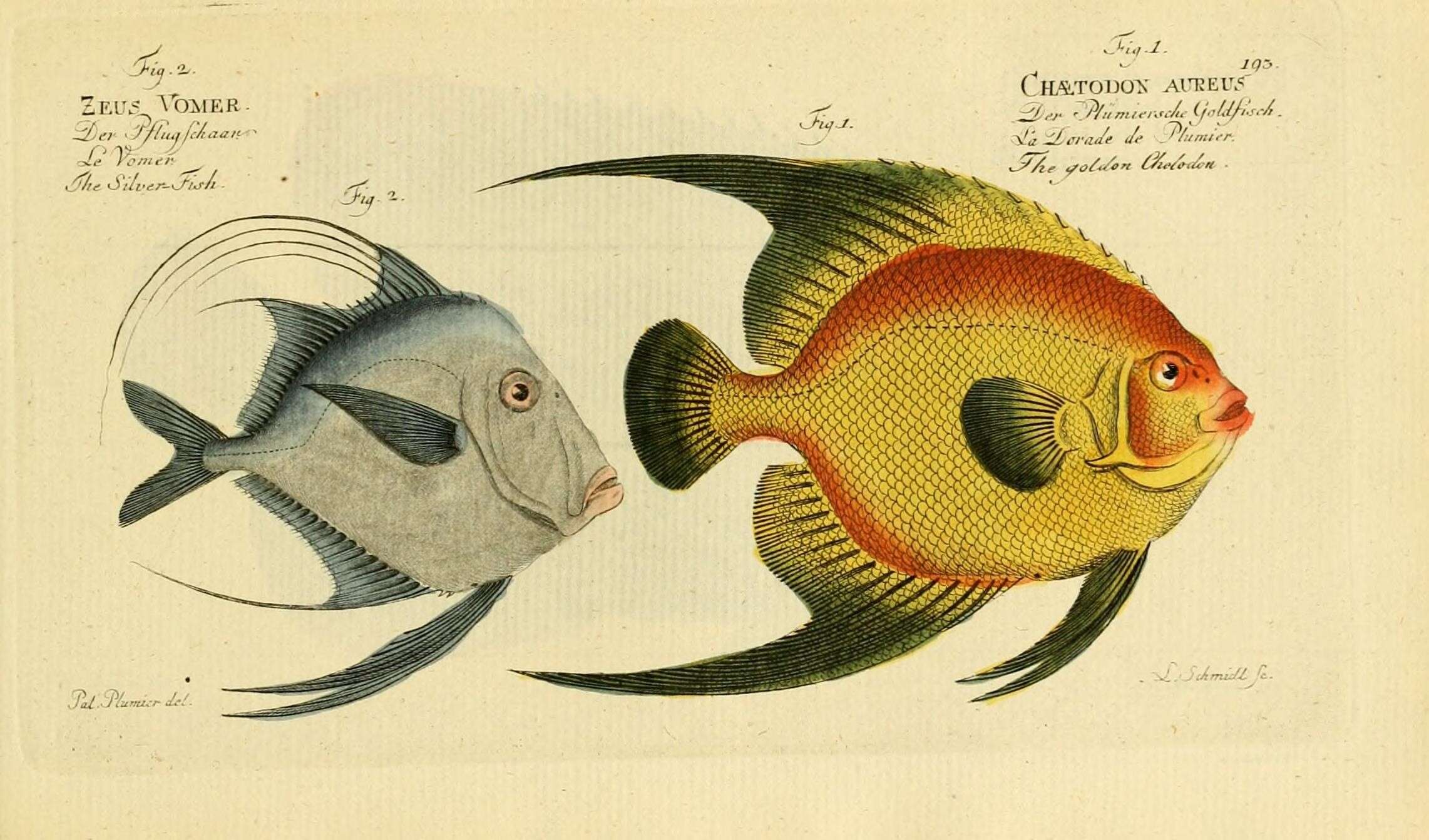
Pomacanthus paru (Bloch, 1787) (French angelfish)
Common in shallow reefs. Usually in pairs, often near sea fans . Feed on sponges, algae, bryozoans, zoantharians, gorgonians and tunicates . Oviparous , monogamous . Spawning pairs are strongly territorial, with usuall...
Read More
Read More
Sphyraena barracuda (Edwards, 1771) (Alho)
Chelonia mydas Linnaeus 1758 (Green Turtle)
Green turtles are long-lived and may take up to 59 years to reach sexual maturity Undertaking tremendous feats of navigation, adults return to the same beach to breed each season, part of the population in Brazil astonish...
Read More
Read More
Share on Social Networks
- Facebook:

personalize your shared text as well as its destination (wall, page...) or send as a private message to a friend
- Twitter: Tweet personalize your tweet
- Google Plus:
Direct link to this dive
- Long link:
- Short link:


 We are participating today in the startup contest Techcrunch Disrupt. Support Diveboard by voting for us!
























































































