


 Brazil
-
Nº1
 Date: 2012-03-24 - 16:05
-
 Max Depth: 15m Duration: 55mins
Pictures

No pictures for this dive
- Temp: Surf 32°C Bottom 23°C
- Dive type : Recreational
- Visibility: Average Water: Salt
Specific gear used
- Boots: Tabata / Tusa -
- Gloves: Cressi Sub -
- Hood: Mares -
- Wet suit: Mares -
- Weights: 7 kg
Recent Divers in Espirito Santo and Guarapari
Recent Pictures in Espirito Santo and Guarapari



Dive Shop & Buddies
 Dive with Bruno
 Dive buddies:
Juliana,
Cecília,
Wilson
Dive buddies:
Juliana,
Cecília,
Wilson

Link to this spot:
- Spot:
- Country:
- Area:
- Body of water:
Dive Profile
- 1. Air
- 12L Aluminium 200 → 80 bar
- Average depth: m
- 2. Air
- 0L Steel
- Average depth: 0m
Data provided by EOL.org



Species Identified
Dactylopterus volitans (Linnaeus, 1758) (flying gurnard)
Found on sand, mud or over rocks in sandy areas, exploring the bottom with the free part of the pectoral fins . Feeds primarily on benthic crustaceans, especially crabs, clams and small fishes. Neither anterolateral glandural groove nor venom gland is present .
Gymnothorax moringa (Cuvier, 1829) (Common conger)
A benthic and solitary species abundant in shallow rocky and grassy areas and on coral reefs; less common in turbid bays or harbors. Its bite is very dangerous . Active during the day, sometimes together with other pred...
Read More
Read More
Holocentrus adscensionis (Osbeck, 1765) (Squirrelfish)
Occurs in shallow coral reefs, as well as deeper offshore waters . A nocturnal species, hiding in deep crevices or under coral ledges during the day; at night it usually moves over sand and grass beds, taking mainly crabs...
Read More
Read More
Myripristis jacobus Cuvier, 1829 (Bastard soldierfish)
Found from shallow coral reefs to offshore deeper waters . A nocturnal species aggregating around coral reefs and deeper rocky reefs . Feeds mainly on planktonic organisms . Occasionally found swimming upside down . Marketed fresh but not popular as a food fish .
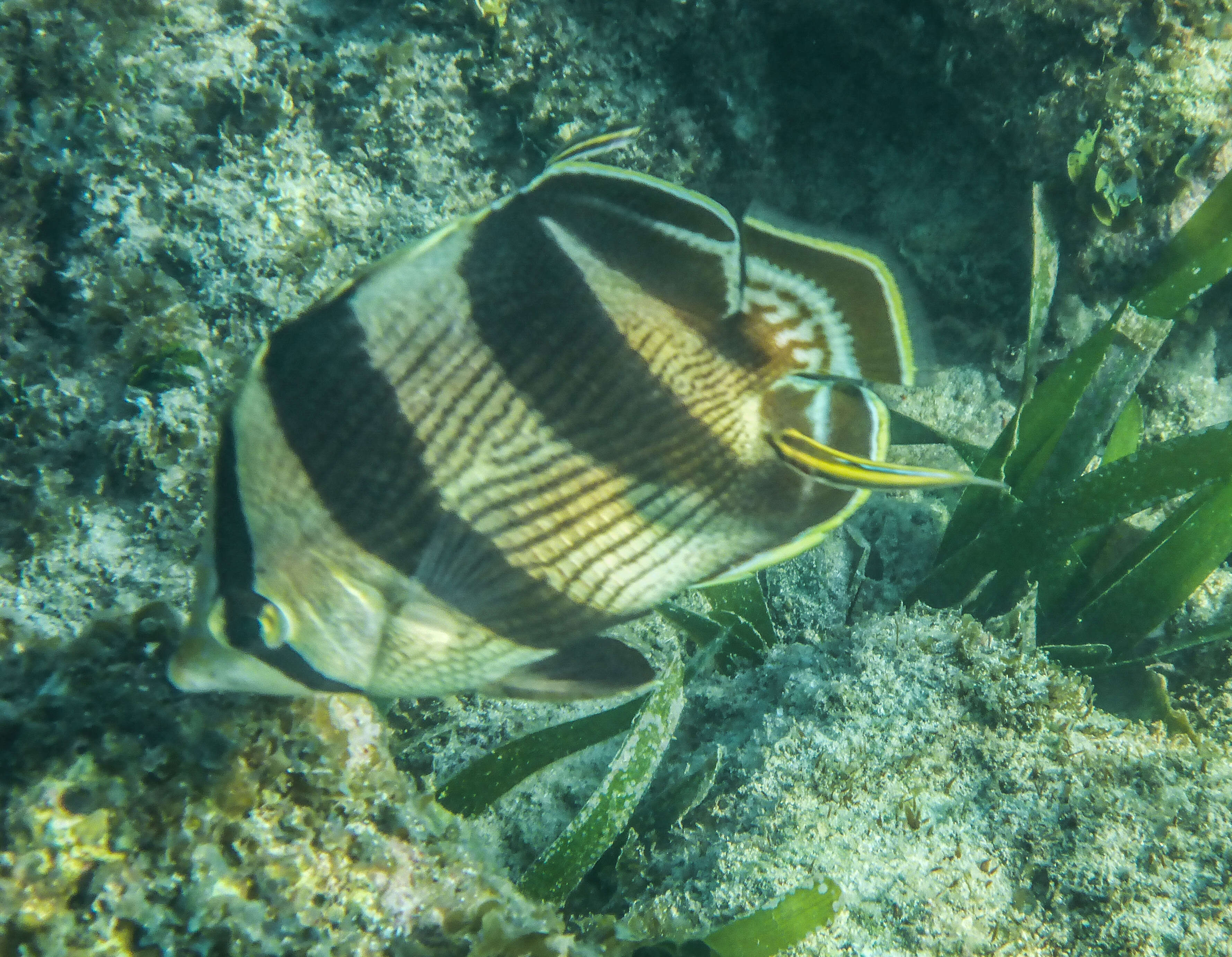
Chaetodon striatus Linnaeus, 1758 (Butterbun)
Inhabit coral reefs. Occur singly or in pairs. Feed on polychaete worms, coral polyps, crustaceans and mollusk eggs. Oviparous , monogamous . Form pairs during breeding . Adults may form plankton-feeding aggregations ...
Read More
Read More
Chaetodon ocellatus Bloch, 1787 (Butterbun)
Inhabit shallow, coral reefs with clear water . Develop dusky bands at night. Generally common . Oviparous . Form pairs during breeding .
Anisotremus virginicus (Linnaeus, 1758) (Atlantic porkfish)
Inhabits reefs and rocky bottoms. Feeds at night on mollusks, echinoderms, annelids, and crustaceans . Young pick parasites from the bodies of larger fishes . Young are popular aquarium fish . Marketed fresh . Has been reared in captivity .
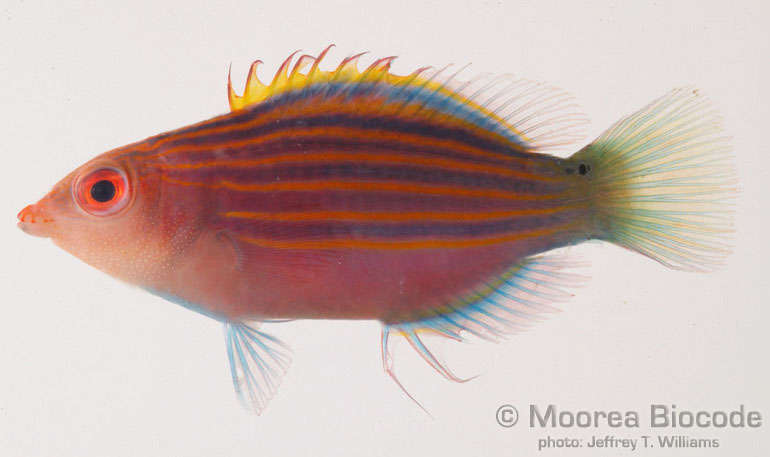
Pseudocheilinus hexataenia (Bleeker, 1857) (Pyjama)
Occurs in seaward reefs among coral branches. Also in clear coastal waters, dense coral habitats on shallow reef crest or slopes to depth of about 20 m. Usually occurs in small loose groups. A shy species, usually swimm...
Read More
Read More
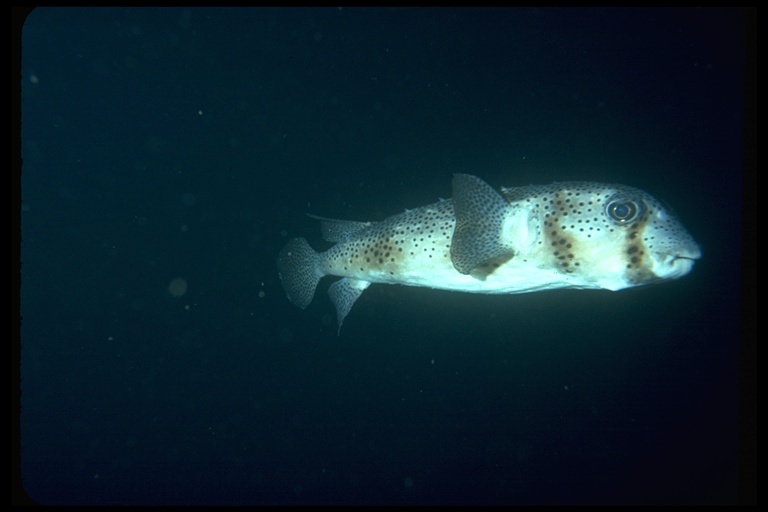
Chilomycterus reticulatus (Linnaeus, 1758) (burrfish)
Balistes vetula Linnaeus, 1758 (Ol'wife)
The queen triggerfish is often found drifting close to the bottom, where it feeds on a range of molluscs, crustaceans and echinoderms . The strong jaws and long teeth of this fish enable it to bite through the hard body p...
Read More
Read More
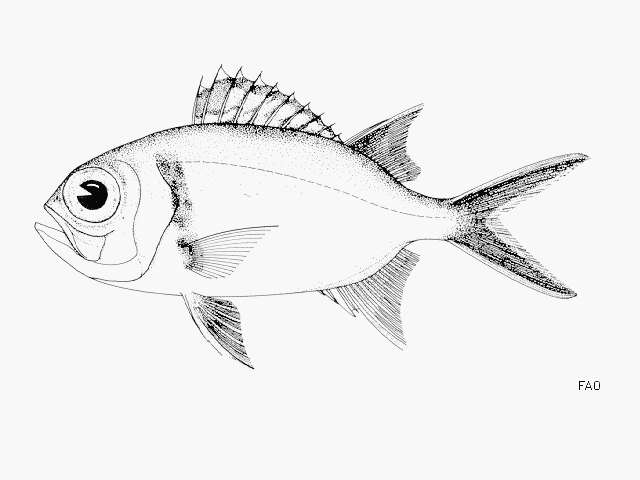
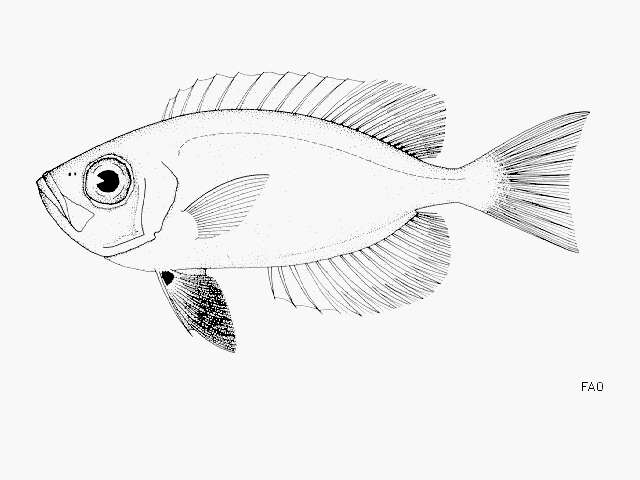
Priacanthus arenatus Cuvier, 1829 (Atlantic bigeye)
Found on coral reefs and rocky bottoms . Forms small aggregations near the bottom . A nocturnal feeder , feeds mainly on small fishes, crustaceans and polychaetes . Most of its prey are larvae. Flesh considered excellent quality; marketed fresh .
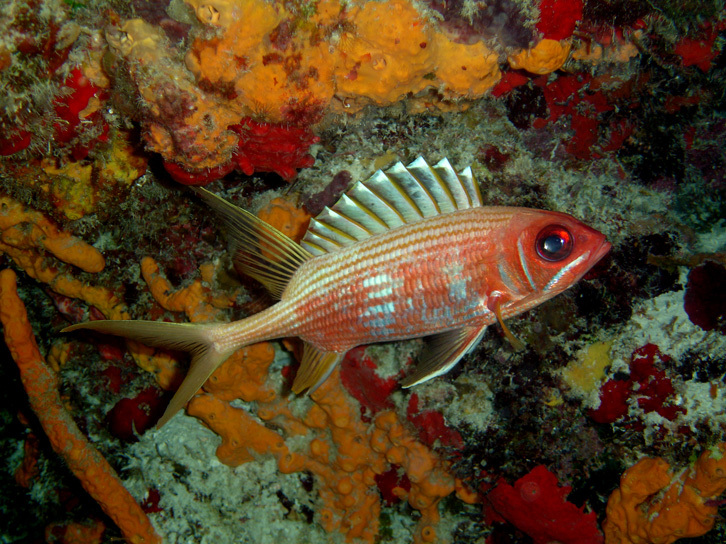
Holocentrus rufus (Walbaum, 1792) (Miss darlington)
Nocturnal , inhabits clear reefs . Found near mouths of caves and holes ; at night they usually move to sandy areas and grass beds to feed on crabs, shrimps, gastropods and brittle stars . Marketed fresh but not popular as a food fish .
Share on Social Networks
- Facebook:

personalize your shared text as well as its destination (wall, page...) or send as a private message to a friend
- Twitter: Tweet personalize your tweet
- Google Plus:
Direct link to this dive
- Long link:
- Short link:


 We are participating today in the startup contest Techcrunch Disrupt. Support Diveboard by voting for us!
























































































