


 Duncan Megens

 Netherlands Antilles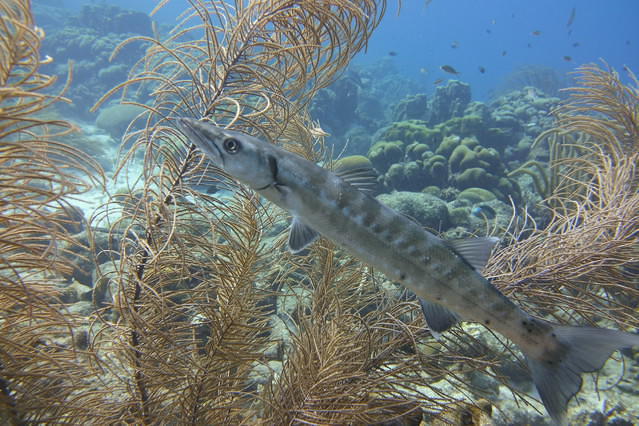
-
Nº58
 Date: 2019-12-29 - 09:51
-
 Max Depth: 16.8m Duration: 81mins
Dive Location

- Temp: Surf 27°C Bottom 27°C
- Dive type : Recreational
- Visibility: Good Water: Salt
Specific gear used
- Weights: 5 kg
Dive reviews
| Overall review | ||
| Dive difficulty | ||
| Marine life quality |
Recent Divers in Salt Pier
Dive Shop & Buddies
 Dive with Matt from Vip Diving

Link to this spot:
- Spot:
- Country:
- Area:
- Body of water:
Dive Profile
- 1. Air
- 12L Steel 220 → 40 bar
- Average depth: 8.5m
Data provided by EOL.org


Species Identified
Chelonia mydas Linnaeus 1758 (Green Turtle)
Green turtles are long-lived and may take up to 59 years to reach sexual maturity Undertaking tremendous feats of navigation, adults return to the same beach to breed each season, part of the population in Brazil astonish...
Read More
Read More
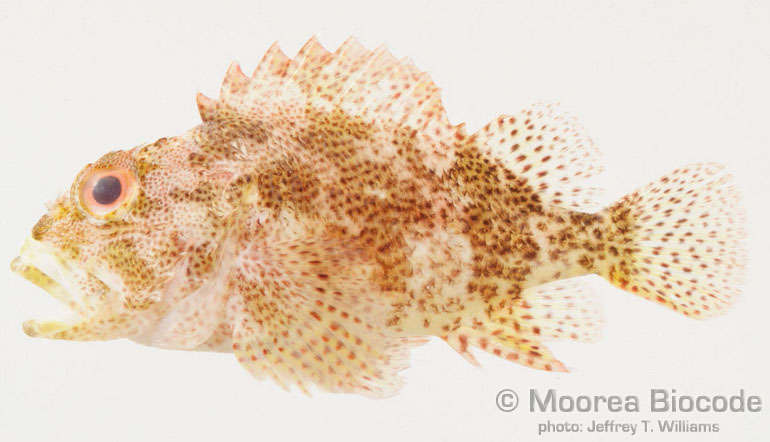
Sebastapistes tinkhami (Fowler, 1946) (Darkspotted scorpionfish)
Rare species. Inhabits deeper reefs.
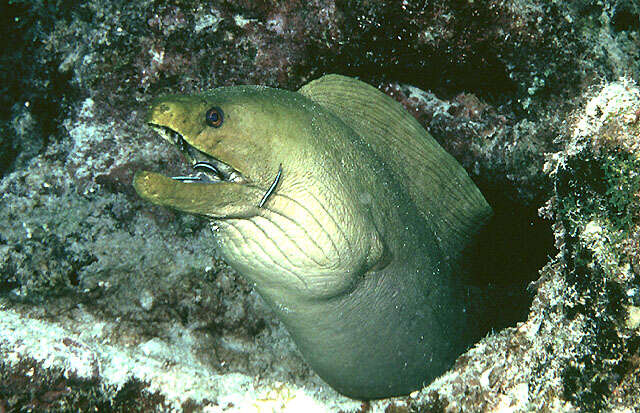
Gymnothorax funebris Ranzani, 1839 (Green cong)
A benthic and solitary species occurring along rocky shorelines, reefs, and mangroves .Usually found shallower than 30 m . Due to its large size and aggressiveness, the bites of this moray are particularly dangerous . F...
Read More
Read More
Sphyraena viridensis Cuvier, 1829 (Barracuda)
Its habits are probably similar to those of the phylogenetically closely related Sphyraena sphyraena . Feeds on cephalopods, crustaceans and fishes. Caught in trammel nets and beach seines .
Megalops atlanticus Valenciennes, 1847 (Atlantic tarpon)
Share on Social Networks
- Facebook:

personalize your shared text as well as its destination (wall, page...) or send as a private message to a friend
- Twitter: Tweet personalize your tweet
- Google Plus:
Direct link to this dive
- Long link:
- Short link:


 We are participating today in the startup contest Techcrunch Disrupt. Support Diveboard by voting for us!
























































































10 lbs, 3mm shorty
Salt Pier, hier worden de boten gevuld met het zout dat hier gewonnen wordt. Het zout wordt voornamelijk naar US geëxporteerd als zout om de wegen mee te bestrooien. Er staat een aantal betonnen constructies op palen. Op die palen groeit allemaal koraal. We duiken eerst om de betonnen constructies, maar op de terugweg duiken we tussen de pilaren door. Eerste duik met nieuwe camera (Sealife DC2000)!
Gids: Matt uit Engeland.
Buddy: Steven uit US
Op zich een lekkere duik, boyancy prima op orde, duikbril loopt wel regelmatig vol. Toch maat een keer een eigen bril kopen!
De pilaren van de pier zijn begroeid met planten en koralen, waardoor er erg veel vis zwemt! Spotted Scorpion Fish, Green Moray, Golden tail Moray, Squid Carribean Reef, Great Barracuda.
Op het einde zien we nog een green turtle voorbij schieten in de verte.