


 Logbook
- PADI Diver Level 2 (Open Water) (Feb 2015)
Places I've Dived
- Total number of dives not on diveboard:
This number is added to the total number of dives logged in Diveboard (public+private) for the stat "Total number of dives". - Dives published:4
- Total dives count:4
- Dives this year:0
- Total underwater time on Diveboard:2 hrs 14 min
- Most dives on Diveboard in:
United States - Deepest Dive:
14.8m in High Springs, FL, United States - Longest Dive:
39 min in High Springs, FL, United States - Pictures in logbook:12
- Number of species spotted:0
Favorite Pictures
Species Spotted
Data provided by EOL.org
BUser Feed
James.m.fretwell@gmail.com's dives and posts rRSS feed
Favorite Dives
-
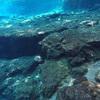
2015-03-28 United States High Springs, FL
Ginnie Springs The Ball RoomGinnie Spring: The Ginnie Spring basin is a large, bowl-shaped depression measuring over 100 feet across and 15 feet deep. A 150-foot long run connects the basin to the nearby Santa Fe River. The chief attraction here is the Ginnie cavern, whose wide, open entrance can be found at the bottom of the basin. Ginnie cavern is among the handful of sites that experts consider sufficiently safe to allow exploration by divers who lack formal cavern or cave diver training. Certified divers of all experience levels may take lights into the water with them at Ginnie Spring and use these lights to explore the underwater cavern. The cavern's upper room is illuminated by light from the entrance. Looking back toward the entrance from this room provides a breathtaking view. Like most of the cavern, the upper room's walls are composed of an extremely light and highly reflective limestone, which adds to its natural beauty. Moving to the back of the upper room, divers pass through a large opening into the amphitheater-sized area called the "Ballroom." Although surface light is clearly visible from most places within the Ballroom, divers will want to carry dive lights to see everything there is to see. The Ballroom provides divers with the opportunity to examine many of the unusual geologic formations that are unique to the Floridan Aquifer. The Ballroom's ceiling contains an excellent example of spongework--a gigantic, limestone swiss cheese. Midway between floor and ceiling, divers will find evidence of a bedding plane--a distinctive horizontal crack that is crucial to the movement of underground water. At the northwest corner of the Ballroom is a beautifully carved phreatic tube--a perfect example of the most common form of underwater cave formation. Nearby, a larger bedding-plane formation collects air in mercury-like pockets on the ceiling. Grate: At the very back of the Ballroom (a maximum depth of 50 feet), is a large, welded grate. This grate prevents divers from entering the dangerous, silty and maze-like cave system that lies beyond. Nevertheless, most divers enjoy pulling themselves up to the grate, so that they can experience the "in-your-face" force of the 35 million gallons of water a day that pass through the opening. A large-diameter, heavy duty guideline runs from the back of the Ballroom to the cavern entrance. This helps ensure there is never any doubt as to which way is out.
-
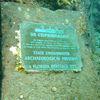
2015-03-15 United States Pompano Beach, Fl
Ss Copenhagen WreckDescription: The SS Copenhagen was a steamer 325' long with a beam of 47'. The wreck is broken up along the eastern side of the Pompano Drop Off. While some of the wreckage is buried you can still make out many features of the wreck. It is nostalgic diving or snorkeling a wreck site over a hundred years old. Usually you see large schools of bait fish being chased by the rest of the food chain. History: The British cargo ship Copenhagen was built by Priestman & Co. of Sunderland in 1898. The Copenhagen was owned by Glasgow Ship Owners Co. While en route from Philadelphia to Havana with 4,940 tons of coal, she ran aground on the Pompano Drop Off. Although the ship was unsalvageable, her cargo was saved. The Copenhagen remained partially visible above the water until WWII naval fighter pilots used her for target practice sending her to the bottom where she sits today. The Copenhagen was declared a State Underwater Archaeological Preserve in 1994.
-
-
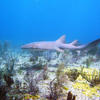
2015-03-15 United States Pompano Beach, Fl
Nursery ReefWe named this site the "Nursery" many years ago after the family of nurse sharks that reside here. There is good habitat here, with large under cut ledges. The sharks are used to divers and snorkelers and usually swim around under the boat. Hundreds of other fish surround the snorkelers on the surface..Occasionally we see the resident morey eel. The "Nursery" has been featured in numerous T.V. shows and magazines.


 We are participating today in the startup contest Techcrunch Disrupt. Support Diveboard by voting for us!
























































































