


 Jenni Green


 Australia
-
Nº10
 Date: 2006-08-04 - 11:10
-
 Max Depth: 7m Duration: 51mins
Dive Location

- Dive type : Recreational
- Visibility: Average Water: Salt
Recent Divers in Exmouth
Recent Pictures in Exmouth

Link to this spot:
- Spot:
- Country:
- Area:
- Body of water:
Dive Profile
Data provided by EOL.org


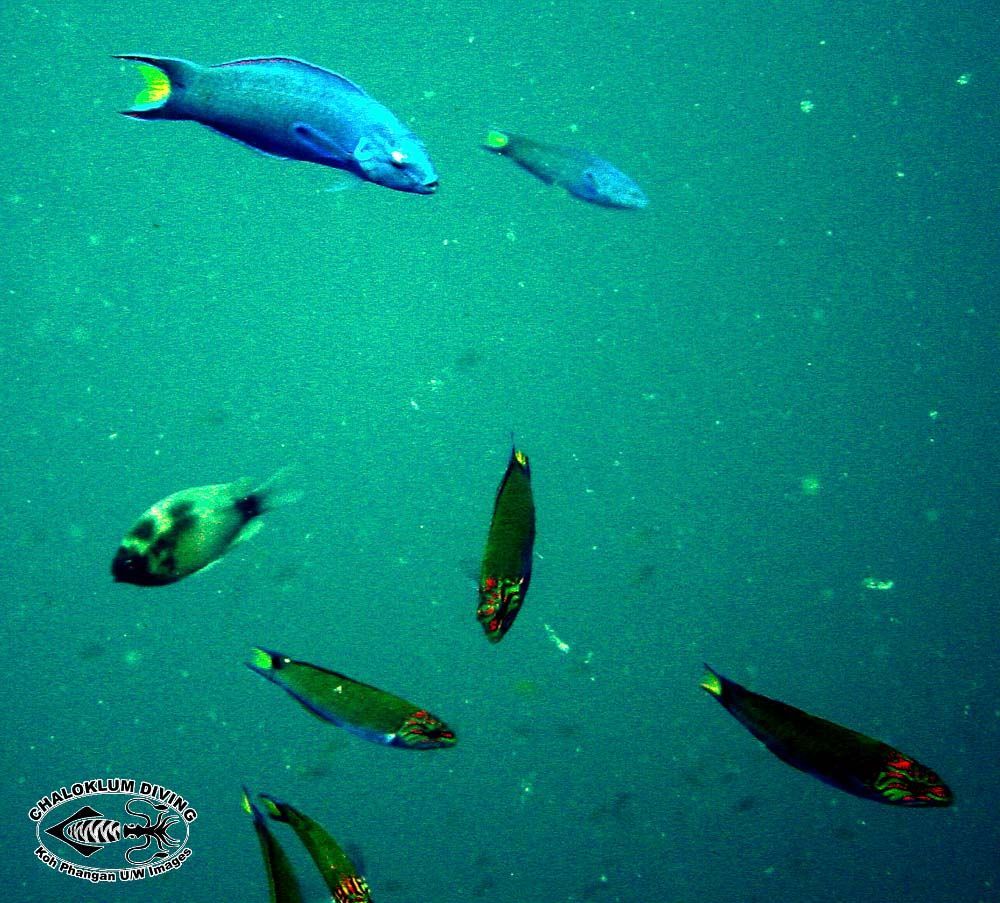



Species Identified
Anampses lennardi Scott, 1959 (Blue and yellow wrasse)
Ranges from the surge zone to at least 24 m . Occurs singly or in pairs . Feeds on small invertebrates . Has relatively little change in color with sex or age. A good food fish .
Choerodon schoenleinii (Valenciennes, 1839) (Green wrasse)
Inhabit flat sandy or weedy areas near lagoon and seaward reefs . Solitary. Feed mainly on hard-shelled prey including crustaceans, mollusks and sea urchins. Marketed mostly fresh. In Hong Kong live fish markets .
Labroides dimidiatus (Valenciennes, 1839) (Bluestreak cleaner wrasse)
Inhabits coral rich areas of inner lagoons and subtidal reef flats to seaward reefs . Feeds on crustacean ectoparasites and mucus of other fishes . Monogamous . A protogynous hermaphrodite . Stays in stations where oth...
Read More
Read More
Thalassoma lunare (Linnaeus, 1758) (Blue wrasse)
Occurs in the upper portions of lagoon and coastal reefs, and in protected seaward reefs . Enters estuaries . Usually found on upper portions of ledges and heads . Feeds mainly on small benthic invertebrates and fish eggs . A protogynous hermaphrodite .
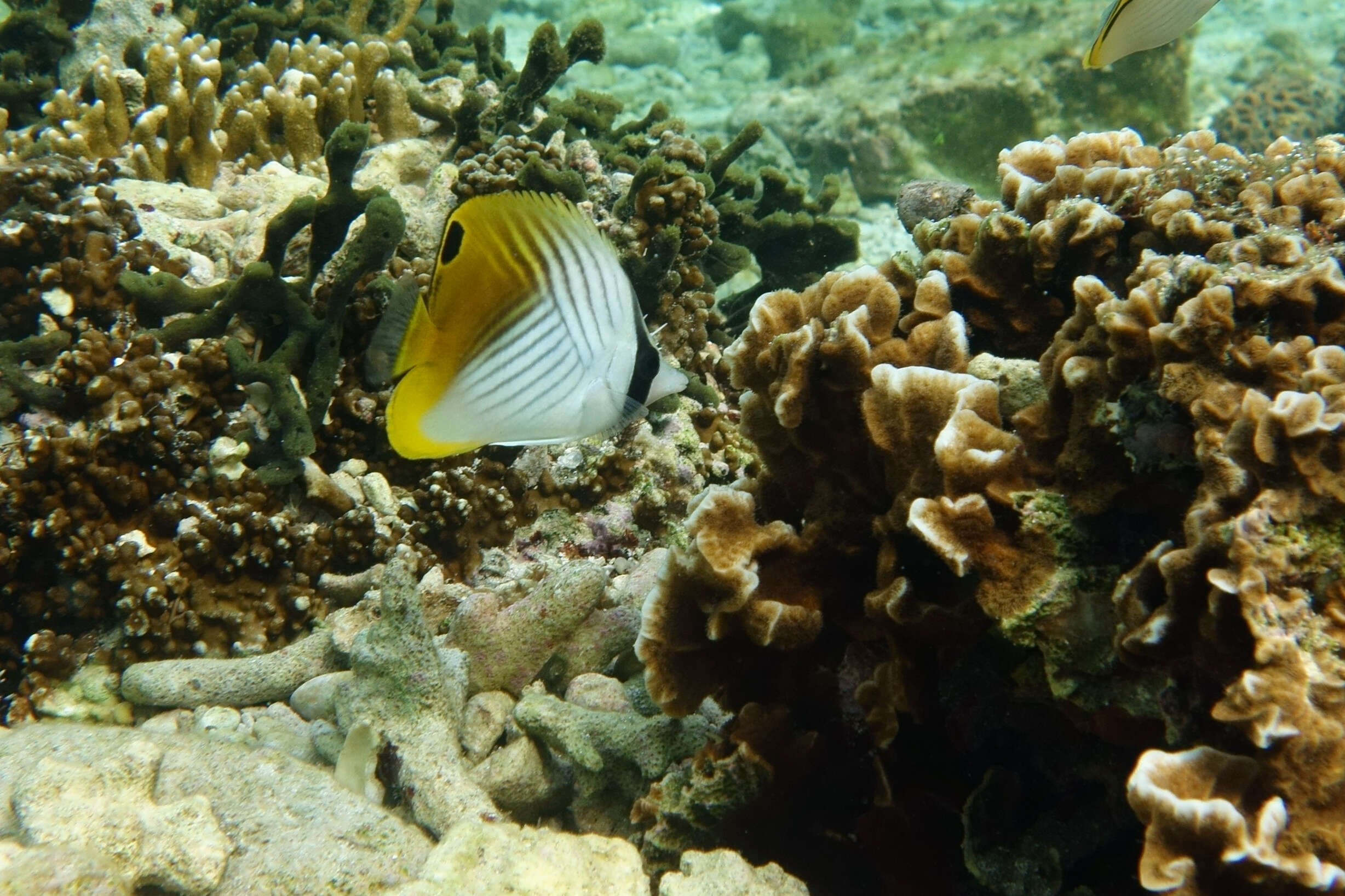
Chaetodon auriga Forsskål, 1775 (Cross-stripe butterfly)
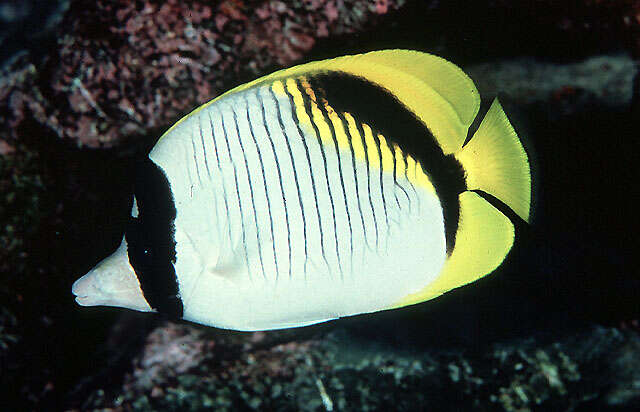
Chaetodon guentheri Ahl, 1923 (Crochet butterflyfish)
Inhabit seaward reefs in areas with rich coral growth. Usually solitary, but also a schooling species that is often on the move, usually in areas prone to strong currents. Usually deep in Indonesia and adults are rarely ...
Read More
Read More
Chaetodon lineolatus Cuvier, 1831 (Line butterflyfish)
Occur in lagoon and seaward reefs, usually in pairs in coral rich areas . Benthopelagic . Feed mainly on coral polyps and anemones, but also on small invertebrates and algae . Largest species in the genus . Oviparous . Form pairs during breeding .
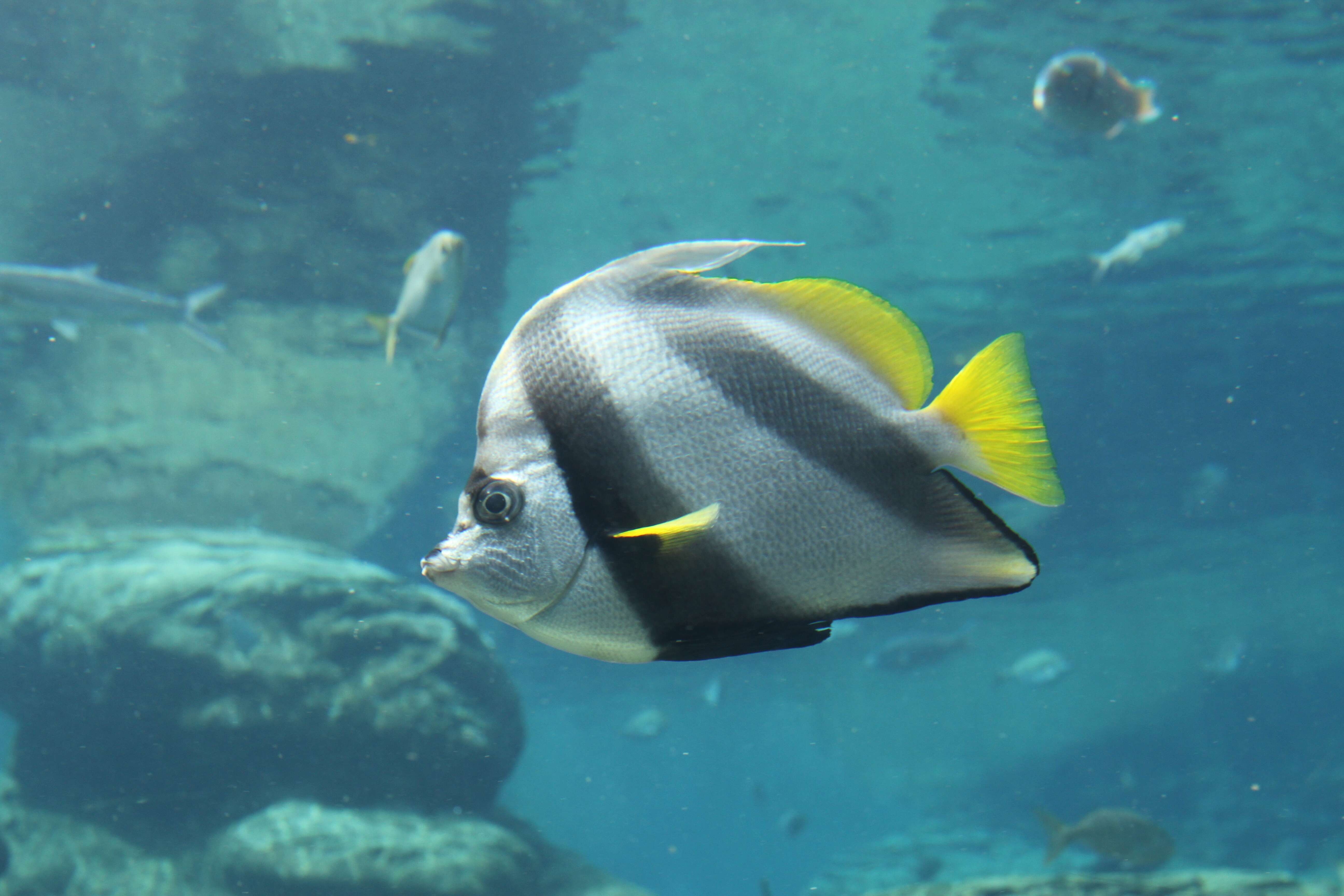
Heniochus diphreutes Jordan, 1903 (False moorish idol)
Occur primarily along outer reef slopes, in current channels. Juveniles in aggregations around isolated patch reefs, adults in large schools well above the bottom . In Indonesia, adults most common in depth 40-50 m, repo...
Read More
Read More
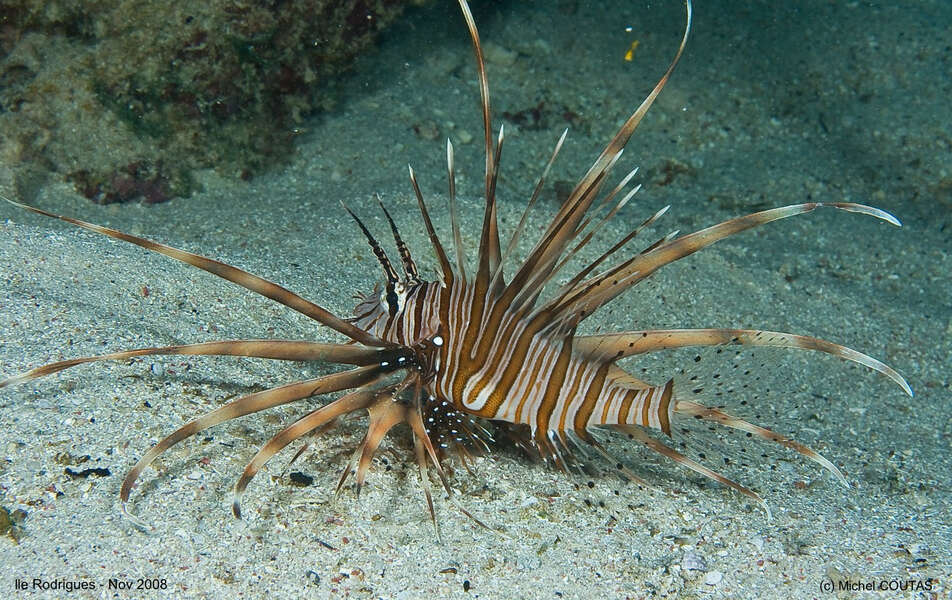
Pterois volitans (Linnaeus, 1758) (Red lionfish)
Pterois mombasae (Smith, 1957) (Frillfin turkeyfish)
Found on the continental shelf . A rare inhabitant of rocky bottoms of deep offshore reefs. Normally found on soft-bottom or muddy substrates with rich rubble ridges amongst rich invertebrate growth, especially sponges . Sold fresh in small quantities in markets.
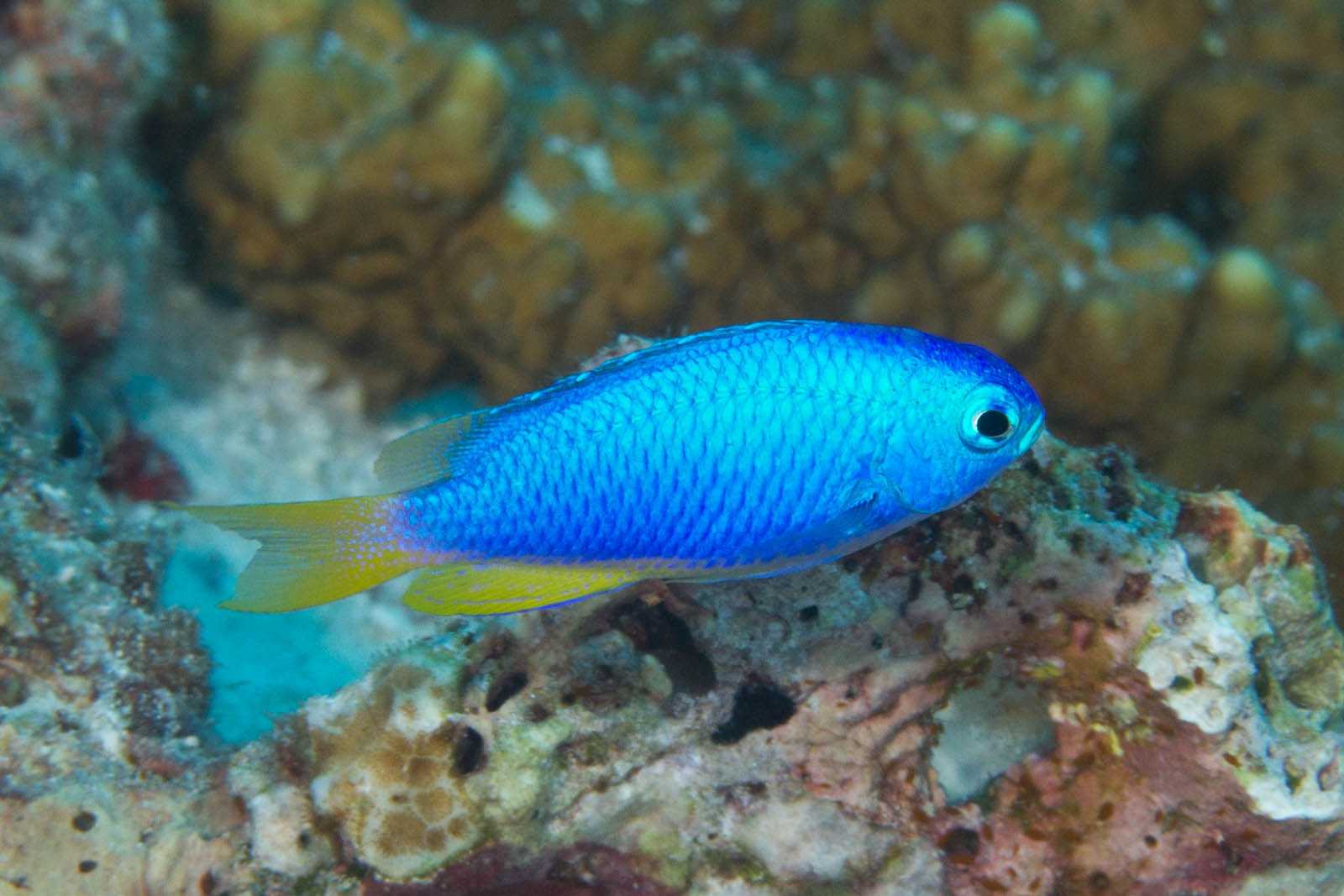
Pomacentrus coelestis Jordan and Starks, 1901 (Neon damsel)
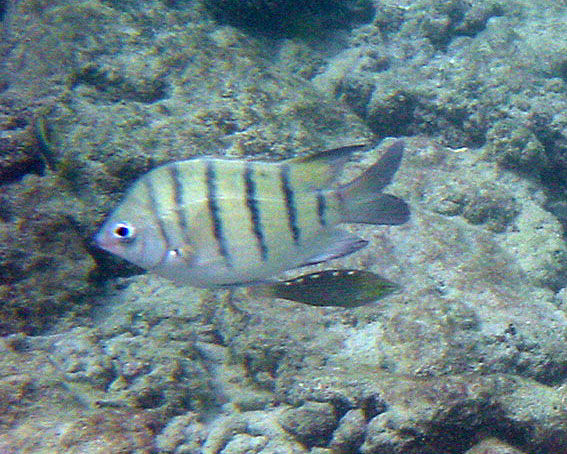
Abudefduf bengalensis (Bloch, 1787) (Bengal sergeant)
Occurs singly or in small groups in inshore reef and lagoon environments. Feeds on algae, gastropods, and small crabs. Highly territorial .
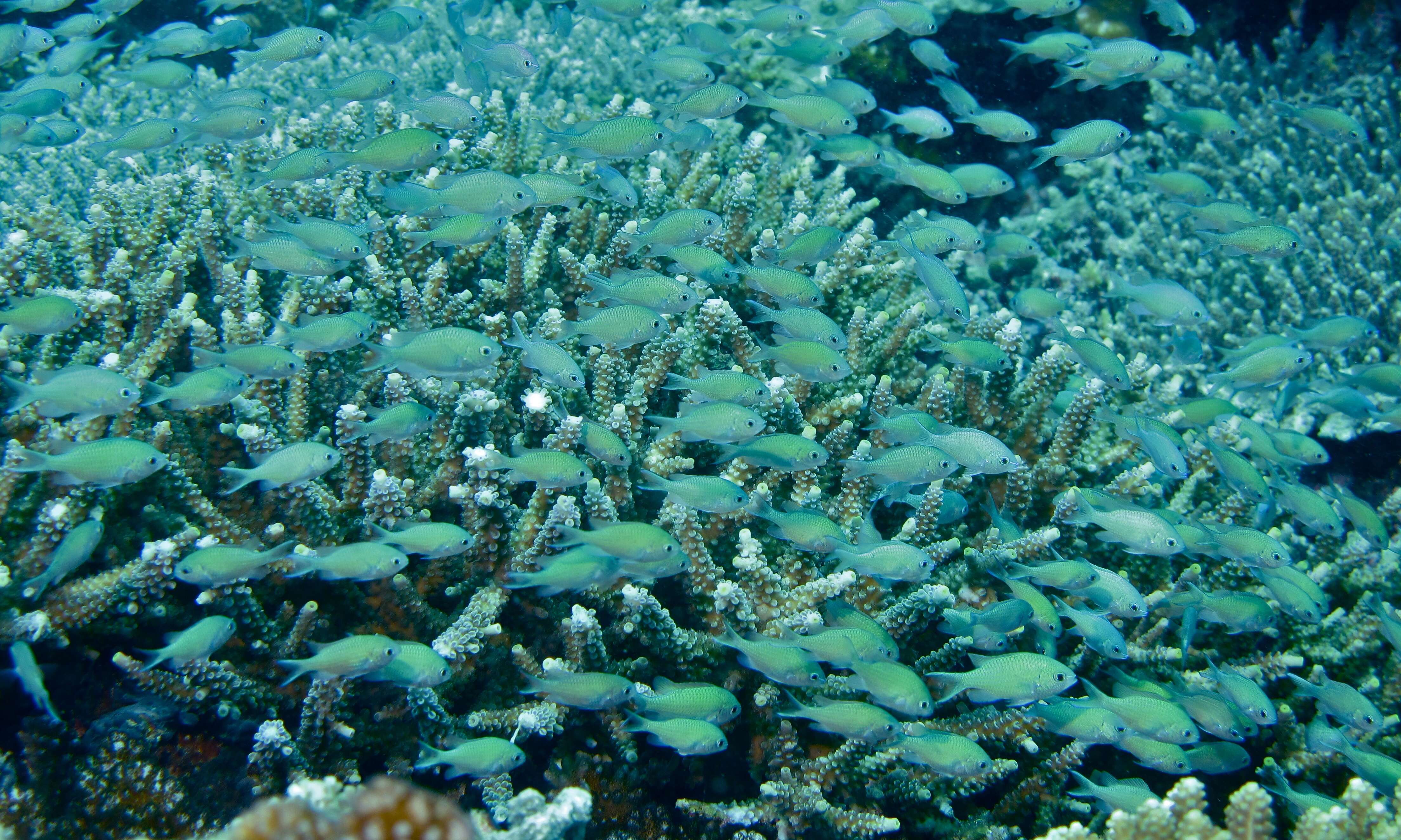
Chromis viridis (Cuvier, 1830) (blue-green chromis)
Found in large aggregations above thickets of branching Acropora corals in sheltered areas such as subtidal reef flats and lagoons. Juveniles closely tied to individual coral heads . Phytoplankton feeders. Breeding is d...
Read More
Read More
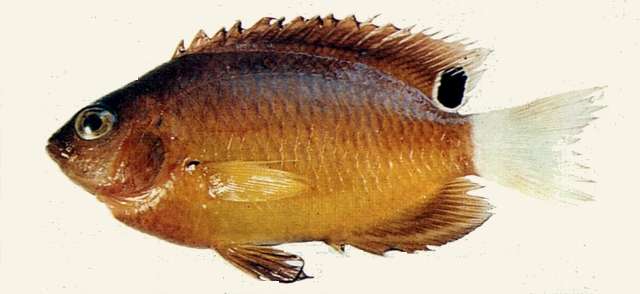
Pomacentrus bankanensis Bleeker, 1853 (Speckled damselfish)
Occurs solitarily or in small groups in lagoons, reef flats, passages, and outer reef slopes. Usually amongst coarse rubble or rock . Feeds primarily on algae, but also takes copepods, isopods, and pelagic tunicates.
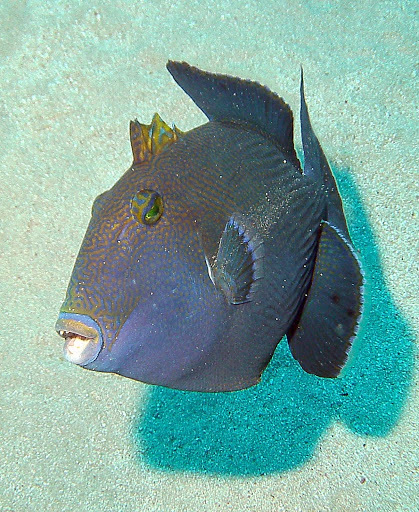
Pseudobalistes fuscus (Bloch and Schneider, 1801) (Yellow-spotted triggerfish)
Occur in clear shallow lagoons and seaward reefs; sandy areas near reef patches of reef edge are preferred. Adults on deep reefs or with shipwrecks, usually deeper than 30 meters. Juveniles inshore on rubble reef or smal...
Read More
Read More
Rhinecanthus rectangulus (Bloch and Schneider, 1801) (Wedge-tail triggerfish)
Occur in shallow outer reefs subject to surge . Commonly found over barren rock or the spur-and-groove zone where there is a mixture of bare rock, rubble, and coral. Juveniles on algae reef . Benthopelagic . Feed on al...
Read More
Read More
Share on Social Networks
- Facebook:

personalize your shared text as well as its destination (wall, page...) or send as a private message to a friend
- Twitter: Tweet personalize your tweet
- Google Plus:
Direct link to this dive
- Long link:
- Short link:


 We are participating today in the startup contest Techcrunch Disrupt. Support Diveboard by voting for us!
























































































