


 Neng Etta Amaknana

 Indonesia
-
Nº6
 Date: 2014-04-26 - 13:15
-
 Max Depth: 16.9m Duration: 54mins
Dive Location

- Surface interval:0 mins
- Temp: Surf 29°C
- Dive type : Training, Reef
- Visibility: Average Water: Salt
Specific gear used
- Fins: Cressi Sub - reaction pro
- Mask: IST Sports - m-99
Dive reviews
| Overall review | ||
| Dive difficulty | ||
| Marine life quality |
Recent Divers in Pulau Pramuka
Recent Pictures in Pulau Pramuka
Dive Shop & Buddies
 Dive with Kahar
 Dive buddies:
Bdvl
Dive buddies:
Bdvl

Link to this spot:
- Spot:
- Country:
- Area:
- Body of water:
Dive Profile
Data provided by EOL.org






Species Identified
Pterois volitans (Linnaeus, 1758) (Red lionfish)
Premnas biaculeatus (Bloch, 1790) (Spinecheek anemonefish)
Inhabits lagoon and seaward reefs , found mainly in protected coastal waters and lagoons. Typically found in pairs in which males are much smaller than females . Feeds primarily on zooplankton and benthic algae . Has been reared in captivity . Associated with the anemone Entacmaea quadricolor .
Amphiprion ocellaris Cuvier, 1830 (false clown anemonefish)
Sepiella ocellata Pfeffer, 1884 (Cuttlefish)
Arothron stellatus (Bloch & Schneider, 1801) (Blackspotted puffer)
Relatively uncommon in patch reefs and coral slopes near sandy areas of clear lagoon and seaward reefs. Juveniles occur in sandy and weedy inner reefs, adults on clear lagoons and seaward reefs . Juveniles inshore, usual...
Read More
Read More
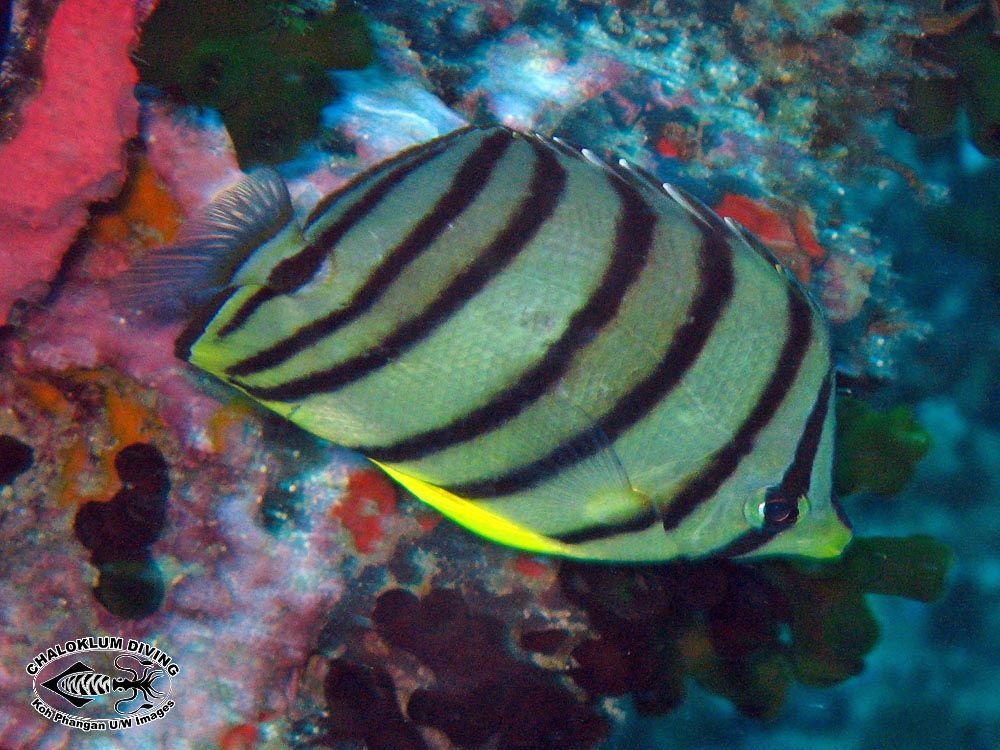
Chaetodon octofasciatus Bloch, 1787 (Eightband butterflyfish)
Swim in pairs in coral rich areas of sheltered lagoon and inshore reefs; juveniles seen in groups among Acropora corals. Feed exclusively on coral polyps. Oviparous . Form pairs during breeding .
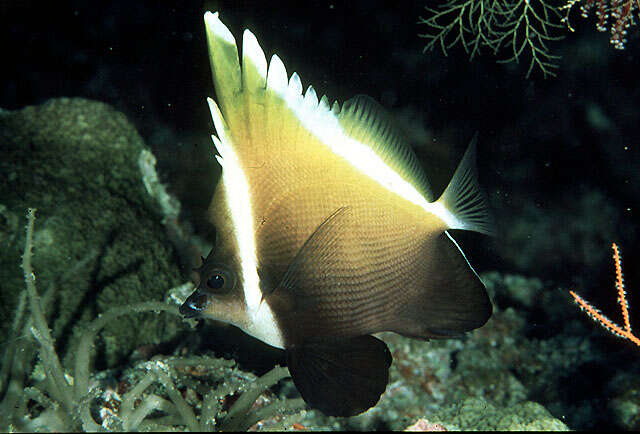
Heniochus varius (Cuvier, 1829) (Horned bannerfish)
Occur in deep lagoons and steep outer reef slopes, with mixed algae and coral growth . Solitary or in small groups. Feed on corals and other invertebrates . Oviparous . Form pairs during breeding . Maximum depth reported taken from Ref. 48636.
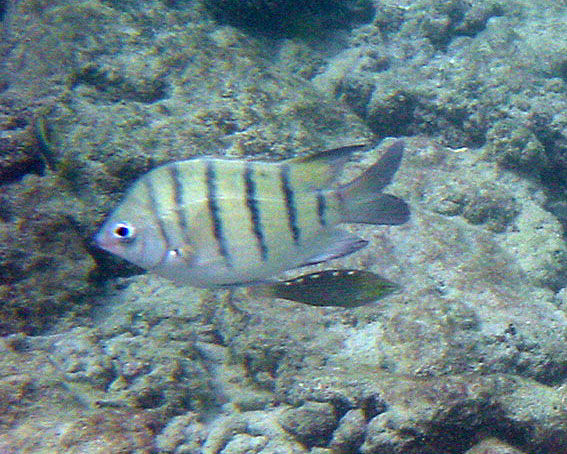
Abudefduf bengalensis (Bloch, 1787) (Bengal sergeant)
Occurs singly or in small groups in inshore reef and lagoon environments. Feeds on algae, gastropods, and small crabs. Highly territorial .
Himantura imbricata (Bloch and Schneider, 1801) (Scaly whipray)
Found in inshore coastal waters . Typically found in estuarine habitats, but also reported from the Great Lake. The single record from the Great Lake may in fact refer to Dasyatis laosensis. Young and adults feed on ben...
Read More
Read More
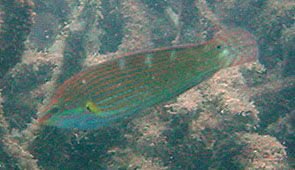
Halichoeres vrolikii (Bleeker, 1855) (Indian Ocean pinstriped wrasse)
Found in shallow weedy areas of rocky shorelines, not where there is rich coral growth .
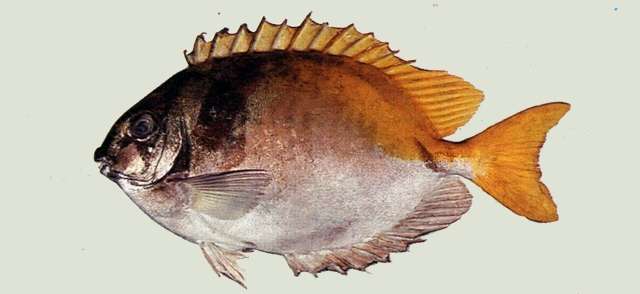
Siganus virgatus (Valenciennes, 1835) (Barhead spinefoot)
Inhabit shallow coastal waters, around hard coral reefs and areas of sand with patches of rock and soft coral. Tolerant of murky waters. Larger juveniles and adults occur in pairs in coastal reef flats, slopes and estuar...
Read More
Read More
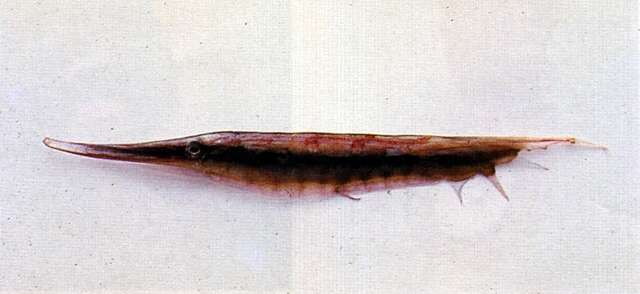
Aeoliscus strigatus (Günther, 1861) (Razorfish)
Form schools among the spines of Diadema or staghorn corals, and feed on minute crustaceans in the zooplankton. Remarkable for their strange body shape and swimming habit: the body is encased in an armor of thin, transpa...
Read More
Read More
Heliofungia actiniformis (Quoy and Gaimard, 1833) (mushroom coral)
zooxanthellate, free-living
Share on Social Networks
- Facebook:

personalize your shared text as well as its destination (wall, page...) or send as a private message to a friend
- Twitter: Tweet personalize your tweet
- Google Plus:
Direct link to this dive
- Long link:
- Short link:


 We are participating today in the startup contest Techcrunch Disrupt. Support Diveboard by voting for us!
























































































First dive after taking OW course. I don't expect this dive could be a species-finding dive, as visibility in Seribu Islands overall's not great. I was just expecting to practice what i've learnt so far, practicing my buoyancy that is...
To my surprise, i saw a lot of critters here, including turtle and cuttlefish. I saw turtle before, skindiving in Gili Trawangan and saw cuttlefish being shot in ******, spearfishing with my other buddies, but I've never see a cuttlefish (and then lionfish) perched still upon a coral. It was amazing.
I think, whatever the environment is, as long as i'm underwater i can still find a way to really enjoy my dive.