


 Red Mangrove Galápagos


Red Mangrove Galapagos Lodges was born in 2007, since then we have been sharing the wonder and excitement of adventure travel with people from all over the world.

We are the number one chain of lodges in the Galápagos and we operate the most incredible diving expeditions through our 5 star PADI I.D.C Dive Center .!

Visit our website http://divingingalapagos.com/ and learn all about us .!
Places I've Dived
- Total number of dives not on diveboard:
This number is added to the total number of dives logged in Diveboard (public+private) for the stat "Total number of dives". - Dives published:3
- Total dives count:3
- Dives this year:0
- Total underwater time on Diveboard:2 hrs 15 min
- Most dives on Diveboard in:
Ecuador - Deepest Dive:
18m in Floreana Island, Ecuador - Longest Dive:
45 min in Floreana Island, Ecuador - Pictures in logbook:11
- Number of species spotted:0
Favorite Pictures
Species Spotted
Data provided by EOL.org
BUser Feed
Red Mangrove Galápagos's dives and posts rRSS feed
Favorite Dives
-
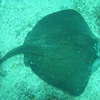
2010-11-03 Ecuador Floreana Island
Corona Del DiabloFLOREANA A 90-minute sail south from Puerto Ayora, diving in Floreana is ideal for divers of all levels. There are 3 possible dive sites: Devil’s Crown, Champion Islet and Enderby Islet. Currents: Usually moderate. Marine Activity: Sea horses are widely seen along with sea lions, Galapagos sharks, white-tip reef sharks, green turtles, reef fishes, sting rays, eagle rays, barracudas, a variety of invertebrates and hammerheads. Devil’s Crown: Getting its name from the exposed rocks that peak out of the water and forms a crown shape, the Devil’s Crown hosts an array of marine life. Keep your eyes open for: blackspot moray, hawkfish, filefish, king angelfish, creolefish, jacks, turtles, octopus, golden eagle rays, hammerheads and whitetips. Champion Islet: This is a drift dive accompanied by sea lions and a large number of sea turtles as well. Great for night dives too, where you can encounter sleeping sea turtles, numerous creolefish, bright yellow and orange tubastrea, slipper lobster, red scorpionfish, nudibraches and pufferfish. Enderby Islet: Diving on the outer edge of this eroded tuff cone (right where the current hits the reef) provides encounters with manta rays, golden eagle rays, morays, turtles, tunas, hammerheads, whitetips, and Galapagos sharks.
-
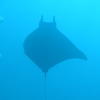
2014-07-05 Ecuador Santa Cruz Island
Seymour NorthNorth Seymour: Eagle Rays, Manta Rays, Hammerheads, White-Tipped Reef Sharks, Galapagos Shark, Stingrays, Marbled Rays, Tiger Snake Eels, Moray Eels, Garden Eels, Sea Stars, Sea Turtles, Jacks, Blue and Gold Snappers, Flag Cabrilla, Creolefish, King Angelfish, Barracuda, Heiroglyphic Hawkfish, Frogfish, Yellowtail Surgeonfish, Spotfin Burrfish, Scorpionfish, Cardinalfish, Nudibranch and more. Lunch will be onboard during surface interval. North Seymour has two dive sites: The ocean side and the channel side. On the ocean side, You dive on a rocky slope and end up in the shallower area close to the island. Jacks, manta rays, eagle rays, marble rays, stingrays and even hammerhead sharks and marlins have been seen here. There are also lots of reef fishes like Yellowtail grunts and bluestriped snappers (rayado) and salemas in schools. Since there are a lot of fish here, you can often observe birds like boobies diving into the water from above and swimming down to catch them and of course there are also sea lions here. The channel side can be an excellent dive site. The area is not very deep (about 20m) but sometimes there is quite a lot of current. You start from the eastern corner and following the major currents, you dive relatively fast over the rock plateau. Galapagos sharks cruise around and there are fish everywhere. There is a large sandy area at 15m with a large colony of endemic garden eels.
-
2014-08-17 Ecuador
Gordon Rocks, Galapagos IslandsGordon Rocks is a highlight of any diving experience in the Galapagos. It is is the top of a submerged cone at the northeastern end of Santa Cruz Island. It is sometimes referred to as 'the washing machine' for good reason. The exposed northern and southern rocks are what remains of a caldera. Below the water are submerged pinnacles and a channel between that can make for very strong currents, surge, down currents and there is depth, so this site is an advanced dive site. Sometimes, you take a taxi to the Itabaca Canal (45 minutes) and board the dive boat. From there, it is 20-30 minutes to Gordon Rocks. I have actually taken a very fast boat that departed from the main dock in Puerto Ayora and arrived at The Plazas (across from Gordon Rocks) 35 minutes later. The following is a mini-trip report from one of my Gordon Rocks dives, the first ever Galapagos Dive Triangle I had put together. It's one thing to dive for yourself, but if you're taking guests out, you REALLY want it to be good. Dive 1: We got all suited up near shore and headed over as the currents around Gordon Rocks can be strong and the chop too difficult to do much beyond not fall out of the boat. We entered the ‘washing machine’ about at the center of the western ‘rock’, the more intact piece of the visible crater. We descended rather quickly assisted by a somewhat strong down current and were immediately rewarded with Hammerheads cruising the sandy bottom next to the reef. Being so fascinated by the hammerheads and not paying attention to our dive computers or depth gauges, Macarron had to ring his bell to alert us to the fact that we had descended a bit too far and guided up a ridge where we just held on for awhile watching the hammerhead swim around us and below us. One curious ‘martillo’ ended up about 5 meters or less in front of us. Fantastic experience to view hammerheads so up close and personal. We continued over the reef and crossed the strong current in the channel heading for the pinnacle. There are a lot of amazing creatures at Gordon Rocks, but hammerheads are a pretty tough act to follow. You end up so focused on them that you just forget that everywhere you look, especially above, is a well-stocked fish bowl! Dive 2: More hammerheads, large schools of fish, eagle rays…and did I mention the hammerheads? Dive 3: Again, I sit this out…Miriam and Javier left their camera onboard, so naturally, it was the best dive of the day. They reported sighting about 40 sharks, mostly hammerheads with a couple of white tips and 1 Galapagos Shark. Post note: Luck of the draw…I dove Gordon Rocks the day after everyone left and waiting for us as we climbed back into the boat was a young whale shark, about 6-7 meters long. Fortunately, we could quickly don our snorkels and jump right back in where I swam about a meter away from him until he decided to speed it up. It’s as hopel
My Certifications
- PADI INSTRUCTOR DEVELOPENT CENTER (Nov 2014)
- PADI DIVE MASTER (Jan 2011)
- PADI ADVANCED (Jan 2011)
- PADI OPEN WATER (Jan 2011)


 We are participating today in the startup contest Techcrunch Disrupt. Support Diveboard by voting for us!
























































































