



 Sam Medina


 Puerto Rico
-
Nº3
 Date: 2012-07-02 - 08:15
-
 Max Depth: 12.8m Duration: 40mins
Pictures

No pictures for this dive
- Dive type : Recreational, Training, Reef
- Visibility: Good Water: Salt
Specific gear used
- BCD:
- Regulator:
- Mask:
- Fins:
- Weights: 5.9 kg
Recent Divers in Aguadilla
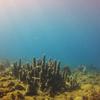
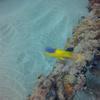
Recent Pictures in Aguadilla

Link to this spot:
- Spot:
- Country:
- Area:
- Body of water:
Dive Profile
- 1. Air
- 0L Aluminium 214 → 103 bar
- Average depth: 8.5m
Data provided by EOL.org

Species Identified
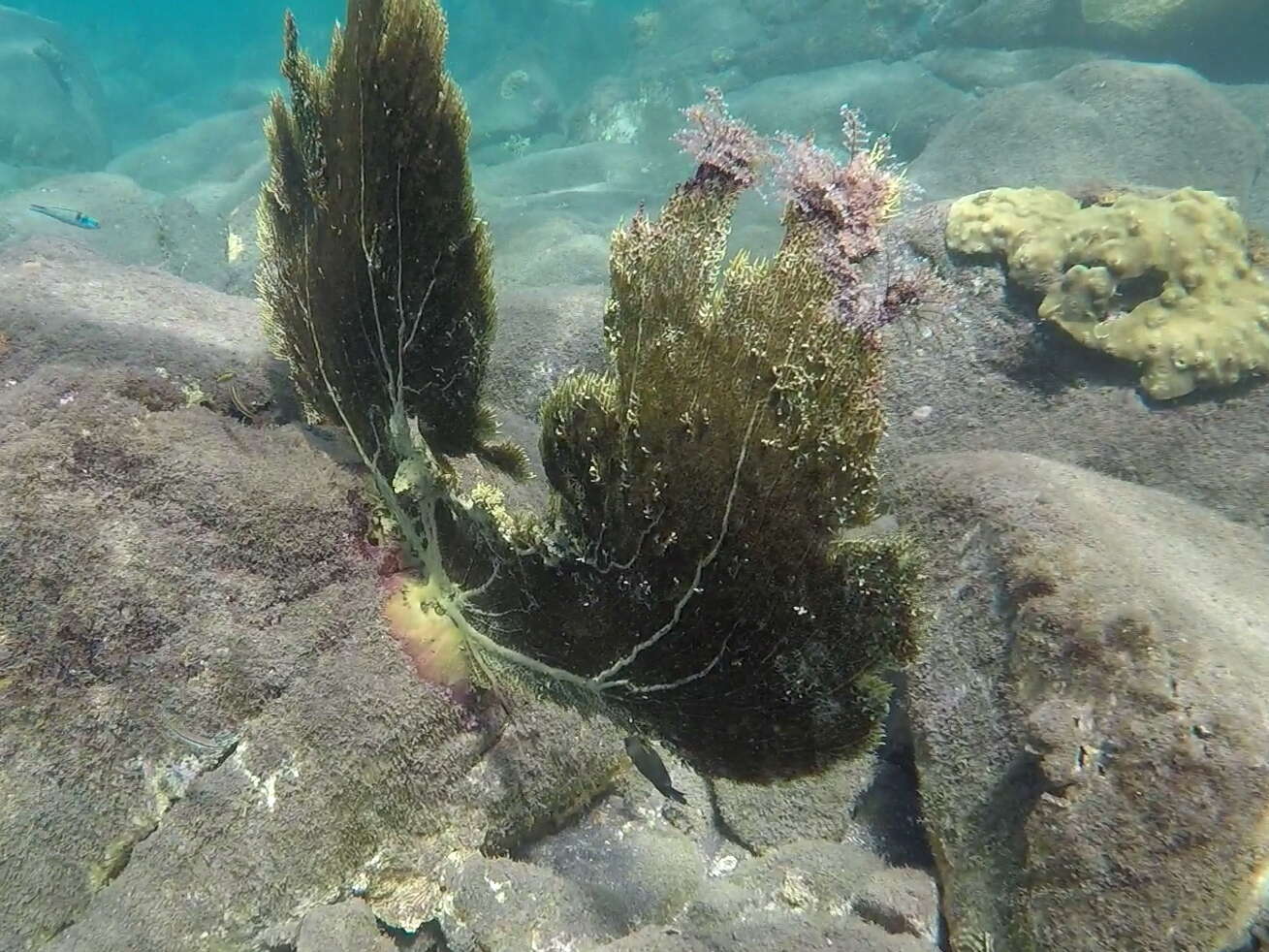
Gorgonia ventalina Linnaeus, 1758 (common sea fan)
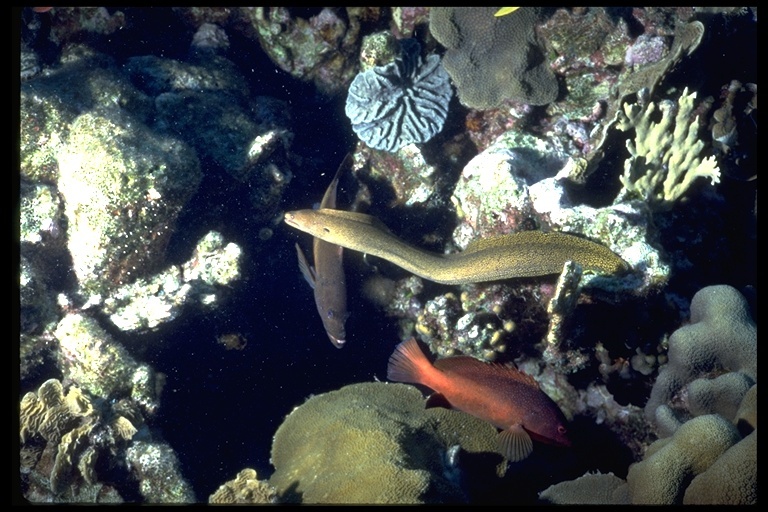
Gymnothorax miliaris (Kaup, 1856) (Bastard eel)
A benthic and solitary species inhabiting coral reefs and rocky shorelines. Usually at depths of 60 m . One of the most common and easily recognized morays of the West Indian reefs, active during the day and sometimes h...
Read More
Read More
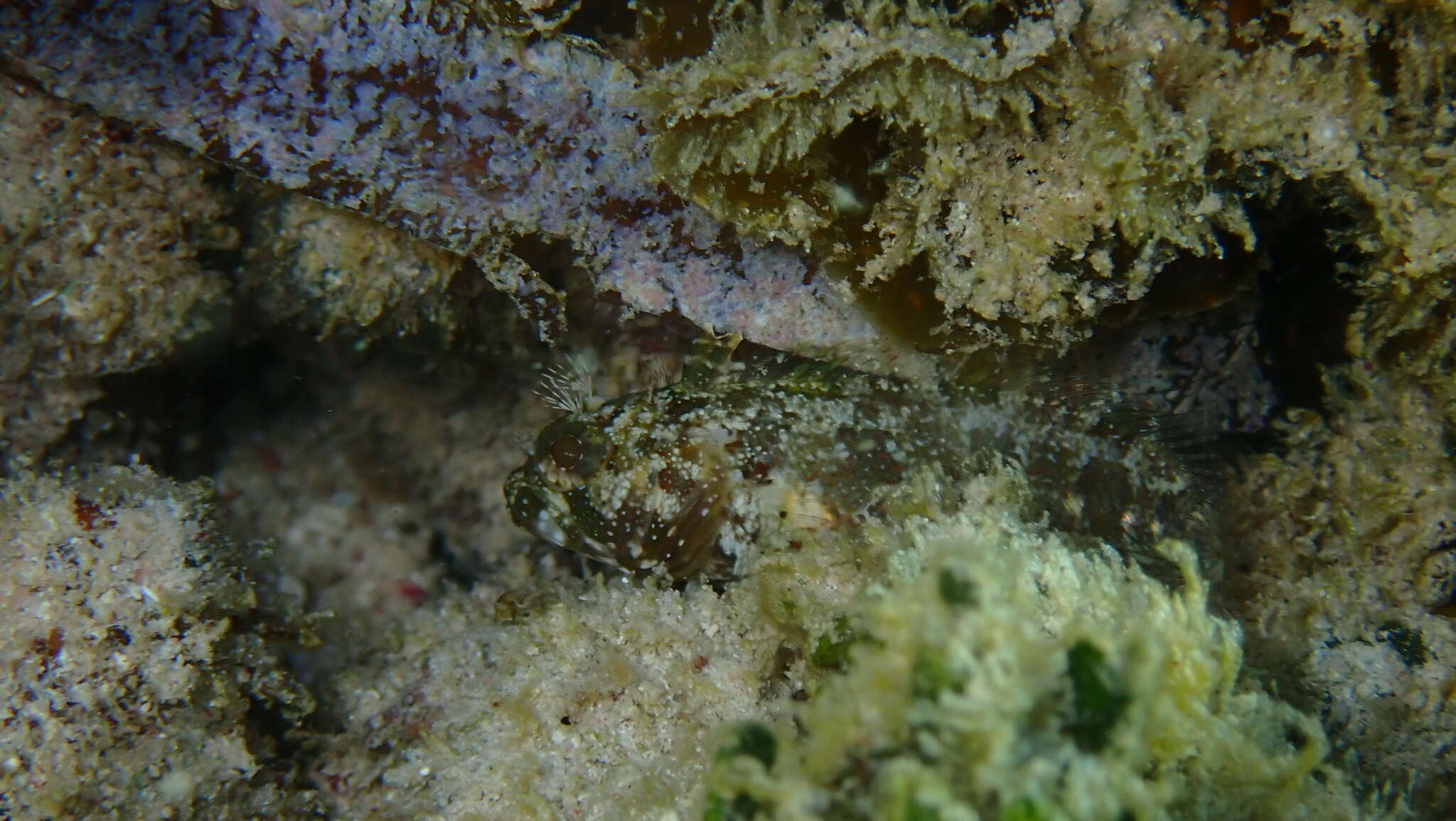
Labrisomus bucciferus Poey, 1868 (puffcheek blenny)
Occurs from rocky and rubble shores with algal mats to reefs and seagrass beds.
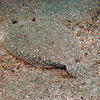
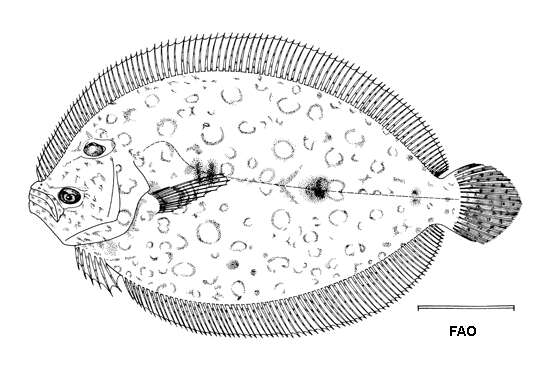
Bothus lunatus (Linnaeus, 1758) (Flounder)
Inhabits clear sandy areas near mangroves, among seagrass, coral or rubble . Most common flounder around coral reefs . Often partially buried in sand, occasionally on hard bottoms . Feeds mainly on small fishes but also on crustaceans and octopuses. Marketed fresh .
Oreaster reticulatus (Linnaeus, 1758) (cushion sea star)
Tubastraea coccinea Lesson, 1829 (orange cup coral)
azooxanthellate
Favia fragum (Esper, 1795) (golfball coral)
zooxanthellate
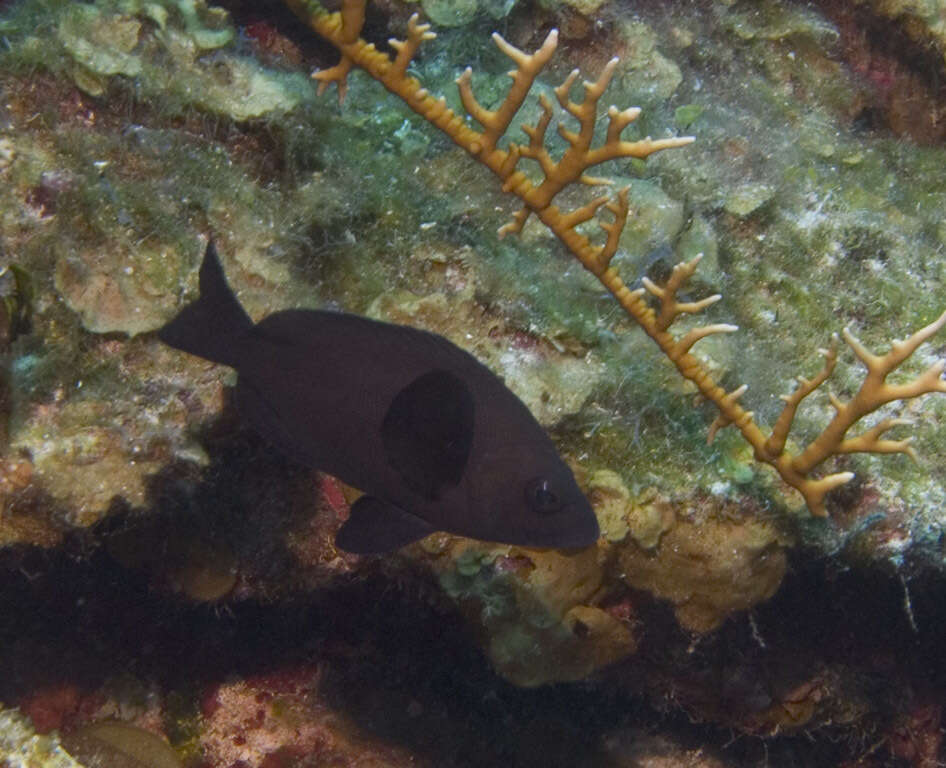
Hypoplectrus nigricans (Poey, 1852) (Black hamlet)
A solitary species inhabiting shallow reefs . Feeds on fishes and crustaceans . Often found near the bottom around soft and hard corals. Occasionally been seen spawning with the H. chlorurus
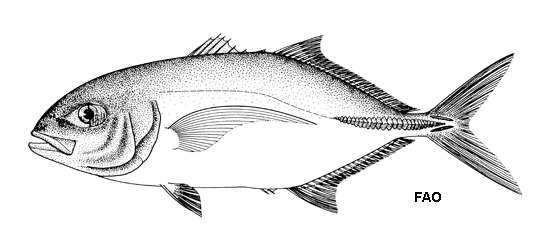
Carangoides bartholomaei (Cuvier, 1833) (yellow jack)
Prefers offshore reefs and open marine waters . Juveniles often found near the shore on seagrass beds or often associated jellyfish or floating Sargassum . Generally solitary but sometimes seen in small groups . Feeds ...
Read More
Read More
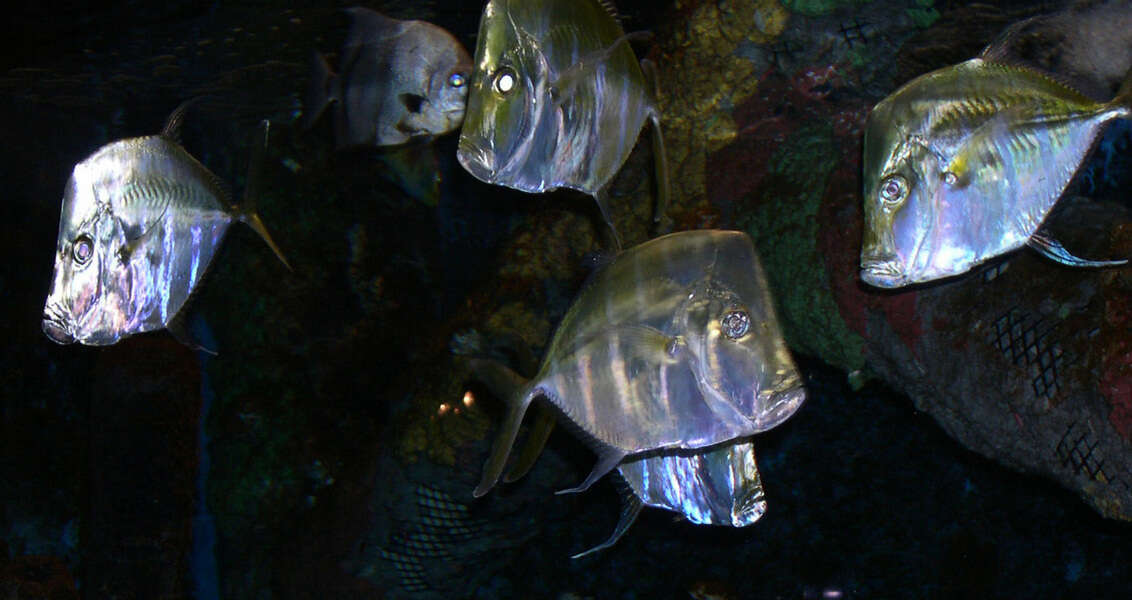
Selene vomer (Linnaeus, 1758) (Flatjack)
Found in shallow coastal waters, usually over hard or sandy bottoms. Juveniles may be encountered in estuarine areas and off sandy beaches . Found in schools, but may be encountered in small groups or in pairs . Feeds ...
Read More
Read More
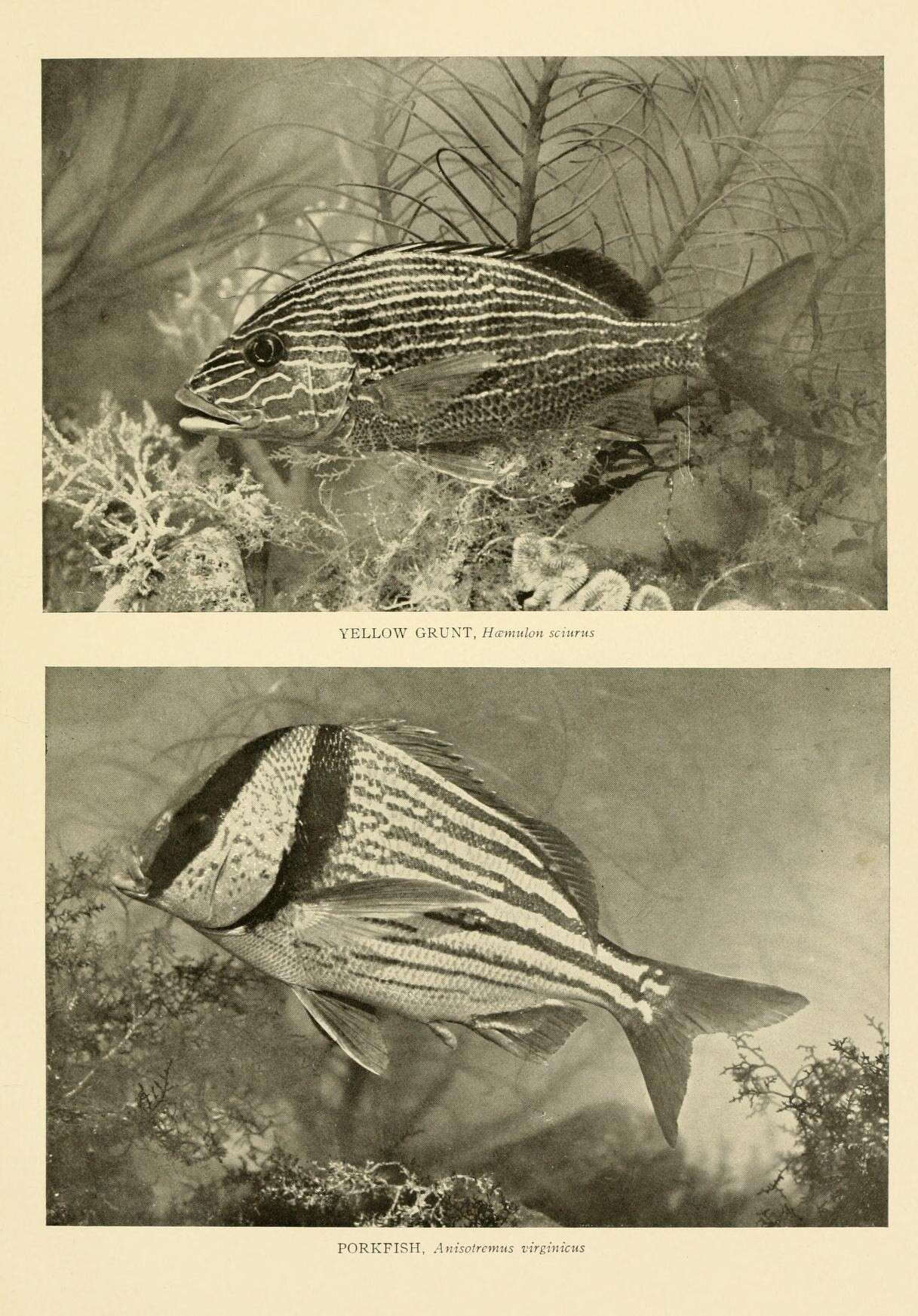
Haemulon sciurus (Shaw, 1803) (Blue striped grunt)
Found in small groups over coral and rocky reefs and drop-offs . Juveniles are abundant in Thalassia beds . Feeds on crustaceans, bivalves, and occasionally on small fishes. Marketed fresh.
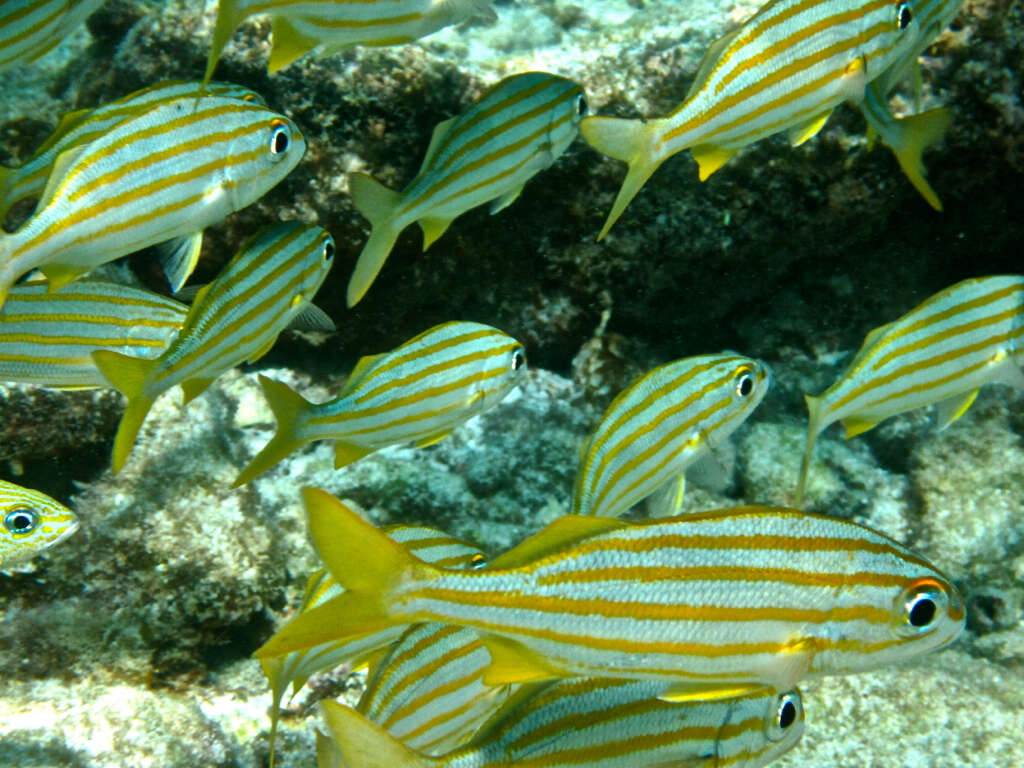
Haemulon chrysargyreum Günther, 1859 (Banana grunt)
Inhabits exposed rocky areas and coral reefs. Often near elkhorn and staghorn corals . Commonly found in schools. Juveniles are encountered in Thalassia beds . Adults are observed in coral reefs during the day but ente...
Read More
Read More
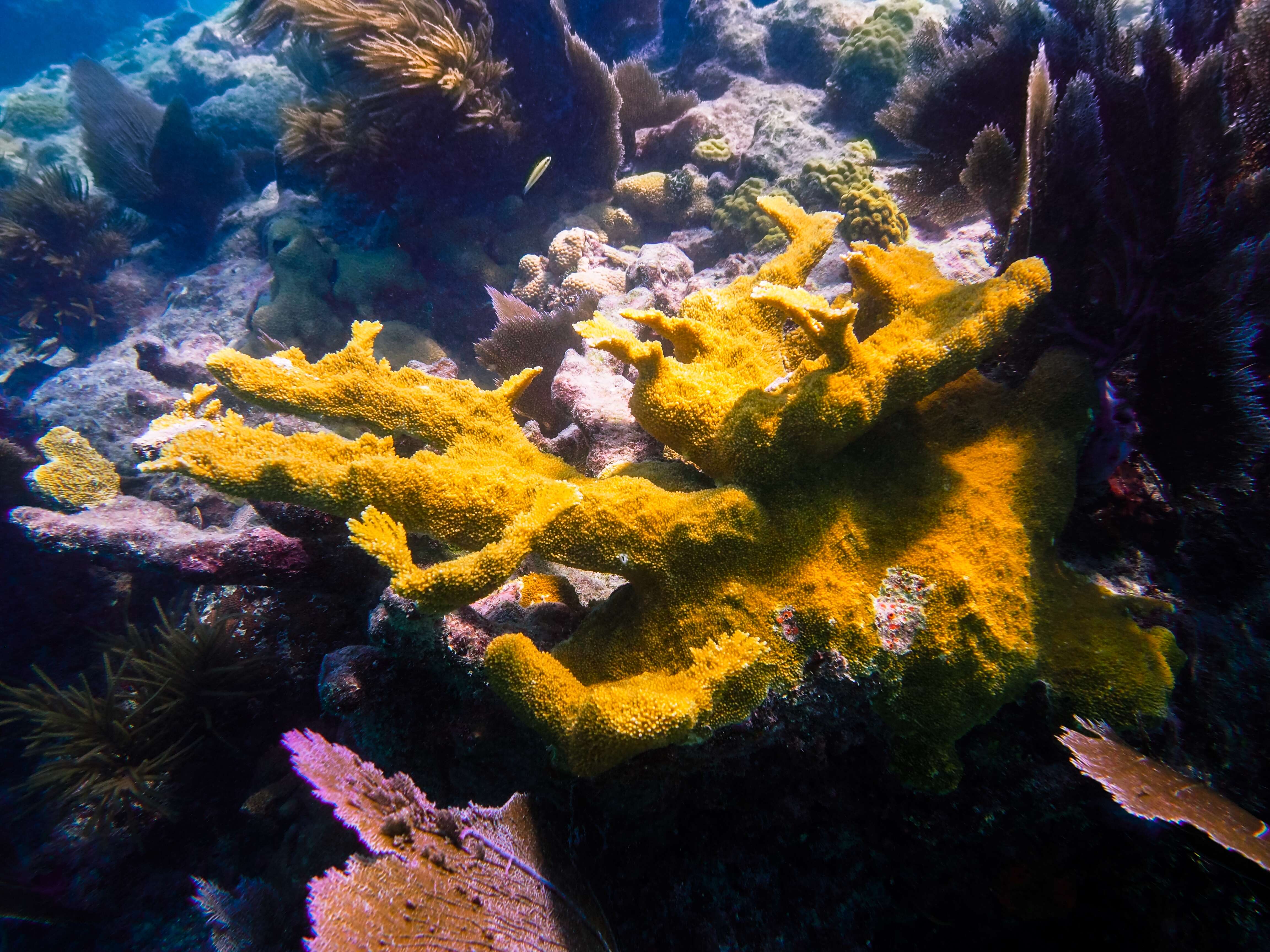
Acropora palmata (Lamarck, 1816) (elkhorn coral)
zooxanthellate
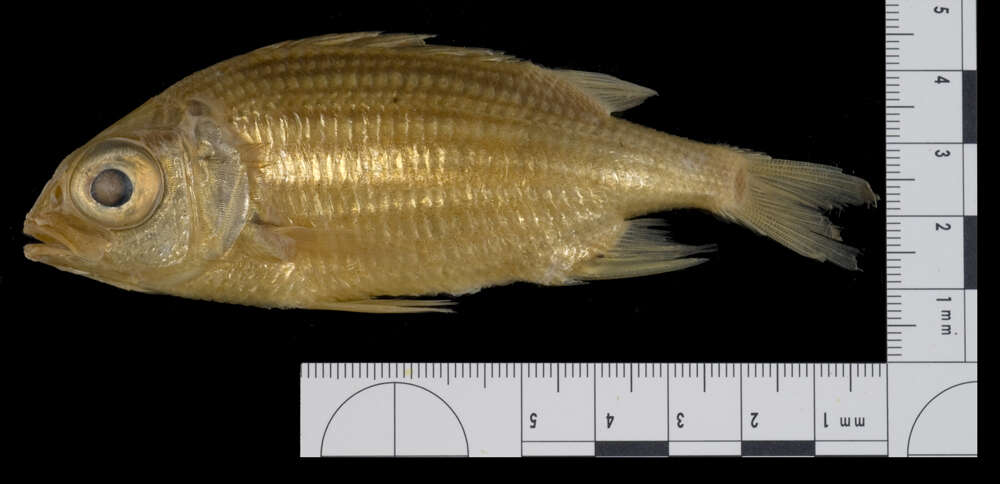
Sargocentron vexillarium (Poey, 1860) (Dusky squirrelfish)
Inhabits inshore reefs and tide pools. Hides in small recesses. Common, but rarely seen . Nocturnal species .
Holacanthus ciliaris (Linnaeus, 1758) (queen angelfish)
Found on coral reefs. Generally occurs solitarily or in pairs. Moves gracefully between seafans, seawhips, and corals . Stomach contents of 26 specimens indicate that the species feeds almost exclusively on sponges supp...
Read More
Read More
Chelonia mydas Linnaeus 1758 (Green Turtle)
Green turtles are long-lived and may take up to 59 years to reach sexual maturity Undertaking tremendous feats of navigation, adults return to the same beach to breed each season, part of the population in Brazil astonish...
Read More
Read More
Share on Social Networks
- Facebook:

personalize your shared text as well as its destination (wall, page...) or send as a private message to a friend
- Twitter: Tweet personalize your tweet
- Google Plus:
Direct link to this dive
- Long link:
- Short link:


 We are participating today in the startup contest Techcrunch Disrupt. Support Diveboard by voting for us!
























































































