


 Dkr82
Dkr82

 Indonesia
-
Nº27
 Date: 2013-12-07 - 11:34
-
 Max Depth: 18.5m Duration: 40mins
Pictures

No pictures for this dive
- Temp: Surf 30°C Bottom 26°C
- Dive type : Recreational, Drift, Reef
- Visibility: Average Water: Salt
Specific gear used
- Fins: Mares - X-Stream
- Other: Mares - Ergo Splash Snorkel
- Weights: 8 kg
Recent Divers in Amuk Bay
Recent Pictures in Amuk Bay
Dive Shop & Buddies
 Dive with Bali Scuba

Link to this spot:
- Spot:
- Country:
- Area:
- Body of water:
Dive Profile
- 1. Nitrox 32
- 12L Steel 200 → 60 bar
- Average depth: 12.3m
Data provided by EOL.org


Species Identified
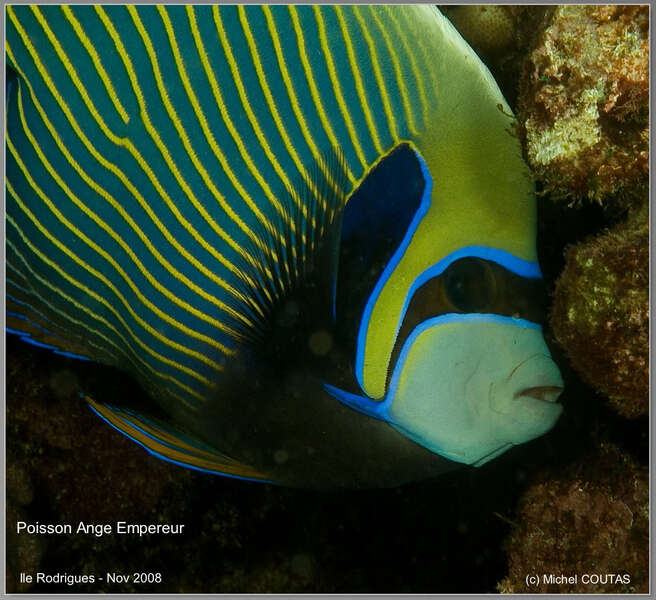
Pomacanthus imperator (Bloch, 1787) (Angel fish)
Juveniles are encountered under ledges, or in holes of outer lagoon patch reefs or semi-protected areas of exposed channels and outer reef flats. Subadults move to reef front holes and surge channels. Large adults inhabi...
Read More
Read More
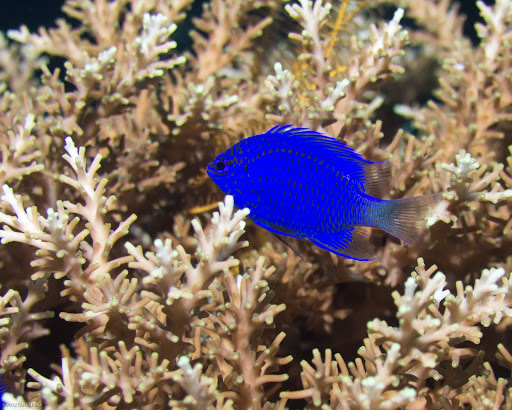
Chrysiptera springeri (Allen and Lubbock, 1976) (Springer's demoiselle)
Inhabit coral-rich areas of sheltered lagoon and inshore coral reefs . Seen with similar yellow-tailed species, often on the same coral patches. Mostly found in aggregations on coastal reef slopes with low Acropora patches on sand to 30 m .
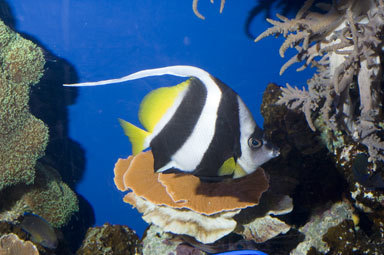
Heniochus acuminatus (Linnaeus, 1758) (Pennant coralfish)
Inhabit deep, protected lagoons and channels, and the deeper parts of outer reef slopes. Juveniles are often solitary while adults occur in pairs . A planktivorous species that generally remains within a few meters of th...
Read More
Read More
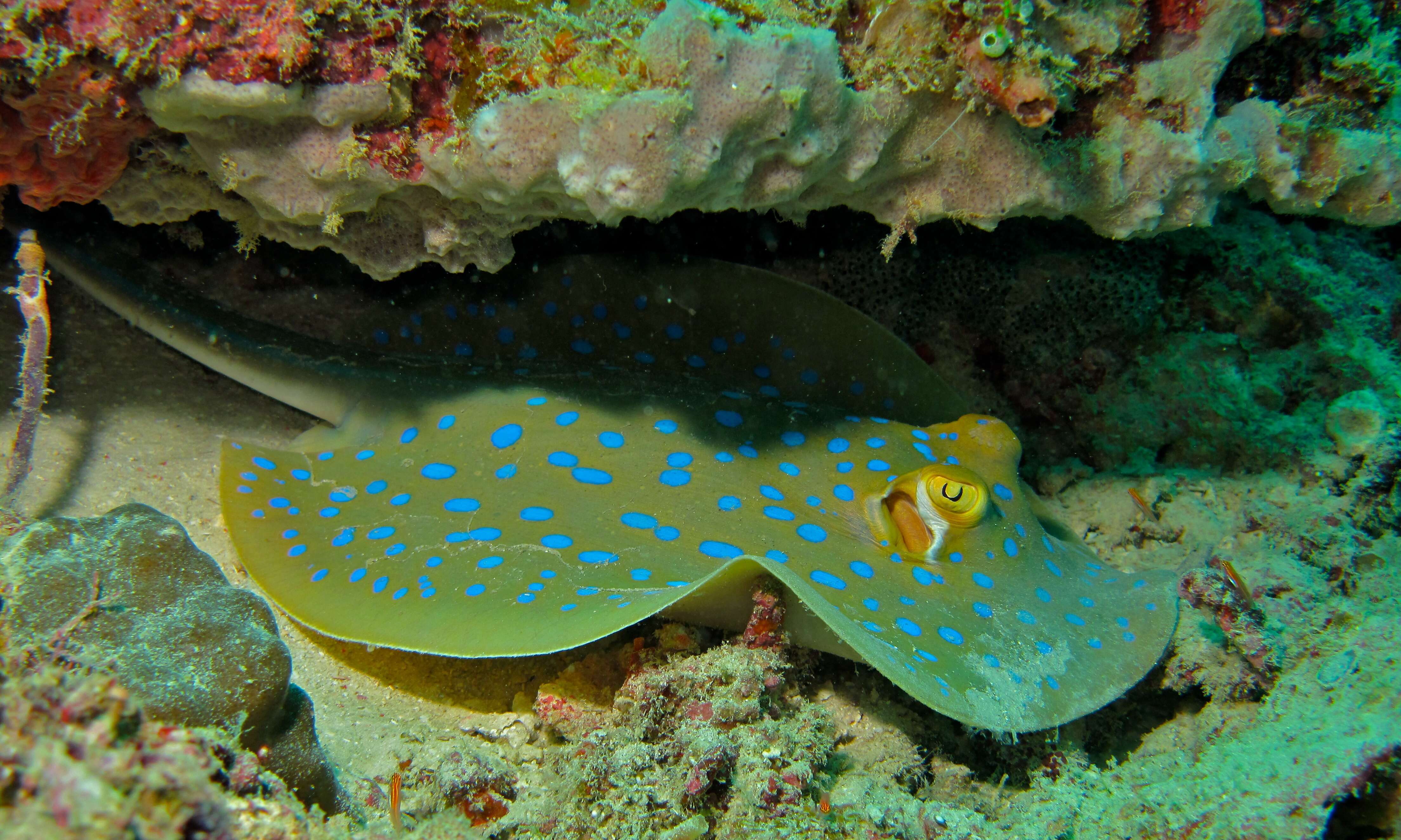
Taeniura lymma (Forsskål, 1775) (Bluespotted ribbontail ray)
Blue-spotted stingrays live alone or in small groups , migrating in large schools into shallow sandy areas on the rising tide in order to feed, and dispersing back into the ocean as the tide falls to shelter in the coral c...
Read More
Read More
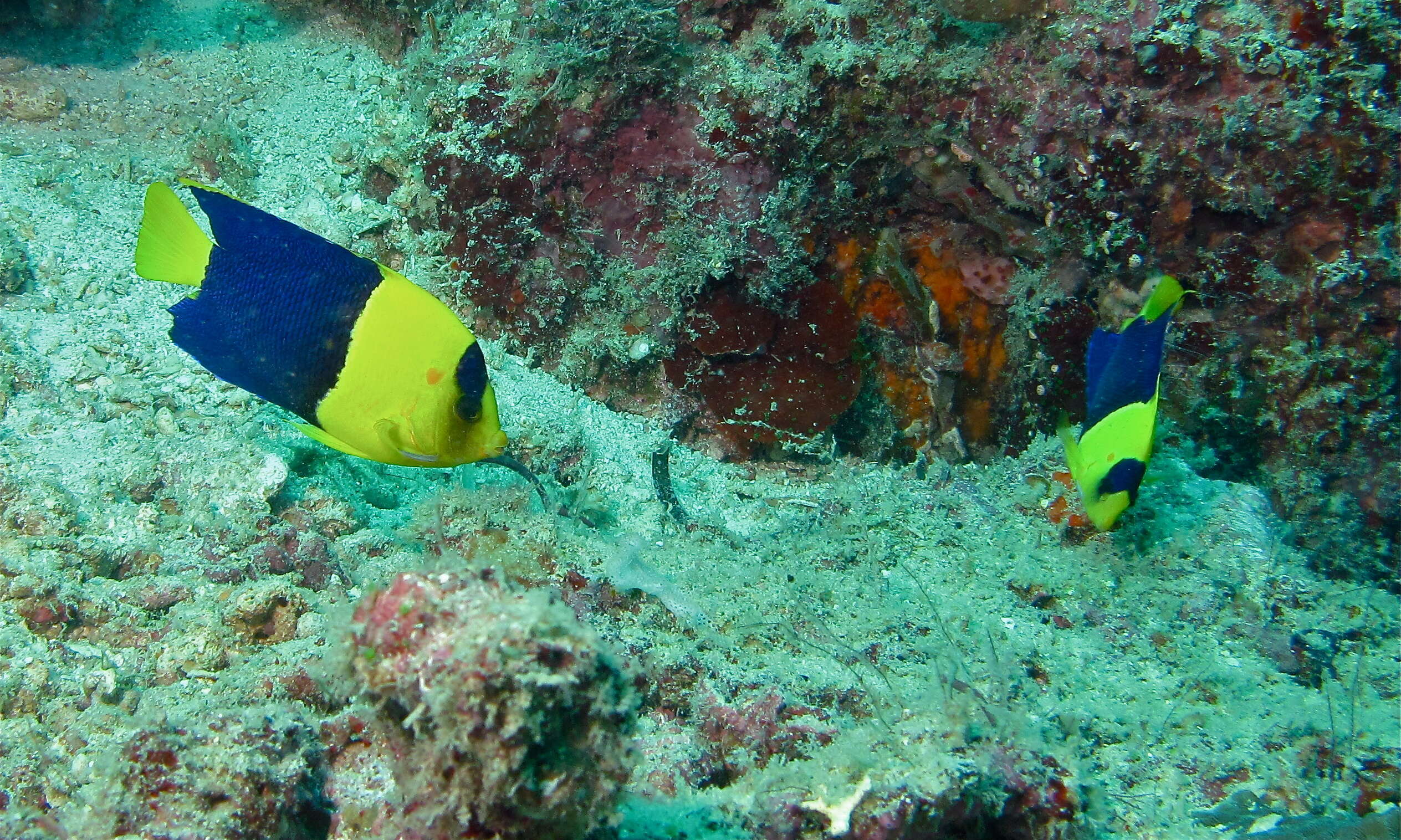
Centropyge bicolor (Bloch, 1787) (Bicolor angelfish)
Inhabits lagoon, channel, or protected seaward reef slopes, drop offs, coral and rubble areas . Usually in pairs or in small groups. Feeds on algae, small crustaceans and worms. Darts from one hiding place to the next. Commonly exported through the aquarium trade .
Amphiprion ocellaris Cuvier, 1830 (false clown anemonefish)
Redigobius bikolanus (Herre, 1927) (Speckled goby)
Adults inhabit creeks, rivers and brackish estuaries . Found in tidal streams . Sometimes seen upstream a short distance from the tidal zone. Feed on small fishes and invertebrates. Not seen in markets .
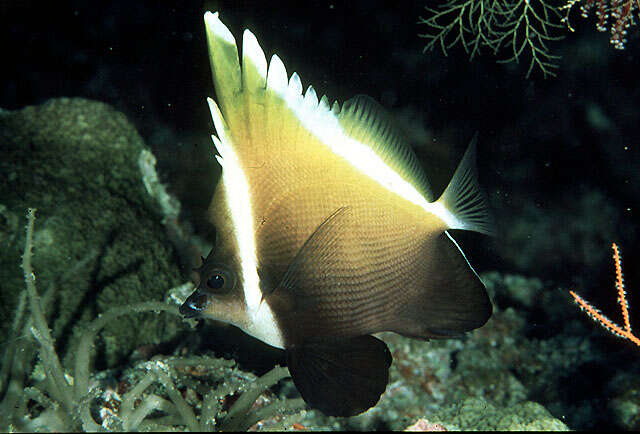
Heniochus varius (Cuvier, 1829) (Horned bannerfish)
Occur in deep lagoons and steep outer reef slopes, with mixed algae and coral growth . Solitary or in small groups. Feed on corals and other invertebrates . Oviparous . Form pairs during breeding . Maximum depth reported taken from Ref. 48636.
Triaenodon obesus (Rüppell, 1837) (Whitetip reef shark)
Despite its docile nature during the day this nocturnal shark can become aggressive when hunting at night, thrashing through coral reefs looking for potential prey. The whitetip reef shark usually hunts alone, but is non-t...
Read More
Read More
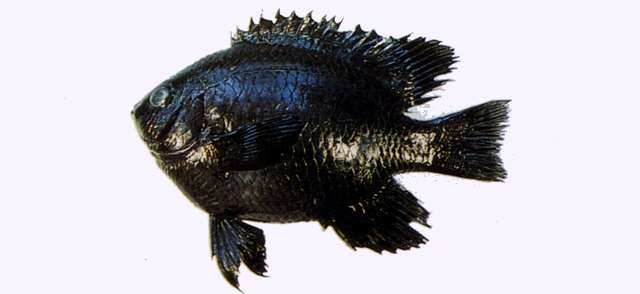
Neoglyphidodon melas (Cuvier, 1830) (black damselfish)
Found in coral-rich areas of lagoon and seaward reefs and usually associated with soft corals on which it feeds . Occur singly or in pairs . Juveniles are encountered in around staghorn Acropora corals . Adults often near Tridacna clams and may feed on their feces .
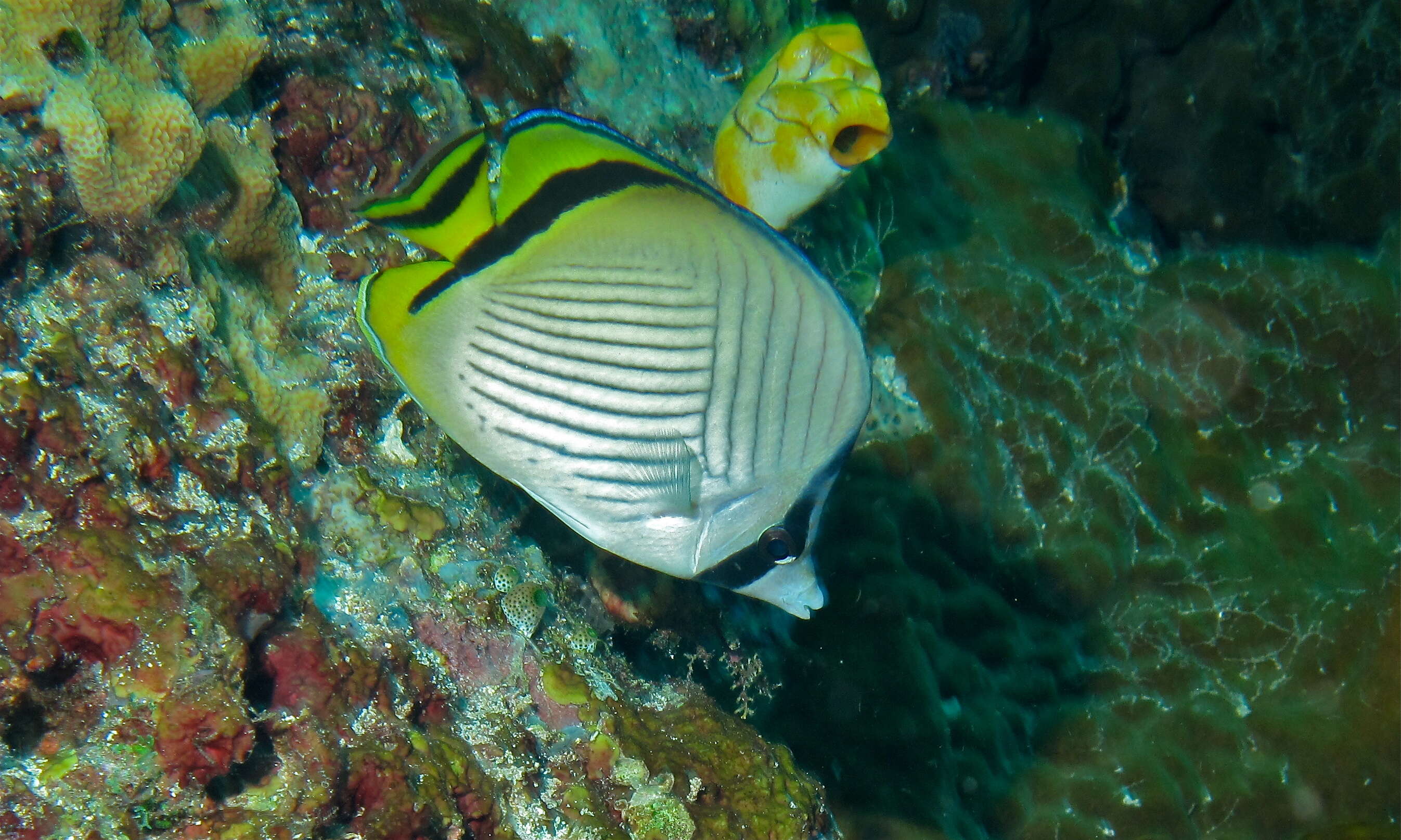
Chaetodon vagabundus Linnaeus, 1758 (Vagabond butterflyfish)
Found in reef flats, lagoon and seaward reefs and sometimes in turbid waters subject to freshwater runoff. Swim in pairs. Omnivorous, feed on algae, coral polyps, crustaceans and worms . Oviparous , monogamous . Stab...
Read More
Read More
Share on Social Networks
- Facebook:

personalize your shared text as well as its destination (wall, page...) or send as a private message to a friend
- Twitter: Tweet personalize your tweet
- Google Plus:
Direct link to this dive
- Long link:
- Short link:


 We are participating today in the startup contest Techcrunch Disrupt. Support Diveboard by voting for us!
























































































