


 Gustavo Beolchi


 Brazil
-
Nº1
 Date: 2012-08-25 - 10:22
-
 Max Depth: 8.3m Duration: 54mins
Dive Location

- Temp: Bottom 18°C
- Dive type : Recreational, Photo
- Visibility: Average Water: Salt
Specific gear used
- Weights: 10 kg
Recent Divers in Santos

Recent Pictures in Santos
Dive Shop & Buddies
 Dive with Theo Costa from Aqualander Mergulho
 Dive buddies:
Jupisa

Link to this spot:
- Spot:
- Country:
- Area:
- Body of water:
Dive Profile
- 1. Air
- 11L Aluminium 205 → 60 bar
- Average depth: 5.4m
- SAC: 1.74 bar/min
- RMV: 19.14 L/min
Data provided by EOL.org





Species Identified
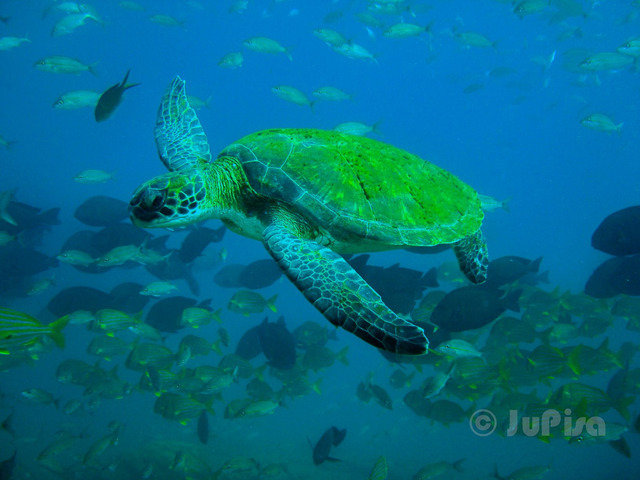
Chelonia mydas Linnaeus 1758 (Green Turtle)
Green turtles are long-lived and may take up to 59 years to reach sexual maturity Undertaking tremendous feats of navigation, adults return to the same beach to breed each season, part of the population in Brazil astonish...
Read More
Read More
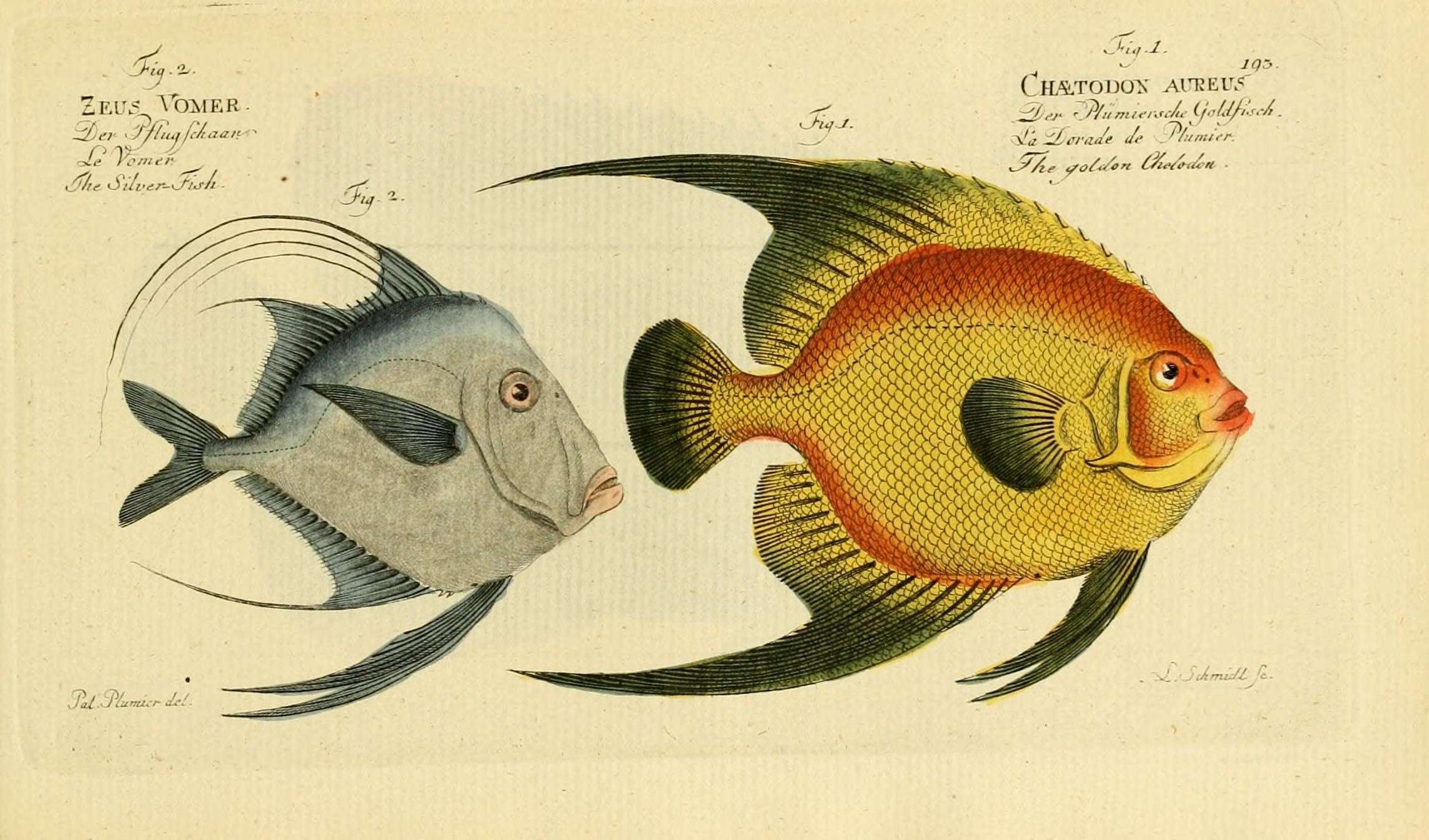
Pomacanthus paru (Bloch, 1787) (French angelfish)
Common in shallow reefs. Usually in pairs, often near sea fans . Feed on sponges, algae, bryozoans, zoantharians, gorgonians and tunicates . Oviparous , monogamous . Spawning pairs are strongly territorial, with usuall...
Read More
Read More
Sparisoma axillare (Steindachner, 1878) (Gray parrotfish)
Occurs in oceanic islands, dwelling in coral, algal and rocky reefs and on algal beds .
Parablennius pilicornis (Cuvier, 1829) (Ringneck blenny)
Occurs in rocky shores, often at steep walls of surf-exposed sites . Oviparous . Eggs are demersal and adhesive .
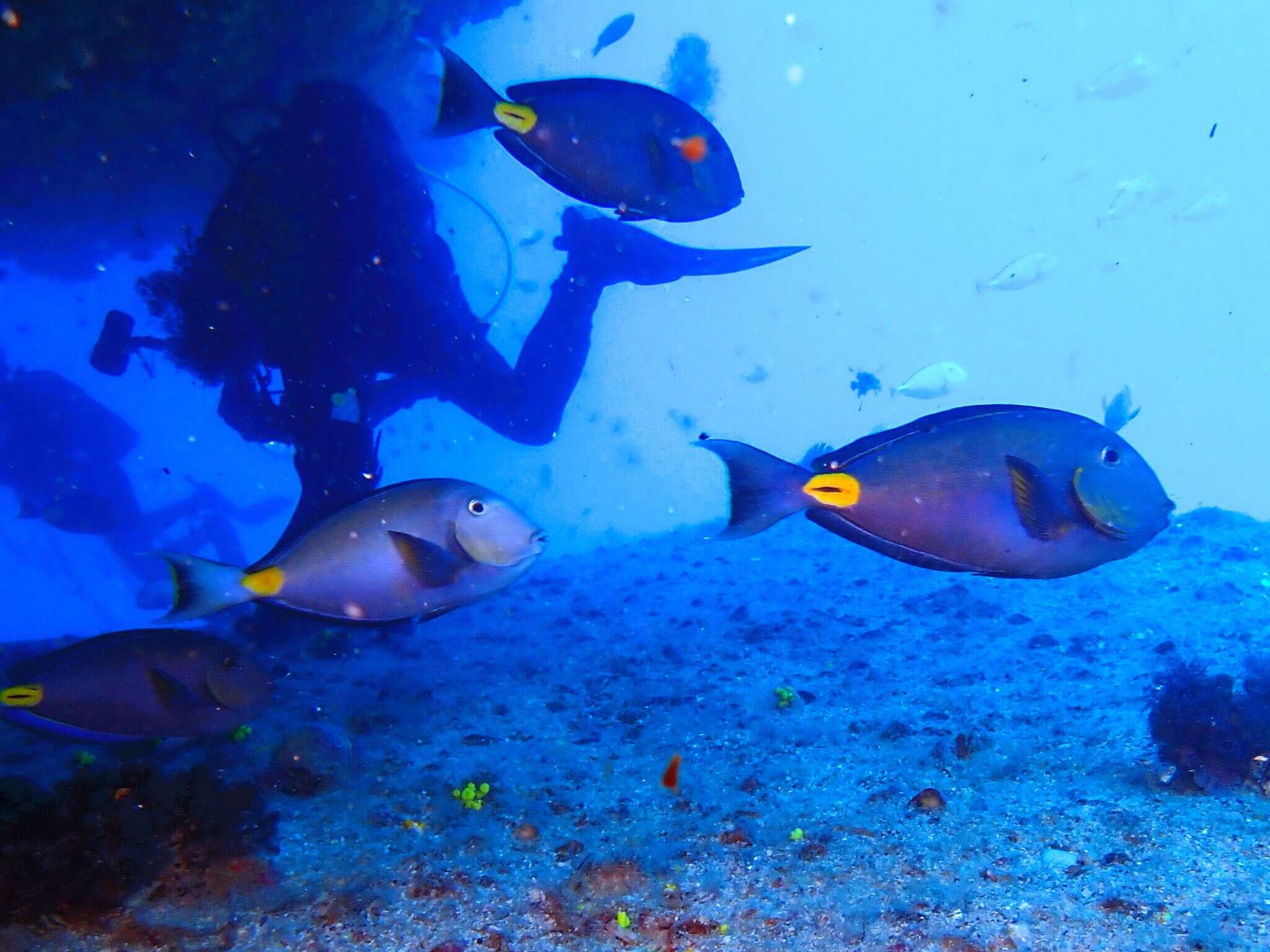
Acanthurus monroviae Steindachner, 1876 (Monrovia doctorfish)
Coastal species found in the mouth of rivers and lagoons . Found on rocky and coral bottoms . Feeds on zooplankton, phytoplankton and detritus . Minimum depth reported from Ref. 27115.
Halichoeres brasiliensis (Bloch, 1791) (Brazilian wrasse)
Inhabits organic and rocky reefs . Large individuals at depths of 10 m or more; juveniles in areas as shallow as tide pools . Feeds on benthic invertebrates .
Bodianus pulchellus (Poey, 1860) (Hogfish)
Inhabits coral and rocky reefs, rarely at depths greater than 24 m . Feeds on crabs and small shellfish . Juveniles pick parasites from other fishes . May hybridize with Spanish hogfish, B. rufus . Marketed fresh .
Epinephelus marginatus (Lowe, 1834) (Duskey grouper)
The dusky grouper is a protogynous hermaphrodite, meaning that it matures as a female but later develops into a male as it grows larger and older . Sexual maturity is attained fairly late, when females are around five year...
Read More
Read More
Holocentrus adscensionis (Osbeck, 1765) (Squirrelfish)
Occurs in shallow coral reefs, as well as deeper offshore waters . A nocturnal species, hiding in deep crevices or under coral ledges during the day; at night it usually moves over sand and grass beds, taking mainly crabs...
Read More
Read More
Haemulon aurolineatum Cuvier, 1830 (Tomtate grunt)
Inhabits seagrass beds, sand flats, and patch reefs . Forms schools . Feeds on small crustaceans, mollusks, other benthic invertebrates, plankton, and algae . Marketed fresh and salted .
Anisotremus taeniatus Gill, 1861 (Panama porkfish)
Abudefduf saxatilis (Linnaeus, 1758) (Mamo)
Pseudocaranx dentex (Bloch and Schneider, 1801) (underjaw kingfish)
Occur in bays and coastal waters, including estuaries . Juveniles usually inhabit estuaries, bays and shallow continental shelf waters, while adults form schools near the sea bed on the continental shelf . Schools are fo...
Read More
Read More
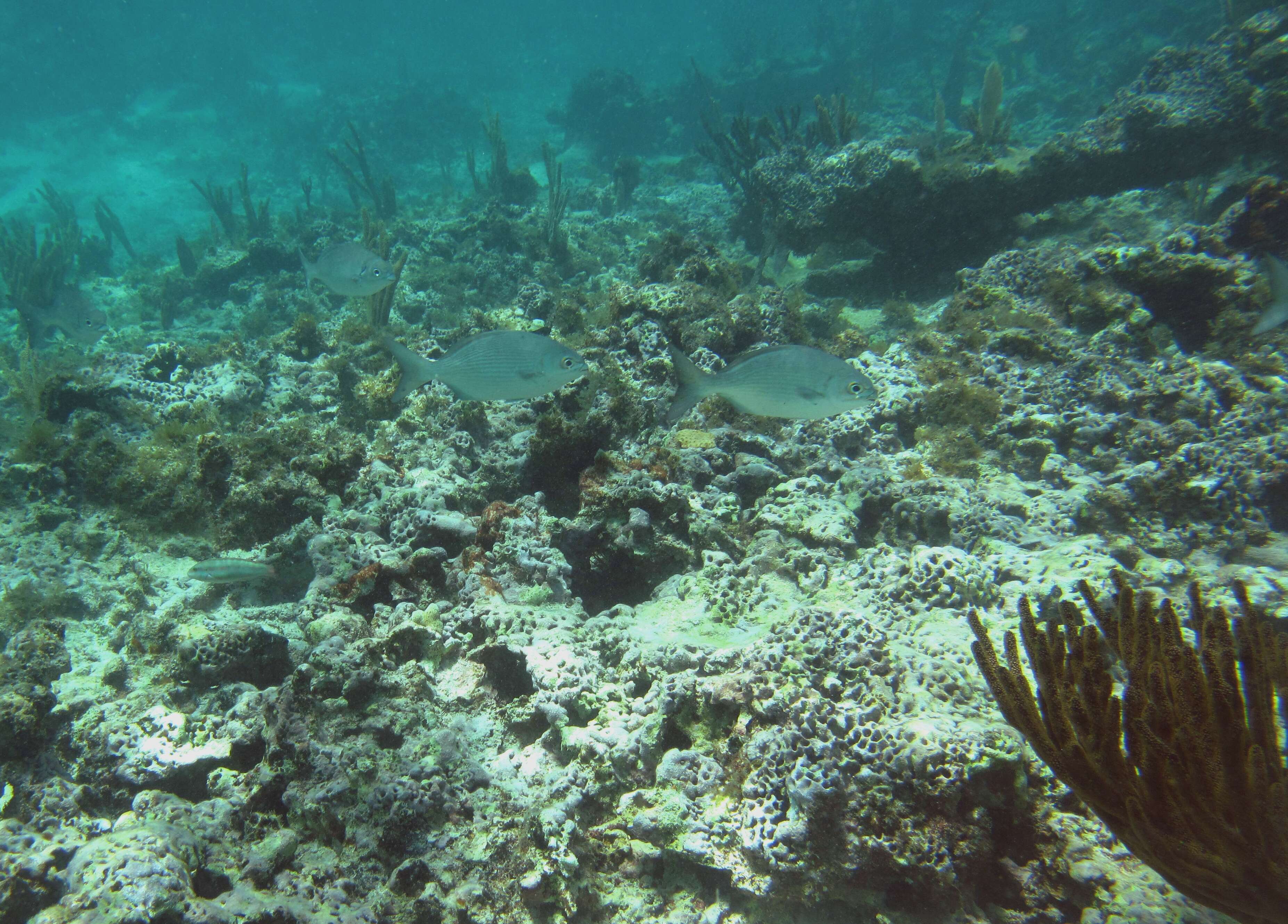
Kyphosus sectator (Linnaeus, 1758) (Bermuda chub)
Share on Social Networks
- Facebook:

personalize your shared text as well as its destination (wall, page...) or send as a private message to a friend
- Twitter: Tweet personalize your tweet
- Google Plus:
Direct link to this dive
- Long link:
- Short link:


 We are participating today in the startup contest Techcrunch Disrupt. Support Diveboard by voting for us!
























































































My first dive after the accident. Donning and removing my old two-piece wetsuit were a challenge but I managed (with help). The lost elasticity made things harder, not to mention the rocking of the boat (high waves). During the dive the pressure of the sleeve against may elbow´s screws made things unconfortable. On the plus side I was able to equip on the water and to climb up the boat fully equipped without problems, except for the fact that I´m unable to reach my left fin with my left arm, at least for now. All of this made me (finally) decide to buy a semi-dry suit, hope it makes things easier.
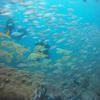
The dive was very pleasent. Aside the strong currents comming from the ocean and the high waves, an out of season thermocline at 7 m forced most fishes to shalower waters, making the surface waters teem with them. Of not we found rays, a turtle and a lobster. No morey eels heads, only a tail. The visibility was average for the site, but was able to take some good pictures.