


 Nikolas Margaritis

 Greece
-
Nº22
 Date: 2014-09-06 - 15:10
-
 Max Depth: 29.9m Duration: 67mins
Pictures

No pictures for this dive
- Temp: Surf 28°C Bottom 25°C
- Dive type : Photo, Research, BIOWATCH PROJECT
- Visibility: Good Water: Salt
Specific gear used
- Wet suit: Waterproof Diving AB - W2 7MM (BACKZIP)
- Hood: SANTI - 9.0mm Basic Standard Neoprene Hood
- Boots: Waterproof Diving AB - Tough 6.5mm semi-dry boot
- Mask: TUSA - Visio Pro
- Mask: SANTI - MASK STRAP
- Regulator: Tabata / Tusa - RS-860
- Regulator: Tusa - RS-460II
- Regulator: Tusa - SS-60
- BCD: Hollis - SMS100
- Computer: Suunto - Vyper
- Compass: Suunto - Suunto SK-7 Wrist Dive Compass NH
- Light: Tusa - Led TUL-310
- Other: TECLINE - SMB
- Other: Innerspace Explorers - ISE Wetnotes
- Camera: GoPro - Hero3 Black
- Other: Free Dive - Taurus Bag
- Other: SANTI - E.Lite Bag
- Weights: 9 kg
Dive reviews
| Overall review | ||
| Dive difficulty | ||
| Marine life quality |
Recent Divers in Attica
Recent Pictures in Attica
Dive Shop & Buddies
 Dive with Sea Breaze Technical Diving Facility
 Sea Breaze Technical Diving Facility confirmed the dive with parameters: 29.9m / 67mins
 Dive buddies:
G,
Anastasia-Marina Tentoma
Dive buddies:
G,
Anastasia-Marina Tentoma

Link to this spot:
- Spot:
- Country:
- Area:
- Body of water:
Dive Profile
- 1. Nitrox 32
- 11L Aluminium 220 → 90 bar
- Average depth: m
- 2. Nitrox 32
- 11L Aluminium 220 → 90 bar
- Average depth: 15.3m
Data provided by EOL.org

Species Identified
Apogon imberbis (Linnaeus, 1758) (Cardinal fish)
Occasionally forms schools; sometimes solitary. Inhabits muddy or rocky bottoms and caves. Feeds on small invertebrates and fishes . Oral brooding by males .
Atherina boyeri Risso, 1810 (Big-scale sand smelt)
A very euryhaline species, which is frequently found in brackish waters and more sporadically in freshwater , preferring still or slow flowing waters . Adults occur in great schools. Carnivorous, feeds on small crustaceans, worms, mollusks and fish larvae .
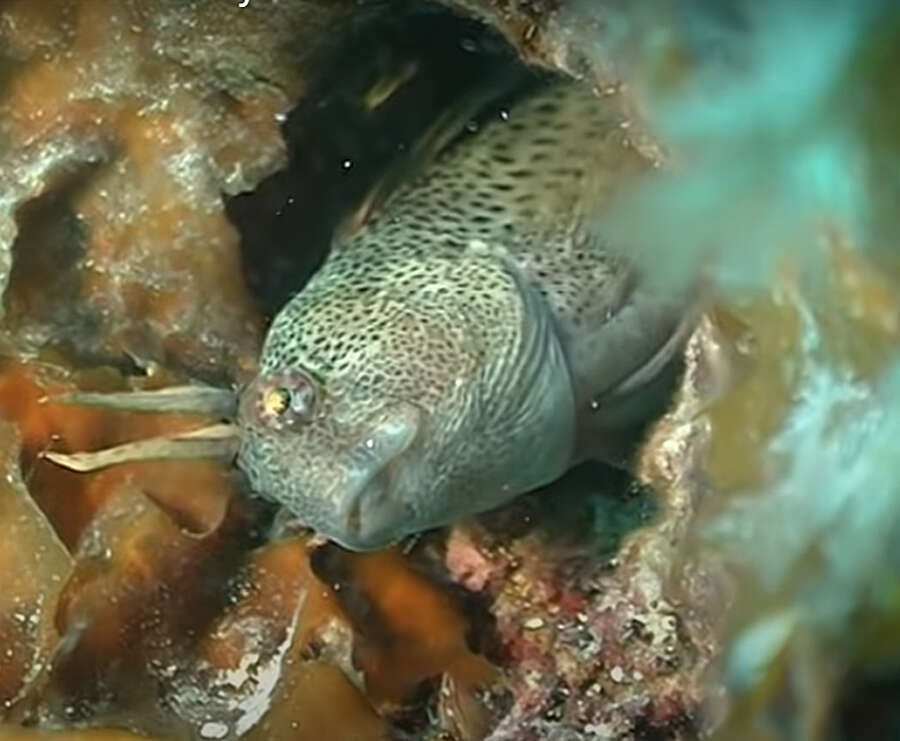
Parablennius tentacularis (Brünnich, 1768) (Tentacled blenny)
Adults occur over sandy bottoms with boulders and light vegetation. They hide in crevices where the nests are being guarded by the male . Oviparous . Eggs are demersal and adhesive .
Thalassoma pavo (Linnaeus, 1758) (Ornate wrasse)
Inhabits coastal waters near rocks and eel-grass beds. Usually solitary, sometimes in small groups. Feeds on small mollusks and crustaceans . Protogynous hermaphrodite, with distinct sexual dichromatism . Eggs are pelagic .
Coris julis (Linnaeus, 1758) (Mediterranean rainbow wrasse)
Occurs in the littoral zone, near rocks and eelgrass beds. Usually found between 1-60 m, but old males stay in deeper water. Found in deeper waters during winter. Sometimes solitary, among rocks, often with numerous spe...
Read More
Read More
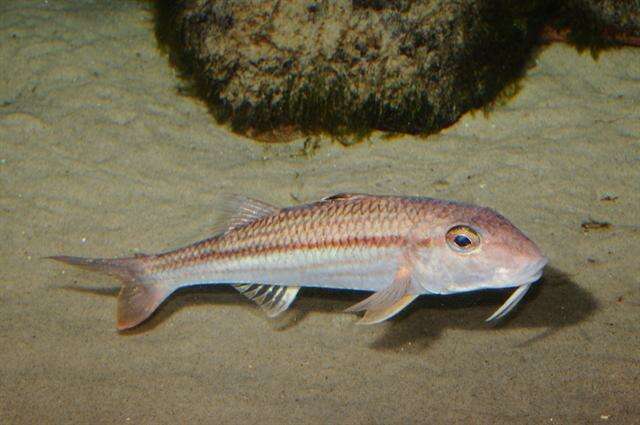
Mullus surmuletus Linnaeus, 1758 (Striped red mullet)
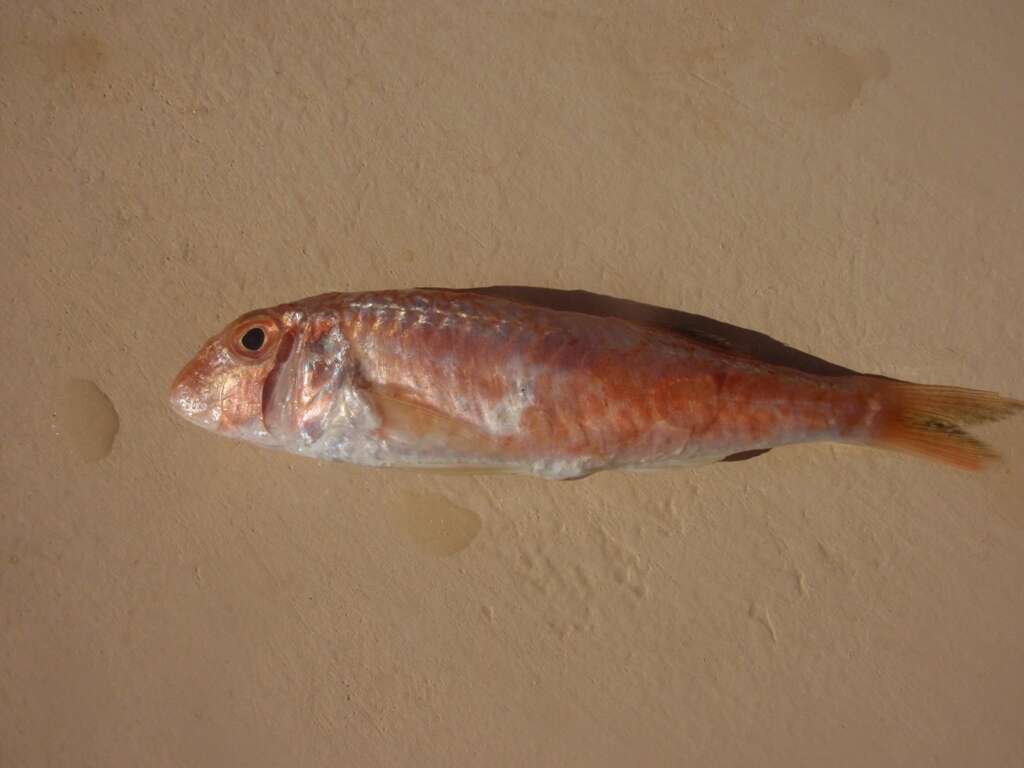
Mullus barbatus Linnaeus, 1758 (Mullet)
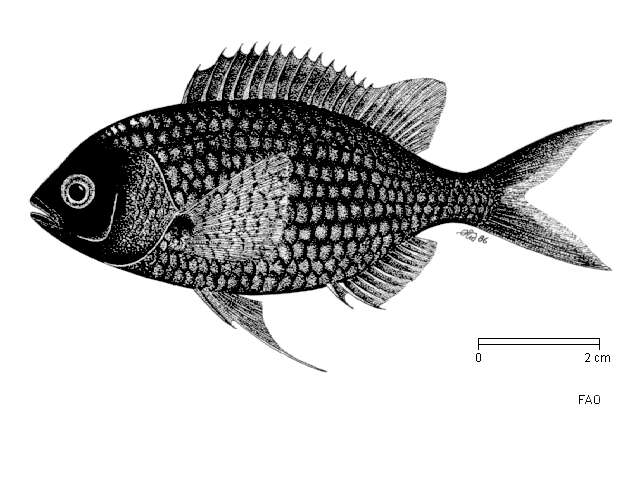
Chromis chromis (Linnaeus, 1758) (Mediterranean chromis)
Form small shoals in midwater above or near rocky reefs or above seagrass meadows (Posidonia. Feed on small planktonic or benthic animals . Reproduce in summer . Eggs characterised by adhesive filaments are nested on rocky or sandy bottoms . Males guard the eggs .
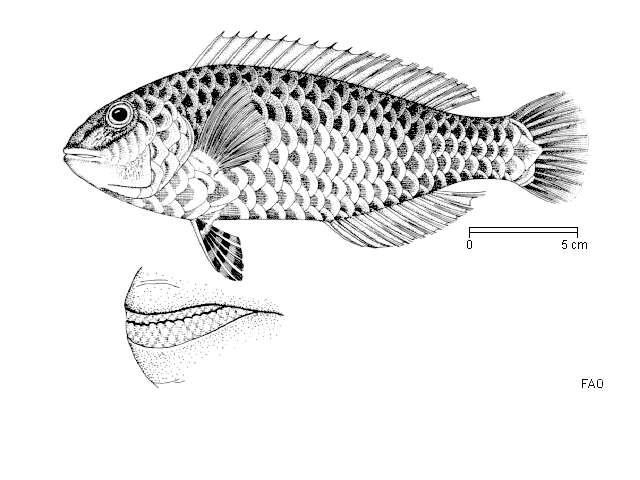
Sparisoma cretense (Linnaeus, 1758) (parrotfish)
In shallow water along rocky shores. Feed on algae and small invertebrates . Herbivore species with specialized pharyngeal bones and muscles . Breeding occurs from July to September, with juveniles recruiting in late summer in Portugal .
Serranus hepatus (Linnaeus, 1758) (Brown comber)
Found over seagrass, sand, mud and rocks . Carnivorous. Adapts well in an aquarium . A synchronous hermaphrodite .
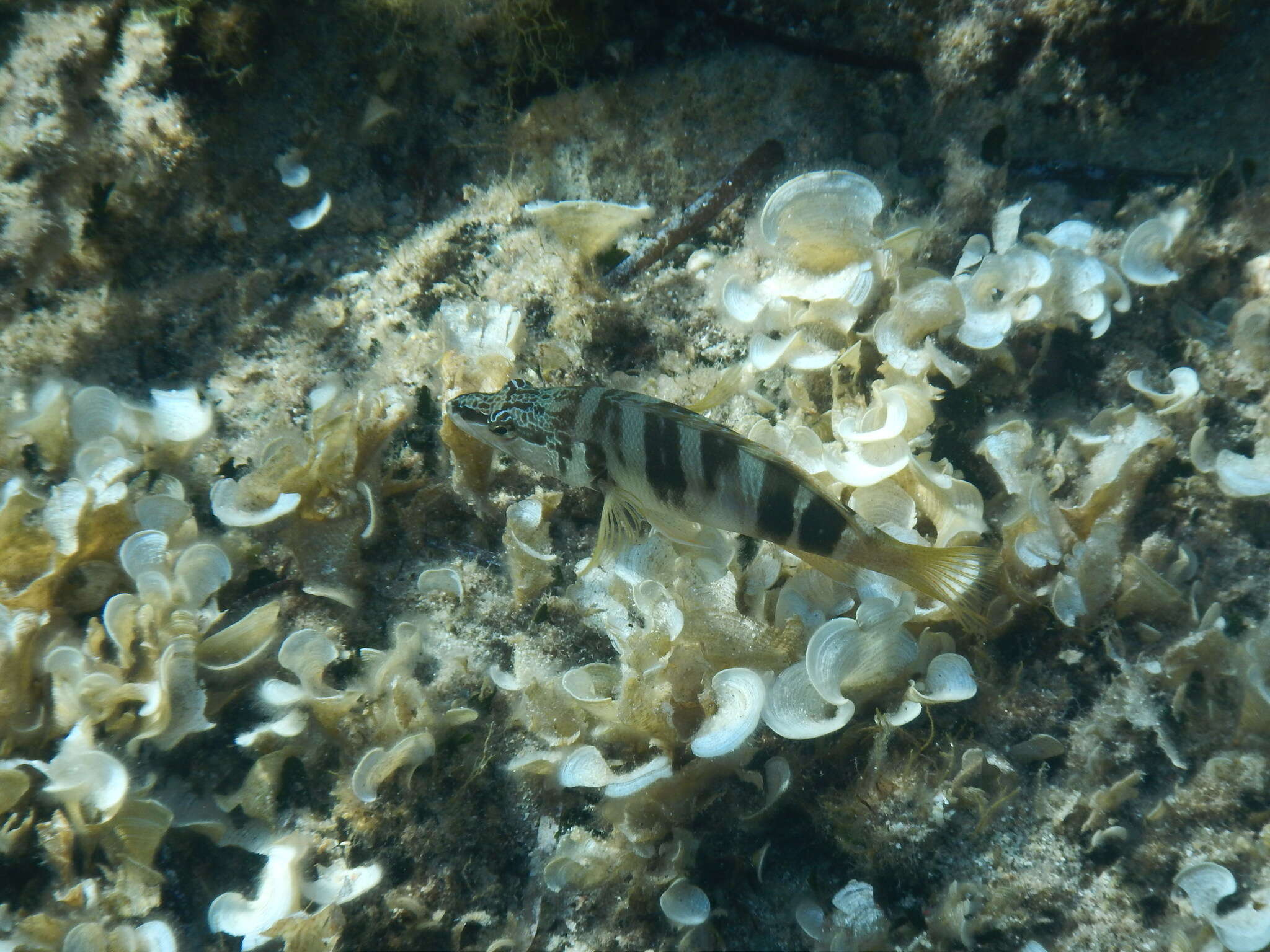
Serranus scriba (Linnaeus, 1758) (Painted comber)
Found on rocky bottom and on Posidonia beds. Feed on fishes and crustaceans.
Epinephelus marginatus (Lowe, 1834) (Duskey grouper)
The dusky grouper is a protogynous hermaphrodite, meaning that it matures as a female but later develops into a male as it grows larger and older . Sexual maturity is attained fairly late, when females are around five year...
Read More
Read More
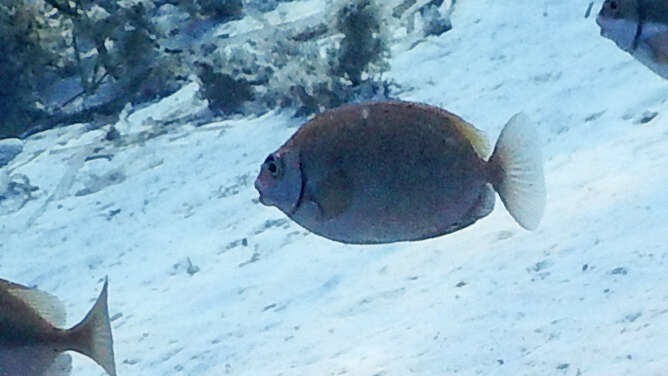
Siganus luridus (Rüppell, 1829) (Dusky spinefoot)
Found in small schools in very shallow water close to the bottom. Prefer hard bottoms of compacted sand with rock or coral debris. Solitary adults and groups of 3 or 4 adults have also been observed. Feed on a wide rang...
Read More
Read More
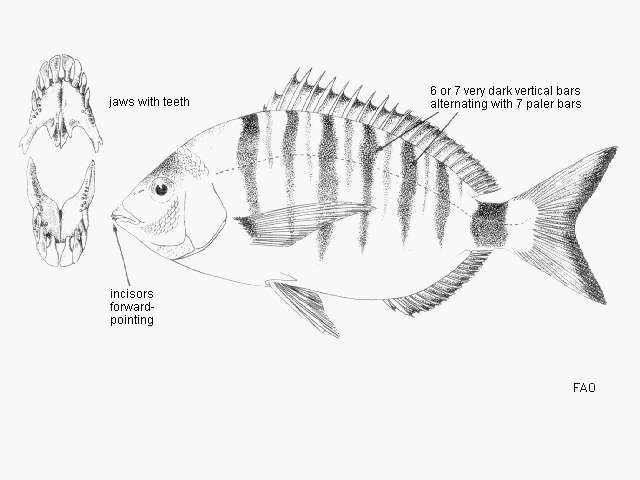
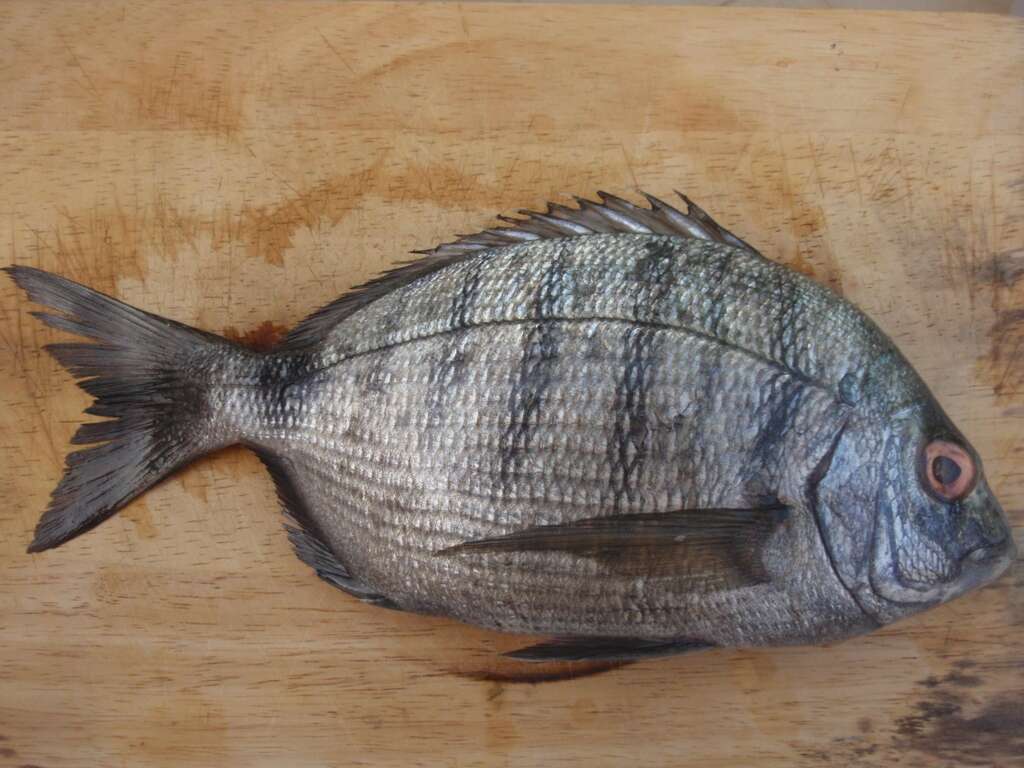
Diplodus puntazzo (Cetti, 1777) (Sharpsnout seabream)
Benthopelagic marine species. Gregarious species living in coastal waters on rocky or sandy bottoms, up to 1 50 m . Younger individuals can also be found in brackish waters and may live in littoral pools , the adults often...
Read More
Read More
Diplodus annularis (Linnaeus, 1758) (Annular seabream)
Inhabit chiefly Zostera seagrass beds but also found on Posidonia beds and sandy bottoms, rarely on rocky bottoms. Carnivorous, feed on worms, crustaceans, mollusks, echinoderms and hydrozoans. The sexes are separated, a...
Read More
Read More
Diplodus vulgaris (Geoffroy Saint-Hilaire, 1817) (Common two-banded seabream)
A euryhaline species inhabiting rocky and sometimes sandy bottoms to depths of 160 m, but more commonly in less than 50 m. The young are sometimes found in seagrass beds. Adults feed on crustaceans, worms and mollusks . Important food fish.
Diplodus sargus sargus (Linnaeus, 1758) (White seabream)
Inhabits coastal rocky reef areas and Posidonia oceanica beds. Like other sparids, it is very active and frequents the surf zone, primarily at dawn . Feeds on shellfish and other benthic invertebrates which it picks from the sediment .
Lithognathus mormyrus (Linnaeus, 1758) (Striped seabream)
Found on the shelf, over sandy and muddy bottoms as well as seagrass-beds and estuaries. Gregarious, sometimes forming sizeable schools. Feeds on worms, mollusks and small crustaceans. Protandric hermaphrodite . Flesh excellent ; sold fresh and dried.
Share on Social Networks
- Facebook:

personalize your shared text as well as its destination (wall, page...) or send as a private message to a friend
- Twitter: Tweet personalize your tweet
- Google Plus:
Direct link to this dive
- Long link:
- Short link:


 We are participating today in the startup contest Techcrunch Disrupt. Support Diveboard by voting for us!
























































































BIOWATCH PROJECT
Sidemount configuration