



 Iliyana Ramjaun


 Malaysia

-
Nº19
 Date: 2012-09-18 - 18:30
-
 Max Depth: 12m Duration: 60mins
Pictures

No pictures for this dive
- Dive type : Recreational, Night dive, Reef
- Visibility: Average Water: Salt
Specific gear used
- Weights: 4 kg
Recent Divers in Mabul island
Recent Pictures in Mabul island

Dive Shop & Buddies
 Dive with Ramil from Sipadan Water Village Resort

Link to this spot:
- Spot:
- Country:
- Area:
- Body of water:
Dive Profile
Data provided by EOL.org




Species Identified
Chelonia mydas Linnaeus 1758 (Green Turtle)
Green turtles are long-lived and may take up to 59 years to reach sexual maturity Undertaking tremendous feats of navigation, adults return to the same beach to breed each season, part of the population in Brazil astonish...
Read More
Read More
Pseudechidna brummeri (Bleeker, 1859) (White ribbon eel)
Inhabits reef flats and shallow lagoons, usually buried in the sand or rubble . Occasionally seen swimming between its burrows in shallow protected areas . A gonochoristic species .
Gymnothorax prasinus (Richardson, 1848) (Yellow moray)
Stays in holes and crevices. Feeds mainly on crabs and fish .
Thysanophrys chiltonae Schultz, 1966 (Longsnout flathead)
Inhabits sand areas adjacent to coral reefs . Seldom noticed for it buries itself in the sand . Usually in small groups . Feeds on crustaceans, crabs and prawns, also on fishes.
Cymbacephalus beauforti (Knapp, 1973) (Crocodile fish)
Lives on sand or rubble substrates of sheltered or semi-exposed reefs to a depth of at least 8 m . Well camouflaged on reefs .
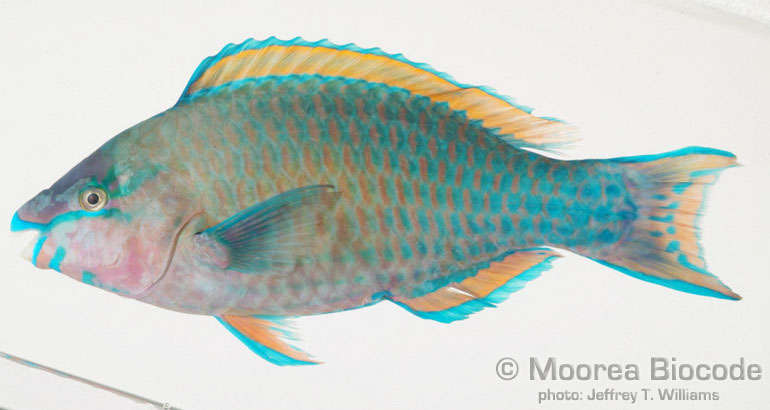
Scarus psittacus Forsskål, 1775 (Common parrotfish)
Inhabit reef flats and lagoon and seaward reefs to at least 25 m depth . Found over corals . Benthopelagic . Initial-phase fish stage usually form small feeding schools . Graze on benthic algae . Secrete a mucus cocoon .
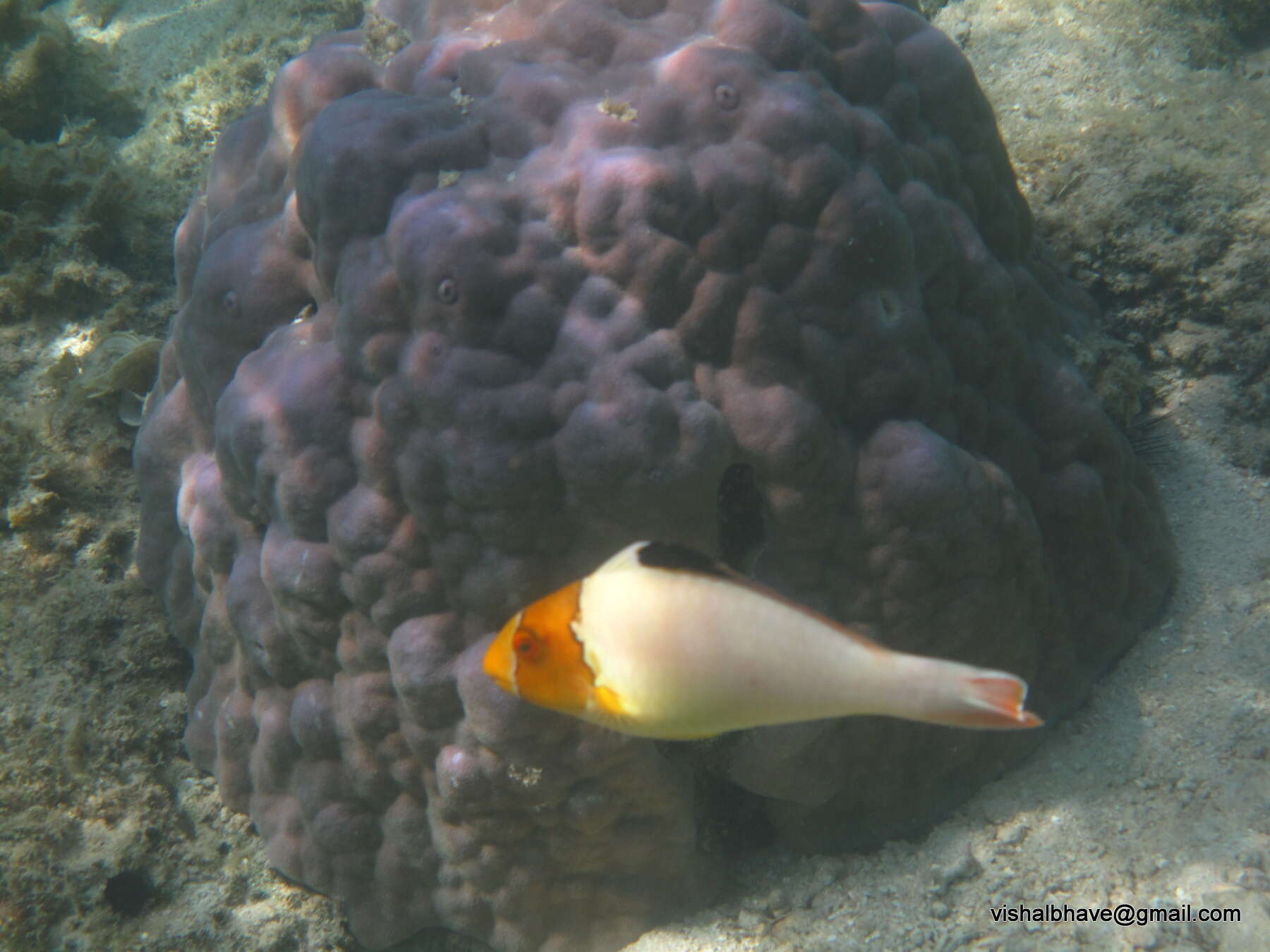
Cetoscarus bicolor (Rüppell, 1829) (Bicolour parrotfish)
Occurs in clear lagoon and seaward reefs . Juveniles usually solitary; adults form harems ; males are territorial. Goes to several changes during growth and very large females change sex to the brightly colored male. Sm...
Read More
Read More
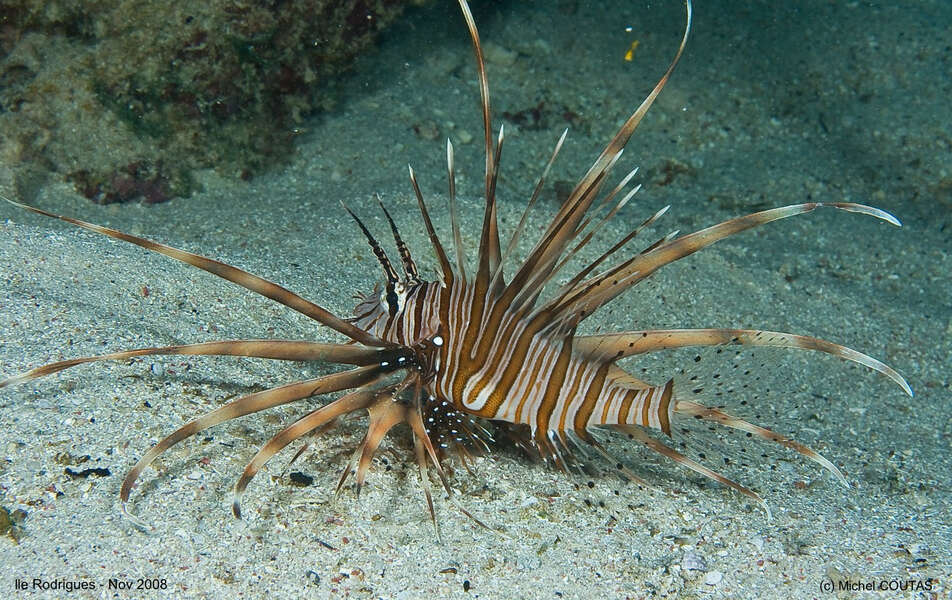
Pterois volitans (Linnaeus, 1758) (Red lionfish)
Metasepia pfefferi (Hoyle, 1885) (Cuttlefish)
Sepiella ocellata Pfeffer, 1884 (Cuttlefish)
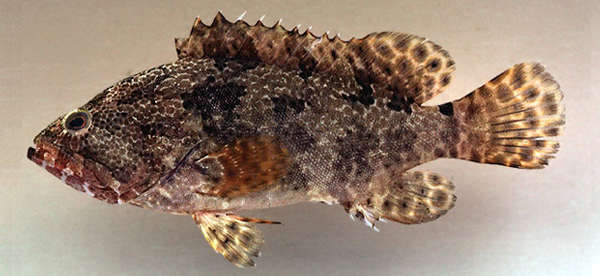
Cephalopholis argus Bloch and Schneider, 1801 (Grouper)
A generally common species found in a variety of coral habitats from tide pools to depths of at least 40 m; prefers the 1 to 10 m reef zone. Juvenile prefers shallow, protected coral thickets . Benthic and benthopelagi...
Read More
Read More
Epinephelus polyphekadion (Bleeker, 1849) (Camouflage grouper)
Usually found in coral-rich areas of lagoon and outer reefs; in caves and large crevices to swim through . Most abundant around islands, particularly atolls. Usually in small schools. Feeds mainly on crustaceans and fi...
Read More
Read More
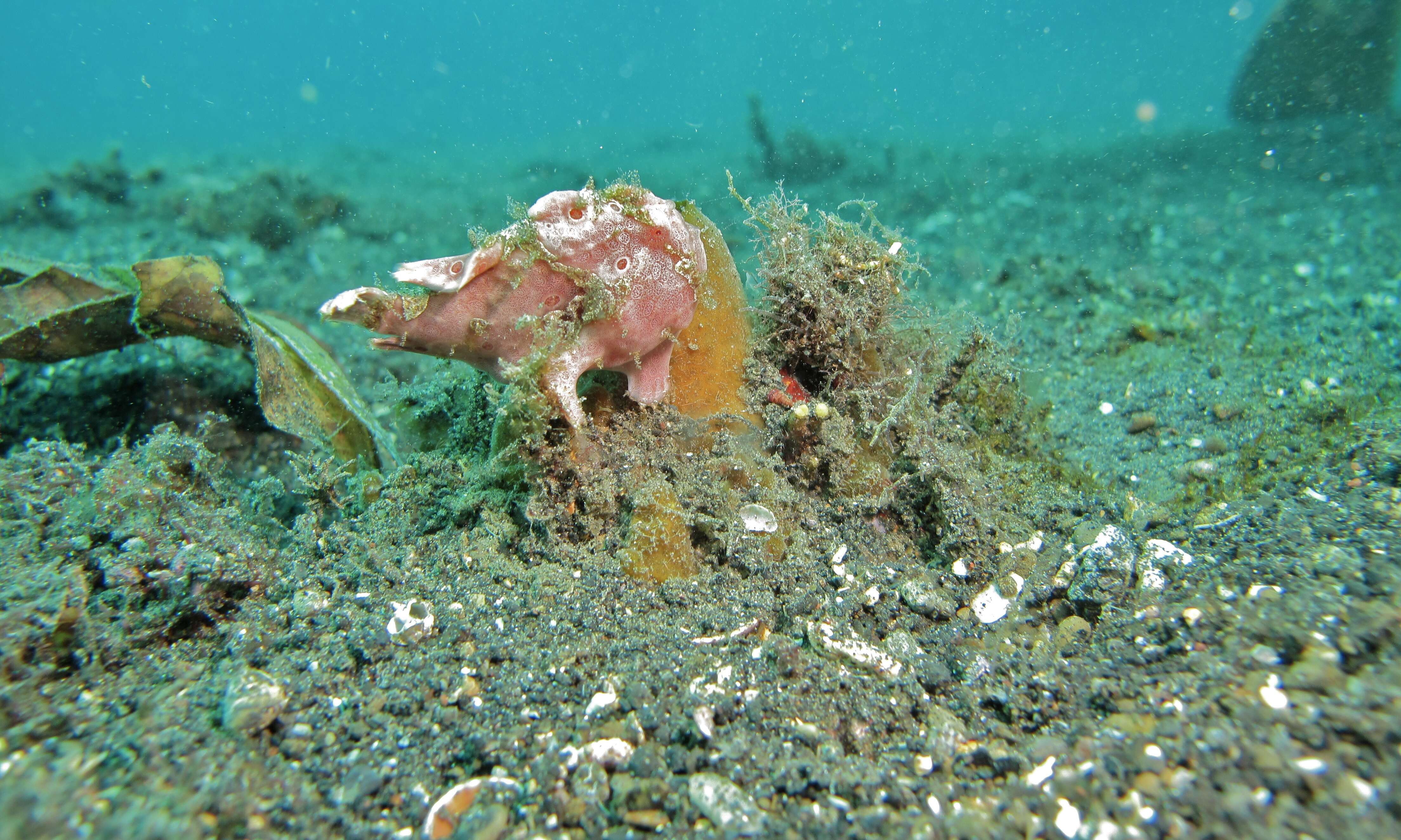
Antennarius pictus (Shaw, 1794) (Painted angler)
Inhabit shallow sheltered reefs . Adults usually with sponges; juveniles openly on sand or reef, mimicking small sponges or nudibranchs . Benthic . Oviparous. Eggs are bound in ribbon-like sheath or mass of gelatinous mucus called 'egg raft' or 'veil' .
Bothus pantherinus (Rüppell, 1830) (Flounder)
Inhabits sandy or silty sand, and muddy bottoms of inner reef flats and seaward reefs; juveniles frequently found in tide pools . Benthic . Feeds on benthic animals . Utilized as a food fish and processed into fish meal .
Share on Social Networks
- Facebook:

personalize your shared text as well as its destination (wall, page...) or send as a private message to a friend
- Twitter: Tweet personalize your tweet
- Google Plus:
Direct link to this dive
- Long link:
- Short link:


 We are participating today in the startup contest Techcrunch Disrupt. Support Diveboard by voting for us!
























































































Air:
205 bar
80 bar
Mission:
Check out night dive in Paradise 2 SWV.
Buddies:
Shehzaad Ramjaun
Spotted:
Sleeping - giant & juvenile turtles, parrotfish, giant black painted frogfish, camouflaged grouper.
Longspine Lionfish
White Ribbon Eel - running from lionfish and burrowing itself in the sand (tail down went in like a ribbon)
Flamboyant Cuttlefish (Metasepia pfefferi)
Leopard/Panther Flounder (Bothus pantherinus)
Big fat purple nudibranch (not sure of its genus) feeding on sponge
Dark Green Nudibranch feeding on sponge (Elysia expansa)