


 Iliyana Ramjaun


 Malaysia

-
Nº12
 Date: 2012-09-17 - 06:11
-
 Max Depth: 25.9m Duration: 51mins
Pictures

No pictures for this dive
- Dive type : Recreational, Drift
- Visibility: Average Water: Salt
Specific gear used
- Weights: 5 kg
Recent Divers in Sipadan Island
Recent Pictures in Sipadan Island
Dive Shop & Buddies
 Dive with Allan from Sipadan Water Village Resort

Link to this spot:
- Spot:
- Country:
- Area:
- Body of water:
Dive Profile
Data provided by EOL.org





Species Identified
Triaenodon obesus (Rüppell, 1837) (Whitetip reef shark)
Despite its docile nature during the day this nocturnal shark can become aggressive when hunting at night, thrashing through coral reefs looking for potential prey. The whitetip reef shark usually hunts alone, but is non-t...
Read More
Read More
Carcharhinus sorrah (Müller and Henle, 1839) (Black-tip shark)
Found on the continental and insular shelves, primarily near reefs . Sometimes in offshore waters . Live near the seabed during the day and near the surface at night . Shark movements often short but may be more than 1...
Read More
Read More
Carcharhinus limbatus (Müller and Henle, 1839) (Black-tip shark)
The fast-swimming blacktip shark is an active fish that can be seen leaping out of the water and spinning before dropping back into the sea . This agile spinning behaviour is thought to be used while feeding on small scho...
Read More
Read More
Sphyraena barracuda (Edwards, 1771) (Alho)
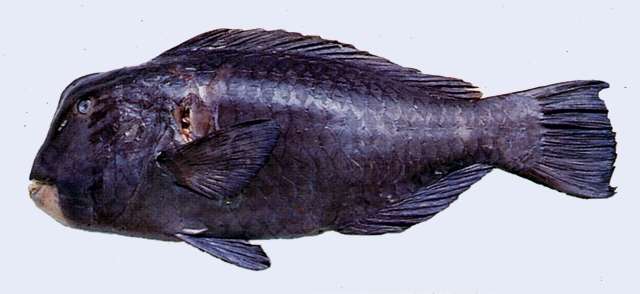
Bolbometopon muricatum (Valenciennes, 1840) (Green humphead parrotfish)
The gregarious humphead parrotfish is always found in small shoals, sometimes consisting of up to 75 individuals . It feeds on a diet of live corals and algae that grow on the ocean bottom, and uses its large bulbous head...
Read More
Read More
Chelonia mydas Linnaeus 1758 (Green Turtle)
Green turtles are long-lived and may take up to 59 years to reach sexual maturity Undertaking tremendous feats of navigation, adults return to the same beach to breed each season, part of the population in Brazil astonish...
Read More
Read More
Eretmochelys imbricata (LINNAEUS) 1766 (Hawksbill Turtle)
Hawksbills may take decades to mature and it could be between 20 to 40 years before they are ready to breed . Upon reaching sexual maturity, a female will typically lay up to five clutches of around 100 to 140 eggs in one ...
Read More
Read More
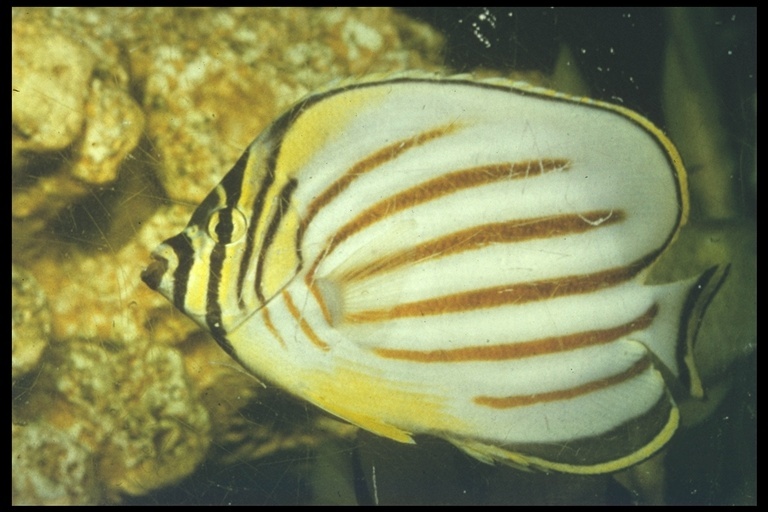
Chaetodon ornatissimus Cuvier, 1831 (Ornate butterflyfish)
Occur in clear waters and coral-rich areas of lagoon and seaward reefs. However, only common in seaward reefs . Benthopelagic . Juveniles are solitary, living among branching corals, while adults are almost always in pa...
Read More
Read More
Chaetodon rafflesii [Bennett], 1830 (Latticed coralfish)
An uncommon species found in areas of rich coral growth of lagoon and protected reef flats and seaward reefs . Often in pairs . Feed on sea anemones, polychaetes, and octocorallian and scleractinian coral polyps. Ovipar...
Read More
Read More
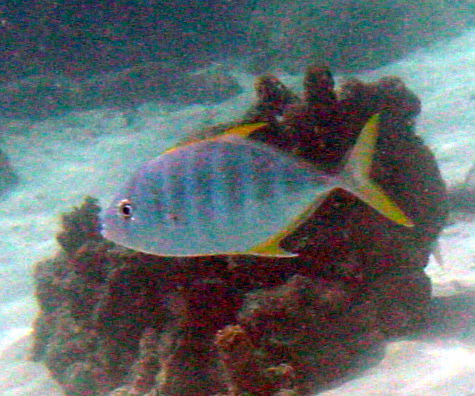
Gnathanodon speciosus (Forsskål, 1775) (Golden trevally)
Occur in deep lagoon and seaward reefs where they feed by rooting for crustaceans and other invertebrates in the sand. Also feed on small fishes. Small juveniles live among the tentacles of jellyfish . Form schools. No...
Read More
Read More
Carangoides ferdau (Forsskål, 1775) (Blue trevally)
Found in coastal waters adjacent to sandy beaches; also found to depths of 60 m, often near reefs . Pelagic . Singly or in small groups . Feeds mainly on crustaceans, mollusks and small fish that are abundant in the lagoons. Excellent food fish , the flesh is rarely poisonous.
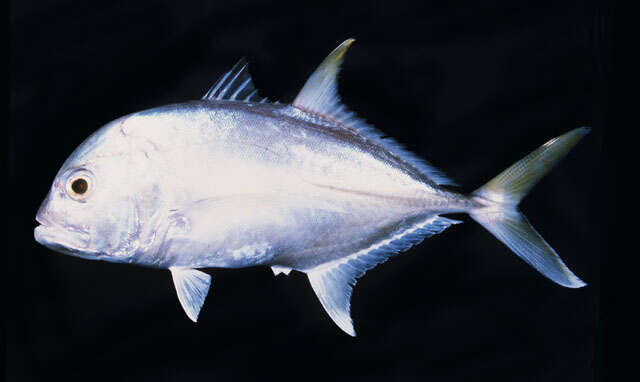
Caranx ignobilis (Forsskål, 1775) (Giant trevally)
Pelagic over sand and rock . Adults occur singly and inhabit clear lagoon and seaward reefs . Juveniles found in estuaries. Feed on crustaceans and fishes at night . Large individuals may be ciguatoxic. The largest t...
Read More
Read More
Caranx lugubris Poey, 1860 (Black jack fish)
Share on Social Networks
- Facebook:

personalize your shared text as well as its destination (wall, page...) or send as a private message to a friend
- Twitter: Tweet personalize your tweet
- Google Plus:
Direct link to this dive
- Long link:
- Short link:


 We are participating today in the startup contest Techcrunch Disrupt. Support Diveboard by voting for us!
























































































Air:
200 bar
50 bar
Spotted:
Bumphead Parrotfish - feeding
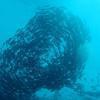
Vortex of Jackfish
Buddies:
Shehzaad Ramjaun
Andrew Mark Tze Liang
Fariz Eldrin Toh Rizal
Edidijus Bacevicius
Dovile Leonaviaute