Pictures
No pictures for this dive

-
Temp: Surf 20°C Bottom 20°C
-
Dive type : Recreational, Deep dive
-
Visibility: Good
Recent Divers in Santa Cruz Island
Recent Pictures in Santa Cruz Island
Dive Profile
- 1. Air
- 12L Steel
207 → 48 bar
-
- Average depth: 20m
Data provided by EOL.org
Species Identified

Lepomis microlophus (Günther, 1859) (redear sunfish)
Inhabits ponds, swamps, lakes; and vegetated pools, usually with mud or sand bottoms, of small to medium rivers. Also occurs in warm, clear and quiet waters rich in vegetation and snags. Has a preference for mollusks as ...
Read More
Inhabits ponds, swamps, lakes; and vegetated pools, usually with mud or sand bottoms, of small to medium rivers. Also occurs in warm, clear and quiet waters rich in vegetation and snags. Has a preference for mollusks as food thus has potential for the control of snail vectors of schistosomiasis . Oviparous .
Aetobatus narinari (Euphrasen, 1790) (Bishop ray)
Large groups of spotted eagle rays may be seen outside of the breeding season. These rays swim close to the surface and can occasionally be seen jumping clear out of the water (known as 'breaching') . Females give birth to...
Read More
Large groups of spotted eagle rays may be seen outside of the breeding season. These rays swim close to the surface and can occasionally be seen jumping clear out of the water (known as 'breaching') . Females give birth to around 4 live young . Spotted eagle rays have heavy dental plates which they use to crush their hard-shelled prey ; they feed predominantly on bivalve shellfish .
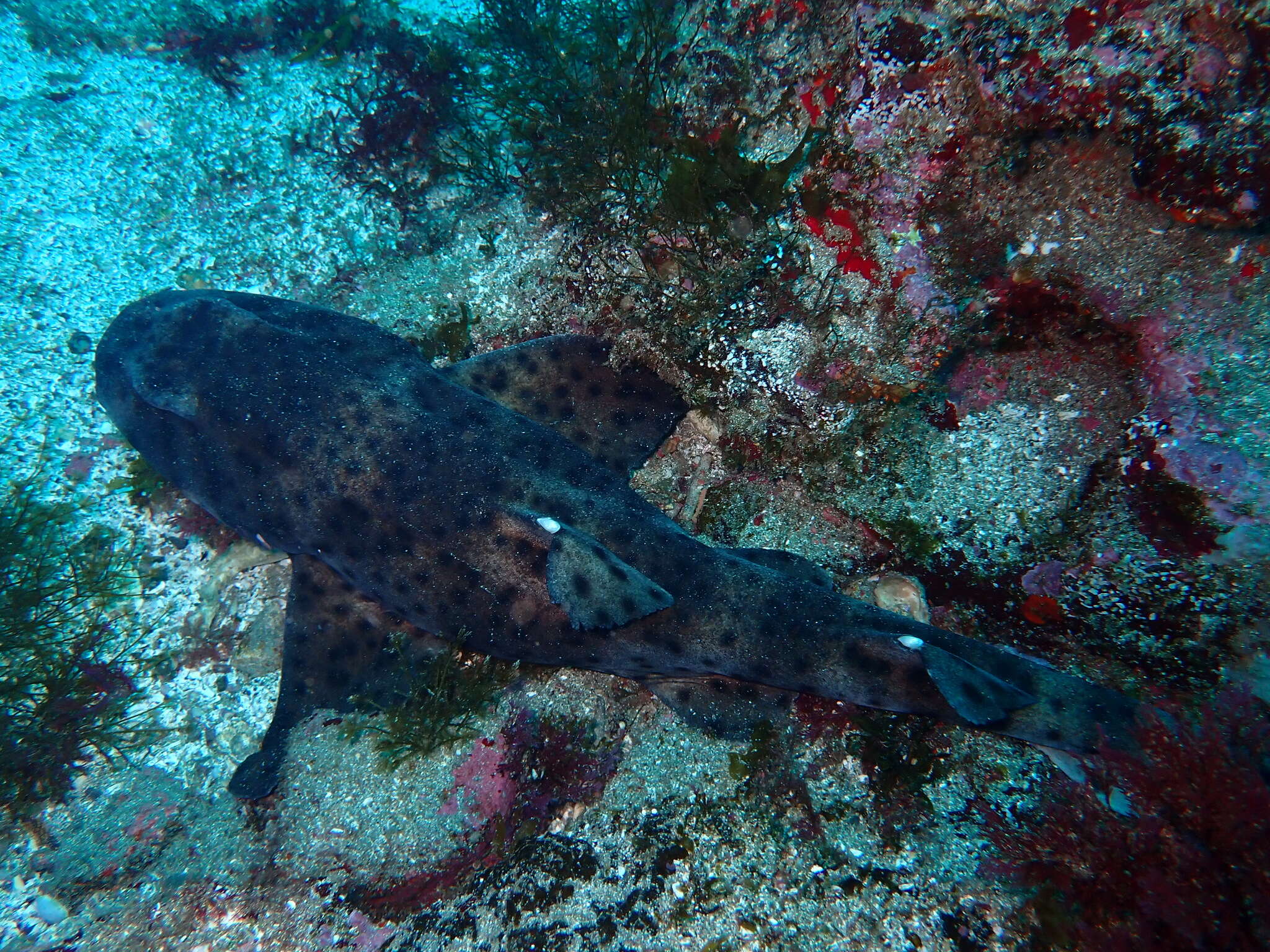
Heterodontus quoyi (Fréminville, 1840) (Galapagos bullhead shark)

Carcharhinus galapagensis (Snodgrass and Heller, 1905) (Galapagos shark)
Prionace glauca (Linnaeus, 1758) (Blue shark)
Blue sharks are viviparous, giving birth to live young after a gestation period of nine to twelve months . Up to 135 pups can be born per litter, partially depending on the size of the female, but the average is 25 to 50 ...
Read More
Blue sharks are viviparous, giving birth to live young after a gestation period of nine to twelve months . Up to 135 pups can be born per litter, partially depending on the size of the female, but the average is 25 to 50 . Maturity is reached at approximately five to six years old and blue sharks are known to have lived to 20 years . Although often observed cruising slowly and sluggishly the blue shark is capable of rapid movement if it is excited or feeding . This species will often circle its prey before moving in to attack it. Blue sharks primarily feed upon relatively small prey, such as bony fish and squid, but will also take larger prey including mammalian carrion .
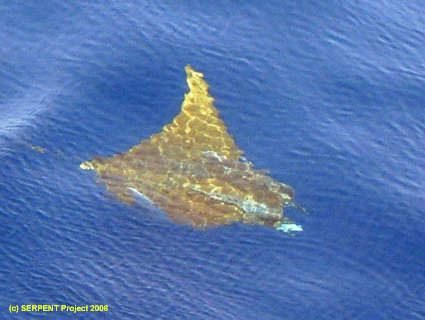
Manta birostris (Walbaum, 1792) (Giant manta)
Manta rays are generally solitary, although loose aggregations of individuals may occur where there are abundant food sources or during the breeding season. When ready to mate, a male will bite his mate's pectoral fin to p...
Read More
Manta rays are generally solitary, although loose aggregations of individuals may occur where there are abundant food sources or during the breeding season. When ready to mate, a male will bite his mate's pectoral fin to position himself belly-belly for copulation . The developing eggs remain inside the female's body for possibly as long as 12 months and hatch internally so that she gives birth to live young . The average litter size is two pups, and there is often a two year gap between births . These rays feed on planktonic organisms by filtering volumes of water through their mouths. Individuals have been observed swimming in slow vertical loops whilst feeding, possibly in an effort to concentrate prey items . The fleshy projections on either side of the mouth are also used to funnel prey; when not feeding, these lobes are either furled or closed in front of the mouth . Mantas are often host to remoras (Remorina spp.), which attach to the underside of the larger fish and consume particles of food that fall from the mouth . Exceptionally graceful swimmers, manta rays appear to fly through the water on their large wings. Individuals have also been observed to jump (or 'breach') clear out of the water, possibly in a form of communication or play .
Chelonia mydas Linnaeus 1758 (Green Turtle)
Green turtles are long-lived and may take up to 59 years to reach sexual maturity Undertaking tremendous feats of navigation, adults return to the same beach to breed each season, part of the population in Brazil astonish...
Read More
Green turtles are long-lived and may take up to 59 years to reach sexual maturity Undertaking tremendous feats of navigation, adults return to the same beach to breed each season, part of the population in Brazil astonishingly migrates around 2,250 kilometres across the open ocean to breed on the Ascension Islands . Mating tends to occur just offshore of the nesting beaches; using a curved claw on each front flipper and a flat nail at the end of the tail, males are able to grip their mates . Females haul out onto the beach at night and dig large nests with their back flippers beyond the high tide mark, they typically lay between 100 and 150 eggs in one nest and then proceed to cover the eggs with sand; the whole process takes around two hours . A single female returns to breed only once every two to five years but will lay up to nine nests in that one season . Incubation takes between 45 and 70 days, and temperature has been shown to determine of the sex of hatchlings; with females being produced at warmer temperatures . Breaking open their eggs with a special hooked 'egg tooth' that will subsequently be lost; hatchlings use their powerful front flippers to reach the surface, and then proceed to the sea . The soft-bodied juveniles are particularly vulnerable at this time from a variety of predators, such as ghost crabs and gulls on the beach to sharks and dolphins in the water . Unlike other marine turtles, adult green turtles are almost exclusively herbivorous, grazing on seagrasses and algae ; it is assumed that juveniles are more omnivorous although the exact composition of their diet is unknown

Sphyraena idiastes Heller & Snodgrass, 1903 (Pelican barracuda)
Remora remora (Linnaeus, 1758) (Common remora)
Usually associated with sharks but also attaches itself to other large fishes, sea turtles and even ships ; found in gill chambers, fins and body surface . Sometimes free-swimming . Younger individual is more active as parasite pickers . Feeds on parasitic copepods .
Usually associated with sharks but also attaches itself to other large fishes, sea turtles and even ships ; found in gill chambers, fins and body surface . Sometimes free-swimming . Younger individual is more active as parasite pickers . Feeds on parasitic copepods .
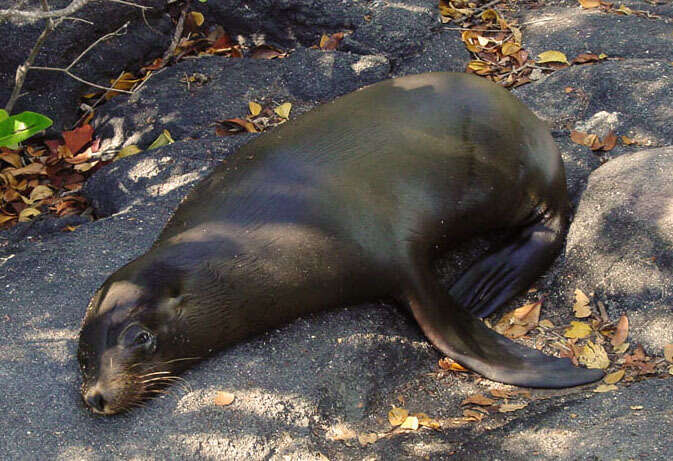
Arctocephalus galapagoensis Heller, 1904 (Galapagos fur seal)
On the rocky shores of the Galapagos Islands, six to ten Galapagos fur seals may occupy an area of about 100 square metres . Grouping together in this manner may be largely due to the rarity of suitable rocky sites, but i...
Read More
On the rocky shores of the Galapagos Islands, six to ten Galapagos fur seals may occupy an area of about 100 square metres . Grouping together in this manner may be largely due to the rarity of suitable rocky sites, but it also has the benefit of females being less vulnerable to predation or harassment when in large groups . Breeding males establish larger territories, around 200 square metres, which encompass a number of females . The breeding season lasts from mid-August to mid-November , when the cooler temperatures mean less heat stress and a greater availability of prey . A peak of births occurs in the last week of September or the first week of October , when females give birth to a single pup that has been carried for eight to twelve months . For the first five to ten days, the mother will stay with her newborn, but after this period, she alternates one to three days of feeding at sea with one to two days ashore with the pup. The pup is nursed for two to three years, sometimes even longer . Just eight days after giving birth, the female mates . Being a polygynous mammal, one male may mate with between six and sixteen females within his territory . The rough terrain and large size of the male's territory means that it can be difficult to successfully defend all the females within the area, and a rival male may sometimes invade and mate with a female . Defending a territory with threats and fighting can be tiring work, so the male can often be seen cooling off in the sea at midday . Although all females mate shortly after giving birth, only a small percentage will give birth the following year if they are still feeding a pup. If a pup is born to a female that is still feeding a pup from the previous year, the newborn often starves, or is occasionally killed by the older sibling . Females mature at three to four years of age, while males become territorial breeding bulls between seven and ten years old . While the Galapagos fur seal is capable of diving to much greater depths, it mainly undertakes short dives to between 10 and 50 metres , where it feeds on a variety of fish and small squid .
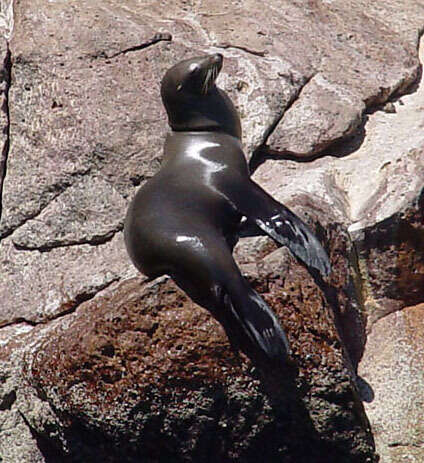
Zalophus californianus (Lesson, 1828) (california sea lion)
The California sea lion is a highly gregarious species, hauling out in large groups, although tending to feed individually or in small groups, unless large quantities of food are present. They feed on a large number of di...
Read More
The California sea lion is a highly gregarious species, hauling out in large groups, although tending to feed individually or in small groups, unless large quantities of food are present. They feed on a large number of different fish species , such as northern anchovies, pacific whiting, mackerel and are known to also take some cephalopod species. Dives usually last about two minutes, but can last up to ten minutes, and average depths of 26 to 98 metres, although California sea lions have been known to dive to well below 200 metres . The breeding season starts in May, at which time adult males begin to fight for a territory. Most males are unsuccessful and retreat to the sea, or to bachelor beaches nearby. Successful males guard their territory and maintain boundaries with routine displays and frequent barking. A male may maintain his territory for up to 45 days depending on other competitive males and on fat reserves. Females give birth to a single pup throughout May and June and are ready to mate again about 28 days after giving birth, although this interval is more variable among the population in Mexico. The mothers spend the first week after birth with their pup and then begin alternating feeding trips at sea with suckling bouts on land , until the pup is weaned, at about ten to twelve months. The mothers and pups recognise each other after separation by sound and smell . The breeding season ends in August after which time most males migrate north and the females and juveniles disperse, but stay close to the breeding islands. Average lifespan is 15 to 24 years with the young reaching sexual maturity at about four to five years. However, males will generally fail to hold a territory until they are older .
Otaria flavescens (Shaw, 1800) (South American sea lion)
Tursiops truncatus (Montagu, 1821) (bottle-nosed dolphin)
This active species engages in much energetic behaviour, including breaching , lobtailing and bow-riding . It has also been observed 'playing games' with seaweed and other objects . Dolphins are highly intelligent a...
Read More
This active species engages in much energetic behaviour, including breaching , lobtailing and bow-riding . It has also been observed 'playing games' with seaweed and other objects . Dolphins are highly intelligent animals; they have a sophisticated echolocation system and communicate via a range of sounds . Although lone individuals occur, this is typically a very sociable animal, living in groups numbering between 10 and 100 individuals; even larger groups may form offshore . This species has a broad diet, with a wide variety of fish and invertebrates including cephalopods being taken . It varies its hunting methods greatly, and cooperative hunting has been observed in many areas . In Brazil, this species even hunts cooperatively with humans, driving fish into the nets of local fishers. In return, the dolphin takes its share of the fish . Females produce a single calf in the summer after a gestation period of 12 months. The calf suckles for up to 18 months and stays close to the mother until it reaches four or five years of age .

Steno bredanensis (G. Cuvier in Lesson, 1828) (Rough-toothed dolphin)
Although widespread, the rough-toothed dolphin is not frequently encountered, and thus few studies have been conducted on its ecology and biology . Like many other dolphins, it is a sociable animal, commonly moving in gro...
Read More
Although widespread, the rough-toothed dolphin is not frequently encountered, and thus few studies have been conducted on its ecology and biology . Like many other dolphins, it is a sociable animal, commonly moving in groups of 10 to 20 individuals, although larger groups have also been observed, such as one consisting of up to 300 dolphins in Hawaii. In these groups, the rough-toothed dolphin has been seen with other dolphin species, as well as often associating with flotsam, the rubbish and debris found floating in the ocean . Often described as a sluggish or lethargic creature, the rough-toothed dolphin often swims with its chin and head above the water's surface, skimming along with a distinctive splash . It is not the most acrobatic of dolphins, but will occasionally leap and ride the bow waves of boats . It feeds on a range of fish and cephalopods, with its robust, rough teeth suggesting that some particularly large fish may be eaten. Algae have also been found in the stomachs of rough-toothed dolphins, although this may have been eaten accidentally . It is known to dive to 70 metres to capture its prey and remain underwater for 15 minutes, although evidence suggests that this dolphin is actually capable of undertaking much deeper dives. With males reaching sexual maturity at 14 years, and females at 10 years, the rough-toothed dolphin is known to live for up to 32 to 36 years .
Grampus griseus (G. Cuvier, 1812) (Risso's dolphin)
Risso's dolphin feeds largely on squid, although other cephalopods are also taken, as well as fish and crustaceans . Like most dolphins, this species is a highly social animal, typically occurring in groups of between 3 to...
Read More
Risso's dolphin feeds largely on squid, although other cephalopods are also taken, as well as fish and crustaceans . Like most dolphins, this species is a highly social animal, typically occurring in groups of between 3 to 50 individuals , and may mix with different species of cetaceans . When groups are hunting they spread out into a long line . This species tends to ride alongside or in the wake of boats, and young individuals often breach , slap their flippers on the surface of the water or 'spyhop' . A number of sounds are produced, including characteristic 'signature whistles' , many of these vocalisations are important in detecting prey through echolocation .
All the data in this dive will be erased (profile, notes, fish list...) and cannot be recovered. Are you sure?
You need to select at least one dive to import your dives in Diveboard.
This dive will be copied into your own logbook.
Please select which details you would like to keep.
This dive has been copied into your own logbook.
 We are participating today in the startup contest Techcrunch Disrupt. Support Diveboard by voting for us!
All it takes is a click!
This popup will only show once. Don't forget to vote before closing it!


 Halim H Omar

 Ecuador
 Date: 2011-11-23 - 10:45
 Max Depth: 30m Duration: 30mins
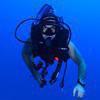





 Dive with Hugo Masaquiza from Dive Center Silberstein
























































































