


 Normah Baharom

 United Arab Emirates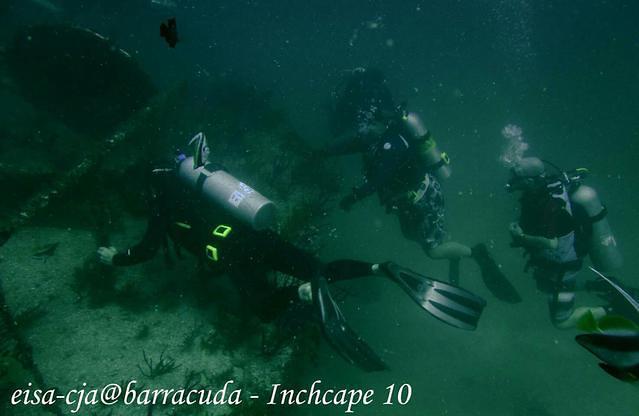
-
Nº13
 Date: 2016-12-24 - 11:17
-
 Max Depth: 22m Duration: 34mins
Dive Location

- Surface interval:60 mins
- Dive type : Wreck
- Visibility: Average Water: Salt
Specific gear used
- Mask: Scubapro - Synergy TruFit
- Mask: Aqualung - Infinity
- BCD: Aqualung - Pearl
- Computer: Suunto - D6i
- Wet suit: Aqualung - 1mm
- Fins: Aqualung - Short FX
- Gloves: Aqualung - 1mm
- Knife: Aqualung - Steel
- Lift bag: Aqualung - Red
- Camera: GoPro - Hero 4 Silver
- Weights: 5 kg
Dive reviews
| Overall review | ||
| Dive difficulty | ||
| Marine life quality |
Recent Divers in Fujariah
Dive Shop & Buddies
 Dive with Eisa Acosta

Link to this spot:
- Spot:
- Country:
- Area:
- Body of water:
Dive Profile
Data provided by EOL.org
Species Identified
Share on Social Networks
- Facebook:

personalize your shared text as well as its destination (wall, page...) or send as a private message to a friend
- Twitter: Tweet personalize your tweet
- Google Plus:
Direct link to this dive
- Long link:
- Short link:


 We are participating today in the startup contest Techcrunch Disrupt. Support Diveboard by voting for us!
























































































I am gaining my confidence in the abyss. My instructor continues to give positive comments on my progress.
17 Ways to Reduce Air Consumption
Streamline your equipment. Stash accessories in pockets or leave them behind. Reduce the lengths of your hoses where you can and route them close to your body. Clip in your console and your octopus. Choose a BC sized properly for your body and for the buoyancy you need; too much causes excess drag.
Drop weight. The less weight you carry, the less air you have to put into your BC to maintain buoyancy, so the less bulk you have to drag through the water. You use more air dragging more bulk around. Most divers can drop two pounds or so.
Get neutral. And get trimmed properly, so that when you're neutral, you're horizontal. That minimizes the size of the "hole" you have to make in the water when you swim.
Move slowly. Water resistance increases exponentially with speed. Swimming twice as fast requires four times as much energy. All your movements should be in slow motion.
Kick within your slipstream. Keep your fins within that "hole" in the water made by your body. Wider kicks increase drag.
Use efficient fins. Some deliver more thrust for a given effort than others, especially split fins. See ScubaLab tests in our Gear section for details.
Don't skim the bottom. Both the bottom and the surface cause turbulence that robs energy if you swim within a few feet of them.
Make long surface swims on your back. And breathe surface air: It's free.
Pause after inhaling. Under water, your breathing pattern should be inhale, pause, exhale, inhale, pause, exhale. The pause (held with your chest muscles, not by closing your throat) allows more gas transfer to take place in your lungs and less oxygen to be wasted.
Breathe slowly. Friction between the incoming air and your mouth, throat, lungs, etc. increases exponentially with speed. More friction means more energy expended for less air actually arriving in your lungs. Move the air slowly.
Breathe deeply. The more complete each breath is, the fewer of them you have to take. Breathe "from the diaphragm," trying to completely fill and completely empty your lungs.
Use a high-performance regulator. Better regulators minimize the work of breathing. They minimize the amount of air you burn just getting air.
Maintain your regulator. They lose performance and increase work of breathing with use and age, and need regular maintenance.
Readjust your regulator. On many regulators, the purpose of the adjustment knob is not merely to prevent free-flowing on the surface. It's also to minimize work of breathing at depth. Periodically during your dive, open the valve until the regulator just begins to bubble, then back up on the adjustment a bit.
Stop all leaks. Lots of little bubbles add up. Usual suspects: tank O-ring, BC inflators, console swivels.
Stay above. At five feet less depth than your buddy, you'll see almost everything he does, but you'll use substantially less air. (Though the difference is greatest at shallower depths.)
Manage currents wisely. Learn how to detect, avoid and cope efficiently with adverse currents.