


 Tom Griffith

 Sri Lanka
-
Nº20
 Date: 2018-03-19 - 08:27
-
 Max Depth: 18.6m Duration: 57mins
Pictures

No pictures for this dive
- Temp: Surf 31°C Bottom 28°C
- Dive type : Recreational, Wreck
- Visibility: Average Water: Salt
Specific gear used
- Weights: 5 kg
Dive reviews
| Overall review | ||
| Dive difficulty | ||
| Marine life quality |
Dive Shop & Buddies
 Dive with Gunnhild

Link to this spot:
- Spot:
- Country:
- Area:
- Body of water:
Dive Profile
Data provided by EOL.org



Species Identified
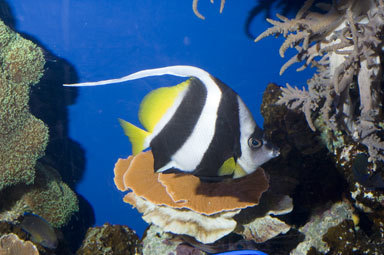
Heniochus acuminatus (Linnaeus, 1758) (Pennant coralfish)
Inhabit deep, protected lagoons and channels, and the deeper parts of outer reef slopes. Juveniles are often solitary while adults occur in pairs . A planktivorous species that generally remains within a few meters of th...
Read More
Read More
Arothron stellatus (Bloch & Schneider, 1801) (Blackspotted puffer)
Relatively uncommon in patch reefs and coral slopes near sandy areas of clear lagoon and seaward reefs. Juveniles occur in sandy and weedy inner reefs, adults on clear lagoons and seaward reefs . Juveniles inshore, usual...
Read More
Read More
Gymnothorax favagineus Bloch & Schneider, 1801 (Laced moray)
Inhabits reef flats and outer reef slopes of continental reefs . One of the two largest of Indo-Pacific morays. Often in holes with cleaner wrasses or shrimps . Feeds on cephalopods and small fishes . Large adults may be aggressive . Minimum depth reported taken from Ref. 30573.
Epinephelus tukula Morgans, 1959 (potato cod)
Mainly found in deep reef channels and seamounts, in current prone areas . Juveniles may be found in tide pools . Feeds on reef fishes, skates, crabs, and spiny lobsters . Considered to be exceedingly territorial and ve...
Read More
Read More
Pterois volitans (Linnaeus, 1758) (Red lionfish)
Scarus ghobban Forsskål, 1775 (Blue-barred parrotfish)
Scorpaenopsis gibbosa (Bloch & Schneider, 1801) (Humpback scorpionfish)
Usually found immobile at the bottom camouflaged among rocks and coral. Hunts by ambushing prey . Unlike most scorpaenids, the sting from the dorsal spines of this species can be painful but does not pose any real danger to the victim . Sold fresh in small quantities in markets.
Share on Social Networks
- Facebook:

personalize your shared text as well as its destination (wall, page...) or send as a private message to a friend
- Twitter: Tweet personalize your tweet
- Google Plus:
Direct link to this dive
- Long link:
- Short link:


 We are participating today in the startup contest Techcrunch Disrupt. Support Diveboard by voting for us!
























































































