


 Low Wai Hoe


 Malaysia
-
Nº4
 Date: 1999-04-03 - 17:30
-
 Max Depth: 20m Duration: 31mins
Dive Location

- Dive type : Training, Open Water
- Visibility: Average Water: Salt
Specific gear used
- Weights: 6 kg
Recent Divers in Pulau Kerengga, Pulau Redang
Recent Pictures in Pulau Kerengga, Pulau Redang
Dive Shop & Buddies
 Dive with David Heng from Deep Blue Scuba Pty Ltd
 Dive buddies:
Angela Cheng,
Lee Chee Siong

Link to this spot:
- Spot:
- Country:
- Area:
- Body of water:
Dive Profile
- 1. Air
- 12L Aluminium 193 → 28 bar
- Average depth: 13.3m
Data provided by EOL.org

Species Identified
Neotrygon kuhlii (Müller & Henle, 1841) (Bluespotted stingray)
A solitary species found on sandy bottoms near rocky or coral reefs . Usually found in deeper water but moves onto the reef flat and into shallow lagoons at high tide . Occasionally covers itself with sand, leaving only ...
Read More
Read More
Share on Social Networks
- Facebook:

personalize your shared text as well as its destination (wall, page...) or send as a private message to a friend
- Twitter: Tweet personalize your tweet
- Google Plus:
Direct link to this dive
- Long link:
- Short link:


 We are participating today in the startup contest Techcrunch Disrupt. Support Diveboard by voting for us!
























































































Chek Isa consists of two underwater sea mounts where it house many hard and soft corals.
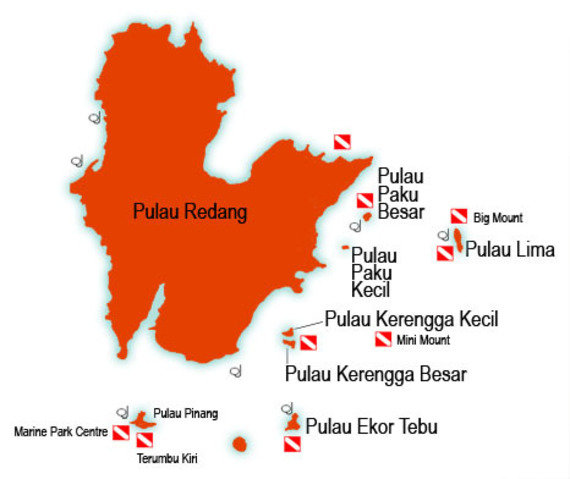
Mini Mount, popular submerged reef is situated about 100 metres east of Pulau Kerangga Besar and is marked by a mooring buoy by the Fisheries Department. Granite boulders are scattered around the sandy bottom with the deepest portion at about 20 metres. The faces of the boulders are carpeted with a variety of soft corals (Dendronephthya species), tubastrea corals, sea squirts, sponges and stinging hydroids.
Expect to find numerous cowries, spider shells and large aggregation of colourful Christmas tree worms carpeting coral blocks. Damsel fish, butterfly fish, chromis, wrasses, rabbit fish, parrot fish and lion fish inhabit the coral garden. The boulder terrain presents itself for exploration; canyons and crevices harbor groupers, moray eels and lobsters.
Mini Mount is a popular choice for night diving. Divers are rewarded with an abundance of night creatures foraging for food around the reef. Plan to dive around 15 metres depth, inspect under the folds of leathery soft corals for cowries with its mantle fully extended, banded shrimps, crabs, sea cucumbers, colourful sea urchins, squids, spiny lobsters and the occasional octopus.
Experience Required: Open Water
Sea animals seen in the past:
Turtles, fusiliers, yellow snappers, blue spotted sting rays, school of small barracuda