


 Marco
Marco

 Thailand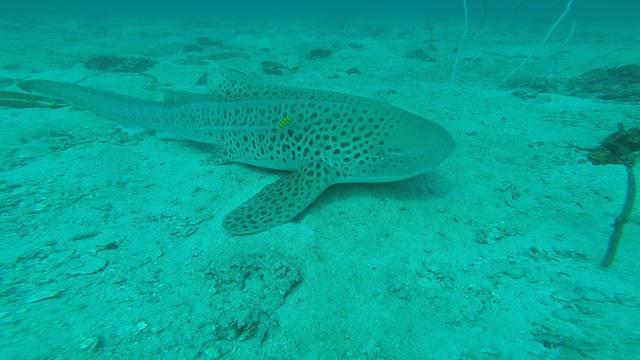
-
Nº57
 Date: 2016-03-05 - 10:58
-
 Max Depth: 18.4m Duration: 60mins
Dive Location

- Surface interval:89 mins
- Temp: Surf 35°C Bottom 28°C
- Dive type : Reef
- Visibility: Good Water: Salt
Specific gear used
- Weights: 3 kg
Dive reviews
| Overall review | ||
| Dive difficulty | ||
| Marine life quality | ||
| Big fish |
Recent Divers in Koh Phi Phi
Recent Pictures in Koh Phi Phi
Dive Shop & Buddies
 Dive with Katie from Phi Phi Scuba Diving Center
 Phi Phi Scuba Diving Center confirmed the dive with parameters: 18.4m / 60mins
 Dive buddies:
Robin Hoppe
Dive buddies:
Robin Hoppe

Link to this spot:
- Spot:
- Country:
- Area:
- Body of water:
Dive Profile
- 1. Air
- 12L Aluminium 200 → 40 bar
- Average depth: 12.3m
Data provided by EOL.org






Species Identified
Triakis semifasciata Girard, 1855 (Leopard shark)
Pterois volitans (Linnaeus, 1758) (Red lionfish)
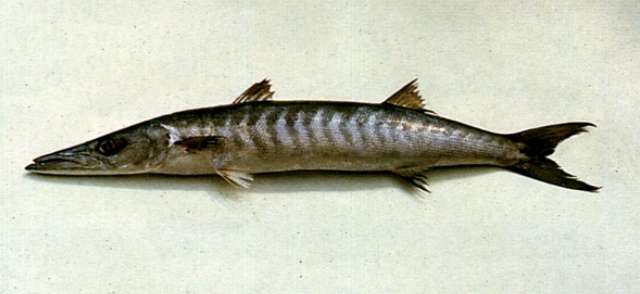
Sphyraena putnamae Jordan & Seale, 1905 (Barracuda)
Found near prominent current-swept lagoons or seaward reefs . Also in bays and inner turbid lagoons . Nocturnally active, but occurring in relatively large schools during the day . Sold fresh or processed into fish cakes .
Gymnothorax javanicus (Bleeker, 1859) (Giant moray)
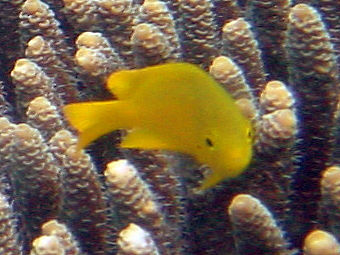
Pomacentrus moluccensis Bleeker, 1853 (Lemon damsel)
Inhabits clear lagoon and seaward reefs among branching corals. Occurs in small aggregations. Feeds mainly on algae and planktonic crustaceans.
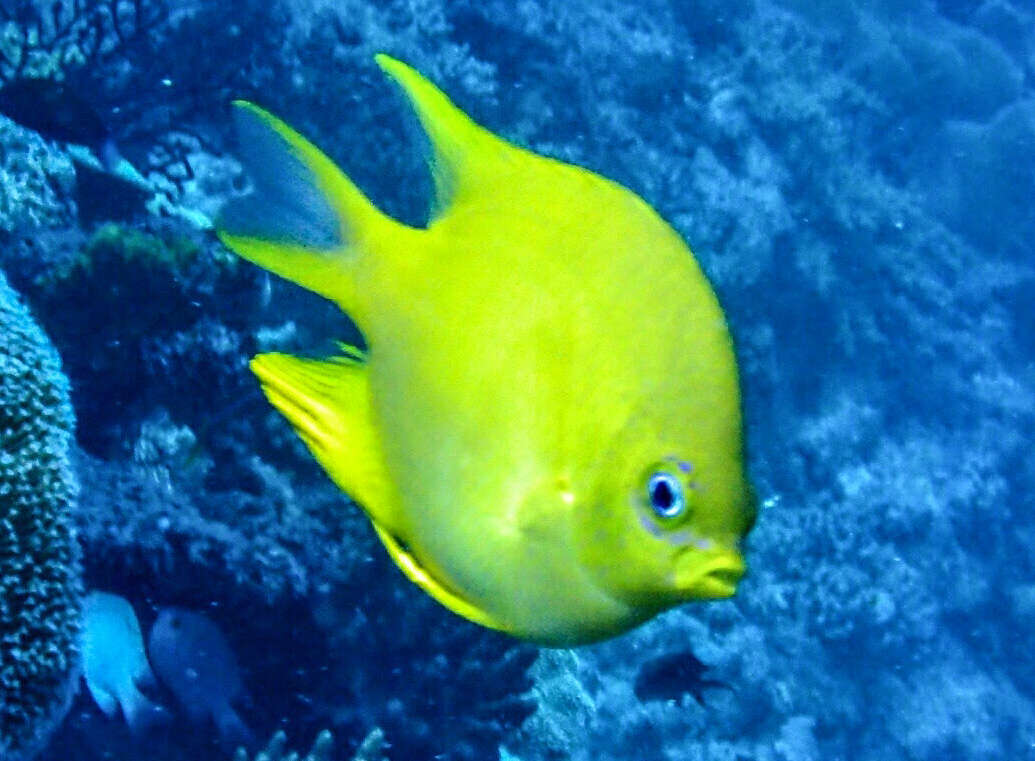
Amblyglyphidodon aureus (Cuvier, 1830) (Golden damsel)
Occurs in steep outer reef, occasionally in deep lagoons and along channel walls, usually in current prone habitats and where there are abundant gorgonian and long sea-whip corals on which they lay and guard eggs. Juvenil...
Read More
Read More
Stichastrella rosea (rosy starfish)
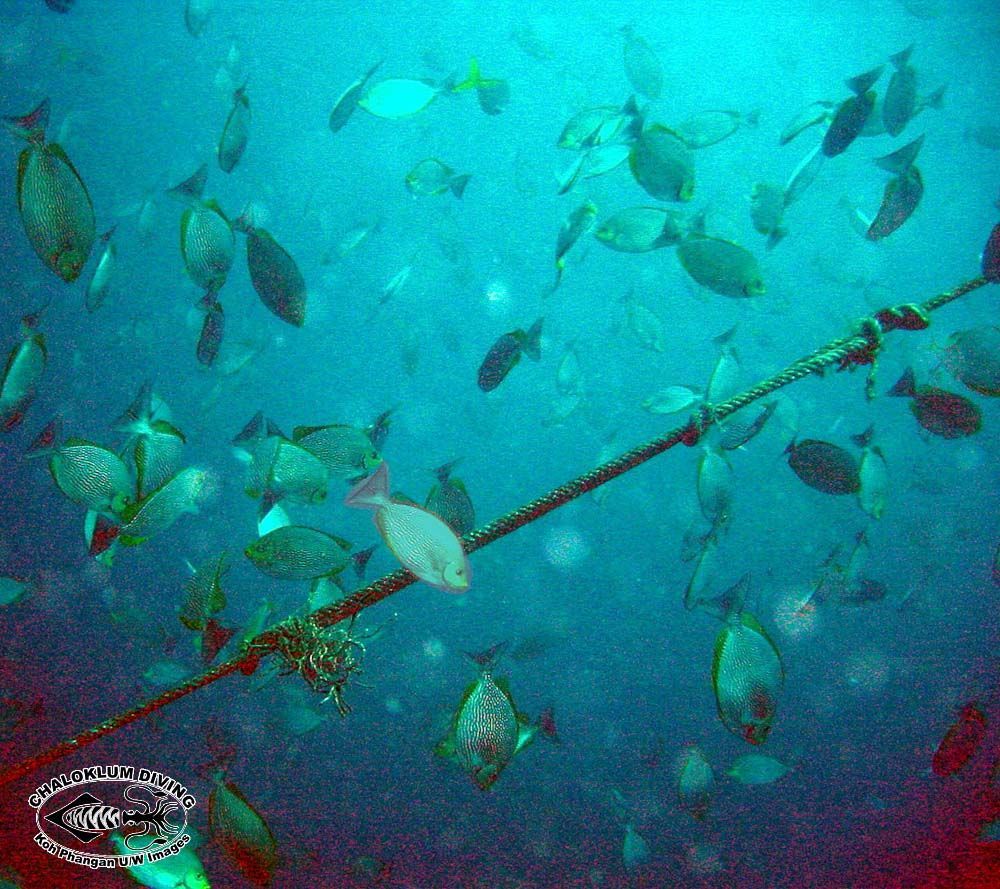
Siganus javus (Linnaeus, 1766) (Streaked spinefoot)
Occurs in small schools of up to 10 individuals or so, in shallow coastal waters, brackish lagoons and rocky or coral reefs. Feeds on algae attached to the substrate and on floating algal fragments. Found resting in midwater at depths of 2 to 6 m when not feeding. Marketed fresh .
Siganus doliatus Guérin-Méneville, 1829-38 (Barred rabbitfish)
Inhabits coral-rich areas of lagoons and seaward reefs. Juveniles form schools. Pairs form at 7 cm; but these pairs continue to form loose schools, sometimes with juvenile scarids, to feed in areas being flooded by the t...
Read More
Read More
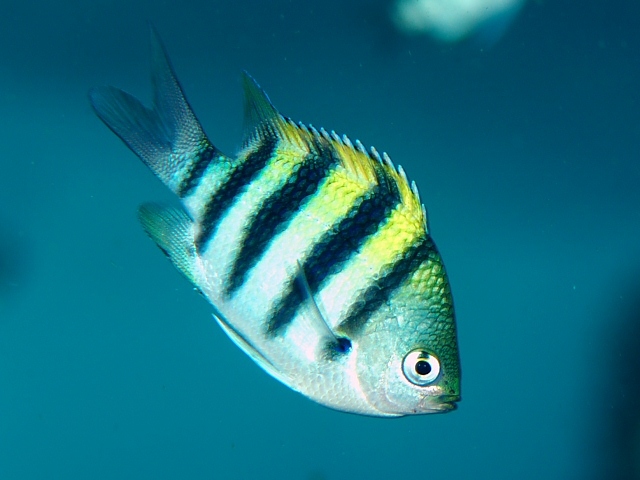
Abudefduf vaigiensis (Quoy and Gaimard, 1825) (Five finger)
Adults inhabit upper edge of outer reef slopes and inshore rocky reefs. Juveniles associated with drifting seaweed . Benthopelagic . Feed on zooplankton, benthic algae, and small invertebrates . Often in aggregations ...
Read More
Read More
Leiuranus semicinctus (Lay & Bennett, 1839) (Saddled snake-eel)
Occurs in sandy areas and seagrass beds of both lagoon and seaward reefs. Uses its stiff pointed tail to rapidly burrow backwards into the sand when frightened . Benthic . Feeds on sand-dwelling fishes and crabs and pra...
Read More
Read More
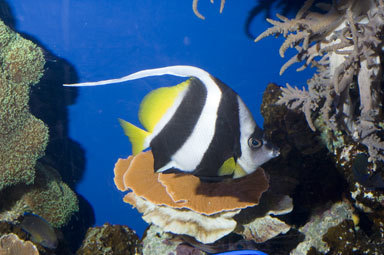
Heniochus acuminatus (Linnaeus, 1758) (Pennant coralfish)
Inhabit deep, protected lagoons and channels, and the deeper parts of outer reef slopes. Juveniles are often solitary while adults occur in pairs . A planktivorous species that generally remains within a few meters of th...
Read More
Read More
Diadema antillarum (Philippi, 1845) (long-spined sea urchin)
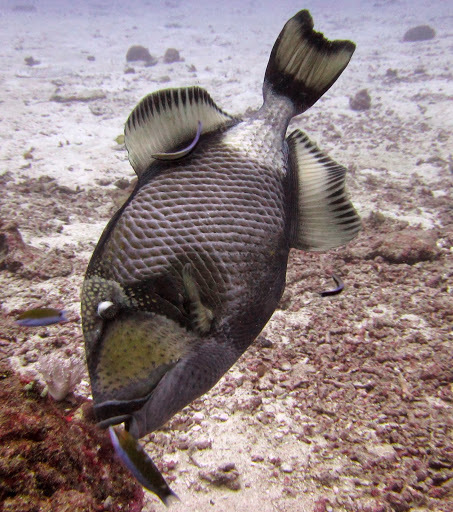
Balistoides viridescens (Bloch and Schneider, 1801) (Titan triggerfish)
Occur in lagoon, seaward reefs and sheltered inner reef slopes . Juveniles often associated with isolated patches of branching coral or rubble of shallow sandy protected areas. Adults occur singly or in pairs on the slo...
Read More
Read More
Share on Social Networks
- Facebook:

personalize your shared text as well as its destination (wall, page...) or send as a private message to a friend
- Twitter: Tweet personalize your tweet
- Google Plus:
Direct link to this dive
- Long link:
- Short link:


 We are participating today in the startup contest Techcrunch Disrupt. Support Diveboard by voting for us!
























































































8 Leopardenhaie, Muränen, Barracuda, Lionfishes