


 Sea Kangaroo


 Netherlands Antilles

-
Nº59
 Date: 2008-05-13 - 07:20
-
 Max Depth: 22.3m Duration: 56mins
Pictures

No pictures for this dive
- Temp: Surf 27°C Bottom 27°C
- Dive type : Recreational, shore
- Water: Salt
Specific gear used
- Wet suit: Henderson - 3
- Weights: 3.2 kg
Recent Divers in Bonaire




Recent Pictures in Bonaire

Link to this spot:
- Spot:
- Country:
- Area:
- Body of water:
Dive Profile
- 1. Nitrox 32
- 0L Steel
- Average depth: 13.3m
Data provided by EOL.org










Species Identified
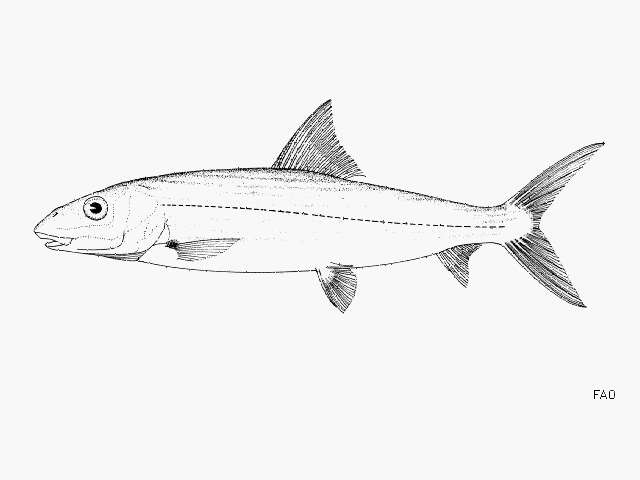
Albula vulpes (Linnaeus, 1758) (Tarpon)
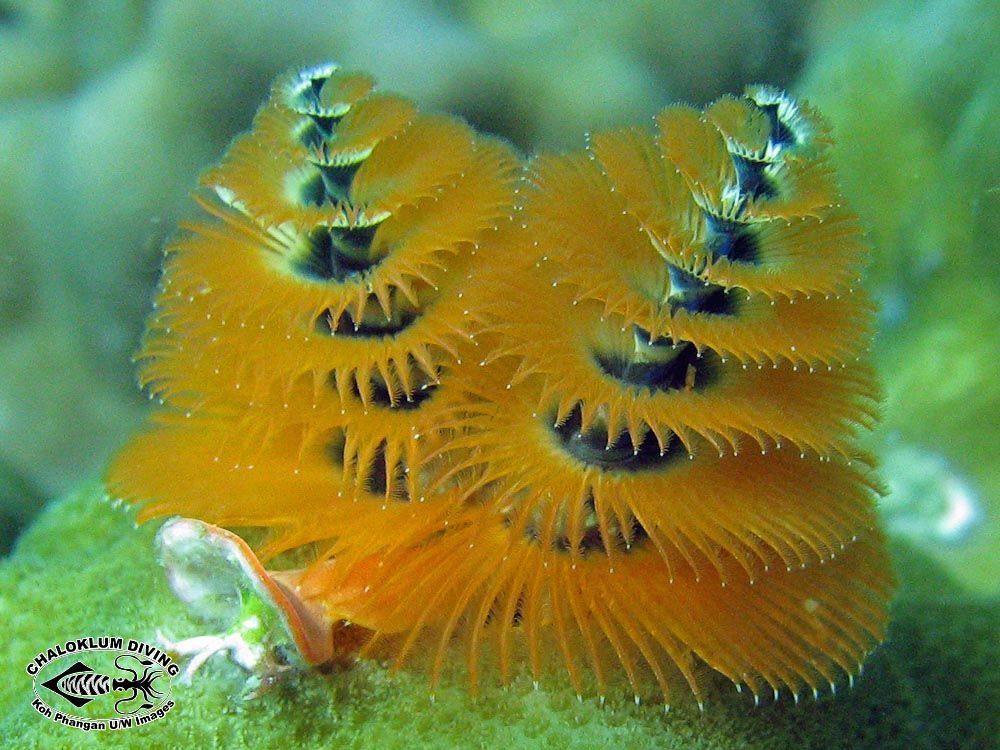
Spirobranchus giganteus (Pallas, 1766) (Christmas Tree Worm)
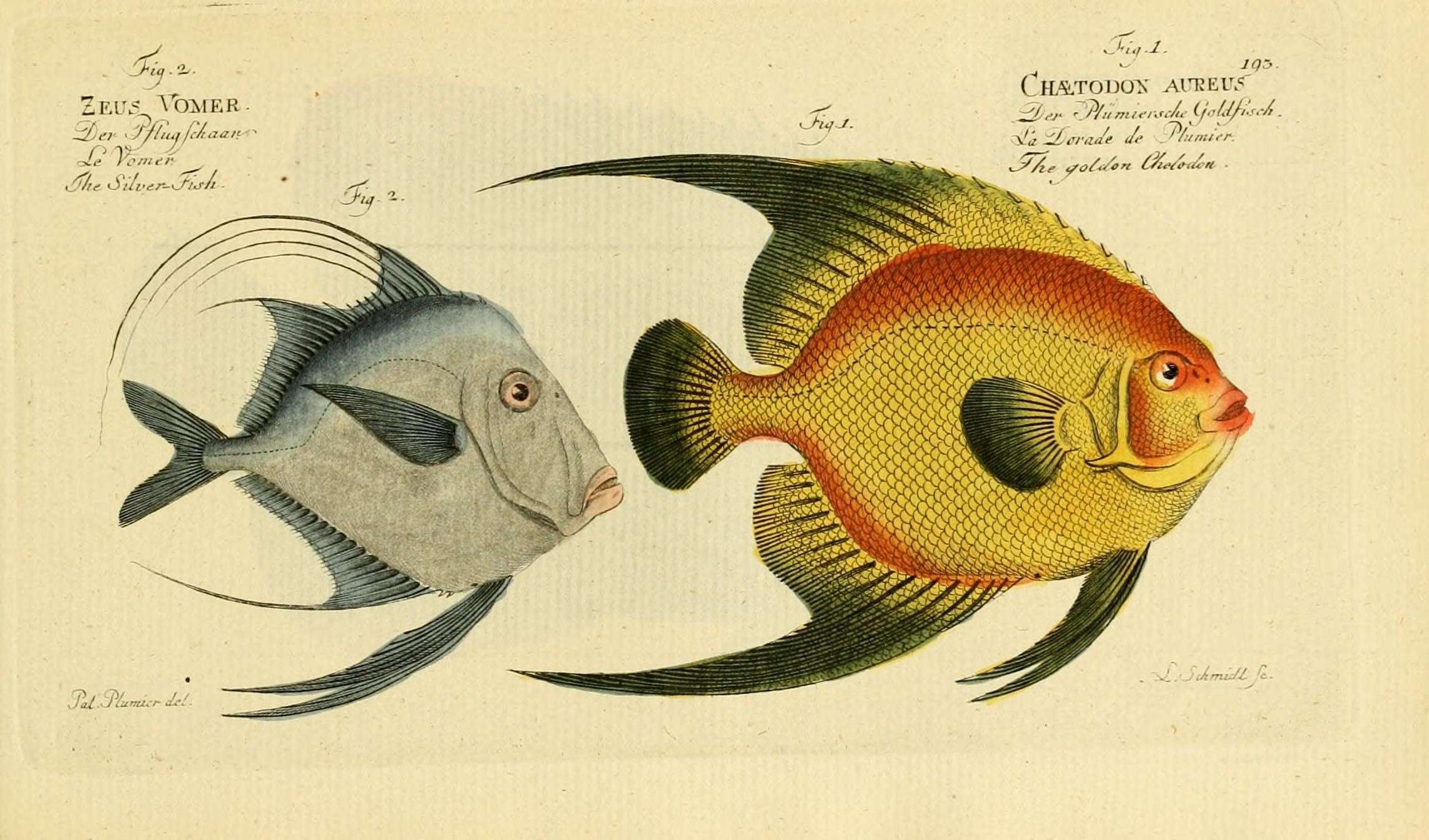
Pomacanthus paru (Bloch, 1787) (French angelfish)
Common in shallow reefs. Usually in pairs, often near sea fans . Feed on sponges, algae, bryozoans, zoantharians, gorgonians and tunicates . Oviparous , monogamous . Spawning pairs are strongly territorial, with usuall...
Read More
Read More
Opistognathus aurifrons (Jordan and Thompson, 1905) (yellowhead jawfish)
Inhabit burrows made of crushed coral or sand. Hovers vertically, above or near its hole. The male courts the female by swimming in an arched position with his fins spread towards her . Male broods the eggs orally . Has been reared in captivity .
Elacatinus evelynae (Böhlke & Robins, 1968) (sharknose goby)
Inhabits coral reefs with clear waters, preferably in oceanic, insular areas . In pairs near coral heads. Monogamous . A cleaner . Minimum depth reported from Ref. 27115. Has been reared in captivity . Feeds on ectoparasites of fishes .
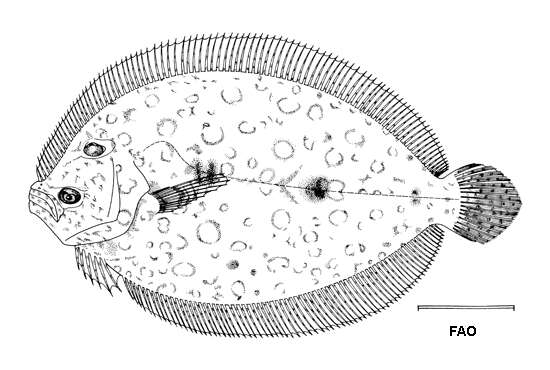
Bothus lunatus (Linnaeus, 1758) (Flounder)
Inhabits clear sandy areas near mangroves, among seagrass, coral or rubble . Most common flounder around coral reefs . Often partially buried in sand, occasionally on hard bottoms . Feeds mainly on small fishes but also on crustaceans and octopuses. Marketed fresh .
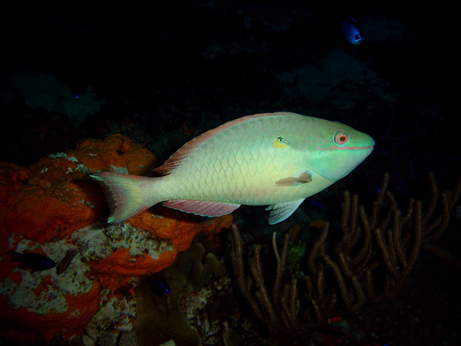
Sparisoma aurofrenatum (Valenciennes, 1840) (Black parrot)
Inhabits coral reefs, young usually in adjacent seagrass beds. Often rests on the bottom . Feeds on plants. Solitary or in small groups. A protogynous hermaphrodite .
Holothuria mexicana Ludwig, 1875 (donkey dung sea cucumber)
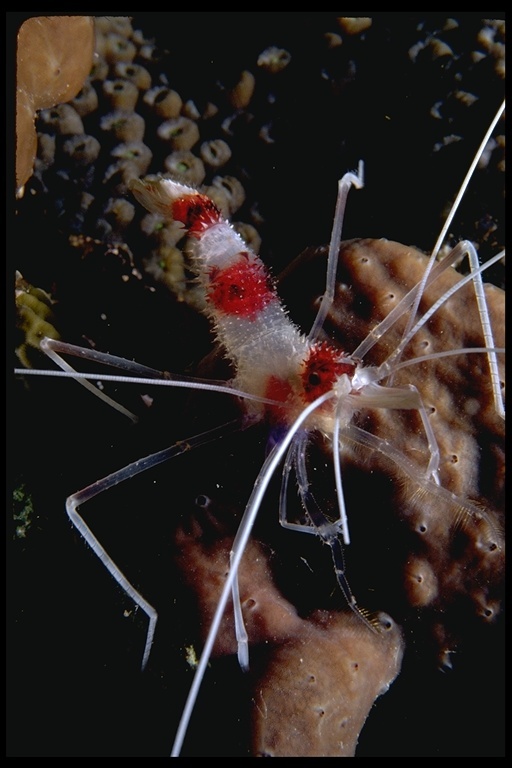
Stenopus hispidus (Olivier, 1811) (banded coral shrimp)
Gymnothorax moringa (Cuvier, 1829) (Common conger)
A benthic and solitary species abundant in shallow rocky and grassy areas and on coral reefs; less common in turbid bays or harbors. Its bite is very dangerous . Active during the day, sometimes together with other pred...
Read More
Read More
Scarus vetula Bloch and Schneider, 1801 (Blownose)
Inhabits coral reefs and adjacent habitats. Feeds on algae scraped from rocks or dead coral. Sleeps in a mucus cocoon . Often seen in groups of one super male with several young adults, most of which are probably females . A protogynous hermaphrodite .
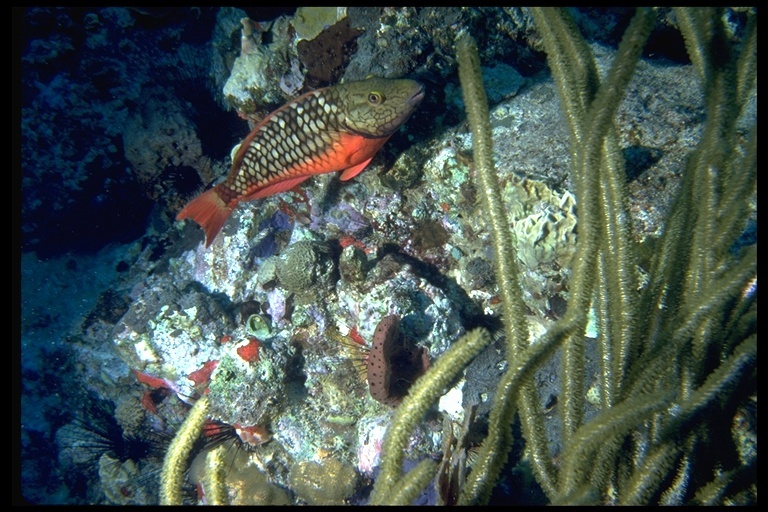
Sparisoma viride (Bonnaterre, 1788) (Dark green parrotfish)
Inhabits coral reefs with clear water . Young may be found in seagrass beds and other heavily vegetated bottoms. Feeds mainly on soft algae, but has been observed to graze on live corals like, Montastraea annularis . Pr...
Read More
Read More
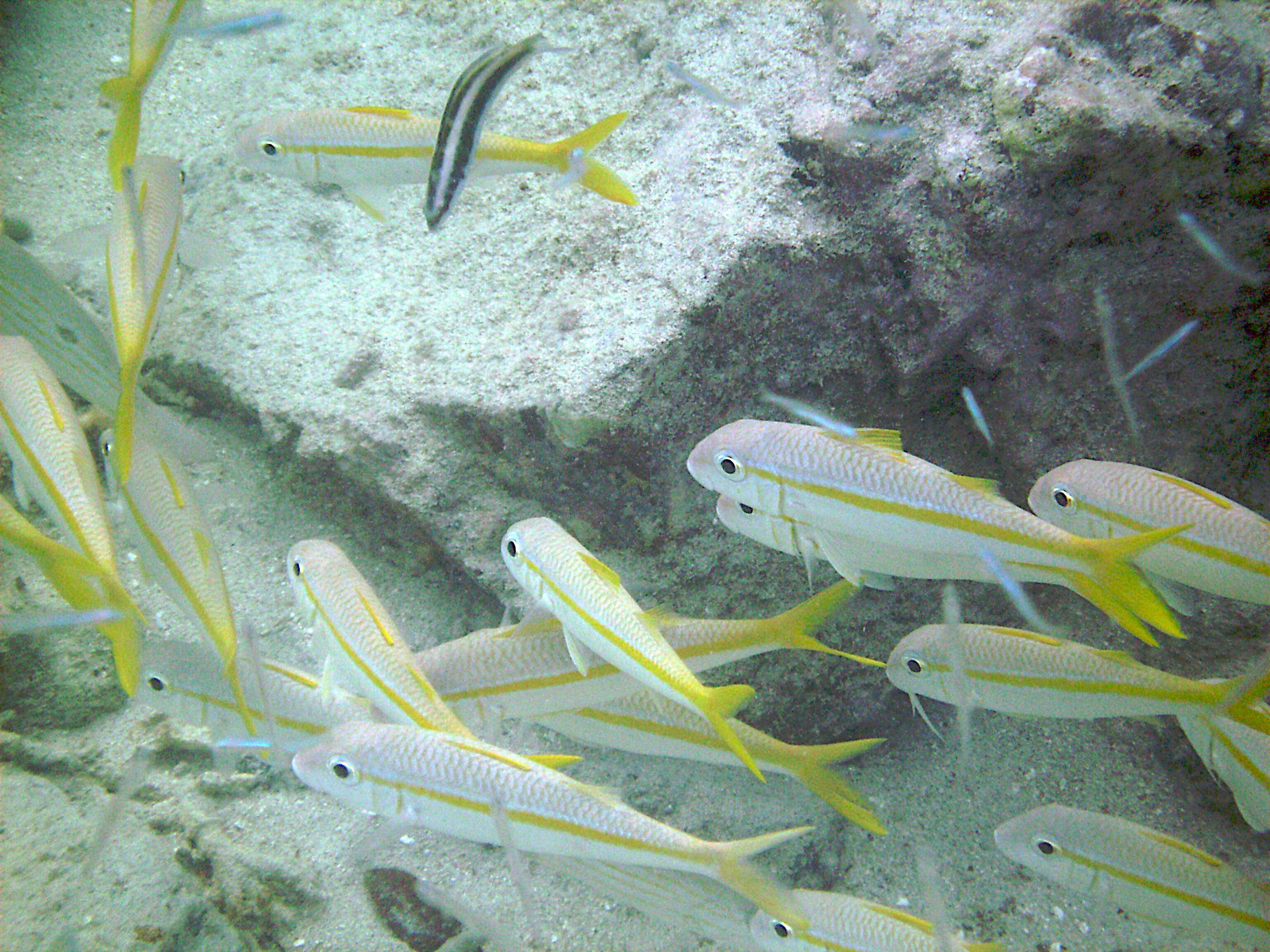
Mulloidichthys martinicus (Cuvier, 1829) (goatfish)
Found over sandy areas of lagoon and seaward reefs . Often in schools . Forms schools with the smallmouth grunt , an association regarded as social protective mimicry . Juveniles are common in seagrass beds . Feeds on benthic invertebrates . Marketed fresh .
Acanthurus bahianus Castelnau, 1855 (Barber)
Inhabits shallow bottoms with coral or rocky formations . Usually occurs in groups of five or more individuals. Mainly diurnal species. Feeds on algae. The spine on both sides of the caudal peduncle may inflict painful wounds . Marketed fresh. Minimum depth reported from Ref. 27115.
Acanthurus coeruleus Bloch and Schneider, 1801 (Blue tang surgeonfish)
Inhabits coral reefs, inshore grassy or rocky areas. Forms small groups . Mainly diurnal. Feeds entirely on algae . At Fernando de Noronha Archipelago in southwestern Atlantic, juveniles hold cleaning stations togeth...
Read More
Read More
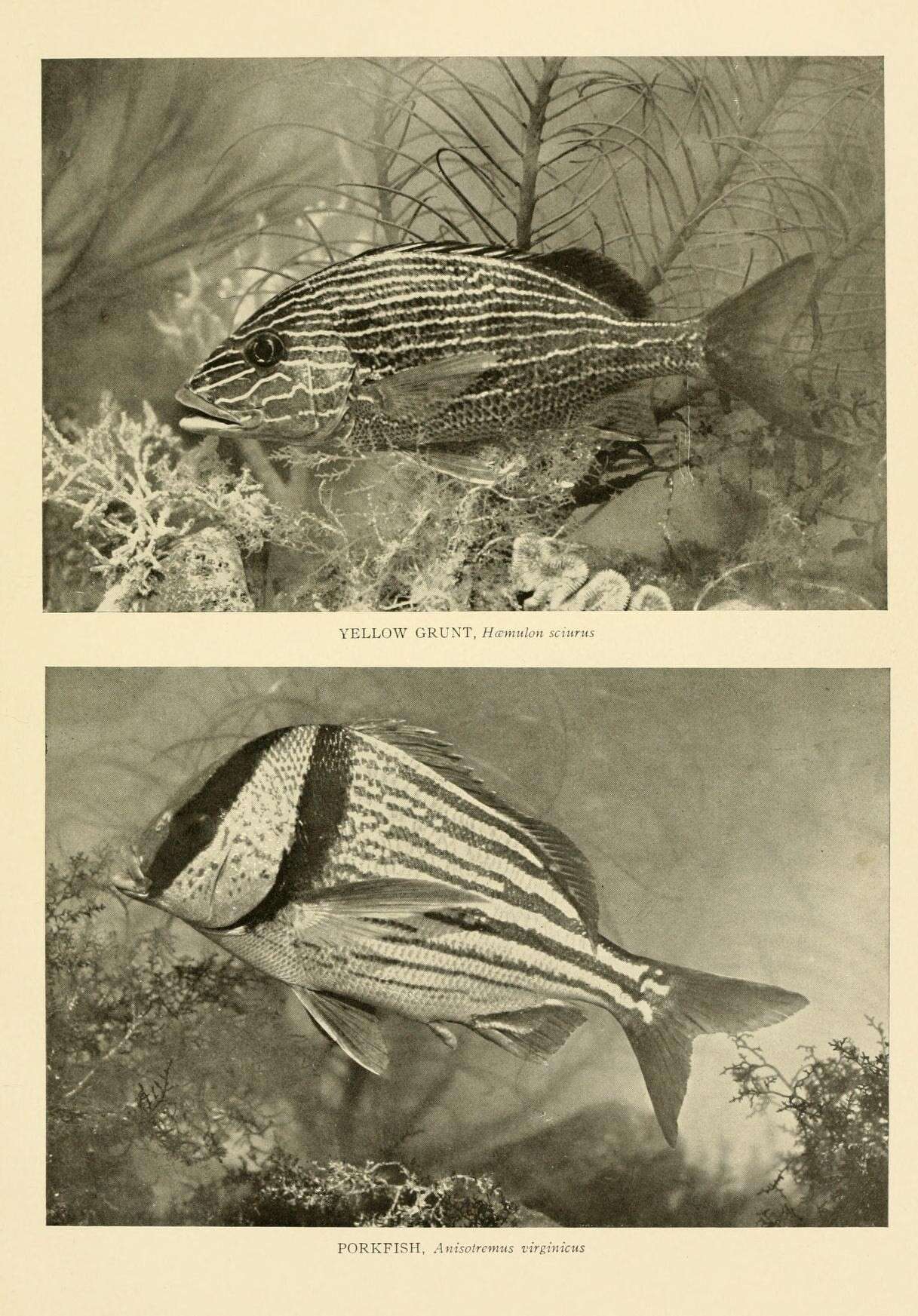
Haemulon sciurus (Shaw, 1803) (Blue striped grunt)
Found in small groups over coral and rocky reefs and drop-offs . Juveniles are abundant in Thalassia beds . Feeds on crustaceans, bivalves, and occasionally on small fishes. Marketed fresh.
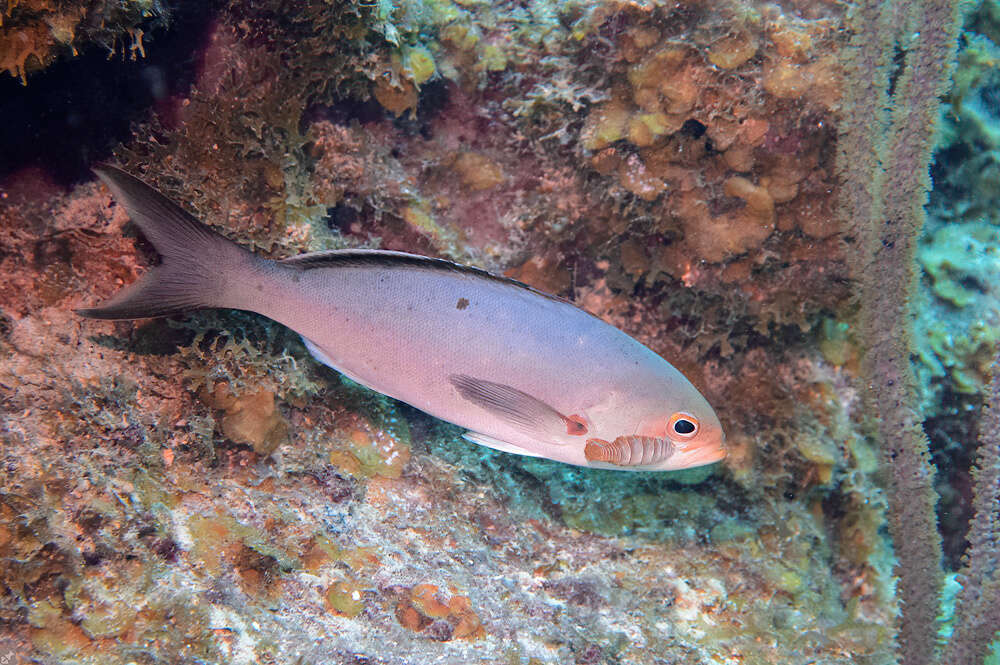
Lutjanus apodus (Walbaum, 1792) (Dogtooth snapper)
Occurs in shallow, clear, warm, coastal waters over coral reefs. Often near the shelter of elkhorn corals and gorgonians . Juveniles are encountered over sand bottoms with or without seagrass , and over muddy bottoms of ...
Read More
Read More
Equetus punctatus (Bloch & Schneider, 1801) (Spooted drum)
Occurs primarily on coral reefs. Secretive and usually solitary, under ledges or near small caves . Often seen during the day around the bases of corals . Feeds at night on crabs, shrimps, and polychaetes. Easily approached . Has been reared in captivity .
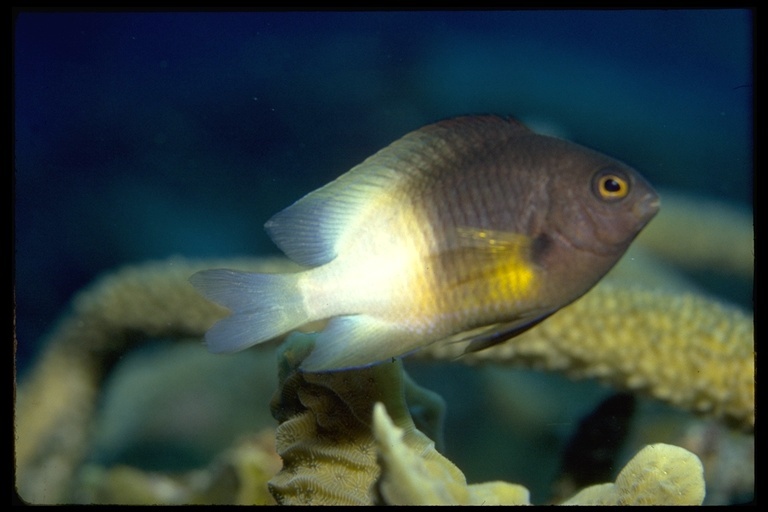
Stegastes partitus (Poey, 1868) (bicolor damselfish)
Inhabits shallow coral reefs and isolated patch reefs in deeper water. Feeds primarily on algae but also on polychaetes, hydroids, copepods and ascidians . Aggressively territorial but only around a small area . Taken incidentally in traps and small-meshed beach nets .
Clepticus parrae (Bloch and Schneider, 1801) (Creole wrasse)
Inhabits seaward reef slopes; occasionally on shallow patch reefs . Found in large midwater aggregations feeding on plankton , small jellyfishes, pteropods, pelagic tunicates and various invertebrate larvae . Form leks during breeding . Also caught with beach nets .
Megalops atlanticus Valenciennes, 1847 (Atlantic tarpon)
Scarus iseri (Bloch, 1789) (Grey chub)
Found over shallow, clear waters, generally over Thalassia beds . Also found rocky or coral areas . A schooling species. Feeds on plants. A protogynous hermaphrodite . Super males spawn individually with striped females, while sexually mature males in the striped phase spawn in aggregation.
Paranthias furcifer (Valenciennes, 1828) (Creole-fish)
Inhabits coral reefs and hard bottom areas. Observed in feeding aggregations well above the reef. Feeds mainly in midwater on zooplankton . Retreats instantly when alarmed .
Myripristis jacobus Cuvier, 1829 (Bastard soldierfish)
Found from shallow coral reefs to offshore deeper waters . A nocturnal species aggregating around coral reefs and deeper rocky reefs . Feeds mainly on planktonic organisms . Occasionally found swimming upside down . Marketed fresh but not popular as a food fish .
Abudefduf saxatilis (Linnaeus, 1758) (Mamo)
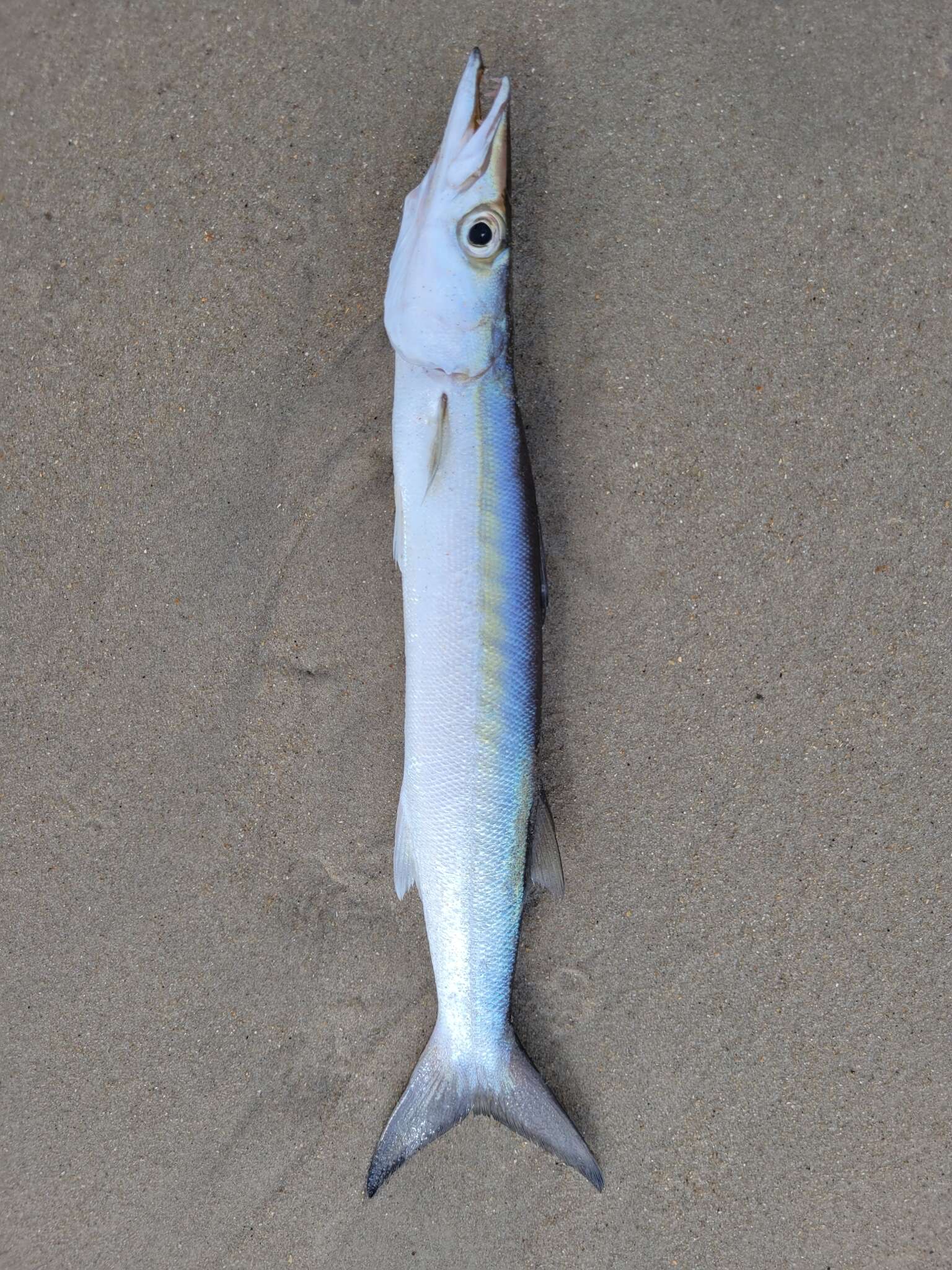
Sphyraena guachancho Cuvier, 1829 (Guachanche barracuda)
Occurs in shallow and generally turbid coastal water over muddy bottoms, often around river estuaries. Schooling species . Feeds on mainly on fishes belonging to the Engraulidae, Clupeidae, Lutjanidae and Synodontidae fa...
Read More
Read More
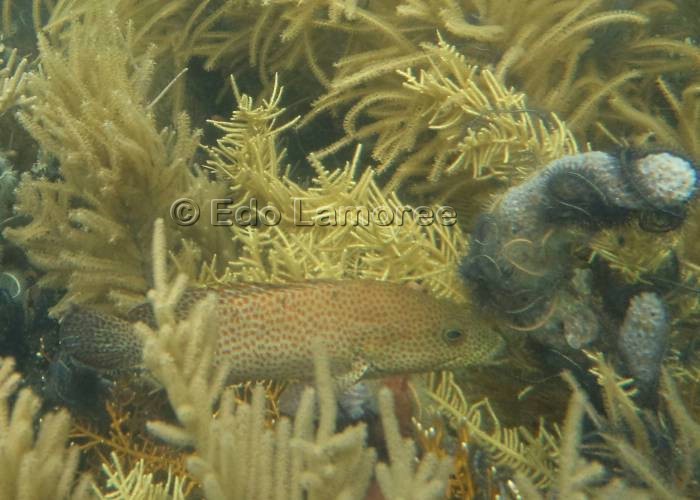
Cephalopholis cruentata (Lacepède, 1802) (Coney)
Inhabit Thalassia beds and coral reefs. In the Gulf of Mexico, they are found on rocky reef ledge in depths greater than 27 m. Solitary and secretive, they usually stay near hiding places during the day. Prefer to rema...
Read More
Read More
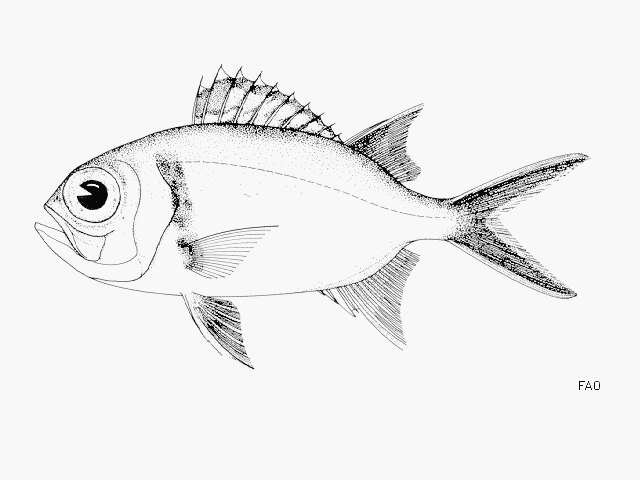
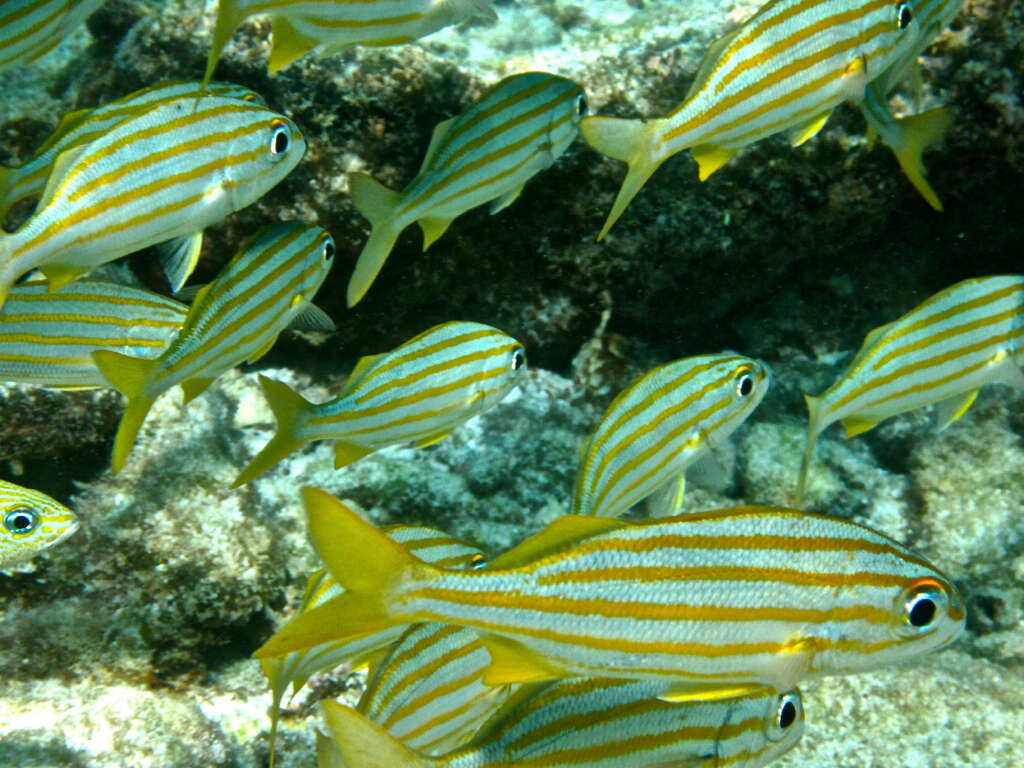
Haemulon chrysargyreum Günther, 1859 (Banana grunt)
Inhabits exposed rocky areas and coral reefs. Often near elkhorn and staghorn corals . Commonly found in schools. Juveniles are encountered in Thalassia beds . Adults are observed in coral reefs during the day but ente...
Read More
Read More
Scorpaena plumieri Bloch, 1789 (Spotted scorpionfish)
Found mostly in shallow coral reef and rocky areas. Lies motionless on the bottom . Feeds mostly on other fishes and crustaceans. Moderately common below about 5 m depth to at least 55 m. Displays characteristic bright...
Read More
Read More
Heteroconger longissimus Günther, 1870 (brown garden eel)
Found on sandy bottom, living in colonies . Feed on plankton and detritus . They retreat into burrow when frightened . Probably spawn during warm season . Larval life spans 6-8 months .
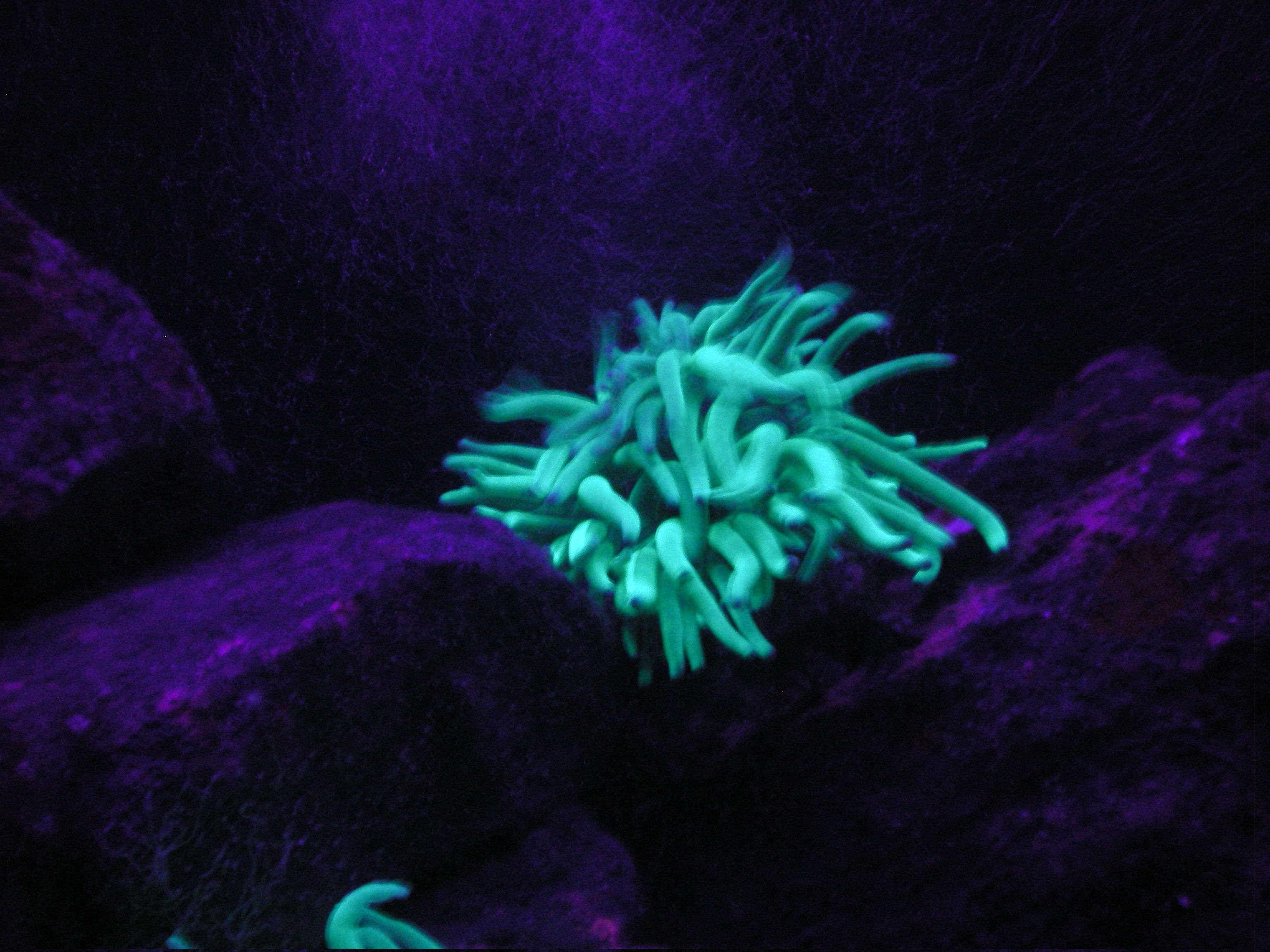
Condylactis gigantea (Weinland, 1860) (giant caribbean anenone)
Share on Social Networks
- Facebook:

personalize your shared text as well as its destination (wall, page...) or send as a private message to a friend
- Twitter: Tweet personalize your tweet
- Google Plus:
Direct link to this dive
- Long link:
- Short link:


 We are participating today in the startup contest Techcrunch Disrupt. Support Diveboard by voting for us!
























































































