


 Michael Colligon

- Michael Colligon in Shipwreck Point Dolphin Academy Open Water
-
 Netherlands Antilles
Curacao
Caribbean Sea
Netherlands Antilles
Curacao
Caribbean Sea

-
Nº1
 Date: 2014-08-29 - 09:02
-
 Max Depth: 6.7m Duration: 50mins
Pictures

No pictures for this dive
- Temp: Surf 31°C Bottom 29°C
- Dive type : Recreational, Photo, dolphin
- Visibility: Good Water: Salt
Specific gear used
- Weights: 6.4 kg
Dive reviews
| Overall review | ||
| Dive difficulty | ||
| Marine life quality |
Recent Divers in Curacao

Recent Pictures in Curacao
Dive Shop & Buddies
 Dive with Marigo from Ocean Encounters Curacao
 Dive buddies:
Mennove
Dive buddies:
Mennove

Link to this spot:
- Spot:
- Country:
- Area:
- Body of water:
Dive Profile
- 1. Air
- 10L Aluminium 221 → 66 bar
- Average depth: 4.5m
Data provided by EOL.org

Species Identified
Tursiops truncatus (Montagu, 1821) (bottle-nosed dolphin)
This active species engages in much energetic behaviour, including breaching , lobtailing and bow-riding . It has also been observed 'playing games' with seaweed and other objects . Dolphins are highly intelligent a...
Read More
Read More
Lutjanus synagris (Linnaeus, 1758) (Lane snapper)
Found over all types of bottom, but mainly around coral reefs and on vegetated sandy areas. In turbid as well as clear water . Often forms large aggregations, especially during the breeding season. Feeds at night on sma...
Read More
Read More
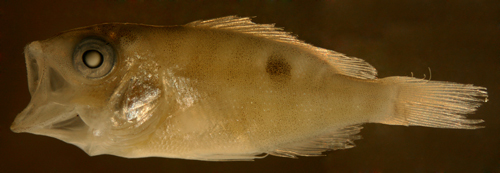
Gymnothorax vicinus (Castelnau, 1855) (Brown conger)
A benthic and solitary species inhabiting rocky shores and reefs where water is clear. Most active at night . Marketed fresh . May cause serious wounds . Traded as an aquarium fish at Ceará, Brazil .
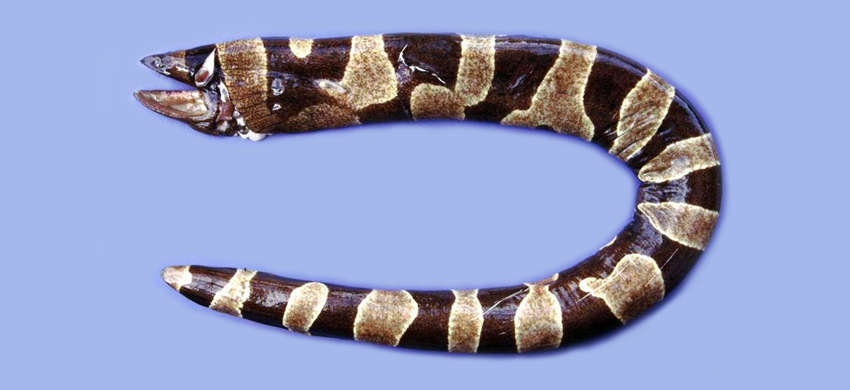
Channomuraena vittata (Richardson, 1845) (Broadbanded moray)
A benthic species and solitary species inhabiting outer reef slopes. Occurs under ledges and in holes of reef slopes . Has the habit of puffing its head like a cobra when approached . Secretive and nocturnal . Minimum depth reported taken from Ref. 30874.
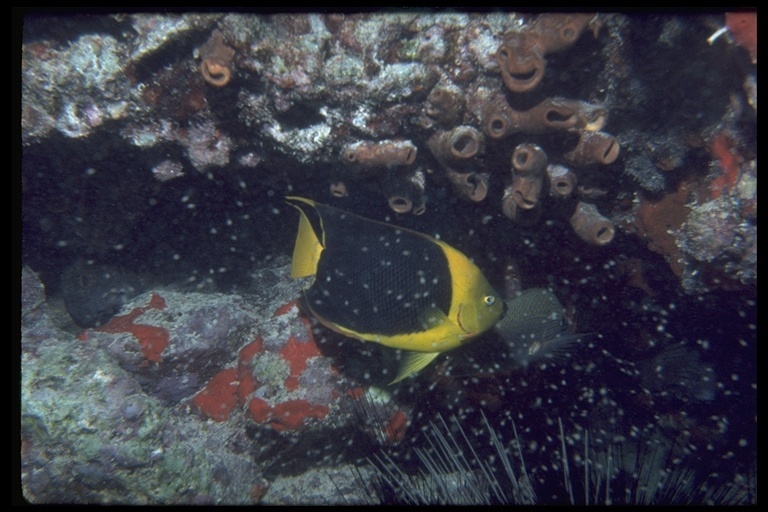
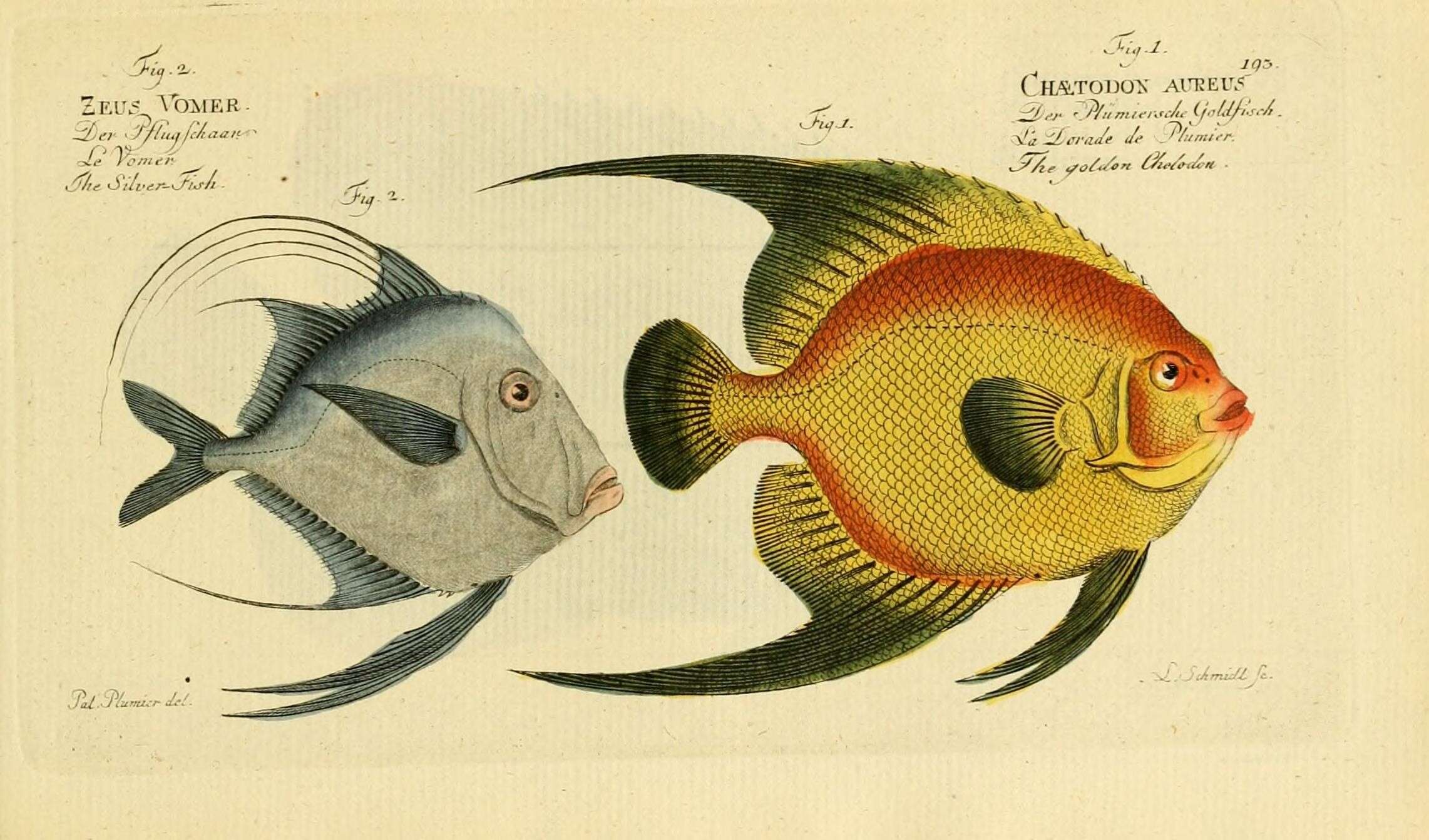
Holacanthus tricolor (Bloch, 1795) (Angelfish)
Inhabits rock jetties, rocky reefs and rich coral areas. Juveniles often associated with fire corals . Feeds on tunicates, sponges, zoantharians and algae. Marketed fresh .
Holacanthus ciliaris (Linnaeus, 1758) (queen angelfish)
Found on coral reefs. Generally occurs solitarily or in pairs. Moves gracefully between seafans, seawhips, and corals . Stomach contents of 26 specimens indicate that the species feeds almost exclusively on sponges supp...
Read More
Read More
Pomacanthus paru (Bloch, 1787) (French angelfish)
Common in shallow reefs. Usually in pairs, often near sea fans . Feed on sponges, algae, bryozoans, zoantharians, gorgonians and tunicates . Oviparous , monogamous . Spawning pairs are strongly territorial, with usuall...
Read More
Read More
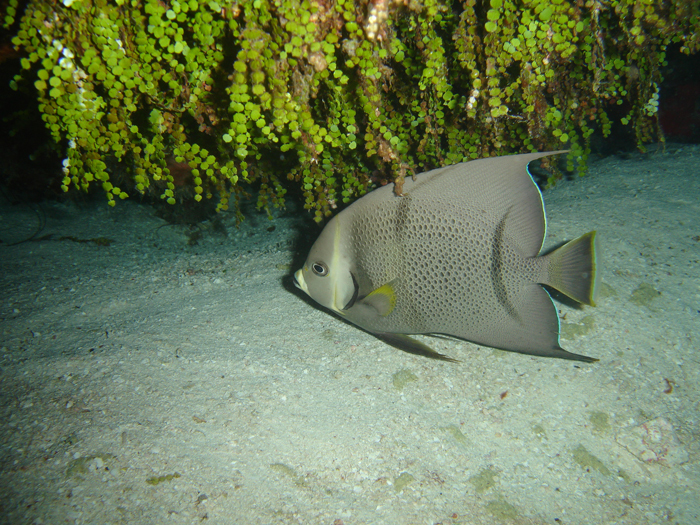
Pomacanthus arcuatus (Linnaeus, 1758) (Grey angelfish)
Common in coral reefs, usually solitary, occasionally in pairs. Juveniles are part-time cleaners. Feed mainly on sponges, but also takes tunicates, algae, zoantharians, gorgonians, hydroids, bryozoans, and seagrasses. O...
Read More
Read More
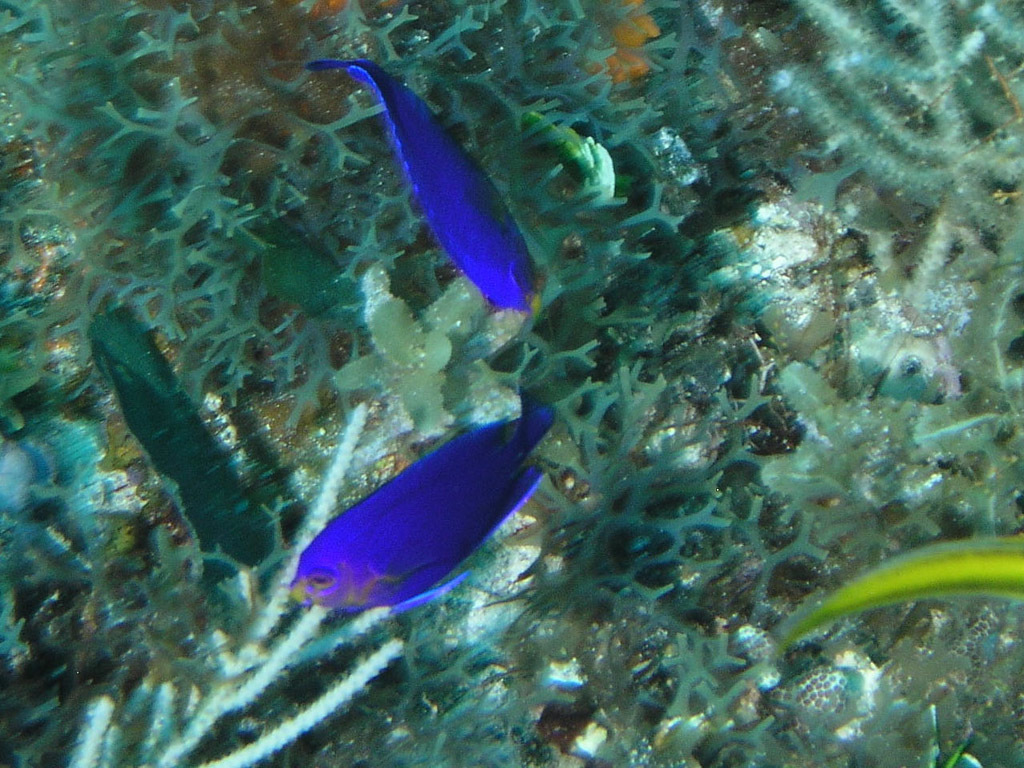
Centropyge argi Woods and Kanazawa, 1951 (Cherub pygmy angelfish)
Normally occurs in rubble areas. Feeds on various types of algae. Oviparous , monogamous . Retreats into holes when frightened . Has been reared in captivity .
Sphyraena barracuda (Edwards, 1771) (Alho)
Share on Social Networks
- Facebook:

personalize your shared text as well as its destination (wall, page...) or send as a private message to a friend
- Twitter: Tweet personalize your tweet
- Google Plus:
Direct link to this dive
- Long link:
- Short link:


 We are participating today in the startup contest Techcrunch Disrupt. Support Diveboard by voting for us!
























































































Dolphin Academy in Royal Sea Aquarium, Curacao. Did an open ocean dive with a dolphin from the Royal Sea Aquarium. It was a great dive both for the dolphin experience and the coral reef that was at shipwreck point.
This dive was done with Ocean Encounters of Curacao and they were extremely professional and would dive with them again for certain dives, but they are likely the most expensive dive center on the island.
I was completely overweighted and should have dove with 4 lbs.