


 David 'dibs' Bishop

 Egypt
Egypt
-
Nº93
 Date: 2017-04-17 - 10:39
-
 Max Depth: 24.9m Duration: 57mins
Pictures

No pictures for this dive
- Temp: Surf 23°C Bottom 22°C
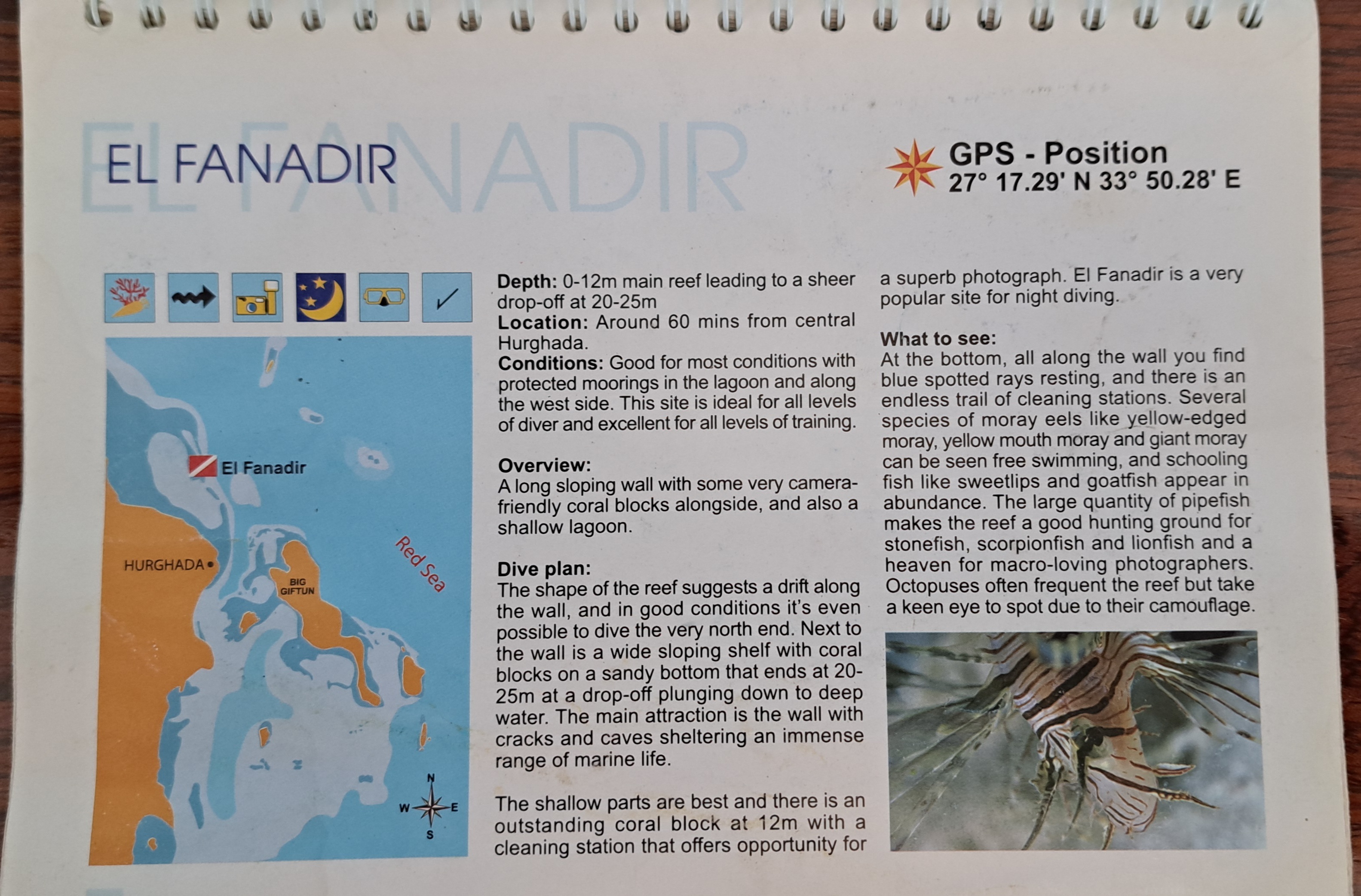
- Dive type : Recreational, Reef
- Visibility: Excellent Water: Salt
Specific gear used
- BCD: Cressi Sub - Ultralight
- Fins: Atomic Aquatics - Split Fins
- Weights: 6 kg
Dive reviews
| Overall review | ||
| Dive difficulty | ||
| Marine life quality |
Recent Divers in Hurghada


Recent Pictures in Hurghada




Dive Shop & Buddies
 Dive with Maggot from Pro Divers Corner

Link to this spot:
- Spot:
- Country:
- Area:
- Body of water:
Dive Profile
- 1. Air
- 12L Steel 170 → 50 bar
- Average depth: 9.6m
Data provided by EOL.org




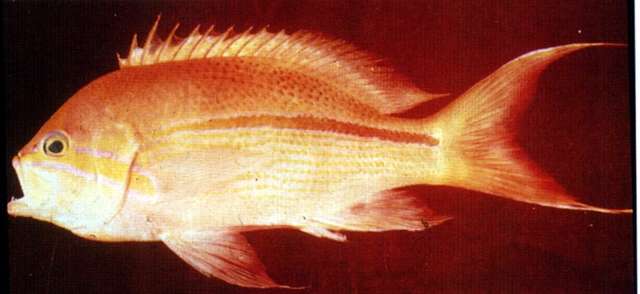
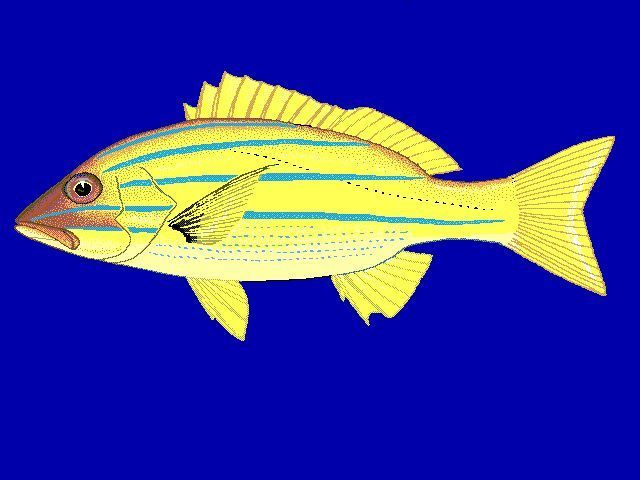
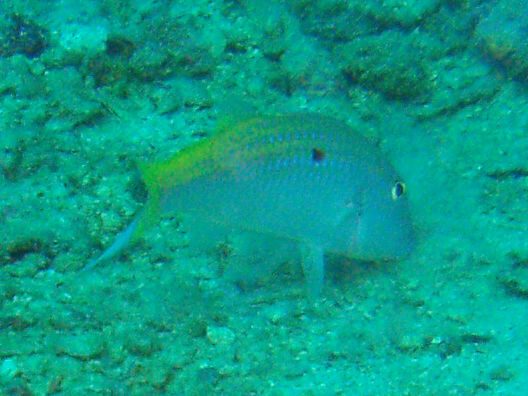

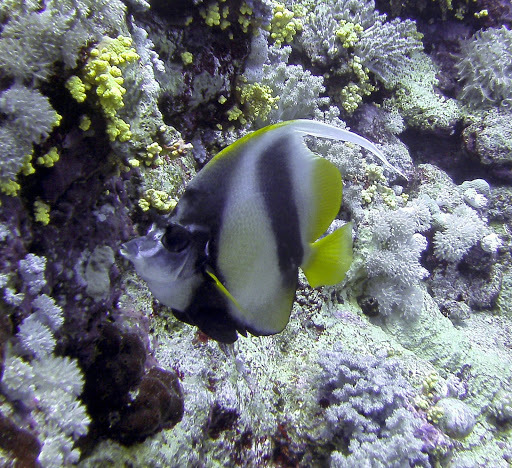





Species Identified
Sepioteuthis lessoniana Férussac, 1831 in Lesson, 1830-1831 (Bigfin reef squid)
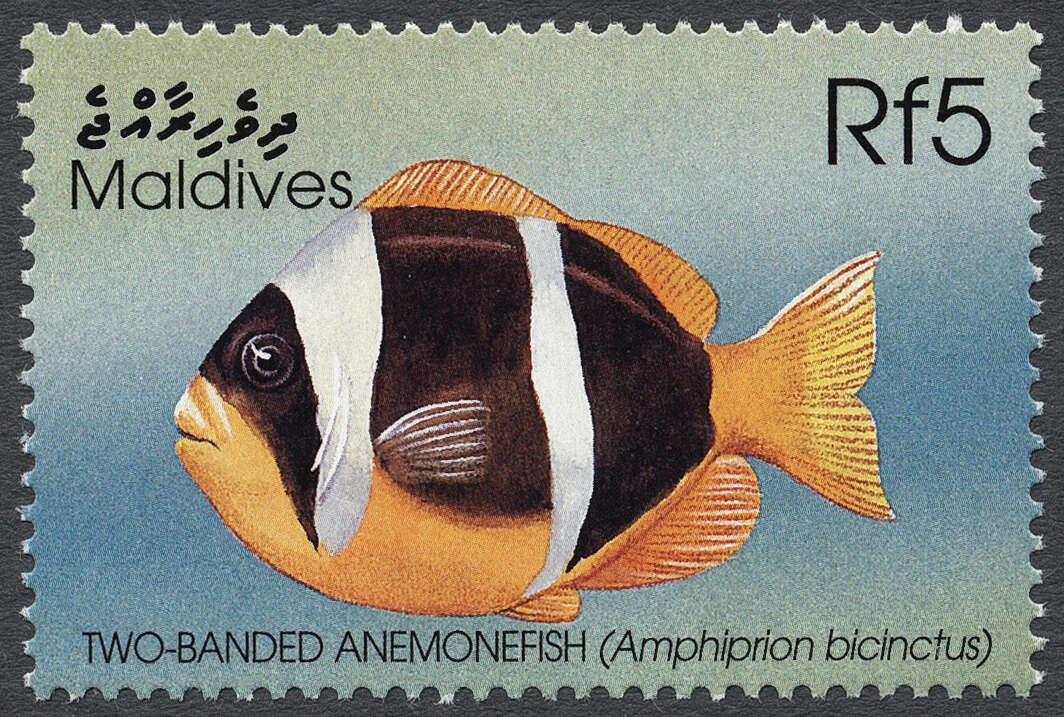
Amphiprion bicinctus Rüppell, 1830 (threebanded anemonefish)
Inhabits lagoons and outer reefs. Oviparous, with elliptical eggs . Monogamous . Has been reared in captivity . Associated with the anemones: Entacmaea quadricolor, Heteractis aurora, Heteractis crispa, Heteractis magnifica, and Stichodactyla gigantea .
Priacanthus hamrur (Forsskål, 1775) (Moontail bullseye)
Uncommon species found in outer reef slopes and deep lagoon pinnacles from 8 to at least 80 m. In small aggregations, sometimes schools in oceanic locations . Feeds on small fish, crustaceans, and other small invertebrates . Generally marketed fresh, may be salted or dried .
Naso lituratus (Forster, 1801) (Orangespine unicornfish)
Cirrhitichthys oxycephalus (Bleeker, 1855) (Coral hawkfish)
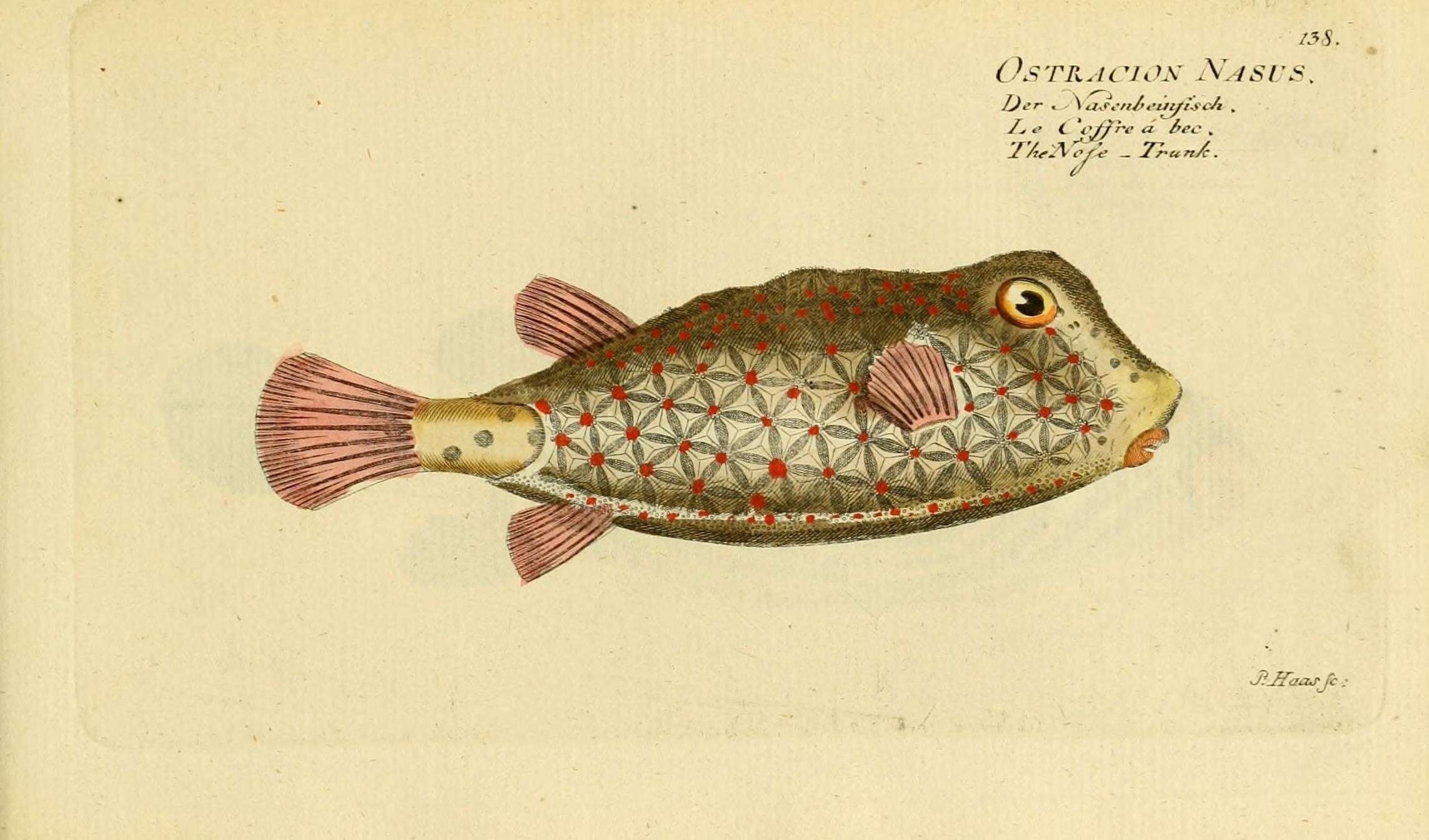
Ostracion nasus Bloch, 1785 (Shortnose boxfish)
Found around rocky and sandy substrates .
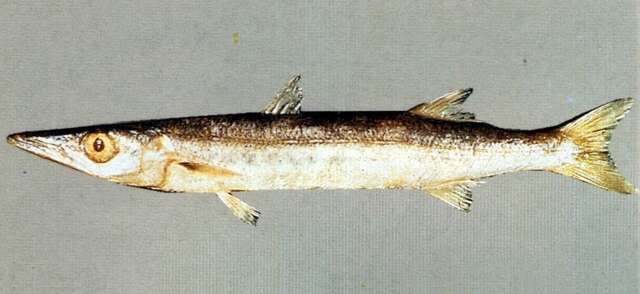
Sphyraena forsteri Cuvier, 1829 (Bigeye barracuda)
Nocturnally active, but occurring in large schools above lagoon patch reefs and along outer reef slopes during the day . Feeds mainly on fishes, but also on penaeid shrimps and squids. Sold fresh, frozen or dried salted. Reports of ciguatera poisoning need confirmation.
Plectorhinchus harrawayi (Smith, 1952) (哈氏胡椒鲷)
In coral reefs of the West Pacific Region .
Rhinecanthus assasi (Forsskål, 1775) (Picasso triggerfish)
Inhabits shallow sandy and rubble areas of coral reefs . Juveniles are commonly found on reef flats . Feeds on benthic invertebrates . Caught with artisanal gear, mainly pots .
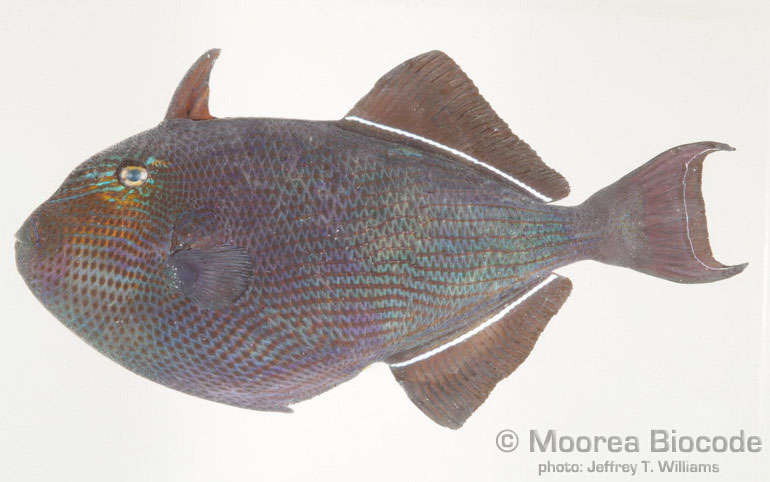
Odonus niger (Rüppell, 1836) (Redtoothed triggerfish)
Inhabits reef channels or along slopes that are subject to strong currents . Occur in current-swept seaward coral reefs. Usually form aggregations and feed on zooplankton as well as sponges . Juveniles associated with i...
Read More
Read More
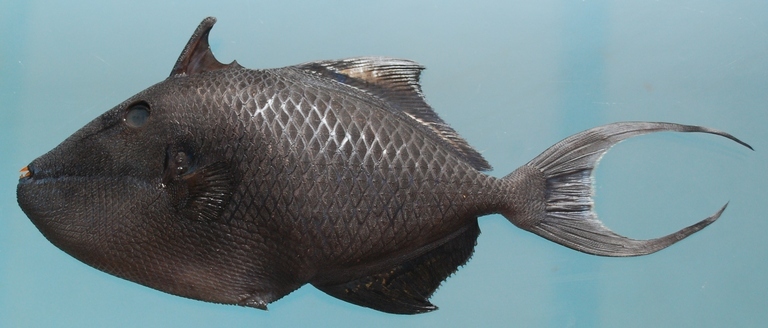
Melichthys niger (Bloch, 1786) (Black triggerfish)
Pseudanthias fasciatus (Kamohara, 1954) (One-stripe anthias)
Found in or near caves and ledges of seaward reefs . Adults swim upside-down .
Lutjanus kasmira (Forsskål, 1775) (bluebanded sea perch)
Mulloidichthys flavolineatus (Lacepède, 1801) (Samoan goatfish)
Occasionally schooling species inhabit shallow sandy areas of lagoon and seaward reefs . Large adults are often found solitary on sand slopes with other species following to feed on prey that are disturbed when the goatfi...
Read More
Read More
Parupeneus forsskali (Fourmanoir and Guézé, 1976) (forsskâl's goatfish)
The most common goatfish in shallow water in the Red Sea. Usually found on sand bottoms near coral reefs . Feeds on invertebrates that live on sand .
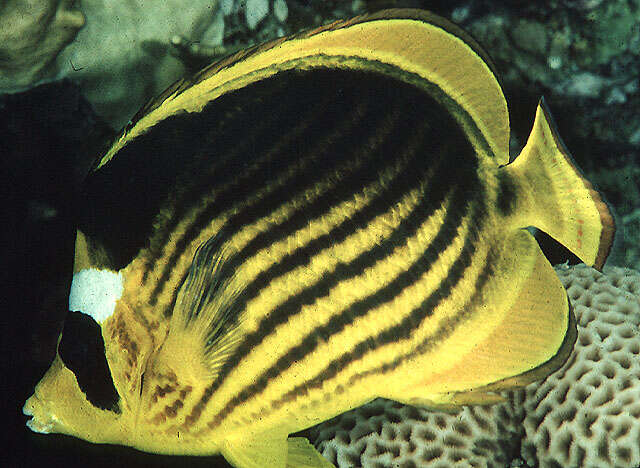
Heniochus intermedius Steindachner, 1893 (Red Sea bannerfish)
Found on coral slopes Juveniles in large groups at base of reef, sometimes with H. diphreutes; adults usually solitary or paired, occasionally in groups . Feed on zooplankton and benthic invertebrates . Oviparous , monogamous . Form pairs during breeding .
Chaetodon fasciatus Forsskål, 1775 (Diagonal butterflyfish)
Commonly found on reef flats . Usually solitary or in pairs in areas with rich coral growth. Monogamous . Feed mainly on coral polyps . Oviparous . Form pairs during breeding .
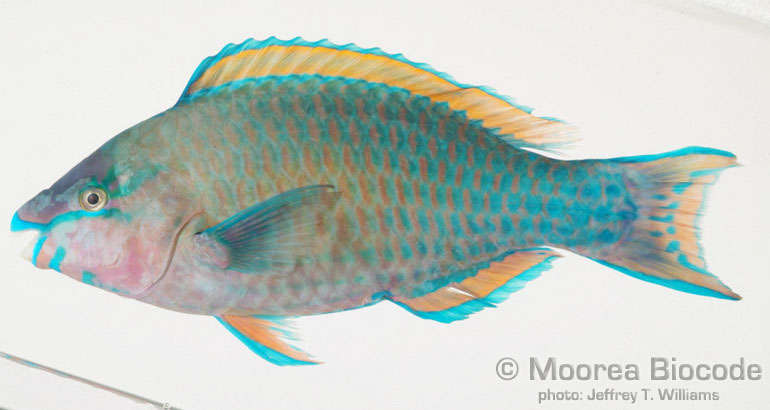
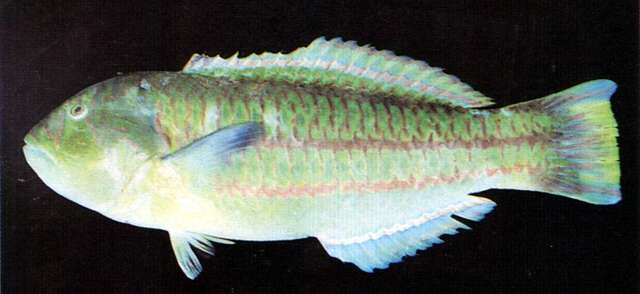
Scarus psittacus Forsskål, 1775 (Common parrotfish)
Inhabit reef flats and lagoon and seaward reefs to at least 25 m depth . Found over corals . Benthopelagic . Initial-phase fish stage usually form small feeding schools . Graze on benthic algae . Secrete a mucus cocoon .
Scarus dubius Bennett, 1828 (Regal parrot)
Inhabits seaward reefs . Benthopelagic . Grazes on benthic algae. Protogynous .
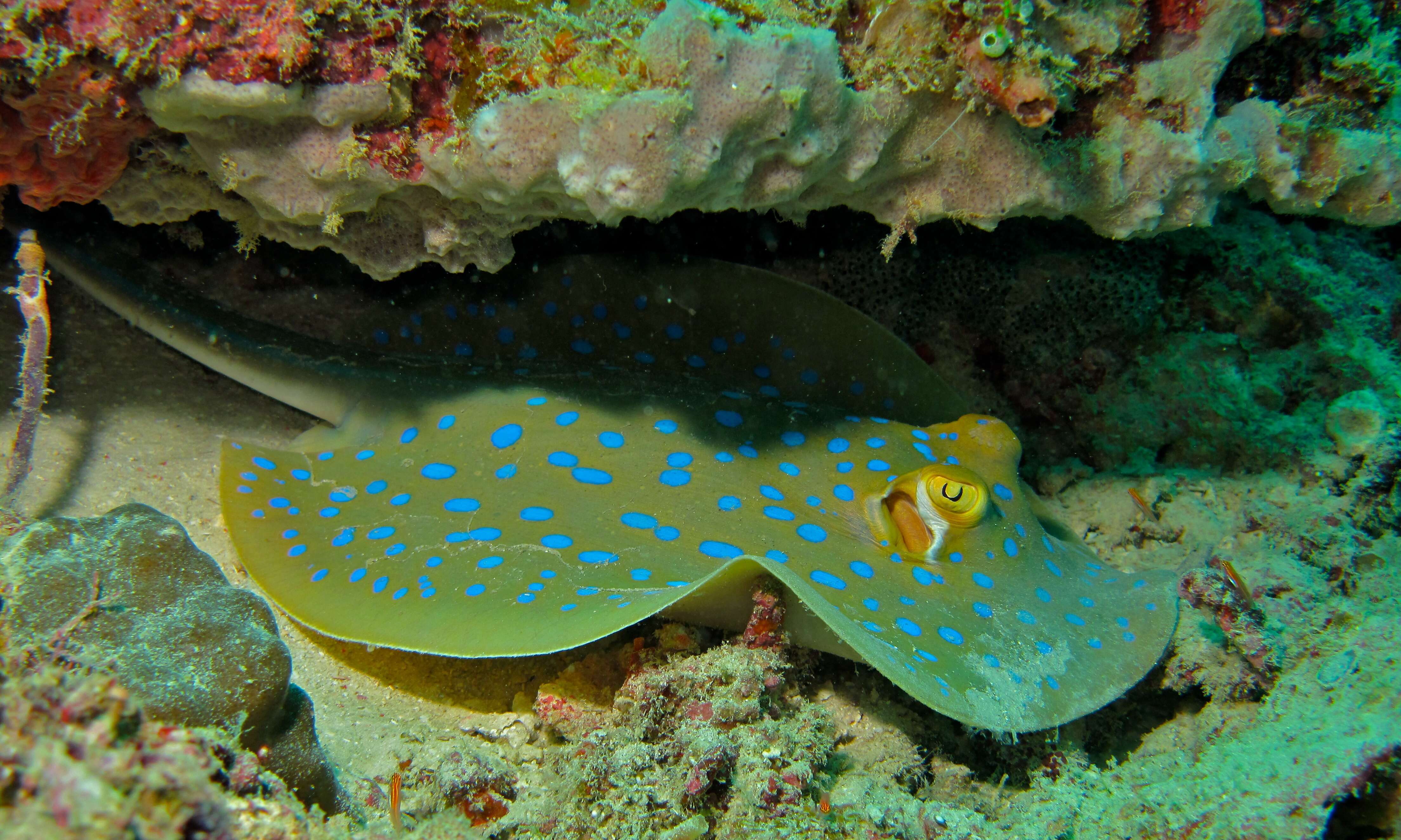
Taeniura lymma (Forsskål, 1775) (Bluespotted ribbontail ray)
Blue-spotted stingrays live alone or in small groups , migrating in large schools into shallow sandy areas on the rising tide in order to feed, and dispersing back into the ocean as the tide falls to shelter in the coral c...
Read More
Read More
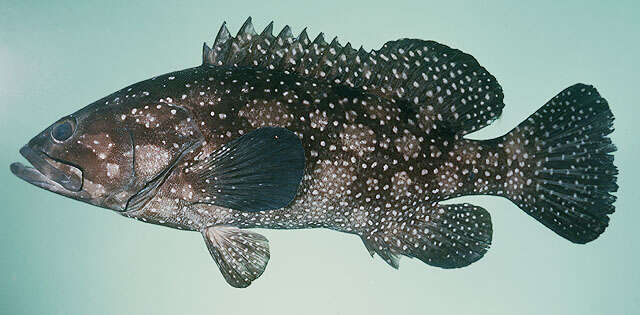
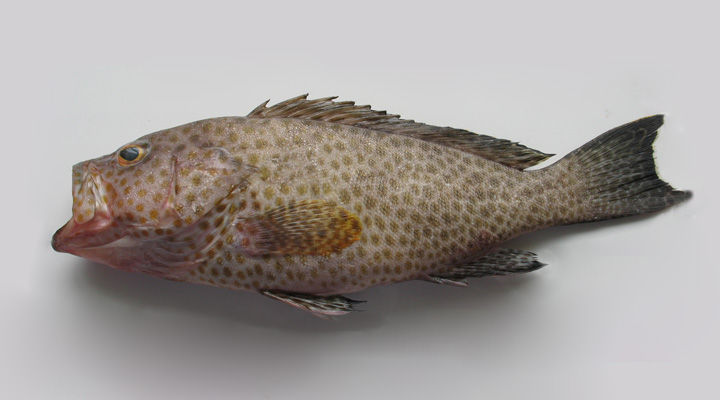
Epinephelus summana (Forsskål, 1775) (Summan grouper)
Occurs in shallow protected coral reefs and in lagoons or brackish-water environments . No published information on the biology of this species has been found . Sold fresh in local markets .
Epinephelus areolatus (Forsskål, 1775) (yellowspotted rockcod)
Usually found in seagrass beds or on fine sediment bottoms near rocky reefs, dead coral, or alcyonarians , in shallow continental shelf waters . Juveniles are common at water depths to 80 m . Probably spawn during restri...
Read More
Read More
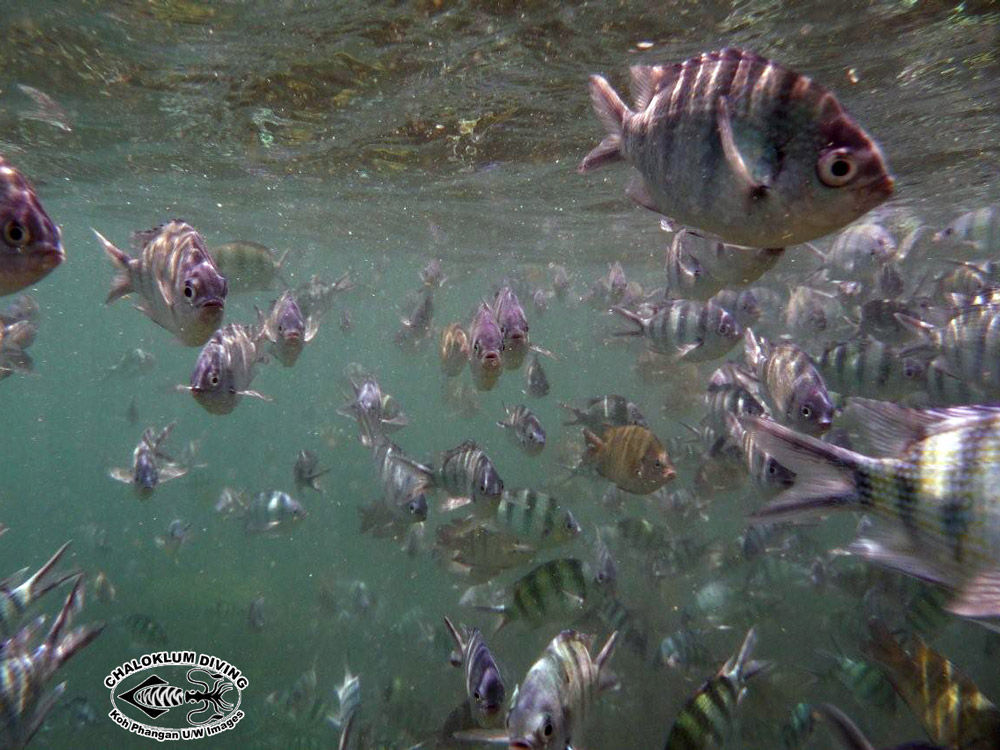
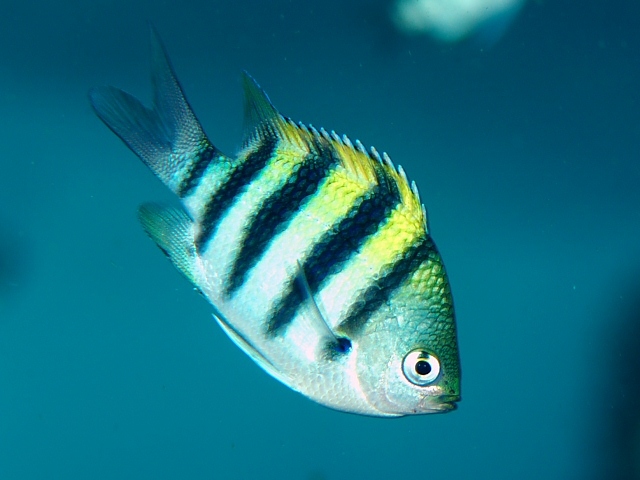
Abudefduf sexfasciatus (Lacepède, 1801) (Natal sergeant)
Inhabits inshore and offshore coral or rocky reefs. Also in shallow coastal reef flats or crests, usually where lots of tall soft corals or hydroid colonies are present . Feeds on zooplankton and algae and aggregates high in the water column .
Abudefduf vaigiensis (Quoy and Gaimard, 1825) (Five finger)
Adults inhabit upper edge of outer reef slopes and inshore rocky reefs. Juveniles associated with drifting seaweed . Benthopelagic . Feed on zooplankton, benthic algae, and small invertebrates . Often in aggregations ...
Read More
Read More
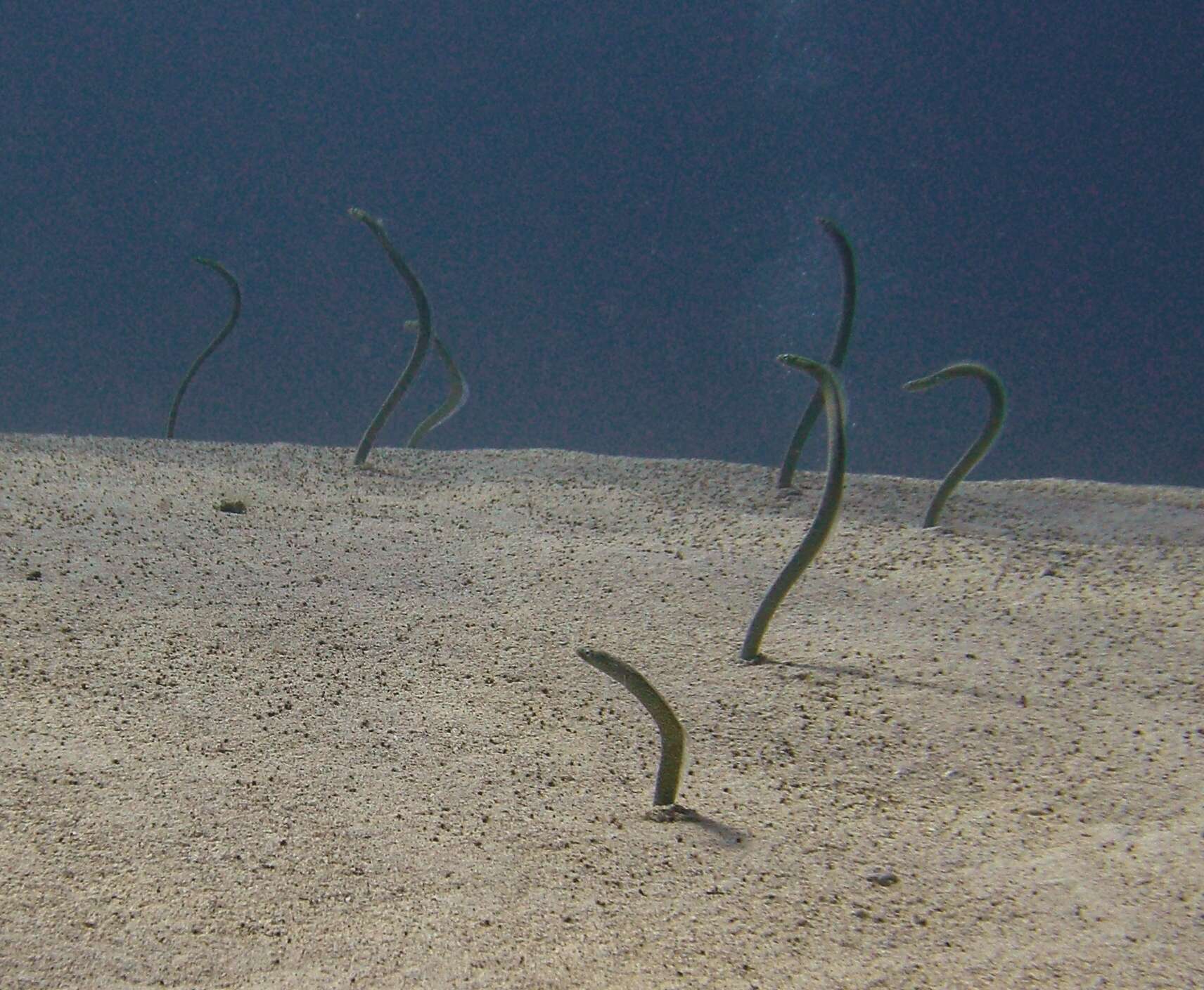
Gorgasia sillneri Klausewitz, 1962 (Úhorovec sillneruv)
Pterois volitans (Linnaeus, 1758) (Red lionfish)
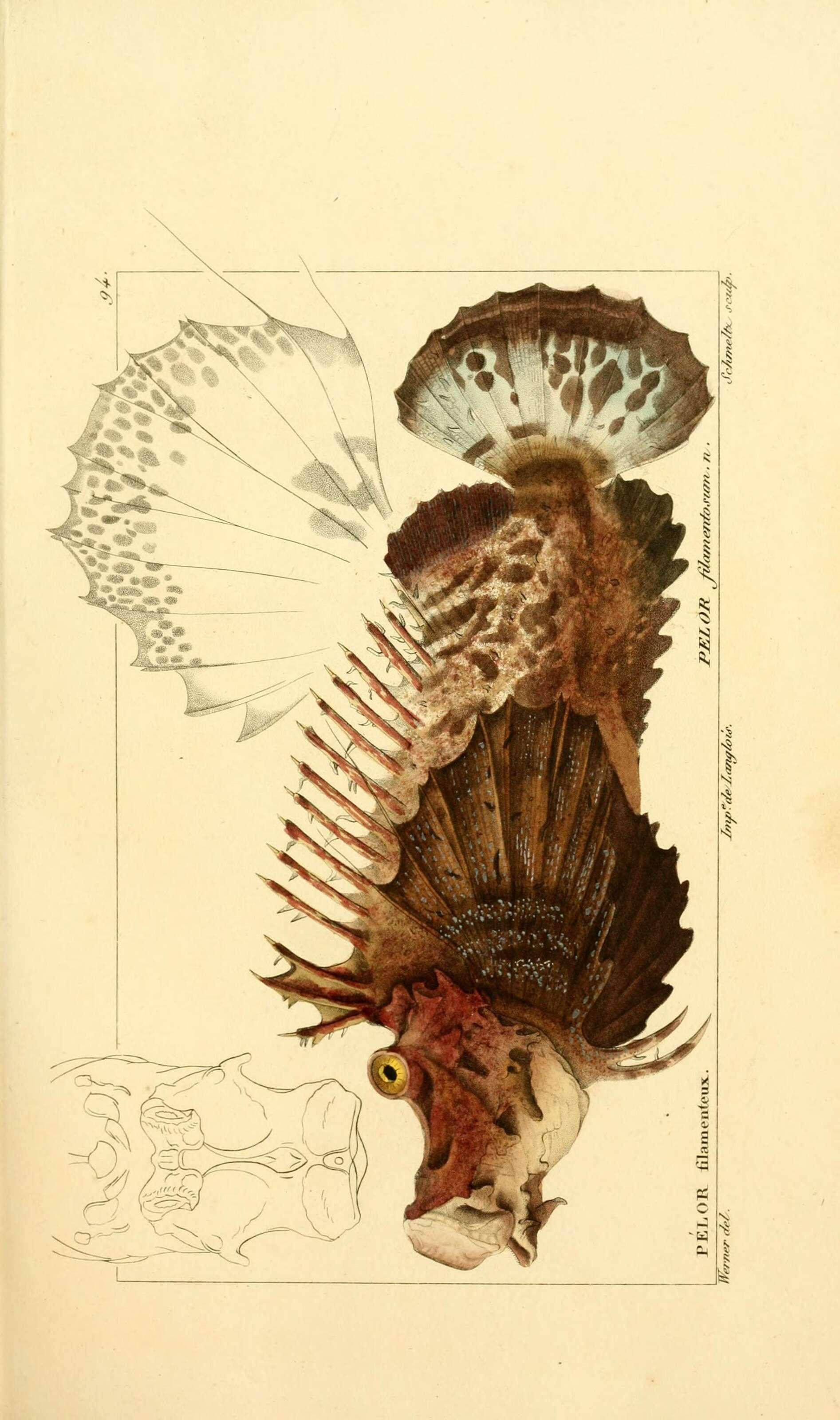
Inimicus filamentosus (Cuvier, 1829) (Two-stick stingfish)
Inhabits sand and rubble bottoms of coral reefs . Uncommon in markets.
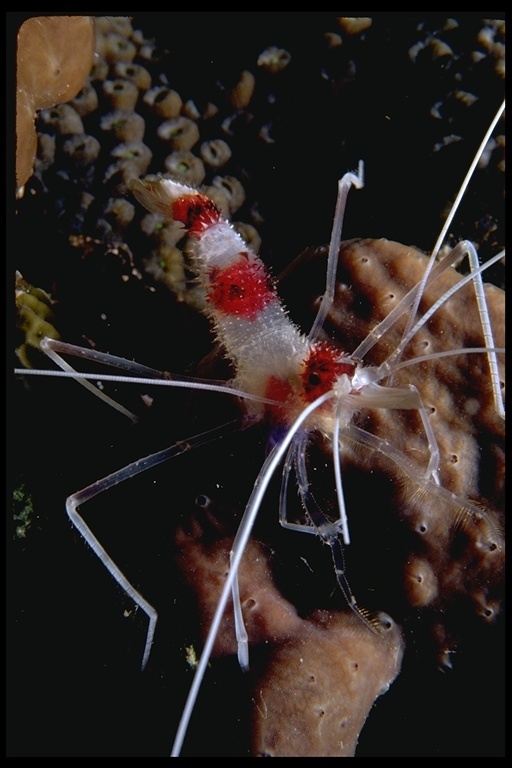
Stenopus hispidus (Olivier, 1811) (banded coral shrimp)
Aspidontus taeniatus Quoy & Gaimard, 1834 (threadfin blenny)
Inhabit lagoons, subtidal reef flats and outer reef slopes . Often in lives in pairs in empty worm tubes or narrow holes. Mimic the cleaner wrasse Labroides dimidiatus and nip fins, skin and scales of other fishes . It ...
Read More
Read More
Labroides dimidiatus (Valenciennes, 1839) (Bluestreak cleaner wrasse)
Inhabits coral rich areas of inner lagoons and subtidal reef flats to seaward reefs . Feeds on crustacean ectoparasites and mucus of other fishes . Monogamous . A protogynous hermaphrodite . Stays in stations where oth...
Read More
Read More
Coris aygula Lacepède, 1801 (Clown wrasse)
Occurs in the vicinity of sand or rubble patches of exposed outer reef flats, lagoon reefs, and seaward reefs , often in semi-exposed surge zones . Adults solitary. Juveniles common in shallow tide pools . Feeds mainly ...
Read More
Read More
Thalassoma purpureum (Forsskål, 1775) (Surge wrasse)
Gomphosus caeruleus Lacepède, 1801 (Checkerboard wrasse)
Inhabits coral-rich areas of lagoon and seaward reefs . Also in rocky reefs . Feeds on small invertebrates .
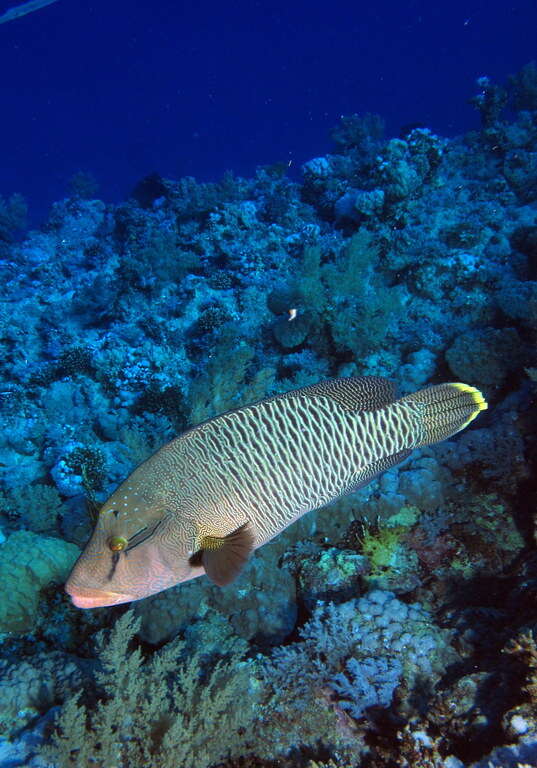
Cheilinus undulatus Rüppell, 1835 (Humphead wrasse)
Humphead wrasses are extremely long-lived, known to survive for at least 30 years, and taking around five to seven years to reach sexual maturity . Adults are usually solitary, spending the day roaming the reef and returni...
Read More
Read More
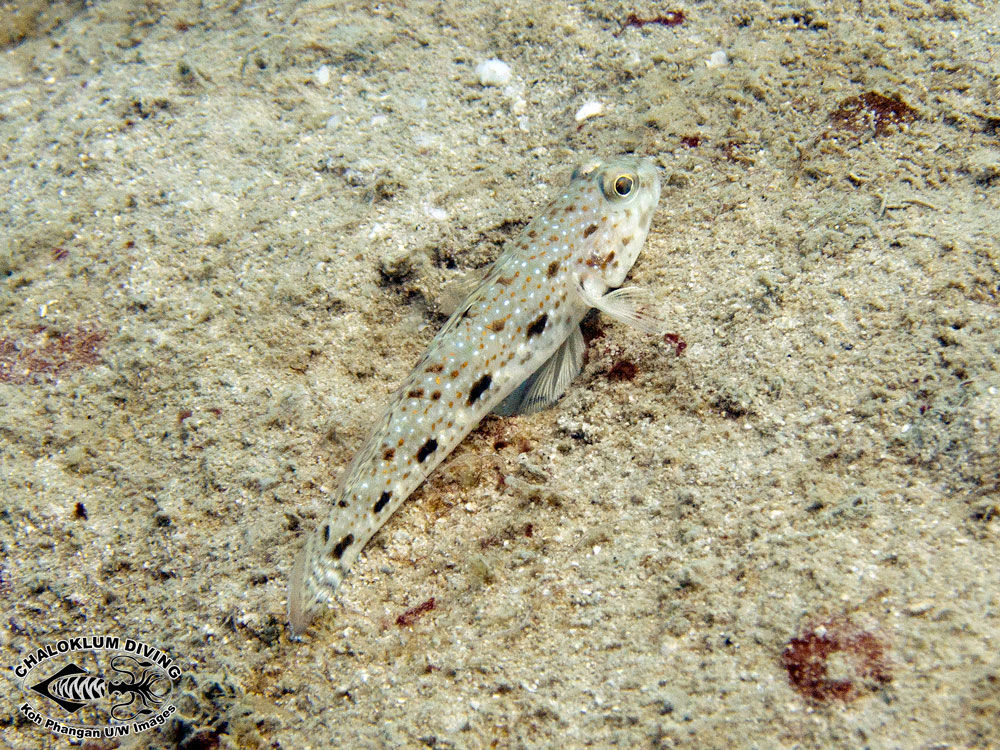
Istigobius decoratus (Herre, 1927) (Decorated goby)
A common species that inhabits areas of coralline sand of clear lagoon and seaward reefs . Found singly. Minimum depth from Ref. 58018.
Hetereleotris vulgaris (Klunzinger, 1871) (Common goby)
Share on Social Networks
- Facebook:

personalize your shared text as well as its destination (wall, page...) or send as a private message to a friend
- Twitter: Tweet personalize your tweet
- Google Plus:
Direct link to this dive
- Long link:
- Short link:


 We are participating today in the startup contest Techcrunch Disrupt. Support Diveboard by voting for us!






















































































School of small barracuda, pyjama chrmoadorid, broomtail wrasse, large klutziness wrasse, coral garden & 2 x squid