


 David 'dibs' Bishop

 Cuba
Cuba
-
Nº64
 Date: 2015-10-17 - 10:06
-
 Max Depth: 20m Duration: 32mins
Pictures

No pictures for this dive
- Temp: Surf 30°C Bottom 29°C
- Dive type : Recreational, Reef, Photo, Boat
- Visibility: Average Water: Salt
Specific gear used
- Fins: Atomic Aquatics - Split Fins
- Light: Intova - 300 Lumen
- Weights: 2 kg
Dive reviews
| Overall review | ||
| Dive difficulty | ||
| Marine life quality |
Recent Divers in Varadero
Recent Pictures in Varadero
Dive Shop & Buddies
 Dive with Jose Santana
 Dive buddies:
Leah Bishop
Dive buddies:
Leah Bishop

Link to this spot:
- Spot:
- Country:
- Area:
- Body of water:
Dive Profile
- 1. Air
- 10L Steel 190 → 70 bar
- Average depth: 14.9m
Data provided by EOL.org






Species Identified
Holocentrus adscensionis (Osbeck, 1765) (Squirrelfish)
Occurs in shallow coral reefs, as well as deeper offshore waters . A nocturnal species, hiding in deep crevices or under coral ledges during the day; at night it usually moves over sand and grass beds, taking mainly crabs...
Read More
Read More
Sphyraena barracuda (Edwards, 1771) (Alho)
Opistognathus aurifrons (Jordan and Thompson, 1905) (yellowhead jawfish)
Inhabit burrows made of crushed coral or sand. Hovers vertically, above or near its hole. The male courts the female by swimming in an arched position with his fins spread towards her . Male broods the eggs orally . Has been reared in captivity .
Mullus auratus Jordan and Gilbert, 1882 (goatfish)
Inhabits neritic waters, especially over sand or mud bottoms . Flesh considered excellent quality; marketed fresh .
Acanthocybium solandri (Cuvier, 1832) (Barracuda)
Pterois volitans (Linnaeus, 1758) (Red lionfish)
Chromis cyanea (Poey, 1860) (blue chromis)
Common above deep outer reefs and feeds in aggregations of the small zooplankton, primarily copepods . Often with creole wrasse. Retreats into coral crevices when frightened .
Cephalopholis argus Bloch and Schneider, 1801 (Grouper)
A generally common species found in a variety of coral habitats from tide pools to depths of at least 40 m; prefers the 1 to 10 m reef zone. Juvenile prefers shallow, protected coral thickets . Benthic and benthopelagi...
Read More
Read More
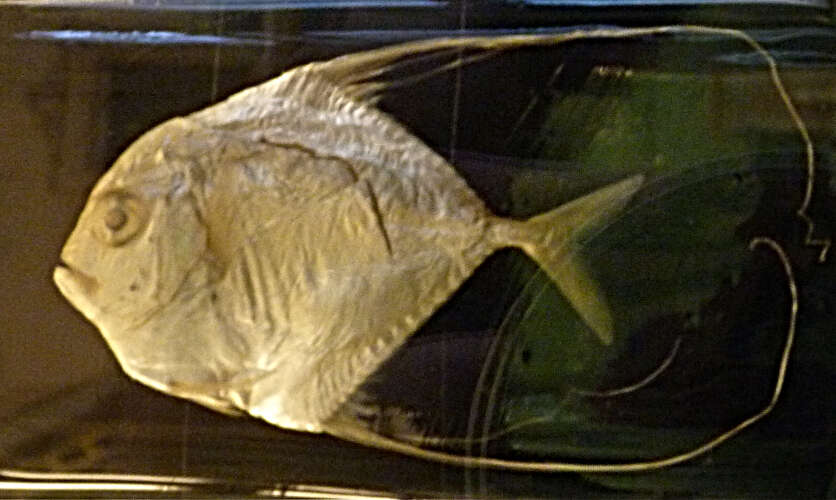
Alectis ciliaris (Bloch, 1787) (African pompano)
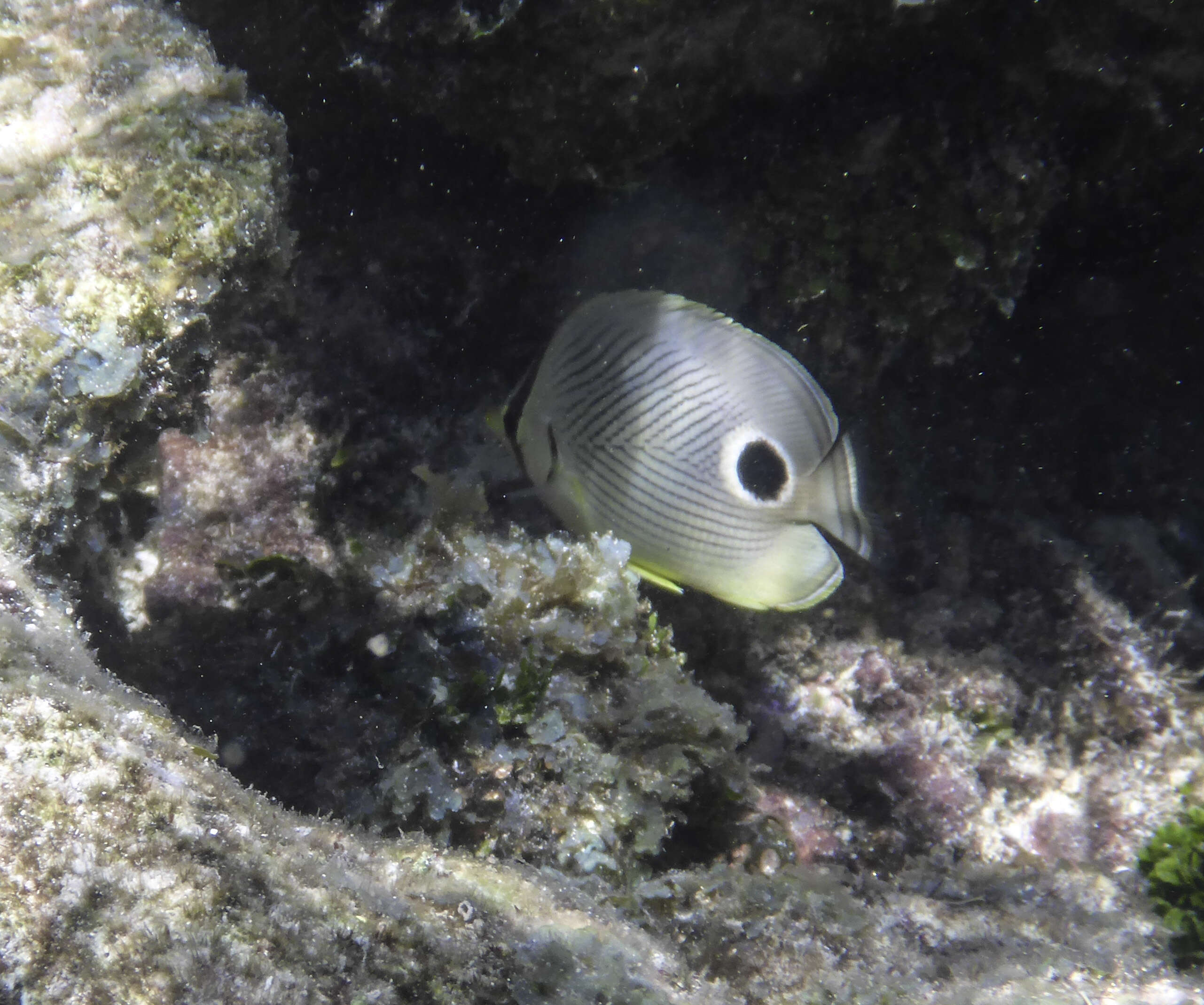
Chaetodon capistratus Linnaeus, 1758 (Butterbun)
Inhabit shallow reefs and generally occurs singly or in pairs. Feed mainly on zoantharians, polychaete worms, gorgonians and tunicates. Easily approached . Oviparous . Form pairs during breeding .
Chaetodon ocellatus Bloch, 1787 (Butterbun)
Inhabit shallow, coral reefs with clear water . Develop dusky bands at night. Generally common . Oviparous . Form pairs during breeding .
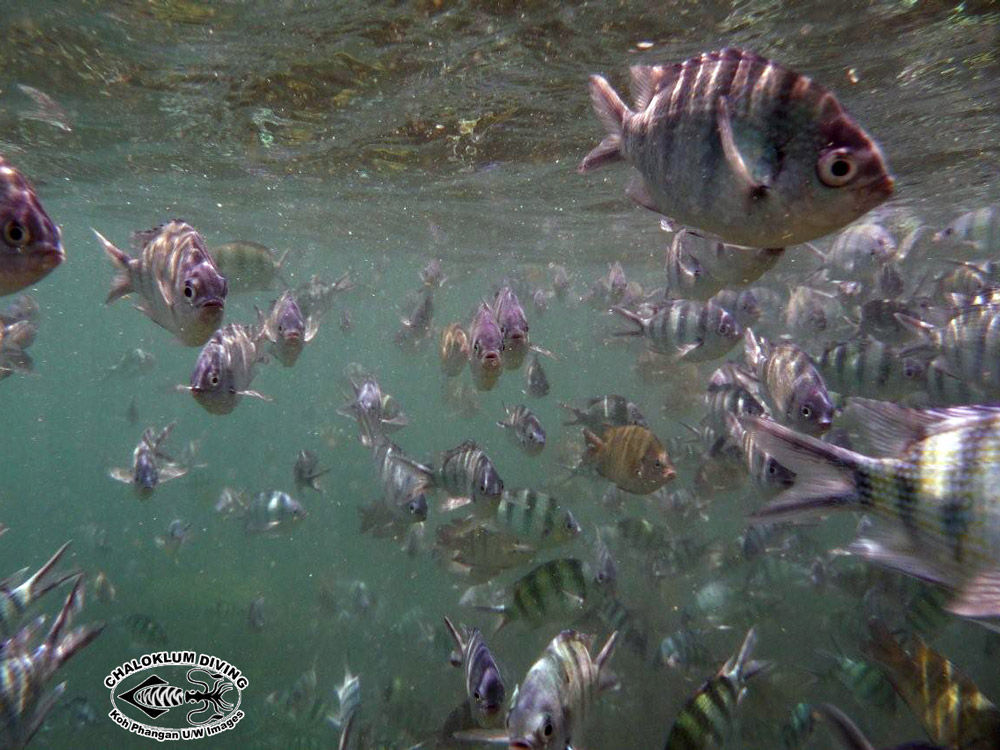
Abudefduf sexfasciatus (Lacepède, 1801) (Natal sergeant)
Inhabits inshore and offshore coral or rocky reefs. Also in shallow coastal reef flats or crests, usually where lots of tall soft corals or hydroid colonies are present . Feeds on zooplankton and algae and aggregates high in the water column .
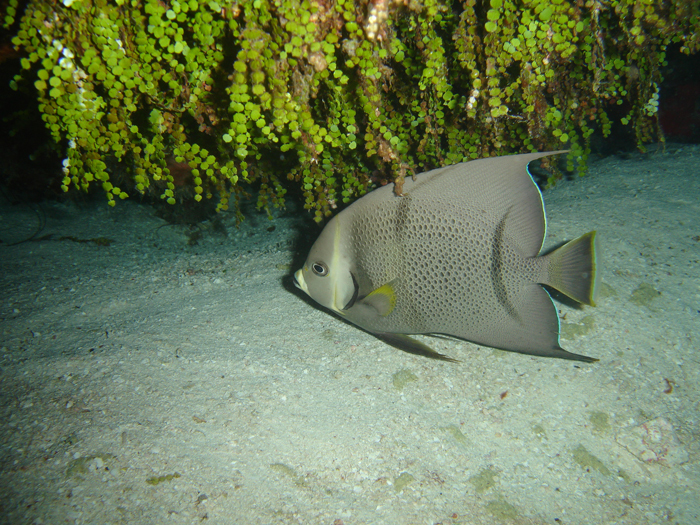
Pomacanthus arcuatus (Linnaeus, 1758) (Grey angelfish)
Common in coral reefs, usually solitary, occasionally in pairs. Juveniles are part-time cleaners. Feed mainly on sponges, but also takes tunicates, algae, zoantharians, gorgonians, hydroids, bryozoans, and seagrasses. O...
Read More
Read More
Holacanthus ciliaris (Linnaeus, 1758) (queen angelfish)
Found on coral reefs. Generally occurs solitarily or in pairs. Moves gracefully between seafans, seawhips, and corals . Stomach contents of 26 specimens indicate that the species feeds almost exclusively on sponges supp...
Read More
Read More
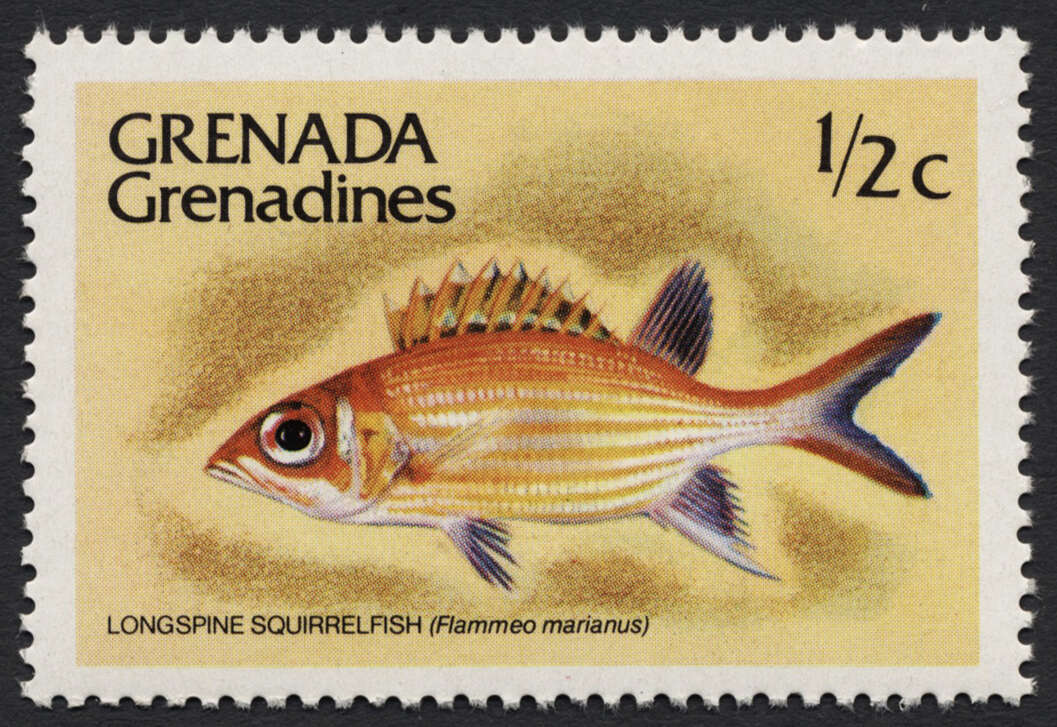
Neoniphon marianus (Cuvier, 1829) (Longjaw squirrelfish)
Rarely found in shallow water, but appears to be the most common squirrelfish in the depth range of 30-60 m or more . Reported used as food fish .
Coryphopterus eidolon Böhlke & Robins, 1960 (pallid goby)
Inhabits reef areas deeper than 6 m.
Caranx crysos (Mitchill, 1815) (Bluestripe jack)
A schooling species generally not far from the coast . Juveniles often found in association with floating Sargassum . Feed on fishes, shrimps, and other invertebrates. Spawn offshore from January through August . Eggs ...
Read More
Read More
Share on Social Networks
- Facebook:

personalize your shared text as well as its destination (wall, page...) or send as a private message to a friend
- Twitter: Tweet personalize your tweet
- Google Plus:
Direct link to this dive
- Long link:
- Short link:


 We are participating today in the startup contest Techcrunch Disrupt. Support Diveboard by voting for us!
























































































Strong current, poorer vis, Swim throughs, Lionfish, large barracuda, Starfish fossil