


 Orlandosjm

 United States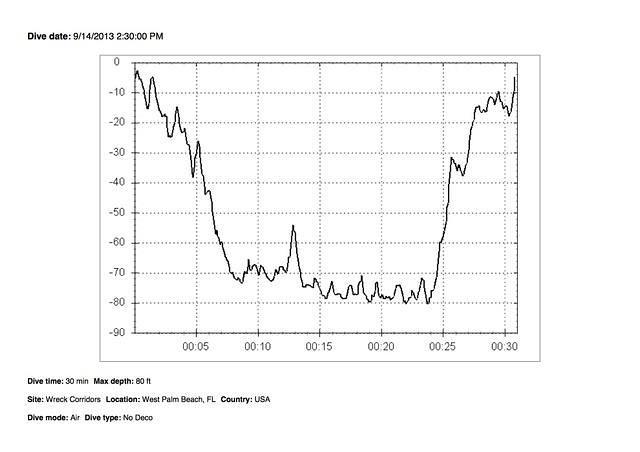
-
Nº14
 Date: 2013-09-14 - 14:30
-
 Max Depth: 24.4m Duration: 30mins
Dive Location

- Temp: Surf 34°C Bottom 29°C
- Dive type : Recreational, Wreck
- Visibility: Bad Water: Salt
Specific gear used
- Boots: Sunset -
- Computer: Mares - puck
- Fins: Pro Light -
- Lift bag: Oceanic -
- Mask: Sopras sub - Mask
- Other: Response - Snorkel
- Wet suit: Body Glove -
- Weights: 6.8 kg
Recent Divers in West Palm Beach, FL
Recent Pictures in West Palm Beach, FL
Dive Shop & Buddies
 Dive with Alex from Jim Abernethy's Scuba Adventures
 Jim Abernethy's Scuba Adventures confirmed the dive with parameters: 24.4m / 30mins
 Dive buddies:
Simone Lowson
Dive buddies:
Simone Lowson

Link to this spot:
- Spot:
- Country:
- Area:
- Body of water:
Dive Profile
- 1. Air
- 10L Aluminium 221 → 86 bar
- Average depth: 16.3m
Data provided by EOL.org

Species Identified
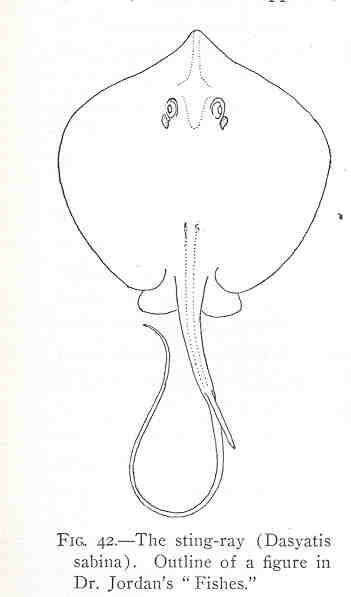
Dasyatis sabina (Lesueur, 1824) (Atlantic stingray)
Aurelia aurita (Linnaeus, 1758) (moon jelly)
The common jellyfish is carnivorous, and feeds mainly on a variety of planktonic species such as molluscs, crustaceans, young worms and copepods . The plankton is caught in a layer of mucus that covers the jellyfish. Tiny ...
Read More
Read More
Share on Social Networks
- Facebook:

personalize your shared text as well as its destination (wall, page...) or send as a private message to a friend
- Twitter: Tweet personalize your tweet
- Google Plus:
Direct link to this dive
- Long link:
- Short link:


 We are participating today in the startup contest Techcrunch Disrupt. Support Diveboard by voting for us!
























































































We went on Bill Walker's boat called “Wetter is Better” that only had about 11 people on it not including the crew and we headed out to the Corridors getting out there ready to dive at 2:30. Michelle and Alex were working the boat with Bill Walker as Captain. As usual it took us about three minutes to finish equalizing. We descended with visibility at about 30 feet which is quite poor. The current had swept us passed the wreck Mizpah and we came down almost directly on top of the Amaryllis. I remember the briefing that our guide had given us where she recommended that we swim inside the Amaryllis and the bulkheads would be a shield against the current which work quite nicely. In the current however we were being swept across the ocean floor rather quickly. Simone didn't show any signs of anxiety or discomfort as we were down. We stayed down for about 25 minutes according to my dive computer and then ascended to our 15 foot safety stop where we stayed for three minutes before continuing to the surface. At quite a few times we were at the surface surrounded by jellyfish. They were the ones with short tentacles though and didn't cause a problem.