



 April Leonard


 Netherlands Antilles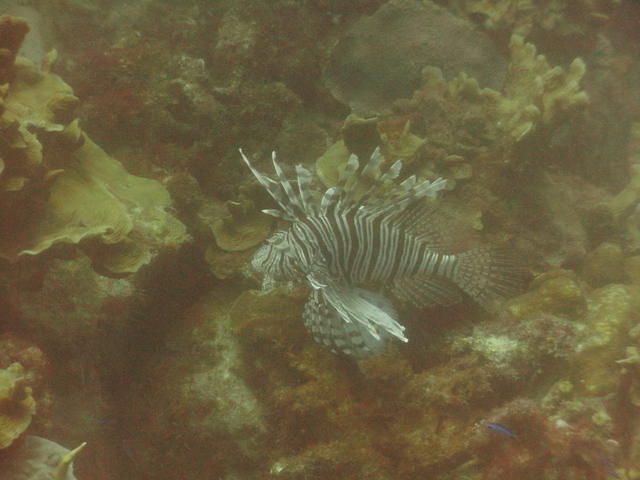
-
Nº47
 Date: 2015-07-09 - 11:37
-
 Max Depth: 20m Duration: 41mins
Dive Location

- Temp: Surf 33°C Bottom 26°C
- Dive type : Recreational, Reef, Photo, Shore dive
- Visibility: Average Water: Salt
Specific gear used
- BCD: Oceanic - Hera
- Computer: Oceanic - Pro Plus 2.1
- Regulator: Oceanic - Delta 4
- Weights: 3.6 kg
Dive reviews
| Overall review | ||
| Marine life quality |
Recent Divers in Bonaire




Recent Pictures in Bonaire
Dive Shop & Buddies
 Dive with Dive Friends Bonaire
 Dive buddies:
Justin Jantes,
Joe_kickass
Dive buddies:
Justin Jantes,
Joe_kickass

Link to this spot:
- Spot:
- Country:
- Area:
- Body of water:
Dive Profile
- 1. Nitrox 31
- 0L Steel 200 → 50 bar
- Average depth: m
- 2. Air
- 0L Steel 200 → 50 bar
- Average depth: m
- 3. Air
- 0L Steel 200 → 50 bar
- Average depth: 11.7m
Data provided by EOL.org

Species Identified
Sphyraena barracuda (Edwards, 1771) (Alho)
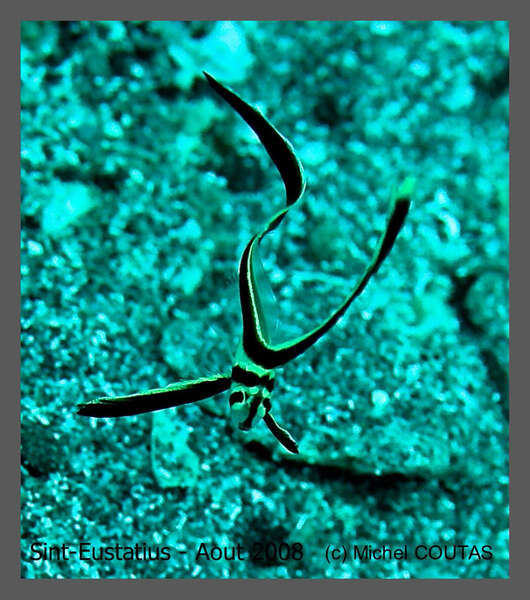
Equetus lanceolatus (Linnaeus, 1758) (Jack-knifefish)
Inhabits bays and sounds; also deep coral reefs . Juveniles sometimes inshore . Easily approached . Has been reared in captivity . Feeds mainly on small shrimps and crabs, but also on polychaete worms and gastropod mollusks .
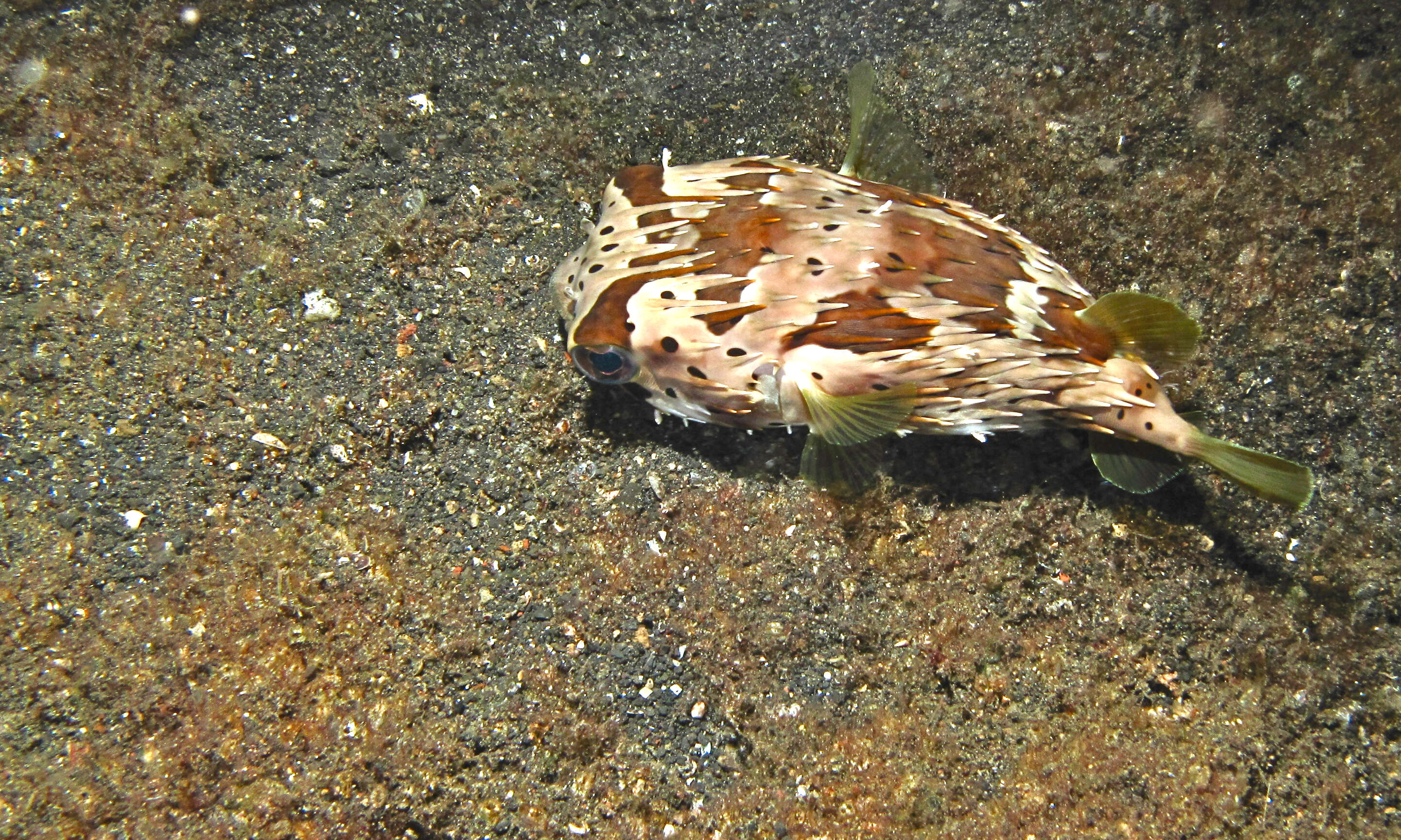
Diodon holocanthus Linnaeus, 1758 (Long-spine porcupinefish)
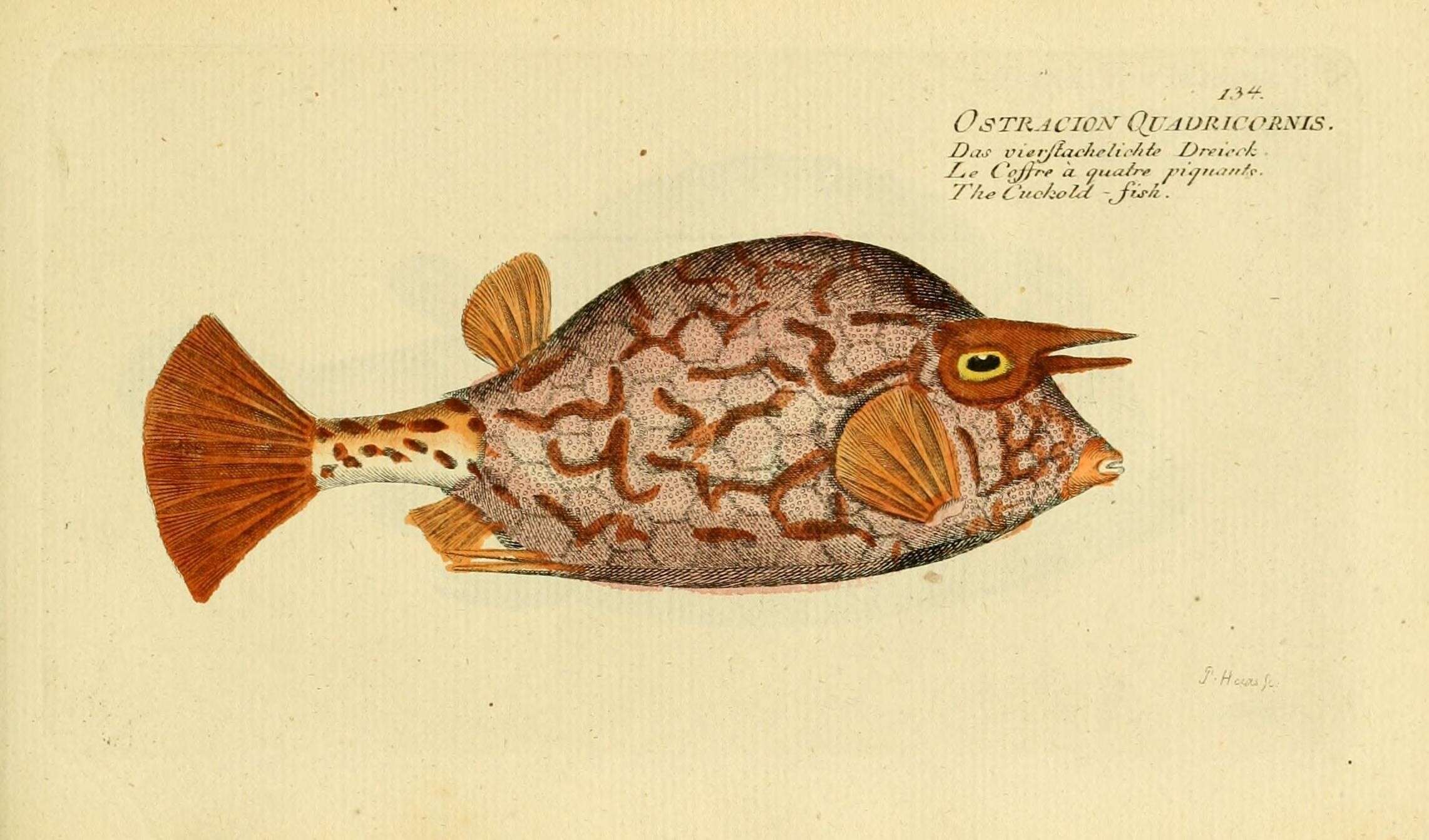
Acanthostracion quadricornis (Linnaeus, 1758) (Cowfish)
Found in shallow water down to about 80 m, mainly in seagrass beds . Feeds on sessile invertebrates such as tunicates, gorgonians and anemones, as well as on slow-moving crustaceans, sponges , hermit crabs and marine plants . Oviparous . Considered an excellent food fish; marketed fresh .
Aetobatus narinari (Euphrasen, 1790) (Bishop ray)
Large groups of spotted eagle rays may be seen outside of the breeding season. These rays swim close to the surface and can occasionally be seen jumping clear out of the water (known as 'breaching') . Females give birth to...
Read More
Read More
Share on Social Networks
- Facebook:

personalize your shared text as well as its destination (wall, page...) or send as a private message to a friend
- Twitter: Tweet personalize your tweet
- Google Plus:
Direct link to this dive
- Long link:
- Short link:


 We are participating today in the startup contest Techcrunch Disrupt. Support Diveboard by voting for us!
























































































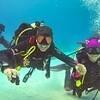
This was a very easy entrance and exit with a ladder to use. We saw several cool things on this dive: a barracuda, a large drum fish, a porcupine puffer, a cowfish, and a spotted eagle ray. I saw a large lionfish here but it was only the third of fourth of this trip. There was almost no current. The visibility was better than it's been but still not great.