


 Smmcdonald

 United States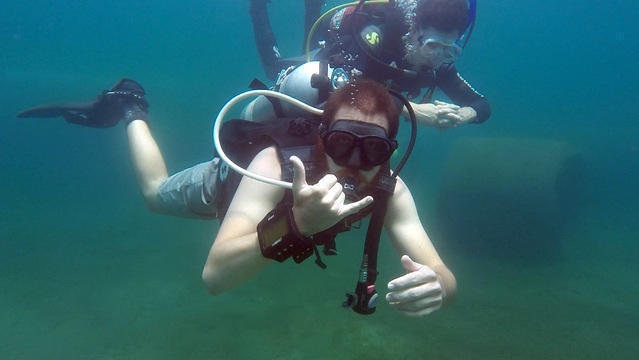
-
Nº44
 Date: 2015-07-04 - 13:21
-
 Max Depth: 7.4m Duration: 26mins
Dive Location

- Surface interval:11 mins
- Temp: Surf 30°C Bottom 25°C
- Dive type : Recreational, Photo
- Visibility: Average Water: Fresh
Specific gear used
- BCD: Scubapro - Nighthawk
- Camera: GoPro - Hero3+
- Computer: Scubapro - Luna
- Fins: Scubapro - Twin Jet
- Mask: Genesis - Panview
- Regulator: Scubapro - AIR2
- Regulator: Scubapro - MK21/S560
- Weights: 3.6 kg
Dive reviews
| Overall review | ||
| Dive difficulty | ||
| Marine life quality |
Recent Divers in Wake Forest, NC
Recent Pictures in Wake Forest, NC
Dive Shop & Buddies
 Dive buddies:
Joseph Johnson,
Billy Harloff
Dive buddies:
Joseph Johnson,
Billy Harloff

Link to this spot:
- Spot:
- Country:
- Area:
- Body of water:
Dive Profile
- 1. Air
- 12L Aluminium 153 → 83 bar
- Average depth: 4.4m
Data provided by EOL.org


Species Identified
Lepomis macrochirus Rafinesque, 1819 (Sunfish)
Found frequently in lakes, ponds, reservoirs and sluggish streams ; occur primarily in reservoirs in Hawaii; preferably live in deep weed beds . Active mainly during dusk and dawn. Adults feed upon snails, small crayfis...
Read More
Read More
Micropterus salmoides (Lacepède, 1802) (American black bass)
Inhabits clear, vegetated lakes, ponds, swamps, and backwaters and pools of creeks and rivers . Usually found over mud or sand and common in impoundments . An introduced species in Europe reported to avoid fast-flowing w...
Read More
Read More
Share on Social Networks
- Facebook:

personalize your shared text as well as its destination (wall, page...) or send as a private message to a friend
- Twitter: Tweet personalize your tweet
- Google Plus:
Direct link to this dive
- Long link:
- Short link:


 We are participating today in the startup contest Techcrunch Disrupt. Support Diveboard by voting for us!
























































































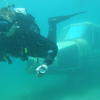
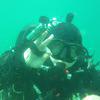
Dive #2 of 5 for Daniel's check-out. After a short surface interval, Daniel snorkeled to the bus buoy and back while Billy changed out his tank. Then it was back down for us to the bus, along the road, and back to the platform for more skills. I observed and shot some footage.
I decided to try dropping some weight for this dive. Thinking I was at 10, I was actually at 8 total: I had 3 lb weights instead of 4 in the pockets. and 1 in each trim. Surprisingly, I still seemed a little heavy.
I also tried shaking loose the new fins and they stayed securely in place. I can really tell a difference in comfort, though the extra movement, however slight, will take some getting used to.