


 Smmcdonald

 United States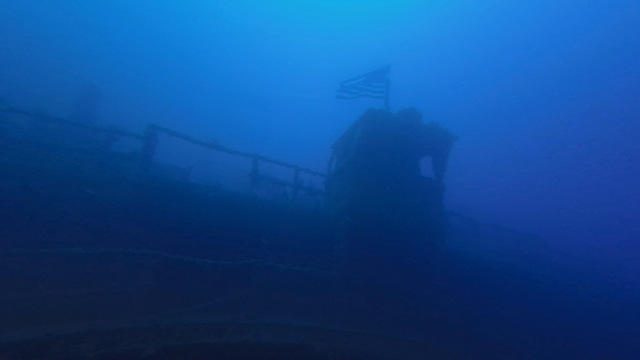
-
Nº34
 Date: 2015-06-05 - 10:26
-
 Max Depth: 37.6m Duration: 28mins
Dive Location

- Surface interval:554 mins
- Temp: Bottom 27°C
- Dive type : Recreational, Deep dive, Wreck, Boat
- Visibility: Good Water: Salt
Specific gear used
- BCD: Scubapro - Nighthawk
- Camera: GoPro - Hero3+
- Computer: Scubapro - Luna
- Fins: Scubapro - Twin Jet
- Regulator: Scubapro - AIR2
- Regulator: Scubapro - MK21/S560
- Wet suit: Henderson - 3mm
- Weights: 6.4 kg
Dive reviews
| Overall review | ||
| Dive difficulty | ||
| Marine life quality |
Recent Divers in Key Largo, FL

Recent Pictures in Key Largo, FL
Dive Shop & Buddies
 Dive with Quiescence Diving Services, Inc.
 Dive buddies:
Jennifer McDonald,
Joseph Johnson,
Cameron Cheek,
Laurin,
Billy Harloff
Dive buddies:
Jennifer McDonald,
Joseph Johnson,
Cameron Cheek,
Laurin,
Billy Harloff

Link to this spot:
- Spot:
- Country:
- Area:
- Body of water:
Dive Profile
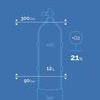
- 1. Nitrox 31
- 12L Aluminium 207 → 42 bar
- Average depth: 16.8m
Data provided by EOL.org


Species Identified
Scarus coeruleus (Edwards, 1771) (Blue kwab)
Inhabits coral reefs. Juveniles found on Thalassia beds . Feeds on benthic plants and small organisms in the sand . Forms large spawning aggregations .
Thalassoma bifasciatum (Bloch, 1791) (Blue head)
Inhabits reef areas, inshore bays and seagrass beds. Feeds mainly on zooplankton and small benthic animals, but may also feed on ectoparasites of other fishes . Spawn at midday throughout the year . A protogynous hermap...
Read More
Read More
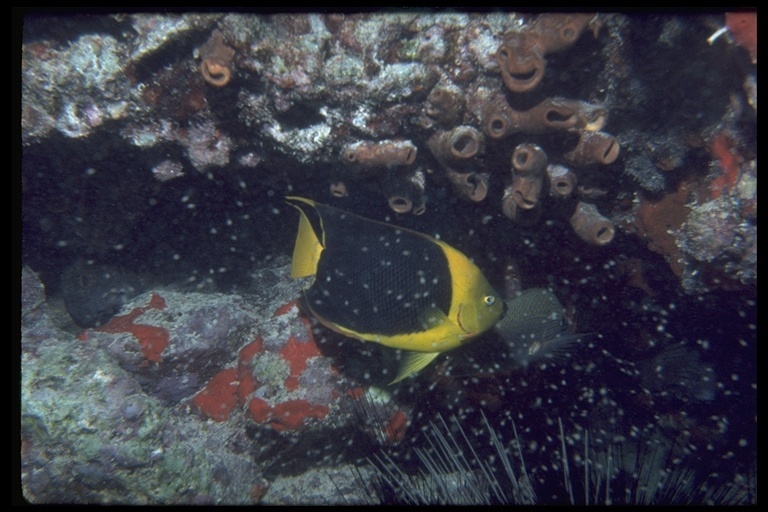
Holacanthus tricolor (Bloch, 1795) (Angelfish)
Inhabits rock jetties, rocky reefs and rich coral areas. Juveniles often associated with fire corals . Feeds on tunicates, sponges, zoantharians and algae. Marketed fresh .
Caranx latus Agassiz, 1831 (Cabali)
A pelagic schooling species usually found in offshore reefs . Juveniles are encountered along shores of sandy beaches, also over muddy bottoms . May penetrate into brackish water and ascend rivers. Feed on fishes, shrimps, and other invertebrates . Often approach divers . Eggs are pelagic .
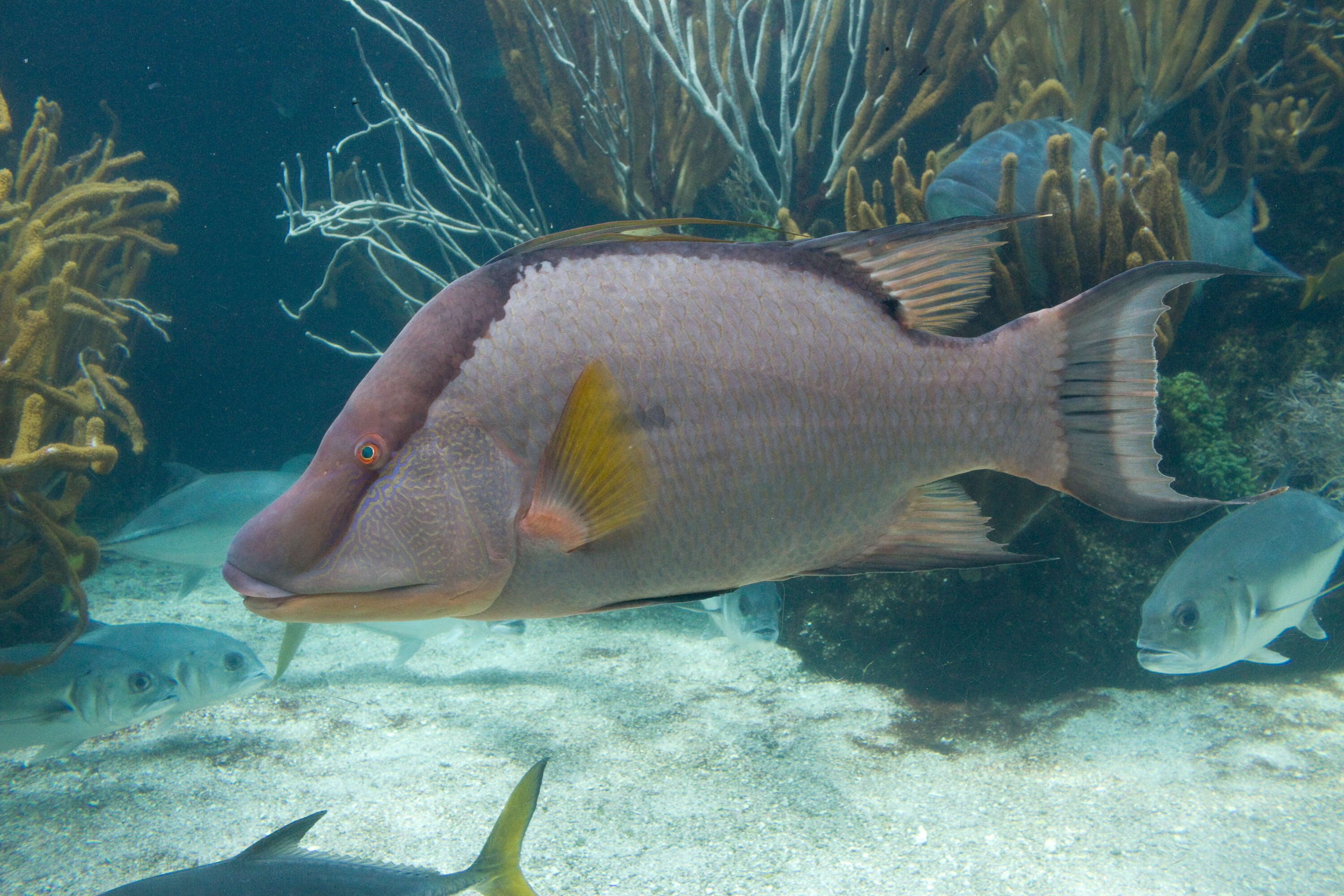
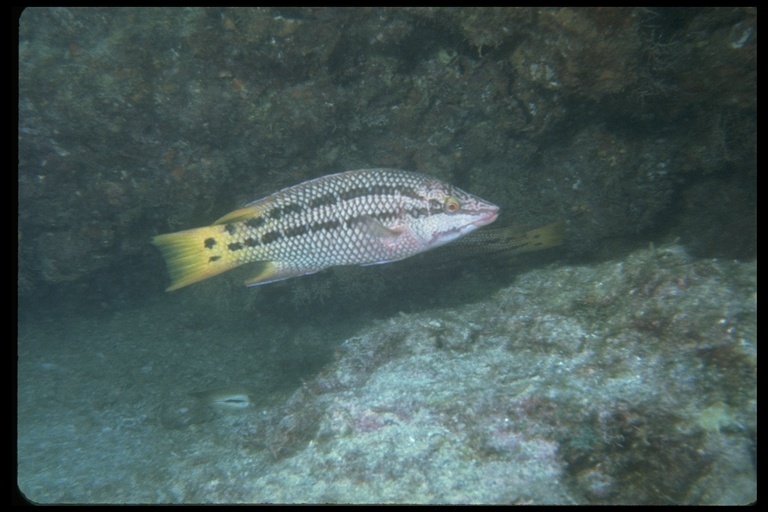
Lachnolaimus maximus (Walbaum, 1792) (Hogfish)
Hogfish have a fascinating life history; they are protogynous hermaphrodites, meaning that individuals first function sexually as females and then later, upon reaching a larger size, transform into males . This change gen...
Read More
Read More
Acanthurus coeruleus Bloch and Schneider, 1801 (Blue tang surgeonfish)
Inhabits coral reefs, inshore grassy or rocky areas. Forms small groups . Mainly diurnal. Feeds entirely on algae . At Fernando de Noronha Archipelago in southwestern Atlantic, juveniles hold cleaning stations togeth...
Read More
Read More
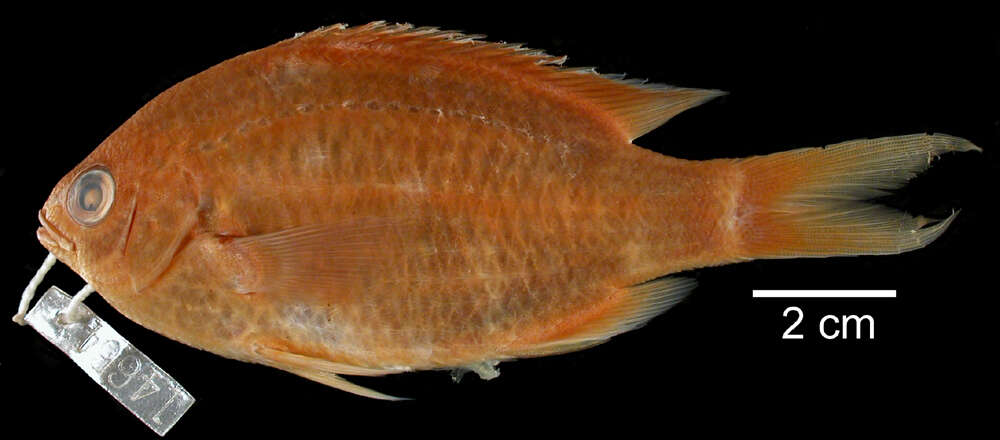
Chromis multilineata (Guichenot, 1853) (Cavalley pilot)
Generally occurs in steep slopes and patch reefs. A diurnal species , it most commonly forms moderate-sized feeding-schools over reef tops, rising above the bottom to feed on plankton, mainly copepods. Often seen with Chromis cyanea . Rarely marketed .
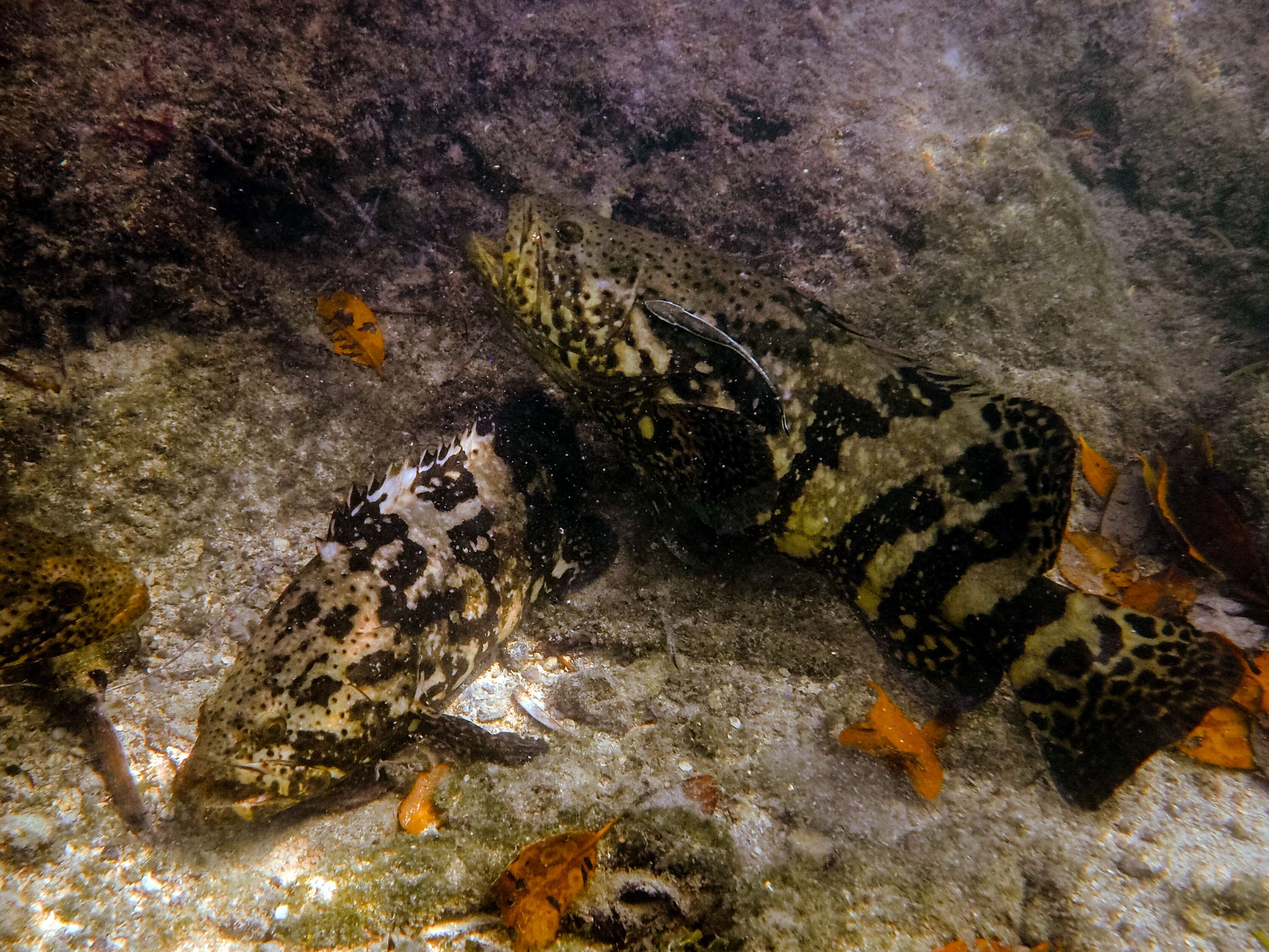
Epinephelus itajara (Lichtenstein, 1822) (Giant grouper)
The goliath grouper may be solitary or occur in groups of up to 50 or more individuals. Home range appears limited and the fish produces a booming sound when threatened by divers or large sharks. Variations of these voca...
Read More
Read More
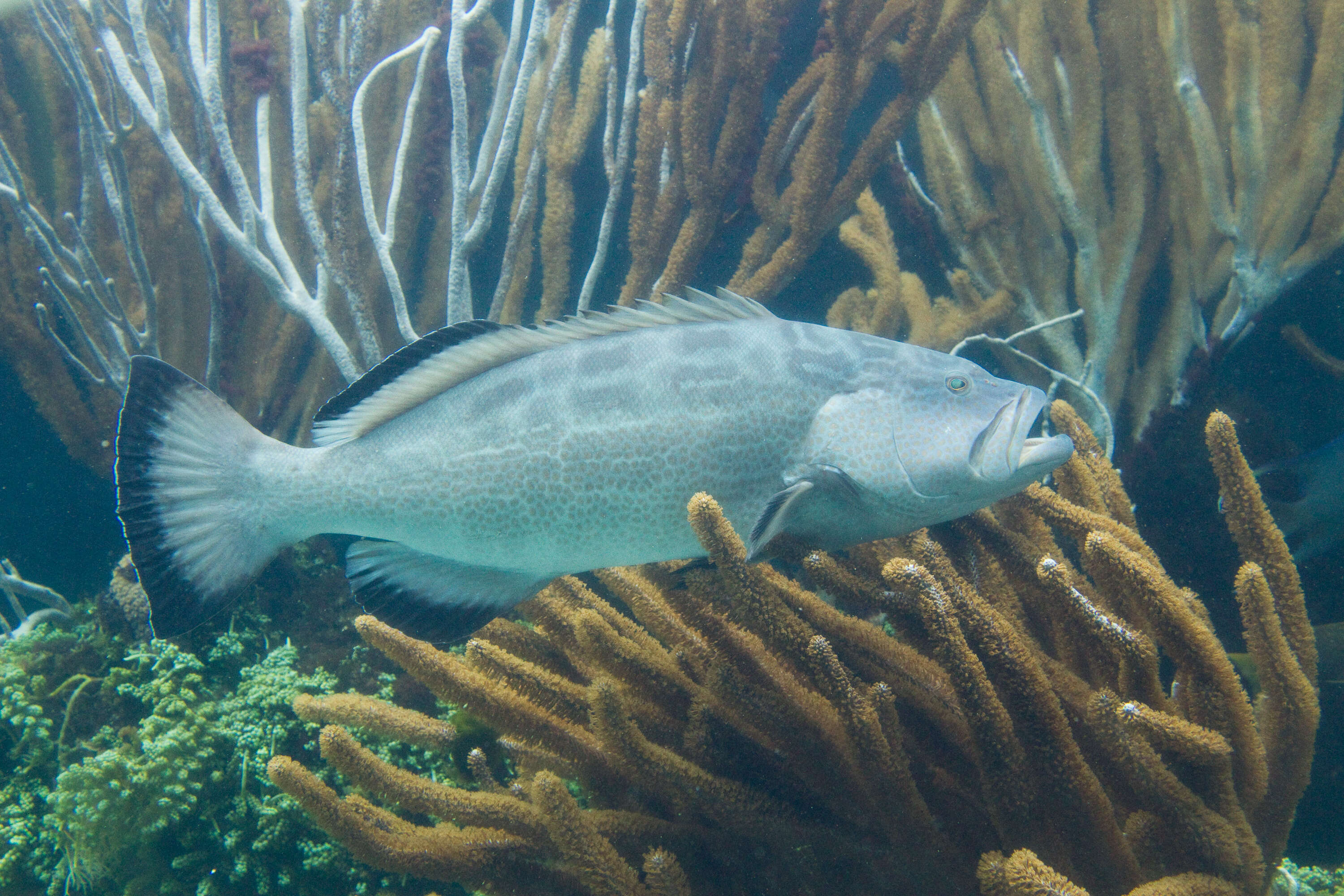
Mycteroperca bonaci (Poey, 1860) (Black gouper)
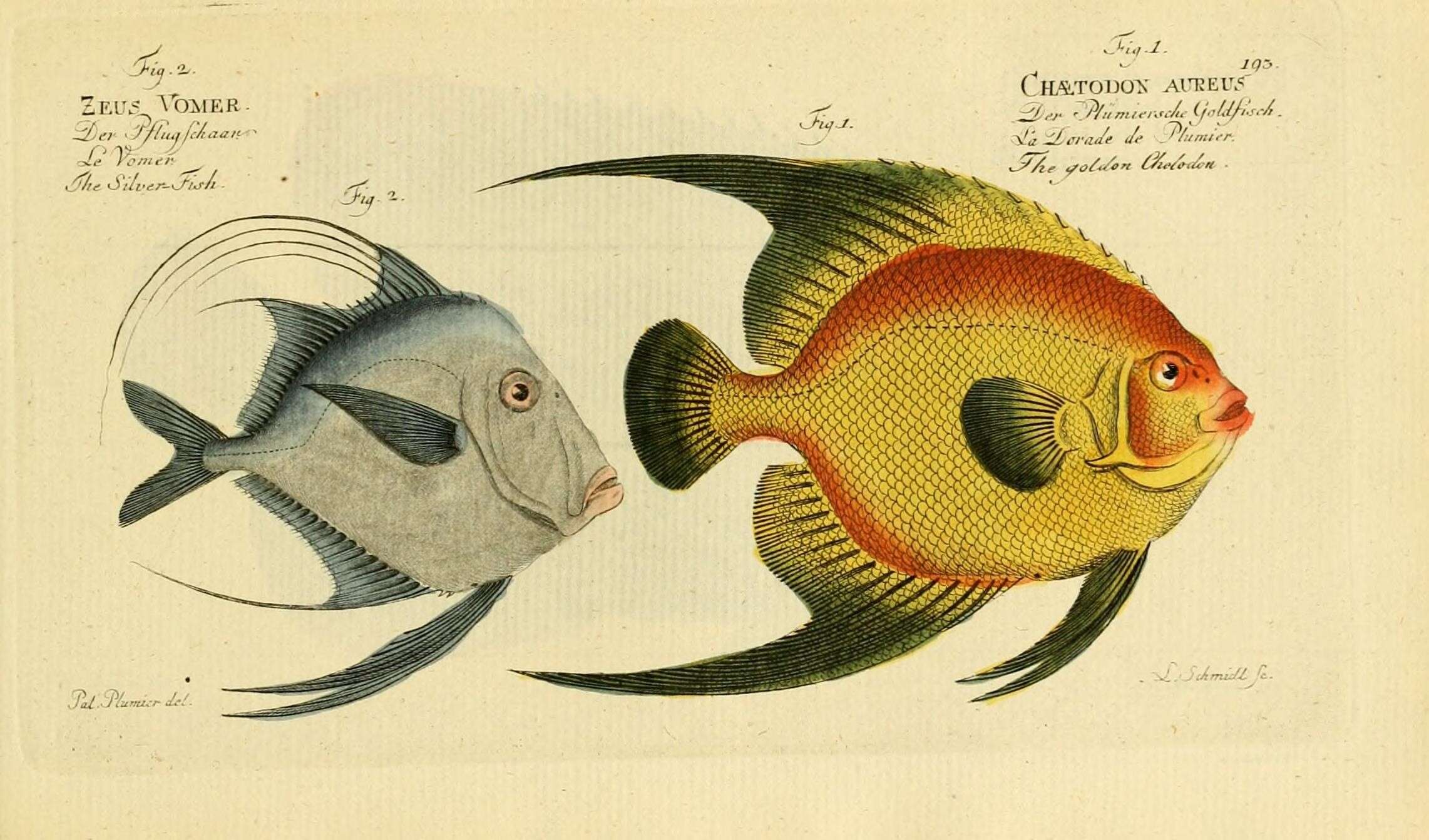
Holacanthus ciliaris (Linnaeus, 1758) (queen angelfish)
Found on coral reefs. Generally occurs solitarily or in pairs. Moves gracefully between seafans, seawhips, and corals . Stomach contents of 26 specimens indicate that the species feeds almost exclusively on sponges supp...
Read More
Read More
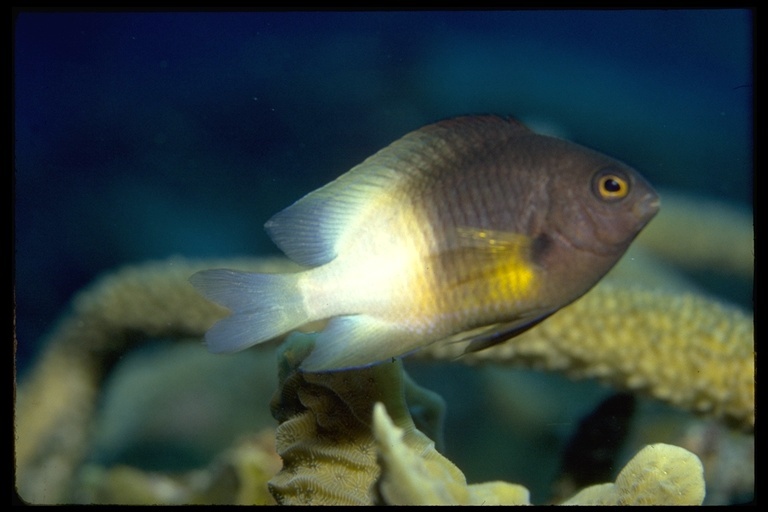
Stegastes partitus (Poey, 1868) (bicolor damselfish)
Inhabits shallow coral reefs and isolated patch reefs in deeper water. Feeds primarily on algae but also on polychaetes, hydroids, copepods and ascidians . Aggressively territorial but only around a small area . Taken incidentally in traps and small-meshed beach nets .
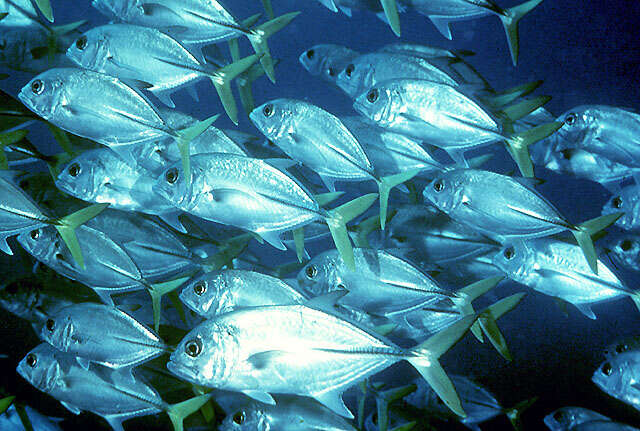
Carangoides ruber (Bloch, 1793) (Bar jack)
Common in clear insular areas or in coral reefs off mainland coasts . Juveniles frequent areas with algae . Usually in schools which may be spawning groups; occasionally solitary. Feeds on fishes, shrimps and other in...
Read More
Read More
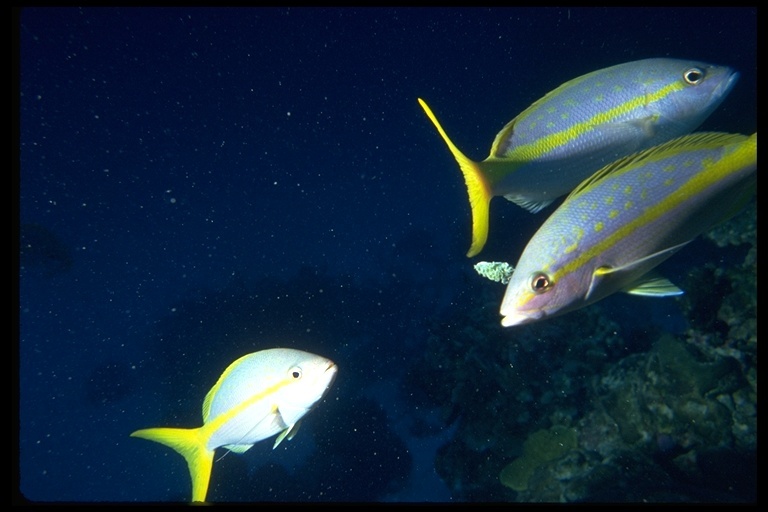
Ocyurus chrysurus (Bloch, 1791) (yellowtail snapper)
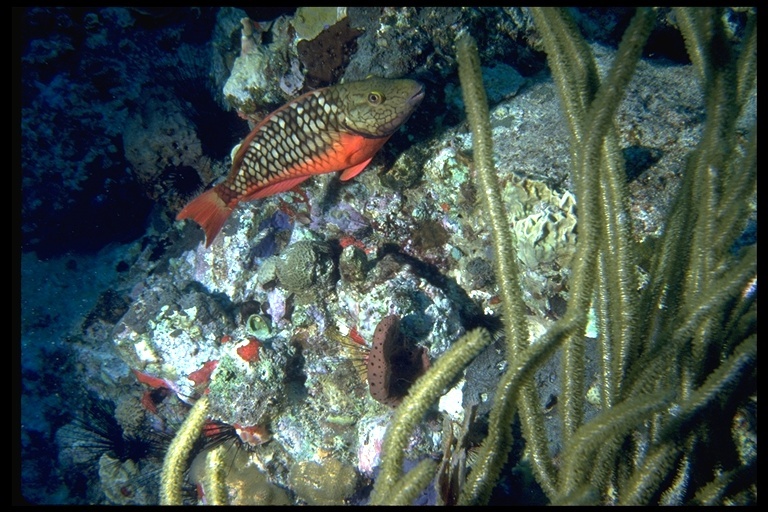
Bodianus rufus (Linnaeus, 1758) (Spanish hogfish)
Inhabits rocky or coral reefs . Feeds on brittle stars, crustaceans, mollusks, and sea urchins . Juveniles actively pick parasites from larger fishes . A protogynous hermaphrodite . May hybridize with spotfin hogfish, B. pulchellus . Marketed fresh . Maximum depth reported from Ref. 27115.
Sparisoma viride (Bonnaterre, 1788) (Dark green parrotfish)
Inhabits coral reefs with clear water . Young may be found in seagrass beds and other heavily vegetated bottoms. Feeds mainly on soft algae, but has been observed to graze on live corals like, Montastraea annularis . Pr...
Read More
Read More
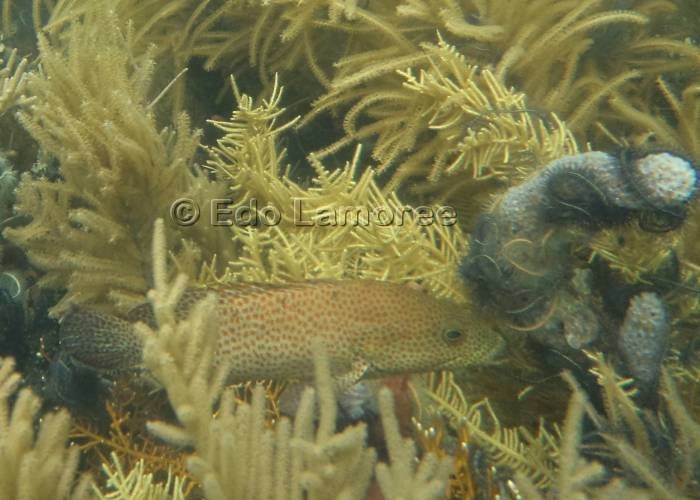
Cephalopholis cruentata (Lacepède, 1802) (Coney)
Inhabit Thalassia beds and coral reefs. In the Gulf of Mexico, they are found on rocky reef ledge in depths greater than 27 m. Solitary and secretive, they usually stay near hiding places during the day. Prefer to rema...
Read More
Read More
Abudefduf saxatilis (Linnaeus, 1758) (Mamo)
Pomacanthus paru (Bloch, 1787) (French angelfish)
Common in shallow reefs. Usually in pairs, often near sea fans . Feed on sponges, algae, bryozoans, zoantharians, gorgonians and tunicates . Oviparous , monogamous . Spawning pairs are strongly territorial, with usuall...
Read More
Read More
Share on Social Networks
- Facebook:

personalize your shared text as well as its destination (wall, page...) or send as a private message to a friend
- Twitter: Tweet personalize your tweet
- Google Plus:
Direct link to this dive
- Long link:
- Short link:


 We are participating today in the startup contest Techcrunch Disrupt. Support Diveboard by voting for us!
























































































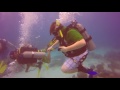
Moored to port-side buoy near stern today (on crane). This is my first time exploring this part of the Spiegel Grove. The crane is like a grid of floating aquariums! There is so much marine life here: Large jacks met us at the base of the crane arm on the descent; angels, angels on the pillar, and other reef fish all along the crane arm. The marine life in this area alone was more than most of the reef dives I've done.
We descended down to the deck and found the "throne", with which we had a bit of fun before swimming aft to explore the helipad area. It was here that Jen spotted the highlight of our dive--Two Goliath Groupers! The largest was at least 6' in length; the smaller about 2/3 the size of the larger. After watching them for a bit--and Jen swimming off to try and "catch" the smaller one--we swam back to the crane arm. I took more footage of the reef fish there, including a queen angelfish. Through the crane arm, I could clearly see the flag about 50 feet away.
We finished the dive with a swim over the helipad toward the stern. I stayed at the back of the helipad while Joseph and Jen swam the remaining distance to the stern. We turned and swam back to the line, and ascended taking our PDIS and safety stop.
SAC = 0.92 cf/min