


 Smmcdonald


 United States
-
Nº31
 Date: 2015-06-04 - 13:49
-
 Max Depth: 8m Duration: 53mins
Dive Location

- Temp: Bottom 28°C
- Dive type : Recreational, Reef, Boat
Specific gear used
- BCD: Scubapro - Nighthawk
- Camera: GoPro - Hero3+
- Computer: Scubapro - Luna
- Fins: Scubapro - Twin Jet
- Regulator: Scubapro - AIR2
- Regulator: Scubapro - MK21/S560
- Weights: 6.4 kg
Dive reviews
| Overall review | ||
| Dive difficulty | ||
| Marine life quality |
Recent Divers in Florida Keys


Recent Pictures in Florida Keys





Dive Shop & Buddies
 Dive with Quiescence Diving Services, Inc.
 Dive buddies:
Cameron Cheek,
Joseph Johnson,
Jennifer McDonald,
Laurin,
Billy Harloff

Link to this spot:
- Spot:
- Country:
- Area:
- Body of water:
Dive Profile
- 1. Air
- 12L Aluminium 210 → 36 bar
- Average depth: 5m
Data provided by EOL.org





Species Identified
Microspathodon chrysurus (Cuvier, 1830) (Jewelfish)
A common territorial species that inhabits coral reefs, juveniles usually encountered among branches of yellow stinging coral, Millepora. Found in very shallow waters of coral reefs, usually near top of outer edge where ...
Read More
Read More
Chromis cyanea (Poey, 1860) (blue chromis)
Common above deep outer reefs and feeds in aggregations of the small zooplankton, primarily copepods . Often with creole wrasse. Retreats into coral crevices when frightened .
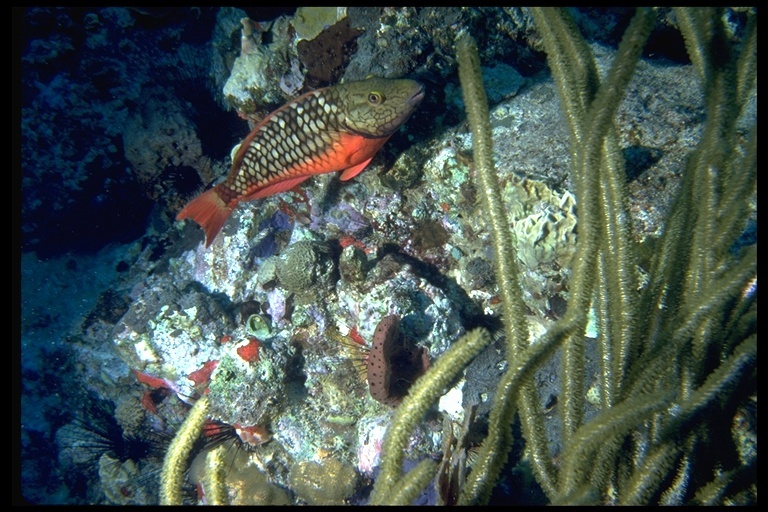
Sparisoma viride (Bonnaterre, 1788) (Dark green parrotfish)
Inhabits coral reefs with clear water . Young may be found in seagrass beds and other heavily vegetated bottoms. Feeds mainly on soft algae, but has been observed to graze on live corals like, Montastraea annularis . Pr...
Read More
Read More
Aluterus scriptus (Osbeck, 1765) (Unicornfish)
Thalassoma bifasciatum (Bloch, 1791) (Blue head)
Inhabits reef areas, inshore bays and seagrass beds. Feeds mainly on zooplankton and small benthic animals, but may also feed on ectoparasites of other fishes . Spawn at midday throughout the year . A protogynous hermap...
Read More
Read More
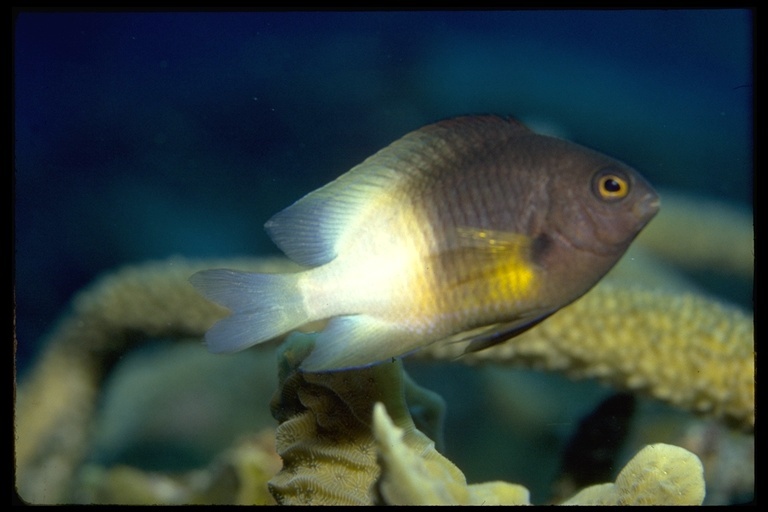
Stegastes partitus (Poey, 1868) (bicolor damselfish)
Inhabits shallow coral reefs and isolated patch reefs in deeper water. Feeds primarily on algae but also on polychaetes, hydroids, copepods and ascidians . Aggressively territorial but only around a small area . Taken incidentally in traps and small-meshed beach nets .
Pempheris schomburgkii Müller & Troschel, 1848 (Glassy sweeper)
Occurs in clear water with coral bottom. Form aggregations in dark crevices and caves . Nocturnal . Its name probably refers to the juveniles, which are so transparent that the backbone can be seen in the living fish . Feeds on zooplankton, particularly the larval stages of invertebrates .
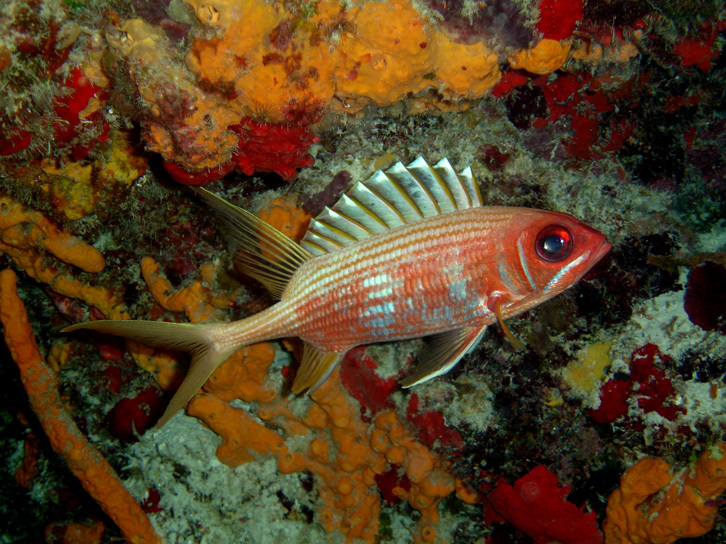
Holocentrus rufus (Walbaum, 1792) (Miss darlington)
Nocturnal , inhabits clear reefs . Found near mouths of caves and holes ; at night they usually move to sandy areas and grass beds to feed on crabs, shrimps, gastropods and brittle stars . Marketed fresh but not popular as a food fish .
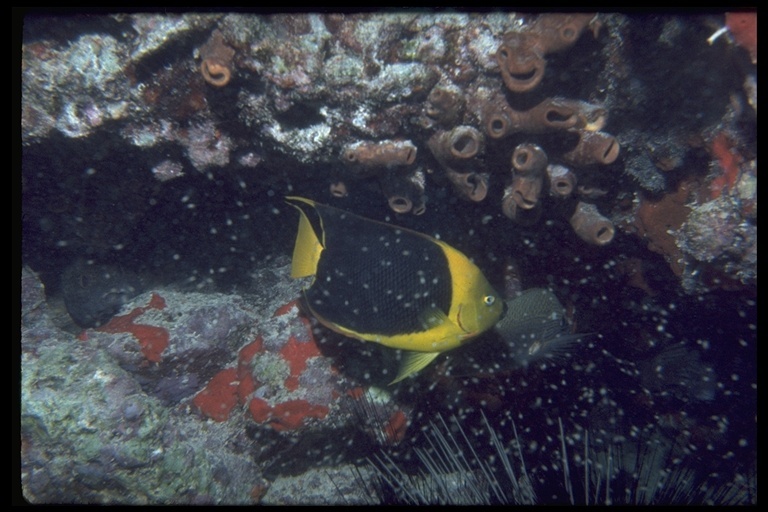
Holacanthus tricolor (Bloch, 1795) (Angelfish)
Inhabits rock jetties, rocky reefs and rich coral areas. Juveniles often associated with fire corals . Feeds on tunicates, sponges, zoantharians and algae. Marketed fresh .
Acanthurus coeruleus Bloch and Schneider, 1801 (Blue tang surgeonfish)
Inhabits coral reefs, inshore grassy or rocky areas. Forms small groups . Mainly diurnal. Feeds entirely on algae . At Fernando de Noronha Archipelago in southwestern Atlantic, juveniles hold cleaning stations togeth...
Read More
Read More
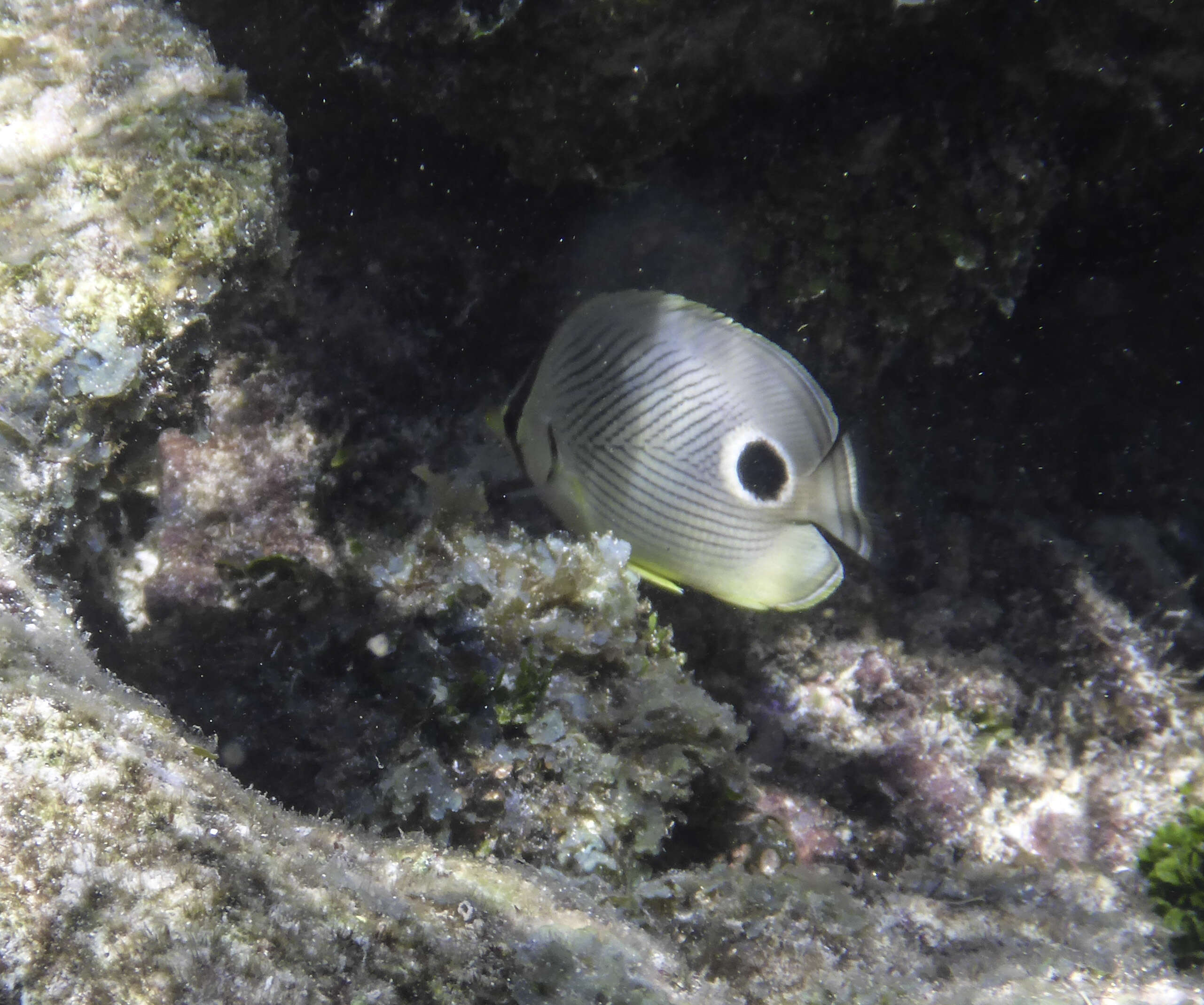
Chaetodon capistratus Linnaeus, 1758 (Butterbun)
Inhabit shallow reefs and generally occurs singly or in pairs. Feed mainly on zoantharians, polychaete worms, gorgonians and tunicates. Easily approached . Oviparous . Form pairs during breeding .
Abudefduf saxatilis (Linnaeus, 1758) (Mamo)
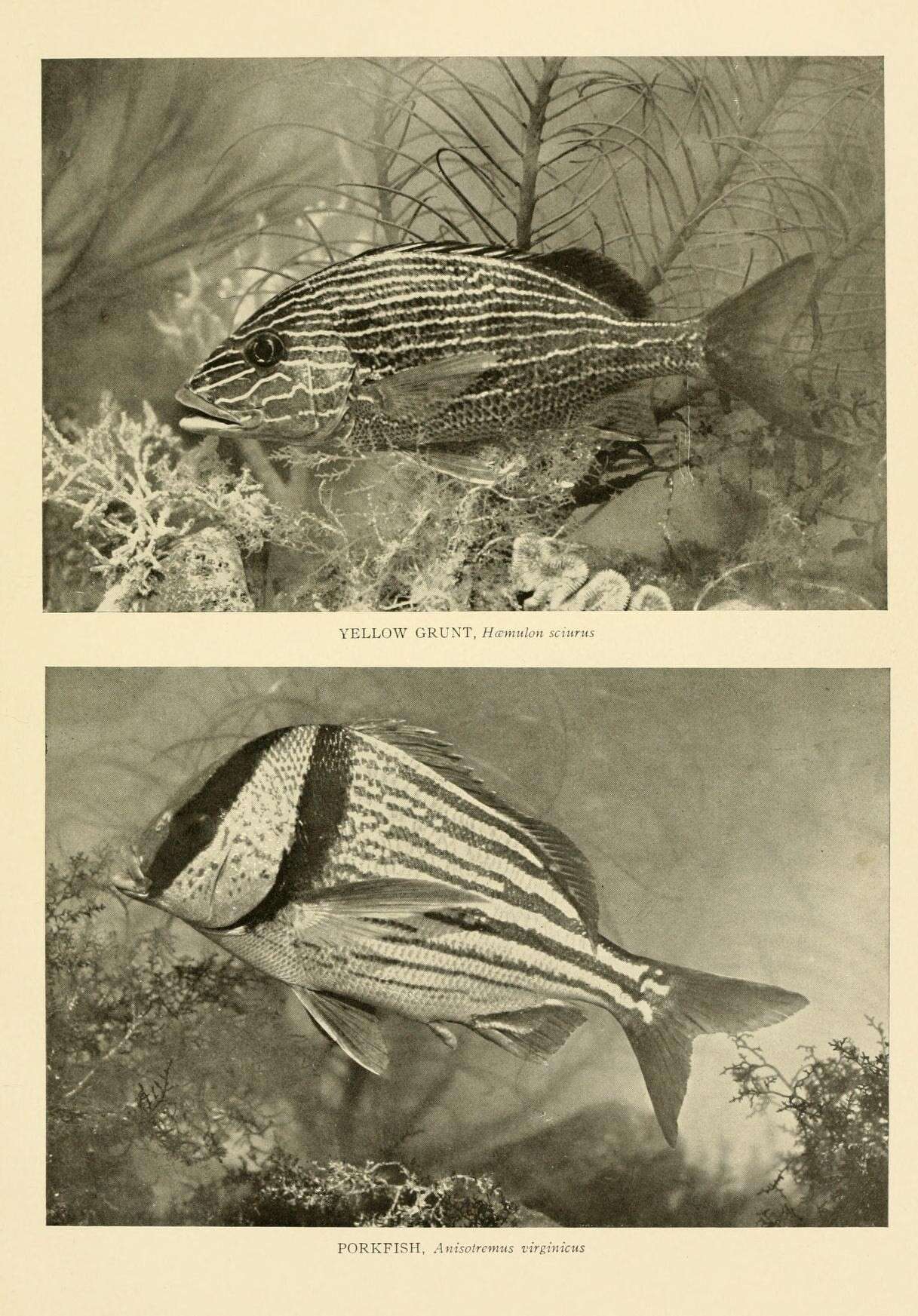
Haemulon sciurus (Shaw, 1803) (Blue striped grunt)
Found in small groups over coral and rocky reefs and drop-offs . Juveniles are abundant in Thalassia beds . Feeds on crustaceans, bivalves, and occasionally on small fishes. Marketed fresh.
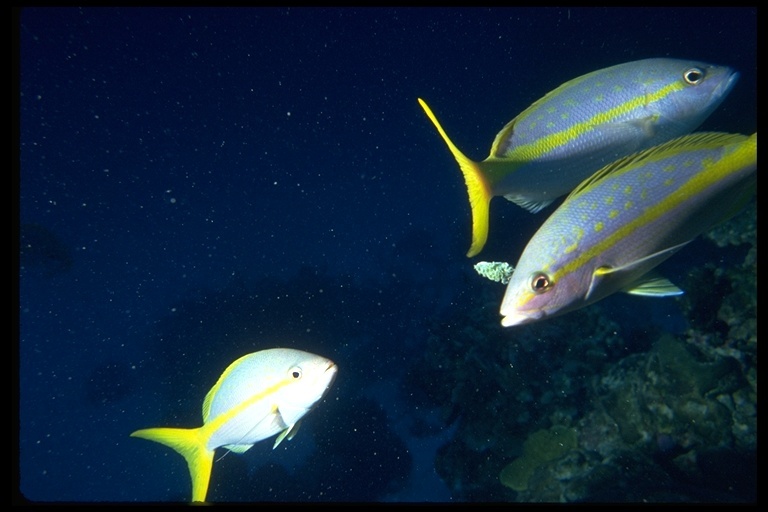
Ocyurus chrysurus (Bloch, 1791) (yellowtail snapper)
Sphyraena barracuda (Edwards, 1771) (Alho)
Acanthurus tractus (Fiveband surgeonfish)
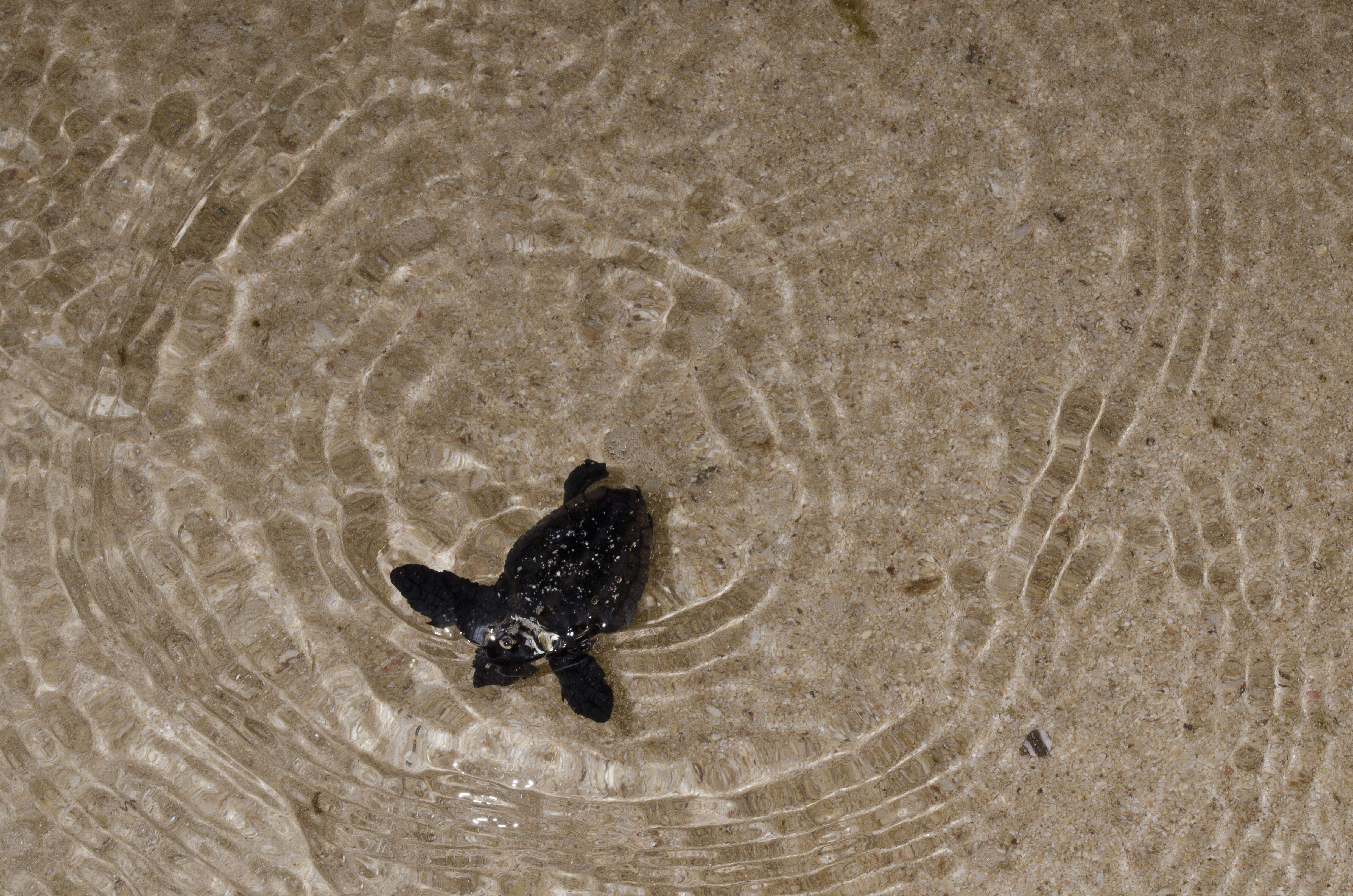
Caretta caretta Linnaeus 1758 (Loggerhead Turtle)
Adults are primarily carnivorous, using their powerful jaws to crack open crustaceans such as crabs and even seemingly impenetrable molluscs such as the queen conch (Strombus gigas) and giant clam (Tridacna s...
Read More
Read More
Share on Social Networks
- Facebook:

personalize your shared text as well as its destination (wall, page...) or send as a private message to a friend
- Twitter: Tweet personalize your tweet
- Google Plus:
Direct link to this dive
- Long link:
- Short link:


 We are participating today in the startup contest Techcrunch Disrupt. Support Diveboard by voting for us!























































































Calm seas and sunny, the first of two afternoon dives.
The Spurs is a colorful reef with a variety of marine life and great visibility. There was a very slight current. This area seems to be very healthy: more so than the usual reefs we've dived in the Keys. Captain Steve dropped anchor in a sandy patch near the reef, as there is no mooring ball at the site. I am not quite sure where this site is, though it is not too far from the North North Dry Rocks, which was our last dive of the day.
Shot a lot of footage with GoPro.
SAC = 0.98 cf/min