


 Smmcdonald


 United States
-
Nº8
 Date: 2014-08-15 - 08:30
-
 Max Depth: 8.2m Duration: 40mins
Dive Location

- Surface interval:30 mins
- Temp: Surf 32°C Bottom 30°C
- Dive type : Recreational, Wreck, Photo, boat
- Visibility: Average Water: Salt
Specific gear used
- Mask:
- Boots:
- BCD:
- Regulator:
- Camera: GoPro - Hero3+
- Fins: Scubapro - Twin Jet
- Weights: 6.4 kg
Dive reviews
| Overall review | ||
| Dive difficulty | ||
| Marine life quality |
Recent Divers in Key Largo, FL

Recent Pictures in Key Largo, FL

Dive Shop & Buddies
 Dive with Quiescence Diving Services, Inc.
 Dive buddies:
Jennifer McDonald,
Elliott Thomas

Link to this spot:
- Spot:
- Country:
- Area:
- Body of water:
Dive Profile
- 1. Air
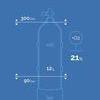
- 10L Aluminium 207 → 34 bar
- Average depth: 5.5m
Data provided by EOL.org




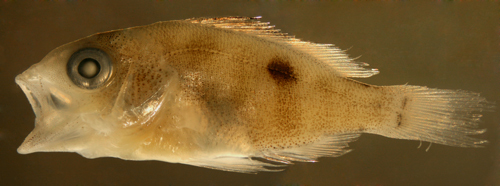


Species Identified
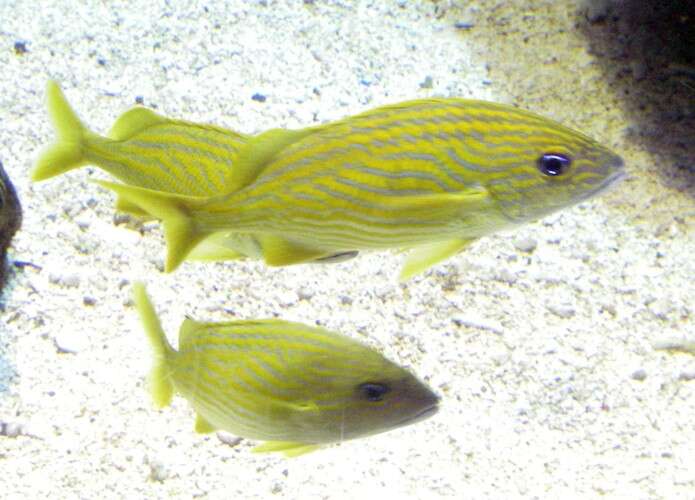
Haemulon flavolineatum (Desmarest, 1823) (French grunt)
Occurs in large schools on rocky and coral reefs, often under ledges or close to elkhorn coral . Juveniles abundant in near-shore seagrass beds . Feeds mainly on small crustaceans . Marketed fresh .
Acanthurus coeruleus Bloch and Schneider, 1801 (Blue tang surgeonfish)
Inhabits coral reefs, inshore grassy or rocky areas. Forms small groups . Mainly diurnal. Feeds entirely on algae . At Fernando de Noronha Archipelago in southwestern Atlantic, juveniles hold cleaning stations togeth...
Read More
Read More
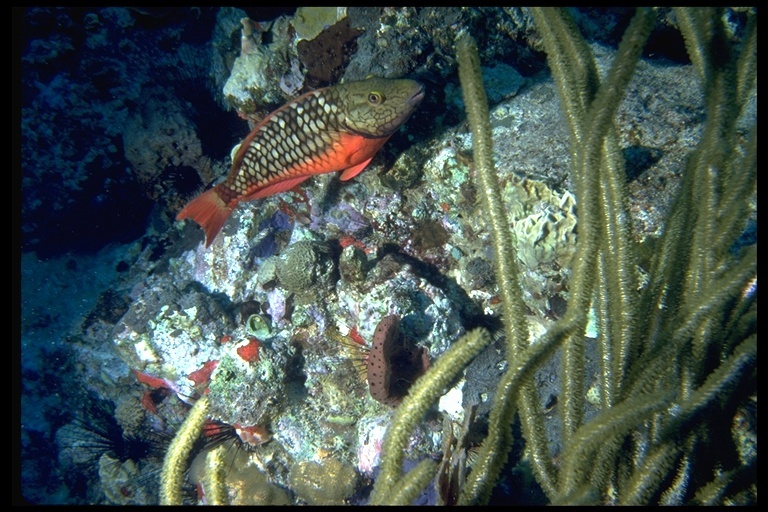
Sparisoma viride (Bonnaterre, 1788) (Dark green parrotfish)
Inhabits coral reefs with clear water . Young may be found in seagrass beds and other heavily vegetated bottoms. Feeds mainly on soft algae, but has been observed to graze on live corals like, Montastraea annularis . Pr...
Read More
Read More
Haemulon plumierii (Lacepède, 1801) (Jolle cocoon)
Found in dense aggregations during the day on patch reefs, around coral formations, or on sandy bottoms . Juveniles common in Thalassia testudinum beds . Feeds on crustaceans, small mollusks, and small fishes. Frequentl...
Read More
Read More
Chromis cyanea (Poey, 1860) (blue chromis)
Common above deep outer reefs and feeds in aggregations of the small zooplankton, primarily copepods . Often with creole wrasse. Retreats into coral crevices when frightened .
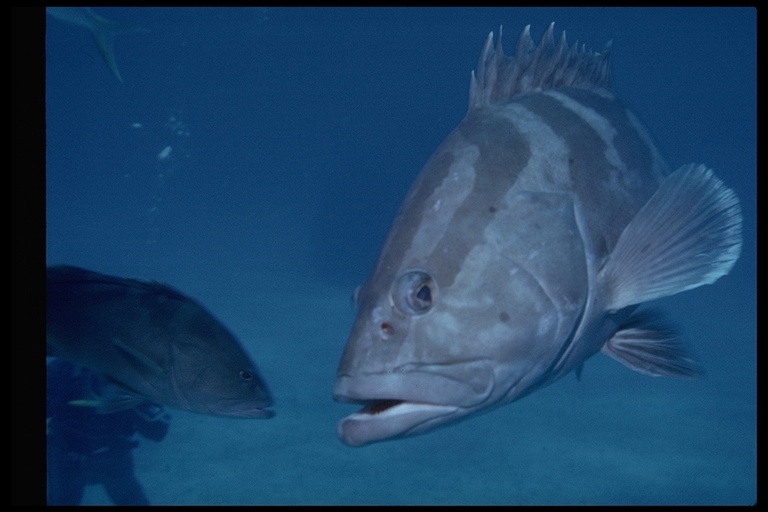
Epinephelus striatus (Bloch, 1792) (Nassau grouper)
Adults are generally solitary, with the exception of spawning events when hundreds to thousands of individuals were known to group together. In the southern extent of the grouper's range, these awesome aggregations occurre...
Read More
Read More
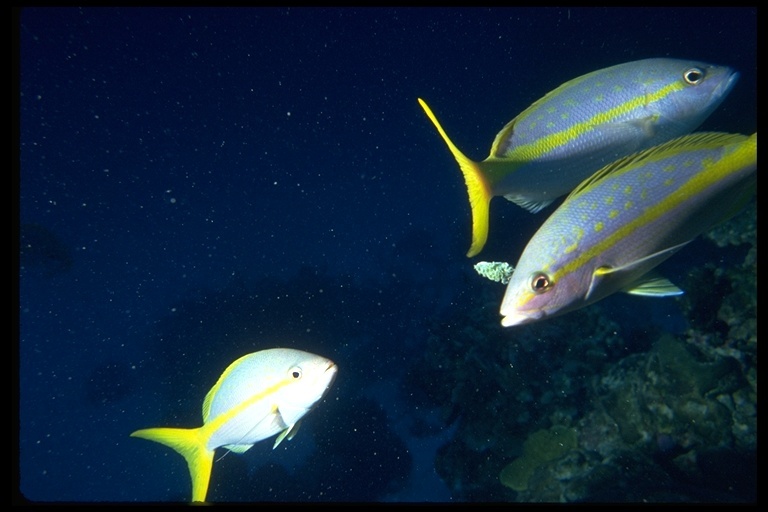
Ocyurus chrysurus (Bloch, 1791) (yellowtail snapper)
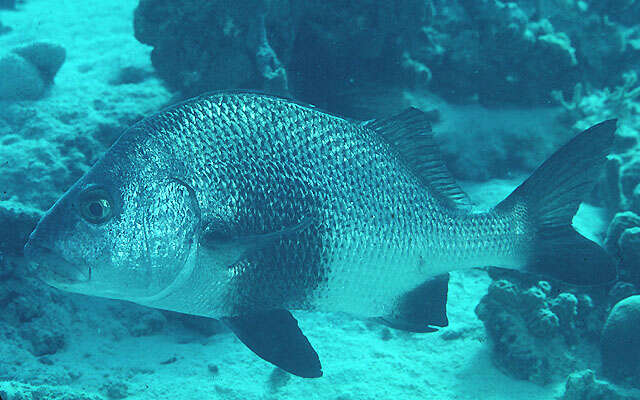
Anisotremus surinamensis (Bloch, 1791) (Black thicklip)
Inhabits larger patch reefs and quickly sloping rocky bottoms. Often near the shelter of caves, ledges, or wrecks . Feeds at night on crustaceans, mollusks, smaller fish, and the long-spined urchin, Diadema. Marketed fresh.
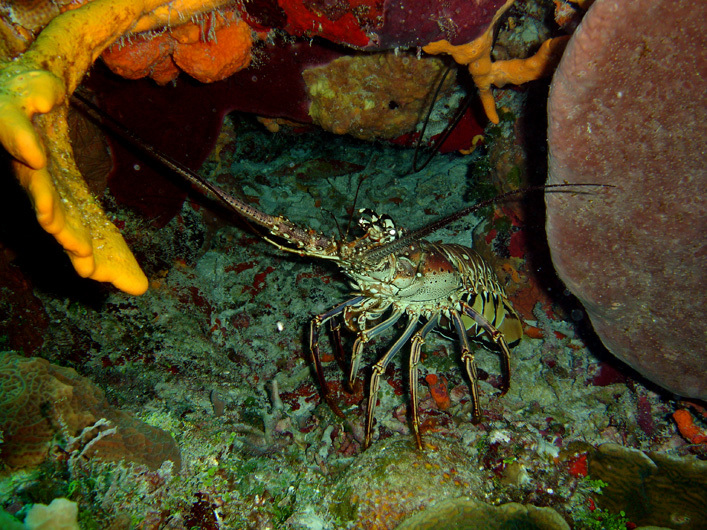
Panulirus argus (Latreille, 1804) (Caribbean spiny lobster)
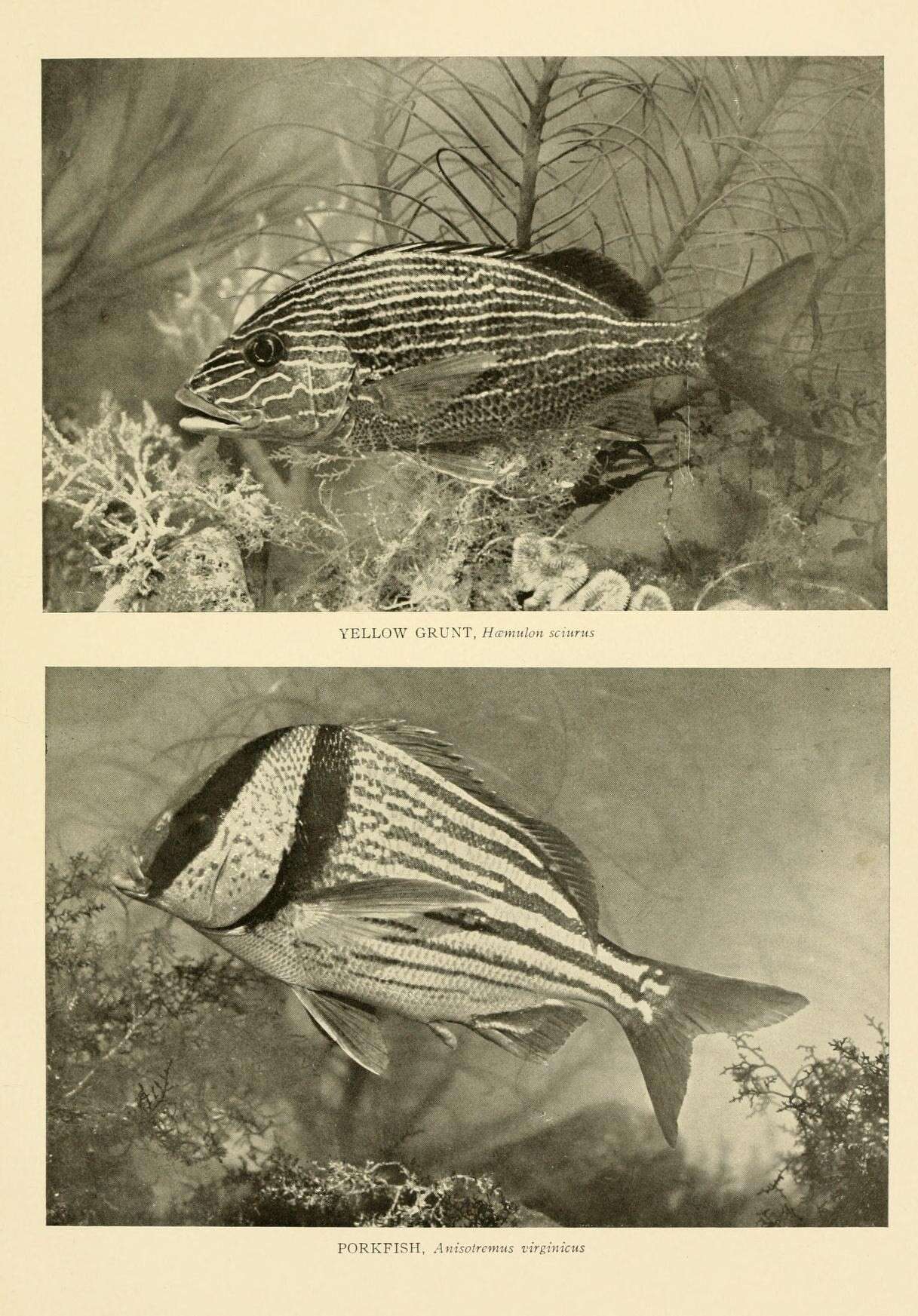
Haemulon sciurus (Shaw, 1803) (Blue striped grunt)
Found in small groups over coral and rocky reefs and drop-offs . Juveniles are abundant in Thalassia beds . Feeds on crustaceans, bivalves, and occasionally on small fishes. Marketed fresh.
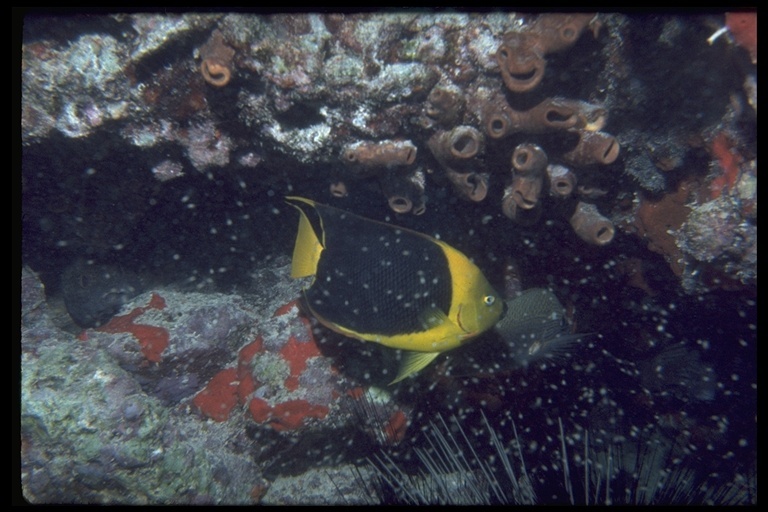
Holacanthus tricolor (Bloch, 1795) (Angelfish)
Inhabits rock jetties, rocky reefs and rich coral areas. Juveniles often associated with fire corals . Feeds on tunicates, sponges, zoantharians and algae. Marketed fresh .
Scarus vetula Bloch and Schneider, 1801 (Blownose)
Inhabits coral reefs and adjacent habitats. Feeds on algae scraped from rocks or dead coral. Sleeps in a mucus cocoon . Often seen in groups of one super male with several young adults, most of which are probably females . A protogynous hermaphrodite .
Anisotremus virginicus (Linnaeus, 1758) (Atlantic porkfish)
Inhabits reefs and rocky bottoms. Feeds at night on mollusks, echinoderms, annelids, and crustaceans . Young pick parasites from the bodies of larger fishes . Young are popular aquarium fish . Marketed fresh . Has been reared in captivity .
Lutjanus mahogoni (Cuvier, 1828) (Lantern jaw)
Inhabits clear shallow waters over rocky bottoms in the vicinity of coral reefs, less frequently in sandy or seagrass areas. Often forms large aggregations during the day. Feeds at night mainly on small fish, shrimps, crabs and cephalopods.
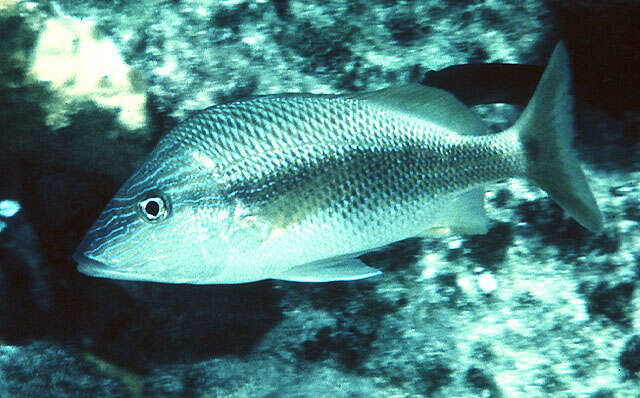
Lutjanus griseus (Linnaeus, 1758) (Black pargue)
Inhabit coastal as well as offshore waters. Found around coral reefs, rocky areas, estuaries, mangrove areas, and sometimes in lower reaches of rivers . Found in fresh water in Florida . Often forming large aggregation...
Read More
Read More
Haemulon carbonarium Poey, 1860 (Caesar grunt)
Occurs in clear rocky or coral reefs and mangroves . Often forming schools . Nocturnal feeder on crabs, gastropods, starfish and annelid worms . Marketed fresh .
Chaetodon ocellatus Bloch, 1787 (Butterbun)
Inhabit shallow, coral reefs with clear water . Develop dusky bands at night. Generally common . Oviparous . Form pairs during breeding .
Share on Social Networks
- Facebook:

personalize your shared text as well as its destination (wall, page...) or send as a private message to a friend
- Twitter: Tweet personalize your tweet
- Google Plus:
Direct link to this dive
- Long link:
- Short link:


 We are participating today in the startup contest Techcrunch Disrupt. Support Diveboard by voting for us!
























































































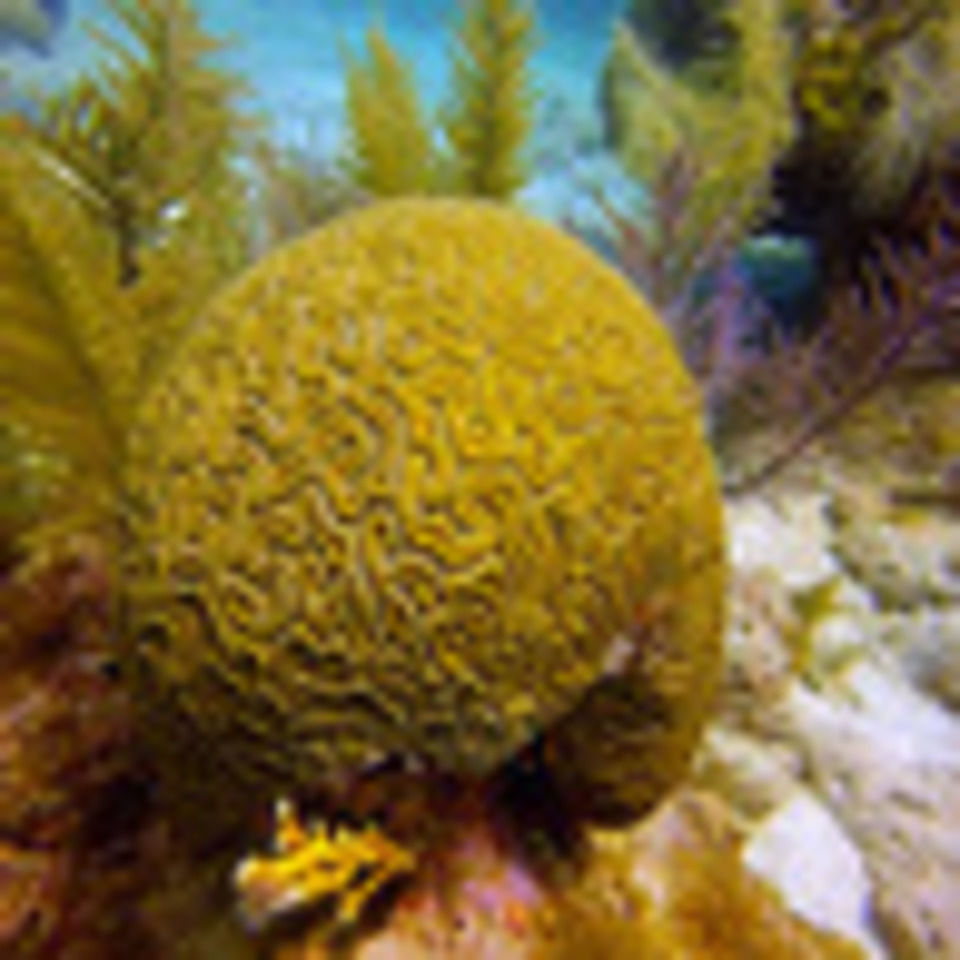
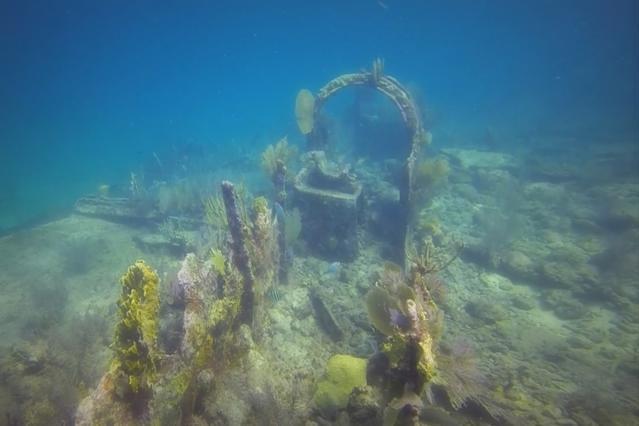
City of Washington on Elbow Reef - beautiful sunny day, 90 degrees. This was the first dive by ourselves (Jen, Elle and I). We saw a lot of small reef fish. I started leading and didn't realize we were not on the main wreck, but a large debris field. Jen had seen the wreck from jump-in, but I did not. After circumnavigating the debris field, she lead us to the stern of the wreck. I was a little disoriented, made worse by a communication breakdown. We recovered, and came up near the boat. Jen and Elle could have stayed down longer. Captain Ryan suggested they dive with 63cf to balance out time.