


 Smmcdonald


 Mexico
-
Nº57
 Date: 2015-08-06 - 09:19
-
 Max Depth: 19.7m Duration: 40mins
Dive Location

- Temp: Surf 33°C Bottom 29°C
- Dive type : Recreational, Drift, Reef
- Visibility: Good Water: Salt
Specific gear used
- BCD: Scubapro - Nighthawk
- Camera: GoPro - Hero3+
- Computer: Scubapro - Luna
- Fins: Scubapro - Twin Jet
- Mask: Genesis - Panview
- Regulator: Scubapro - AIR2
- Regulator: Scubapro - MK21/S560
- Weights: 3.6 kg
Dive reviews
| Overall review | ||
| Dive difficulty | ||
| Marine life quality |
Dive Shop & Buddies
 Dive with Oscar from Dive Aventuras
 Dive buddies:
Jennifer McDonald,
Elliott Thomas

Link to this spot:
- Spot:
- Country:
- Area:
- Body of water:
Dive Profile
- 1. Air
- 10L Aluminium 207 → 49 bar
- Average depth: 11.9m
Data provided by EOL.org









Species Identified
Chromis cyanea (Poey, 1860) (blue chromis)
Common above deep outer reefs and feeds in aggregations of the small zooplankton, primarily copepods . Often with creole wrasse. Retreats into coral crevices when frightened .
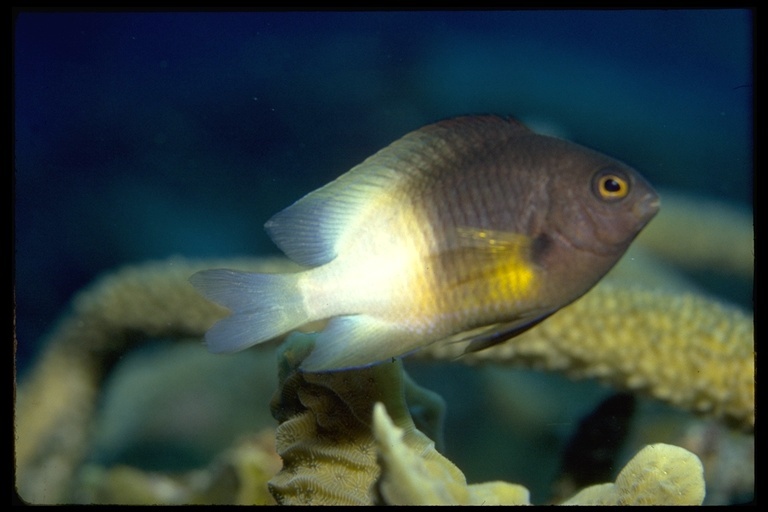
Stegastes partitus (Poey, 1868) (bicolor damselfish)
Inhabits shallow coral reefs and isolated patch reefs in deeper water. Feeds primarily on algae but also on polychaetes, hydroids, copepods and ascidians . Aggressively territorial but only around a small area . Taken incidentally in traps and small-meshed beach nets .
Holocentrus adscensionis (Osbeck, 1765) (Squirrelfish)
Occurs in shallow coral reefs, as well as deeper offshore waters . A nocturnal species, hiding in deep crevices or under coral ledges during the day; at night it usually moves over sand and grass beds, taking mainly crabs...
Read More
Read More
Canthigaster rostrata (Bloch, 1786) (sharpnose puffer)
Inhabits reefs and marginal habitats such as seagrass beds . Diet consists of seagrass, sponges, crabs and other crustaceans, mollusks, polychaete worms, sea urchins, starfishes, hydroids and algae . Monogamous .
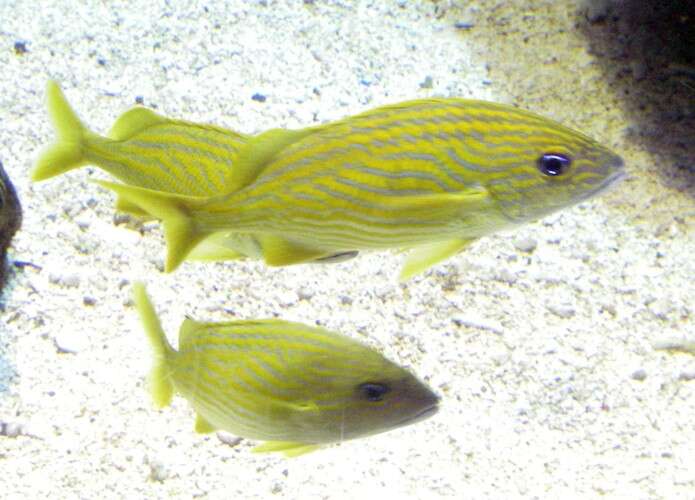
Haemulon flavolineatum (Desmarest, 1823) (French grunt)
Occurs in large schools on rocky and coral reefs, often under ledges or close to elkhorn coral . Juveniles abundant in near-shore seagrass beds . Feeds mainly on small crustaceans . Marketed fresh .
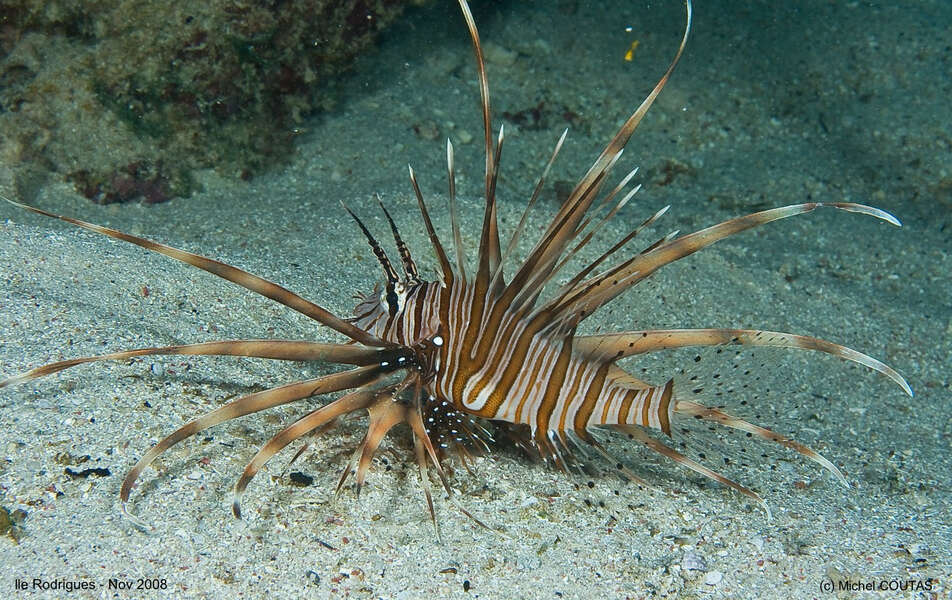
Pterois volitans (Linnaeus, 1758) (Red lionfish)
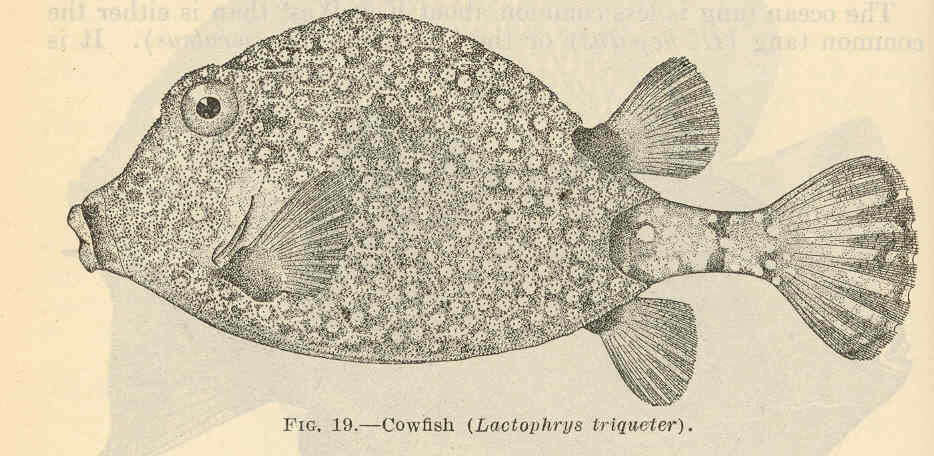
Lactophrys triqueter (Trunkfish)
Found on coral reefs . Solitary or in small groups . Feeds on a wide variety of small bottom invertebrates such as mollusks, crustaceans, worms, sessile tunicates and sponges exposed by a jet of water ejected through the...
Read More
Read More
Anisotremus virginicus (Linnaeus, 1758) (Atlantic porkfish)
Inhabits reefs and rocky bottoms. Feeds at night on mollusks, echinoderms, annelids, and crustaceans . Young pick parasites from the bodies of larger fishes . Young are popular aquarium fish . Marketed fresh . Has been reared in captivity .
Acanthurus coeruleus Bloch and Schneider, 1801 (Blue tang surgeonfish)
Inhabits coral reefs, inshore grassy or rocky areas. Forms small groups . Mainly diurnal. Feeds entirely on algae . At Fernando de Noronha Archipelago in southwestern Atlantic, juveniles hold cleaning stations togeth...
Read More
Read More
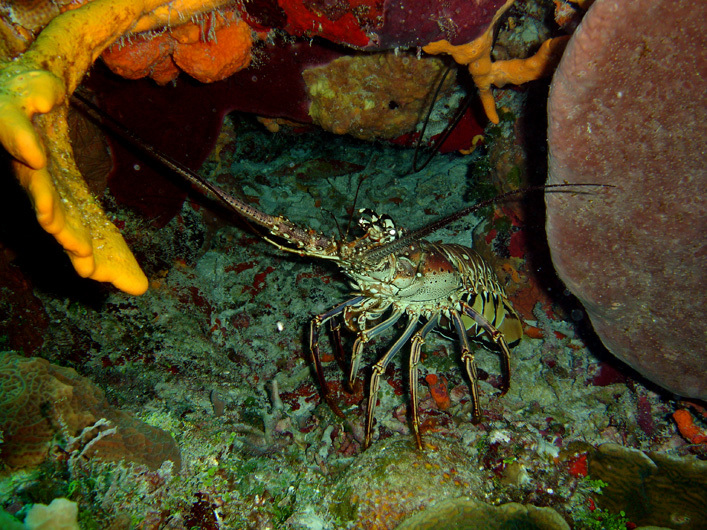
Panulirus argus (Latreille, 1804) (Caribbean spiny lobster)
Chaetodon capistratus Linnaeus, 1758 (Butterbun)
Inhabit shallow reefs and generally occurs singly or in pairs. Feed mainly on zoantharians, polychaete worms, gorgonians and tunicates. Easily approached . Oviparous . Form pairs during breeding .
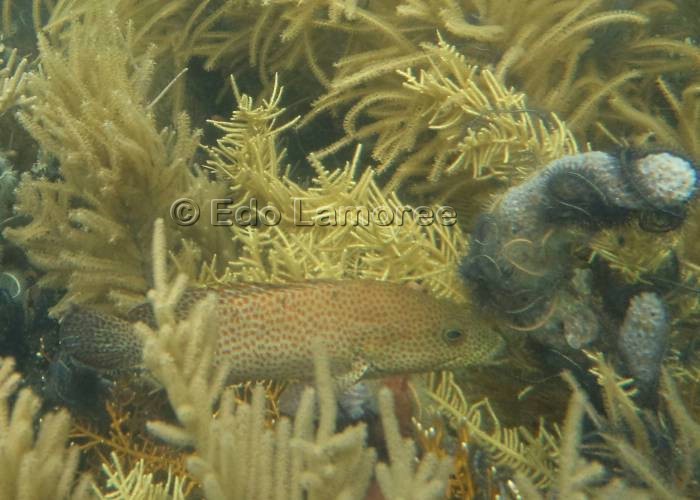
Cephalopholis cruentata (Lacepède, 1802) (Coney)
Inhabit Thalassia beds and coral reefs. In the Gulf of Mexico, they are found on rocky reef ledge in depths greater than 27 m. Solitary and secretive, they usually stay near hiding places during the day. Prefer to rema...
Read More
Read More
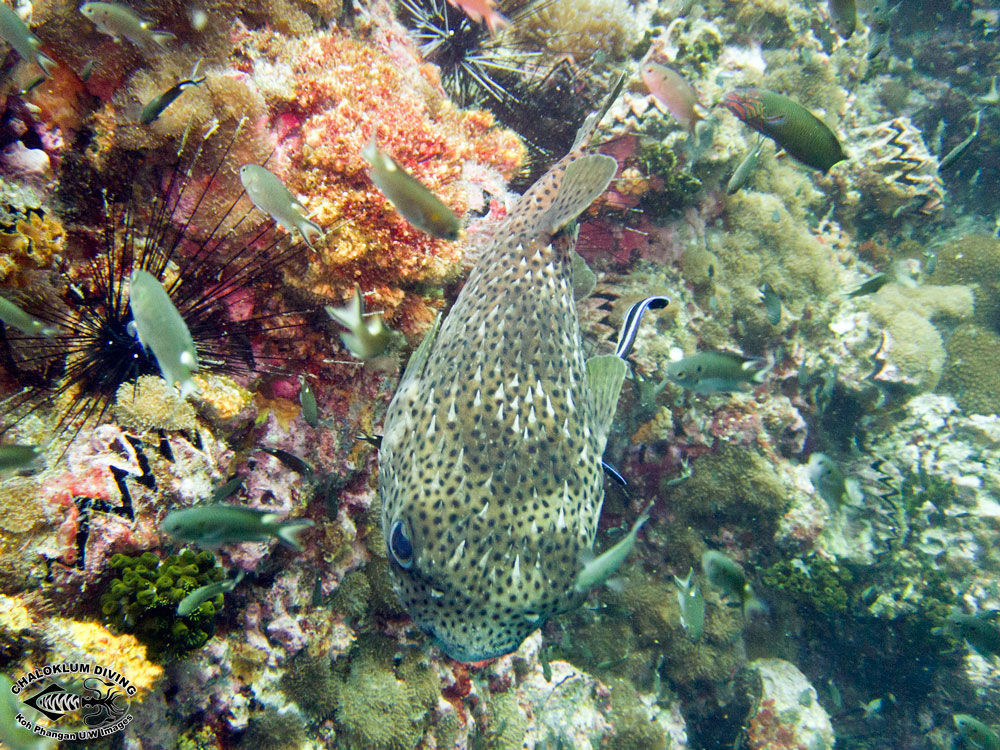
Diodon hystrix Linnaeus, 1758 (Spot-fin porcupinefish)
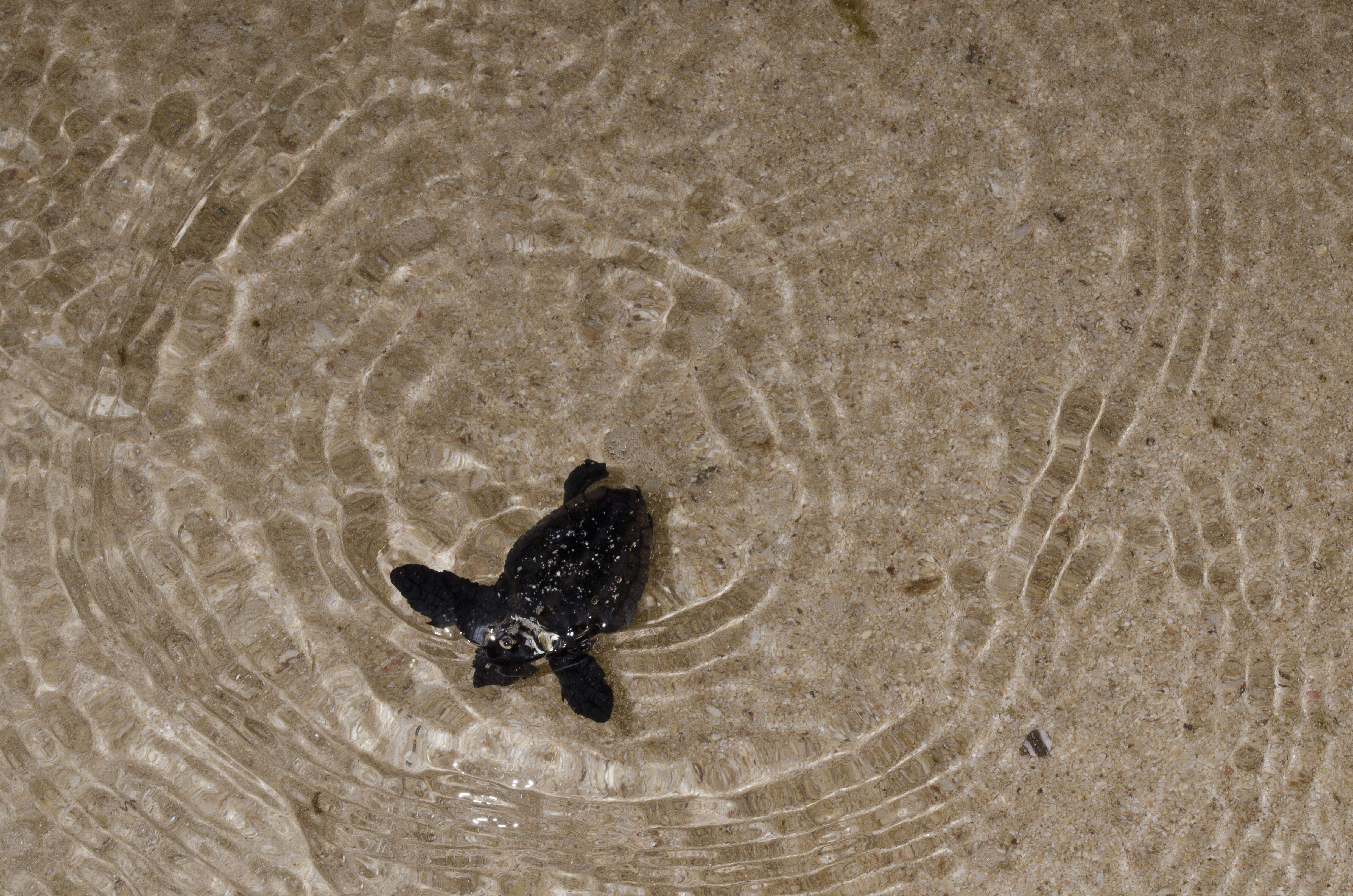
Caretta caretta Linnaeus 1758 (Loggerhead Turtle)
Adults are primarily carnivorous, using their powerful jaws to crack open crustaceans such as crabs and even seemingly impenetrable molluscs such as the queen conch (Strombus gigas) and giant clam (Tridacna s...
Read More
Read More
Acanthurus tractus (Fiveband surgeonfish)
Abudefduf saxatilis (Linnaeus, 1758) (Mamo)
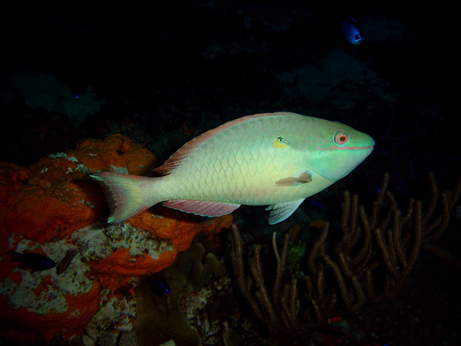
Sparisoma aurofrenatum (Valenciennes, 1840) (Black parrot)
Inhabits coral reefs, young usually in adjacent seagrass beds. Often rests on the bottom . Feeds on plants. Solitary or in small groups. A protogynous hermaphrodite .
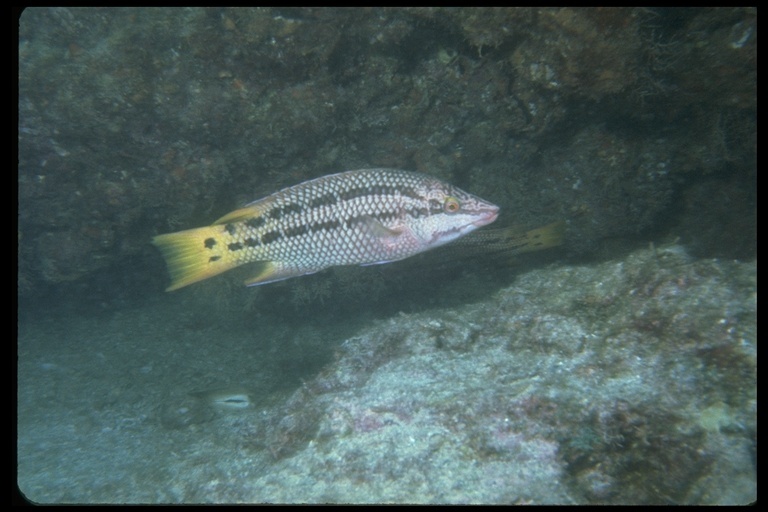
Bodianus rufus (Linnaeus, 1758) (Spanish hogfish)
Inhabits rocky or coral reefs . Feeds on brittle stars, crustaceans, mollusks, and sea urchins . Juveniles actively pick parasites from larger fishes . A protogynous hermaphrodite . May hybridize with spotfin hogfish, B. pulchellus . Marketed fresh . Maximum depth reported from Ref. 27115.
Stegastes diencaeus (Jordan and Rutter, 1897) (Honey damselfish)
Inhabits coral and rocky reefs of sheltered lagoons and inshore areas. Territorial and pugnacious . Taken incidentally in traps and small-meshed beach nets .
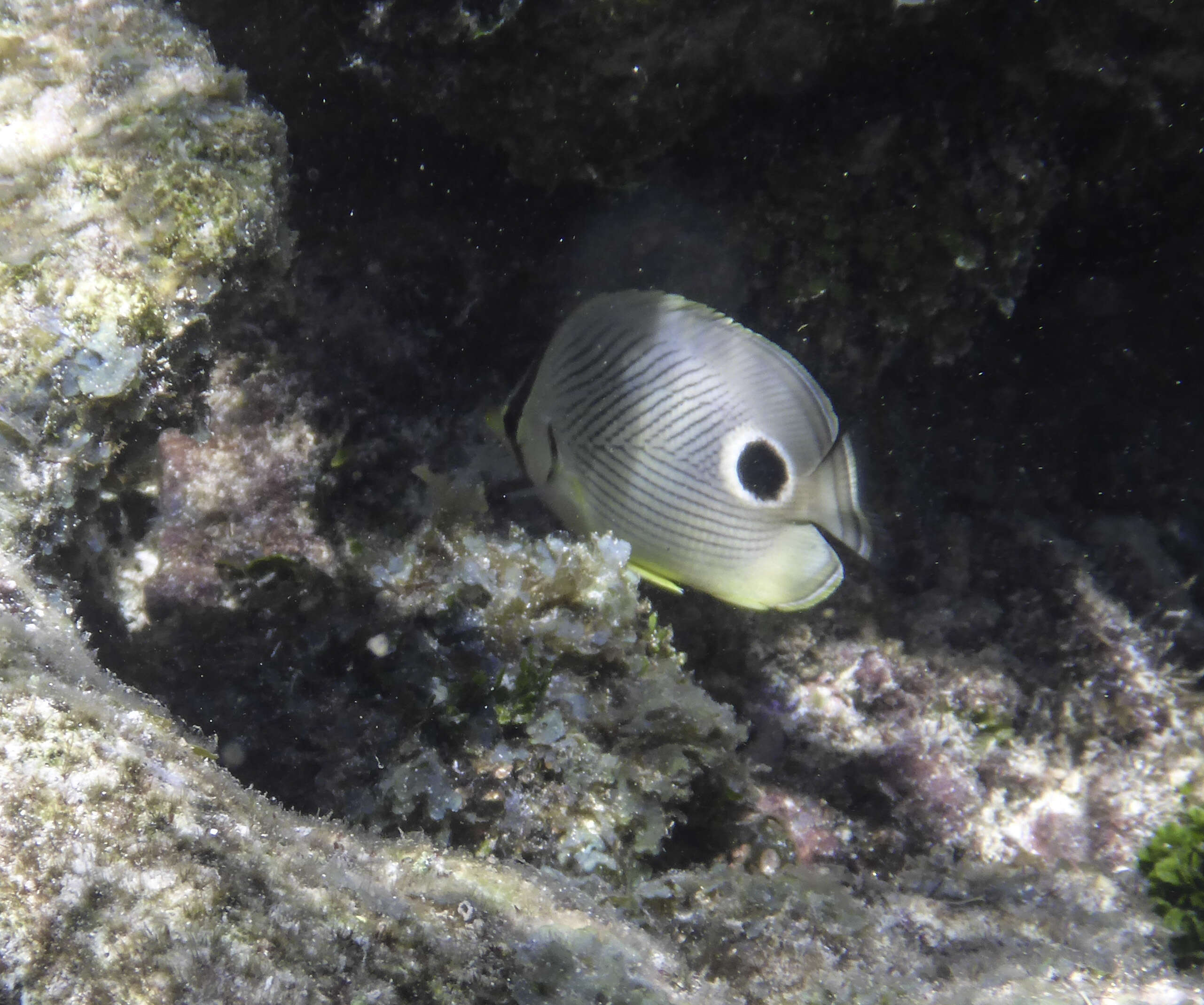
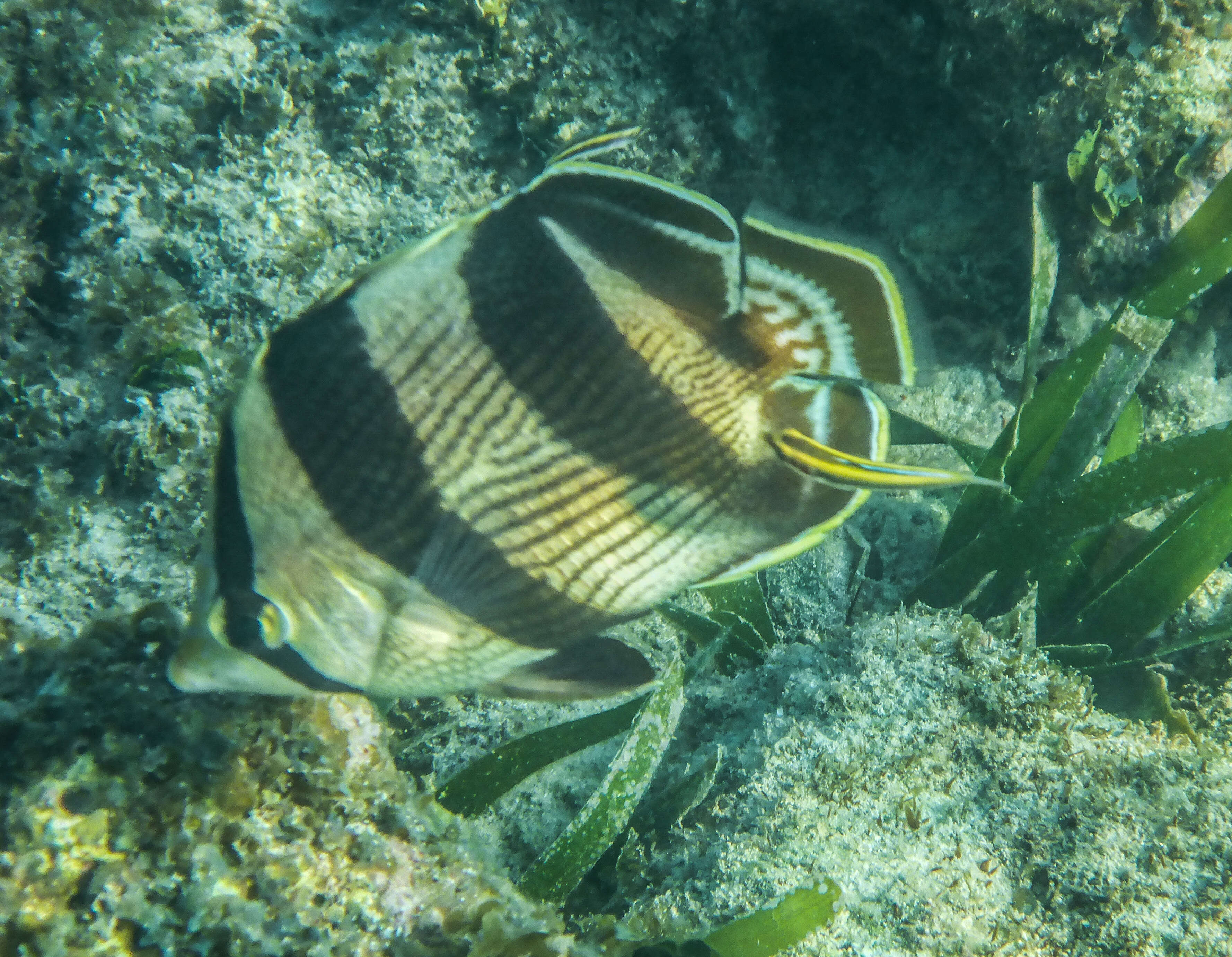
Chaetodon striatus Linnaeus, 1758 (Butterbun)
Inhabit coral reefs. Occur singly or in pairs. Feed on polychaete worms, coral polyps, crustaceans and mollusk eggs. Oviparous , monogamous . Form pairs during breeding . Adults may form plankton-feeding aggregations ...
Read More
Read More
Haemulon parra (Desmarest, 1823) (Sailor's grunt)
Inhabits shallow coastal reefs, the young on seagrass beds, adults in schools in relatively open areas . Rare at oceanic islands . Feeds at night on mollusks and small fishes . Marketed fresh .
Dasyatis americana Hildebrand and Schroeder, 1928 (stingaree)
The southern stingray is an active swimmer that feeds primarily at night, on a diet of invertebrates and small fishes. They feeding by flapping their wing-like pectoral fins to disturb the sand, and expose their prey . T...
Read More
Read More
Scarus iseri (Bloch, 1789) (Grey chub)
Found over shallow, clear waters, generally over Thalassia beds . Also found rocky or coral areas . A schooling species. Feeds on plants. A protogynous hermaphrodite . Super males spawn individually with striped females, while sexually mature males in the striped phase spawn in aggregation.
Serranus tigrinus (Bloch, 1790) (Harlequin serranid)
Most common in areas with rock or scattered coral. Solitary or in pairs. Feeds mainly upon crustaceans . Synchronously hermaphroditic. The most common member of the genus .
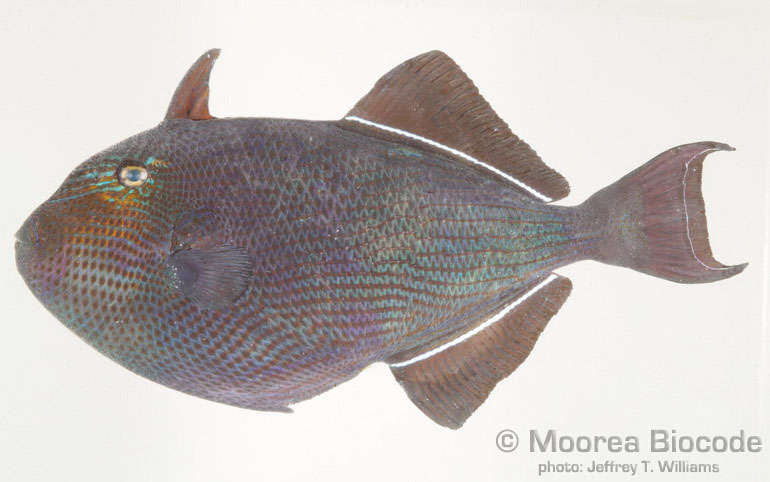
Melichthys niger (Bloch, 1786) (Black triggerfish)
Balistes vetula Linnaeus, 1758 (Ol'wife)
The queen triggerfish is often found drifting close to the bottom, where it feeds on a range of molluscs, crustaceans and echinoderms . The strong jaws and long teeth of this fish enable it to bite through the hard body p...
Read More
Read More
Share on Social Networks
- Facebook:

personalize your shared text as well as its destination (wall, page...) or send as a private message to a friend
- Twitter: Tweet personalize your tweet
- Google Plus:
Direct link to this dive
- Long link:
- Short link:


 We are participating today in the startup contest Techcrunch Disrupt. Support Diveboard by voting for us!
























































































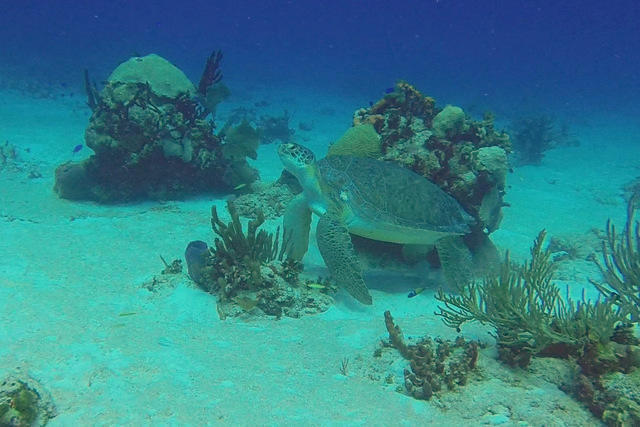
First drift dive! With a group of 7, including the dive guide, we motored out to Island reef. This reef is just offshore from the dive shop marina. It's coral heads are low and scattered with large, flat sandy areas between and around the area. We saw a lot of familiar fish, and a few species I have not seen before, including a queen trigger fish. We also saw a loggerhead turtle and a stingray, though the latter was too far out to capture in the GoPro. Oscar is an excellent dive guide and made me feel comfortable doing the drift dive for the first time. At the end, he unreeled a line with a safety sausage marker out to mark our location, while we drifted along at the 15' safety stop. At the surface, we regrouped and swam to the boat. Holding onto a line on the port side, we removed our gear (weights, then BCD, then fins) and handed up to the boat captain. One-by-one we swam over to the latter and climbed aboard. I was a little nervous about doing this, but, as it turned out, it wasn't so bad! This was an ok dive for the reef quality, but it was a great experience for the drift and boat entrance. The only real issue I had was submerging under water. Thinking 6 pounds was enough--I have been diving with 2 lbs with the same tanks, I think, in fresh water--Oscar held onto my vest and pulled me down to about 6' until I could get all air out, straighten and start a slow descent. I suppose the salt water and current together kept me buoyant. I may have been a little nervous about the drift dive and boat entry, too.