


 Smmcdonald


 United States
-
Nº26
 Date: 2014-11-02 - 14:40
-
 Max Depth: 16.2m Duration: 41mins
Dive Location

- Temp: Bottom 26°C
- Dive type : Recreational, Reef, Boat
- Visibility: Average Water: Salt
Specific gear used
- BCD: Scubapro - Nighthawk
- Camera: GoPro - Hero3+
- Computer: Scubapro - Luna
- Fins: Scubapro - Twin Jet
- Regulator: Scubapro - AIR2
- Regulator: Scubapro - MK21/S560
- Weights: 7.3 kg
Dive reviews
| Overall review | ||
| Dive difficulty | ||
| Marine life quality |
Recent Divers in Key Largo, FL

Recent Pictures in Key Largo, FL
Dive Shop & Buddies
 Dive with Billy Harloff
 Dive buddies:
Jennifer McDonald

Link to this spot:
- Spot:
- Country:
- Area:
- Body of water:
Dive Profile
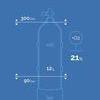
- 1. Nitrox 31
- 12L Aluminium 207 → 50 bar
- Average depth: 9.5m
Data provided by EOL.org




Species Identified
Thalassoma bifasciatum (Bloch, 1791) (Blue head)
Inhabits reef areas, inshore bays and seagrass beds. Feeds mainly on zooplankton and small benthic animals, but may also feed on ectoparasites of other fishes . Spawn at midday throughout the year . A protogynous hermap...
Read More
Read More
Acanthurus coeruleus Bloch and Schneider, 1801 (Blue tang surgeonfish)
Inhabits coral reefs, inshore grassy or rocky areas. Forms small groups . Mainly diurnal. Feeds entirely on algae . At Fernando de Noronha Archipelago in southwestern Atlantic, juveniles hold cleaning stations togeth...
Read More
Read More
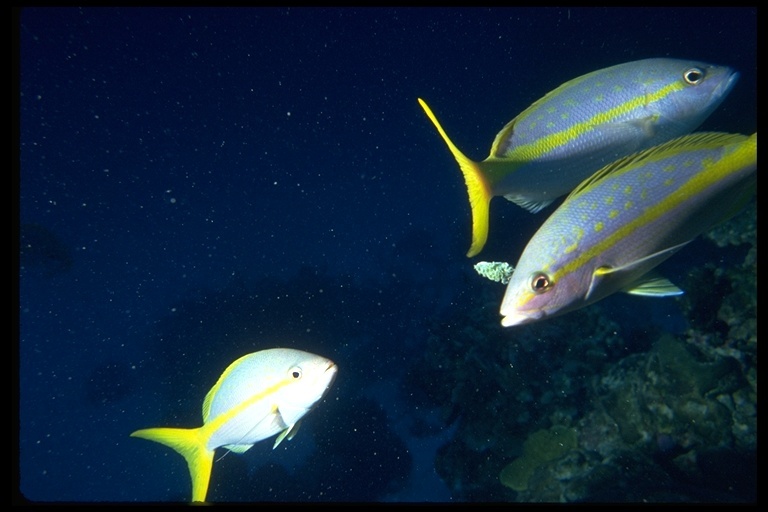
Ocyurus chrysurus (Bloch, 1791) (yellowtail snapper)
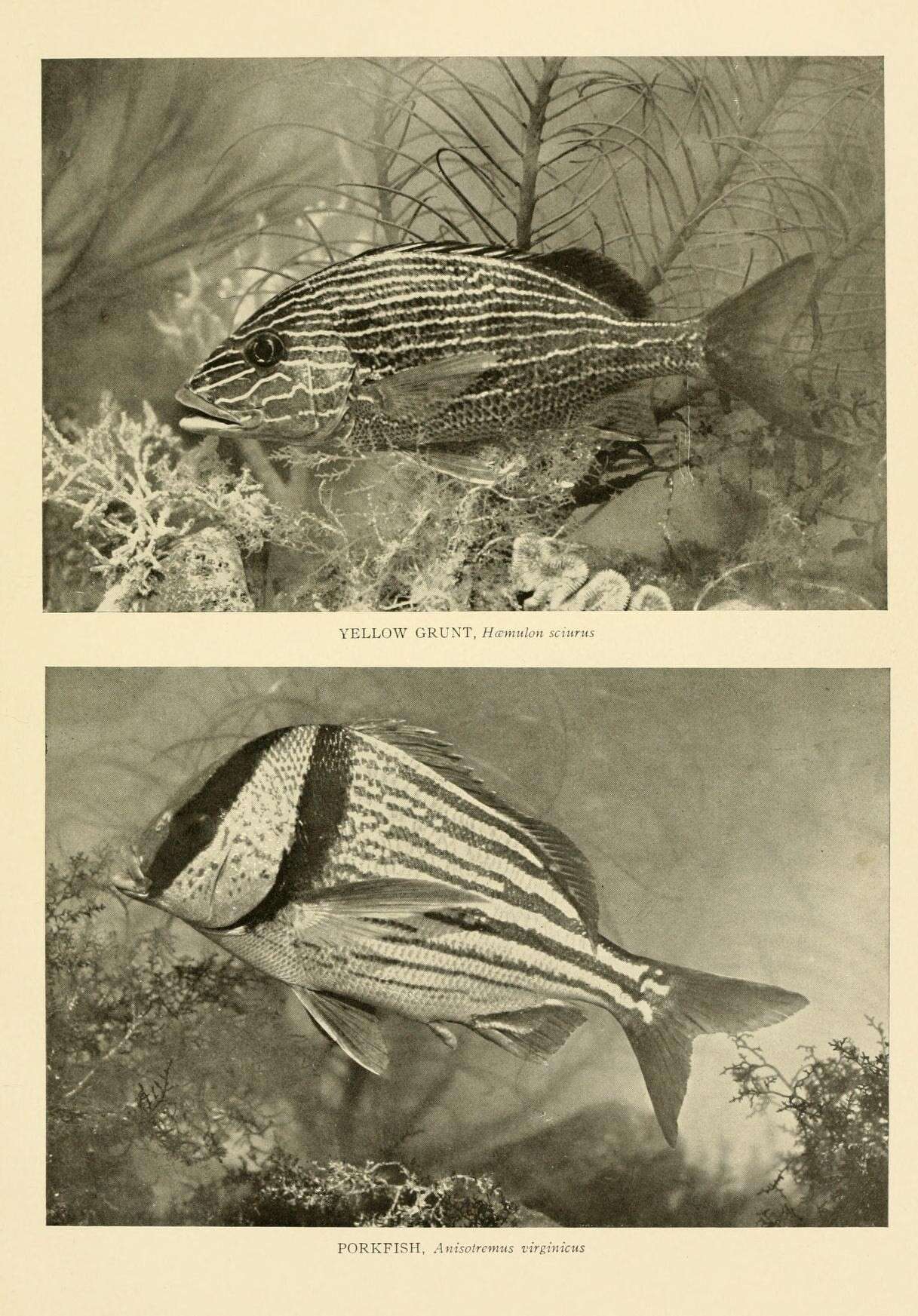
Anisotremus virginicus (Linnaeus, 1758) (Atlantic porkfish)
Inhabits reefs and rocky bottoms. Feeds at night on mollusks, echinoderms, annelids, and crustaceans . Young pick parasites from the bodies of larger fishes . Young are popular aquarium fish . Marketed fresh . Has been reared in captivity .
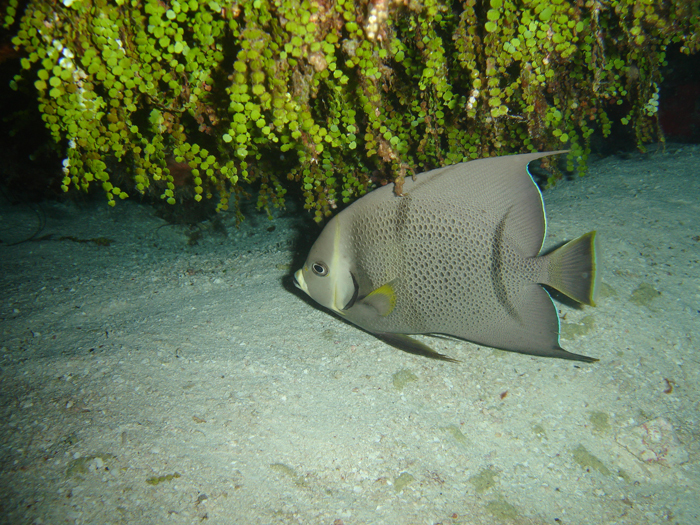
Pomacanthus arcuatus (Linnaeus, 1758) (Grey angelfish)
Common in coral reefs, usually solitary, occasionally in pairs. Juveniles are part-time cleaners. Feed mainly on sponges, but also takes tunicates, algae, zoantharians, gorgonians, hydroids, bryozoans, and seagrasses. O...
Read More
Read More
Haemulon sciurus (Shaw, 1803) (Blue striped grunt)
Found in small groups over coral and rocky reefs and drop-offs . Juveniles are abundant in Thalassia beds . Feeds on crustaceans, bivalves, and occasionally on small fishes. Marketed fresh.
Abudefduf saxatilis (Linnaeus, 1758) (Mamo)
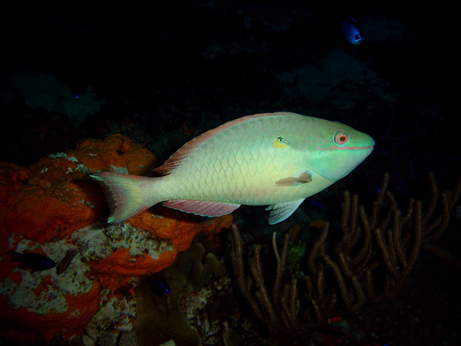
Sparisoma aurofrenatum (Valenciennes, 1840) (Black parrot)
Inhabits coral reefs, young usually in adjacent seagrass beds. Often rests on the bottom . Feeds on plants. Solitary or in small groups. A protogynous hermaphrodite .
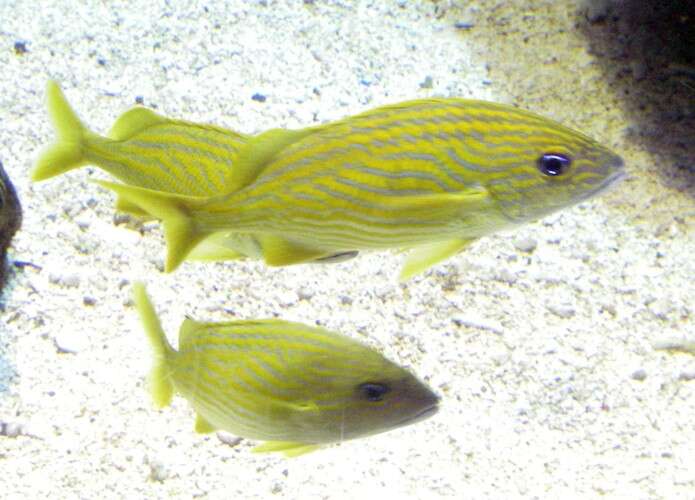
Haemulon flavolineatum (Desmarest, 1823) (French grunt)
Occurs in large schools on rocky and coral reefs, often under ledges or close to elkhorn coral . Juveniles abundant in near-shore seagrass beds . Feeds mainly on small crustaceans . Marketed fresh .
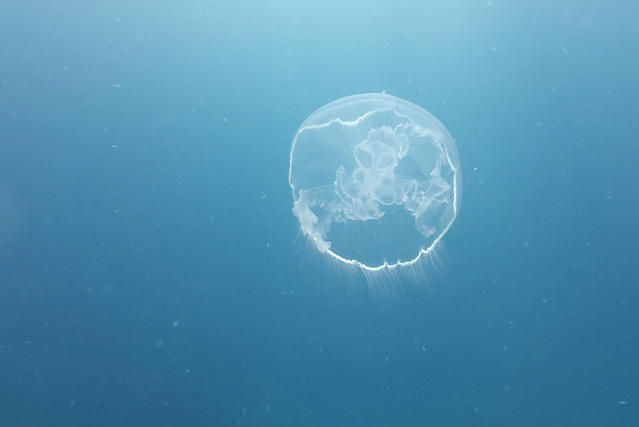
Aurelia aurita (Linnaeus, 1758) (moon jelly)
The common jellyfish is carnivorous, and feeds mainly on a variety of planktonic species such as molluscs, crustaceans, young worms and copepods . The plankton is caught in a layer of mucus that covers the jellyfish. Tiny ...
Read More
Read More
Share on Social Networks
- Facebook:

personalize your shared text as well as its destination (wall, page...) or send as a private message to a friend
- Twitter: Tweet personalize your tweet
- Google Plus:
Direct link to this dive
- Long link:
- Short link:


 We are participating today in the startup contest Techcrunch Disrupt. Support Diveboard by voting for us!
























































































"Molasses Reef at Drop Off"
This was Jen's AOW dive!
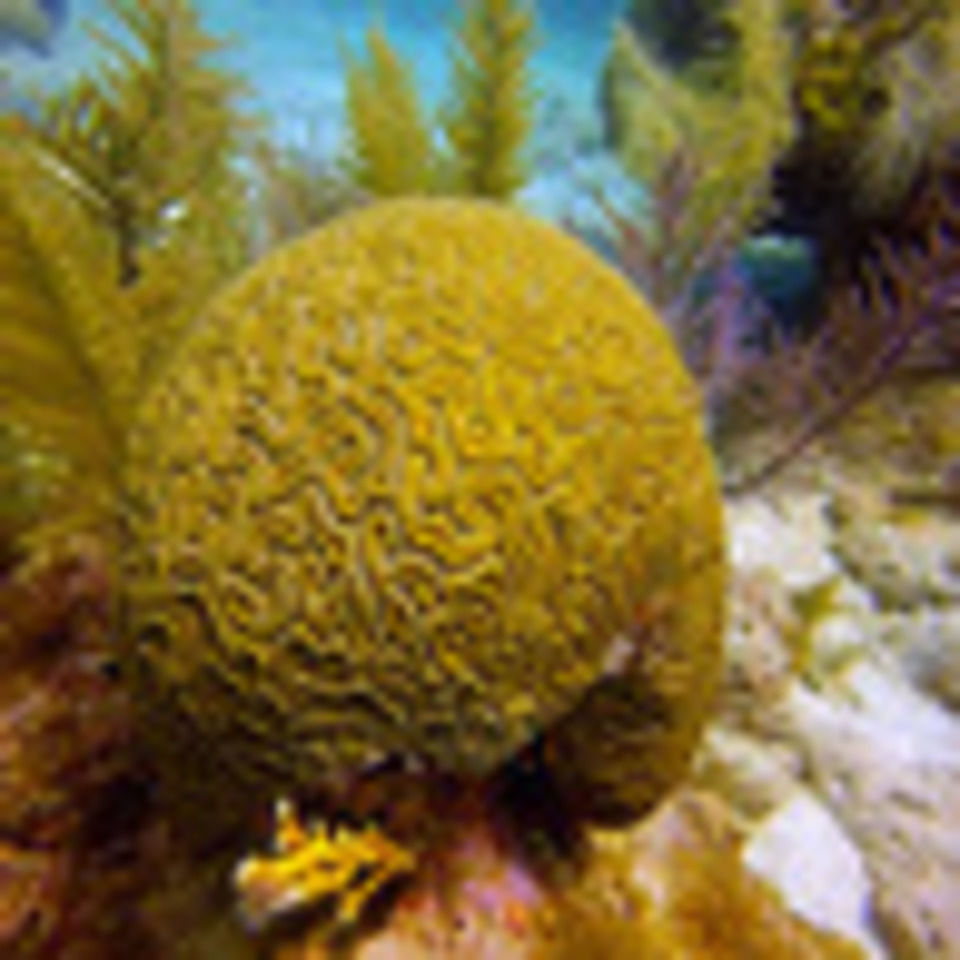
Very nice, very relaxing dive. Typical reef dive, but much deeper. I noticed that the species of sponges/coral changed with the deeper depth: I saw a lot more barrel sponges. There were a lot of the typical reef fish, but the larger fish seemed to be scarce: maybe because of last night's storms, or maybe just the area and depth?
We ascended under a school of moon jellyfish, and I chased them around a bit with the GoPro.
Much better breathing attributed to trying a trick with my mask, giving me more breathing room under my nose. May try out new masks to see if another works better.
This was our last dive for this trip. It has been a blast!