


 Smmcdonald

 United States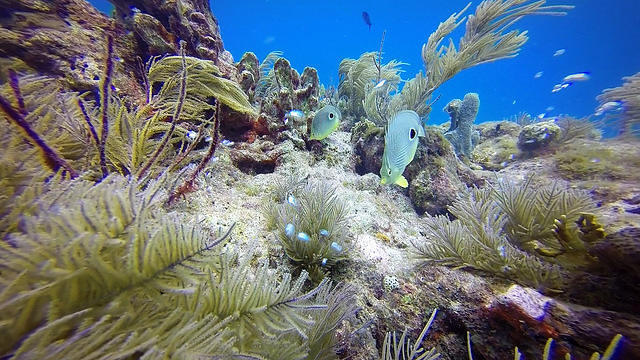
-
Nº37
 Date: 2015-06-06 - 10:16
-
 Max Depth: 11.5m Duration: 56mins
Dive Location

- Temp: Bottom 27°C
- Dive type : Recreational, Reef, Boat
- Visibility: Good Water: Salt
Specific gear used
- BCD: Scubapro - Nighthawk
- Camera: GoPro - Hero3+
- Computer: Scubapro - Luna
- Fins: Scubapro - Twin Jet
- Regulator: Scubapro - AIR2
- Regulator: Scubapro - MK21/S560
- Weights: 6.4 kg
Dive reviews
| Overall review | ||
| Dive difficulty | ||
| Marine life quality |
Dive Shop & Buddies
 Dive buddies:
Jennifer McDonald,
Joseph Johnson,
Cameron Cheek,
Billy Harloff,
Laurin
Dive buddies:
Jennifer McDonald,
Joseph Johnson,
Cameron Cheek,
Billy Harloff,
Laurin

Link to this spot:
- Spot:
- Country:
- Area:
- Body of water:
Dive Profile
- 1. Nitrox 28
- 12L Aluminium 228 → 32 bar
- Average depth: 7.7m
Data provided by EOL.org





Species Identified
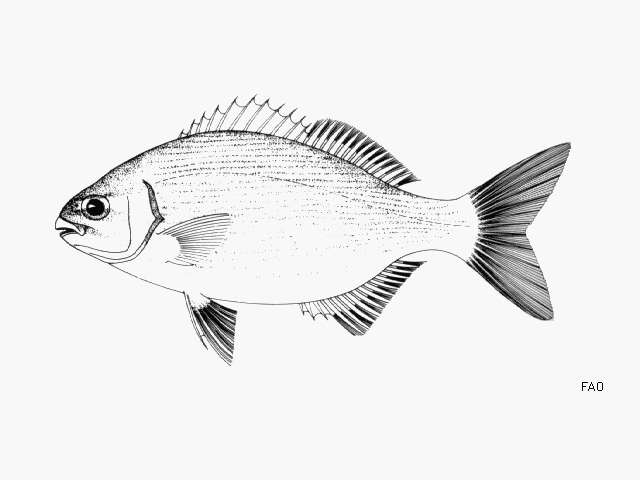
Kyphosus incisor (Cuvier, 1831) (Yellow sea chub)
Inhabits shallow waters, especially over rocky bottoms in coral reef areas; also among floating Sargassum weeds . Feeds on algae including much Sargassum . Marketed fresh .
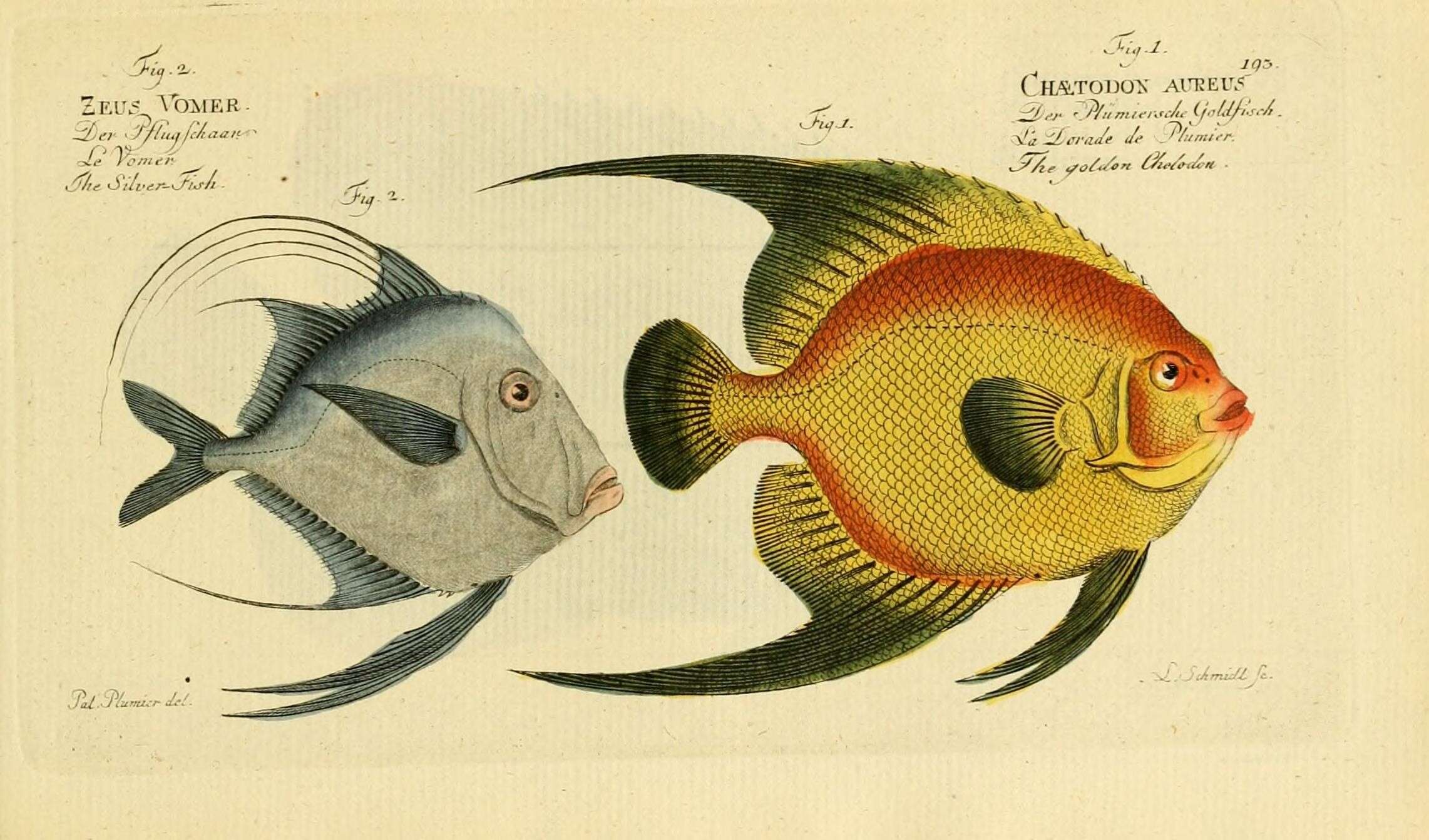
Pomacanthus paru (Bloch, 1787) (French angelfish)
Common in shallow reefs. Usually in pairs, often near sea fans . Feed on sponges, algae, bryozoans, zoantharians, gorgonians and tunicates . Oviparous , monogamous . Spawning pairs are strongly territorial, with usuall...
Read More
Read More
Anisotremus virginicus (Linnaeus, 1758) (Atlantic porkfish)
Inhabits reefs and rocky bottoms. Feeds at night on mollusks, echinoderms, annelids, and crustaceans . Young pick parasites from the bodies of larger fishes . Young are popular aquarium fish . Marketed fresh . Has been reared in captivity .
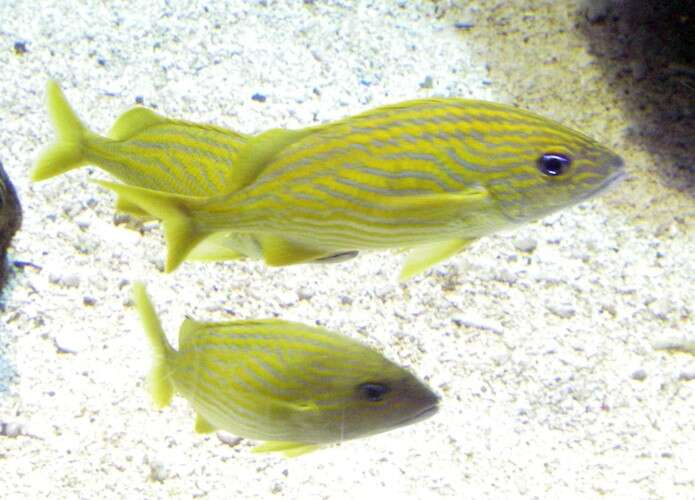
Haemulon flavolineatum (Desmarest, 1823) (French grunt)
Occurs in large schools on rocky and coral reefs, often under ledges or close to elkhorn coral . Juveniles abundant in near-shore seagrass beds . Feeds mainly on small crustaceans . Marketed fresh .
Abudefduf saxatilis (Linnaeus, 1758) (Mamo)
Chaetodon capistratus Linnaeus, 1758 (Butterbun)
Inhabit shallow reefs and generally occurs singly or in pairs. Feed mainly on zoantharians, polychaete worms, gorgonians and tunicates. Easily approached . Oviparous . Form pairs during breeding .
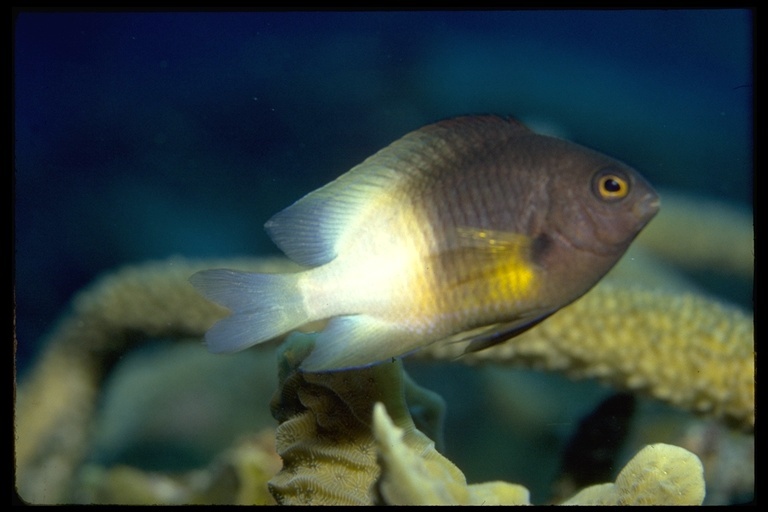
Stegastes partitus (Poey, 1868) (bicolor damselfish)
Inhabits shallow coral reefs and isolated patch reefs in deeper water. Feeds primarily on algae but also on polychaetes, hydroids, copepods and ascidians . Aggressively territorial but only around a small area . Taken incidentally in traps and small-meshed beach nets .
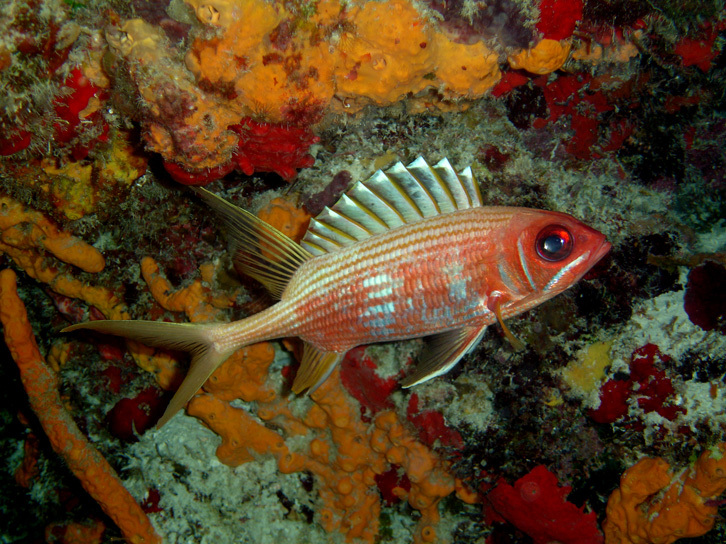
Holocentrus adscensionis (Osbeck, 1765) (Squirrelfish)
Occurs in shallow coral reefs, as well as deeper offshore waters . A nocturnal species, hiding in deep crevices or under coral ledges during the day; at night it usually moves over sand and grass beds, taking mainly crabs...
Read More
Read More
Pterois volitans (Linnaeus, 1758) (Red lionfish)
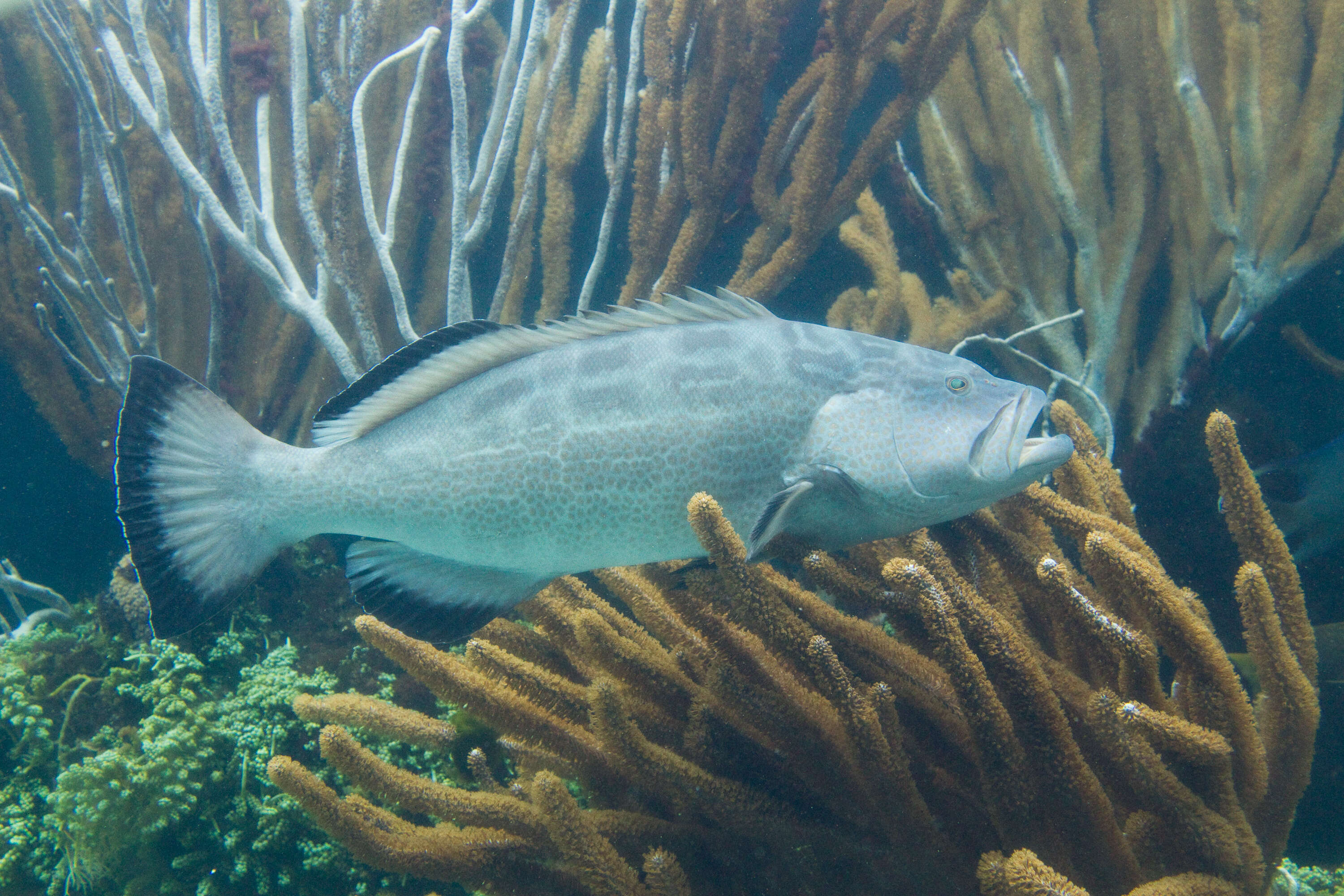
Mycteroperca bonaci (Poey, 1860) (Black gouper)
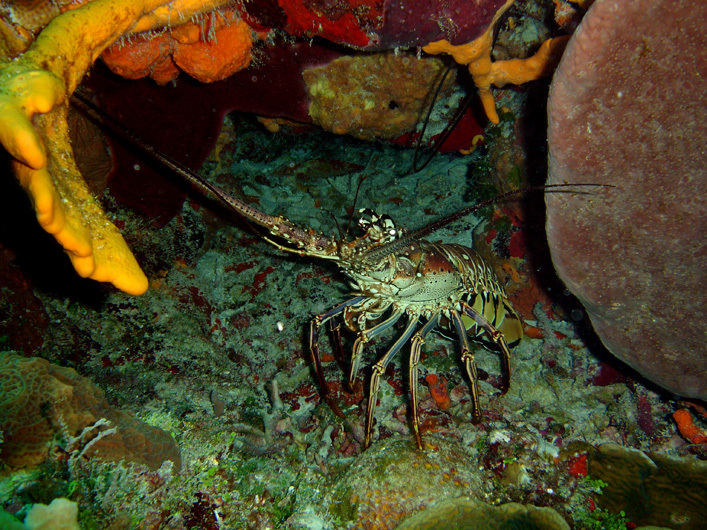
Panulirus argus (Latreille, 1804) (Caribbean spiny lobster)
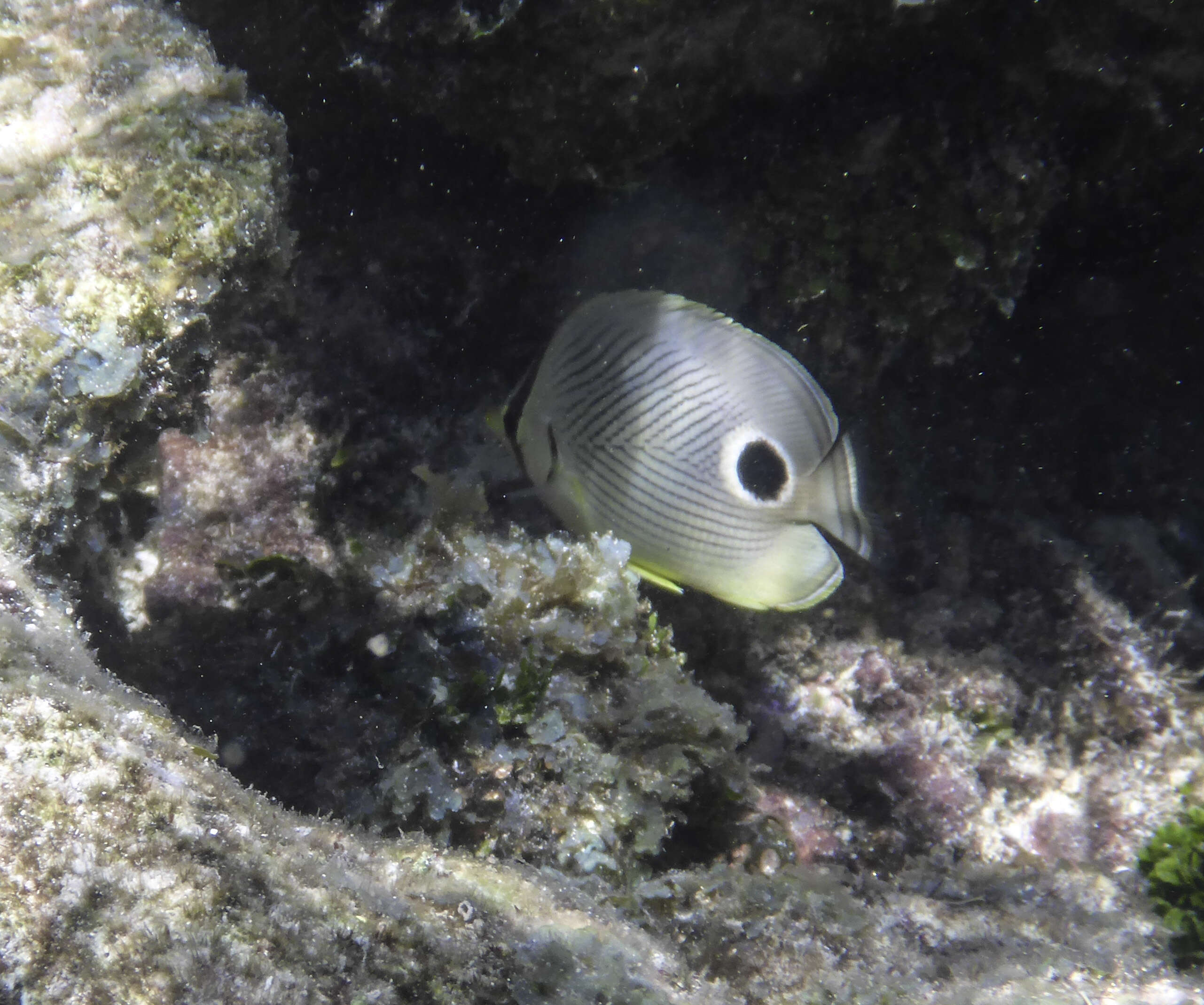
Chaetodon ocellatus Bloch, 1787 (Butterbun)
Inhabit shallow, coral reefs with clear water . Develop dusky bands at night. Generally common . Oviparous . Form pairs during breeding .
Scorpaena plumieri Bloch, 1789 (Spotted scorpionfish)
Found mostly in shallow coral reef and rocky areas. Lies motionless on the bottom . Feeds mostly on other fishes and crustaceans. Moderately common below about 5 m depth to at least 55 m. Displays characteristic bright...
Read More
Read More
Holocentrus rufus (Walbaum, 1792) (Miss darlington)
Nocturnal , inhabits clear reefs . Found near mouths of caves and holes ; at night they usually move to sandy areas and grass beds to feed on crabs, shrimps, gastropods and brittle stars . Marketed fresh but not popular as a food fish .
Chromis cyanea (Poey, 1860) (blue chromis)
Common above deep outer reefs and feeds in aggregations of the small zooplankton, primarily copepods . Often with creole wrasse. Retreats into coral crevices when frightened .
Acanthurus tractus (Fiveband surgeonfish)
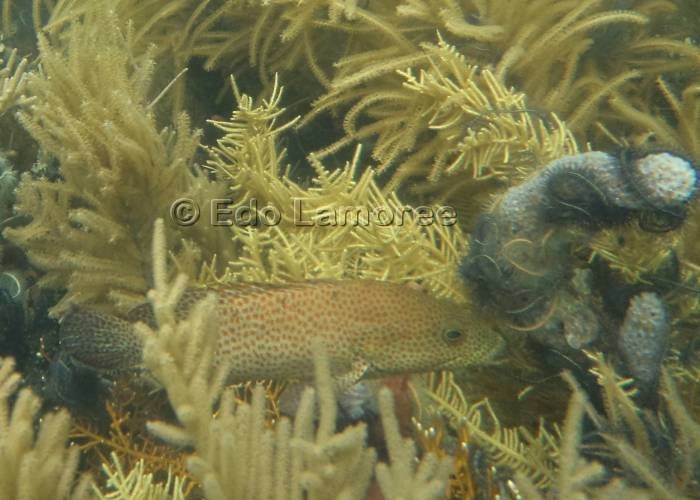
Cephalopholis cruentata (Lacepède, 1802) (Coney)
Inhabit Thalassia beds and coral reefs. In the Gulf of Mexico, they are found on rocky reef ledge in depths greater than 27 m. Solitary and secretive, they usually stay near hiding places during the day. Prefer to rema...
Read More
Read More
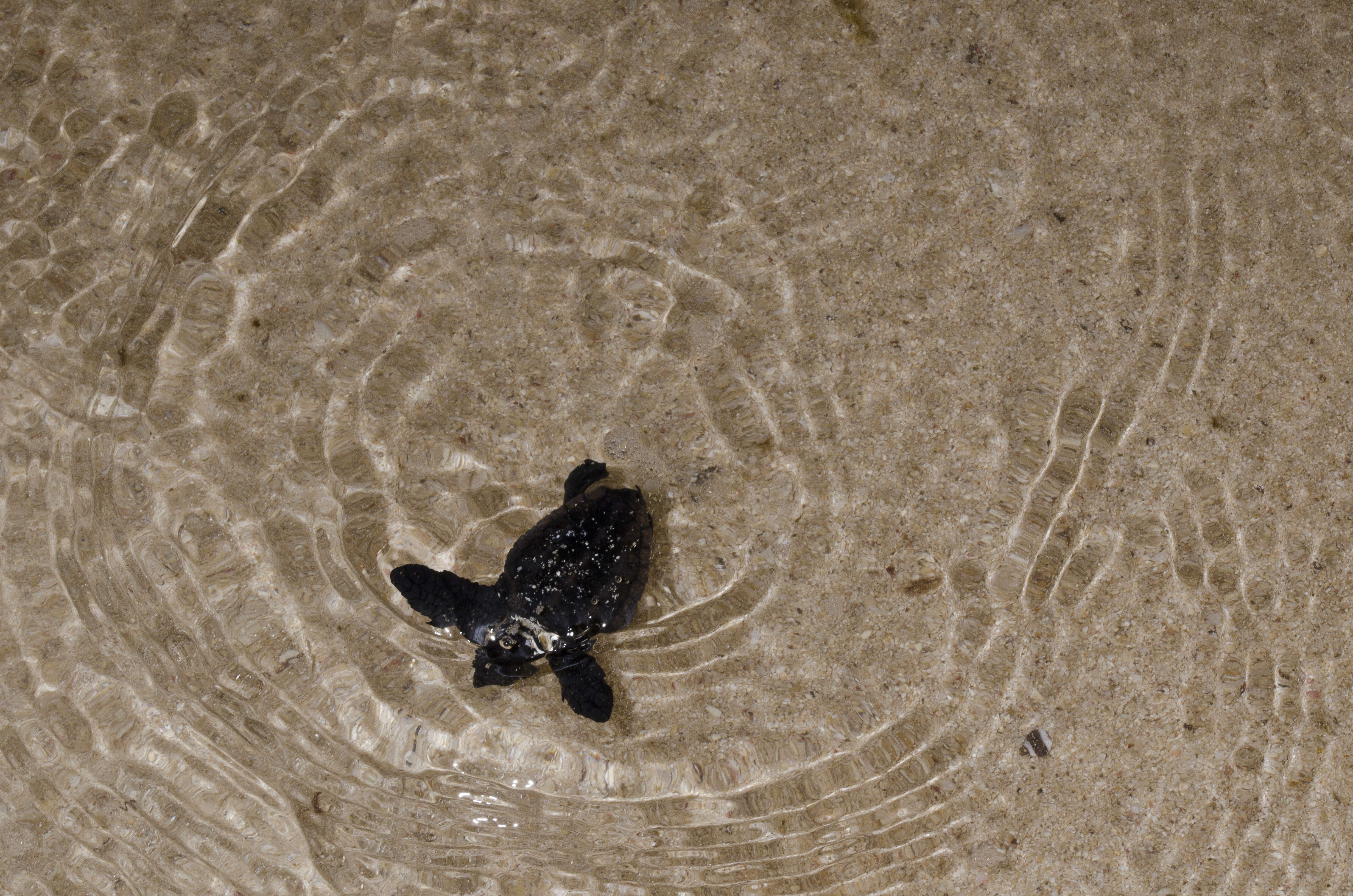
Caretta caretta Linnaeus 1758 (Loggerhead Turtle)
Adults are primarily carnivorous, using their powerful jaws to crack open crustaceans such as crabs and even seemingly impenetrable molluscs such as the queen conch (Strombus gigas) and giant clam (Tridacna s...
Read More
Read More
Acanthurus coeruleus Bloch and Schneider, 1801 (Blue tang surgeonfish)
Inhabits coral reefs, inshore grassy or rocky areas. Forms small groups . Mainly diurnal. Feeds entirely on algae . At Fernando de Noronha Archipelago in southwestern Atlantic, juveniles hold cleaning stations togeth...
Read More
Read More
Share on Social Networks
- Facebook:

personalize your shared text as well as its destination (wall, page...) or send as a private message to a friend
- Twitter: Tweet personalize your tweet
- Google Plus:
Direct link to this dive
- Long link:
- Short link:


 We are participating today in the startup contest Techcrunch Disrupt. Support Diveboard by voting for us!
























































































Simply known as "Slab", this reef may have been one of the best dives yet! It's small with a lot of crevices and low swim-throughs, especially at the "point" where our Captain, Steve, dropped his anchor. Off of the point, he told us, about 100 yards at a bearing of 220 degrees was an archway that we needed to visit and swim through. An easy traverse back, and around the opposite side of the Slab clockwise would bring us back to the anchor.
This is a reef that isn't on most maps, or any that I could find (thus, I'm not sure of its exact location). Capt. Steve says he comes here often to dive and explore. It's obvious that the reef isn't visited by many, as it is very healthy and clean, with an abundance of marine life. We started off exploring the crevices and swim-through at the point. Here, I saw the first lion fish I've seen yet--actually a pair of them. (Not a good sign, but beautiful to see nonetheless!) Cam or Billy, or someone--not sure who--shot a bearing to the archway and we played "follow-the-leader" out to the arch. I stayed a bit behind never losing site of the diver in front of me, or Joseph behind, who stayed back to explore the cave a bit more.
Swimming through the arch was cool, as there was a slight current, stronger than anywhere else on this dive, it seemed, and the fish were hiding out under facing and swimming into it, not moving forward at all. But the real treat was swimming back over. Crystal clear waters at that depth, and very colorful, I had the opportunity to shoot some great video of two butterflyfish bobbing up and down around the bubbles coming through the coral from the divers below.
Our trip back was over the same, sandy flat bottom sprinkled with all sorts of coral and sponges and small reef fish (including a rather large squirrel fish). We returned to the point, where I filmed the two lion fish. (I later noticed in the video a large grouper hanging out behind them that I hadn't paid much attention to while filming.) We left the point again to circumnavigate the slab. Again, we came across an abundance of reef fish of all types. The highlight, though, was an ancient loggerhead turtle that Billy found. He was half hidden under a low ledge. As I swam by, I was truly amazed by his size! His head was bigger than mine, and he looked very old. We all gathered around while Laurin desperately tried coaching him out of his hiding place. He finally obliged and, as he did so, swam a full circle around me and then slowly swam back over the reef off into the distance. I'm not sure of the size: maybe 5-6 feet long from head to tail, with a 3 1/2 to 4 foot long carapace. He may have been as big as a VW! (Well, he looked like it under water!) At any rate, Billy said later it was the largest loggerhead he has ever seen. And it was a great conclusion to the best dive trip I've been on!
Incidentally, we reported the lionfish siting to Captain Steve.
SAC = 0.98 cf/min