


 Smmcdonald


 United States
-
Nº23
 Date: 2014-11-01 - 11:36
-
 Max Depth: 10.5m Duration: 44mins
Dive Location

- Surface interval:123 mins
- Temp: Bottom 26°C
- Dive type : Training, Deep dive, Boat
- Visibility: Average Water: Salt
Specific gear used
- BCD: Scubapro - Nighthawk
- Camera: GoPro - Hero3+
- Computer: Scubapro - Luna
- Fins: Scubapro - Twin Jet
- Regulator: Scubapro - AIR2
- Regulator: Scubapro - MK21/S560
- Weights: 6.4 kg
Dive reviews
| Overall review | ||
| Dive difficulty | ||
| Marine life quality |
Recent Divers in Key Largo, FL

Recent Pictures in Key Largo, FL

Dive Shop & Buddies
 Dive with Billy Harloff (Instructor, Gypsy Divers) from Quiescence Diving Services, Inc.
 Dive buddies:
Jennifer McDonald

Link to this spot:
- Spot:
- Country:
- Area:
- Body of water:
Dive Profile
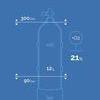
- 1. Nitrox 31
- 12L Aluminium 214 → 54 bar
- Average depth: 7.7m
Data provided by EOL.org




Species Identified
Sphyraena barracuda (Edwards, 1771) (Alho)
Abudefduf saxatilis (Linnaeus, 1758) (Mamo)
Thalassoma bifasciatum (Bloch, 1791) (Blue head)
Inhabits reef areas, inshore bays and seagrass beds. Feeds mainly on zooplankton and small benthic animals, but may also feed on ectoparasites of other fishes . Spawn at midday throughout the year . A protogynous hermap...
Read More
Read More
Acanthurus coeruleus Bloch and Schneider, 1801 (Blue tang surgeonfish)
Inhabits coral reefs, inshore grassy or rocky areas. Forms small groups . Mainly diurnal. Feeds entirely on algae . At Fernando de Noronha Archipelago in southwestern Atlantic, juveniles hold cleaning stations togeth...
Read More
Read More
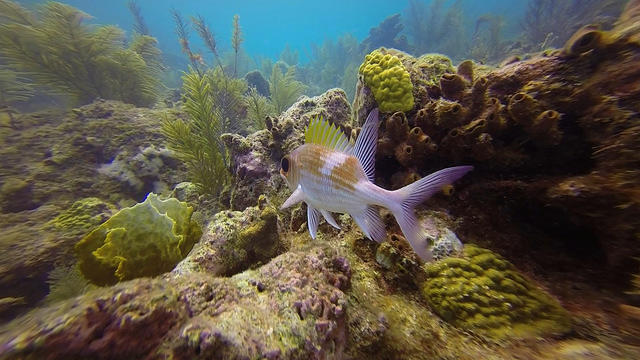
Holocentrus adscensionis (Osbeck, 1765) (Squirrelfish)
Occurs in shallow coral reefs, as well as deeper offshore waters . A nocturnal species, hiding in deep crevices or under coral ledges during the day; at night it usually moves over sand and grass beds, taking mainly crabs...
Read More
Read More
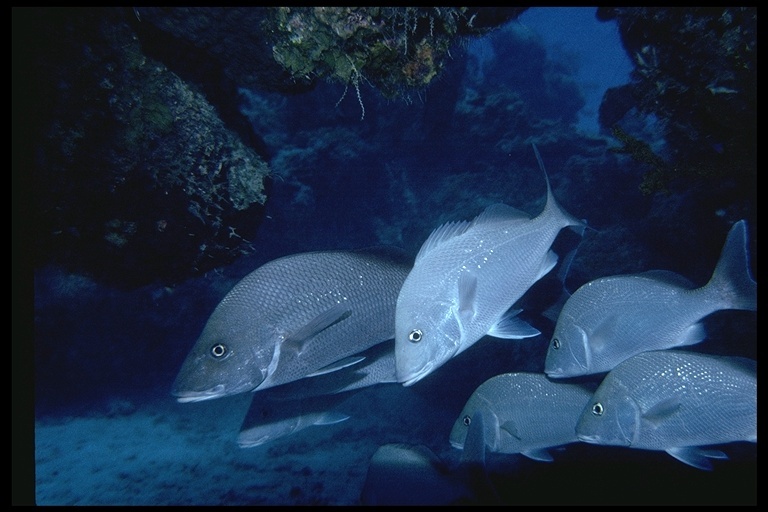
Lutjanus apodus (Walbaum, 1792) (Dogtooth snapper)
Occurs in shallow, clear, warm, coastal waters over coral reefs. Often near the shelter of elkhorn corals and gorgonians . Juveniles are encountered over sand bottoms with or without seagrass , and over muddy bottoms of ...
Read More
Read More
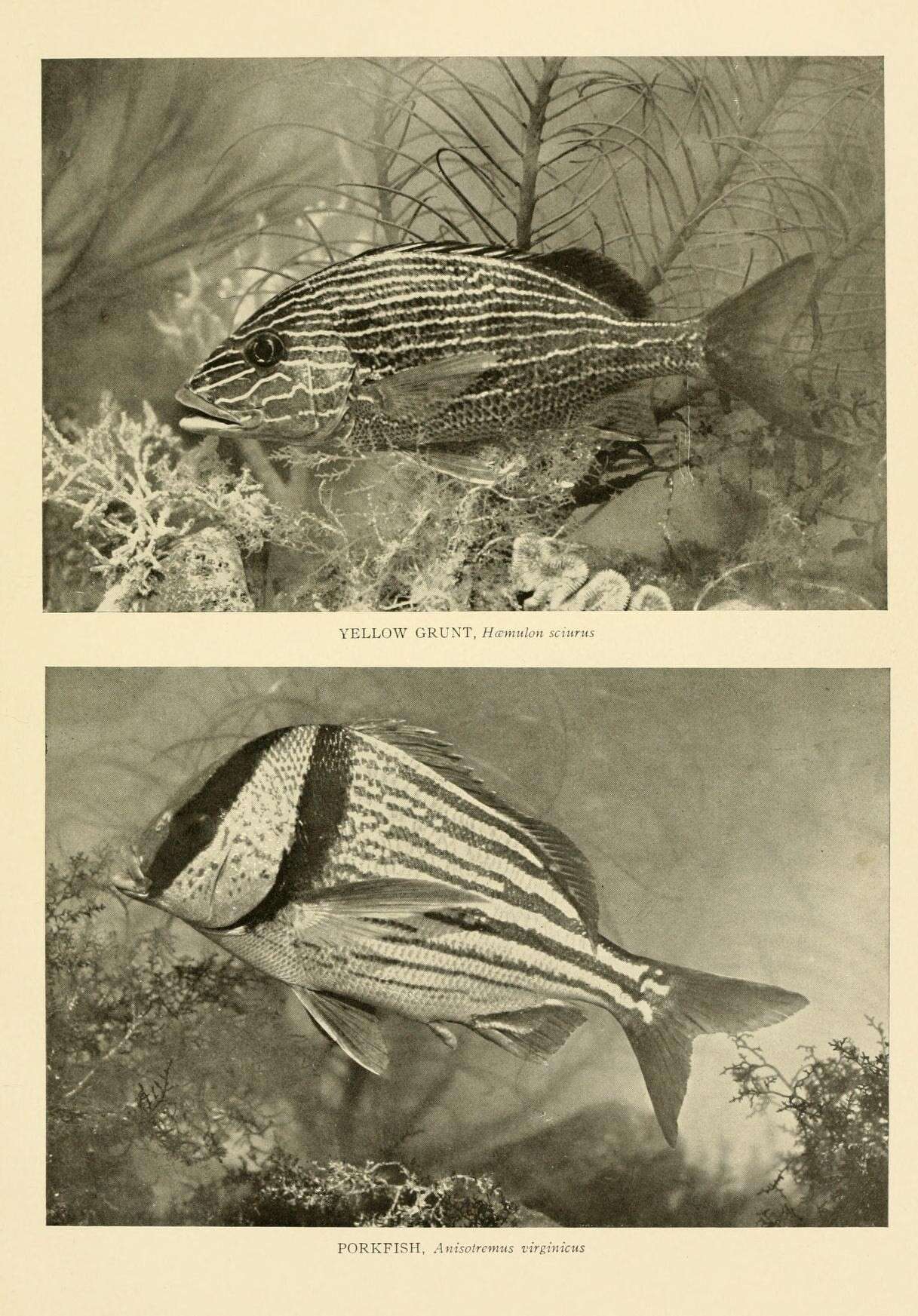
Haemulon sciurus (Shaw, 1803) (Blue striped grunt)
Found in small groups over coral and rocky reefs and drop-offs . Juveniles are abundant in Thalassia beds . Feeds on crustaceans, bivalves, and occasionally on small fishes. Marketed fresh.
Sparisoma rubripinne (Valenciennes, 1840) (Redfin parrot)
Inhabits coral reefs and seagrass beds. Juveniles or primary-phase fish can rapidly assume a mottled pattern as it comes to rest on the bottom. Spawning is usually a group activity in similarly colored males and females . Feeds on benthic algae and seagrasses . A protogynous hermaphrodite .
Echeneis neucratoides Zuiew, 1786 (whitefin sharksucker)
Occurs near as well as far from the coast .
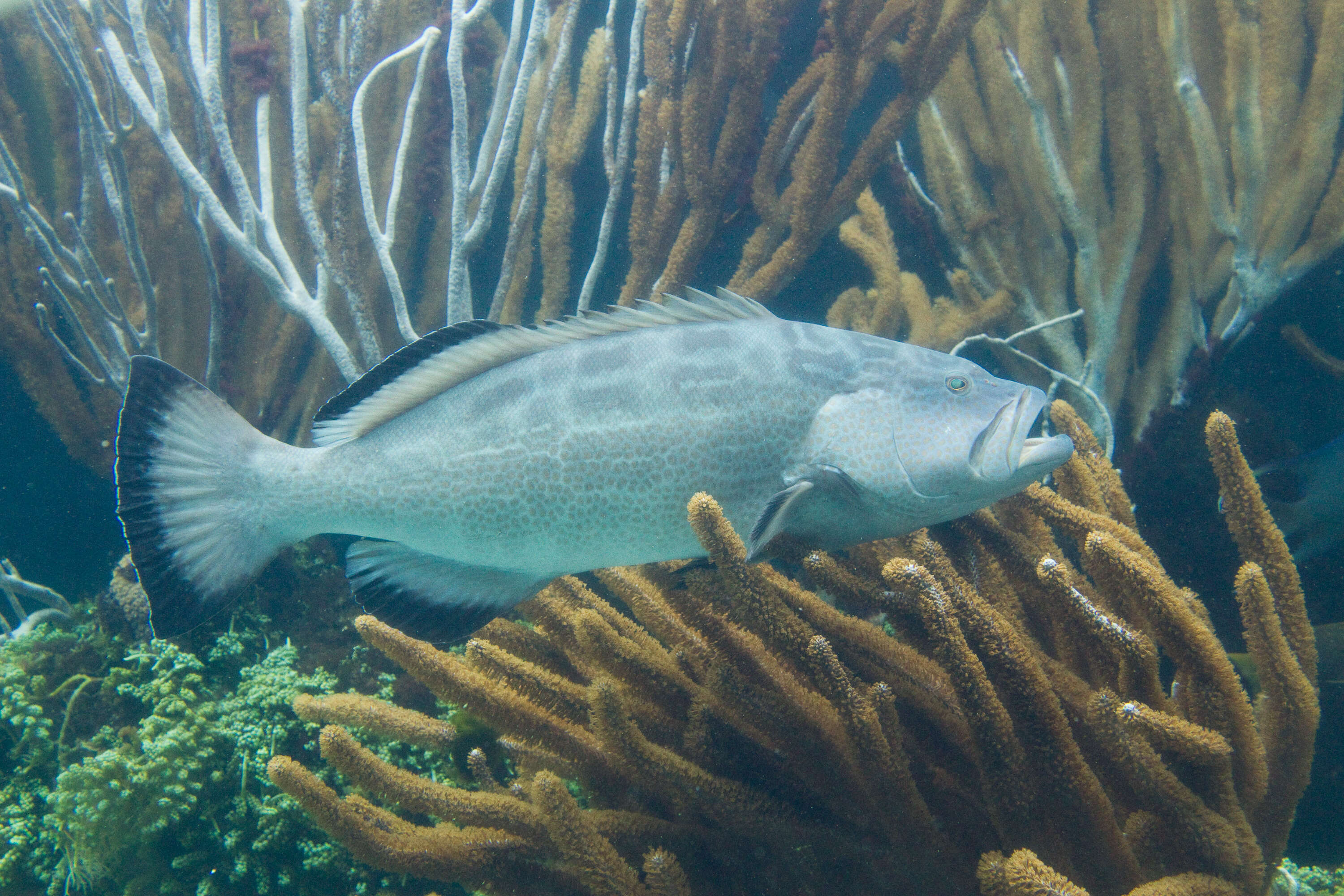
Mycteroperca bonaci (Poey, 1860) (Black gouper)
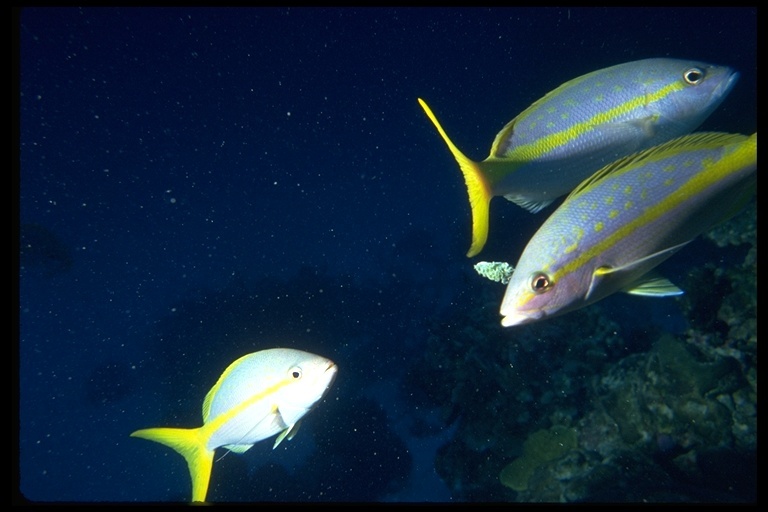
Ocyurus chrysurus (Bloch, 1791) (yellowtail snapper)
Carangoides ruber (Bloch, 1793) (Bar jack)
Common in clear insular areas or in coral reefs off mainland coasts . Juveniles frequent areas with algae . Usually in schools which may be spawning groups; occasionally solitary. Feeds on fishes, shrimps and other in...
Read More
Read More
Chromis cyanea (Poey, 1860) (blue chromis)
Common above deep outer reefs and feeds in aggregations of the small zooplankton, primarily copepods . Often with creole wrasse. Retreats into coral crevices when frightened .
Scarus coeruleus (Edwards, 1771) (Blue kwab)
Inhabits coral reefs. Juveniles found on Thalassia beds . Feeds on benthic plants and small organisms in the sand . Forms large spawning aggregations .
Haemulon album Cuvier, 1830 (White margate)
Inhabits seagrass beds, sand flats, coral reefs, and wrecks . Found in pairs or larger schools . Feeds on benthic invertebrates . Has been observed to nose into the sand to eat such subsurface invertebrates as peanut worms and heart urchins . Marketed fresh .
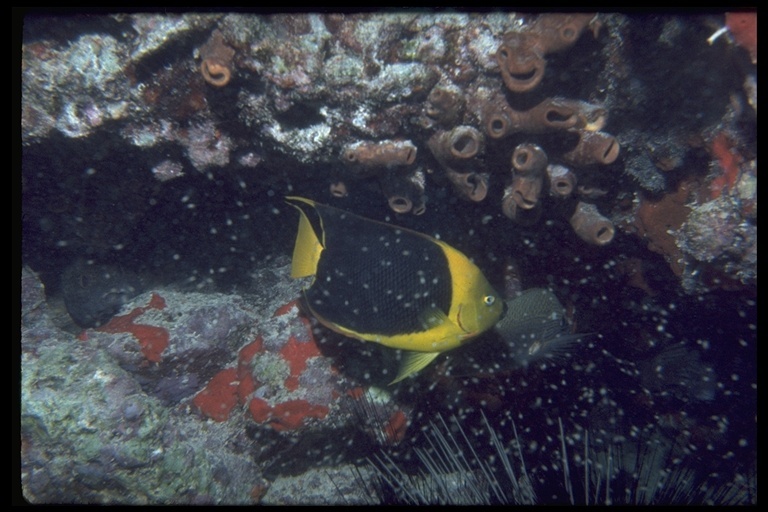
Holacanthus tricolor (Bloch, 1795) (Angelfish)
Inhabits rock jetties, rocky reefs and rich coral areas. Juveniles often associated with fire corals . Feeds on tunicates, sponges, zoantharians and algae. Marketed fresh .
Share on Social Networks
- Facebook:

personalize your shared text as well as its destination (wall, page...) or send as a private message to a friend
- Twitter: Tweet personalize your tweet
- Google Plus:
Direct link to this dive
- Long link:
- Short link:


 We are participating today in the startup contest Techcrunch Disrupt. Support Diveboard by voting for us!
























































































Sunny day, mild chop (1-2') and a slight current.
SAC rate = 0.88 cf/min
No entry in log book. Dive was filmed.
Saw a parrotfish with a remora attached. I cannot clearly identify the species, but it's probably 6-8 inches, and white or light grey in color, with a black splotch on its tail. This resembles most closely a Whitefin Sharksucker (Echeneis neucratiodes), though it may be another species, such as a Sharksucker (Echeneis naucrates in a different/lighter phase. Later, I saw another on a blue parrotfish, about the same size but the darker lines on its sides were more definite.
Black grouper in a very light phase (tan spots on top, sand-color body with distinctive thick, black bands on tips of fins and tail.