


 Smmcdonald


 United States
-
Nº32
 Date: 2015-06-04 - 15:05
-
 Max Depth: 8.4m Duration: 61mins
Dive Location

- Temp: Bottom 28°C
- Dive type : Recreational, Reef, Boat
- Visibility: Excellent Water: Salt
Specific gear used
- BCD: Scubapro - Nighthawk
- Camera: GoPro - Hero3+
- Computer: Scubapro - Luna
- Fins: Scubapro - Twin Jet
- Regulator: Scubapro - AIR2
- Regulator: Scubapro - MK21/S560
- Weights: 6.4 kg
Dive reviews
| Overall review | ||
| Dive difficulty | ||
| Marine life quality |
Recent Divers in Key Largo, FL

Recent Pictures in Key Largo, FL

Dive Shop & Buddies
 Dive with Quiescence Diving Services, Inc.
 Dive buddies:
Jennifer McDonald,
Joseph Johnson,
Billy Harloff,
Laurin,
Cameron Cheek

Link to this spot:
- Spot:
- Country:
- Area:
- Body of water:
Dive Profile
- 1. Air
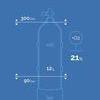
- 12L Aluminium 221 → 49 bar
- Average depth: 4.8m
Data provided by EOL.org



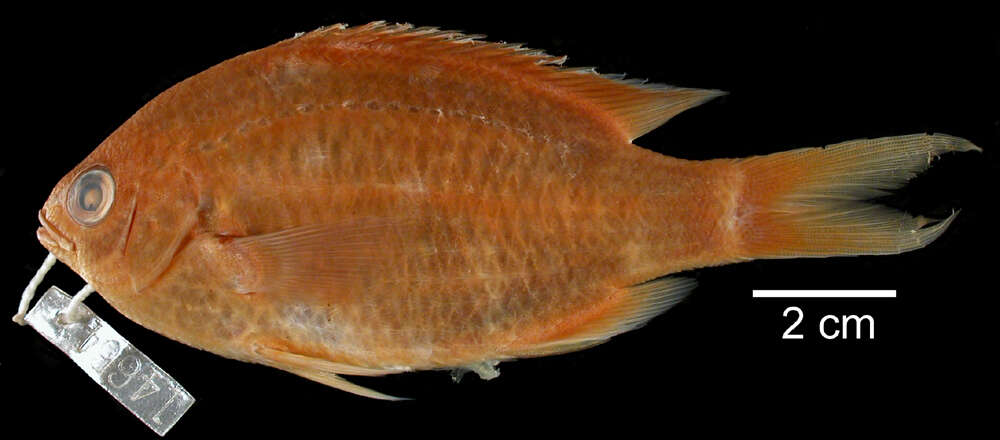


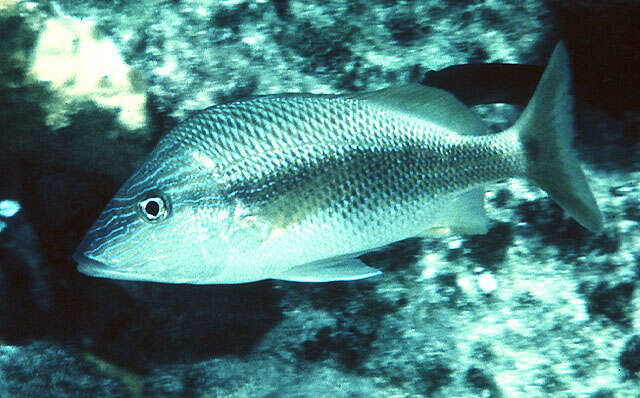
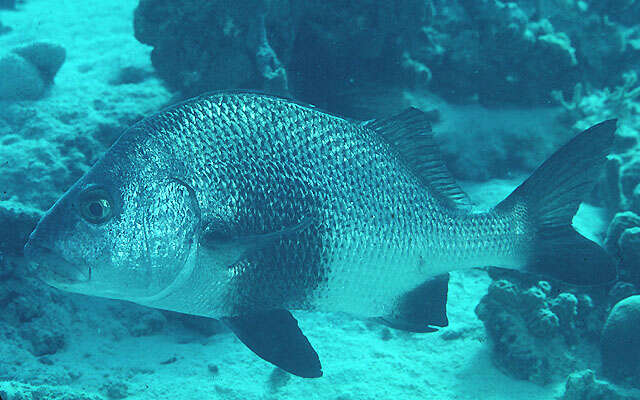

Species Identified
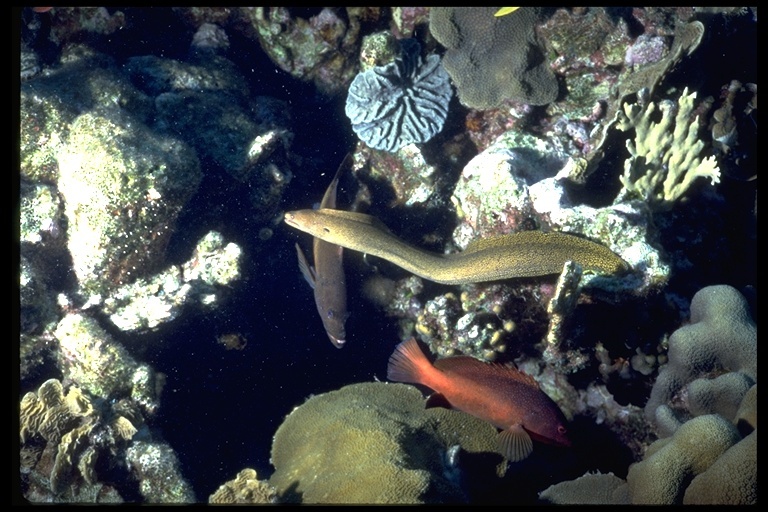
Gymnothorax miliaris (Kaup, 1856) (Bastard eel)
A benthic and solitary species inhabiting coral reefs and rocky shorelines. Usually at depths of 60 m . One of the most common and easily recognized morays of the West Indian reefs, active during the day and sometimes h...
Read More
Read More
Holacanthus ciliaris (Linnaeus, 1758) (queen angelfish)
Found on coral reefs. Generally occurs solitarily or in pairs. Moves gracefully between seafans, seawhips, and corals . Stomach contents of 26 specimens indicate that the species feeds almost exclusively on sponges supp...
Read More
Read More
Lutjanus jocu (Bloch and Schneider, 1801) (Dog teeth snapper)
Adults common around rocky or coral reefs. Young found in estuaries and occasionally enters rivers. Feeds mainly on fishes and benthic invertebrates, including shrimps, crabs, gastropods and cephalopods.
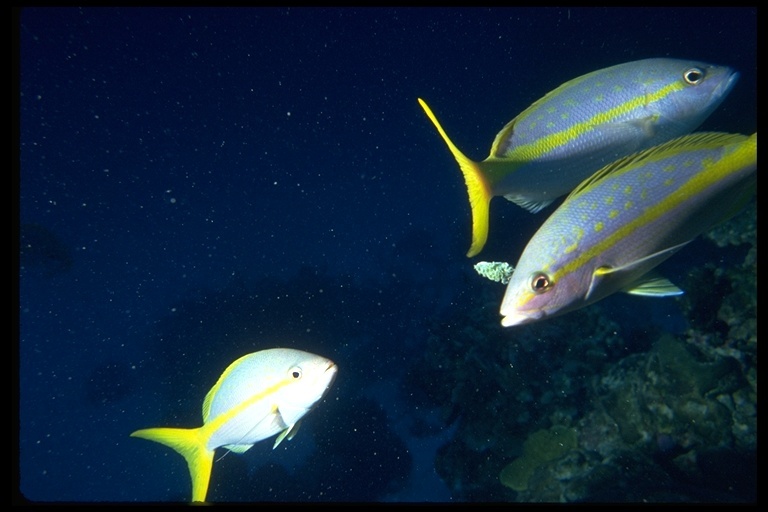
Ocyurus chrysurus (Bloch, 1791) (yellowtail snapper)
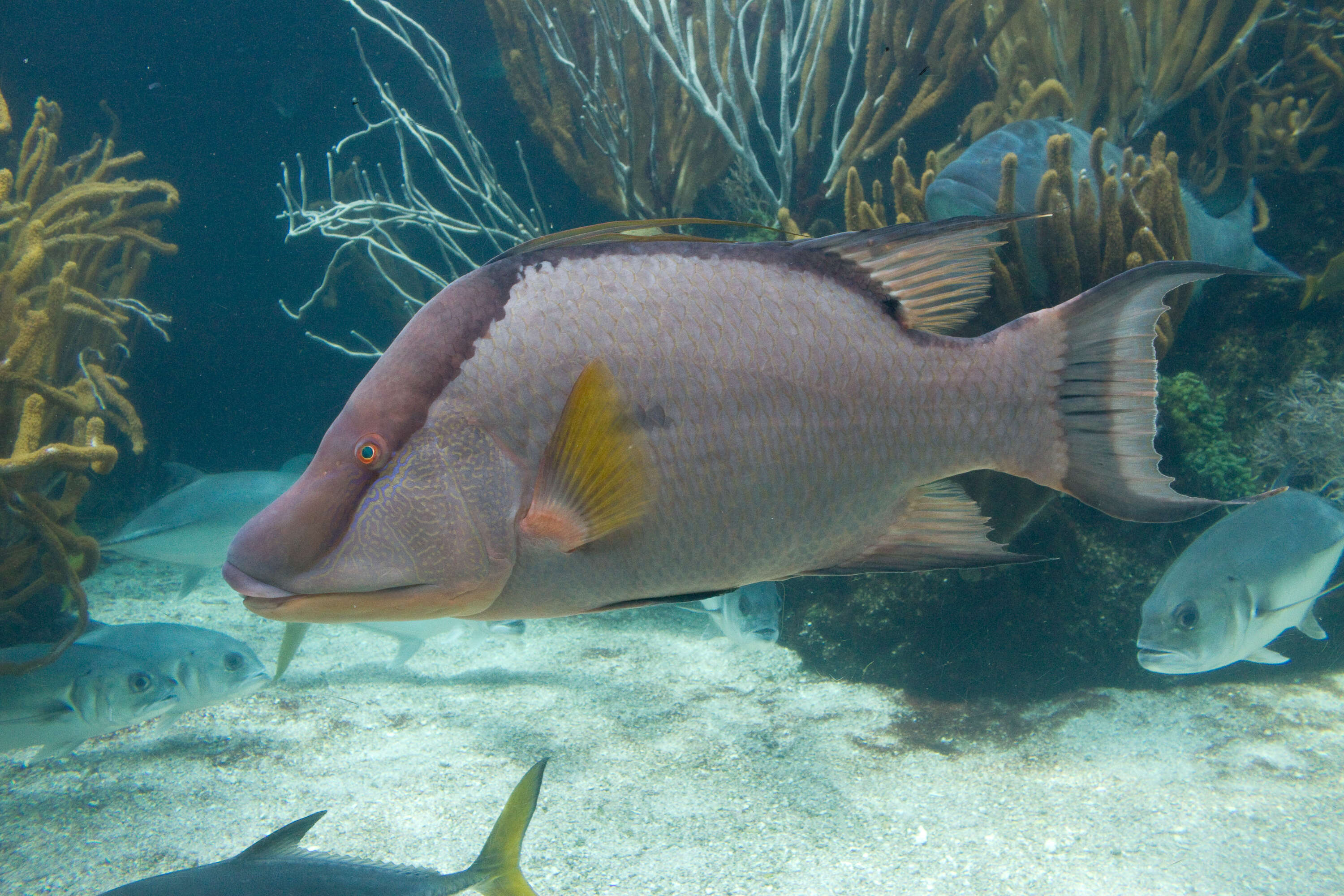
Lachnolaimus maximus (Walbaum, 1792) (Hogfish)
Hogfish have a fascinating life history; they are protogynous hermaphrodites, meaning that individuals first function sexually as females and then later, upon reaching a larger size, transform into males . This change gen...
Read More
Read More
Thalassoma bifasciatum (Bloch, 1791) (Blue head)
Inhabits reef areas, inshore bays and seagrass beds. Feeds mainly on zooplankton and small benthic animals, but may also feed on ectoparasites of other fishes . Spawn at midday throughout the year . A protogynous hermap...
Read More
Read More
Acanthurus coeruleus Bloch and Schneider, 1801 (Blue tang surgeonfish)
Inhabits coral reefs, inshore grassy or rocky areas. Forms small groups . Mainly diurnal. Feeds entirely on algae . At Fernando de Noronha Archipelago in southwestern Atlantic, juveniles hold cleaning stations togeth...
Read More
Read More
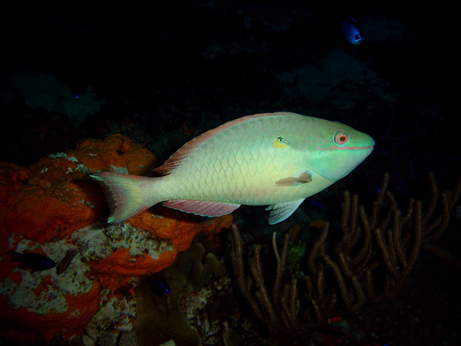
Sparisoma aurofrenatum (Valenciennes, 1840) (Black parrot)
Inhabits coral reefs, young usually in adjacent seagrass beds. Often rests on the bottom . Feeds on plants. Solitary or in small groups. A protogynous hermaphrodite .
Acanthurus tractus (Fiveband surgeonfish)
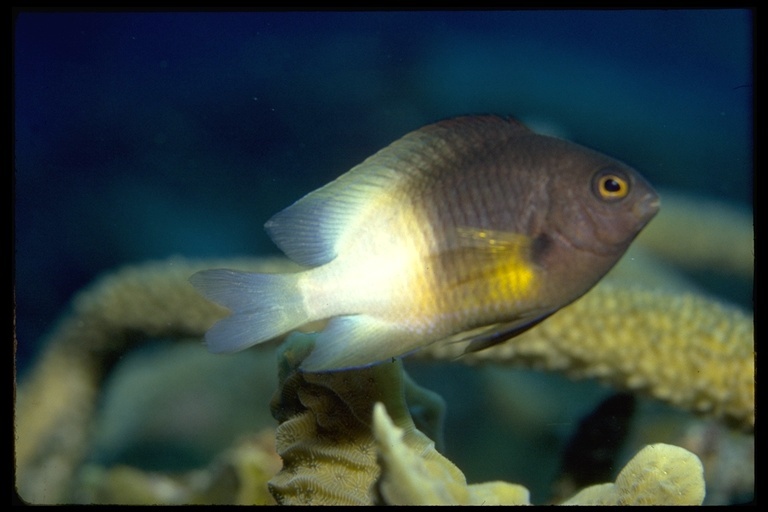
Stegastes partitus (Poey, 1868) (bicolor damselfish)
Inhabits shallow coral reefs and isolated patch reefs in deeper water. Feeds primarily on algae but also on polychaetes, hydroids, copepods and ascidians . Aggressively territorial but only around a small area . Taken incidentally in traps and small-meshed beach nets .
Aluterus scriptus (Osbeck, 1765) (Unicornfish)
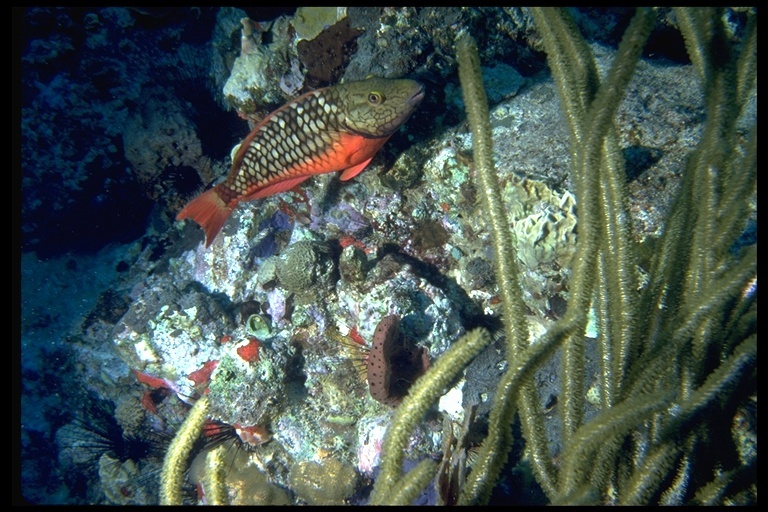
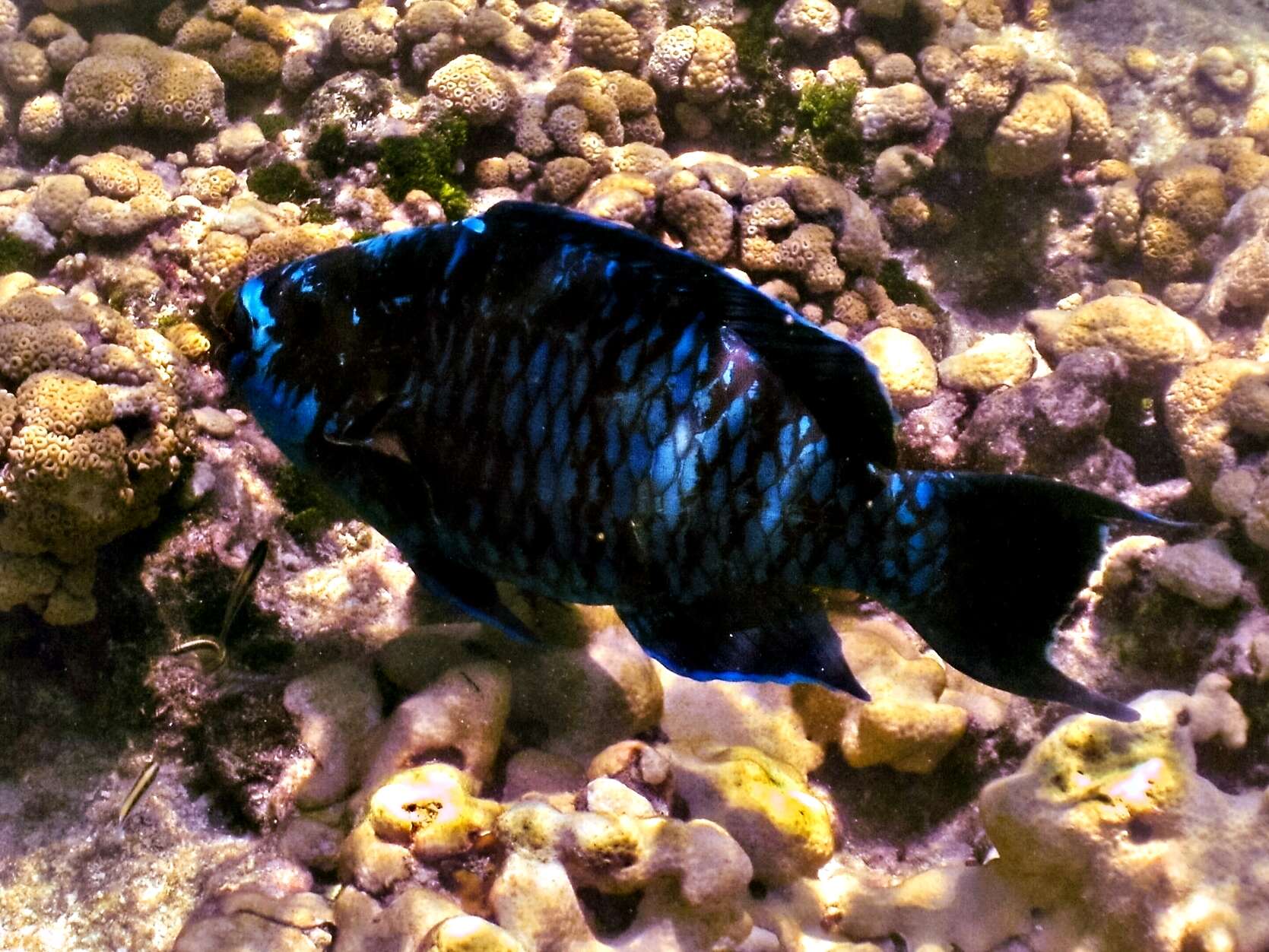
Sparisoma viride (Bonnaterre, 1788) (Dark green parrotfish)
Inhabits coral reefs with clear water . Young may be found in seagrass beds and other heavily vegetated bottoms. Feeds mainly on soft algae, but has been observed to graze on live corals like, Montastraea annularis . Pr...
Read More
Read More
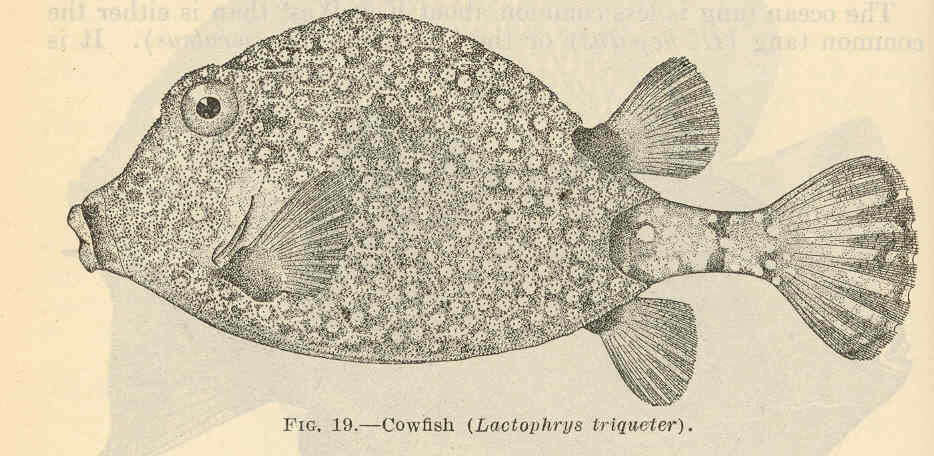
Lactophrys triqueter (Trunkfish)
Found on coral reefs . Solitary or in small groups . Feeds on a wide variety of small bottom invertebrates such as mollusks, crustaceans, worms, sessile tunicates and sponges exposed by a jet of water ejected through the...
Read More
Read More
Haemulon sciurus (Shaw, 1803) (Blue striped grunt)
Found in small groups over coral and rocky reefs and drop-offs . Juveniles are abundant in Thalassia beds . Feeds on crustaceans, bivalves, and occasionally on small fishes. Marketed fresh.
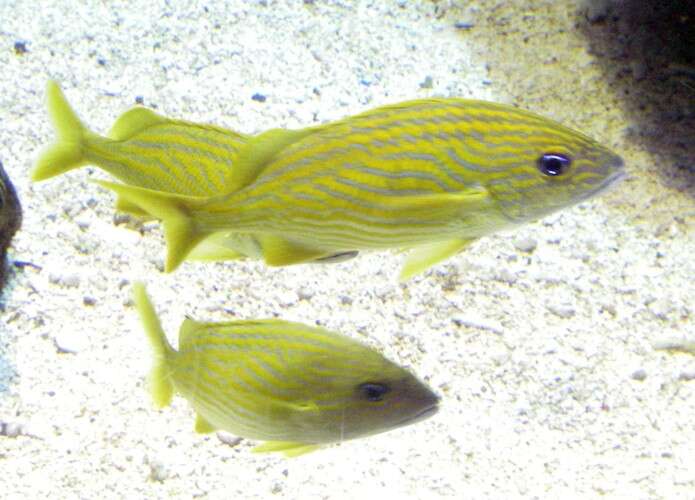
Haemulon flavolineatum (Desmarest, 1823) (French grunt)
Occurs in large schools on rocky and coral reefs, often under ledges or close to elkhorn coral . Juveniles abundant in near-shore seagrass beds . Feeds mainly on small crustaceans . Marketed fresh .
Abudefduf saxatilis (Linnaeus, 1758) (Mamo)
Scarus coelestinus Valenciennes, 1840 (Nightowl parrot)
Occurs from rocky coastal reefs to seaward reefs . Often in schools, feeding with surgeonfishes by scraping off algae from rocks or dead coral . Marketed fresh and salted .
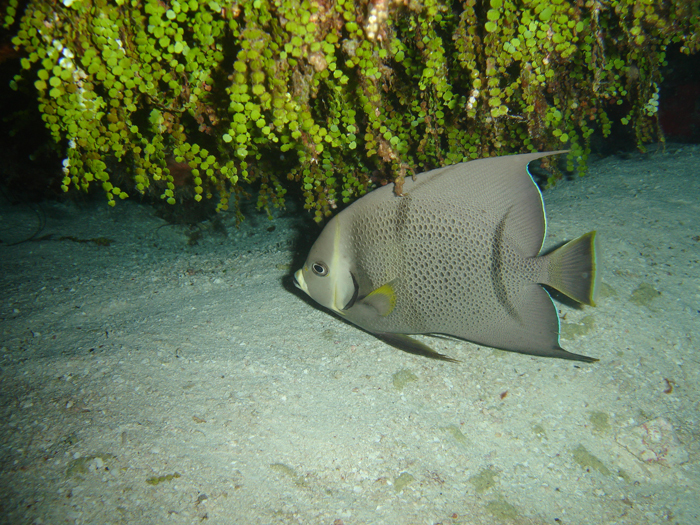
Pomacanthus arcuatus (Linnaeus, 1758) (Grey angelfish)
Common in coral reefs, usually solitary, occasionally in pairs. Juveniles are part-time cleaners. Feed mainly on sponges, but also takes tunicates, algae, zoantharians, gorgonians, hydroids, bryozoans, and seagrasses. O...
Read More
Read More
Carangoides ruber (Bloch, 1793) (Bar jack)
Common in clear insular areas or in coral reefs off mainland coasts . Juveniles frequent areas with algae . Usually in schools which may be spawning groups; occasionally solitary. Feeds on fishes, shrimps and other in...
Read More
Read More
Sphyraena barracuda (Edwards, 1771) (Alho)
Halichoeres bivittatus (Bloch, 1791) (slippery dick)
Commonly found in rocky and reef areas in shallow waters. Less common in seagrass beds. Feeds on other fishes and gastropods . Forms leks during breeding . A protogynous hermaphrodite .
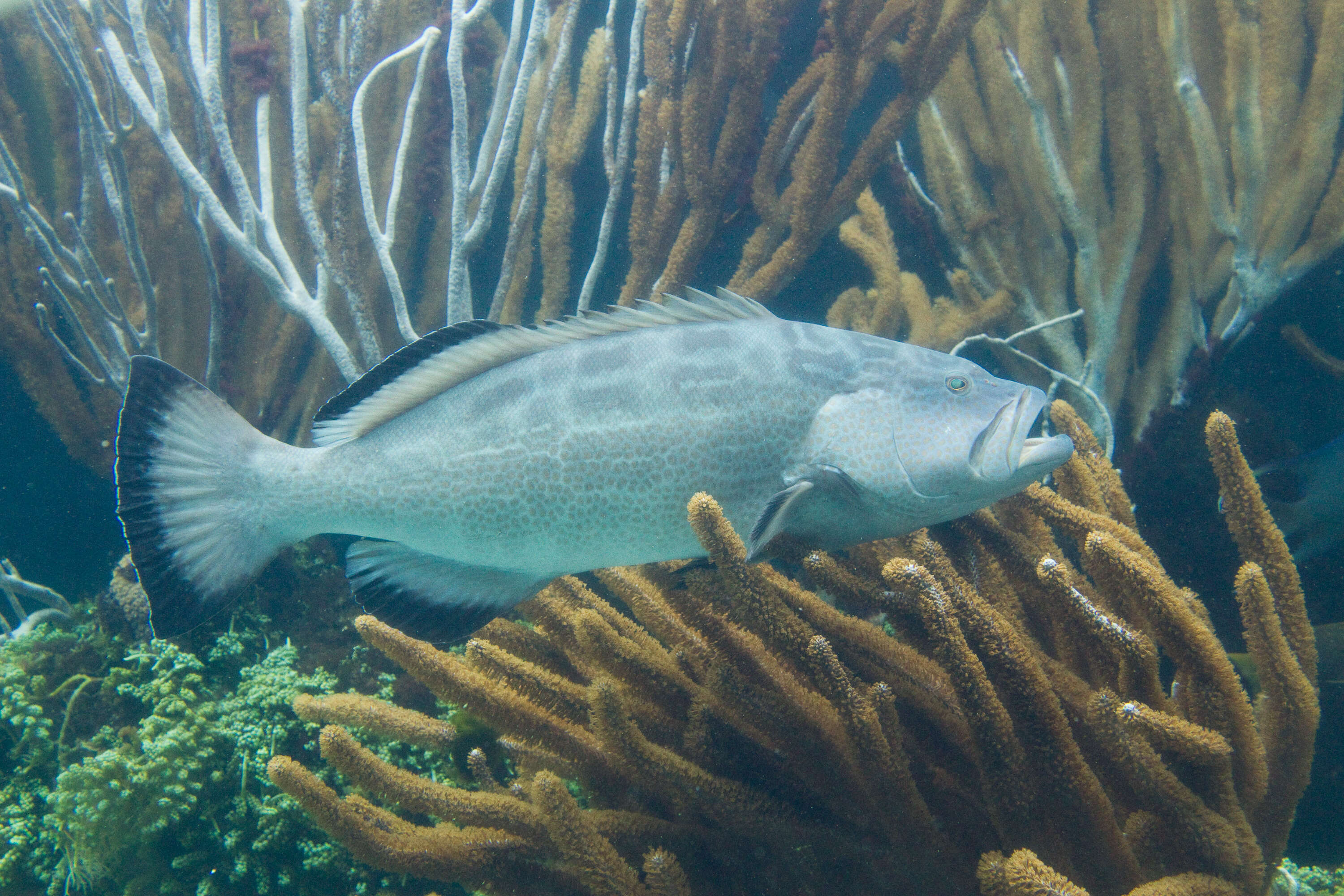
Mycteroperca bonaci (Poey, 1860) (Black gouper)
Chromis multilineata (Guichenot, 1853) (Cavalley pilot)
Generally occurs in steep slopes and patch reefs. A diurnal species , it most commonly forms moderate-sized feeding-schools over reef tops, rising above the bottom to feed on plankton, mainly copepods. Often seen with Chromis cyanea . Rarely marketed .
Microspathodon chrysurus (Cuvier, 1830) (Jewelfish)
A common territorial species that inhabits coral reefs, juveniles usually encountered among branches of yellow stinging coral, Millepora. Found in very shallow waters of coral reefs, usually near top of outer edge where ...
Read More
Read More
Chromis cyanea (Poey, 1860) (blue chromis)
Common above deep outer reefs and feeds in aggregations of the small zooplankton, primarily copepods . Often with creole wrasse. Retreats into coral crevices when frightened .
Haemulon plumierii (Lacepède, 1801) (Jolle cocoon)
Found in dense aggregations during the day on patch reefs, around coral formations, or on sandy bottoms . Juveniles common in Thalassia testudinum beds . Feeds on crustaceans, small mollusks, and small fishes. Frequentl...
Read More
Read More
Anisotremus surinamensis (Bloch, 1791) (Black thicklip)
Inhabits larger patch reefs and quickly sloping rocky bottoms. Often near the shelter of caves, ledges, or wrecks . Feeds at night on crustaceans, mollusks, smaller fish, and the long-spined urchin, Diadema. Marketed fresh.
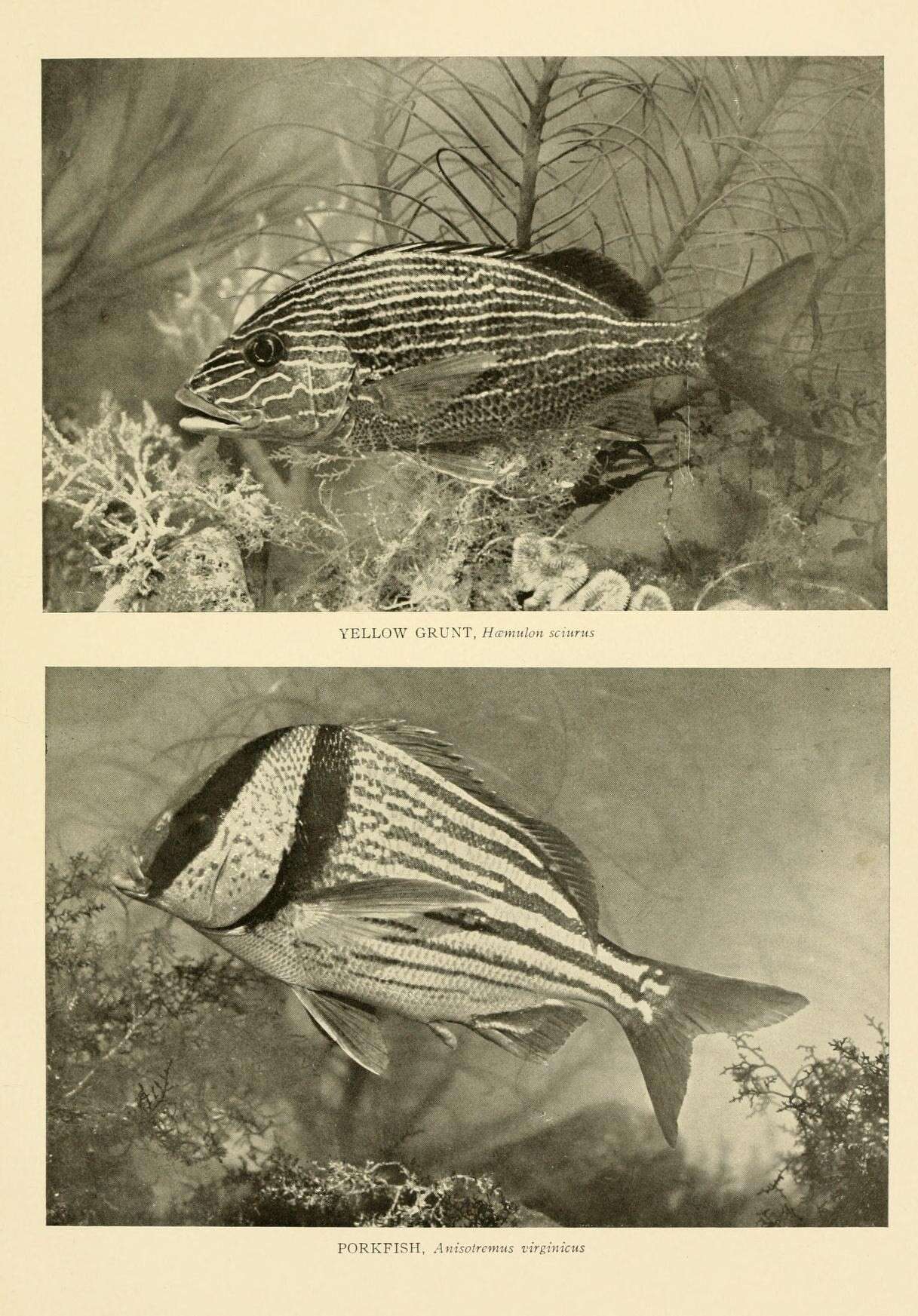
Anisotremus virginicus (Linnaeus, 1758) (Atlantic porkfish)
Inhabits reefs and rocky bottoms. Feeds at night on mollusks, echinoderms, annelids, and crustaceans . Young pick parasites from the bodies of larger fishes . Young are popular aquarium fish . Marketed fresh . Has been reared in captivity .
Share on Social Networks
- Facebook:

personalize your shared text as well as its destination (wall, page...) or send as a private message to a friend
- Twitter: Tweet personalize your tweet
- Google Plus:
Direct link to this dive
- Long link:
- Short link:


 We are participating today in the startup contest Techcrunch Disrupt. Support Diveboard by voting for us!
























































































One of my favorite reef dives to date, and definitely my longest bottom time! After practicing breathing techniques, Joseph and I stayed so that I could push the 1 hour mark before resurfacing.
There are mooring balls here, but it is obvious that this reef isn't dived as often as others nearby (North Dry Rock and Dry Rocks where the Christ of the Abyss is located.
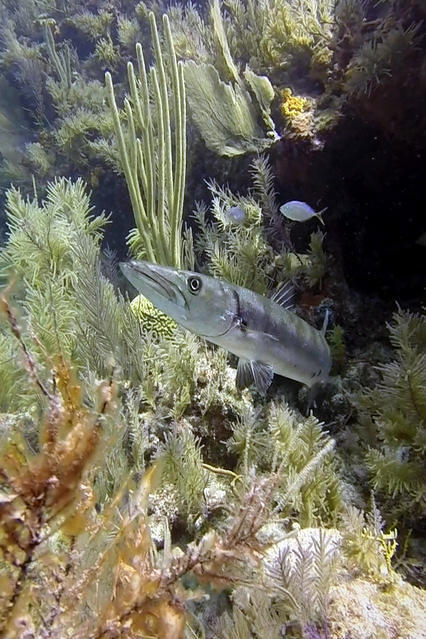
The reef forms deep sand channels with a lot of marine life. Going over them again and again wore my ears out a bit. I filmed a lot, running out of battery power on a near-fully charged battery. At the end, when everyone else resurfaced, Joseph and I stuck around for another 20-15 minutes. That's when a lot of the fish came out of hiding! I swam slowly along the reef, and saw the most colorful queen angel I've ever seen, along with a 2-3 foot long Golden Tail Moray Eel (Gymnothorax miliaris). (Laurin had spotted a smaller moray eel earlier hiding out in the coral nearby.) Unfortunately, my battery had already run out by this time, so I didn't get any footage of it.
Resurfaced a minute over our allotted time of 60 minutes, but no worries: Capt. Steve has been great this entire trip! And this out-of-the-way spot is one of the best!
SAC = 0.82 cf/min