


 Smmcdonald

 Mexico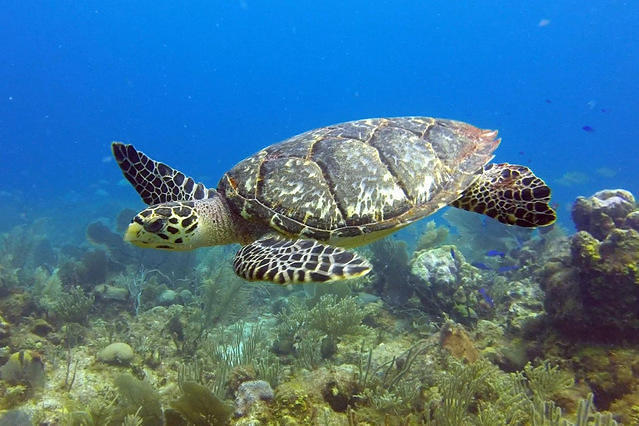
-
Nº58
 Date: 2015-08-06 - 10:53
-
 Max Depth: 14.9m Duration: 50mins
Dive Location

- Surface interval:54 mins
- Temp: Surf 34°C Bottom 29°C
- Dive type : Recreational, Drift, Reef
- Visibility: Good Water: Salt
Specific gear used
- BCD: Scubapro - Nighthawk
- Camera: GoPro - Hero3+
- Computer: Scubapro - Luna
- Fins: Scubapro - Twin Jet
- Mask: Genesis - Panview
- Regulator: Scubapro - AIR2
- Regulator: Scubapro - MK21/S560
- Weights: 3.6 kg
Dive reviews
| Overall review | ||
| Dive difficulty | ||
| Marine life quality |
Dive Shop & Buddies
 Dive with Froylan Pacheco from Dive Aventuras
 Dive buddies:
Jennifer McDonald,
Elliott Thomas
Dive buddies:
Jennifer McDonald,
Elliott Thomas

Link to this spot:
- Spot:
- Country:
- Area:
- Body of water:
Dive Profile
- 1. Air
- 10L Aluminium 219 → 25 bar
- Average depth: 10.4m
Data provided by EOL.org








Species Identified
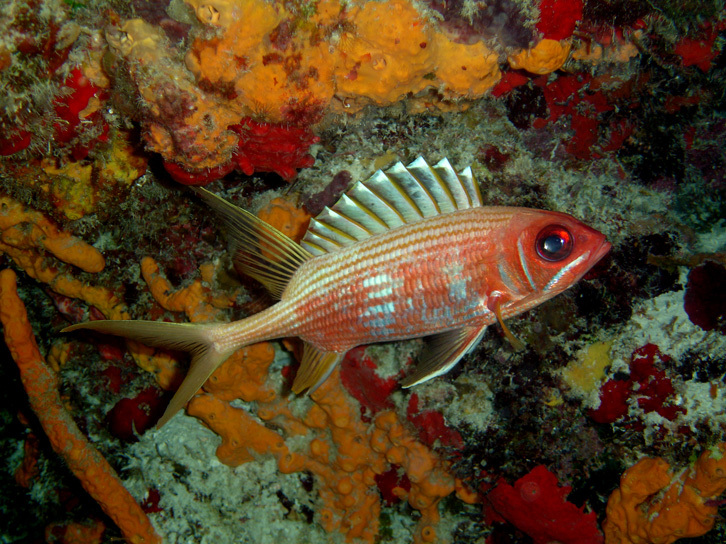
Holocentrus adscensionis (Osbeck, 1765) (Squirrelfish)
Occurs in shallow coral reefs, as well as deeper offshore waters . A nocturnal species, hiding in deep crevices or under coral ledges during the day; at night it usually moves over sand and grass beds, taking mainly crabs...
Read More
Read More
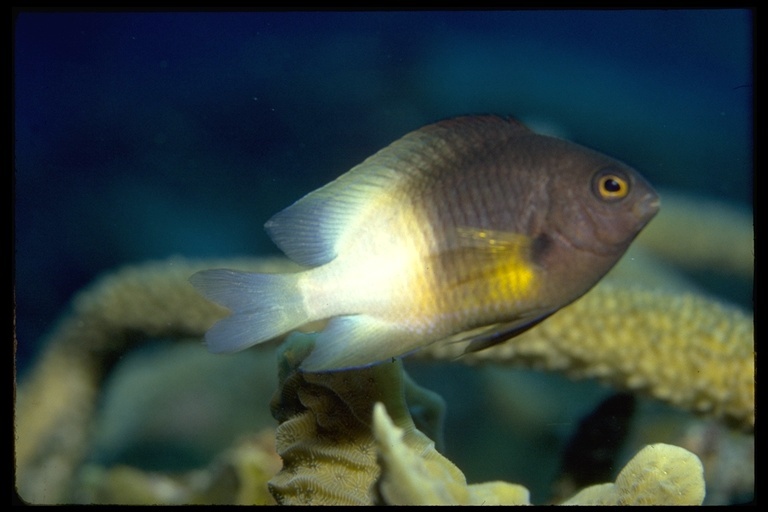
Stegastes partitus (Poey, 1868) (bicolor damselfish)
Inhabits shallow coral reefs and isolated patch reefs in deeper water. Feeds primarily on algae but also on polychaetes, hydroids, copepods and ascidians . Aggressively territorial but only around a small area . Taken incidentally in traps and small-meshed beach nets .
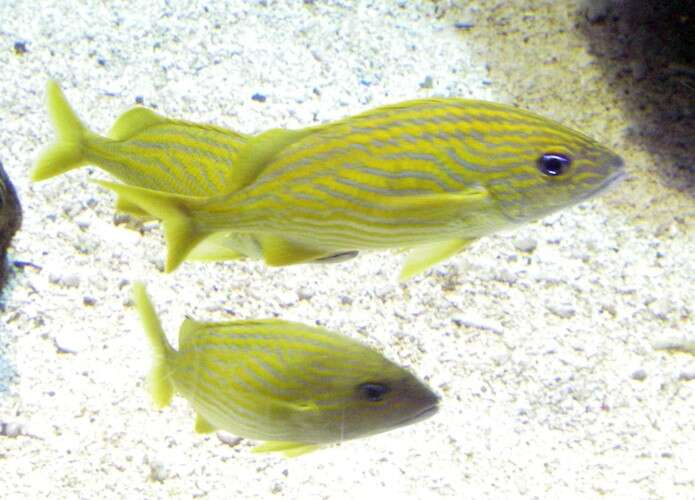
Haemulon flavolineatum (Desmarest, 1823) (French grunt)
Occurs in large schools on rocky and coral reefs, often under ledges or close to elkhorn coral . Juveniles abundant in near-shore seagrass beds . Feeds mainly on small crustaceans . Marketed fresh .
Haemulon sciurus (Shaw, 1803) (Blue striped grunt)
Found in small groups over coral and rocky reefs and drop-offs . Juveniles are abundant in Thalassia beds . Feeds on crustaceans, bivalves, and occasionally on small fishes. Marketed fresh.
Holocentrus rufus (Walbaum, 1792) (Miss darlington)
Nocturnal , inhabits clear reefs . Found near mouths of caves and holes ; at night they usually move to sandy areas and grass beds to feed on crabs, shrimps, gastropods and brittle stars . Marketed fresh but not popular as a food fish .
Chromis cyanea (Poey, 1860) (blue chromis)
Common above deep outer reefs and feeds in aggregations of the small zooplankton, primarily copepods . Often with creole wrasse. Retreats into coral crevices when frightened .
Pterois volitans (Linnaeus, 1758) (Red lionfish)
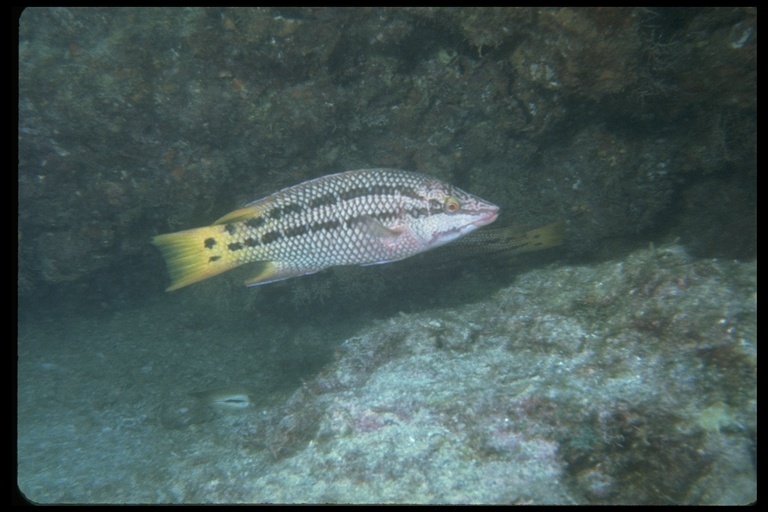
Bodianus rufus (Linnaeus, 1758) (Spanish hogfish)
Inhabits rocky or coral reefs . Feeds on brittle stars, crustaceans, mollusks, and sea urchins . Juveniles actively pick parasites from larger fishes . A protogynous hermaphrodite . May hybridize with spotfin hogfish, B. pulchellus . Marketed fresh . Maximum depth reported from Ref. 27115.
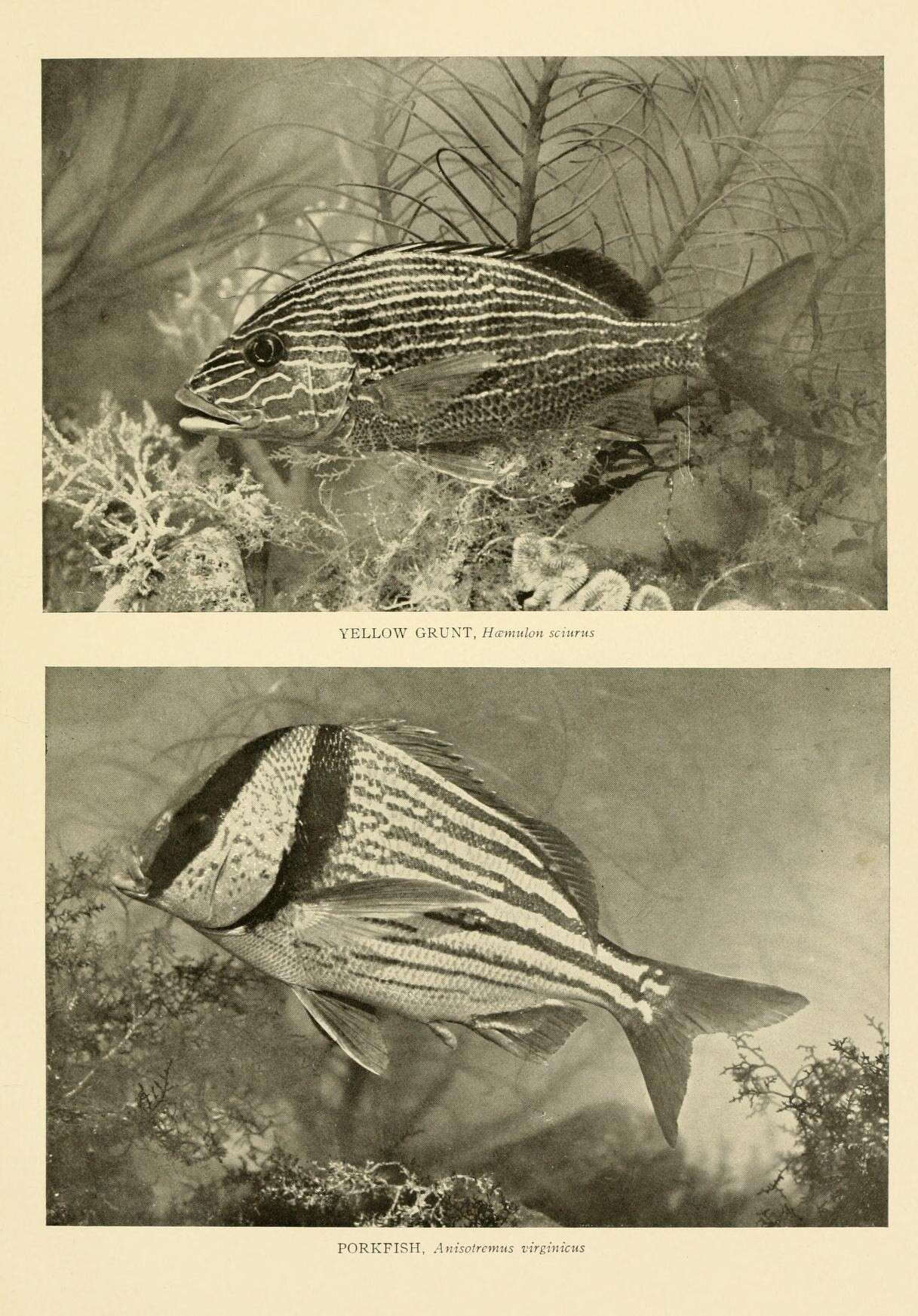
Anisotremus virginicus (Linnaeus, 1758) (Atlantic porkfish)
Inhabits reefs and rocky bottoms. Feeds at night on mollusks, echinoderms, annelids, and crustaceans . Young pick parasites from the bodies of larger fishes . Young are popular aquarium fish . Marketed fresh . Has been reared in captivity .
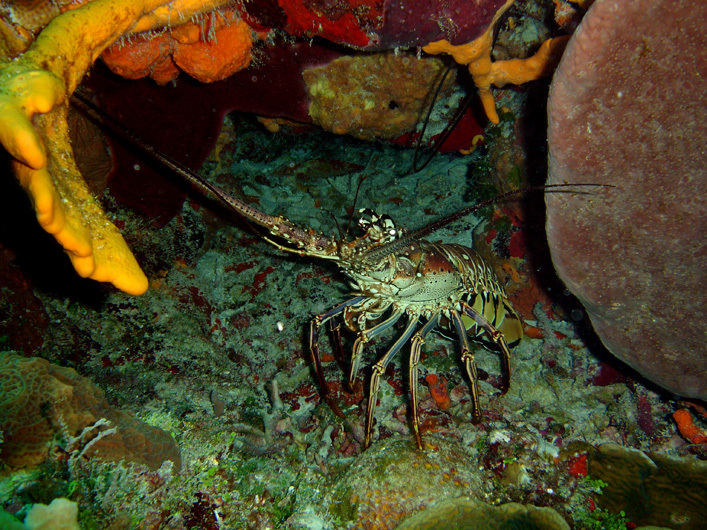
Panulirus argus (Latreille, 1804) (Caribbean spiny lobster)
Lutjanus apodus (Walbaum, 1792) (Dogtooth snapper)
Occurs in shallow, clear, warm, coastal waters over coral reefs. Often near the shelter of elkhorn corals and gorgonians . Juveniles are encountered over sand bottoms with or without seagrass , and over muddy bottoms of ...
Read More
Read More
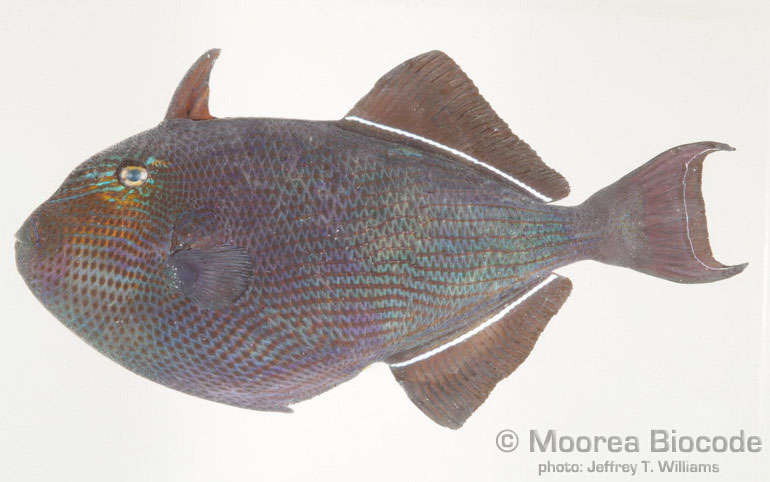
Melichthys niger (Bloch, 1786) (Black triggerfish)
Scarus vetula Bloch and Schneider, 1801 (Blownose)
Inhabits coral reefs and adjacent habitats. Feeds on algae scraped from rocks or dead coral. Sleeps in a mucus cocoon . Often seen in groups of one super male with several young adults, most of which are probably females . A protogynous hermaphrodite .
Acanthurus tractus (Fiveband surgeonfish)
Abudefduf saxatilis (Linnaeus, 1758) (Mamo)
Stegastes planifrons (Cuvier, 1830) (threespot damselfish)
Inhabits inshore and offshore coral reefs. Found within caves at night .Often found in tangles of staghorn coral; anywhere there is abundant algae on reefs . Feeds mainly on algae but also on harpacticoid copepods, small...
Read More
Read More
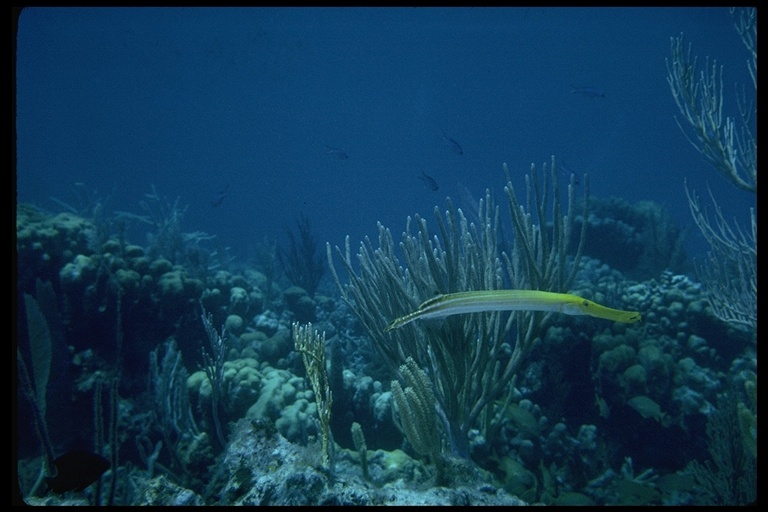
Aulostomus maculatus Valenciennes, 1841 (Caribbean trumpetfish)
Commonly found in weedy areas and especially around reefs, where they usually swim snout-down among sea whips . A solitary ambusher of small fishes and crustaceans that lurk among branching coral or gorgonians. Often swi...
Read More
Read More
Pareques acuminatus (Bloch & Schneider, 1801) (Cluck)
Occurs in clear waters of tropical islands, especially near coral reefs, but also in adjacent bays over rough bottom. Also often found under eroded edges of seagrass beds . Has been reared in captivity .
Equetus punctatus (Bloch & Schneider, 1801) (Spooted drum)
Occurs primarily on coral reefs. Secretive and usually solitary, under ledges or near small caves . Often seen during the day around the bases of corals . Feeds at night on crabs, shrimps, and polychaetes. Easily approached . Has been reared in captivity .
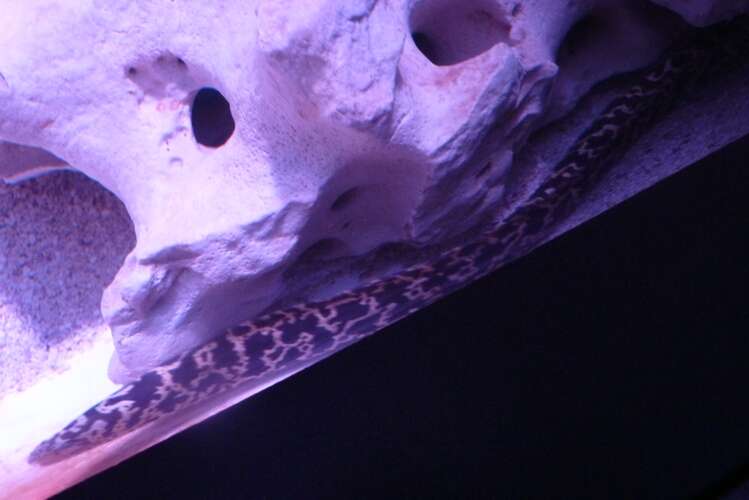
Echidna catenata (Bloch, 1795) (Chained moray)
A benthic and solitary species found commonly on reefs and rocky shore areas. Feeds on small fishes and crustaceans . At Fernando de Noronha Archipelago, offNE Brazil, forages for sally lightfoot crabs on exposed reefs...
Read More
Read More
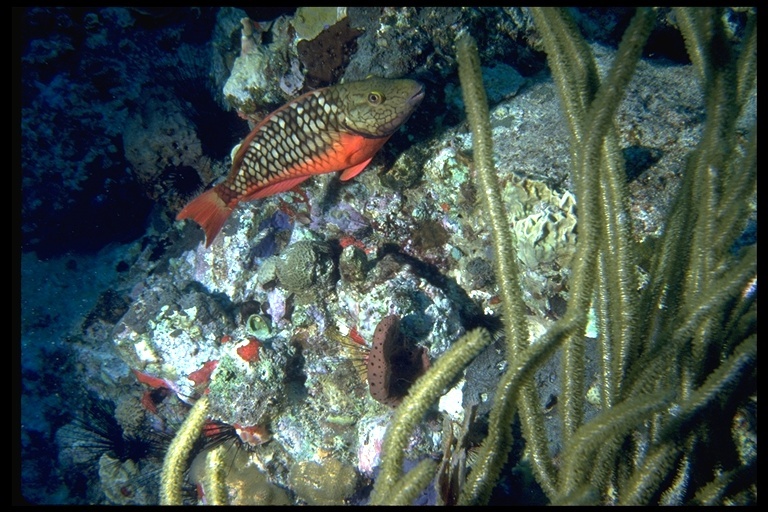
Sparisoma viride (Bonnaterre, 1788) (Dark green parrotfish)
Inhabits coral reefs with clear water . Young may be found in seagrass beds and other heavily vegetated bottoms. Feeds mainly on soft algae, but has been observed to graze on live corals like, Montastraea annularis . Pr...
Read More
Read More
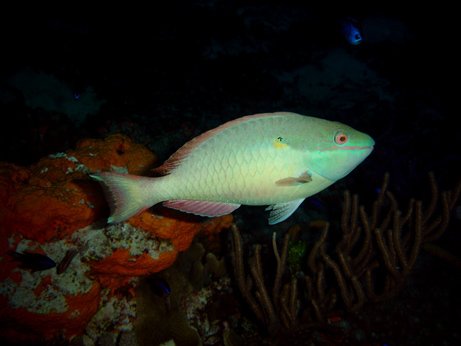
Sparisoma aurofrenatum (Valenciennes, 1840) (Black parrot)
Inhabits coral reefs, young usually in adjacent seagrass beds. Often rests on the bottom . Feeds on plants. Solitary or in small groups. A protogynous hermaphrodite .
Scarus taeniopterus Desmarest, 1831 (Blue chub)
Found on bottoms with coral or rock . Juveniles often occur in association with Thalassia. Forms large feeding aggregations and feeds on plants. Sleeps in a mucus cocoon .
Mithrax spinosissimus (Lamarck, 1818) (channel clinging crab)
Eretmochelys imbricata (LINNAEUS) 1766 (Hawksbill Turtle)
Hawksbills may take decades to mature and it could be between 20 to 40 years before they are ready to breed . Upon reaching sexual maturity, a female will typically lay up to five clutches of around 100 to 140 eggs in one ...
Read More
Read More
Thalassoma bifasciatum (Bloch, 1791) (Blue head)
Inhabits reef areas, inshore bays and seagrass beds. Feeds mainly on zooplankton and small benthic animals, but may also feed on ectoparasites of other fishes . Spawn at midday throughout the year . A protogynous hermap...
Read More
Read More
Apogon townsendi (Breder, 1927) (belted cardinalfish)
Inhabits coral and rocky areas, often near drop-offs. Solitary or in groups in caves or holes . Often seen hovering in the spines of long-spined urchin.
Share on Social Networks
- Facebook:

personalize your shared text as well as its destination (wall, page...) or send as a private message to a friend
- Twitter: Tweet personalize your tweet
- Google Plus:
Direct link to this dive
- Long link:
- Short link:


 We are participating today in the startup contest Techcrunch Disrupt. Support Diveboard by voting for us!
























































































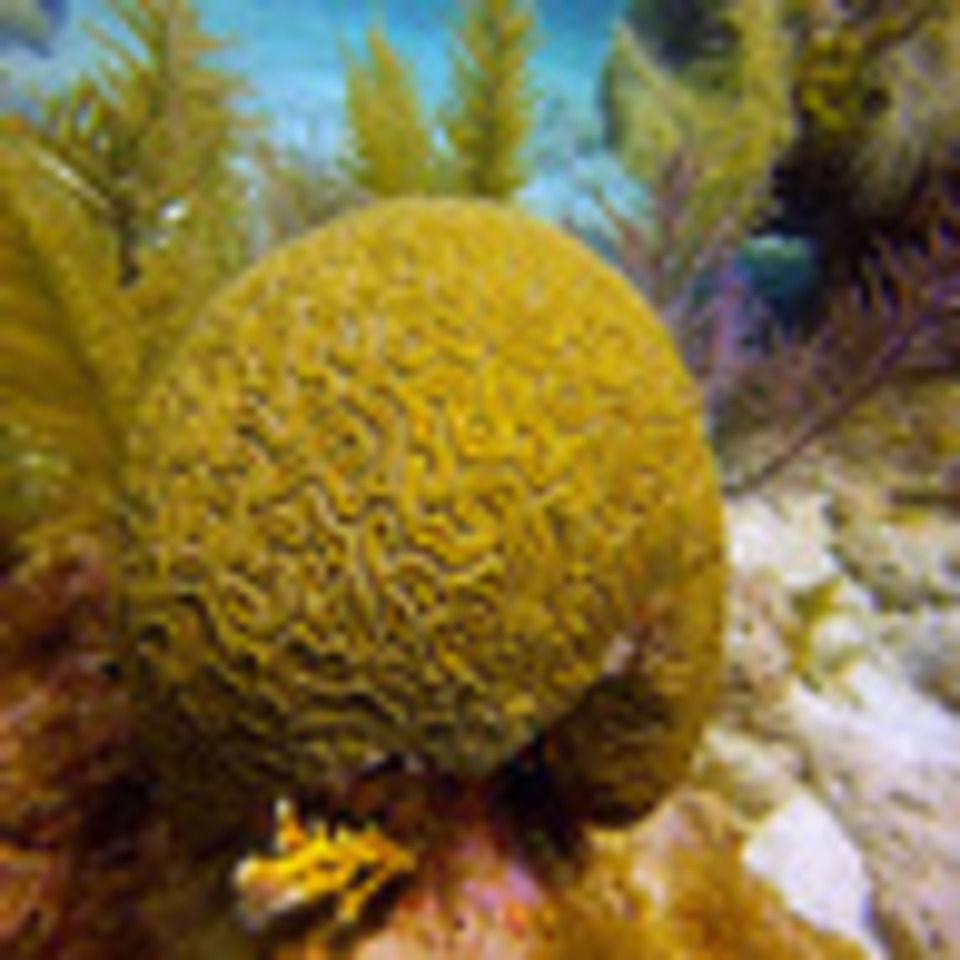
The other party of 3 did not join us for this dive. Apparently, one of them had a very hard time clearing his ear and may have hurt himself, so they sat out. The three of us plus our new dive guide, Froylan, headed back out to do Island Reef again, but this time at a shallower point. Froylan lead us on a very relaxed drift dive, some of which overlapped the first, but nice nonetheless. We saw a small, 1 1/2 foot hawksbill turtle, a lot of trigger fish, a large crab (we saw the same one on the first dive) and lobsters. Froylan pointed out a lot of colorful, small reef fish using a coral as a home. I don't recall ever seeing this type of coral before; it looked like a big head of leafy lettuce, but tightly grouped. Could be a blade coral of some sort, but I'm not really sure. The fish used the little folds as hiding places and darted in and out of them as we swam around watching. Froylan spotted a beautiful chain moray, black with very bright yellow stripes and spots. He later said this was what they call a "leopard" moray. Around this time, my PSI was dipping below 1000. I signaled for Froylan who's plan was to make our way to the shallows by drifting along and up the reef contour. However, the lower my pressure got, the harder I had to work to keep under (I was started to float up as the tanks got lighter), to the point where I was just over 500 and made my way to 15'. Jen got Froylan's attention, who came up to me, deployed the safety sausage, and helped me stay at 15'. By 4 minutes into the safety, without his help there was no way I could have stayed under (I was almost completely vertical, upside down! At 5 minutes, we surfaced with just under 400 psi left in my tank. I would not have cut it that close, and was happy that I made the decision to come up when I did, though I should have a little earlier. I don't think Froylan realized how hard I was having to work to stay under, which used up some air, which made me lighter, turning into a vicious cycle! At any rate, we made it up with no more issues, and the boat quickly came around to pick us up. We entered the same way as before, removing our equipment and passing it up, then climbing the latter into the small outboard motor boat.