


 Beachnutts


 Philippines
-
Nº90
 Date: 2023-07-23 - 09:55
-
 Max Depth: 33.8m Duration: 83mins
Dive Location

- Temp: Surf 27°C Bottom 27°C
- Dive type : Recreational, Deep dive, Reef, Photo
- Visibility: Average Water: Salt
Specific gear used
- BCD: Scubapro - Glide Plus
- Camera: Olympus - TG6
- Computer: Oceanic - OCS
- Fins: Scubapro - Jet Fins
- Knife: Scuba MAx - folding
- Lift bag: ScubaMax - SMB
- Light: Sofirn - SD05
- Mask: Promate - Scope
- Regulator: Aqualung - Titan LX
- Wet suit: Blue Ocean - Diveskin
- Weights: 3.2 kg
Dive reviews
| Overall review | ||
| Dive difficulty | ||
| Marine life quality |
Dive Shop & Buddies
 Dive with Mike Tacansan
 Dive buddies:
Mike Tacansan
Dive buddies:
Mike Tacansan

Link to this spot:
- Spot:
- Country:
- Area:
- Body of water:
Dive Profile
- 1. Air
- 10L Aluminium 207 → 34 bar
- Average depth: 22.6m
Data provided by EOL.org






Species Identified
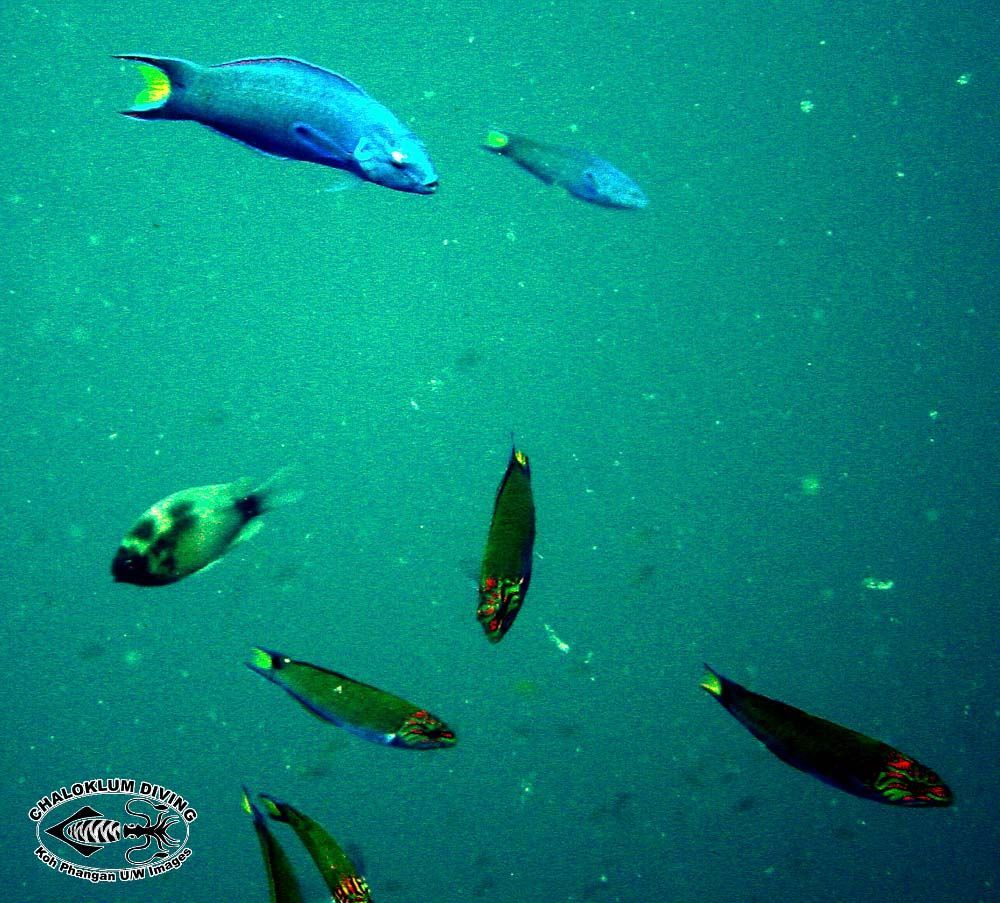
Thalassoma lunare (Linnaeus, 1758) (Blue wrasse)
Occurs in the upper portions of lagoon and coastal reefs, and in protected seaward reefs . Enters estuaries . Usually found on upper portions of ledges and heads . Feeds mainly on small benthic invertebrates and fish eggs . A protogynous hermaphrodite .
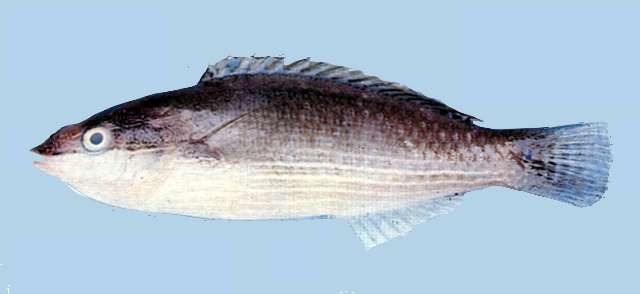
Oxycheilinus bimaculatus (Valenciennes, 1840) (Two-spot wrasse)
Inhabits outer reef slopes or deep clear lagoons among rubble or clumps of algae; also in seagrass beds . Often in sheltered estuaries and harbors . Benthic and benthopelagic .
Labroides dimidiatus (Valenciennes, 1839) (Bluestreak cleaner wrasse)
Inhabits coral rich areas of inner lagoons and subtidal reef flats to seaward reefs . Feeds on crustacean ectoparasites and mucus of other fishes . Monogamous . A protogynous hermaphrodite . Stays in stations where oth...
Read More
Read More
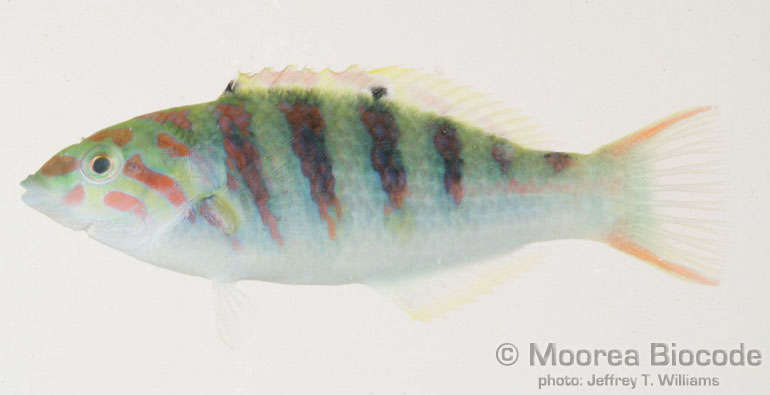
Thalassoma hardwicke (Bennett, 1830) (Sixbar wrasse)
Occurs in shallow lagoon and seaward reefs, slopes and along drop-offs to moderate depths. Occurs in small, loose groups . Feeds on benthic and planktonic crustaceans, small fishes, and foraminiferans.
Halichoeres prosopeion (Bleeker, 1853) (Twotone wrasse)
Inhabits lagoon and seaward reefs, in coral-rich areas . Also found along drop-offs on the bottom of large caves. Usually seen solitary .
Stethojulis strigiventer (Bennett, 1833) (Three-ribbon wrasse)
Inhabits seagrass beds and areas of mixed sand, rubble, and algae of inner reef flats and shallow lagoons. Female length is from Ref. 9137. Swims in small aggregations over large areas. Maximum depth reported taken from Ref. 48636.
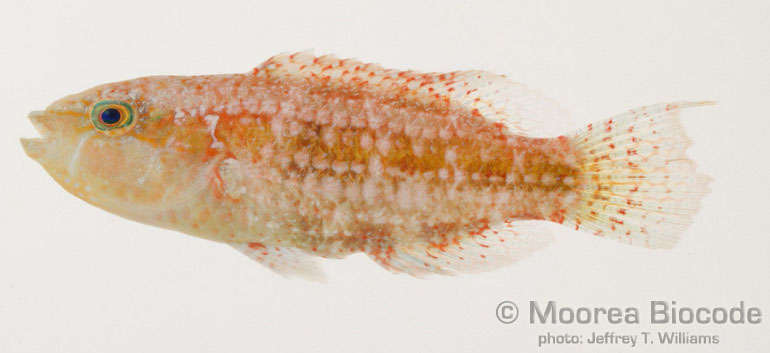
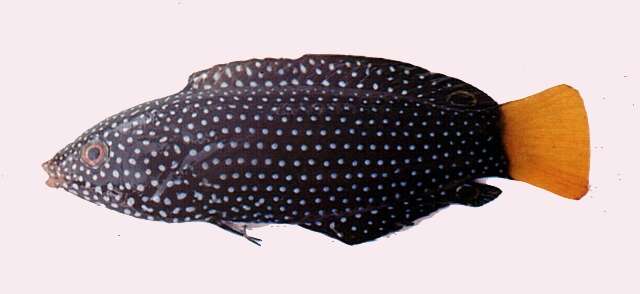
Anampses meleagrides Valenciennes, 1840 (Spotted wrasse)
Found in areas of mixed coral, rubble, consolidated limestone, and sand of seaward reefs; also in soft coral or sponge habitats . Minimum depth reported taken from Ref. 30874.
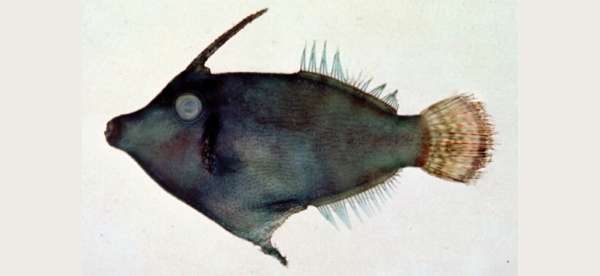
Pervagor melanocephalus (Bleeker, 1853) (Redtail filefish)
Inhabits clear coastal reefs and protected outer reef habitats with rich invertebrate growth . Prefers deeper reefs. Often in pairs . Secretive, adults are usually in pairs .
Cephalopholis argus Bloch and Schneider, 1801 (Grouper)
A generally common species found in a variety of coral habitats from tide pools to depths of at least 40 m; prefers the 1 to 10 m reef zone. Juvenile prefers shallow, protected coral thickets . Benthic and benthopelagi...
Read More
Read More
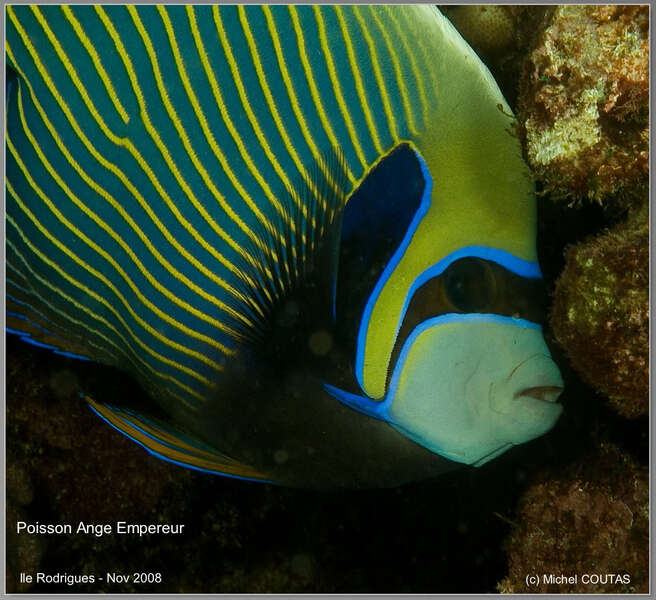
Pomacanthus imperator (Bloch, 1787) (Angel fish)
Juveniles are encountered under ledges, or in holes of outer lagoon patch reefs or semi-protected areas of exposed channels and outer reef flats. Subadults move to reef front holes and surge channels. Large adults inhabi...
Read More
Read More
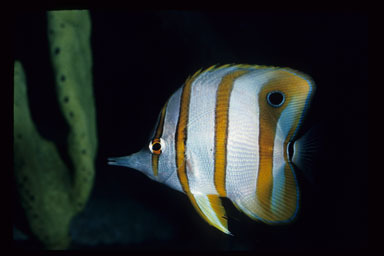
Chelmon rostratus (Linnaeus, 1758) (Copperband butterflyfish)
A common species found singly and in pairs along rocky shores and coral reefs; also in estuaries and silty inner reefs . Territorial species . Oviparous , monogamous . Forms pairs during breeding .
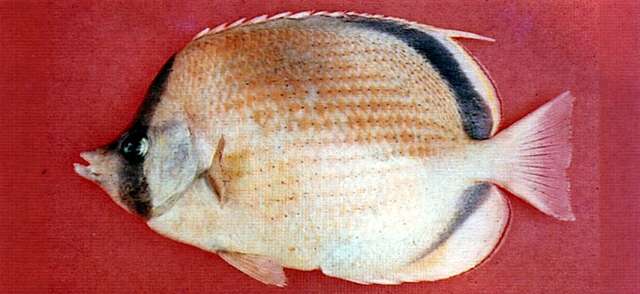
Chaetodon semeion Bleeker, 1855 (Dotted butterflyfish)
Uncommon species found in coral rich areas of clear water lagoon and semi-protected seaward reefs. Usually in pairs or small groups, more wary than most species. Minimum depth reported taken from Ref. 30874. Oviparous .
Chaetodon trifascialis Quoy and Gaimard, 1825 (Chevron butterflyfish)
Territorial species which occur in shallow lagoon and semi-protected seaward reefs . Benthopelagic . Closely associated with tabular and staghorn Acropora corals upon which they feed on their polyps and mucus. Solitary ...
Read More
Read More
Premnas biaculeatus (Bloch, 1790) (Spinecheek anemonefish)
Inhabits lagoon and seaward reefs , found mainly in protected coastal waters and lagoons. Typically found in pairs in which males are much smaller than females . Feeds primarily on zooplankton and benthic algae . Has been reared in captivity . Associated with the anemone Entacmaea quadricolor .
Pomacentrus bankanensis Bleeker, 1853 (Speckled damselfish)
Occurs solitarily or in small groups in lagoons, reef flats, passages, and outer reef slopes. Usually amongst coarse rubble or rock . Feeds primarily on algae, but also takes copepods, isopods, and pelagic tunicates.
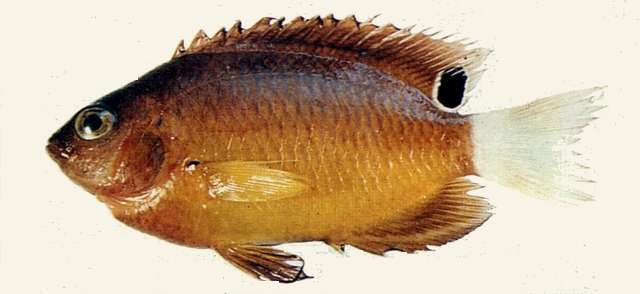
Chrysiptera rollandi (Whitley, 1961) (Rolland's demoiselle)
Occurs singly or in small groups in lagoons, harbors, and outer reef slopes. Found among corals and coral rubble . Feeds mainly on zooplankton.
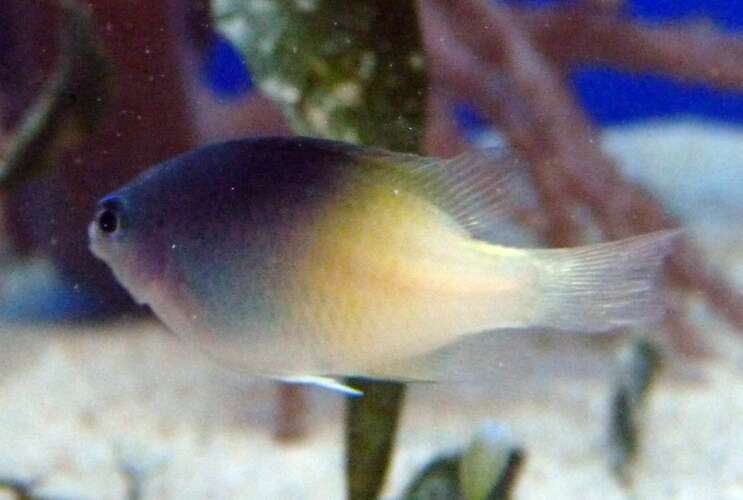
Chrysiptera biocellata (Quoy and Gaimard, 1825) (bluebanded damselfish)
Occurs in protected inner reef flats and shallow lagoons and channels, over rubble and rocky outcrops. Feeds primarily on filamentous algae.
Share on Social Networks
- Facebook:

personalize your shared text as well as its destination (wall, page...) or send as a private message to a friend
- Twitter: Tweet personalize your tweet
- Google Plus:
Direct link to this dive
- Long link:
- Short link:


 We are participating today in the startup contest Techcrunch Disrupt. Support Diveboard by voting for us!
























































































1st dive 2 tanker aboard Waling Waling. Habagat swells breezy, cloudy weather, flat water
drop in at furthest South buoy near Red House, swim down to wall, over wall to bottom sand. Viz still green and silty, not much to photo. Back to boat
multilevel