


 Beachnutts



 Philippines
-
Nº165
 Date: 2025-02-16 - 02:12
-
 Max Depth: 21.3m Duration: 83mins
Dive Location

- Surface interval:139 mins
- Temp: Surf 26°C Bottom 26°C
- Dive type : Recreational, Reef, Photo
- Visibility: Average Water: Salt
Specific gear used
- BCD: Scubapro - Glide Plus
- Boots: Orca - Dive shoes
- Camera: Olympus - TG6
- Computer: Oceanic - OCS
- Fins: Scubapro - Go Rescue
- Lift bag: ScubaMax - SMB
- Light: Sofirn - SD05
- Mask: Promate - Scope
- Regulator: SEAC - Synchro
- Wet suit: Blue Ocean - Diveskin
- Weights: 3.2 kg
Dive reviews
| Overall review | ||
| Dive difficulty | ||
| Marine life quality |
Recent Divers in Samal island, Davao
Recent Pictures in Samal island, Davao
Dive Shop & Buddies
 Dive buddies:
Reymar Tano,
Earnest Damaso,
Beachnutts

Link to this spot:
- Spot:
- Country:
- Area:
- Body of water:
Dive Profile
- 1. Air
- 10L Aluminium 207 → 28 bar
- Average depth: 14.2m
Data provided by EOL.org





Species Identified
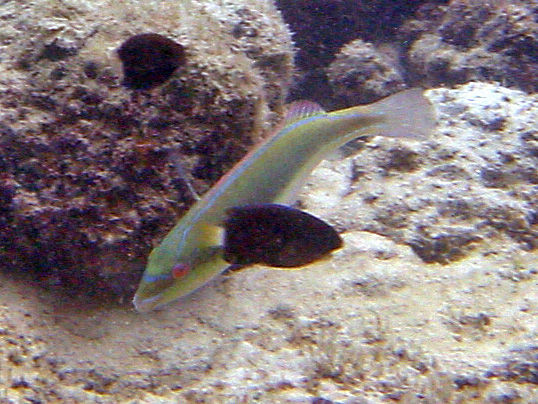
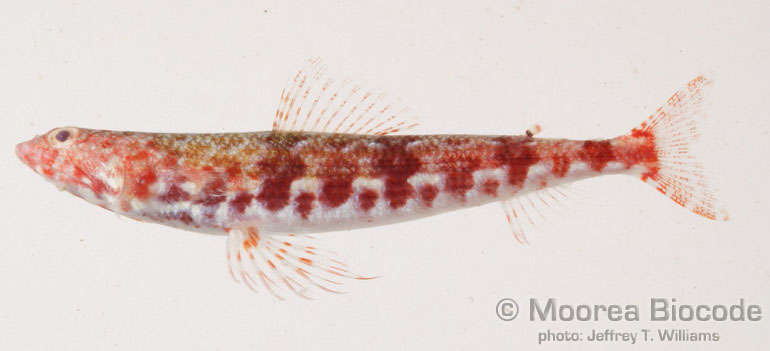
Stethojulis interrupta (Bleeker, 1851) (One-line rainbowfish)
Coastal to outer reef crests. In Japan, it is found in areas of mixed sand, rock and coral . Occurs in small groups to about 20 m depth . Feeds by sorting small animals from mouthfuls of sand and detritus.
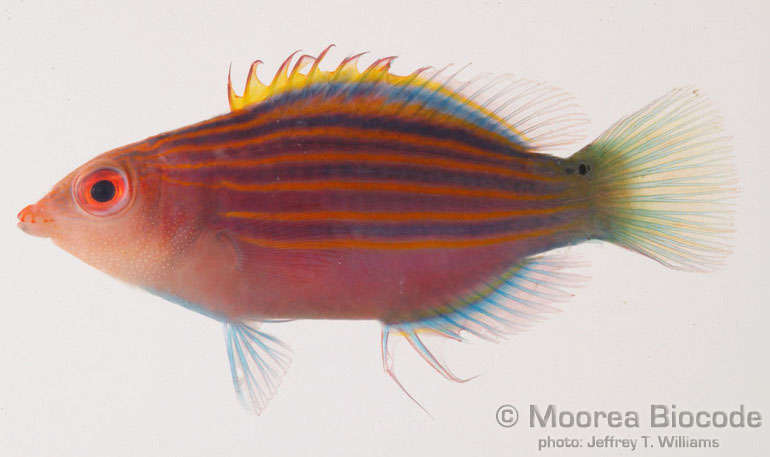
Pseudocheilinus hexataenia (Bleeker, 1857) (Pyjama)
Occurs in seaward reefs among coral branches. Also in clear coastal waters, dense coral habitats on shallow reef crest or slopes to depth of about 20 m. Usually occurs in small loose groups. A shy species, usually swimm...
Read More
Read More
Cheilinus trilobatus Lacepède, 1801 (Tripletail wrasse)
Adults inhabit lagoon and seaward reefs at depths of 1 to over 30 m, and relatively common along shallow reef margins with good coral cover . Usually solitary . Feed mainly on shelled benthic invertebrates such as mollus...
Read More
Read More
Synodus variegatus (Lacepède, 1803) (Variegated lizardfish)
Inhabits deep lagoon and seaward reefs to depths over 40 m ; sometimes found on sandy bottoms concealing itself in the sand. Prefers to rest on hard surfaces and frequently occurs in pairs . Benthic . Feeds on small fis...
Read More
Read More
Platybelone argalus (Lesueur, 1821) (Keeltail needlefish)
Cirrhitichthys oxycephalus (Bleeker, 1855) (Coral hawkfish)
Cirrhitichthys falco Randall, 1963 (Dwarf hawkfish)
Shallow coastal to outer reef flats and slopes to 45 m depth . Common inhabitant of coral reefs, typically resting at the bases of coral heads . Studies indicate that it is haremic and spawns nightly . Occasionally in pairs .
Chaetodontoplus mesoleucus (Bloch, 1787) (Vermiculated angelfish)
Inhabits continental shelf reefs; not usually found around oceanic islands . Feeds on sponges, tunicates, and filamentous algae . Forms small groups. Frequently exported through the aquarium trade .
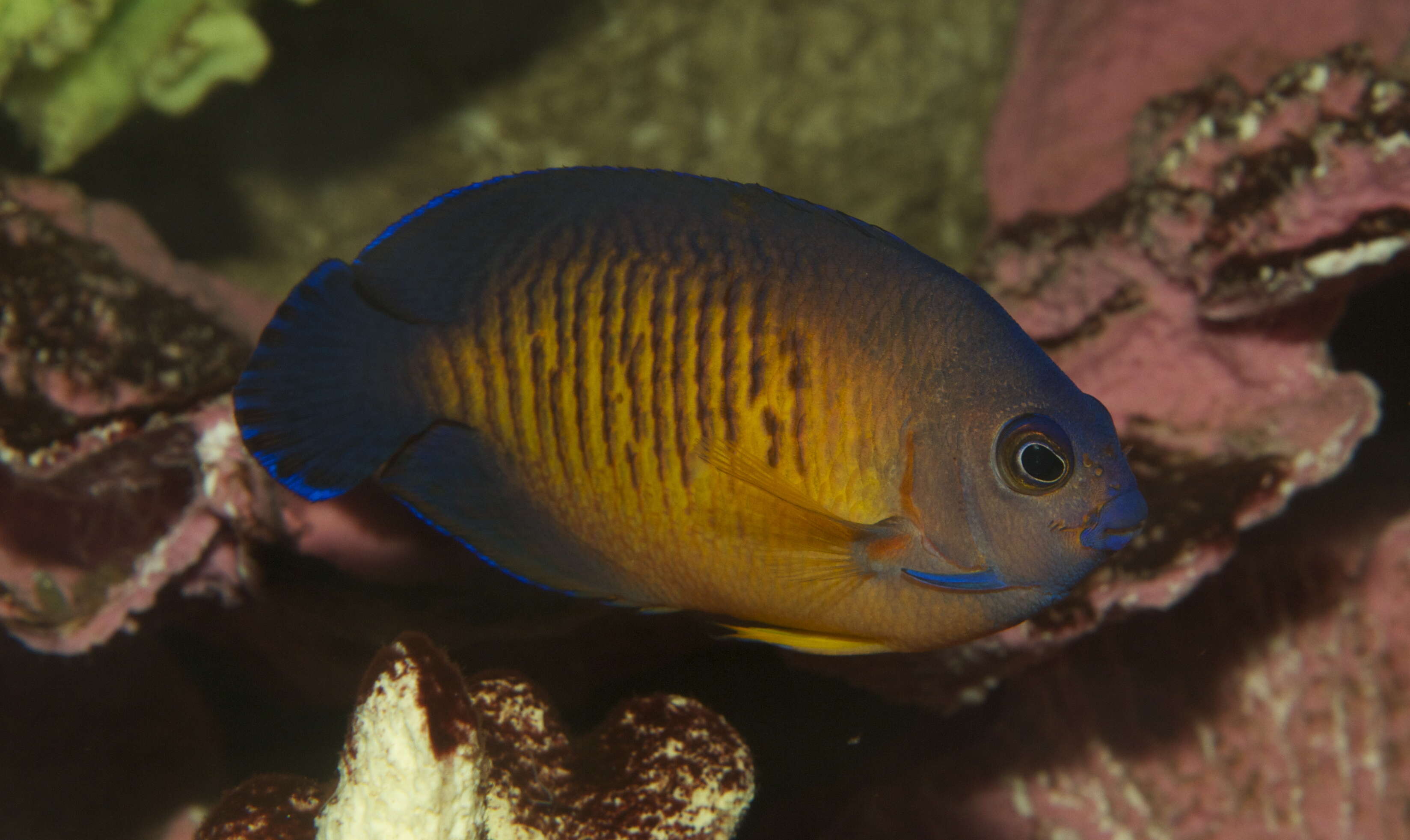
Centropyge multispinis (Playfair, 1867) (Dusky angelfish)
Inhabits coral rich and rubble areas of lagoon and seaward reefs.
Apolemichthys trimaculatus (Cuvier, 1831) (Flagfish)
Inhabits lagoon and seaward reefs ; found near coral . Feeds mainly on sponges and tunicates . Juveniles secretive and occur below 25 m . Adults in small but loose groups at moderate depths . Frequently exported through the aquarium trade .
Centropyge flavissima (Cuvier, 1831) (Lemonpeel angelfish)
Occur in coral rich areas of shallow lagoon and exposed seaward reefs from the lower surge zone to 50 m . Benthopelagic . Juveniles secretive . Feed mainly on algae. Live as long as 11 years in captivity . Frequently exported through the aquarium trade .
Centropyge ferrugata Randall & Burgess, 1972 (Rusty angelfish)
Inhabits seaward , rocky reefs and rubble areas, especially where algal growth is extensive . Solitary or in small groups . Has been reared in captivity .
Centropyge tibicen (Cuvier, 1831) (Keyhole angelfish)
Relatively uncommon in mixed coral and rubble areas of lagoon and seaward reefs. The largest member of the genus . Feeds mainly on algae. Forms harems of 3-7 individuals. Frequently exported through the aquarium trade .
Share on Social Networks
- Facebook:

personalize your shared text as well as its destination (wall, page...) or send as a private message to a friend
- Twitter: Tweet personalize your tweet
- Google Plus:
Direct link to this dive
- Long link:
- Short link:


 We are participating today in the startup contest Techcrunch Disrupt. Support Diveboard by voting for us!
























































































2nd dive of the day, Marisa near Pearl Farm , Seamount/ reef
Drop in East side swim down and to the West (right side)
back to boat
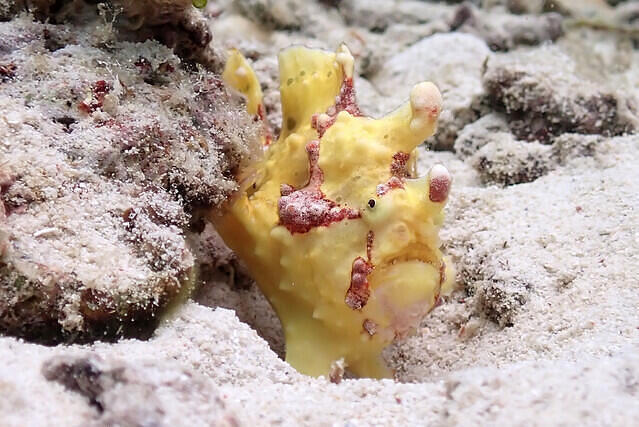
highlight 3 yellow stage warty frogfish almost all same size
multilevel