


 Beachnutts



 Philippines
-
Nº140
 Date: 2024-06-14 - 10:03
-
 Max Depth: 23.2m Duration: 84mins
Dive Location

- Temp: Surf 27°C Bottom 27°C
- Dive type : Recreational, Reef, Photo, Muck Dive
- Visibility: Bad Water: Salt
Specific gear used
- BCD: Scubapro - Glide Plus
- Camera: Olympus - TG6
- Compass:
- Computer: Oceanic - OCS
- Fins: Scubapro - Jet Fins
- Knife: Scuba MAx - folding
- Lift bag: ScubaMax - SMB
- Light: Sofirn - SD05
- Mask: Promate - Scope
- Regulator: SEAC - Synchro
- Wet suit: Blue Ocean - Diveskin
- Weights: 3.2 kg
Dive reviews
| Overall review | ||
| Dive difficulty | ||
| Marine life quality |
Dive Shop & Buddies
 Dive with Blake Auge
 Dive buddies:
Beachnutts

Link to this spot:
- Spot:
- Country:
- Area:
- Body of water:
Dive Profile
- 1. Air
- 10L Aluminium 207 → 24 bar
- Average depth: 15.4m
Data provided by EOL.org






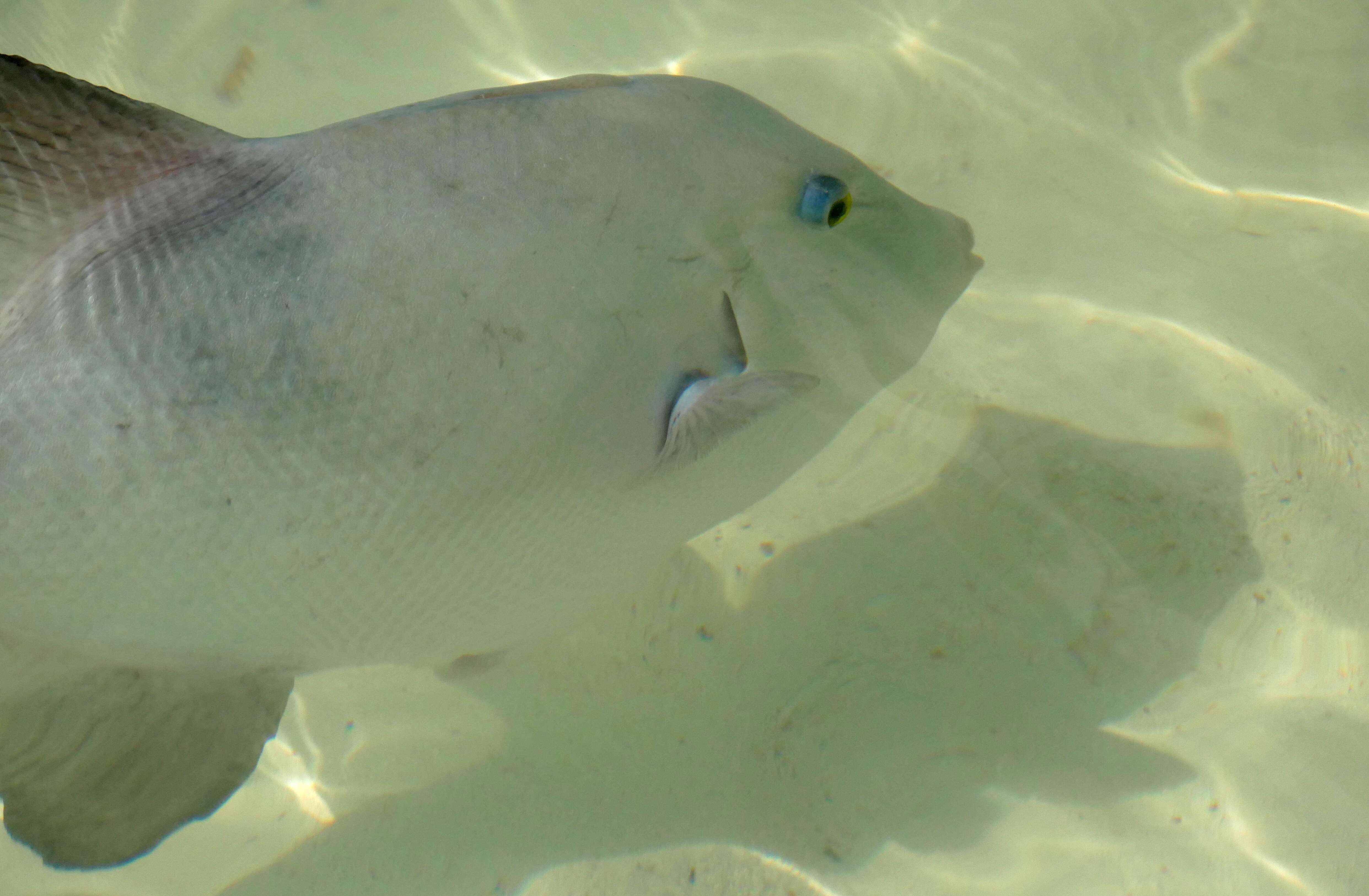
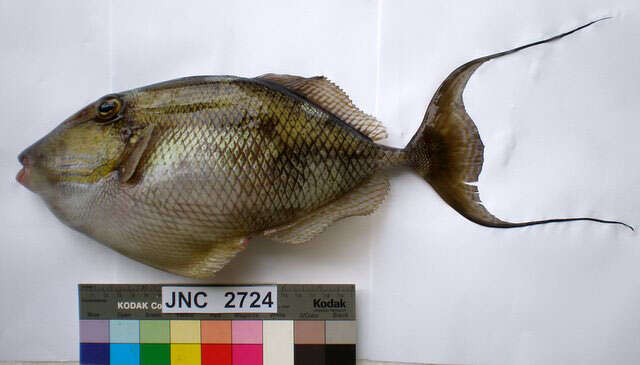
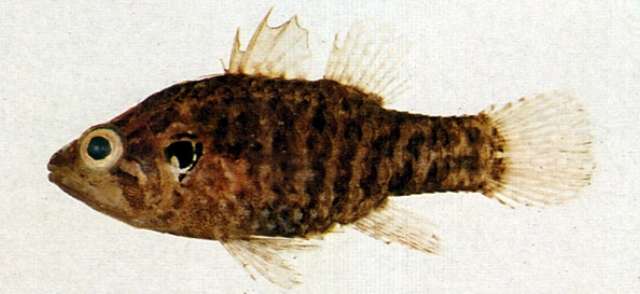
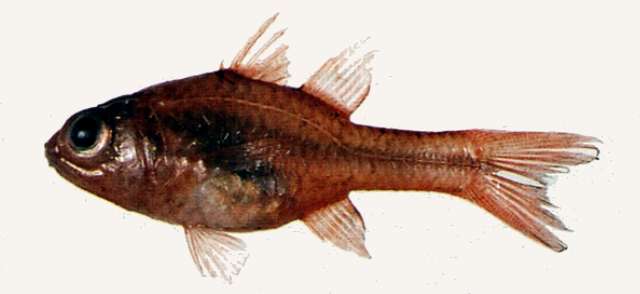
Species Identified
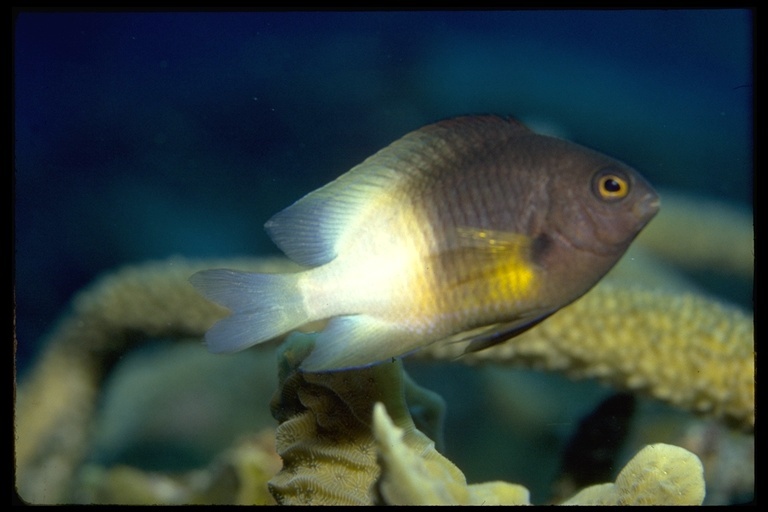
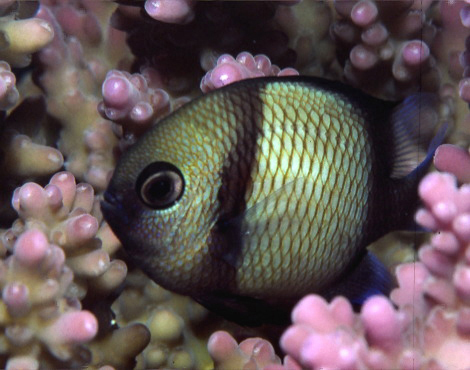
Stegastes partitus (Poey, 1868) (bicolor damselfish)
Inhabits shallow coral reefs and isolated patch reefs in deeper water. Feeds primarily on algae but also on polychaetes, hydroids, copepods and ascidians . Aggressively territorial but only around a small area . Taken incidentally in traps and small-meshed beach nets .
Amblyglyphidodon curacao (Bloch, 1787) (Black-snouted sergeant-major)
Inhabits lagoons, coastal embayments, reef passages and outer reefs. Juveniles often found among Sarcophyton and Sinularia soft corals. Feeding aggregations are frequently observed over growths of the staghorn coral Acro...
Read More
Read More
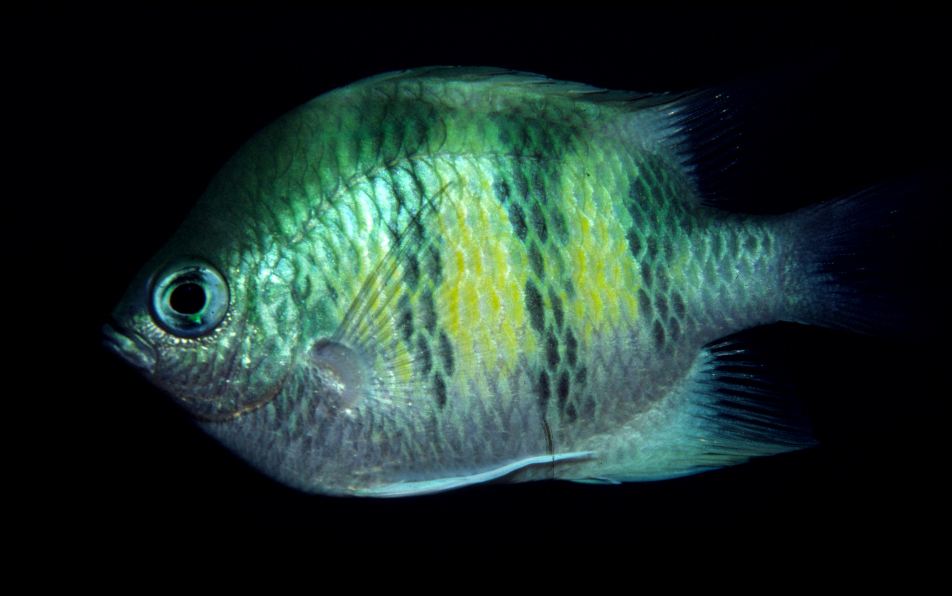
Stegastes variabilis (Castelnau, 1855) (yellow demoiselle)
Inhabits inshore and offshore coral reefs. Adults feed mainly on benthic algae but also on sponges, ascidians and anemones while juvenile feed on invertebrates like harpacticoid copepods and nemerteans . Often solitary ....
Read More
Read More
Dascyllus reticulatus (Richardson, 1846) (twostriped damselfish)
Occurs in outer lagoon and seaward reefs. Inhabits branching coral heads, particularly Pocillopora eydouxi. Forms schools, often in silty habitats . Male prepares a nest by cleaning with its mouth a rock or coral surface where the female will attach the eggs .
Plectroglyphidodon sindonis (Jordan and Evermann, 1903) (Rock damselfish)
Found in very shallow water in the surge zone of exposed rocky shores . Benthopelagic . Feeds mainly on benthic algae and occasionally on small invertebrates .
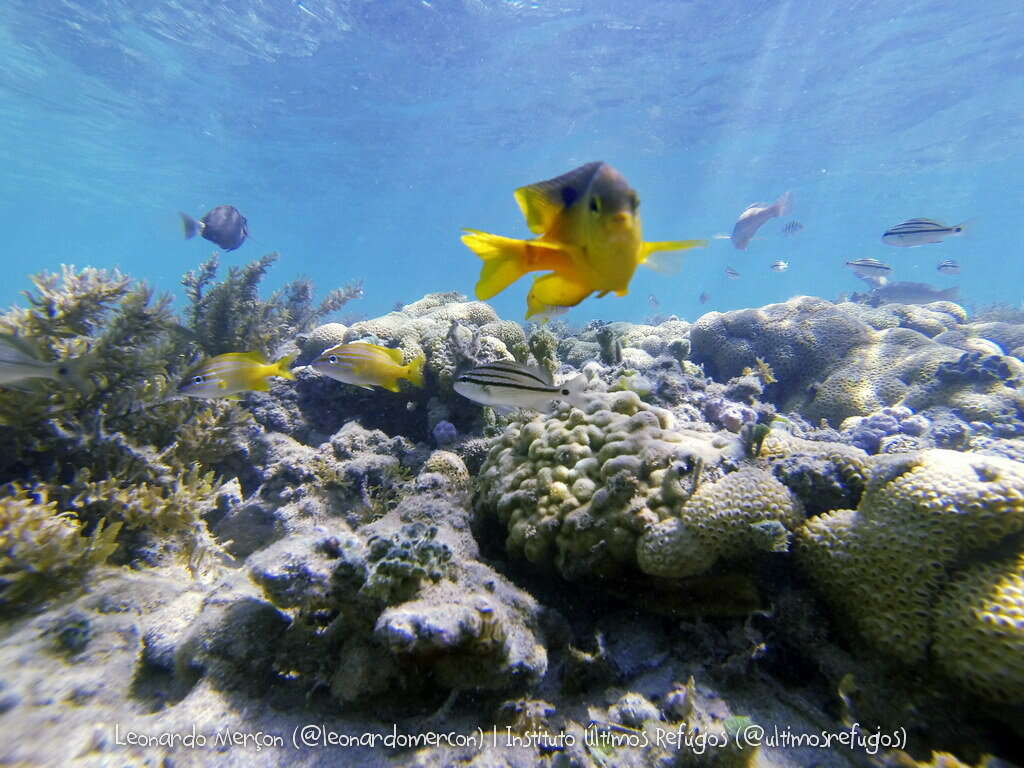
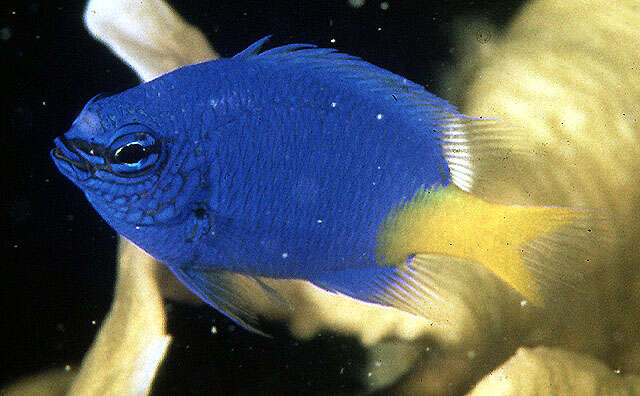
Chrysiptera parasema (Fowler, 1918) (Goldtail demoiselle)
Inhabits coral-rich areas of sheltered lagoon and inshore coral reefs . Occurs in small groups on Acropora patches .
Sakuraeolis enosimensis (Baba, 1930) (white-tentacle Japanes aeolis)
Discodoris heathi MacFarland, 1905 (gritty doris)
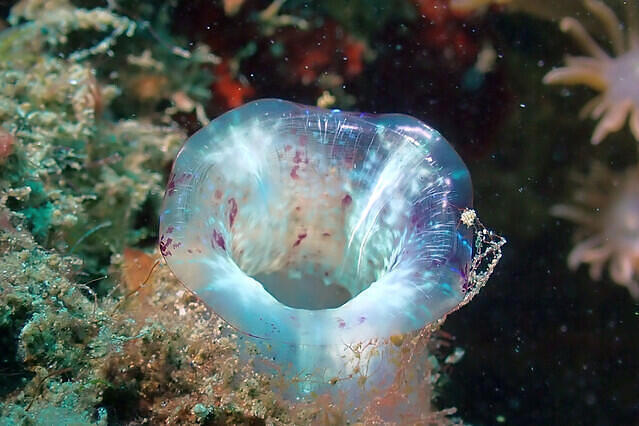
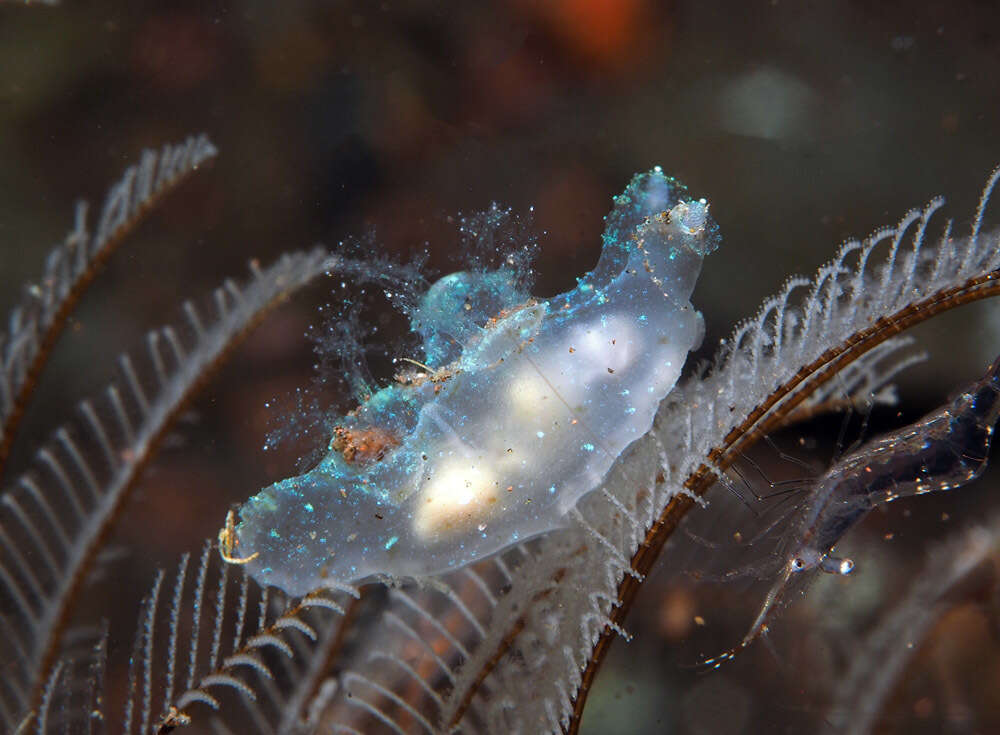
Notobryon wardi (iridescent nudibranch)
Stephanolepis hispidus (Linnaeus, 1766) (Common filefish)
Found on sand or mud bottoms. Associated with Sargassum . Adults feed on benthic invertebrates . Edible but generally rejected by fishers .
Paramonacanthus frenatus (Peters, 1855) (Wedgetail filefish)
Pristigenys alta (Gill, 1862) (Bigeye)
Found on rocky bottoms between 5 and 200 m depth, usually solitary and possibly territorial.
Pomacanthus zonipectus (Gill, 1862) (Angelfish)
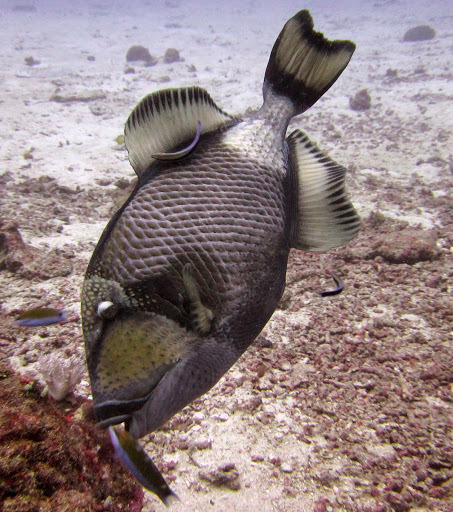
Balistoides viridescens (Bloch and Schneider, 1801) (Titan triggerfish)
Occur in lagoon, seaward reefs and sheltered inner reef slopes . Juveniles often associated with isolated patches of branching coral or rubble of shallow sandy protected areas. Adults occur singly or in pairs on the slo...
Read More
Read More
Balistapus undulatus (Park, 1797) (Orange-lined triggerfish)
Occurs in coral-rich areas of deep lagoon and seaward reefs from the lower surge zone to at least 50 meters, Ref. 48637. Feeds on a variety of benthic organisms such as algae, echinoderms, fishes, mollusks, tunicates, spo...
Read More
Read More
Canthidermis sufflamen (Mitchill, 1815) (Filefish)
Common near drop-offs of seaward reefs . Occasionally in shallow water. Solitary or in small groups in open water. Often associated with Sargassum . Feeds mainly on large zooplankton. Minimum depth reported from Ref. 13121.
Abalistes filamentosus Matsuura & Yoshino, 2004 (Triggerfish)
Fowleria variegata (Valenciennes, 1832) (Spotcheek cardinalfish)
Found in coral reefs and seagrass beds of inner bays and shallow lagoons ; also in dead reef and rubble . Nocturnal species .
Apogon erythrinus Snyder, 1904 (Ruby cardinalfish)
Found in shallow water and observed to be active only at night, near the bottom, and never far from its shelter . Benthopelagic .
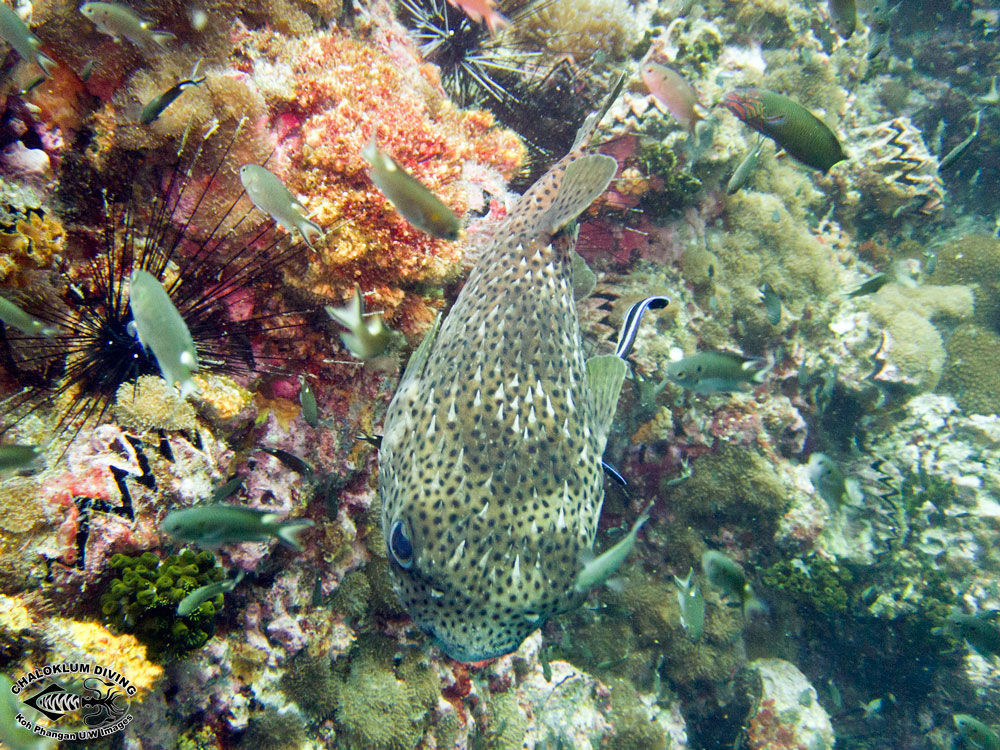
Diodon liturosus Shaw, 1804 (Black-blotched porcupinefish)
Inhabits reef edges and slopes . Hides in caves and ledges during the day and forages at night . Also found below plate-corals during the day and often deep, ranging to at least 40 meters depth. Juveniles occur in lagoo...
Read More
Read More
Diodon hystrix Linnaeus, 1758 (Spot-fin porcupinefish)
Parabembras curtus (Temminck & Schlegel, 1843) (Ubagochi)
Share on Social Networks
- Facebook:

personalize your shared text as well as its destination (wall, page...) or send as a private message to a friend
- Twitter: Tweet personalize your tweet
- Google Plus:
Direct link to this dive
- Long link:
- Short link:


 We are participating today in the startup contest Techcrunch Disrupt. Support Diveboard by voting for us!
























































































Single dive DBC Friday the 14th , reported lots of floating debris day before, but ok Fri. Noticeable trash on bottom
off pier around piers end to nudiville deep looking for morays, special shrimp
multilevel, SOLO
chalky but clear up close, partly cloudy small chop, breezy
High tide 10:38am