


 Beachnutts


 Philippines
-
Nº116
 Date: 2024-01-05 - 10:56
-
 Max Depth: 21.9m Duration: 81mins
Dive Location

- Surface interval:0 mins
- Temp: Surf 26°C Bottom 26°C
- Dive type : Recreational, Wreck, Photo, Muck dive
- Visibility: Bad Water: Salt
Specific gear used
- BCD: Oceanic - OceanPro
- Boots: Orca - Dive shoes
- Camera: Olympus - TG6
- Computer: Aeris - Atmos 2
- Computer: Oceanic - OCS
- Fins: Scubapro - Jet Fins
- Knife: Scuba MAx - folding
- Lift bag: ScubaMax - SMB
- Light: Sofirn - SD05
- Mask: Promate - Scope
- Regulator: Aqualung - Calypso
- Wet suit: Blue Ocean - Diveskin
- Weights: 3.2 kg
Dive reviews
| Overall review | ||
| Dive difficulty | ||
| Marine life quality |
Dive Shop & Buddies
 Dive with Blake Auge
 Dive buddies:
Beachnutts
Dive buddies:
Beachnutts

Link to this spot:
- Spot:
- Country:
- Area:
- Body of water:
Dive Profile
- 1. Air
- 10L Aluminium 207 → 17 bar
- Average depth: 14.6m
Data provided by EOL.org








Species Identified
Apolemichthys xanthurus (Bennett, 1833) (Yellowtail angelfish)
Inhabits coral-rich areas . Found singly or in pairs.
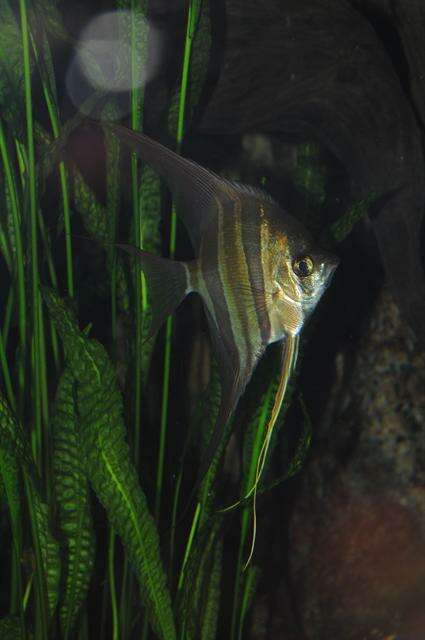
Pterophyllum altum Pellegrin, 1903 (deep angelfish)
Inhabits rivers. May reach about 20 cm in height . Maximum length 18 cm TL .
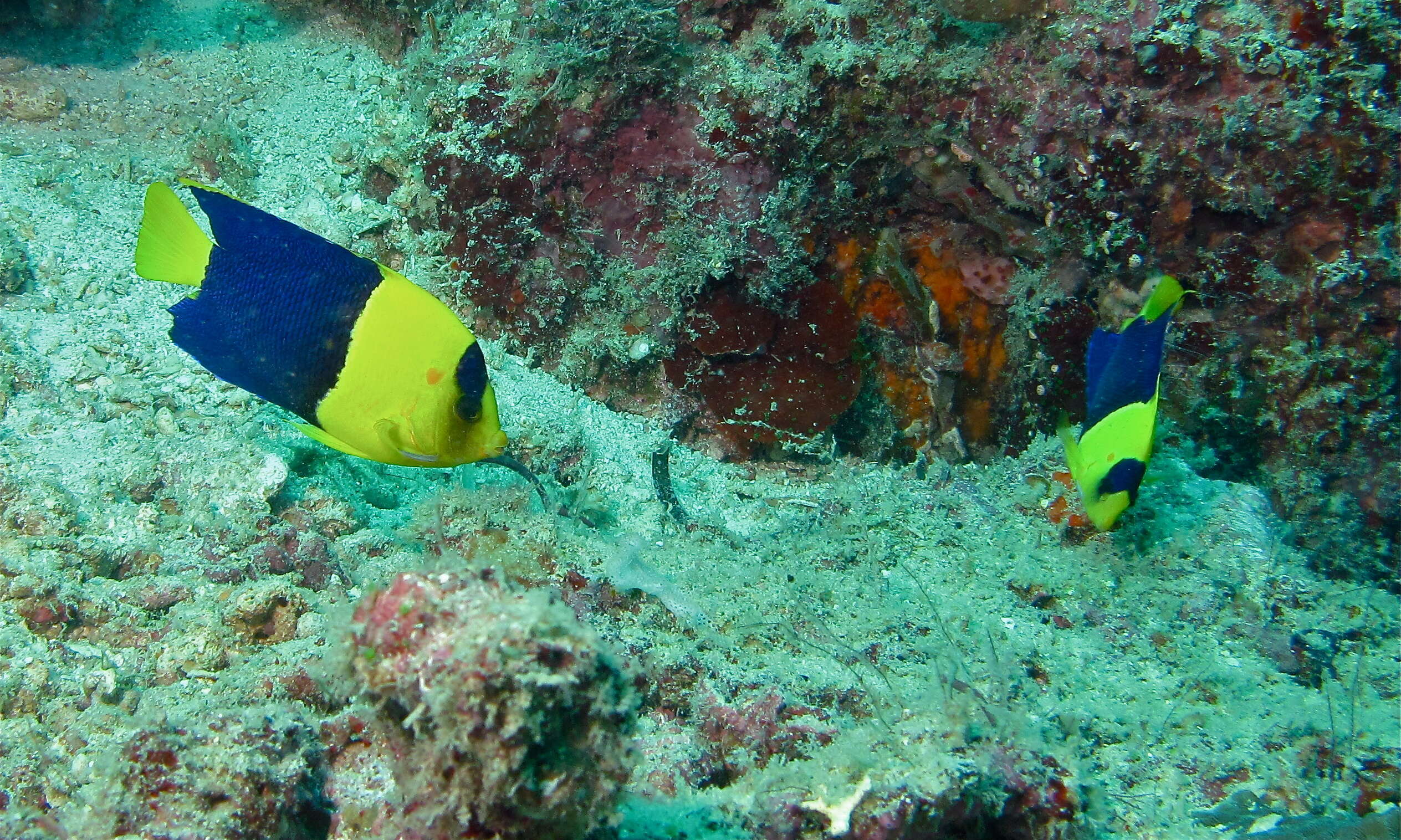
Centropyge bicolor (Bloch, 1787) (Bicolor angelfish)
Inhabits lagoon, channel, or protected seaward reef slopes, drop offs, coral and rubble areas . Usually in pairs or in small groups. Feeds on algae, small crustaceans and worms. Darts from one hiding place to the next. Commonly exported through the aquarium trade .
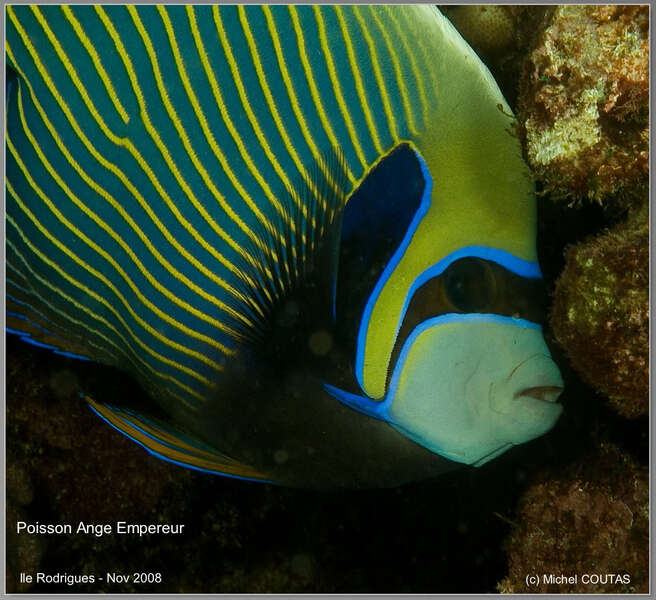
Pomacanthus imperator (Bloch, 1787) (Angel fish)
Juveniles are encountered under ledges, or in holes of outer lagoon patch reefs or semi-protected areas of exposed channels and outer reef flats. Subadults move to reef front holes and surge channels. Large adults inhabi...
Read More
Read More
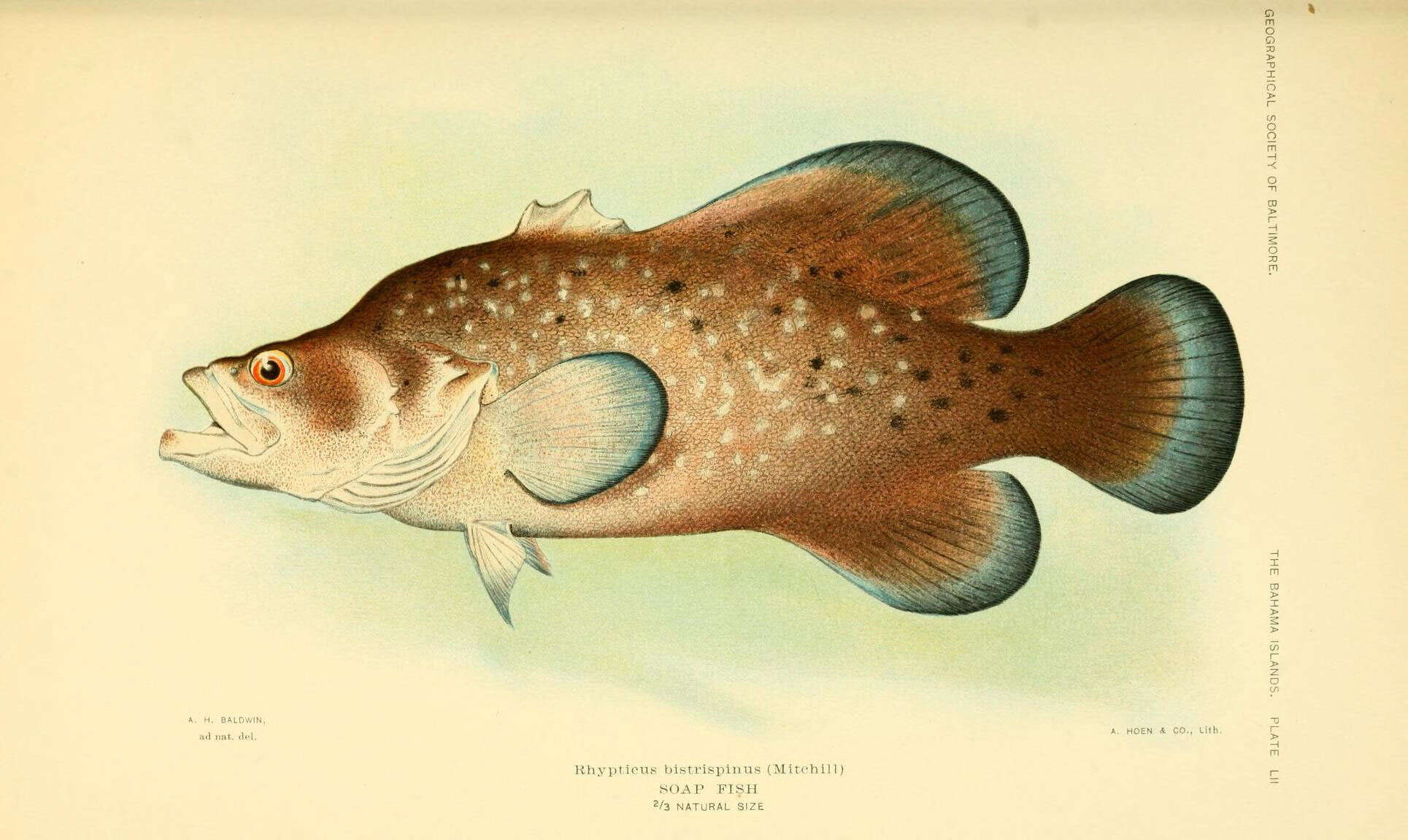
Rypticus bistrispinus (Mitchill, 1818) (Soapfish)
A solitary species inhabiting sandy bottom strewn with rocks . Rarely observed on reefs . Like other soapfishes, it has special skin glands that produce an irritating, mildly toxic slime .
Odontanthias rhodopeplus (Günther, 1872) (Boro-sakuradai)
Inhabits deeper rocky reefs .
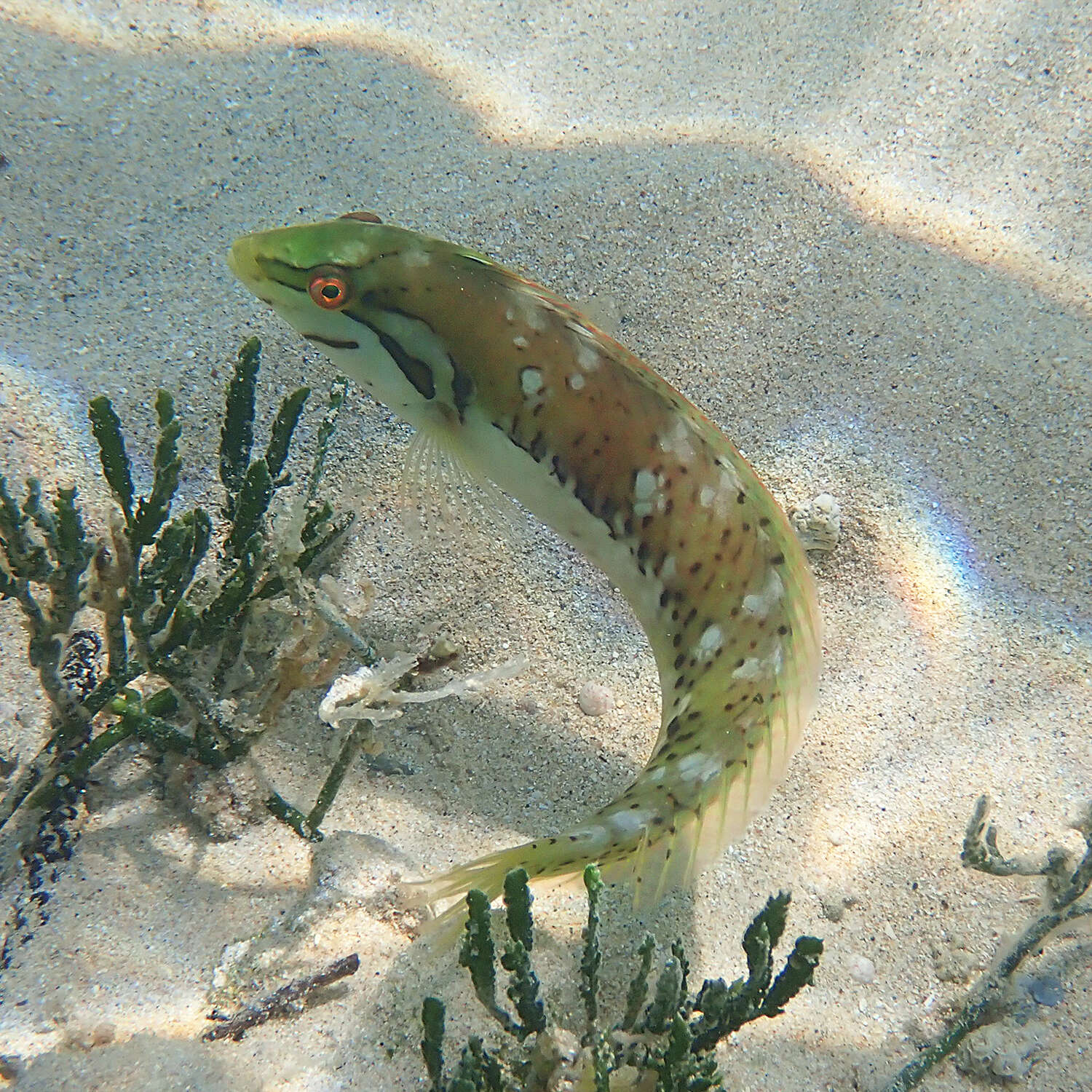
Novaculichthys macrolepidotus (Bloch, 1791) (Seagrass wrasse)
Found in seagrass beds and sandy algal flats of lagoons and mangrove channels. Secretive amongst the vegetation and well-camouflaged .
Cymolutes praetextatus (Quoy and Gaimard, 1834) (Knife razorfish)
Inhabits reef flats and shallow lagoons, in sandy, current-swept areas with rubble and weed . Capable of diving into the sand with the approach of danger. Rarely caught by fishers or aquarium collectors .
Halichoeres notospilus (Günther, 1864) (Banded wrasse)
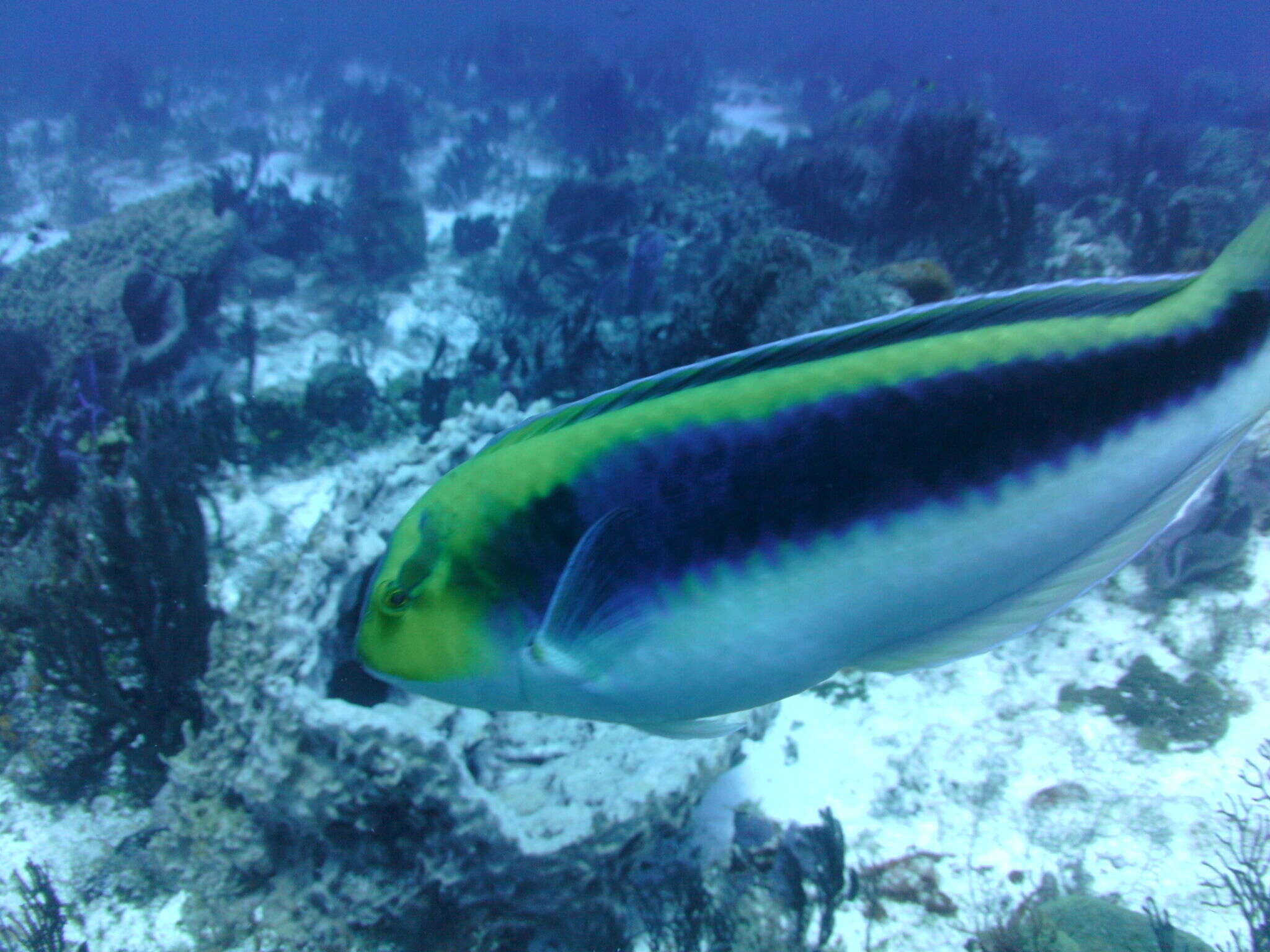
Halichoeres cyanocephalus (Bloch, 1791) (yellowcheek wrasse)
Found over hard substrates . Juveniles up to 8 cm act as specialized cleaners. Each individual tends a defined cleaning station sought by several species of reef fishes including damselfishes, goatfishes, and surgeonfish...
Read More
Read More
Chaetodon guttatissimus Bennett, 1833 (Peppered butterflyfish)
Inhabit lagoon and seaward reefs . Occur in pairs or small groups . Feed on polychaetes, coral polyps, and algae . Oviparous . Form pairs during breeding .
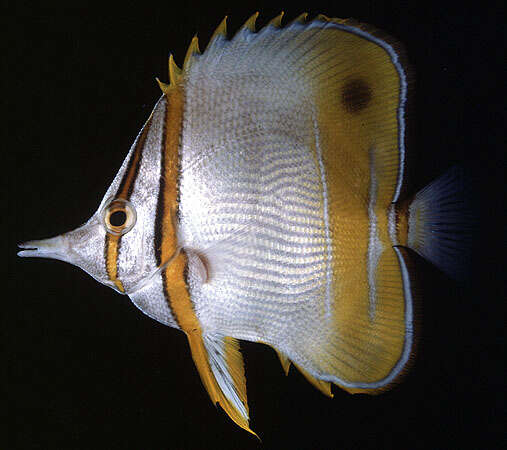
Chelmon marginalis Richardson, 1842 (Margined coralfish)
Inhabit coastal reefs . Usually solitary. Oviparous . Form pairs during breeding .
Chaetodon auripes Jordan and Snyder, 1901 (Oriental butterflyfish)
Inhabit rocky reefs with algae and coral . Solitary or in groups . Feed on benthic invertebrates . Oviparous . Form pairs during breeding .
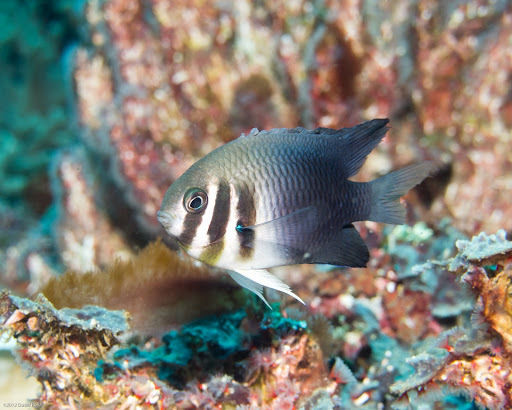
Stegastes lubbocki Allen and Smith, 1992 (卢氏眶锯雀鲷)
Plectroglyphidodon sindonis (Jordan and Evermann, 1903) (Rock damselfish)
Found in very shallow water in the surge zone of exposed rocky shores . Benthopelagic . Feeds mainly on benthic algae and occasionally on small invertebrates .
Neoglyphidodon thoracotaeniatus (Fowler and Bean, 1928) (Barhead damsel)
Inhabits coral-rich areas of outer reef slopes . Occurs in small groups. Juveniles stay close to substrate but adults may swim high above to feed on zooplankton .
Mecaenichthys immaculatus (Ogilby, 1885) (Immaculate damsel)
Inhabits rocky or weedy inshore reefs.
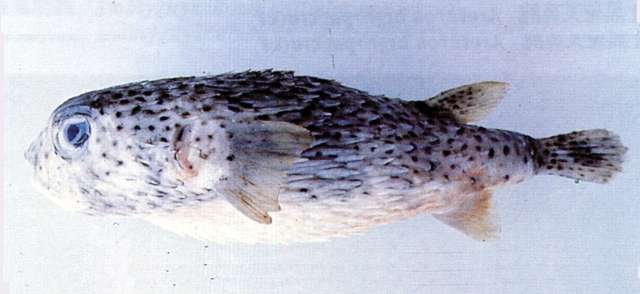
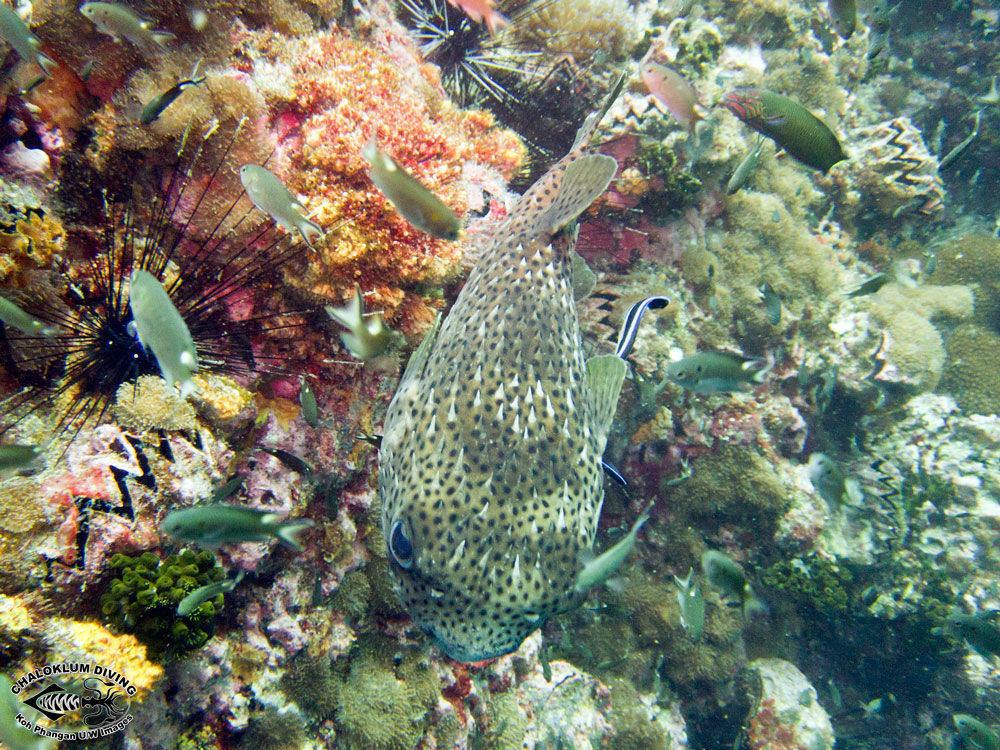
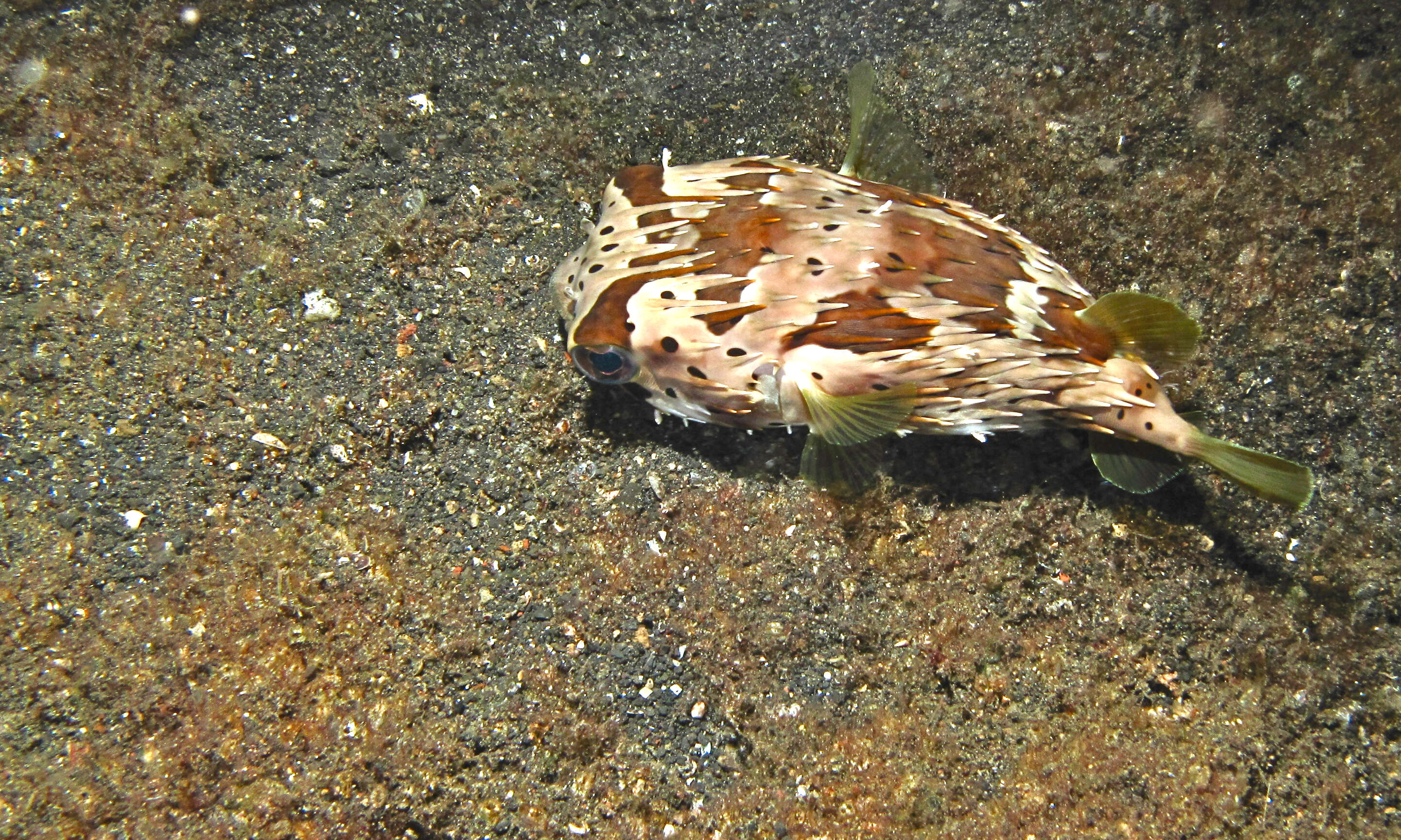
Diodon liturosus Shaw, 1804 (Black-blotched porcupinefish)
Inhabits reef edges and slopes . Hides in caves and ledges during the day and forages at night . Also found below plate-corals during the day and often deep, ranging to at least 40 meters depth. Juveniles occur in lagoo...
Read More
Read More
Diodon eydouxii Brisout de Barneville, 1846 (Pelagic porcupinefish)
Diodon hystrix Linnaeus, 1758 (Spot-fin porcupinefish)
Diodon holocanthus Linnaeus, 1758 (Long-spine porcupinefish)
Share on Social Networks
- Facebook:

personalize your shared text as well as its destination (wall, page...) or send as a private message to a friend
- Twitter: Tweet personalize your tweet
- Google Plus:
Direct link to this dive
- Long link:
- Short link:


 We are participating today in the startup contest Techcrunch Disrupt. Support Diveboard by voting for us!
























































































First dive 2024 DBC , Nudiville area and front of pier, to shallows and beach, not many good photos , very dark underwater.
multilevel