


 Beachnutts


 Philippines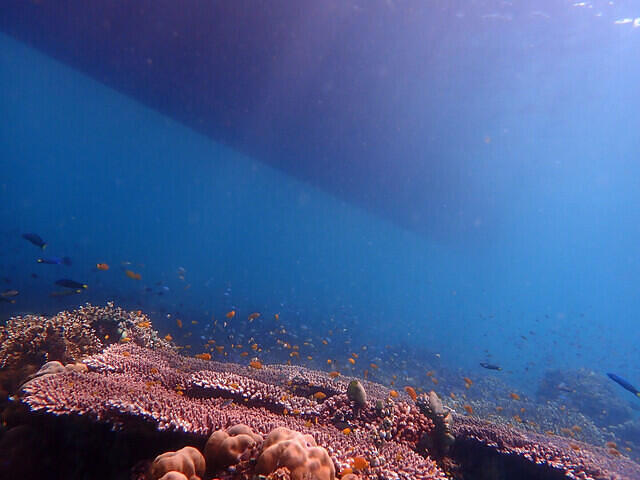
-
Nº168
 Date: 2025-03-09 - 12:50
-
 Max Depth: 23.2m Duration: 85mins
Dive Location

- Surface interval:80 mins
- Temp: Surf 27°C Bottom 27°C
- Dive type : Recreational, Reef, Photo
- Visibility: Bad Water: Salt
Specific gear used
- BCD: Scubapro - Glide Plus
- Boots: Orca - Dive shoes
- Camera: Olympus - TG6
- Computer: Oceanic - OCS
- Fins: Scubapro - Jet Fins
- Knife: Scuba MAx - folding
- Lift bag: ScubaMax - SMB
- Light: Sofirn - SD05
- Mask: Promate - Scope
- Regulator: SEAC - Synchro
- Wet suit: Blue Ocean - Diveskin
- Weights: 3.2 kg
Dive reviews
| Overall review | ||
| Dive difficulty | ||
| Marine life quality |
Recent Divers in Samal island, Davao

Recent Pictures in Samal island, Davao
Dive Shop & Buddies
 Dive with Blake Auge
 Dive buddies:
Reymar Tano,
Beachnutts
Dive buddies:
Reymar Tano,
Beachnutts

Link to this spot:
- Spot:
- Country:
- Area:
- Body of water:
Dive Profile
- 1. Air
- 10L Aluminium 207 → 34 bar
- Average depth: 15.4m
Data provided by EOL.org




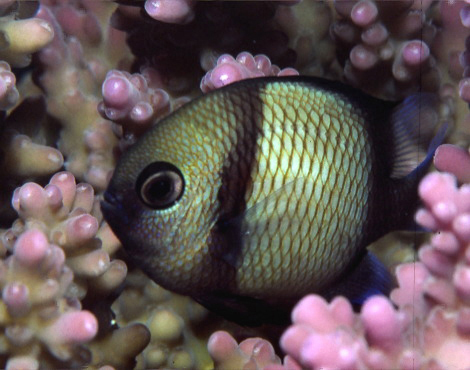
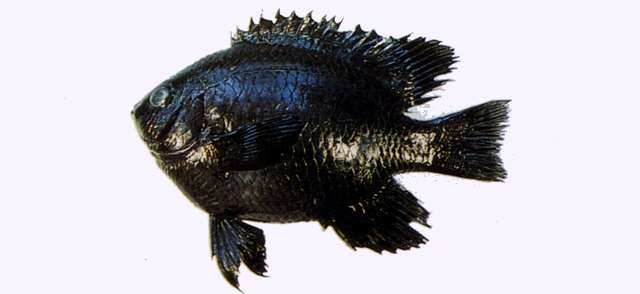
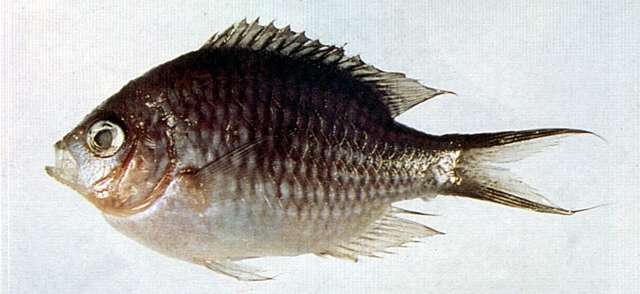
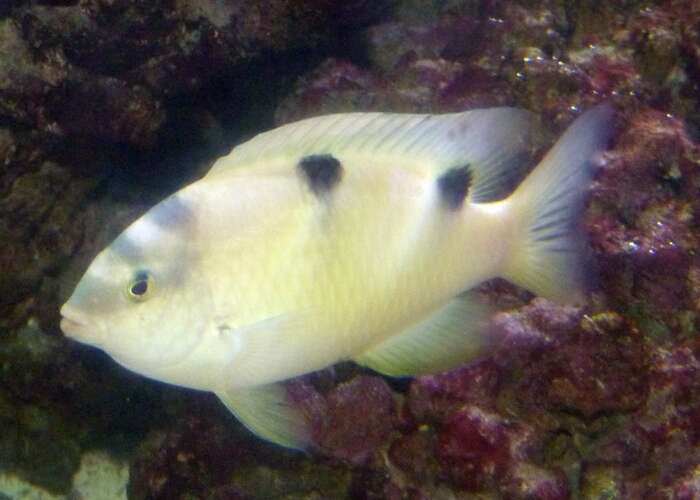

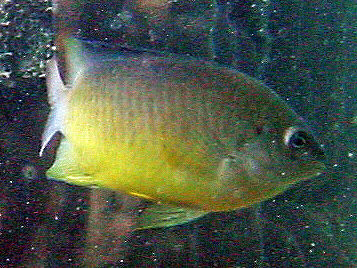
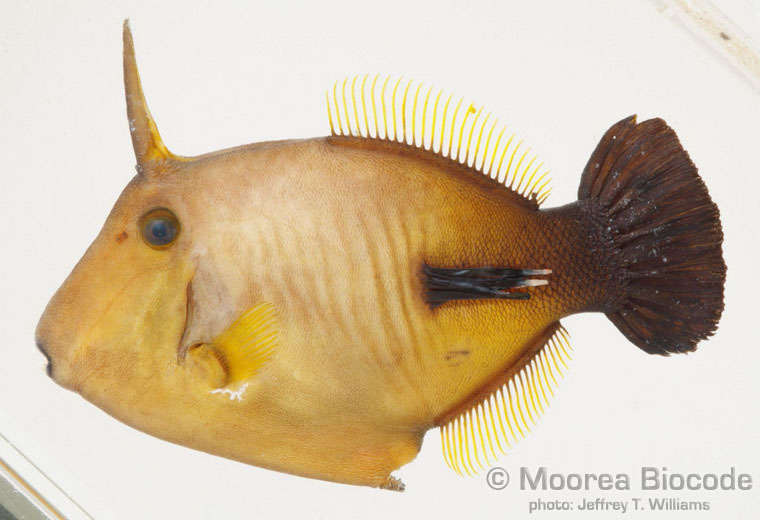
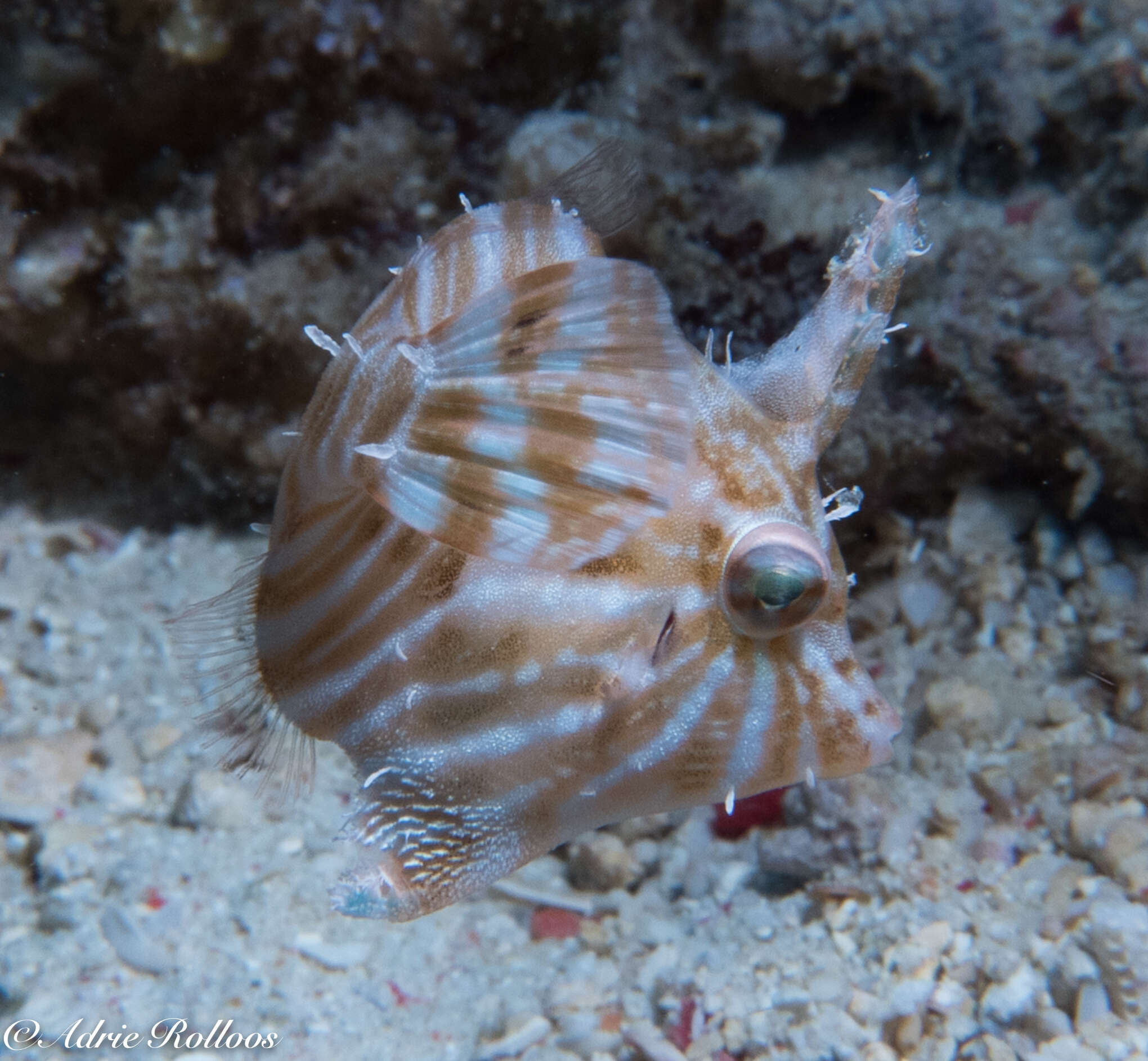
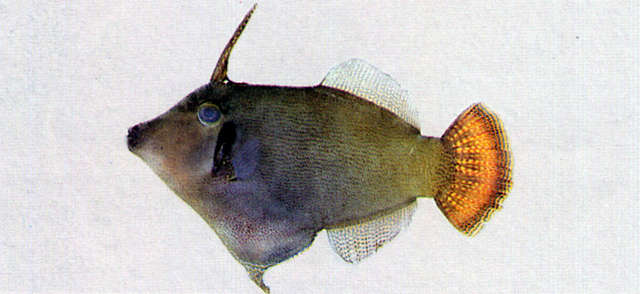



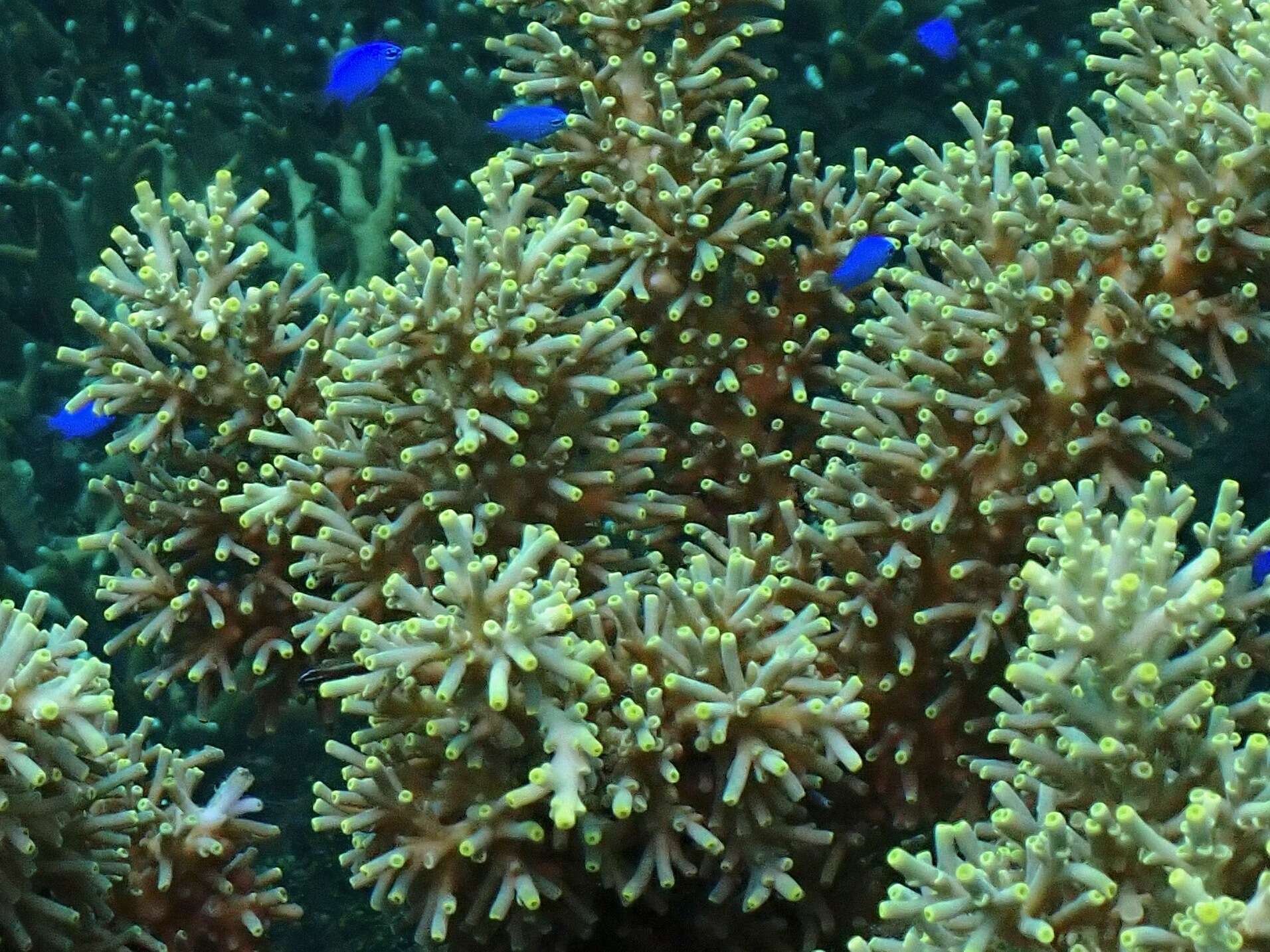
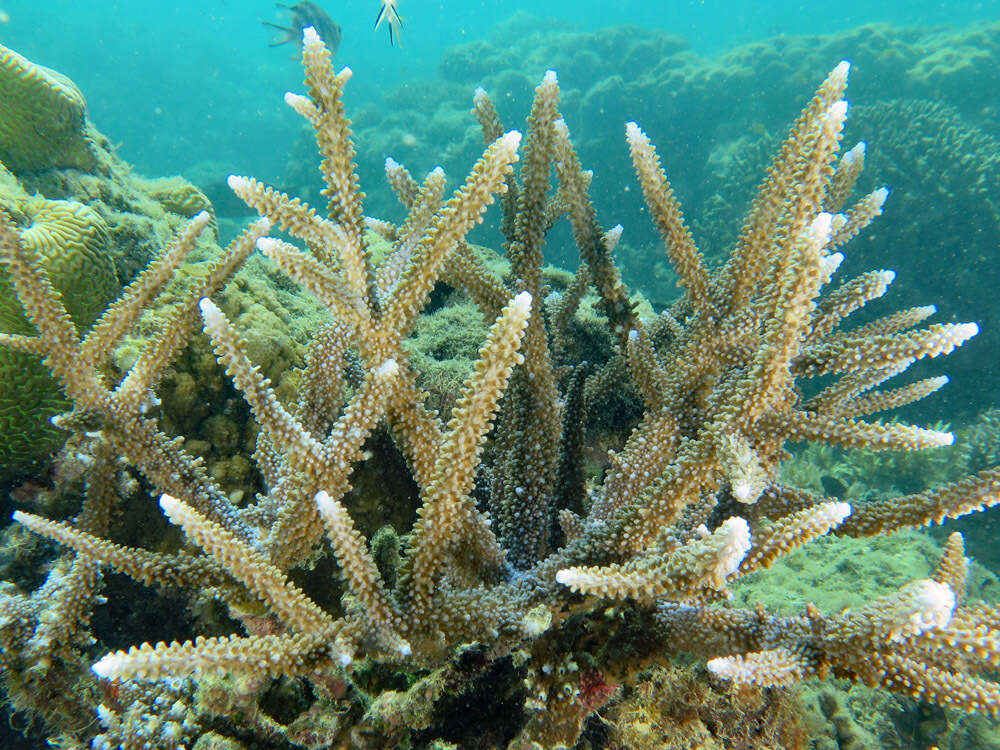
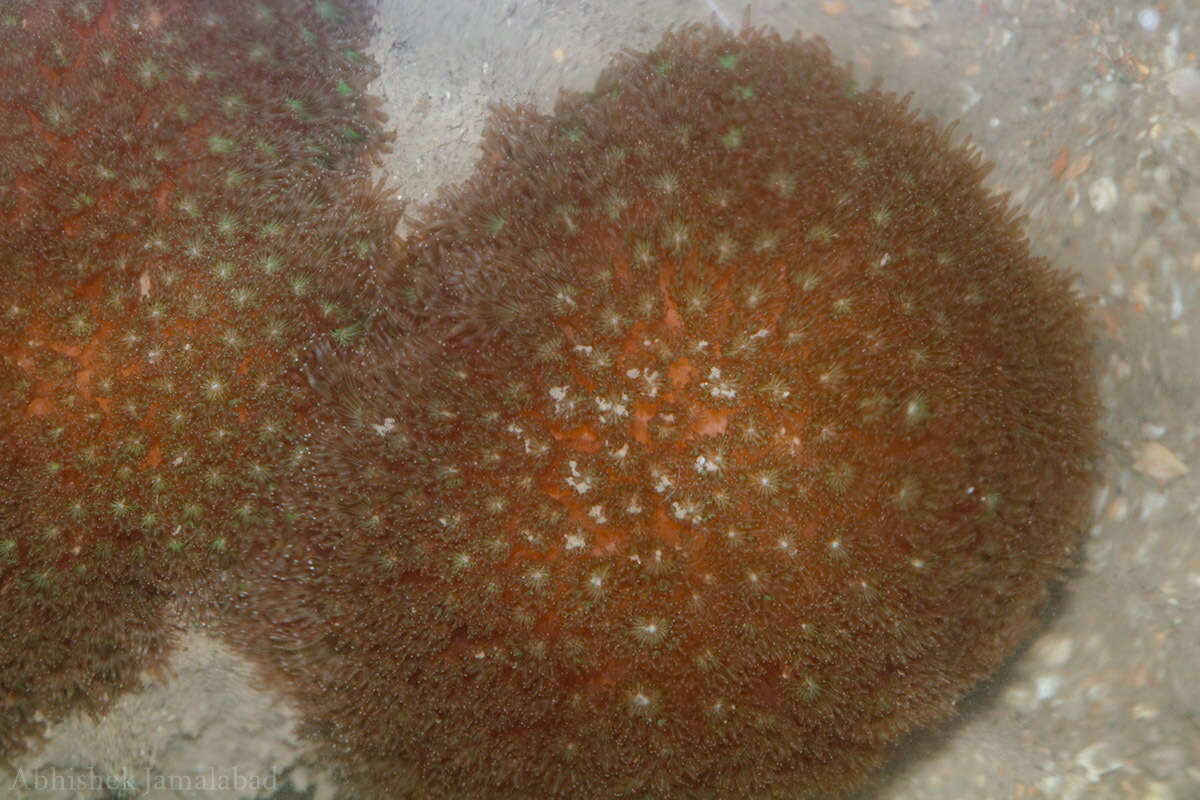
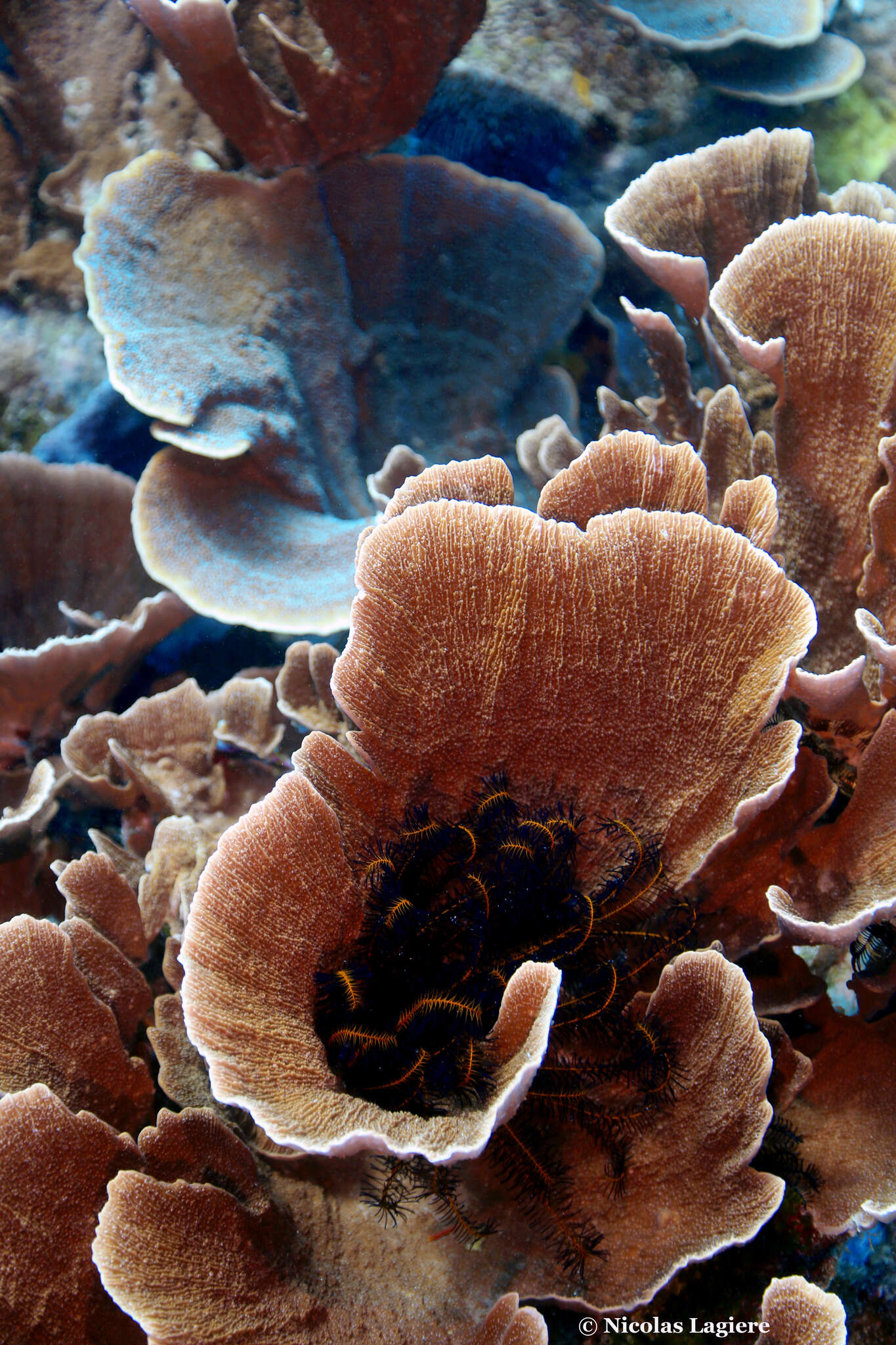
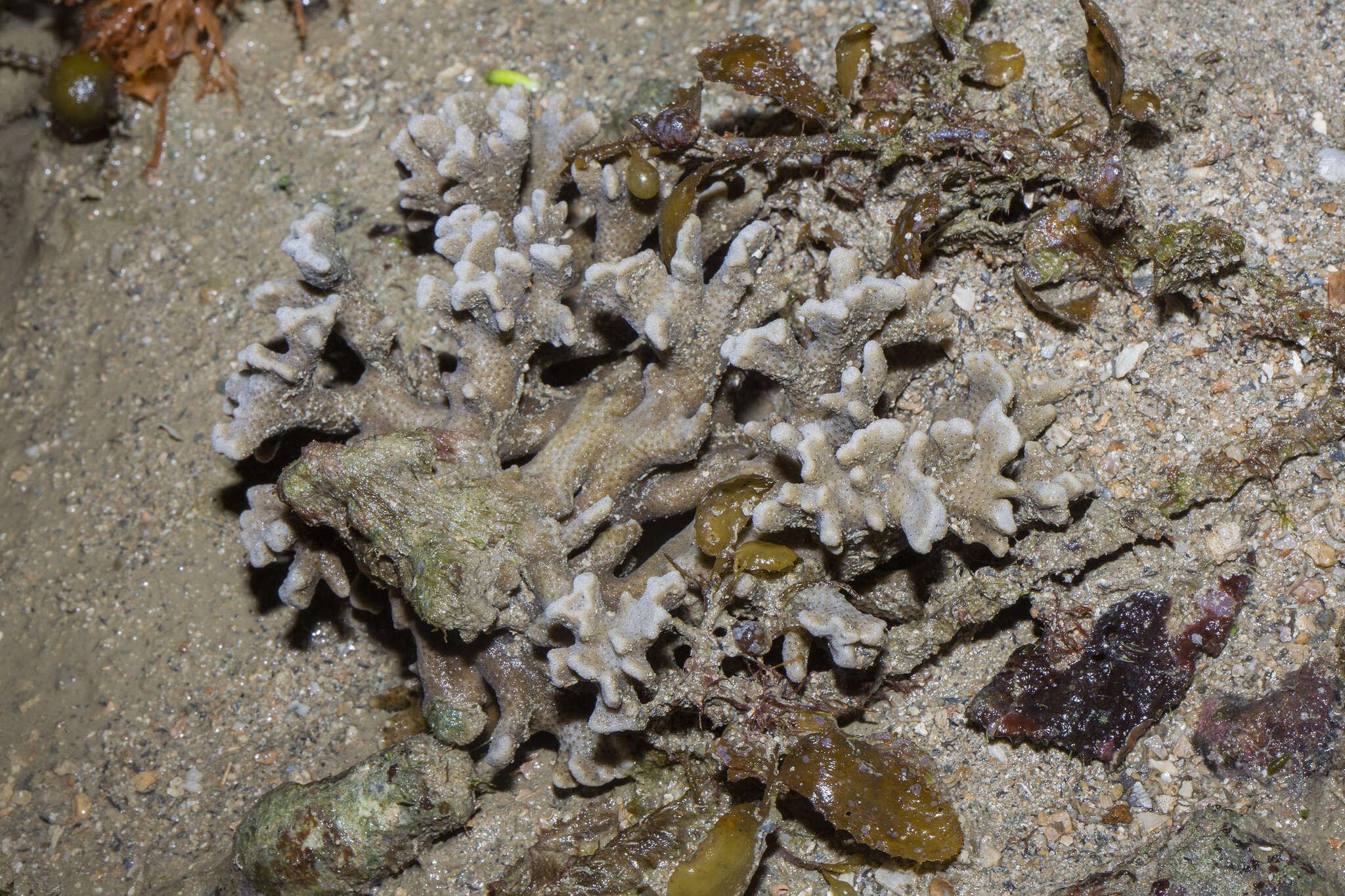
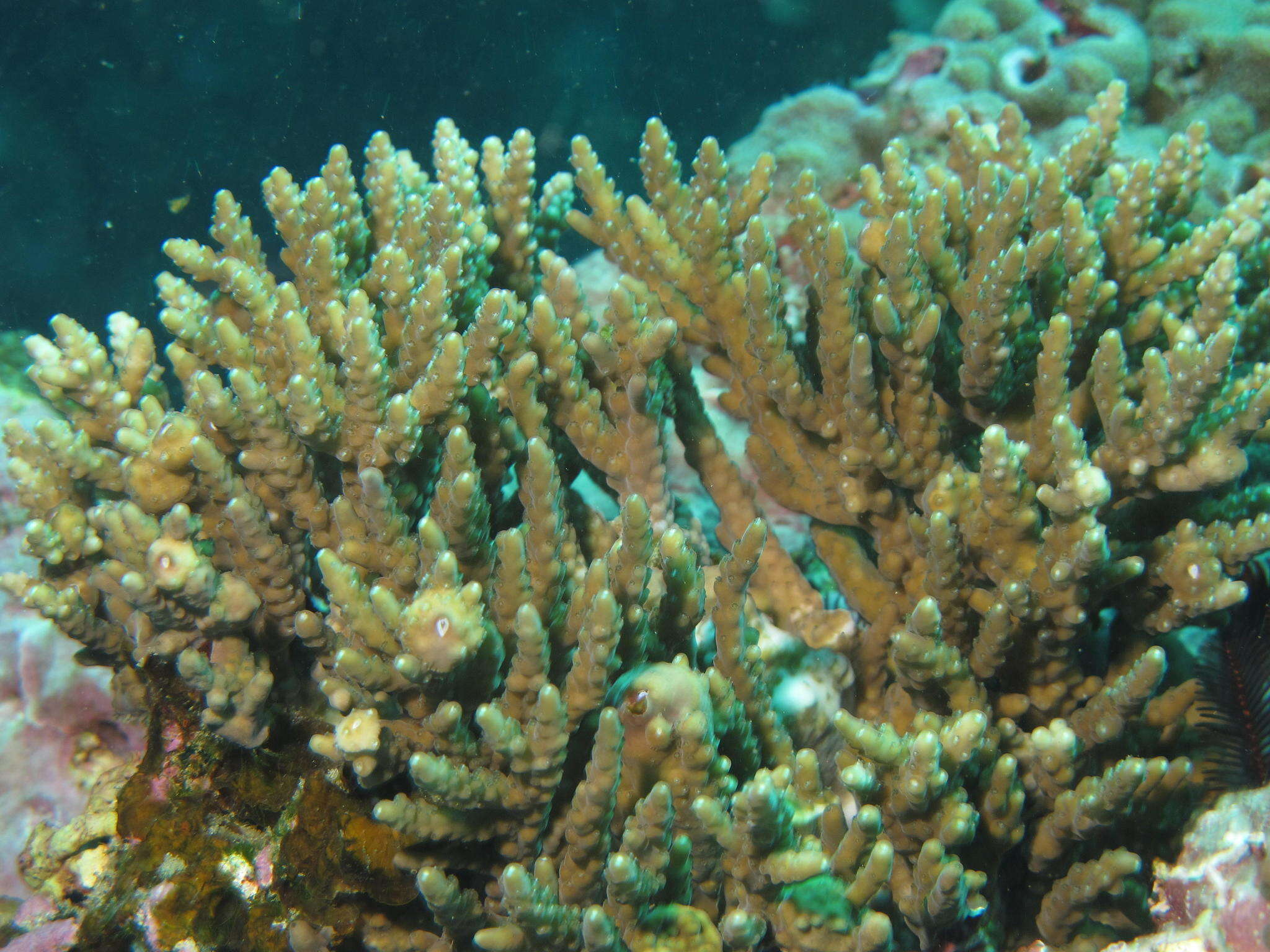
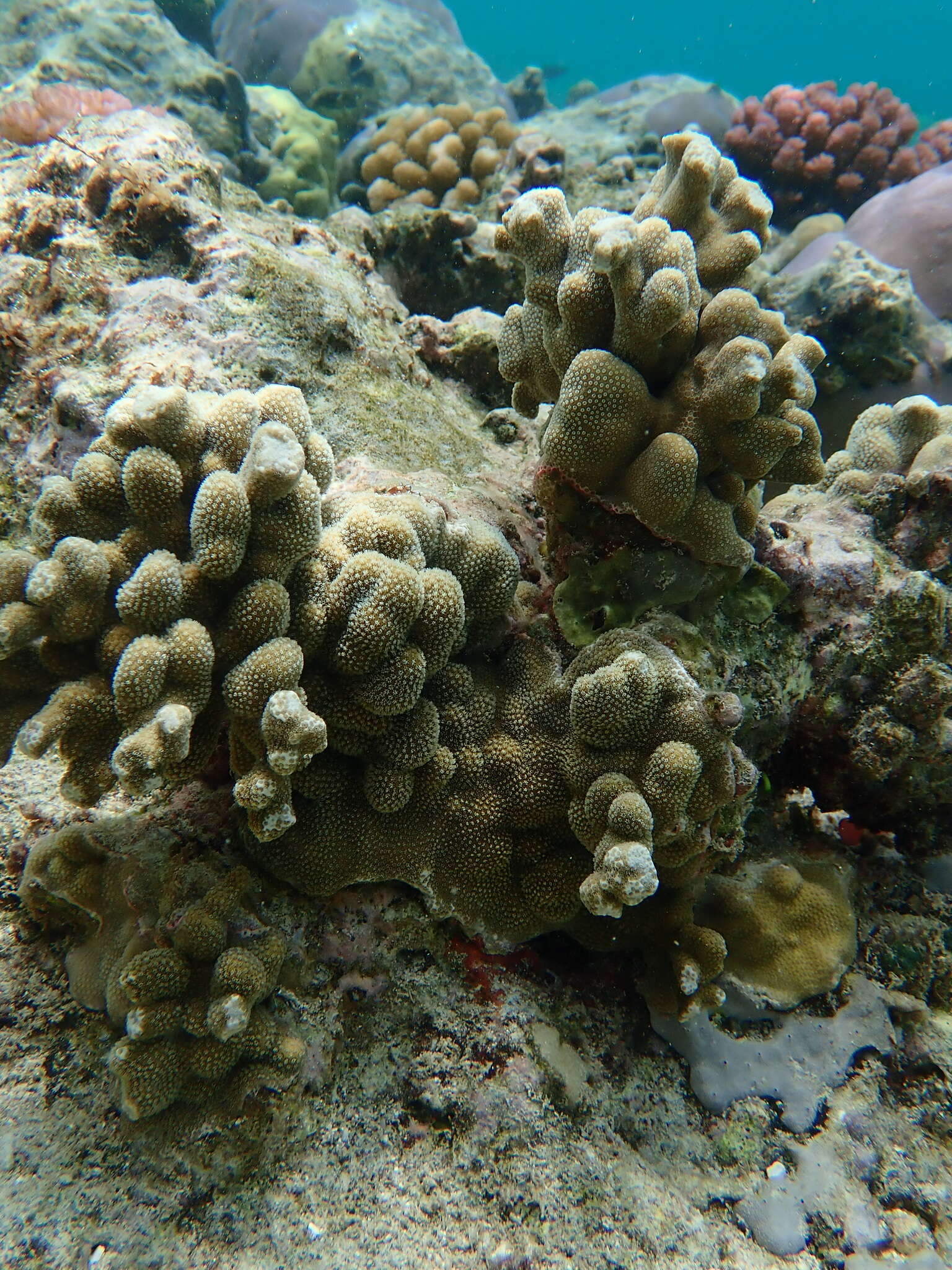
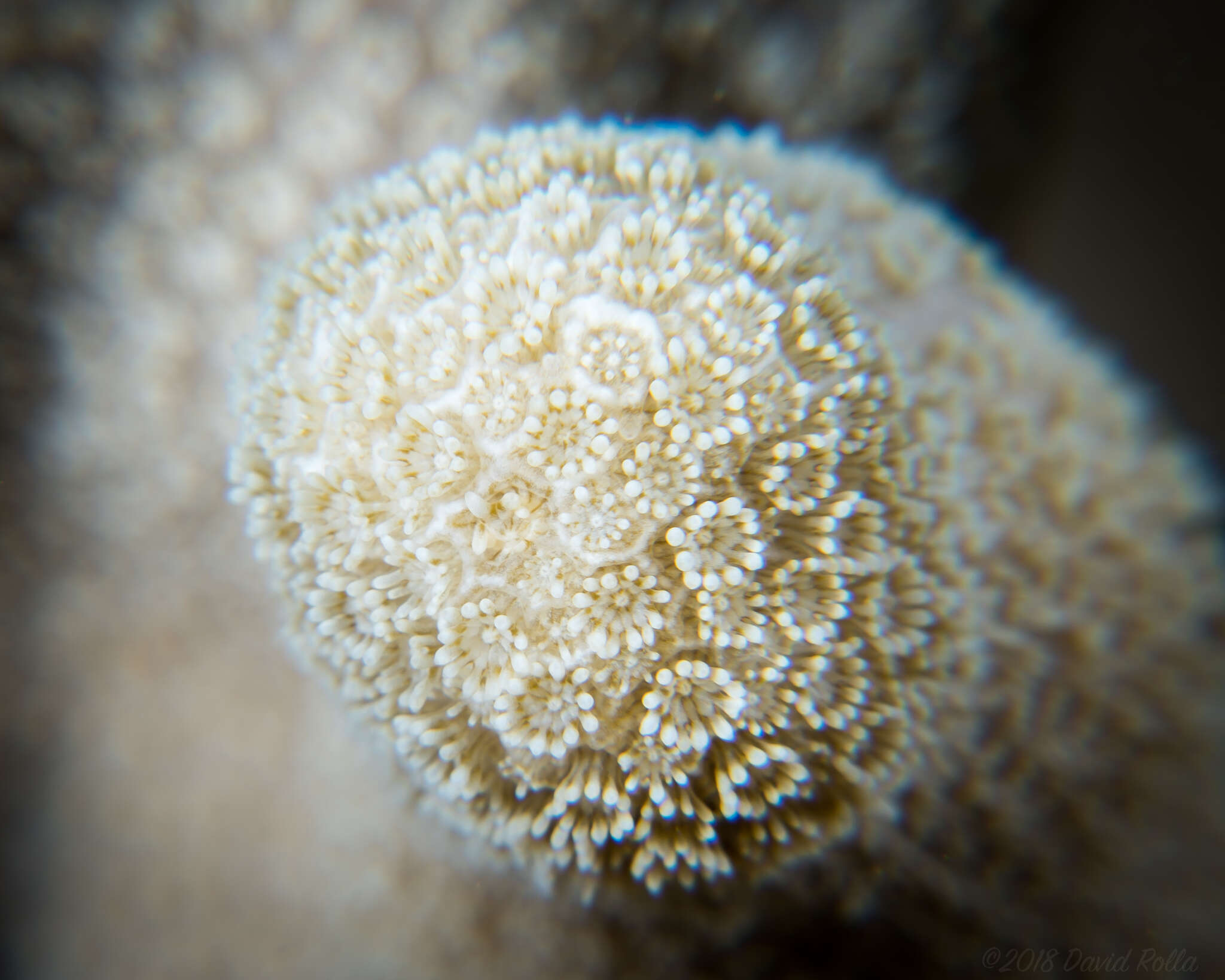
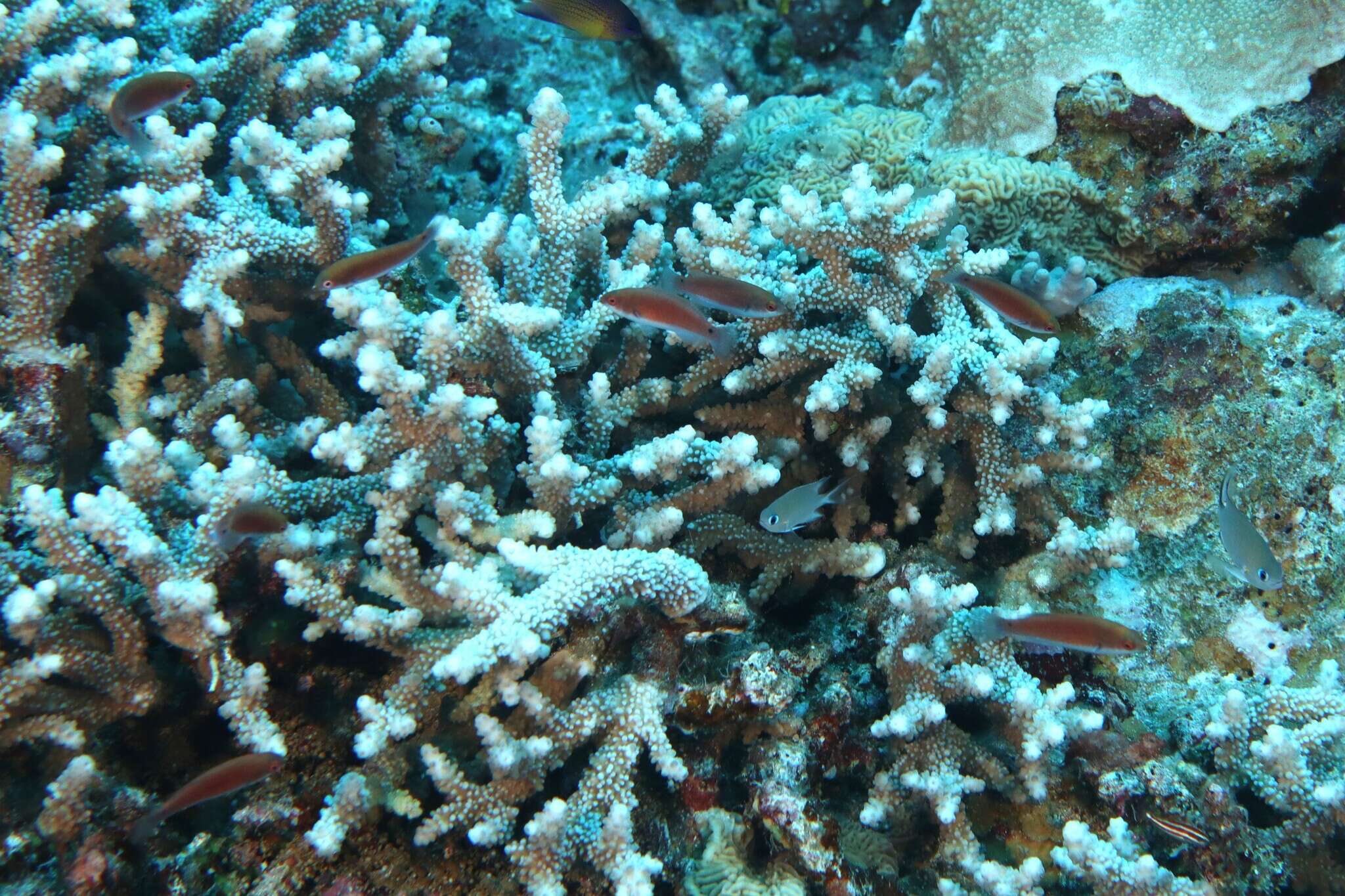



Species Identified
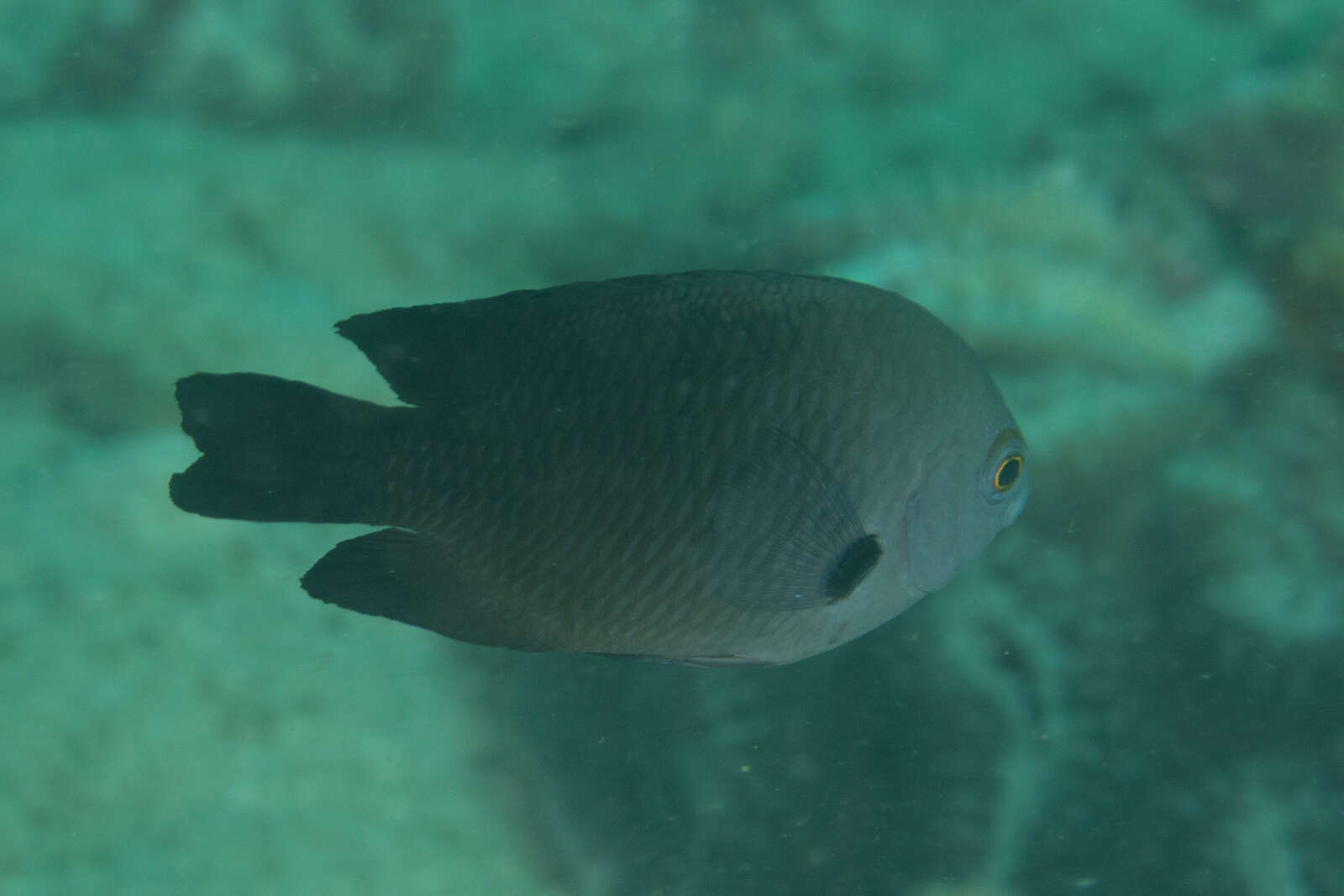
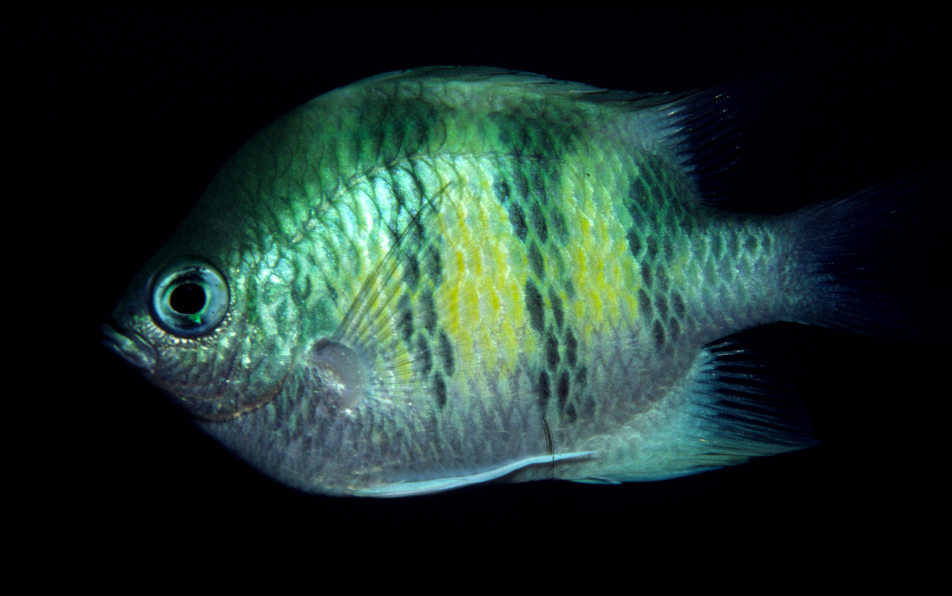
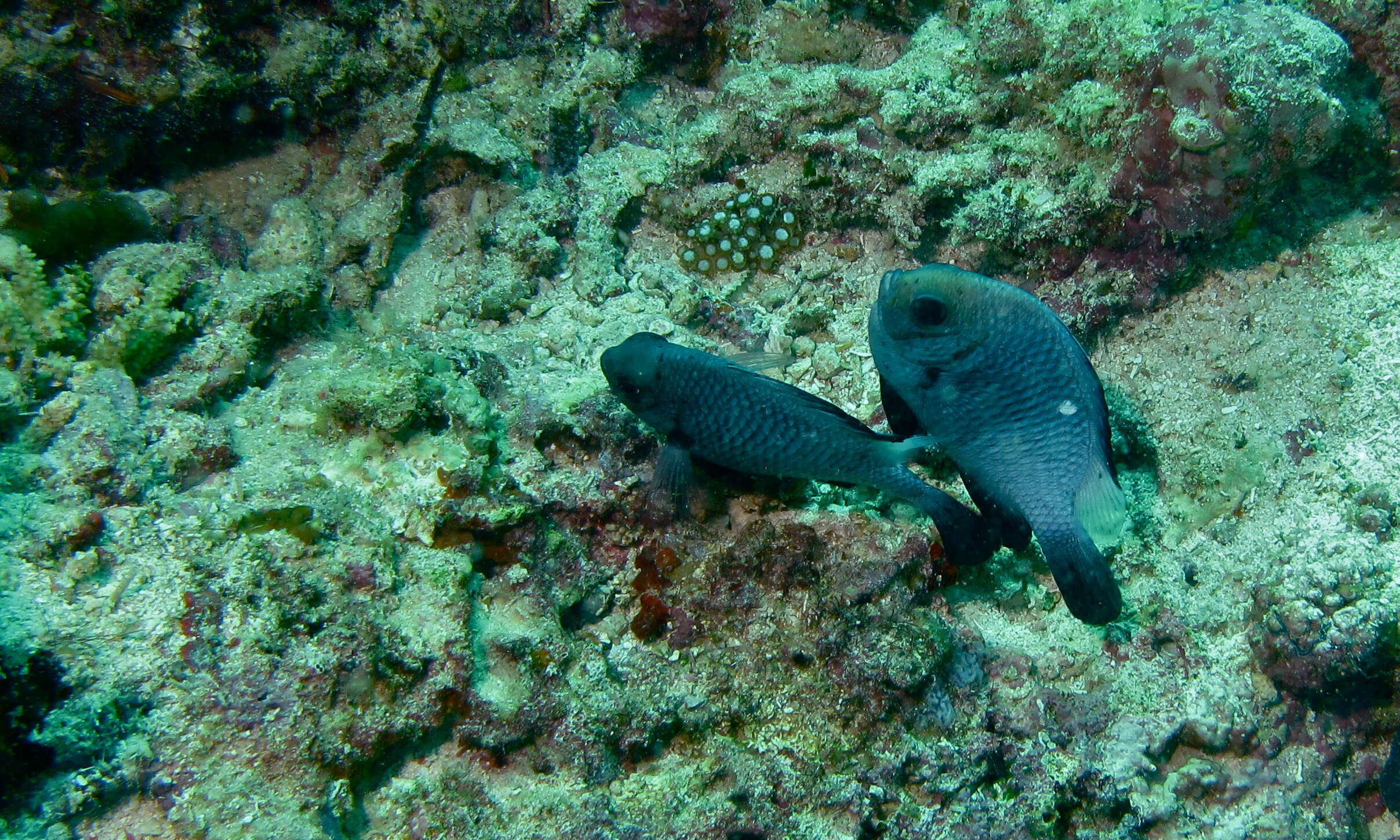
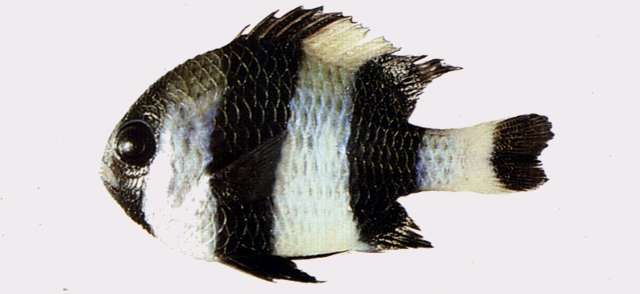
Dascyllus aruanus (Linnaeus, 1758) (black-and-white damselfish)
Territorial, inhabit shallow lagoon and subtidal reef flats. Form large aggregations above staghorn Acropora thickets or in smaller groups above isolated coral heads. Feed on zooplankton, benthic invertebrates, and algae...
Read More
Read More
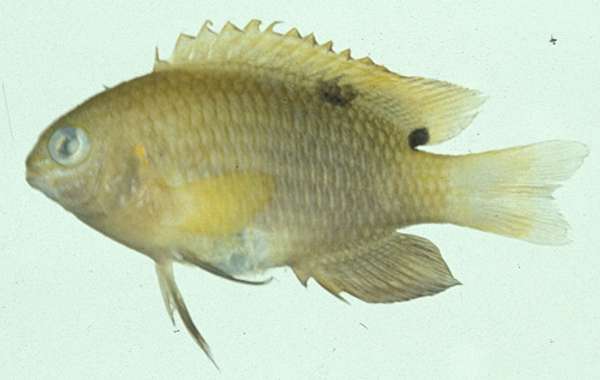
Pomacentrus brachialis Cuvier, 1830 (Charcoal damsel)
Found in passages and outer reef slopes ; also in current prone and clear water reef flats to 40 m depth . Occurs singly or in small groups . Feeds on zooplankton and benthic algae .
Amblyglyphidodon curacao (Bloch, 1787) (Black-snouted sergeant-major)
Inhabits lagoons, coastal embayments, reef passages and outer reefs. Juveniles often found among Sarcophyton and Sinularia soft corals. Feeding aggregations are frequently observed over growths of the staghorn coral Acro...
Read More
Read More
Dascyllus trimaculatus (Rüppell, 1829) (threespot humbug)
Inhabits coral and rocky reefs, juveniles often commensal with large sea anemones, sea urchins, or small coral heads . Occurs in small to large aggregations. Stomach contents include algae, copepods, and other planktonic crustaceans.
Chrysiptera biocellata (Quoy and Gaimard, 1825) (bluebanded damselfish)
Occurs in protected inner reef flats and shallow lagoons and channels, over rubble and rocky outcrops. Feeds primarily on filamentous algae.
Plectroglyphidodon lacrymatus (Quoy and Gaimard, 1825) (whitespeckled demoiselle)
Inhabits clear lagoon and seaward reefs, in areas with mixed coral and rubble or dead coral rocks. Feeds mainly on benthic algae and associated small invertebrates and fish eggs.
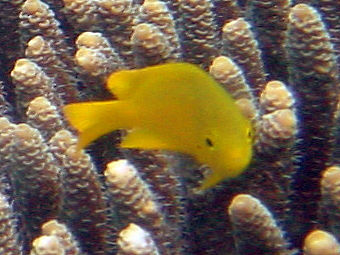
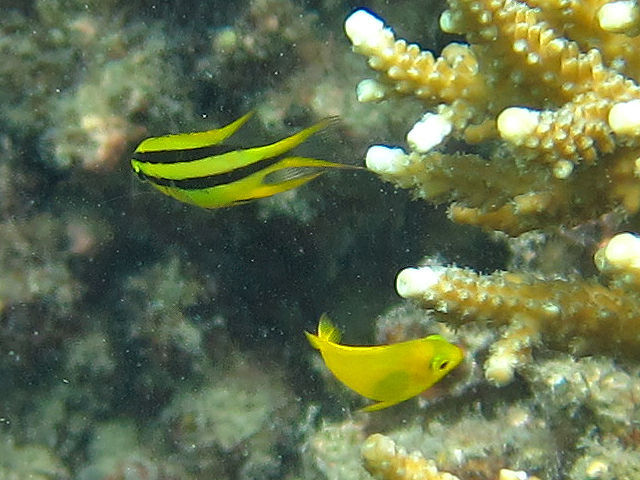
Pomacentrus moluccensis Bleeker, 1853 (Lemon damsel)
Inhabits clear lagoon and seaward reefs among branching corals. Occurs in small aggregations. Feeds mainly on algae and planktonic crustaceans.
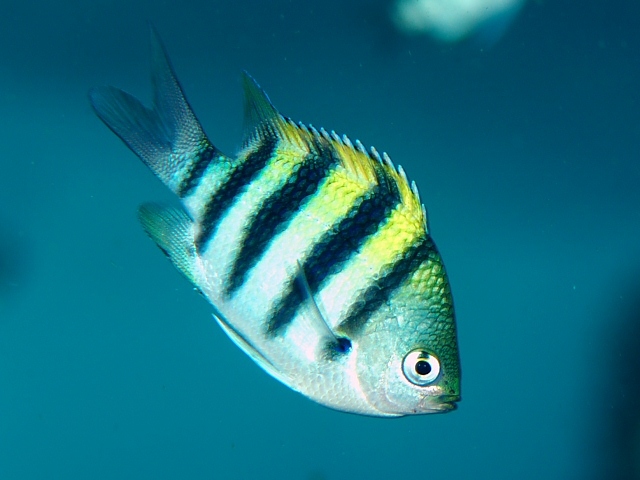
Abudefduf vaigiensis (Quoy and Gaimard, 1825) (Five finger)
Adults inhabit upper edge of outer reef slopes and inshore rocky reefs. Juveniles associated with drifting seaweed . Benthopelagic . Feed on zooplankton, benthic algae, and small invertebrates . Often in aggregations ...
Read More
Read More
Chromis weberi Fowler and Bean, 1928 (Weber's chromis)
Occurs singly or in small to large aggregations in passes and steep outer reef slopes.
Pomacentrus bankanensis Bleeker, 1853 (Speckled damselfish)
Occurs solitarily or in small groups in lagoons, reef flats, passages, and outer reef slopes. Usually amongst coarse rubble or rock . Feeds primarily on algae, but also takes copepods, isopods, and pelagic tunicates.
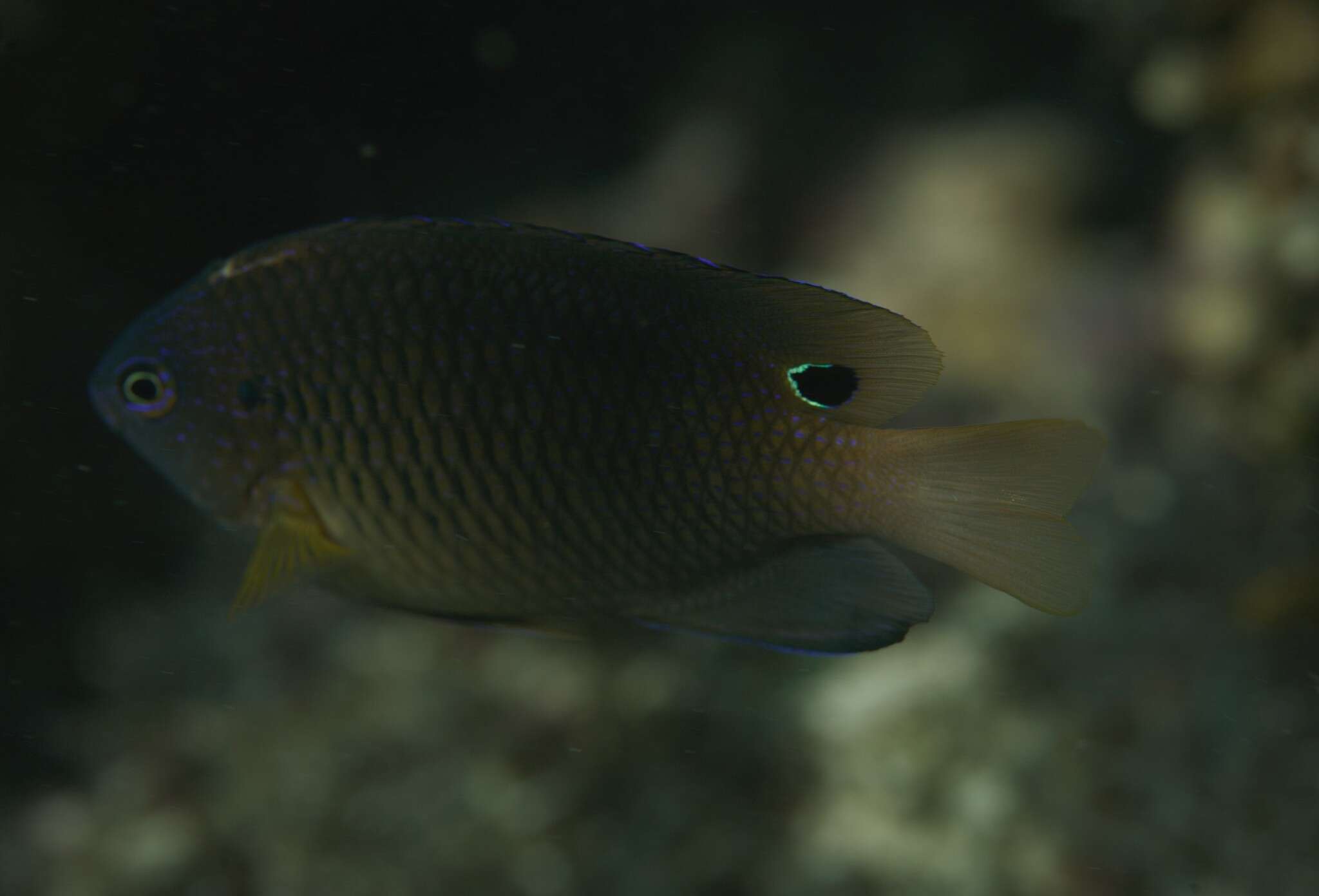
Neoglyphidodon nigroris (Cuvier, 1830) (Yellowfin damsel)
Two forms: long-tailed and black as adults occurs in the Andaman Sea, ranging east to western Bali and north to Japan. Second form, probably valid as N. xanthurus occurs in the rest of the West Pacific and the two overla...
Read More
Read More
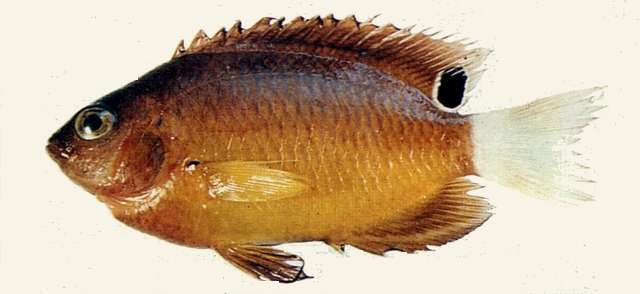
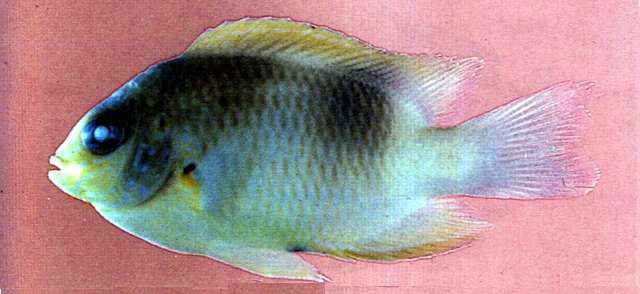
Pomacentrus adelus Allen, 1991 (Obscure damsel)
Inhabits lagoon, coastal and seaward reefs , usually on open rubble patches .
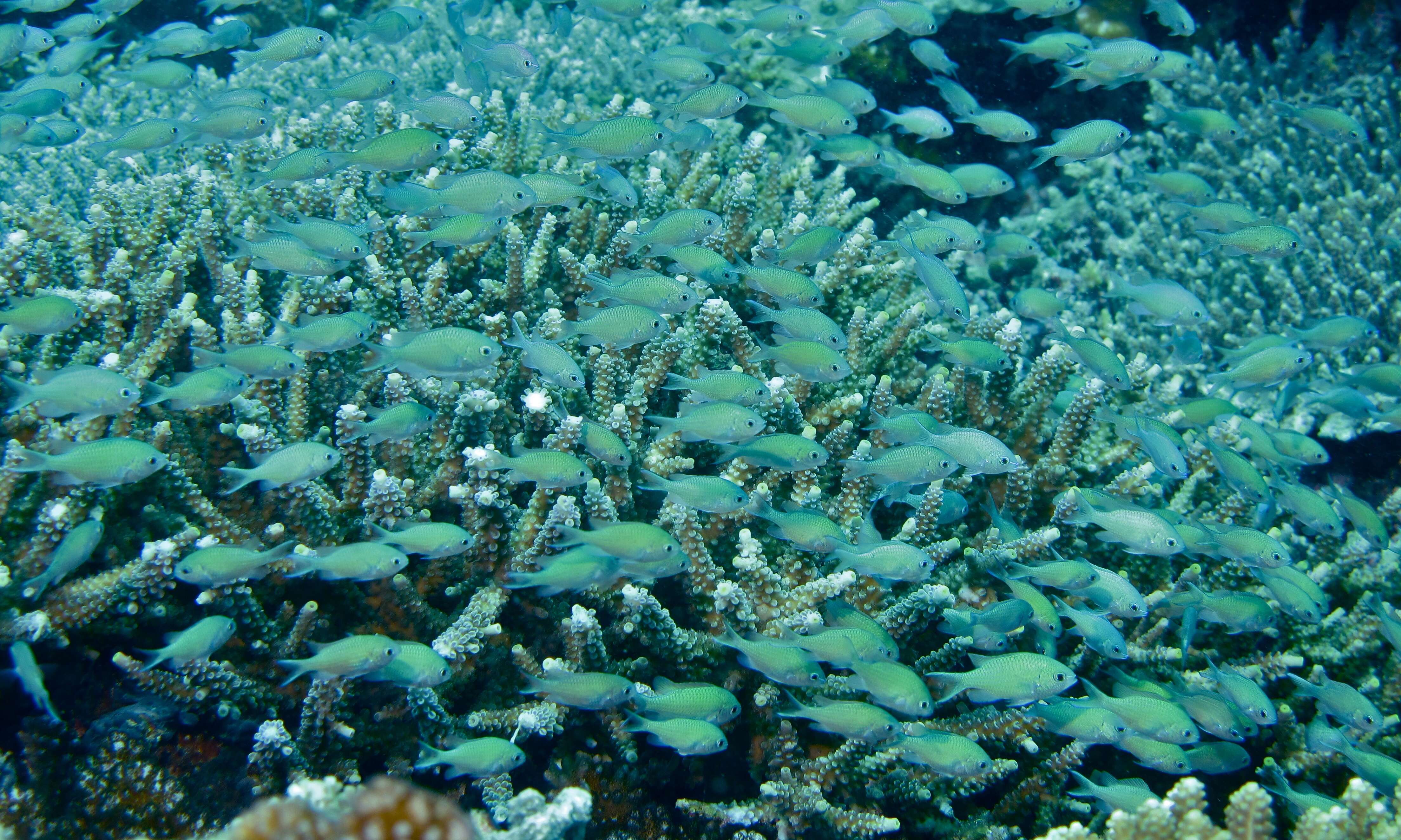
Chromis viridis (Cuvier, 1830) (blue-green chromis)
Found in large aggregations above thickets of branching Acropora corals in sheltered areas such as subtidal reef flats and lagoons. Juveniles closely tied to individual coral heads . Phytoplankton feeders. Breeding is d...
Read More
Read More
Pomacentrus amboinensis Bleeker, 1868 (Ambon damsel)
An ubiquitous species found in lagoons, coastal reefs, passages and outer reef slopes. Inhabits sandy areas around coral or rock outcrops or other protective shelter. Usually in small groups . Feeds primarily on algae, but also takes zooplankton. Has been reared in captivity (Ref. 35404.
Chrysiptera rollandi (Whitley, 1961) (Rolland's demoiselle)
Occurs singly or in small groups in lagoons, harbors, and outer reef slopes. Found among corals and coral rubble . Feeds mainly on zooplankton.
Dascyllus reticulatus (Richardson, 1846) (twostriped damselfish)
Occurs in outer lagoon and seaward reefs. Inhabits branching coral heads, particularly Pocillopora eydouxi. Forms schools, often in silty habitats . Male prepares a nest by cleaning with its mouth a rock or coral surface where the female will attach the eggs .
Neoglyphidodon melas (Cuvier, 1830) (black damselfish)
Found in coral-rich areas of lagoon and seaward reefs and usually associated with soft corals on which it feeds . Occur singly or in pairs . Juveniles are encountered in around staghorn Acropora corals . Adults often near Tridacna clams and may feed on their feces .
Chromis ternatensis (Bleeker, 1856) (Ternate chromis)
Schools above branching corals along upper margins of clear lagoon and outer reef slopes. Often associated with branching Acropora.
Dischistodus perspicillatus (Cuvier, 1830) (White damsel)
Occurs in small patch reefs of shallow lagoons, with algae or seagrass habitats. The stomach of several specimens examined contained mainly algae and detritus mixed with sand grains.
Dascyllus melanurus Bleeker, 1854 (blacktailed humbug)
Schooling species, inhabits sheltered lagoons, harbors and inlets. Also in somewhat open substrates with outcrops of Acropora corals . Often associated with small coral heads. Feeds on a variety of plankton, including l...
Read More
Read More
Pomacentrus simsiang Bleeker, 1856 (Blueback damsel)
Occurs singly or in small aggregations at slightly turbid areas of lagoon and coastal reefs. Feeds mainly on benthic algae.
Chrysiptera unimaculata (Cuvier, 1830) (Onespot demoiselle)
Found solitarily or in small groups among coastal algal reefs, rubble or over open beach-rock of reef flats exposed to moderate surge and feeds mainly on benthic algae .
Dischistodus prosopotaenia (Bleeker, 1852) (Honey-head damsel)
Inhabits lagoons and coastal reefs, usually in silty areas . The true D. prosopotaenia ranges from Singapore to Sulawesi while the yellow-breasted variant ranges from Irian Jaya to eastern Australia and Vanuatu .
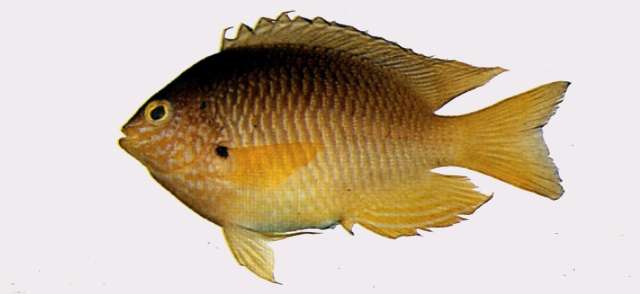
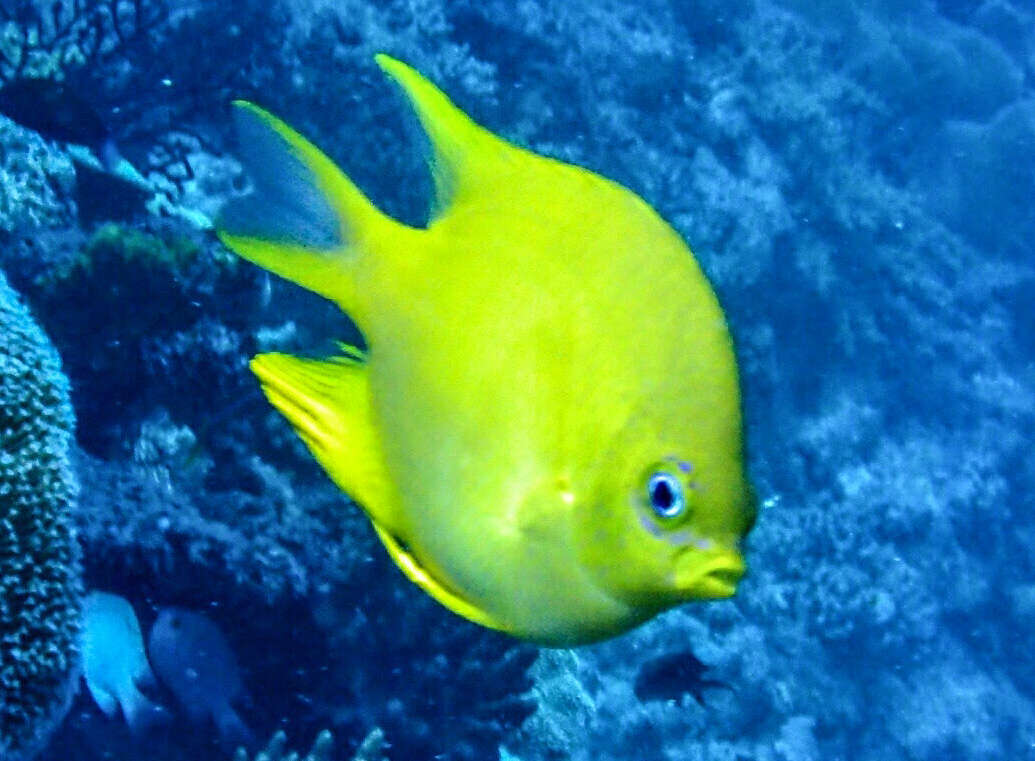
Amblyglyphidodon aureus (Cuvier, 1830) (Golden damsel)
Occurs in steep outer reef, occasionally in deep lagoons and along channel walls, usually in current prone habitats and where there are abundant gorgonian and long sea-whip corals on which they lay and guard eggs. Juvenil...
Read More
Read More
Pomacentrus chrysurus Cuvier, 1830 (Whitetail damsel)
Inhabits sandy areas of lagoons and inshore reefs around rock or coral outcrops. Feeds primarily on algae.
Amanses scopas (Cuvier, 1829) (Broom leatherjacket)
Inhabits clear coastal to outer reefs, usually in rich coral areas with rubble patches or gutters . Less approachable than most filefishes . Usually seeks coverage in large corals when approached .
Acreichthys radiatus (Popta, 1900) (Radial leatherjacket)
Found among soft corals . Extremely well camouflaged when among the corals. Observed picking on the coral polyps and the coral tissue may be an important part of their diet .
Pervagor janthinosoma (Bleeker, 1854) (Blackbar filefish)
Occurs in shallow lagoons and seaward reefs to a depth of about 15 m; common in coral-rich areas. Secretive species among rocks, sponges or in crevices on the bases of large coral formations. Adults usually form pairs but often only one is observed while the other one is hiding .
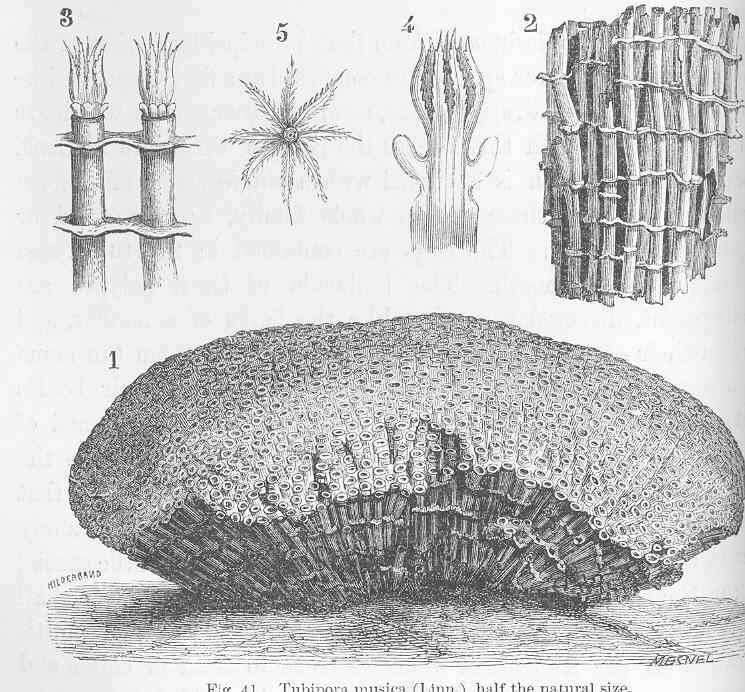
Tubipora musica Linnaeus, 1758 (Organ-pipe coral)
zooxanthellate
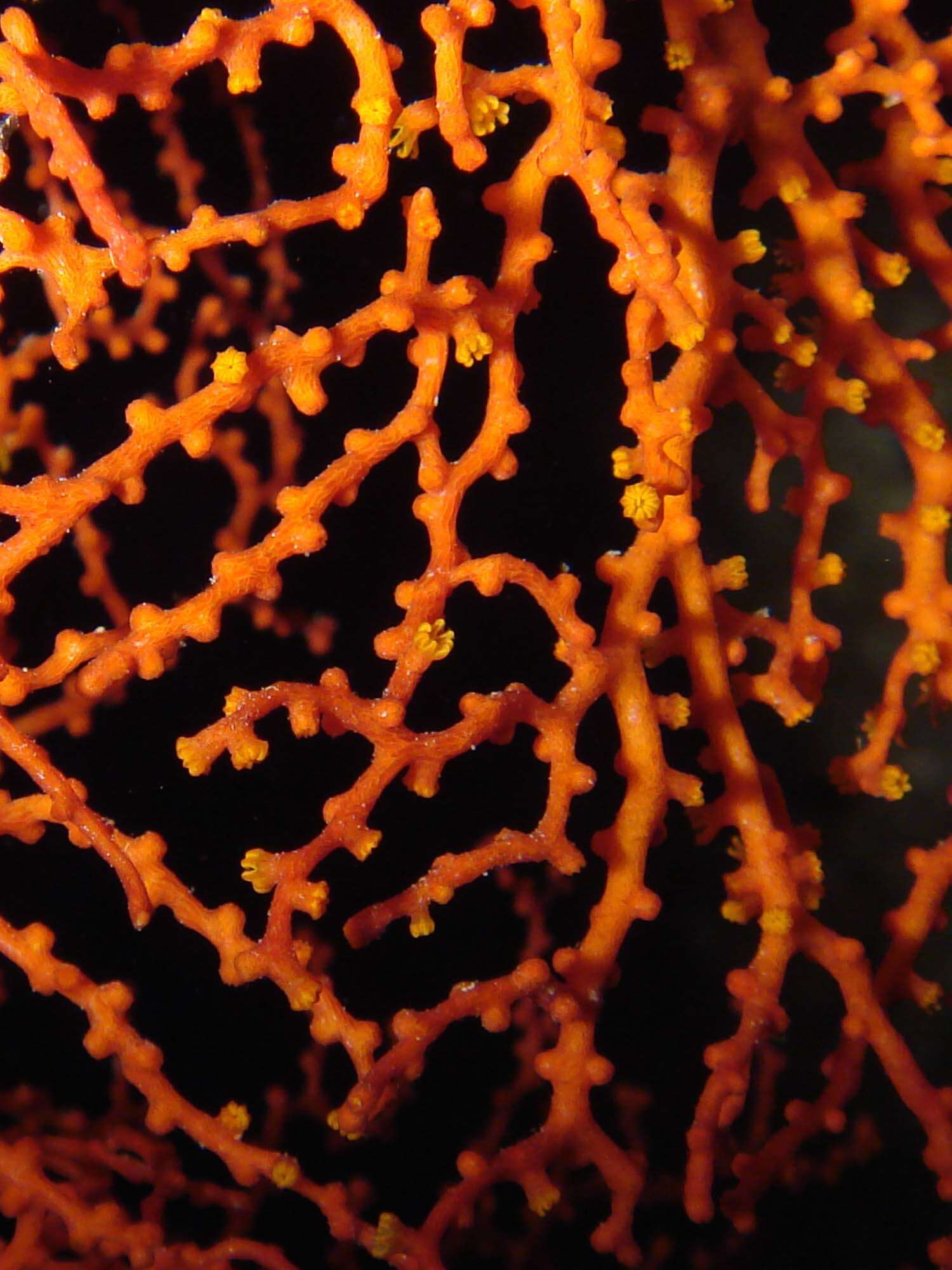
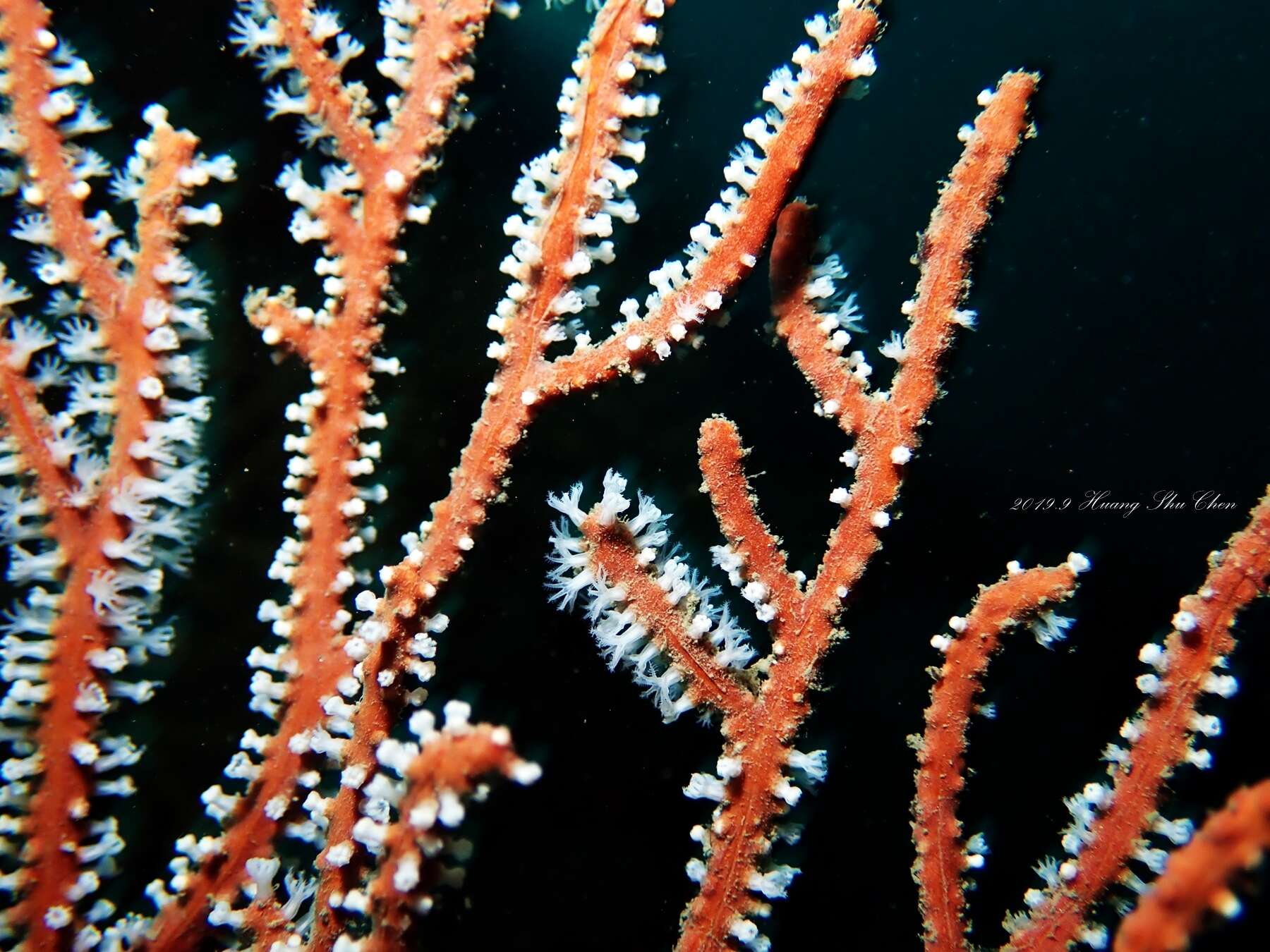
Muricella grandis Nutting, 1910
Subergorgia suberosa (Pallas, 1766)
Plumigorgia hydroides Nutting, 1910
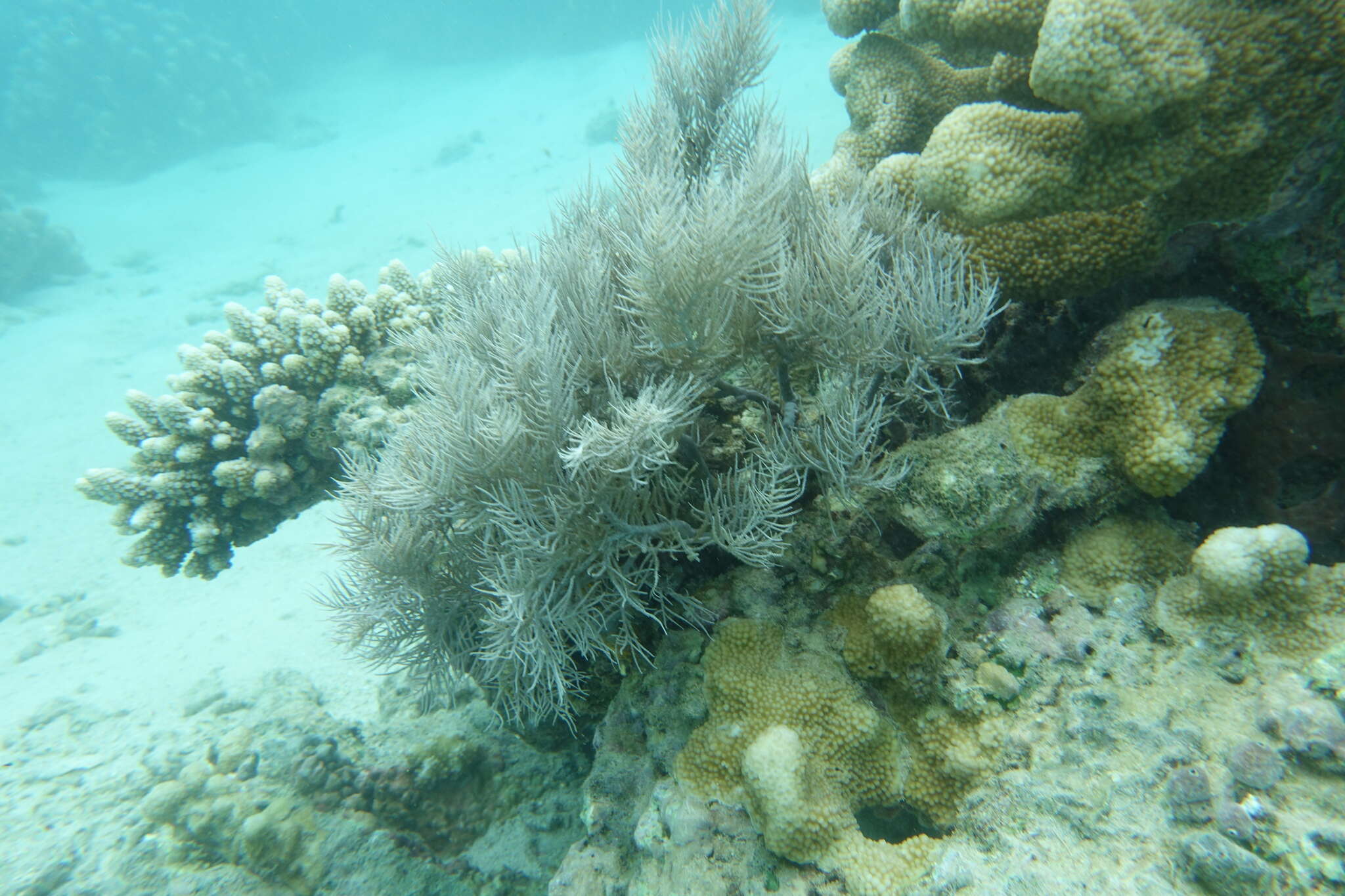
Bellonella petila Verseveldt & Bayer, 1988
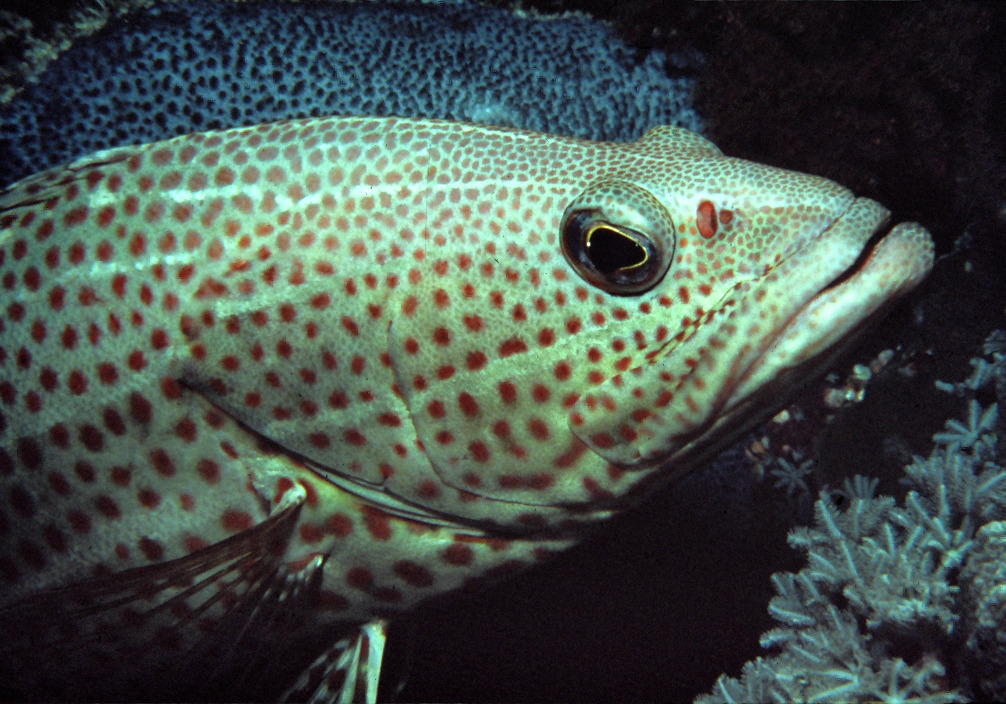
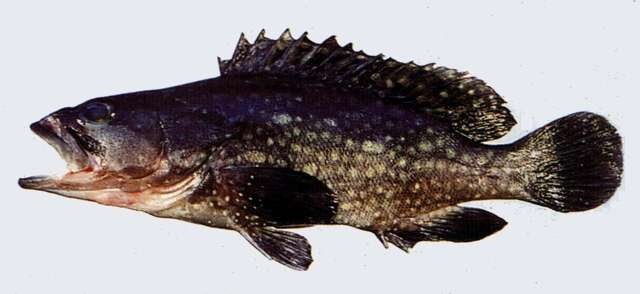
Epinephelus merra Bloch, 1793 (Dwarf spotted grouper)
Very common in shallow lagoon and semi-protected seaward reefs. Juveniles are common in thickets of staghorn Acropora corals. Feed on crustaceans and fishes. Increase of piscivory with age is observed in this species. ...
Read More
Read More
Epinephelus coeruleopunctatus (Bloch, 1790) (Whitespotted grouper)
Occurs in rocky or coral-rich areas of deep lagoons, channels and outer reef slopes; usually in or near caves. Juveniles are found in tide pools. Feeds on fish and crustaceans . In Hong Kong live fish markets .
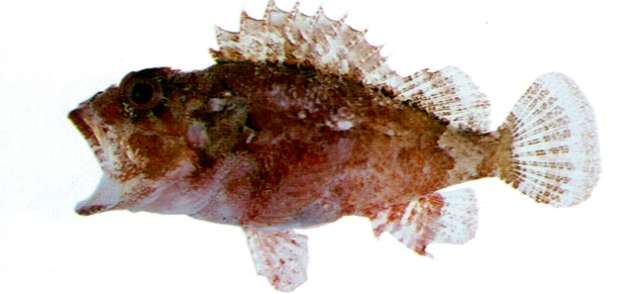
Parascorpaena mcadamsi (Fowler, 1938) (McAdam's scorpionfish)
Secretive in reefs during the day and usually seen only at night .
Pterois volitans (Linnaeus, 1758) (Red lionfish)
Scorpaenopsis possi Randall & Eschmeyer, 2001 (Poisson-scorpion de Poos)
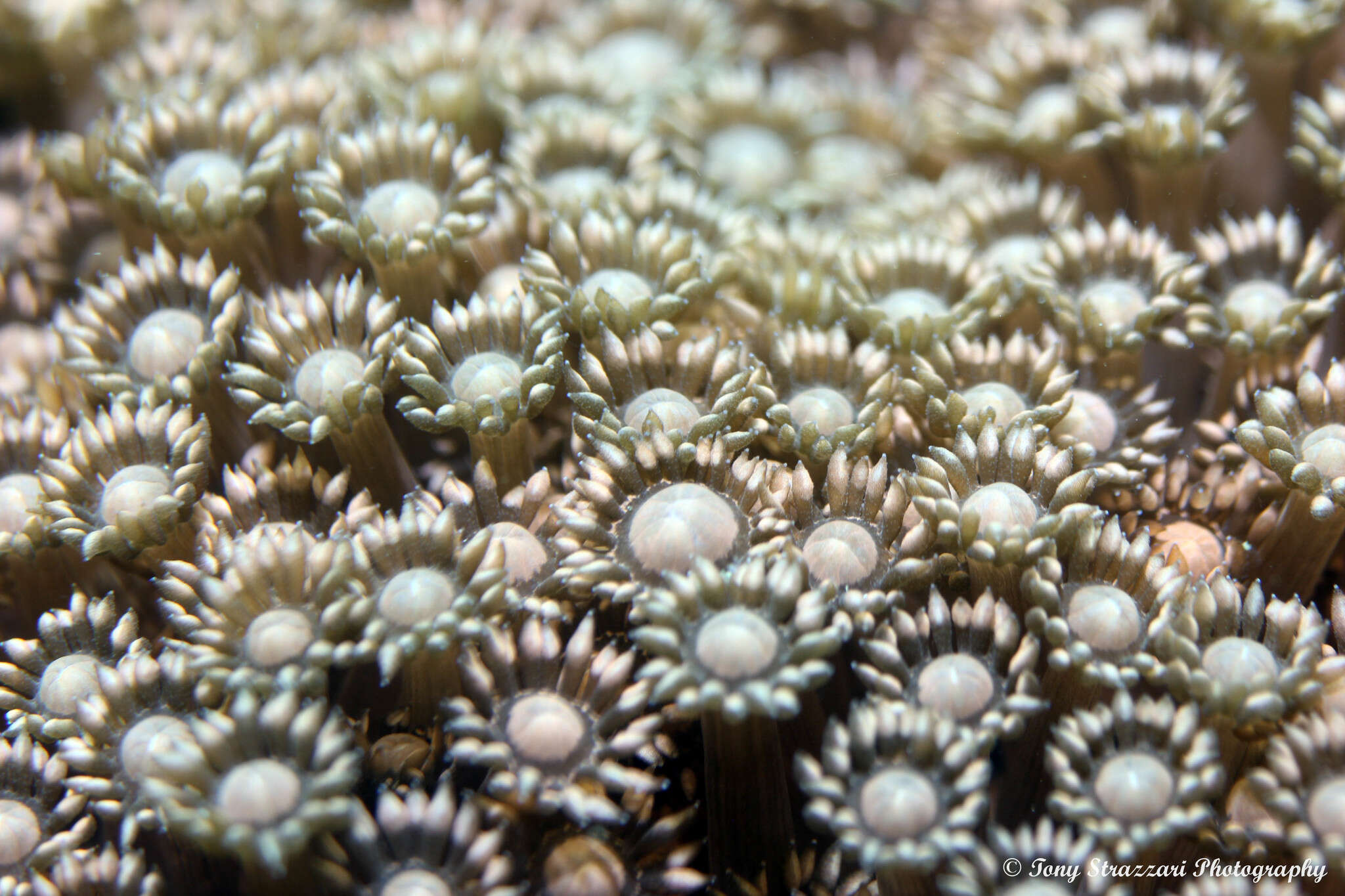
Goniopora tenuidens Quelch, 1886 (Anemone coral)
zooxanthellate
Acropora echinata (Dana, 1846)
zooxanthellate
Acropora intermedia (Brook, 1891)
zooxanthellate
Goniopora stutchburyi Wells, 1955 (Anemone coral)
zooxanthellate
Montipora foliosa (Pallas, 1766) (Pore coral)
zooxanthellate
Montipora digitata (Dana, 1846) (Pore coral)
zooxanthellate
Acropora nana (Studer, 1878)
zooxanthellate
Porites deformis Nemenzo, 1955 (Hump coral)
zooxanthellate
Porites compressa Dana, 1846 (Hump coral)
zooxanthellate
Acropora brueggemanni (Brook, 1893)
zooxanthellate
Montipora millepora Crossland, 1952 (Pore coral)
zooxanthellate
Montipora corbettensis Veron and Wallace, 1984 (Pore coral)
zooxanthellate
Goniopora eclipsensis Veron and Pichon, 1982 (Anemone coral)
zooxanthellate
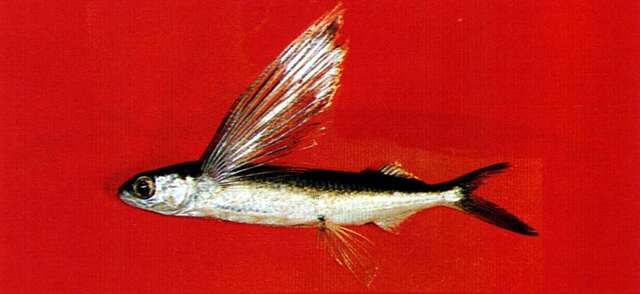
Hirundichthys oxycephalus (Bleeker, 1852) (Bony flyingfish)
Inhabits surface neritic waters. Capable of leaping out of the water and gliding for long distances above the surface.
Corythoichthys haematopterus (Bleeker, 1851) (Messmate pipefish)
Inhabits shallow protected areas of rubble and sand , usually semi-silty zones . Occurs more commonly at depths between 0 and 3 m. Ovoviviparous . The male carries the eggs in a brood pouch which is found under the tail . Males may be brooding at 9.0 cm SL. Adults nearly always in pairs .
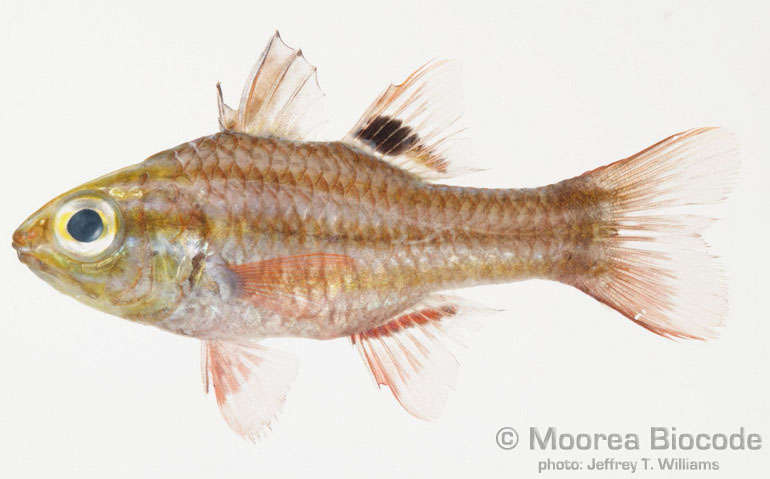
Apogon novemfasciatus Cuvier, 1828 (Nine-banded soldierfish)
Common in reef flats and shallow lagoons to a depth of about 4 m. Feeds on small crustaceans and fishes . Nocturnal species . Usually in pairs swimming close to shelter .
Apogon taeniophorus Regan, 1908 (Reef-flat cardinalfish)
Occurs inshore . Found in holes or ledges of outer reef flats in areas exposed to surge , to depths of about 10 m . Nocturnal .
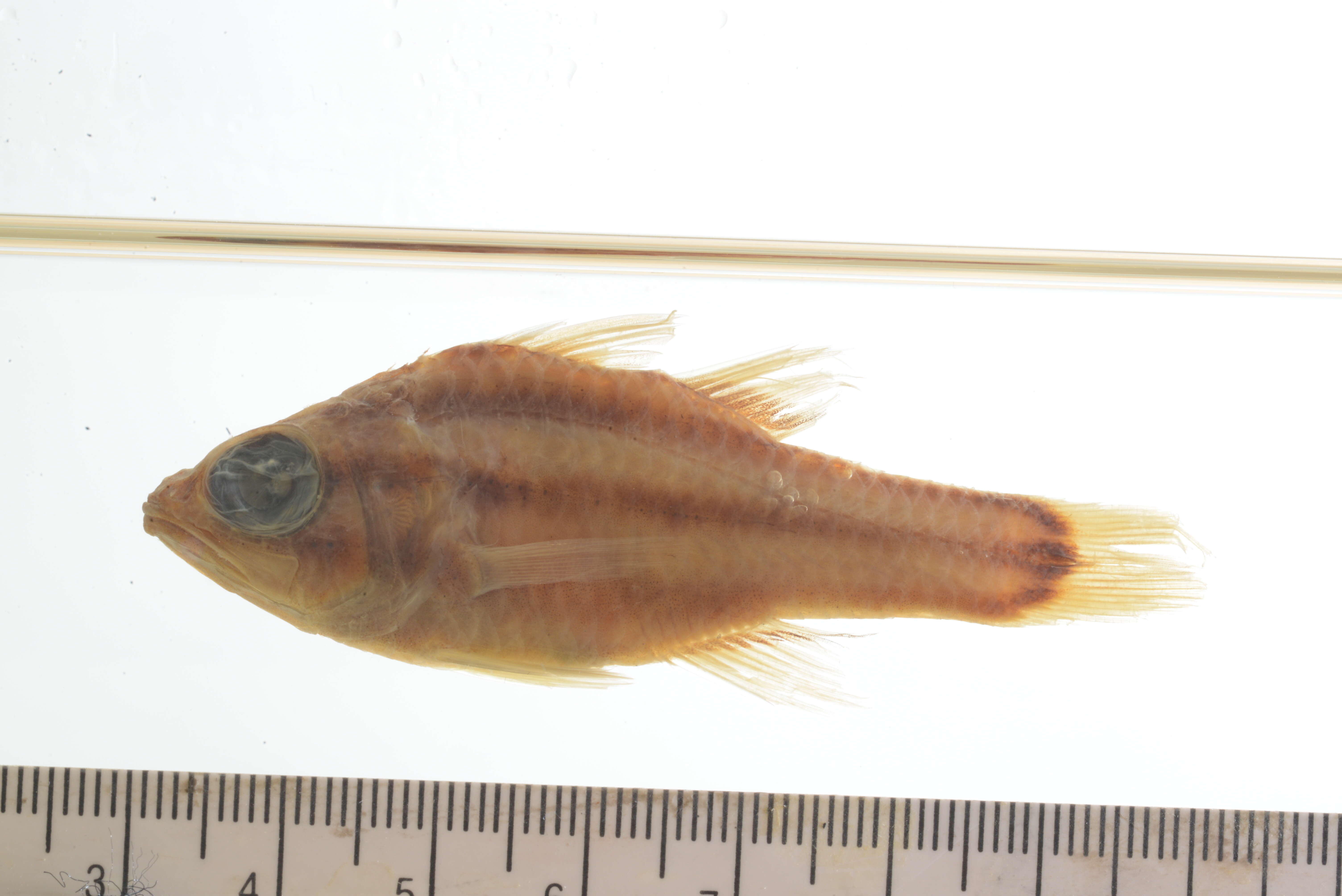
Apogon nigrofasciatus Lachner, 1953 (Blackstripe cardinalfish)
Occurs on reef flats and shallow lagoon reef, usually seen singly or in pairs under ledges or in crevices. Feed on small benthic invertebrates at night .
Apogon lateralis Valenciennes, 1832 (Ceram cardinalfish)
A euryhaline species , common in freshwater and estuaries , shallow sheltered inshore reefs or river mouths, among clumps of algae or algal covered rubble. Found in aggregations .
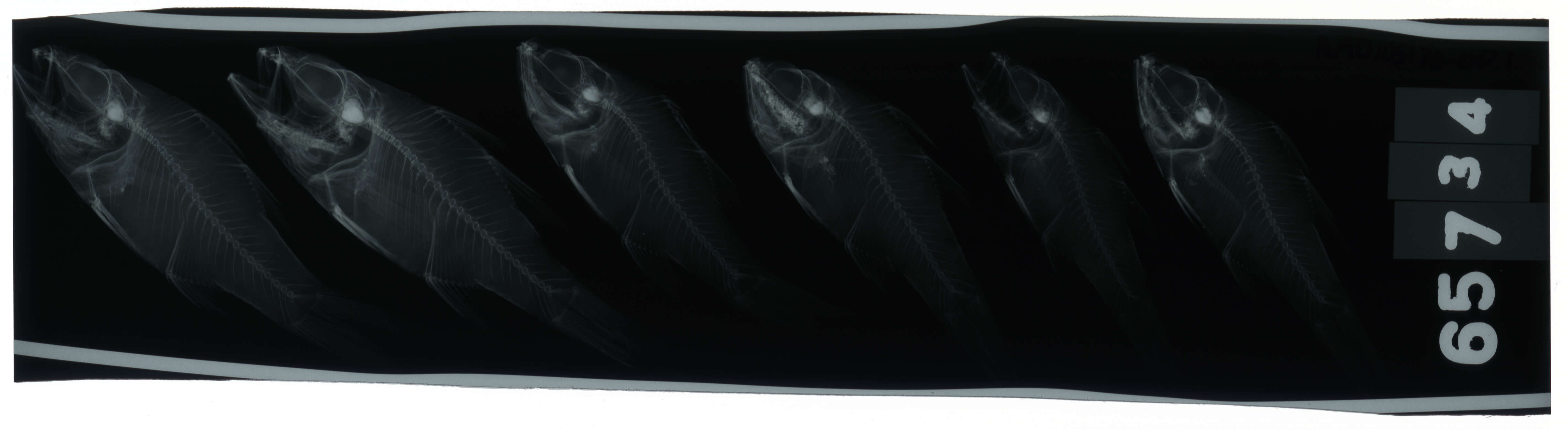
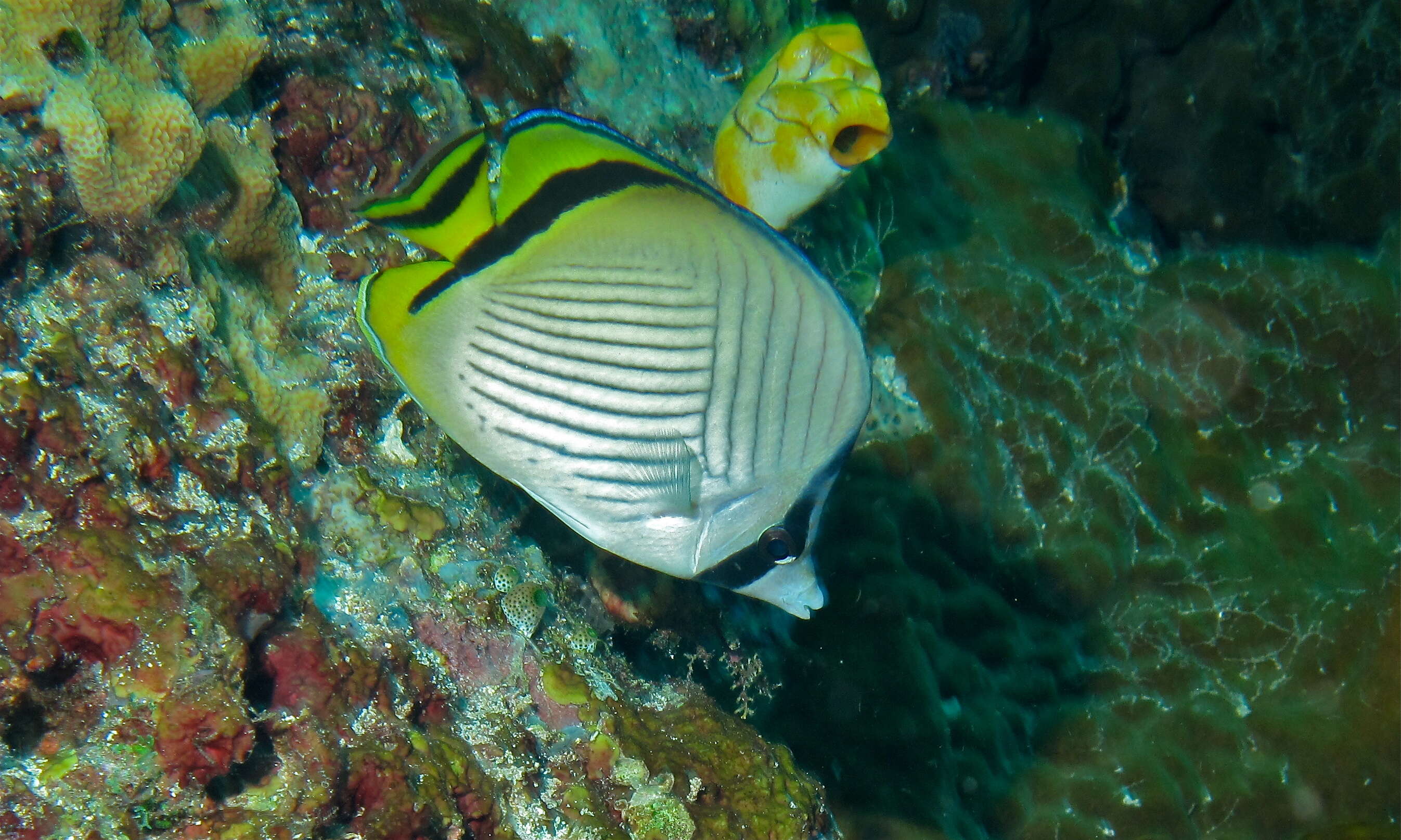
Chaetodon vagabundus Linnaeus, 1758 (Vagabond butterflyfish)
Found in reef flats, lagoon and seaward reefs and sometimes in turbid waters subject to freshwater runoff. Swim in pairs. Omnivorous, feed on algae, coral polyps, crustaceans and worms . Oviparous , monogamous . Stab...
Read More
Read More
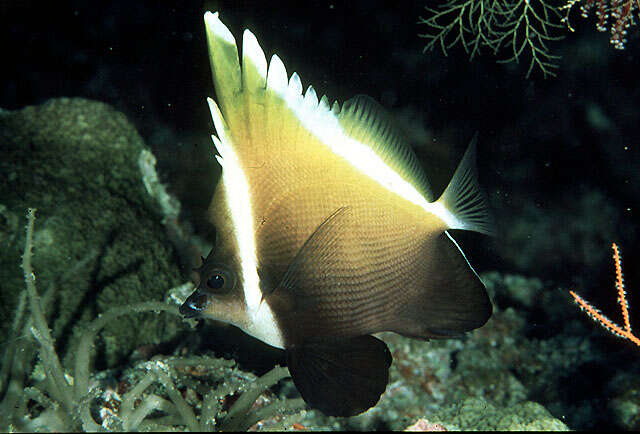
Heniochus varius (Cuvier, 1829) (Horned bannerfish)
Occur in deep lagoons and steep outer reef slopes, with mixed algae and coral growth . Solitary or in small groups. Feed on corals and other invertebrates . Oviparous . Form pairs during breeding . Maximum depth reported taken from Ref. 48636.
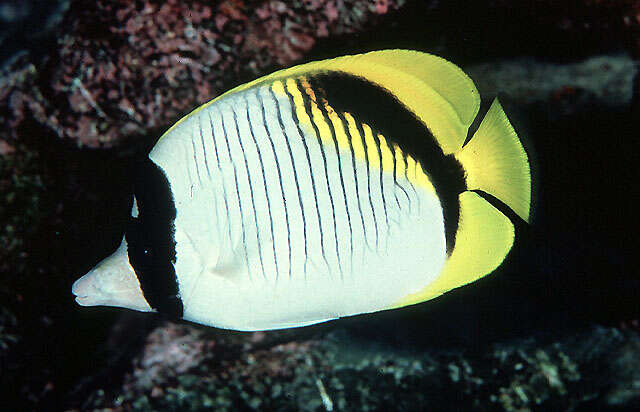
Chaetodon lineolatus Cuvier, 1831 (Line butterflyfish)
Occur in lagoon and seaward reefs, usually in pairs in coral rich areas . Benthopelagic . Feed mainly on coral polyps and anemones, but also on small invertebrates and algae . Largest species in the genus . Oviparous . Form pairs during breeding .
Chaetodon speculum Cuvier, 1831 (Mirror butterflyfish)
In coastal reef slopes rich with hydroids and anemones. Small juveniles secretive in coral thickets . Usually solitary and relatively uncommon. Feed on coral polyps and invertebrates . Oviparous , monogamous . Form pairs during breeding .
Share on Social Networks
- Facebook:

personalize your shared text as well as its destination (wall, page...) or send as a private message to a friend
- Twitter: Tweet personalize your tweet
- Google Plus:
Direct link to this dive
- Long link:
- Short link:


 We are participating today in the startup contest Techcrunch Disrupt. Support Diveboard by voting for us!
























































































Dive 2, 2 tanks aboard datu Budas. Moved to Marisa near Pearl Farm, IGACOS
Drop inlow tide on top, water cloudy some surge, swim around to left and reverse back to boat. Frogfish in exact spot on coral cultures from week before.
Multilevel