


 Beachnutts



 Philippines
-
Nº133
 Date: 2024-04-30 - 08:50
-
 Max Depth: 23.8m Duration: 74mins
Dive Location

- Temp: Surf 26°C Bottom 26°C
- Dive type : Recreational, Reef, Photo, Muck Dive
- Visibility: Bad Water: Salt
Specific gear used
- BCD: Scubapro - Glide Plus
- Boots: Orca - Dive shoes
- Camera: Olympus - TG6
- Compass:
- Computer: Oceanic - OCS
- Fins: Scubapro - Jet Fins
- Knife: Scuba MAx - folding
- Lift bag: ScubaMax - SMB
- Light: Sofirn - SD05
- Mask: Promate - Scope
- Regulator: Aqualung - Calypso
- Wet suit: Blue Ocean - Diveskin
- Weights: 3.2 kg
Dive reviews
| Overall review | ||
| Dive difficulty | ||
| Marine life quality |
Dive Shop & Buddies
 Dive with Blake Auge
 Dive buddies:
Beachnutts

Link to this spot:
- Spot:
- Country:
- Area:
- Body of water:
Dive Profile
- 1. Air
- 10L Aluminium 207 → 34 bar
- Average depth: 15.8m
Data provided by EOL.org



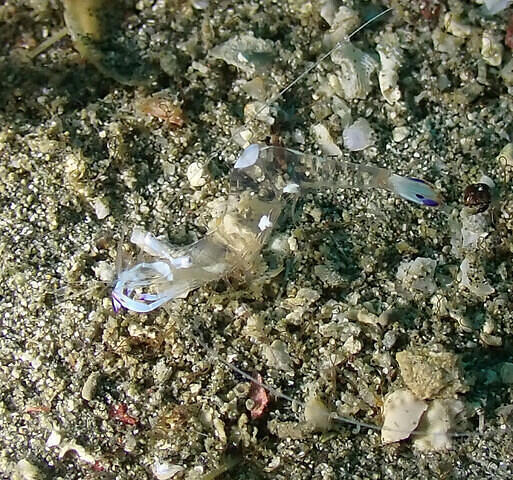
Species Identified
Amblygobius albimaculatus (Rüppell, 1830) (Butterfly goby)
Epibenthic and littoral, entering estuaries and lagoons . Usually seen in pairs, hovering a short distance above the substratum. Monogamous . t builds its burrow in sand or silty sand by moving out mouthfuls of sediment .
Xenia quinqueserta May, 1899
Parrella fusca Ginsburg, 1939 (goby)
Paraclinus mexicanus (Gilbert, 1904) (Blenny)
Halichoeres semicinctus (Ayres, 1859) (rock wrasse)
Pomacentrus simsiang Bleeker, 1856 (Blueback damsel)
Occurs singly or in small aggregations at slightly turbid areas of lagoon and coastal reefs. Feeds mainly on benthic algae.
Plectroglyphidodon sindonis (Jordan and Evermann, 1903) (Rock damselfish)
Found in very shallow water in the surge zone of exposed rocky shores . Benthopelagic . Feeds mainly on benthic algae and occasionally on small invertebrates .
Chromis limbaughi Greenfield and Woods, 1980 (Damselfish)
Pervagor randalli Hutchins, 1986 (伦氏前角鲀)
Occurs in shallow coral reefs to depths of 10 m or more.
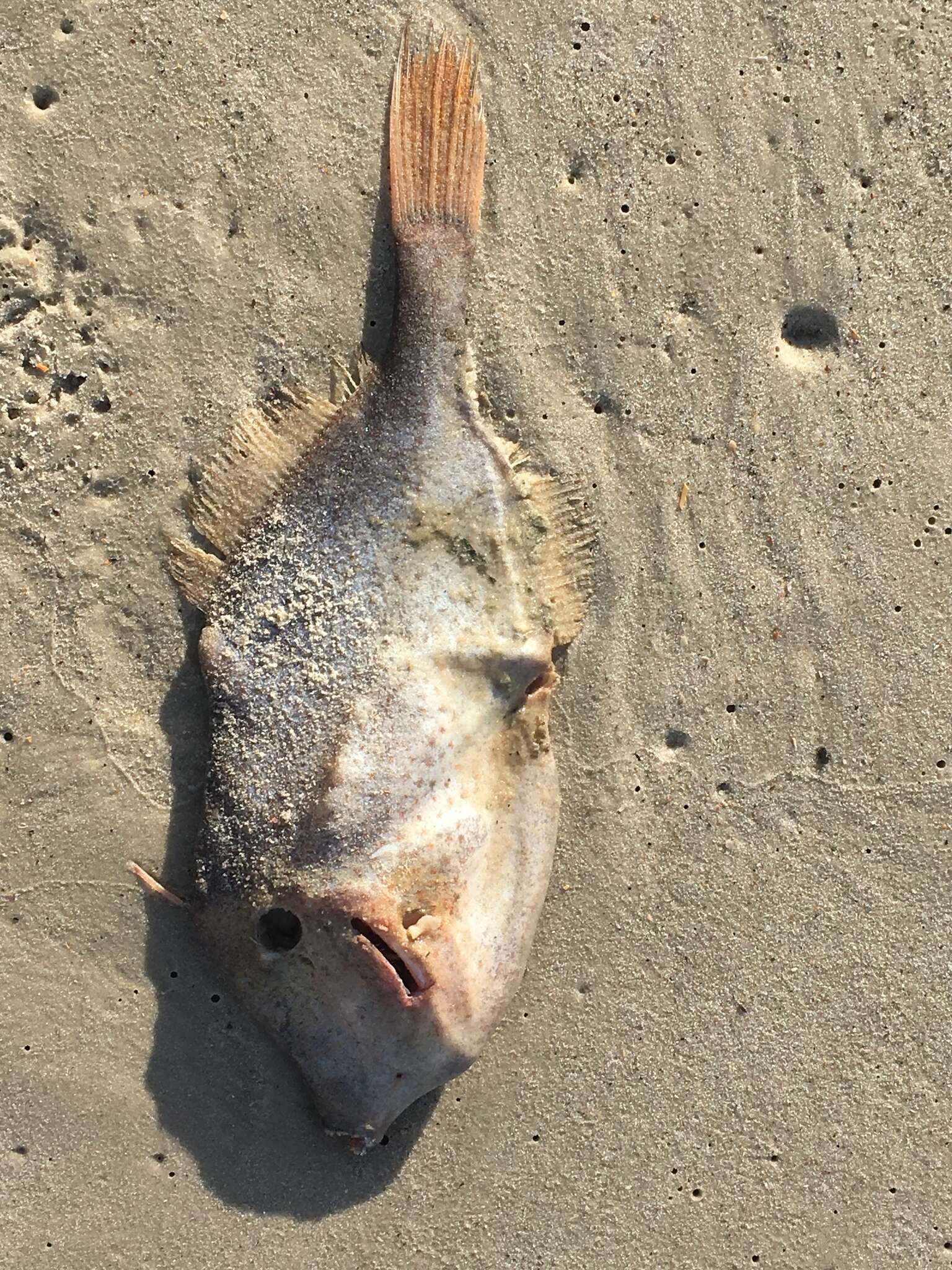
Aluterus schoepfii (Walbaum, 1792) (Orange filefish)
Usually found over bottoms with seagrass, sand, or mud . Juveniles are associated with floating Sargassum. Solitary or in pairs . Feeds on a variety of plants, including algae and seagrasses . Generally considered as trash fish, rarely consumed . Traded as an aquarium fish at Ceará, Brazil .
Stephanolepis hispidus (Linnaeus, 1766) (Common filefish)
Found on sand or mud bottoms. Associated with Sargassum . Adults feed on benthic invertebrates . Edible but generally rejected by fishers .
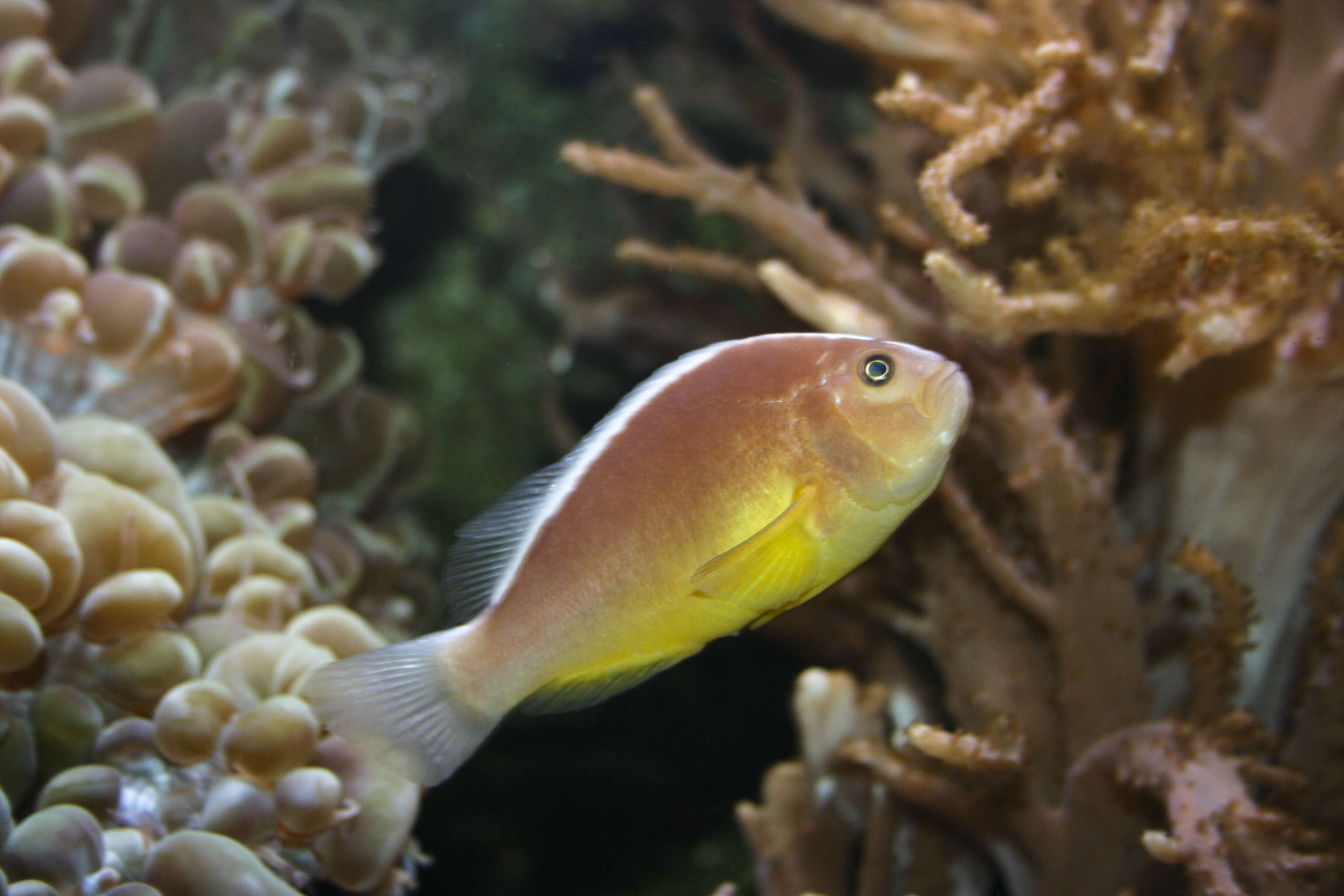
Amphiprion akallopisos Bleeker, 1853 (skunk-stripe anemonefish)
Found in shallow inshore reef habitats, often in strong current zones to about 15 m depth . Are protandrous hermaphrodites . Each pair is monogamous . Each anemone with a large female, a smaller functional male and seve...
Read More
Read More
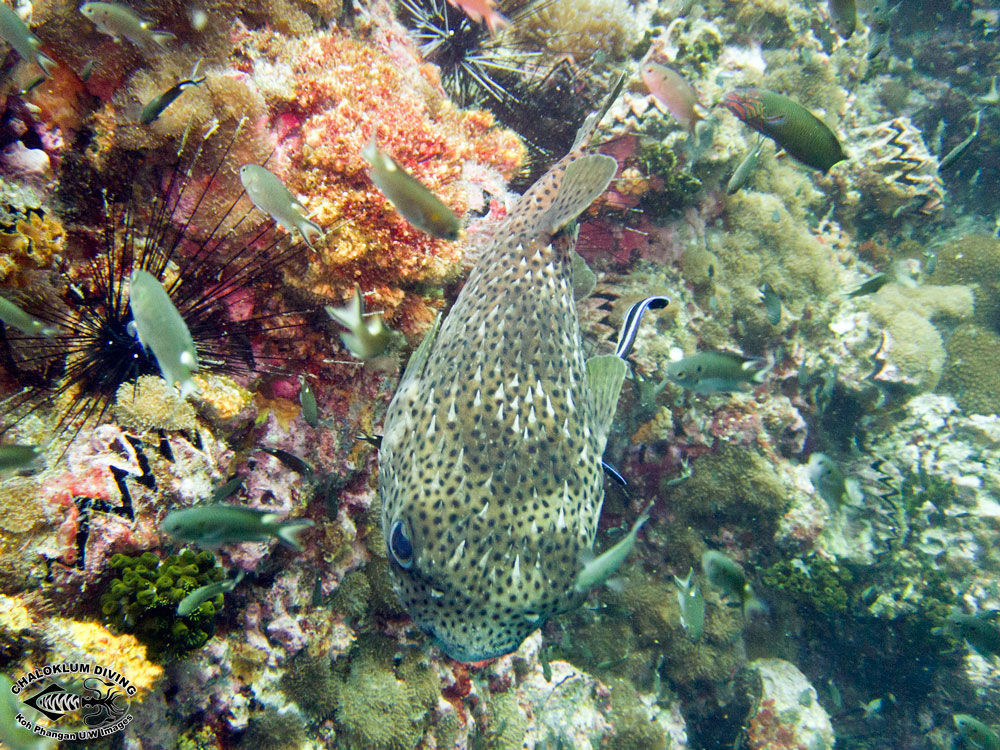
Diodon liturosus Shaw, 1804 (Black-blotched porcupinefish)
Inhabits reef edges and slopes . Hides in caves and ledges during the day and forages at night . Also found below plate-corals during the day and often deep, ranging to at least 40 meters depth. Juveniles occur in lagoo...
Read More
Read More
Diodon hystrix Linnaeus, 1758 (Spot-fin porcupinefish)
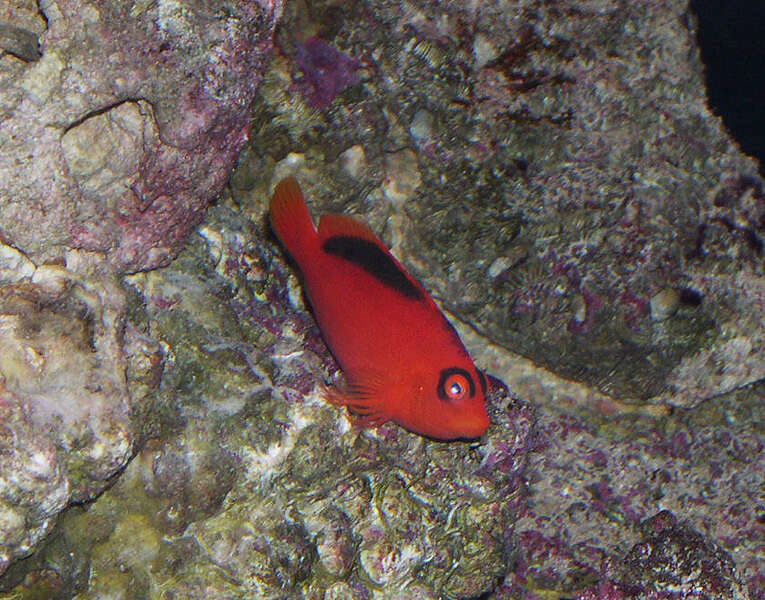
Neocirrhites armatus Castelnau, 1873 (Flame hawkfish)
Common along surge-swept reef fronts and submarine terraces to a depth of about 11 m. Usually seen hiding among branches of live corals . Retreats deep into the coral when approached . Oviparous, monogamous . Highly priced aquarium fish, requires well-oxygenated water and fades in captivity .
Share on Social Networks
- Facebook:

personalize your shared text as well as its destination (wall, page...) or send as a private message to a friend
- Twitter: Tweet personalize your tweet
- Google Plus:
Direct link to this dive
- Long link:
- Short link:


 We are participating today in the startup contest Techcrunch Disrupt. Support Diveboard by voting for us!
























































































single dive day at DBC April Showers, crap weather, cloudy, breezy, rainy, humid, surface chop
blowing silt sand whiteout at times, hard to spot, off end of pier rock to rock, back to shallows and exit
multilevel SOLO