


 Beachnutts



 Philippines
-
Nº62
 Date: 2023-02-05 - 09:12
-
 Max Depth: 26.2m Duration: 63mins
Dive Location

- Temp: Surf 25°C Bottom 25°C
- Dive type : Recreational, Reef, Photo
- Visibility: Average Water: Salt
Specific gear used
- BCD: Scubapro - Glide Plus
- Camera: Canon - Powershot SD780
- Computer: Oceanic - OCS
- Fins: Scubapro - Jet Fins
- Knife: Scuba MAx - folding
- Lift bag: ScubaMax - SMB
- Mask: Promate - Scope
- Regulator: Aqualung - Titan LX
- Wet suit: Blue Ocean - Diveskin
- Weights: 3.2 kg
Dive reviews
| Overall review | ||
| Dive difficulty | ||
| Marine life quality |
Recent Divers in Padre Burgos, Southern Leyte

Recent Pictures in Padre Burgos, Southern Leyte
Dive Shop & Buddies
 Dive with Tinting

Link to this spot:
- Spot:
- Country:
- Area:
- Body of water:
Dive Profile
- 1. Air
- 10L Aluminium 207 → 41 bar
- Average depth: 17.5m
Data provided by EOL.org






Species Identified
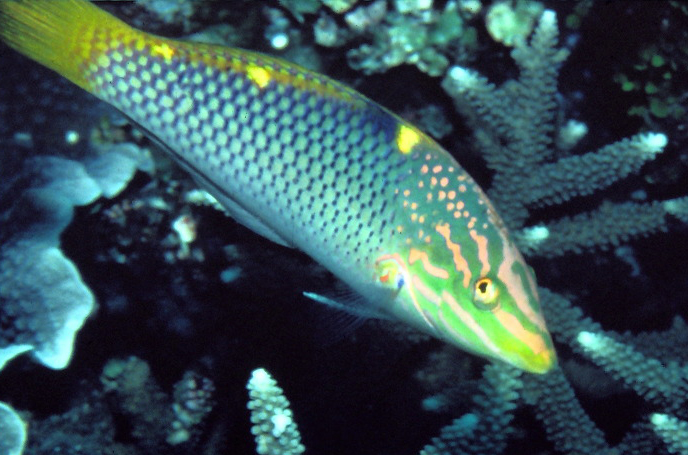
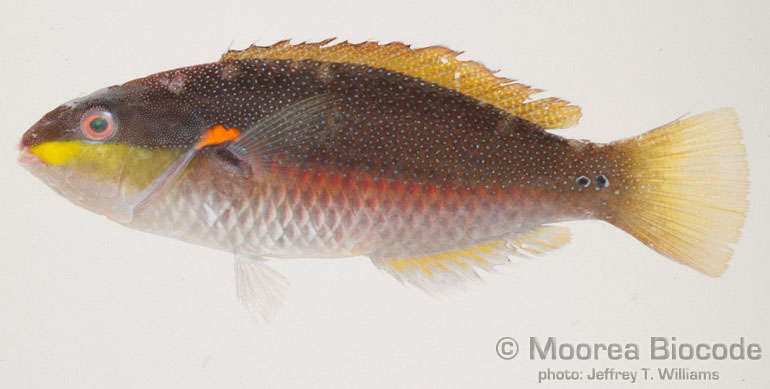
Halichoeres hortulanus (Lacepède, 1801) (Checkerboard wrasse)
Cheilinus fasciatus (Bloch, 1791) (Redbreast wrasse)
Inhabit lagoon and seaward reefs, usually in areas with mixed coral, sand, and rubble . Feed mainly on benthic, hard-shelled invertebrates, including mollusks, crustaceans and sea urchins . Young common on silty reefs, usually along edges with algae-rubble and sand .
Pseudocheilinus evanidus Jordan and Evermann, 1903 (Striated wrasse)
Found among patches of rubble or among branching coral of seaward reef slopes from 6 to at least 40 m . Benthopelagic . Rare in less than 20 m . Generally solitary and feeds on small benthic invertebrates .
Stethojulis bandanensis (Bleeker, 1851) (Red shoulder wrasse)
Stethojulis strigiventer (Bennett, 1833) (Three-ribbon wrasse)
Inhabits seagrass beds and areas of mixed sand, rubble, and algae of inner reef flats and shallow lagoons. Female length is from Ref. 9137. Swims in small aggregations over large areas. Maximum depth reported taken from Ref. 48636.
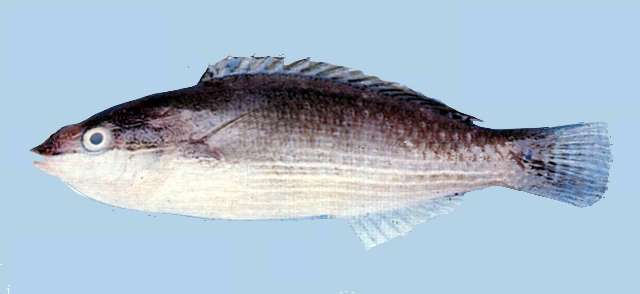
Halichoeres marginatus Rüppell, 1835 (Dusky wrasse)
Inhabit lagoon and seaward reefs, along the upper edges of coral-rich areas . Benthopelagic . Juveniles are encountered in exposed outer reef flats . Feed on a wide variety of small invertebrates as well as fish eggs.
Chaetodontoplus melanosoma (Bleeker, 1853) (Black-velvet angelfish)
An uncommon species that inhabits coastal reefs and drop-offs that are exposed to strong tidal currents . Juveniles on deep rubble slopes with rich invertebrate growth. Feeds on sponges and tunicates. Solitary or in pairs. Frequently exported through the aquarium trade .
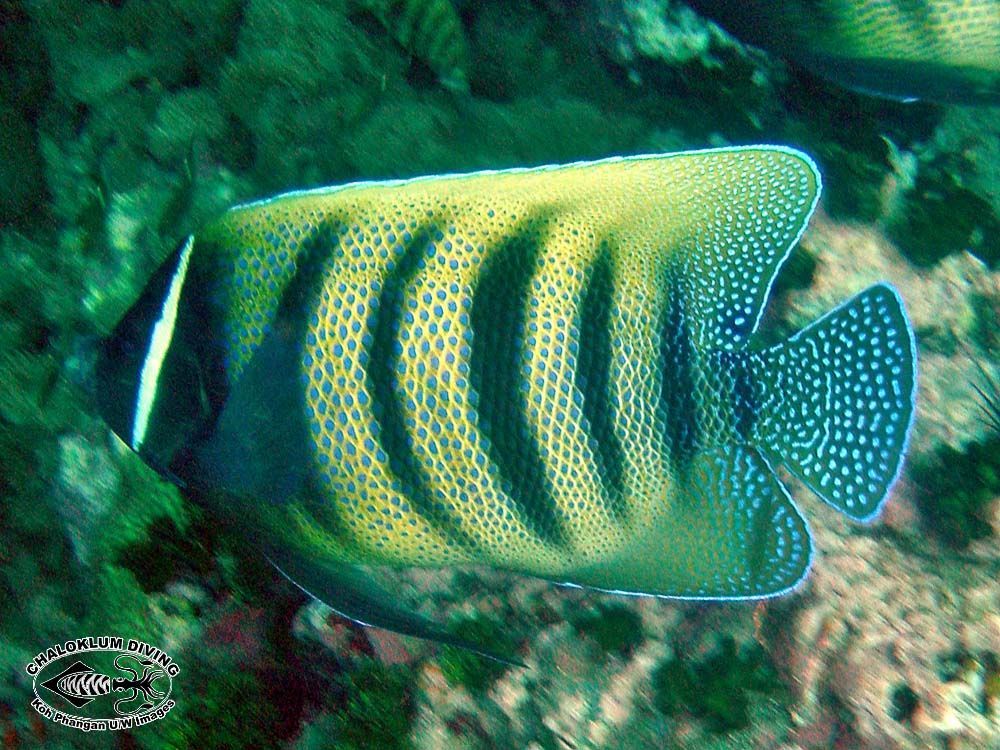
Pomacanthus sexstriatus (Cuvier, 1831) (Sixbar angelfish)
Juveniles prefer sheltered inner reefs while adults occur in areas of rich coral growth and high vertical relief of lagoon and seaward reefs. Adults semi-silty coastal to about 50 m depth, often seen in pairs . Occur sol...
Read More
Read More
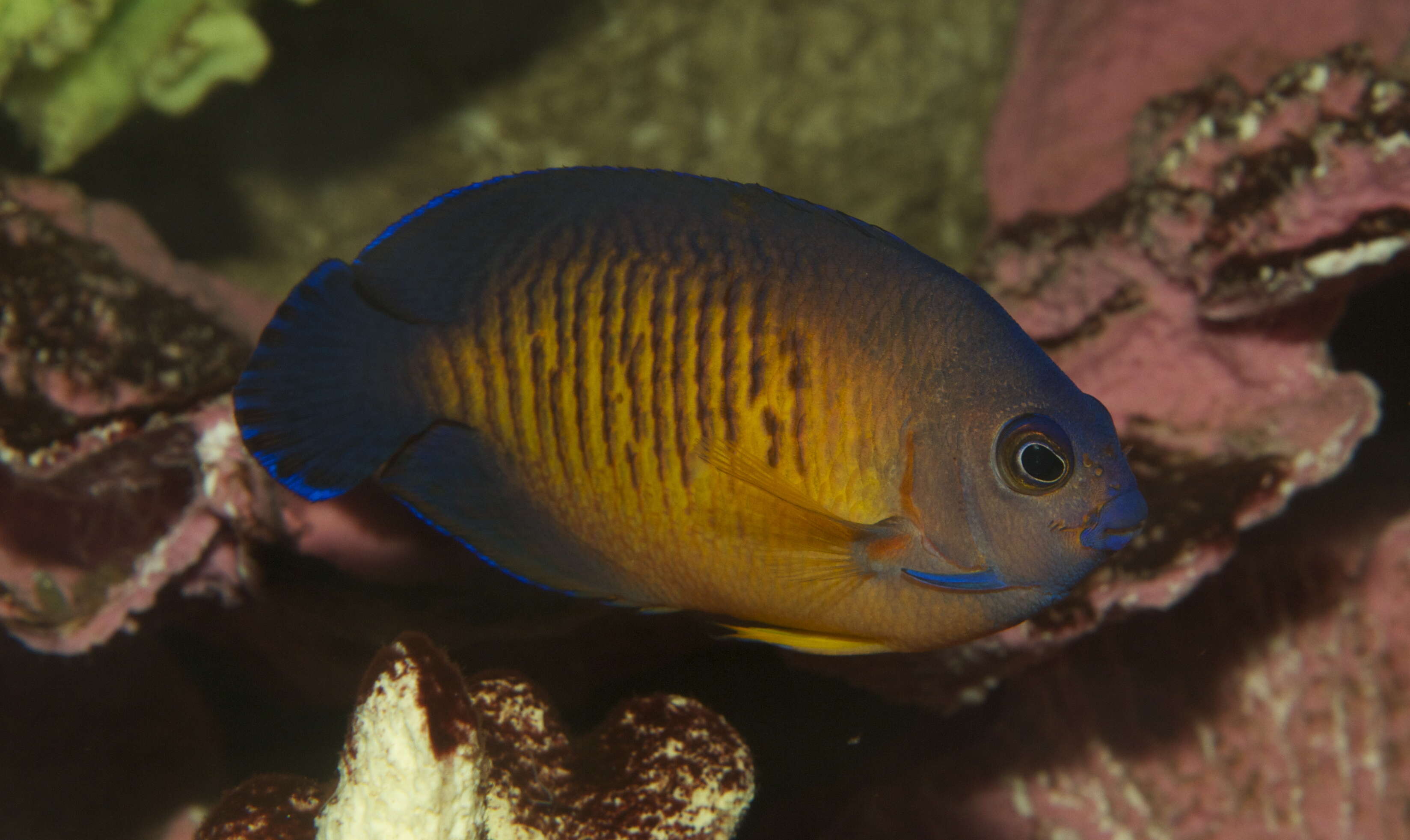
Centropyge multispinis (Playfair, 1867) (Dusky angelfish)
Inhabits coral rich and rubble areas of lagoon and seaward reefs.
Chrysogorgia excavata Kükenthal, 1908
Parisis fruticosa Verrill, 1864
Narella allmani (Wright & Studer, 1889)
Sarcophyton latum (Dana, 1846)
Chrysogorgia bracteata Bayer & Stefani, 1988
Dendronephthya pectinata Song, 1976
Eleutherobia splendens (Thomson & Dean, 1931)
Callionymus simplicicornis Valenciennes, 1837 (Simple-spined dragonet)
Inhabits sand bottoms of subtidal reef flats to a depth of at least 40 m in deep lagoons and outer reef slopes . Usually buries itself in the sand and only comes out to feed or during courtship .
Callionymus umbrithorax Fowler, 1941 (暗胸)
Minimum depth from Ref. 58018.
Synchiropus delandi Fowler, 1943 (婆罗连鳍)
Minimum depth from Ref. 58018.
Callionymus hildae Fricke, 1981 (希尔氏)
Favia pallida (Dana, 1846) (Knob coral)
zooxanthellate
Favites halicora (Ehrenberg, 1834) (Larger star coral)
zooxanthellate
Goniastrea aspera (Verrill, 1865) (Lesser star coral)
zooxanthellate
Cyphastrea chalcidicum (Forskål, 1775) (Lesser knob coral)
zooxanthellate
Psammocora profundacella Gardiner, 1898
zooxanthellate
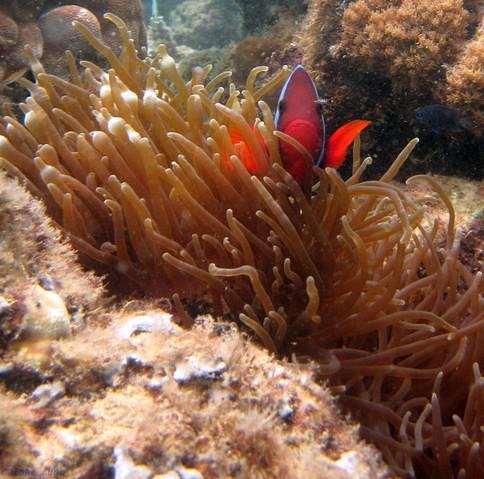
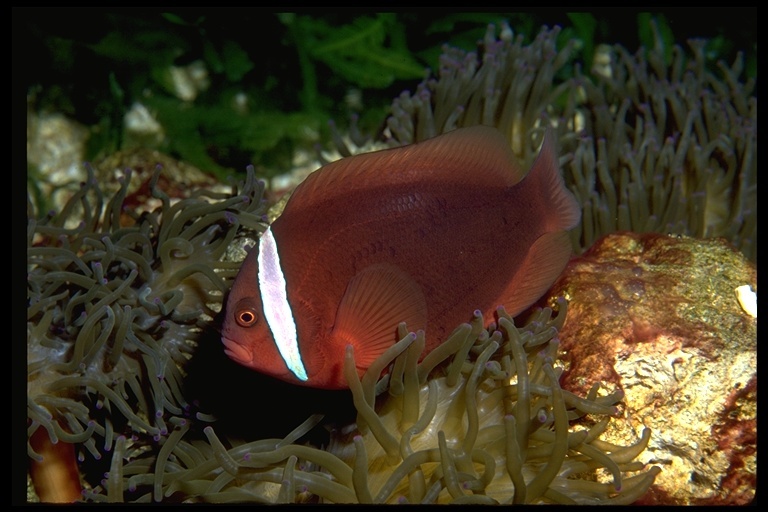
Amphiprion chrysopterus Cuvier, 1830 (Two-banded anemonefish)
Inhabits passages and outer reef slopes. Known to occur at 25°C. Feeds chiefly on planktonic copepods, algae, echiuroid and sipunculoid worms, and pelagic tunicates. Associated with the anemones: Entacmaea quadricolor,...
Read More
Read More
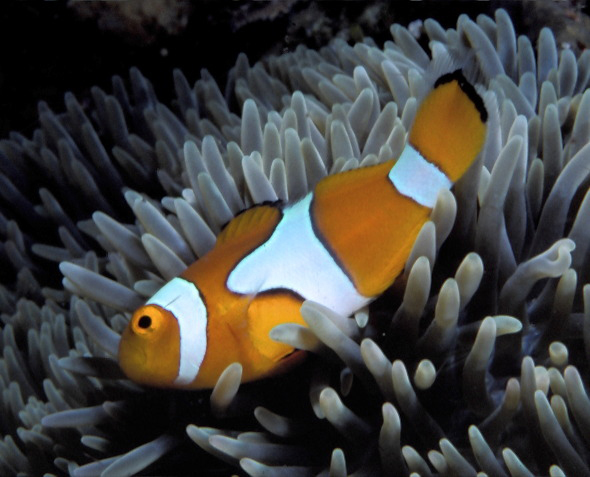
Amphiprion percula (Lacepède, 1802) (Orange clownfish)
Inhabits lagoon and seaward reefs . Each group of fish consists of a breeding pair and 0-4 non-breeders. Within each group there is a size-based hierarchy: the female is largest, the male is second largest, and the non-...
Read More
Read More
Amphiprion frenatus Brevoort, 1856 (oneband anemonefish)
Found in lagoon reefs and embayment. Monogamous , protandrous hermaphrodite . Associated with the anemone Entacmaea quadricolor . Has been reared in captivity .
Share on Social Networks
- Facebook:

personalize your shared text as well as its destination (wall, page...) or send as a private message to a friend
- Twitter: Tweet personalize your tweet
- Google Plus:
Direct link to this dive
- Long link:
- Short link:


 We are participating today in the startup contest Techcrunch Disrupt. Support Diveboard by voting for us!
























































































1st dive 2 tank boat dive Sogod Bay Medicare South and North
Coral reef
windy, overcast cloudy, heavy rain
dark water, silty, difficult photos
start of dive all functions stopped working on camera. Could not adjust to macro mode, white balance, zoom, etc.