


 Beachnutts


 Philippines
-
Nº189
 Date: 2025-12-07 - 11:20
-
 Max Depth: 23.2m Duration: 78mins
Dive Location

- Temp: Surf 26°C Bottom 26°C
- Dive type : Recreational, Reef, Photo
- Visibility: Good Water: Salt
Specific gear used
- BCD: Scubapro - Glide Plus
- Camera: Olympus - TG6
- Compass:
- Computer: Oceanic - OCS
- Fins: Scubapro - Go Rescue
- Knife: Scuba MAx - folding
- Lift bag: ScubaMax - SMB
- Light: Sofirn - SD05
- Mask: Promate - Scope
- Regulator: SEAC - Synchro
- Wet suit: Blue Ocean - Diveskin
- Weights: 3.2 kg
Dive reviews
| Overall review | ||
| Dive difficulty | ||
| Marine life quality |
Recent Divers in Samal island, Davao

Recent Pictures in Samal island, Davao
Dive Shop & Buddies
 Dive with Reymar Tano
 Dive buddies:
Blake Auge,
Maeng,
Reymar Tano,
Ipe Alino,
Beachnutts
Dive buddies:
Blake Auge,
Maeng,
Reymar Tano,
Ipe Alino,
Beachnutts

Link to this spot:
- Spot:
- Country:
- Area:
- Body of water:
Dive Profile
- 1. Air
- 10L Aluminium 207 → 21 bar
- Average depth: 15.4m
Data provided by EOL.org


Species Identified
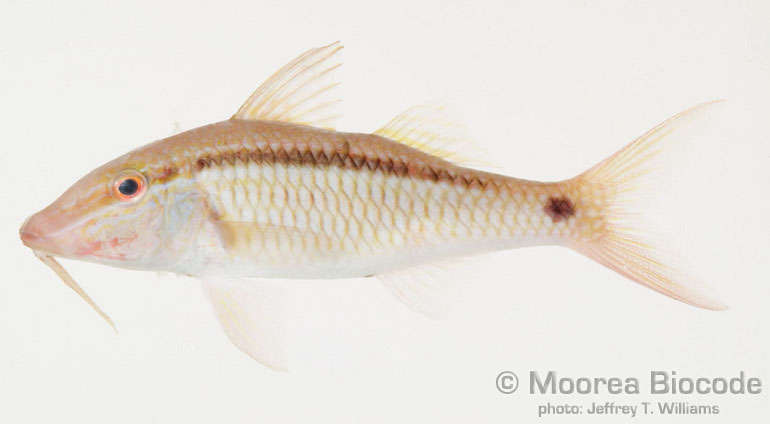
Parupeneus barberinus (Lacepède, 1801) (Dash-and-dot goatfish)
One of the most abundant species of Parupeneus . Inhabits large sand patches as well as sand and rubble areas of reef flats, and lagoon and seaward reefs to a depth of about 100 m. Forages on sand-dwelling invertebrates ...
Read More
Read More
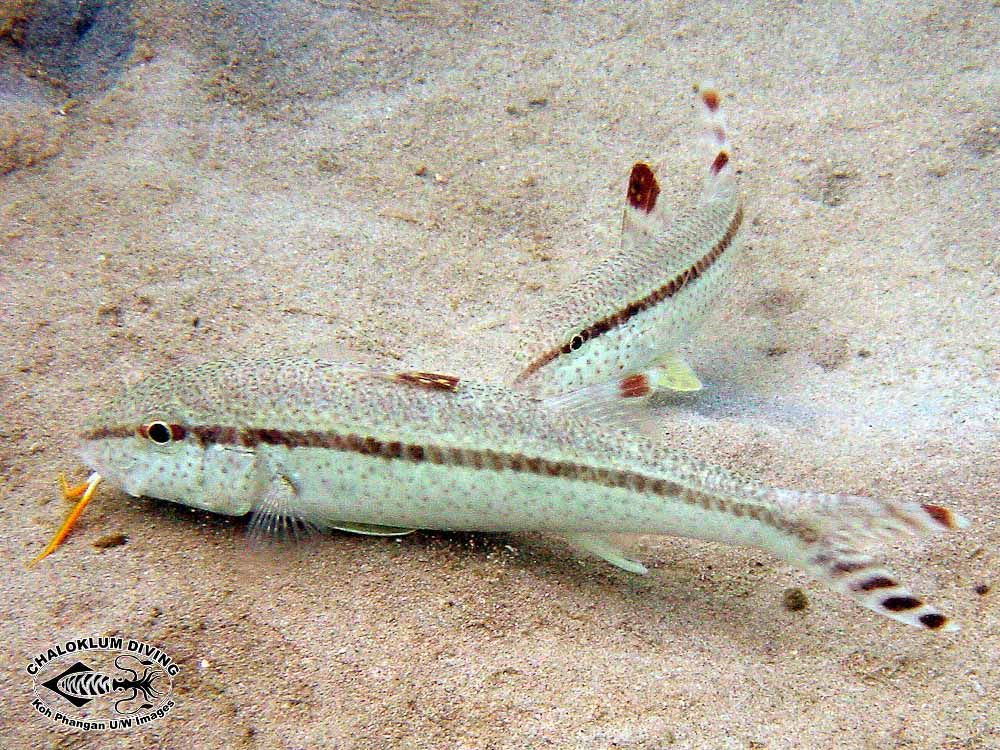
Upeneus tragula Richardson, 1846 (Freckled goatfish)
Found over sand and mud bottoms near coral reefs . Known to enter lower reaches of rivers. Generally solitary , but forms small to moderately large aggregations at all sizes . Minimum depth from Ref. 3470.
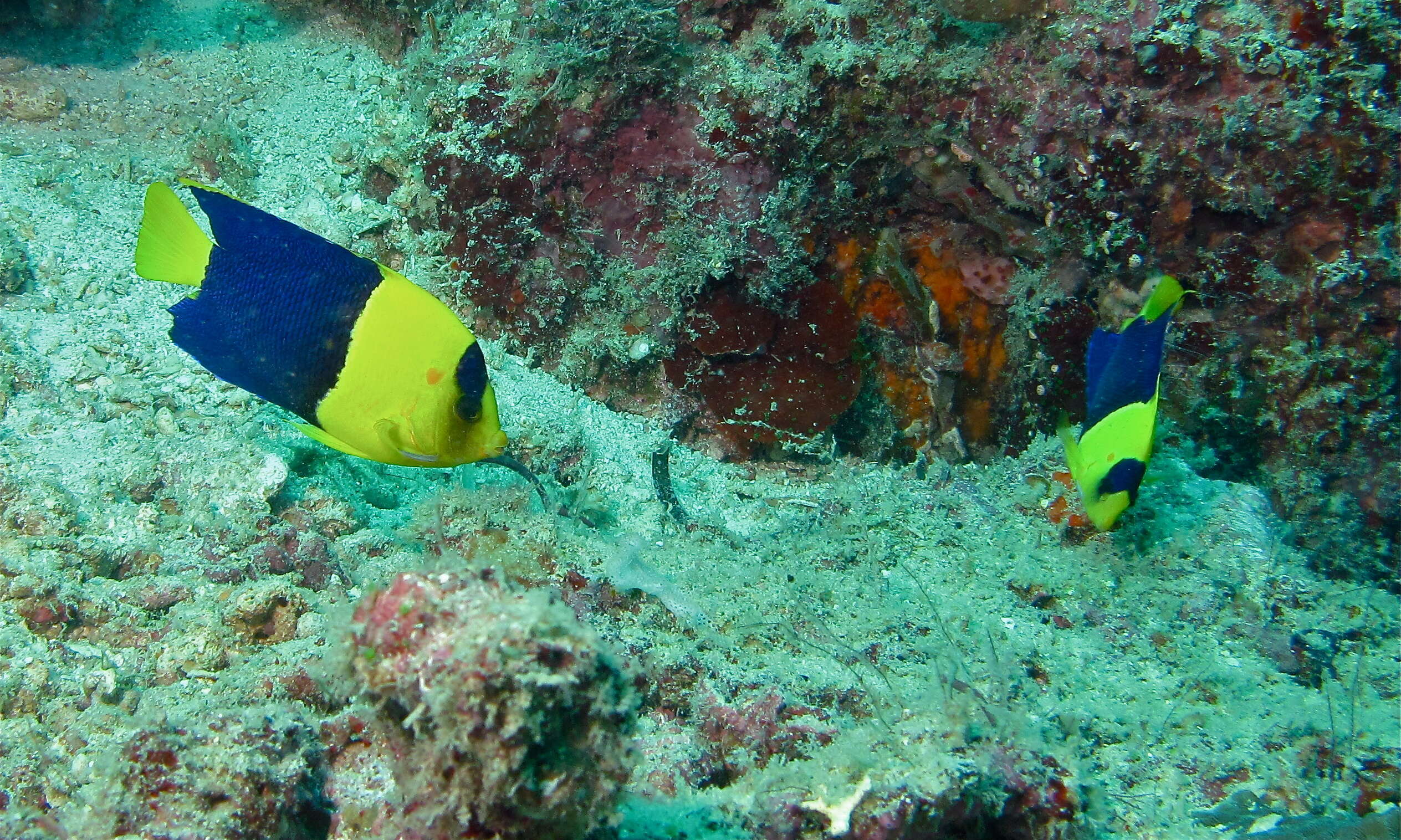
Centropyge bicolor (Bloch, 1787) (Bicolor angelfish)
Inhabits lagoon, channel, or protected seaward reef slopes, drop offs, coral and rubble areas . Usually in pairs or in small groups. Feeds on algae, small crustaceans and worms. Darts from one hiding place to the next. Commonly exported through the aquarium trade .
Centropyge eibli Klausewitz, 1963 (Blacktail angelfish)
Inhabits rocky areas of seaward reefs as well as rich coral areas . Feeds on algae; forms harems of 3-7 individuals. Frequently exported through the aquarium trade. Forms hybrids with Centropyge vrolikii in areas where ...
Read More
Read More
Pygoplites diacanthus (Boddaert, 1772) (Bluebanded angelfish)
Occurs in coral rich areas of lagoon and seaward reefs to a depth of 48 m or more. Often found in the vicinity of caves and feeds on sponges and tunicates. Solitary or in pairs, or in groups. Frequently exported through the aquarium trade . Rarely survives in the aquarium.
Centropyge flavicauda Fraser-Brunner, 1933 (Whitetail angelfish)
Inhabits coral bottoms of channels and over reef slopes . Herbivorous . Occasionally exported through the aquarium trade . Often in small loose groups on inner reefs in low patches of brittle corals and coralline algae mix that is shared by damselfishes and small wrasses .
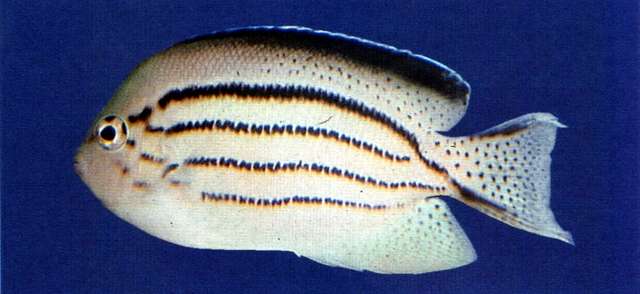
Genicanthus lamarck (Lacepède, 1802) (Blackstriped angelfish)
Inhabit shallow reef crests and deep reefs adjacent to steep slopes. Form aggregations to feed in midwater well above the bottom; harems of 3-7 individuals. Feeds on plankton. Frequently exported through the aquarium trade .
Share on Social Networks
- Facebook:

personalize your shared text as well as its destination (wall, page...) or send as a private message to a friend
- Twitter: Tweet personalize your tweet
- Google Plus:
Direct link to this dive
- Long link:
- Short link:


 We are participating today in the startup contest Techcrunch Disrupt. Support Diveboard by voting for us!
























































































1st dive 2 tanker aboard FHY
long trip to East side Samal
Mushroom and White Rock dive sites
White Rock first nice and clear good dive
multilevel, some solo