


 Beachnutts


 Philippines
-
Nº109
 Date: 2023-11-05 - 10:07
-
 Max Depth: 25m Duration: 83mins
Dive Location

- Temp: Surf 27°C Bottom 27°C
- Dive type : Recreational, Reef, Photo
- Visibility: Bad Water: Salt
Specific gear used
- BCD: Scubapro - Glide Plus
- Camera: Olympus - TG6
- Computer: Oceanic - OCS
- Fins: Scubapro - Jet Fins
- Knife: Scuba MAx - folding
- Lift bag: ScubaMax - SMB
- Light: Cree - L2
- Light: Sofirn - SD05
- Mask: Promate - Scope
- Regulator: Aqualung - Legend
- Wet suit: Blue Ocean - Diveskin
- Weights: 3.2 kg
Dive reviews
| Overall review | ||
| Dive difficulty | ||
| Marine life quality |
Recent Divers in Talicud island, Davao

Recent Pictures in Talicud island, Davao
Dive Shop & Buddies
 Dive with Blake Auge
 Dive buddies:
Ton Ton
Dive buddies:
Ton Ton

Link to this spot:
- Spot:
- Country:
- Area:
- Body of water:
Dive Profile
Data provided by EOL.org




Species Identified
Macrochiridothea lilianae Moreira, 1973A
Gigantione pratti Danforth, 1967
Mesosignum latum Birstein, 1970
Pseudocyclops rostratus Bowman and González, 1961
Limicolana dinjerra Bruce, 1986A
Ridgewayia gracilis M. S. Wilson, 1958
Suezichthys gracilis (Steindachner and Döderlein, 1887) (Slender wrasse)
Found around coral and rock patches in shallow protected sandy areas . Amphipods, small crustaceans, and polychaetes have been reported from the stomachs of Japanese specimens.
Pteragogus guttatus (Fowler and Bean, 1928) (Sneaky wrasse)
Found in sheltered inner reefs amongst broken coral and rubble. Usually seen in less than 10 m depth, staying well hidden in reefs, but sometimes swimming amongst the long-spined Diadema urchins or in thick algae coverage .
Labrichthys unilineatus (Guichenot, 1847) (Tubelip wrasse)
Inhabits shallow lagoon and semi-protected seaward reefs with high coral cover . Found near branching corals and feeds on its coral polyps, particularly staghorn Acropora .
Stethojulis balteata (Quoy and Gaimard, 1824) (Belted wrasse)
Occurs in reef flats and clear lagoon and seaward reefs . Benthopelagic . Feeds primarily on bivalves, polychaete worms, peanut worms, gastropods, various small crustaceans and foraminiferans .
Pseudocoris aurantiofasciata Fourmanoir, 1971 (Rust-banded wrasse)
Found to depths over 35 m in deep outer reef drop-offs. Forms aggregations of females and a single dominating male . Planktivores .
Thalassoma pavo (Linnaeus, 1758) (Ornate wrasse)
Inhabits coastal waters near rocks and eel-grass beds. Usually solitary, sometimes in small groups. Feeds on small mollusks and crustaceans . Protogynous hermaphrodite, with distinct sexual dichromatism . Eggs are pelagic .
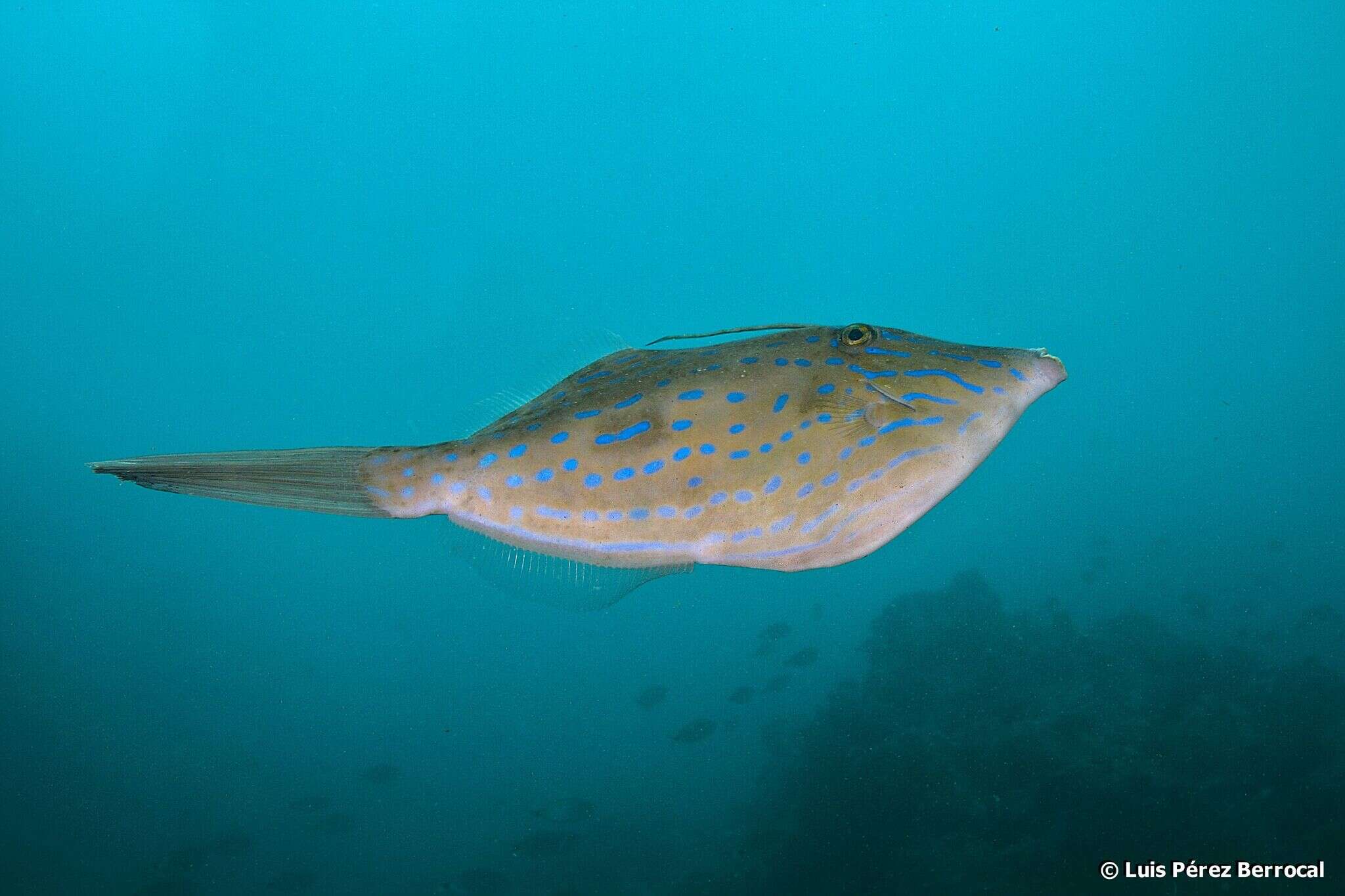
Aluterus heudelotii Hollard, 1855 (Dottered filefish)
Aluterus monoceros (Linnaeus, 1758) (Unicorn leatherjacket)
Occasionally in shallow water by steep drop-offs. Solitary or in pairs, occasionally in groups of five or six, at less than 10 m depth. Juveniles are pelagic, seen under floating objects . Benthopelagic . Adults and ju...
Read More
Read More
Paramonacanthus frenatus (Peters, 1855) (Wedgetail filefish)
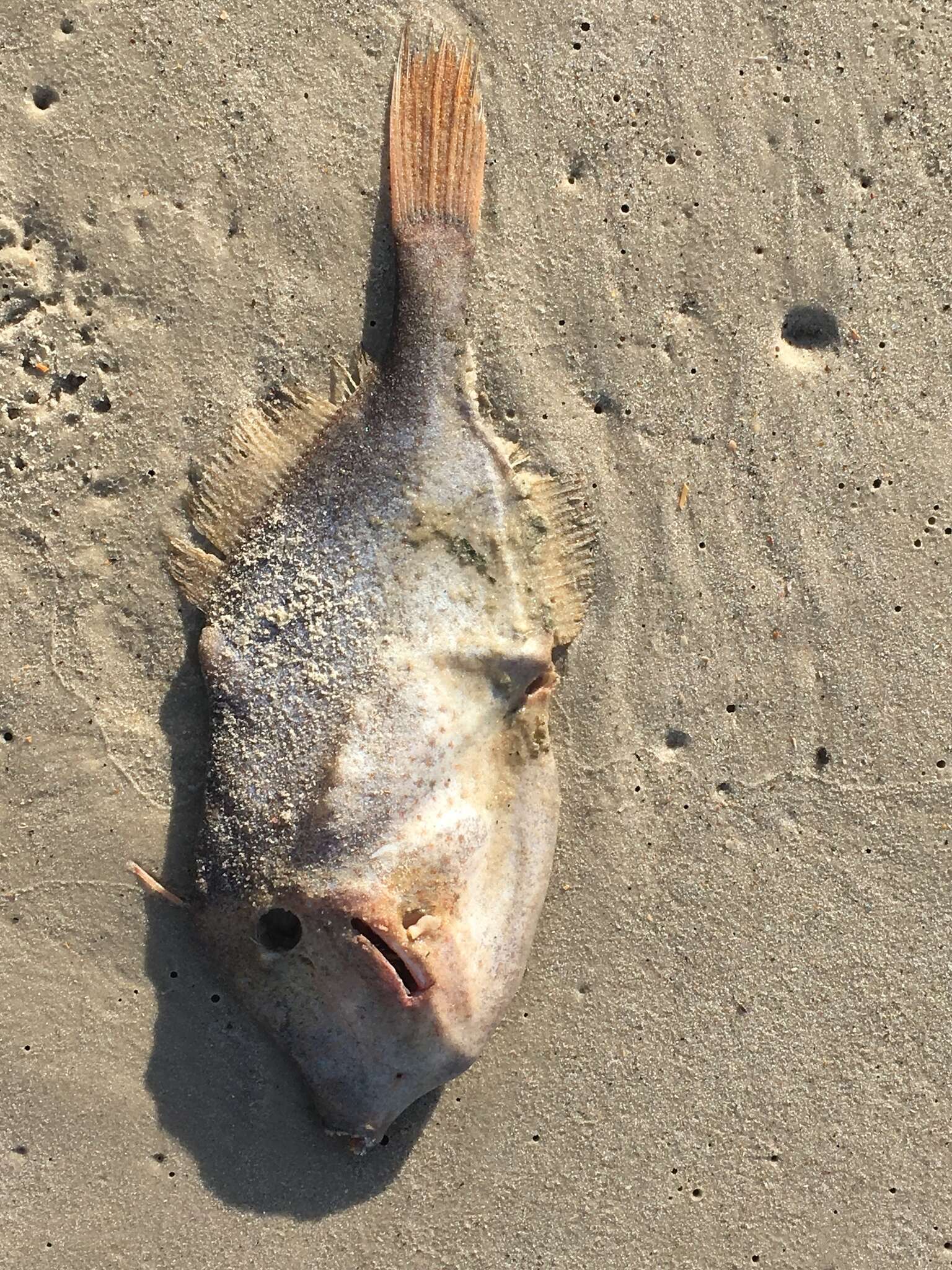
Aluterus schoepfii (Walbaum, 1792) (Orange filefish)
Usually found over bottoms with seagrass, sand, or mud . Juveniles are associated with floating Sargassum. Solitary or in pairs . Feeds on a variety of plants, including algae and seagrasses . Generally considered as trash fish, rarely consumed . Traded as an aquarium fish at Ceará, Brazil .
Brissus brissus (Leske, 1778)
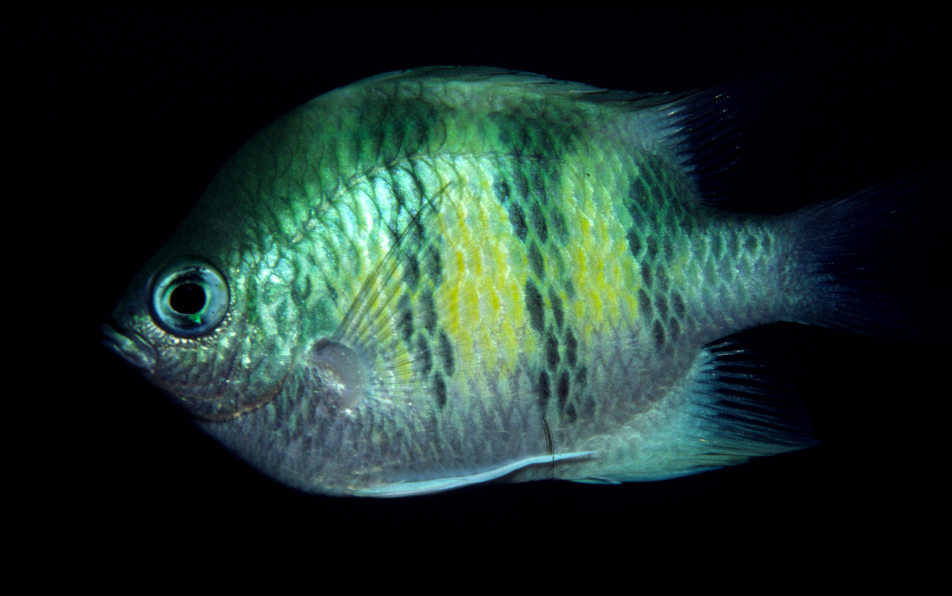
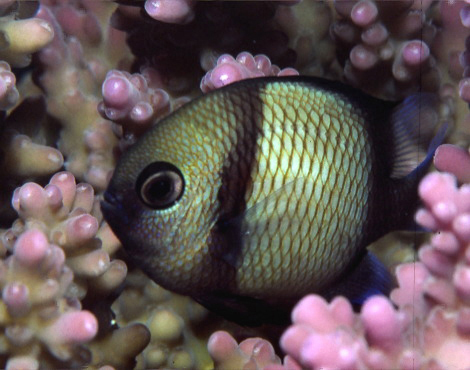
Amblyglyphidodon curacao (Bloch, 1787) (Black-snouted sergeant-major)
Inhabits lagoons, coastal embayments, reef passages and outer reefs. Juveniles often found among Sarcophyton and Sinularia soft corals. Feeding aggregations are frequently observed over growths of the staghorn coral Acro...
Read More
Read More
Dascyllus reticulatus (Richardson, 1846) (twostriped damselfish)
Occurs in outer lagoon and seaward reefs. Inhabits branching coral heads, particularly Pocillopora eydouxi. Forms schools, often in silty habitats . Male prepares a nest by cleaning with its mouth a rock or coral surface where the female will attach the eggs .
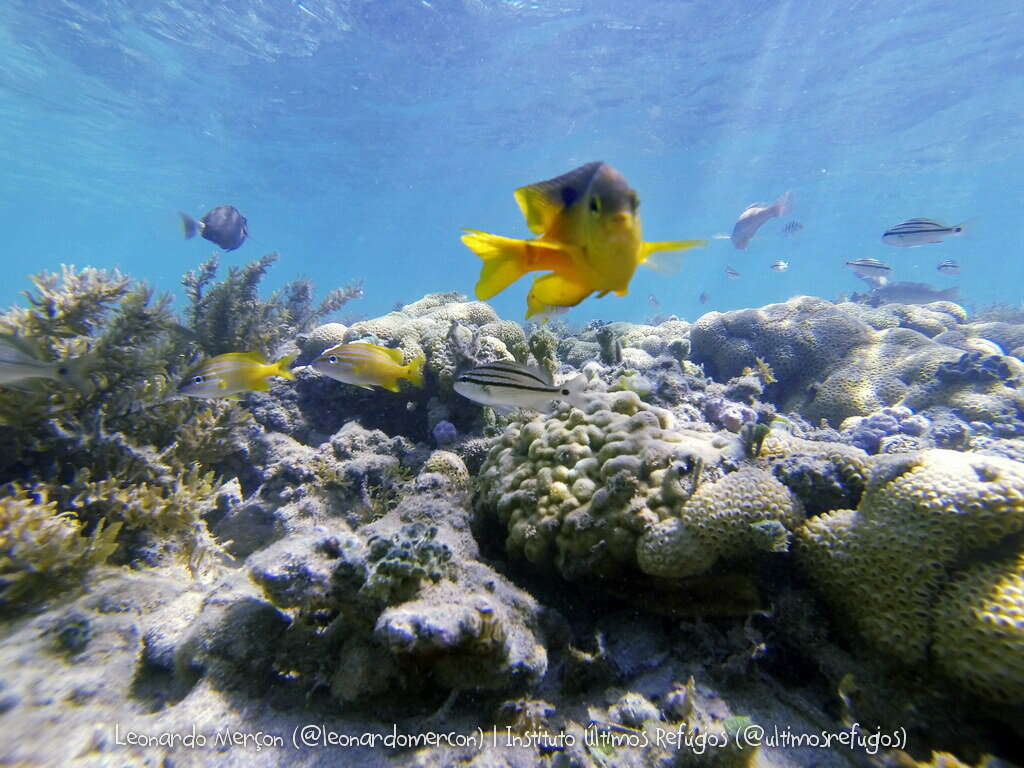
Stegastes variabilis (Castelnau, 1855) (yellow demoiselle)
Inhabits inshore and offshore coral reefs. Adults feed mainly on benthic algae but also on sponges, ascidians and anemones while juvenile feed on invertebrates like harpacticoid copepods and nemerteans . Often solitary ....
Read More
Read More
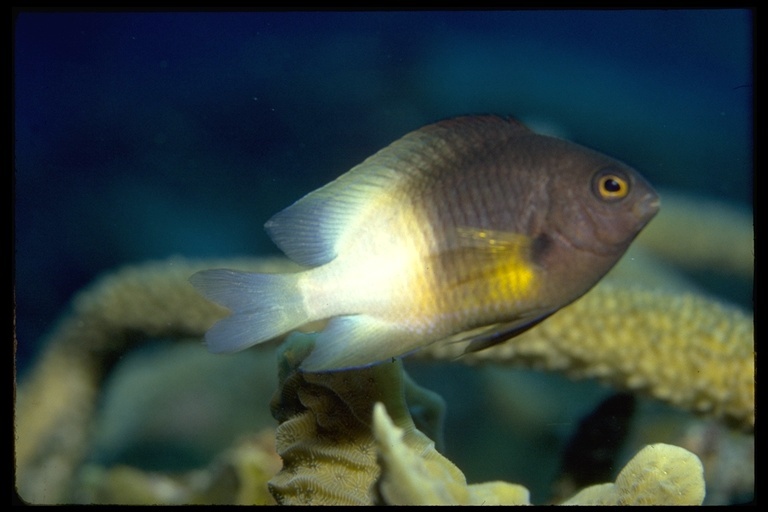
Stegastes partitus (Poey, 1868) (bicolor damselfish)
Inhabits shallow coral reefs and isolated patch reefs in deeper water. Feeds primarily on algae but also on polychaetes, hydroids, copepods and ascidians . Aggressively territorial but only around a small area . Taken incidentally in traps and small-meshed beach nets .
Stegastes planifrons (Cuvier, 1830) (threespot damselfish)
Inhabits inshore and offshore coral reefs. Found within caves at night .Often found in tangles of staghorn coral; anywhere there is abundant algae on reefs . Feeds mainly on algae but also on harpacticoid copepods, small...
Read More
Read More
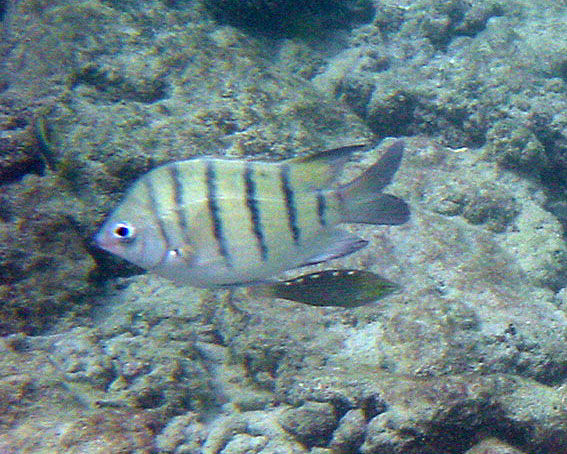
Abudefduf bengalensis (Bloch, 1787) (Bengal sergeant)
Occurs singly or in small groups in inshore reef and lagoon environments. Feeds on algae, gastropods, and small crabs. Highly territorial .
Pomachromis exilis (Allen and Emery, 1973) (Slender reef-damsel)
Inhabits lagoon and seaward reefs. A planktivorous species .
Share on Social Networks
- Facebook:

personalize your shared text as well as its destination (wall, page...) or send as a private message to a friend
- Twitter: Tweet personalize your tweet
- Google Plus:
Direct link to this dive
- Long link:
- Short link:


 We are participating today in the startup contest Techcrunch Disrupt. Support Diveboard by voting for us!
























































































1st dive 2 tanker aboard Datu Budas, Talicud Island
Recent heavy rains, mostly cloudy some sun, humid, hot, mostly calm water. #rd Rock @ Coral Gardens.
terrible viz underwater, silty, chalky, whale snot
Drop in on ledge dive to depth with group, hard to spot anything. Back to boat