


 Beachnutts


 Philippines
-
Nº87
 Date: 2023-07-02 - 10:38
-
 Max Depth: 28m Duration: 72mins
Dive Location

- Temp: Surf 28°C Bottom 28°C
- Dive type : Recreational, Drift, Reef, Photo, Wall
- Visibility: Bad Water: Salt
Specific gear used
- BCD: Scubapro - Glide Plus
- Boots: Orca - Dive shoes
- Camera: Olympus - TG6
- Computer: Oceanic - OCS
- Fins: Scubapro - Jet Fins
- Knife: Scuba MAx - folding
- Lift bag: ScubaMax - SMB
- Mask: Promate - Scope
- Regulator: Aqualung - Titan LX
- Wet suit: Blue Ocean - Diveskin
- Weights: 3.2 kg
Dive reviews
| Overall review | ||
| Dive difficulty | ||
| Marine life quality |
Recent Divers in Samal island, Davao

Recent Pictures in Samal island, Davao
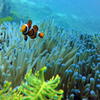
Dive Shop & Buddies
 Dive with Blake Auge
 Dive buddies:
Ton Ton
Dive buddies:
Ton Ton

Link to this spot:
- Spot:
- Country:
- Area:
- Body of water:
Dive Profile
- 1. Air
- 10L Aluminium 207 → 28 bar
- Average depth: 18.7m
Data provided by EOL.org
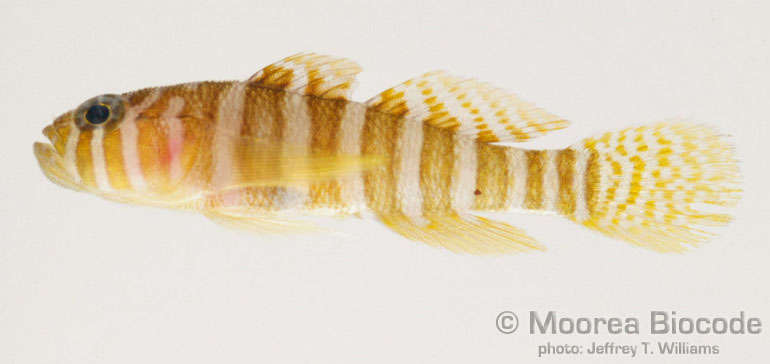
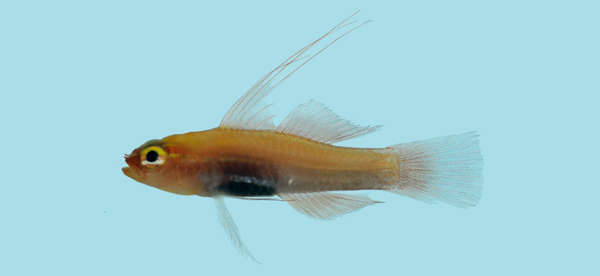
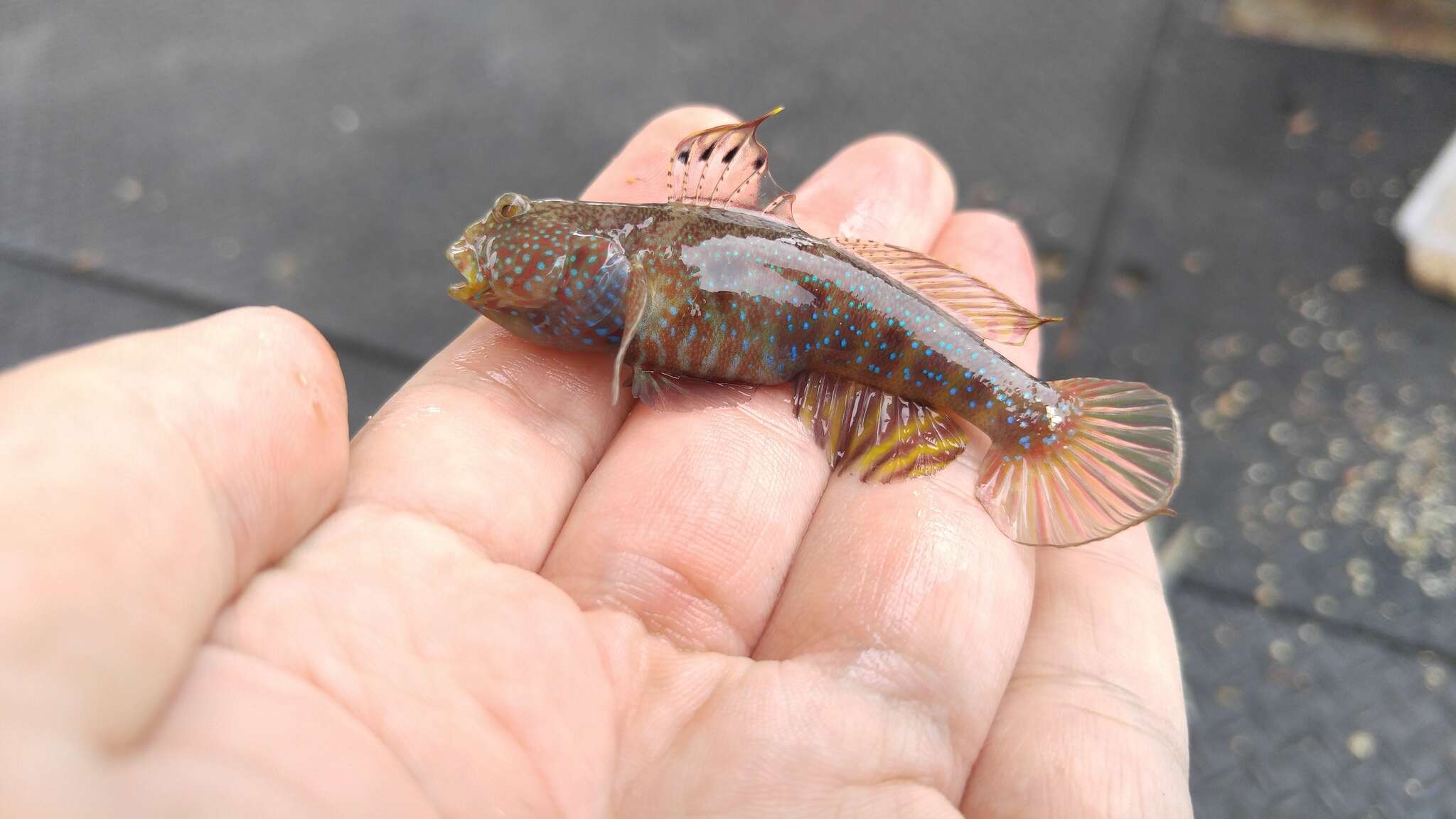
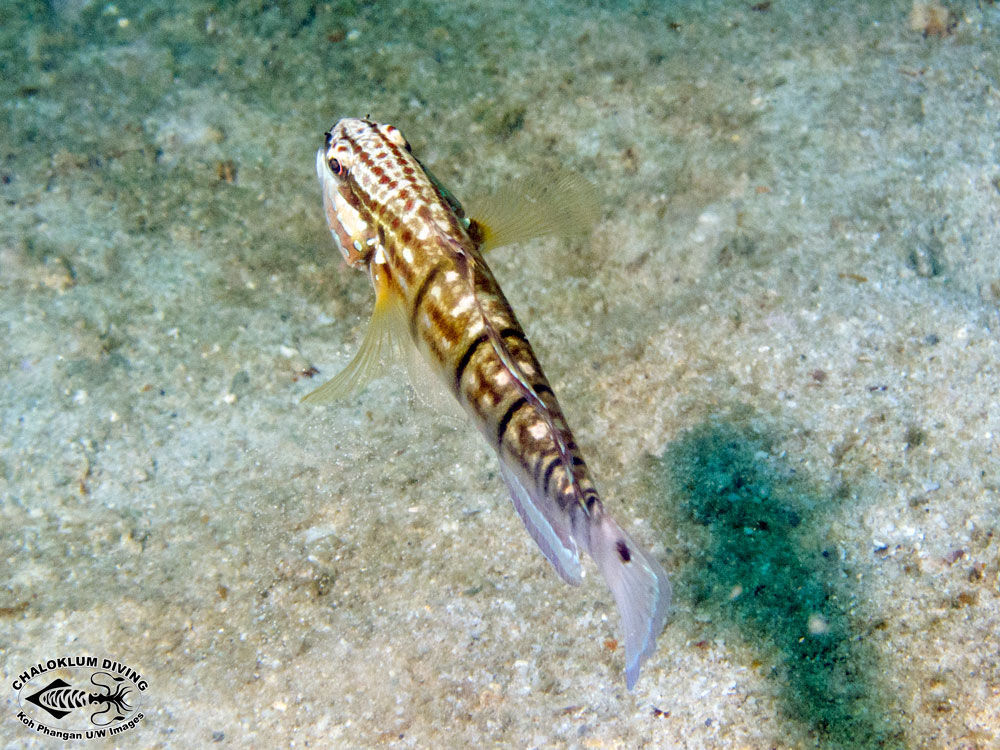







Species Identified
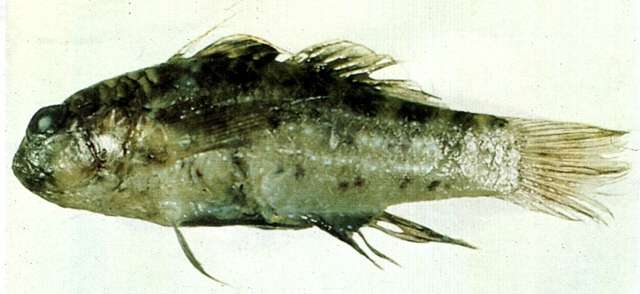
Asterropteryx semipunctata Rüppell, 1830 (Starry goby)
Found on algal-coated reef rock and rubble of inner flats and turbid lagoons . Takes refuge in burrows or holes in the reef . Benthic .
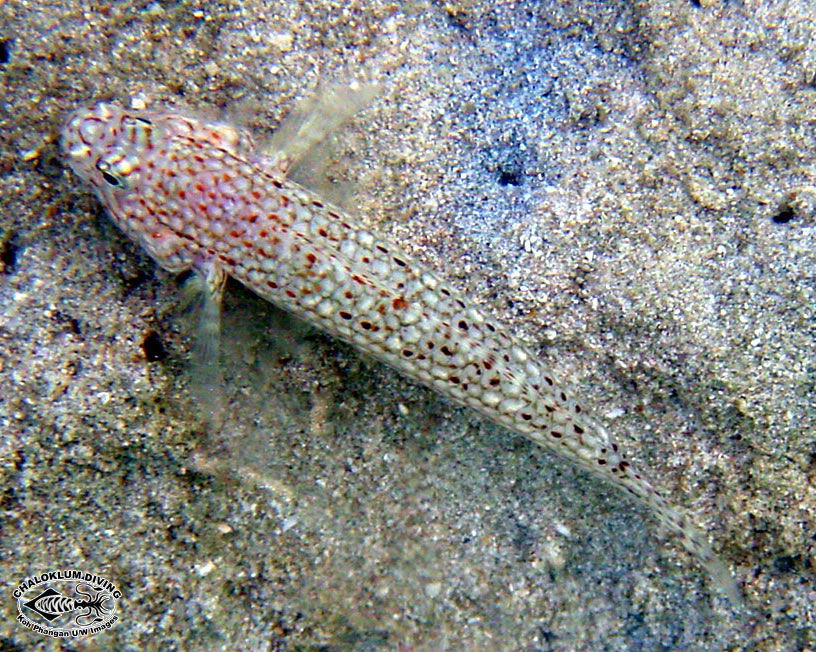
Istigobius ornatus (Rüppell, 1830) (ornate goby)
A common species that inhabits mangroves and silty, rocky areas; occasionally found in rubble reef areas. Only single individuals were observed; many individuals found scattered over a small area . Found primarily in low...
Read More
Read More
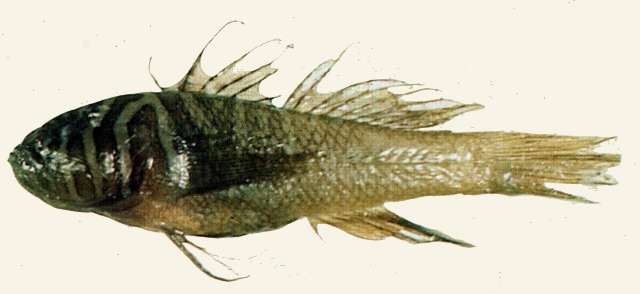
Priolepis semidoliata (Valenciennes, 1837) (Girdled goby)
Benthic in caves and crevices of seaward reefs .
Priolepis cinctus (Regan, 1908) (Girdled goby)
Eviota pellucida Larson, 1976 (Pellucida pygmy goby)
Inhabits coastal reefs and sheltered lagoons with rich coral growth. Found in small groups among Acropora thickets in 6 to 20 meters depth . Collected from 3m to at least 12 m depth .
Cryptocentrus caeruleomaculatus (Herre, 1933) (Blue-speckled prawn-goby)
Occurs in shallow lagoons and coastal bays, usually in areas with runoffs, Ref. 48637.
Amblygobius phalaena (Valenciennes, 1837) (Banded goby)
Adults inhabit coastal reefs and lagoons on sand and rubble margins of algal reefs and sometimes near seagrass beds . Feed by sifting mouthfuls of sand and expelling it through the gills, to capture small invertebrates, o...
Read More
Read More
Cheilinus trilobatus Lacepède, 1801 (Tripletail wrasse)
Adults inhabit lagoon and seaward reefs at depths of 1 to over 30 m, and relatively common along shallow reef margins with good coral cover . Usually solitary . Feed mainly on shelled benthic invertebrates such as mollus...
Read More
Read More
Thalassoma lunare (Linnaeus, 1758) (Blue wrasse)
Occurs in the upper portions of lagoon and coastal reefs, and in protected seaward reefs . Enters estuaries . Usually found on upper portions of ledges and heads . Feeds mainly on small benthic invertebrates and fish eggs . A protogynous hermaphrodite .
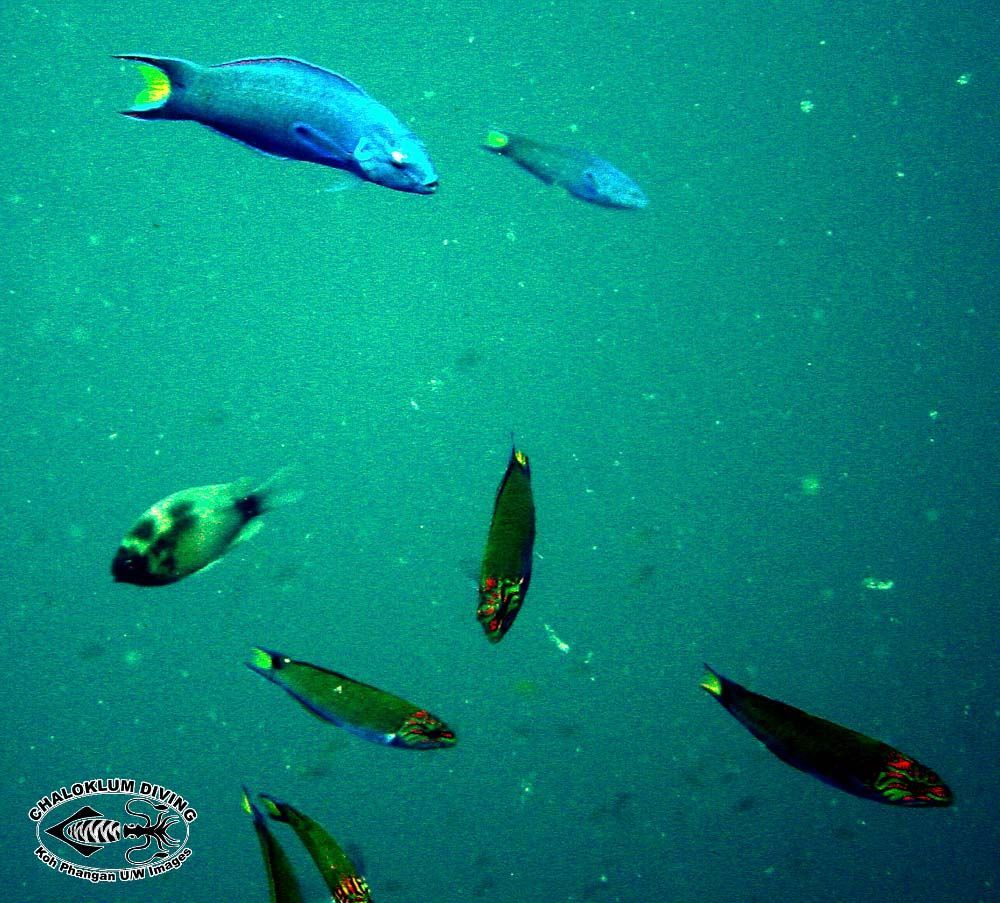
Pseudocheilinus evanidus Jordan and Evermann, 1903 (Striated wrasse)
Found among patches of rubble or among branching coral of seaward reef slopes from 6 to at least 40 m . Benthopelagic . Rare in less than 20 m . Generally solitary and feeds on small benthic invertebrates .
Halichoeres prosopeion (Bleeker, 1853) (Twotone wrasse)
Inhabits lagoon and seaward reefs, in coral-rich areas . Also found along drop-offs on the bottom of large caves. Usually seen solitary .
Halichoeres marginatus Rüppell, 1835 (Dusky wrasse)
Inhabit lagoon and seaward reefs, along the upper edges of coral-rich areas . Benthopelagic . Juveniles are encountered in exposed outer reef flats . Feed on a wide variety of small invertebrates as well as fish eggs.
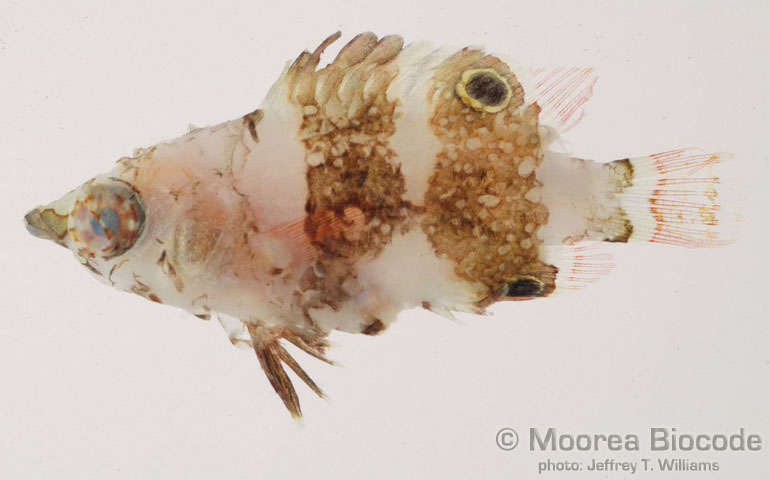
Wetmorella nigropinnata (Seale, 1901) (Sharpnose wrasse)
Inhabits lagoon and seaward reefs, in caves and crevices . A secretive species. Feeds on benthic invertebrates .
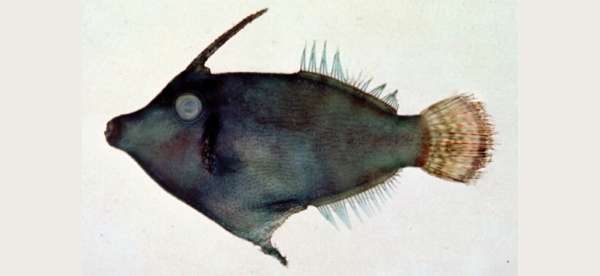
Pervagor melanocephalus (Bleeker, 1853) (Redtail filefish)
Inhabits clear coastal reefs and protected outer reef habitats with rich invertebrate growth . Prefers deeper reefs. Often in pairs . Secretive, adults are usually in pairs .
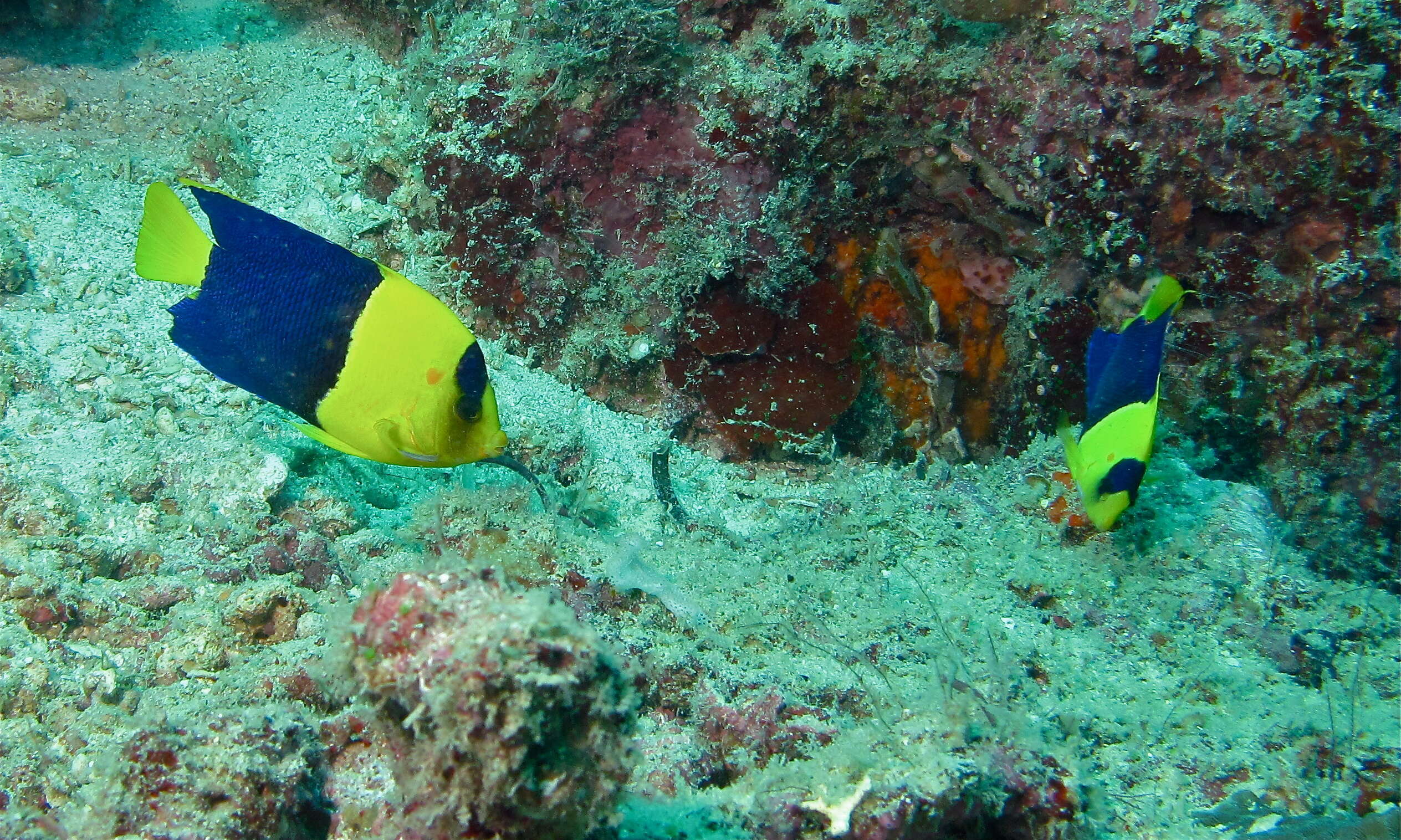
Centropyge multifasciata (Smith & Radcliffe, 1911) (Barred angelfish)
Inhabits ledges and caves and crevices of steep outer reef slopes; occasionally found in clear lagoon reefs. It is secretive and rarely goes out more than a few centimeters from an escape hole . Forms pairs or small grou...
Read More
Read More
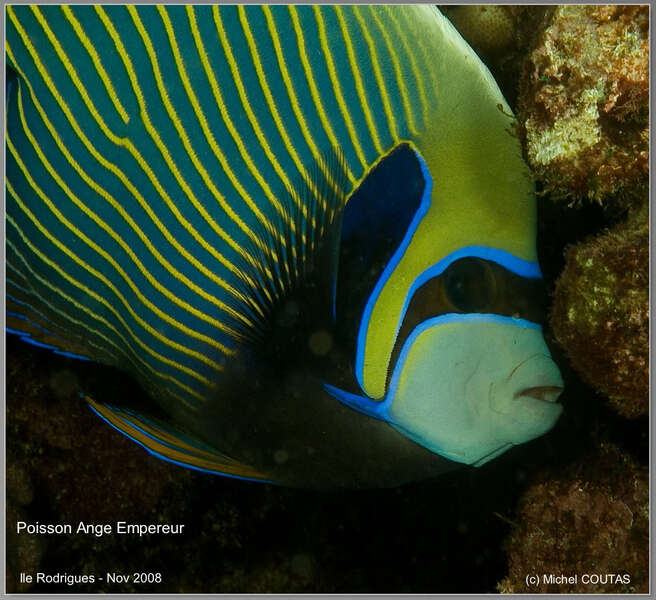
Pomacanthus imperator (Bloch, 1787) (Angel fish)
Juveniles are encountered under ledges, or in holes of outer lagoon patch reefs or semi-protected areas of exposed channels and outer reef flats. Subadults move to reef front holes and surge channels. Large adults inhabi...
Read More
Read More
Centropyge bicolor (Bloch, 1787) (Bicolor angelfish)
Inhabits lagoon, channel, or protected seaward reef slopes, drop offs, coral and rubble areas . Usually in pairs or in small groups. Feeds on algae, small crustaceans and worms. Darts from one hiding place to the next. Commonly exported through the aquarium trade .
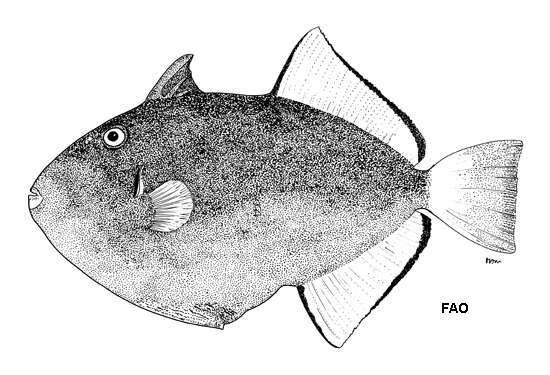
Melichthys vidua (Richardson, 1845) (Pink-tail trigger)
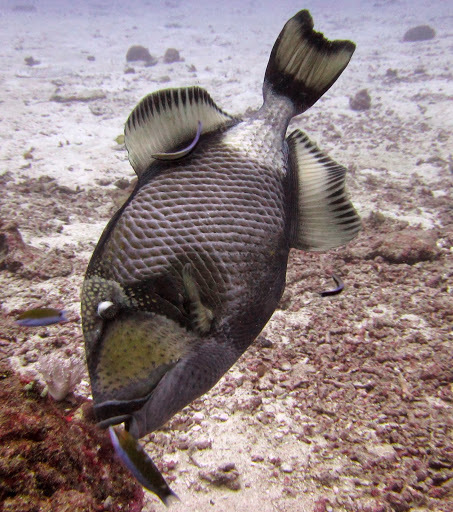
Balistoides viridescens (Bloch and Schneider, 1801) (Titan triggerfish)
Occur in lagoon, seaward reefs and sheltered inner reef slopes . Juveniles often associated with isolated patches of branching coral or rubble of shallow sandy protected areas. Adults occur singly or in pairs on the slo...
Read More
Read More
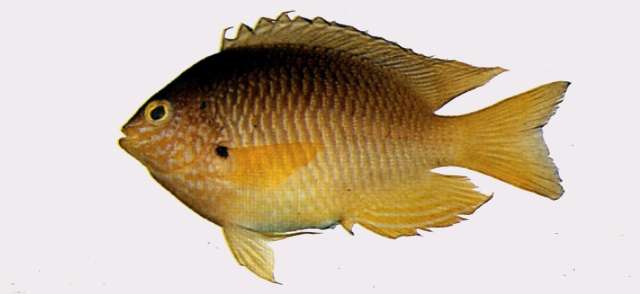
Pomacentrus amboinensis Bleeker, 1868 (Ambon damsel)
An ubiquitous species found in lagoons, coastal reefs, passages and outer reef slopes. Inhabits sandy areas around coral or rock outcrops or other protective shelter. Usually in small groups . Feeds primarily on algae, but also takes zooplankton. Has been reared in captivity (Ref. 35404.
Chrysiptera rex (Snyder, 1909) (Pink demoiselle)
Found in 1-6 m and in coastal to outer reef crests to depths of about 20 m . Occurs solitarily or in groups in reef margins and upper seaward slopes subject to mild surge . Feeds mainly on algae.
Amphiprion ocellaris Cuvier, 1830 (false clown anemonefish)
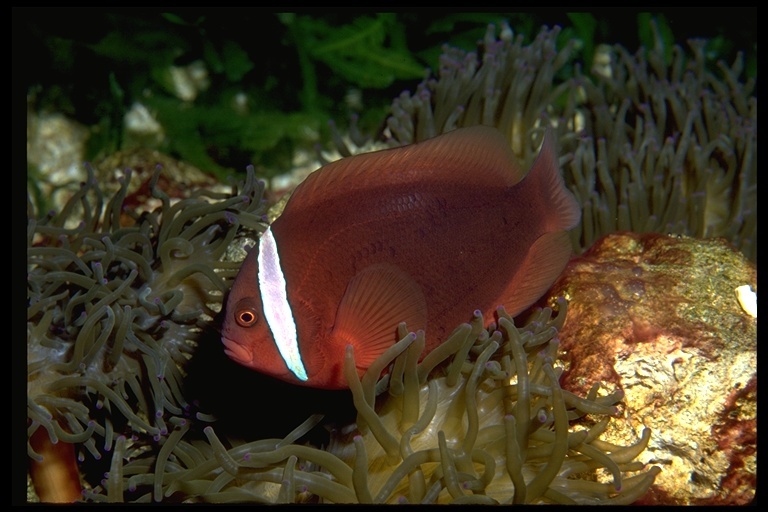
Amphiprion frenatus Brevoort, 1856 (oneband anemonefish)
Found in lagoon reefs and embayment. Monogamous , protandrous hermaphrodite . Associated with the anemone Entacmaea quadricolor . Has been reared in captivity .
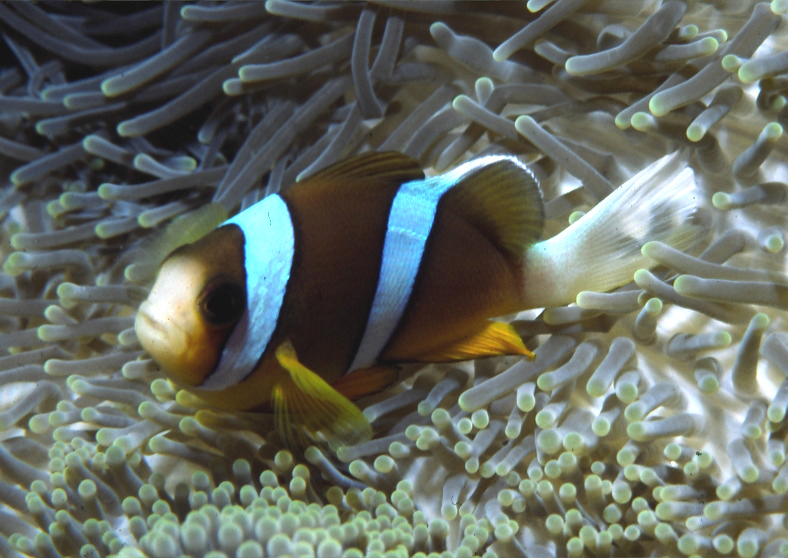
Amphiprion clarkii (Bennett, 1830) (Brown anemonefish)
Inhabits lagoons and outer reef slopes. Omnivorous. Oviparous, with elliptical eggs . Monogamous . Has been reared in captivity . Associated with the anemones: Cryptodendrum adhaesivum, Entacmaea quadricolor, Heterac...
Read More
Read More
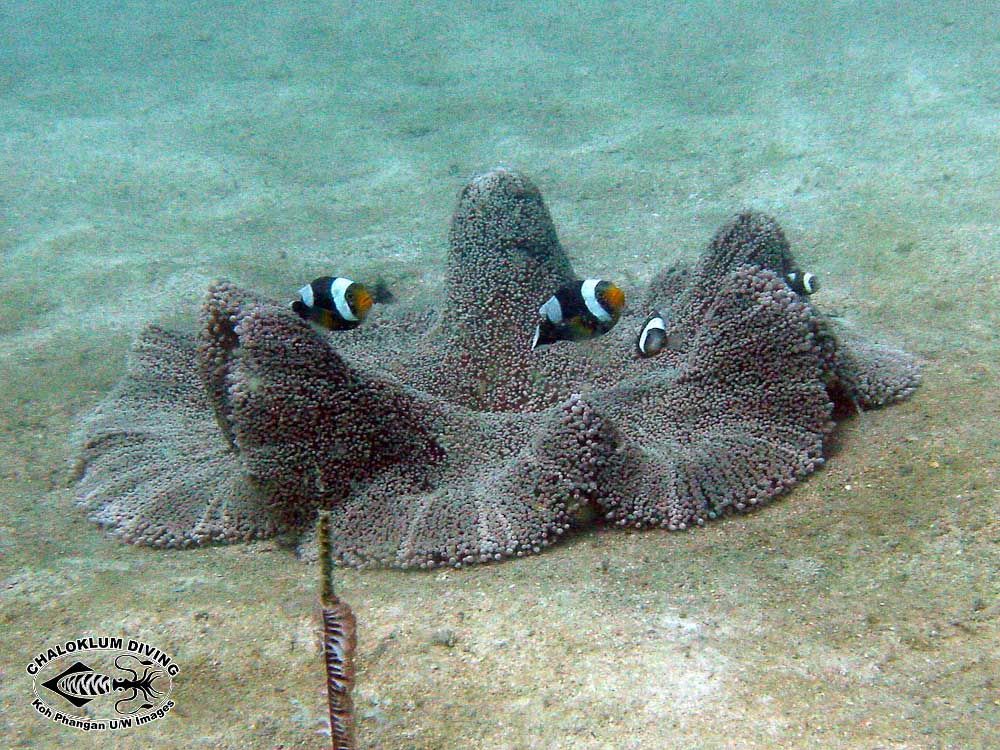
Amphiprion polymnus (Linnaeus, 1758) (yellowfinned anemonefish)
Inhabits silty lagoons and harbors. Monogamous . A protandrous hermaphrodite . Associated with the anemones: Heteractis crispa and Stichodactyla haddoni . Has been reared in captivity .
Gymnothorax pictus (Ahl, 1789) (Moray)
Adults inhabit reef flats and rocky intertidal shorelines. Feed on small fishes and crustaceans, sometimes leaving the water in pursuit of prey . Benthic . Simultaneous hermaphroditism is confirmed for this species . Caught with various nets .
Share on Social Networks
- Facebook:

personalize your shared text as well as its destination (wall, page...) or send as a private message to a friend
- Twitter: Tweet personalize your tweet
- Google Plus:
Direct link to this dive
- Long link:
- Short link:


 We are participating today in the startup contest Techcrunch Disrupt. Support Diveboard by voting for us!
























































































1st dive 2 tanker onboard Datu Budas
green water bad viz all around west shore Samal and Talicud, silt from recent rains
drop in edge of wall to depth, still silty all along wall North to almost Malipano Islet, clearer water at sandy areas
multilevel, thermocline @ 50-60 feet