


 Beachnutts



 Philippines
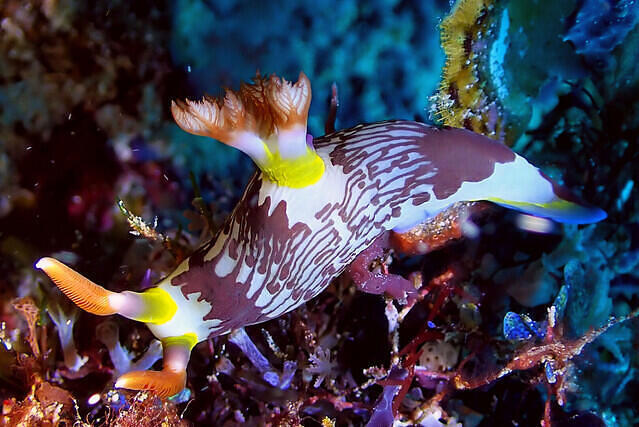
-
Nº180
 Date: 2025-06-22 - 02:36
-
 Max Depth: 20.4m Duration: 60mins
Dive Location

- Surface interval:98 mins
- Temp: Surf 27°C Bottom 27°C
- Dive type : Recreational, Reef, Photo
- Visibility: Good Water: Salt
Specific gear used
- BCD: Scubapro - Glide Plus
- Boots: Orca - Dive shoes
- Camera: Olympus - TG6
- Computer: Oceanic - OCS
- Fins: Scubapro - Jet Fins
- Lift bag: ScubaMax - SMB
- Light: Sofirn - SD05
- Mask: Promate - Scope
- Regulator: SEAC - Synchro
- Wet suit: Blue Ocean - Diveskin
- Weights: 3.2 kg
Dive reviews
| Overall review | ||
| Dive difficulty | ||
| Marine life quality |
Recent Divers in Samal island, Davao
Recent Pictures in Samal island, Davao
Dive Shop & Buddies
 Dive with Maeng
 Dive buddies:
Maeng,
Reymar Tano,
Eric Cembrano,
Beachnutts

Link to this spot:
- Spot:
- Country:
- Area:
- Body of water:
Dive Profile
- 1. Air
- 10L Aluminium 207 → 55 bar
- Average depth: 13.6m
Data provided by EOL.org







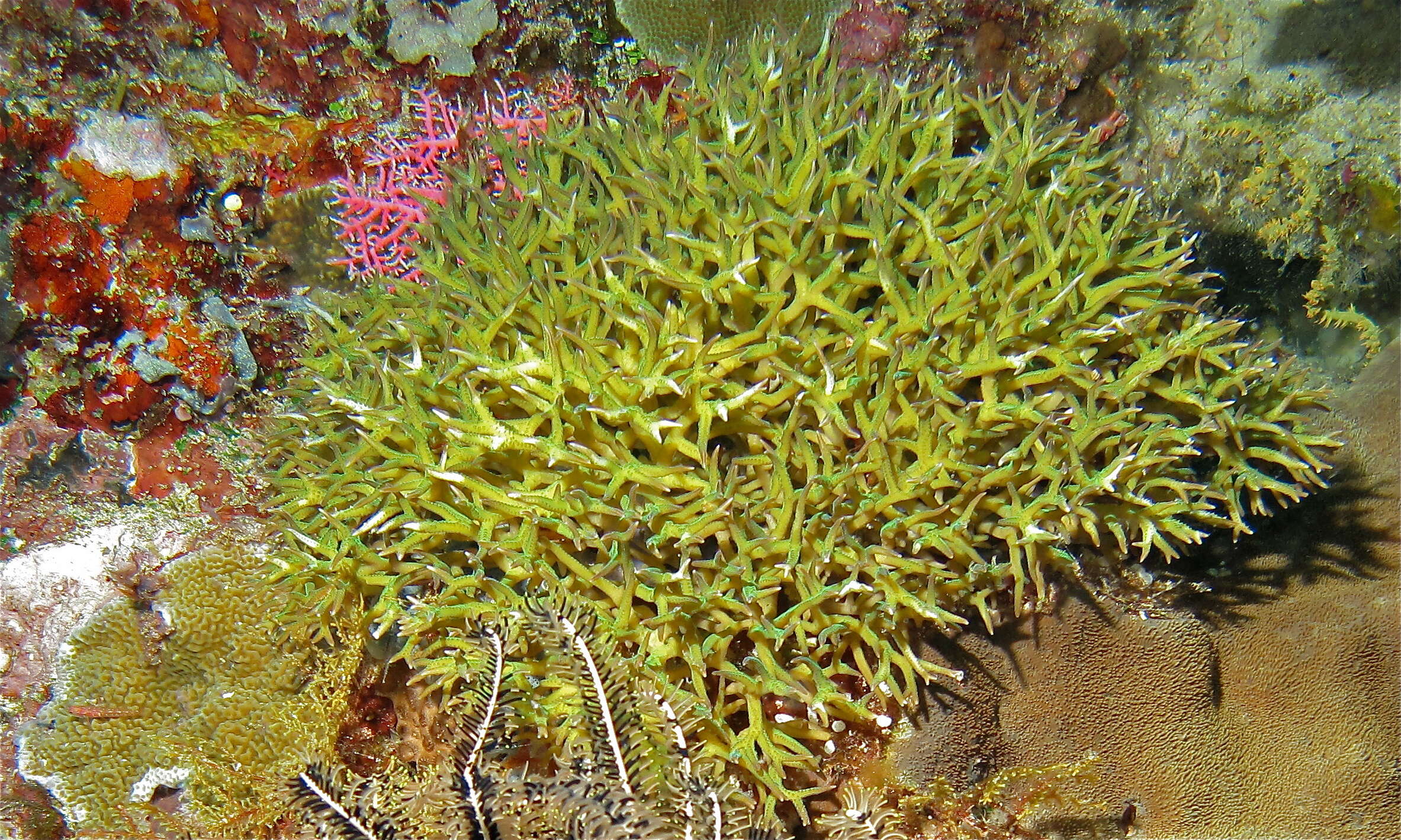


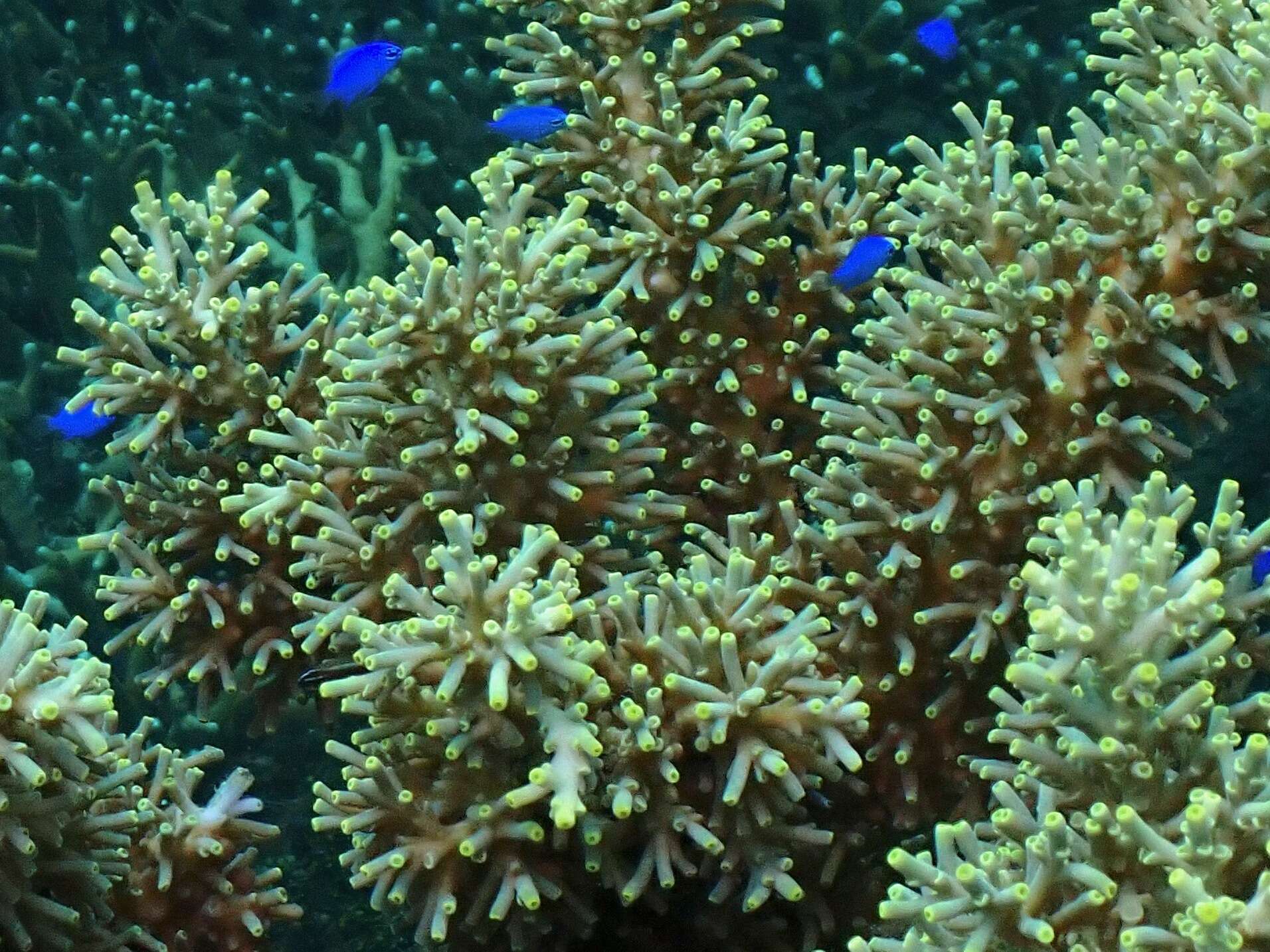
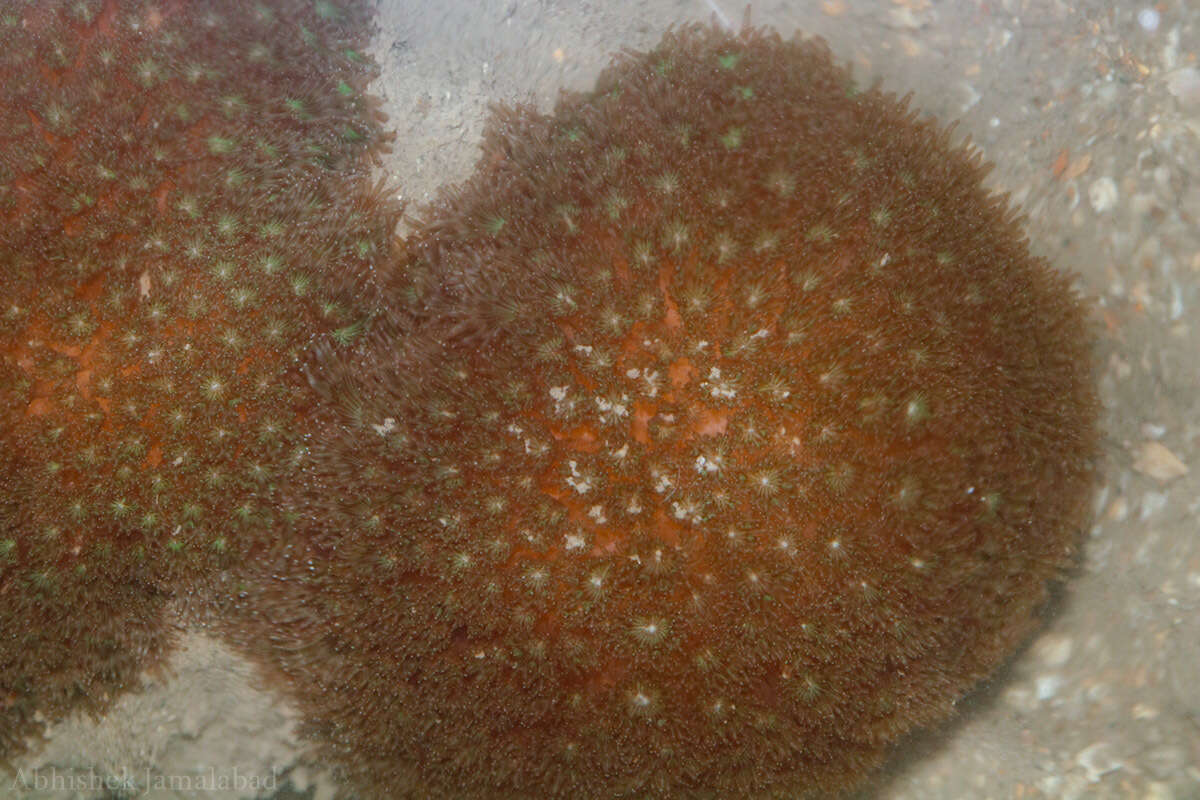
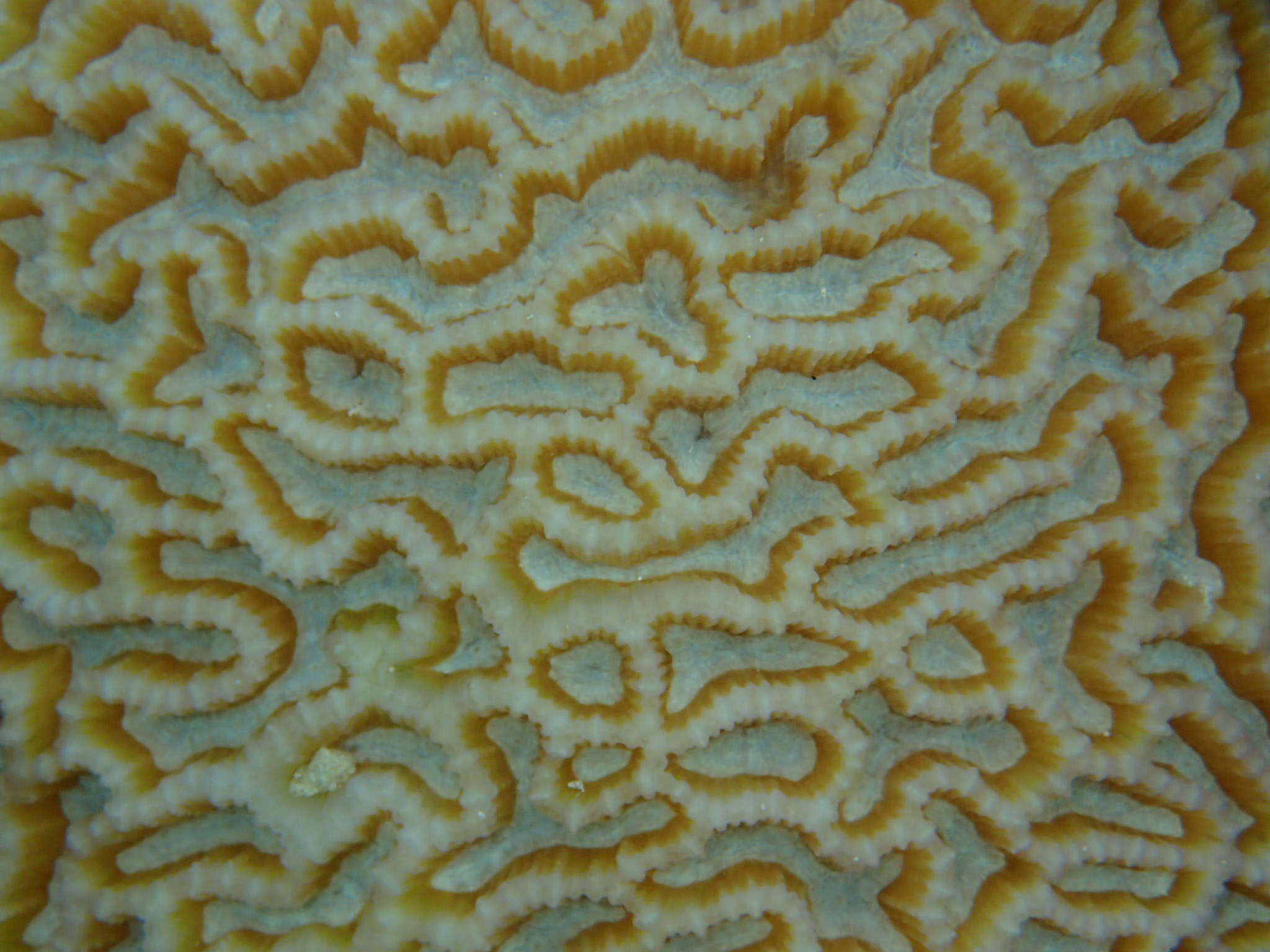








Species Identified
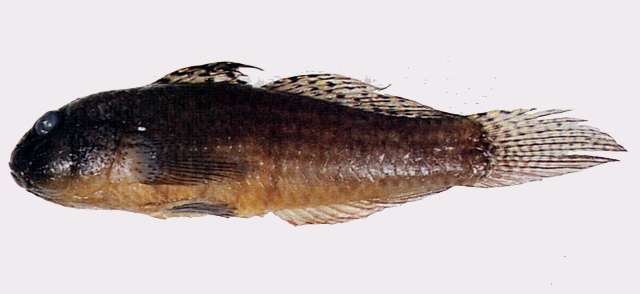
Callogobius maculipinnis (Fowler, 1918) (Ostrich goby)
Occurs among corals.
Exyrias puntang (Bleeker, 1851) (Puntang goby)
Inhabits muddy bottoms of shallow, turbid marine to brackish coastal inlets and estuaries. Also lives in shallow coastal waters, large tidal pools, mangroves, siltty lagoons and brackish lakes .
Paragobiodon echinocephalus (Rüppell, 1830) (Redhead goby)
Lives among branches of Stylophora coral. Monogamous .
Periophthalmus argentilineatus Valenciennes, 1837 (Barred mudskipper)
A resident intertidal species with homing behavior and amphibious air-breather found in brackish mud flats in mangrove and nipa palm areas. Occasionally in the lower parts of freshwater streams . Actively shuttling bac...
Read More
Read More
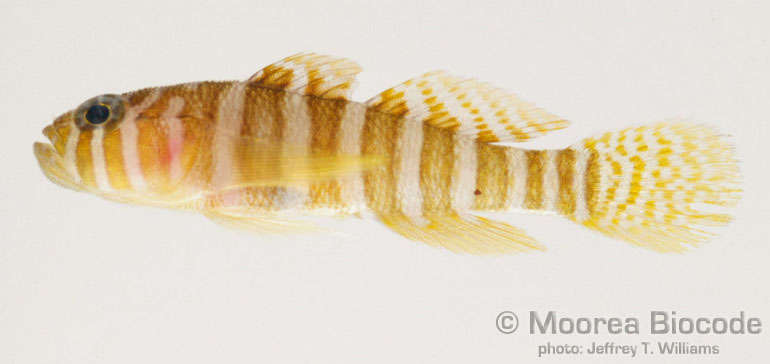
Priolepis cinctus (Regan, 1908) (Girdled goby)
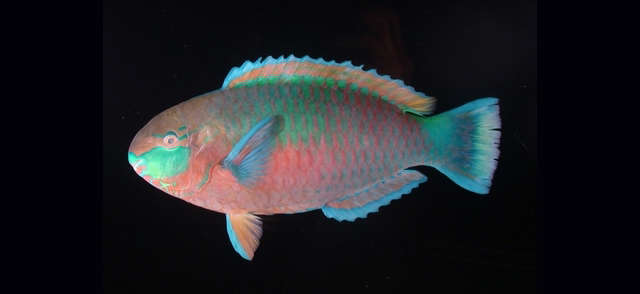
Scarus quoyi Valenciennes, 1840 (Quoy's parrotfish)
Inhabits coral-rich areas of outer channels and seaward reefs . Occurs singly or in small groups over intertidal flats to graze on algae during high water mark .
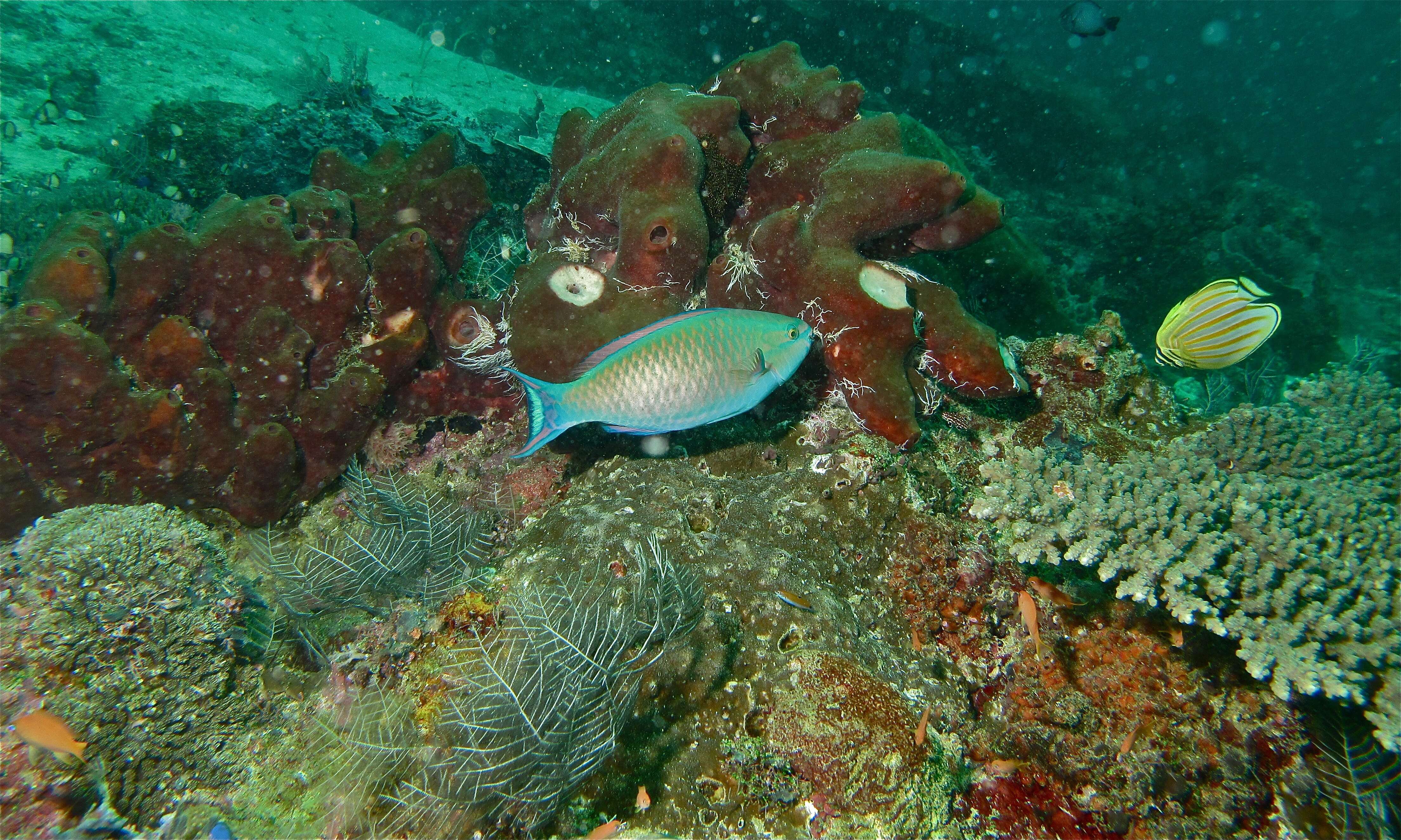
Scarus tricolor Bleeker, 1847 (Tricolour parrotfish)
Inhabits lagoon and seaward reefs, in areas with dense coral growth up to at least 30 m. Usually solitary, sometimes in groups . Feeds on benthic algae .
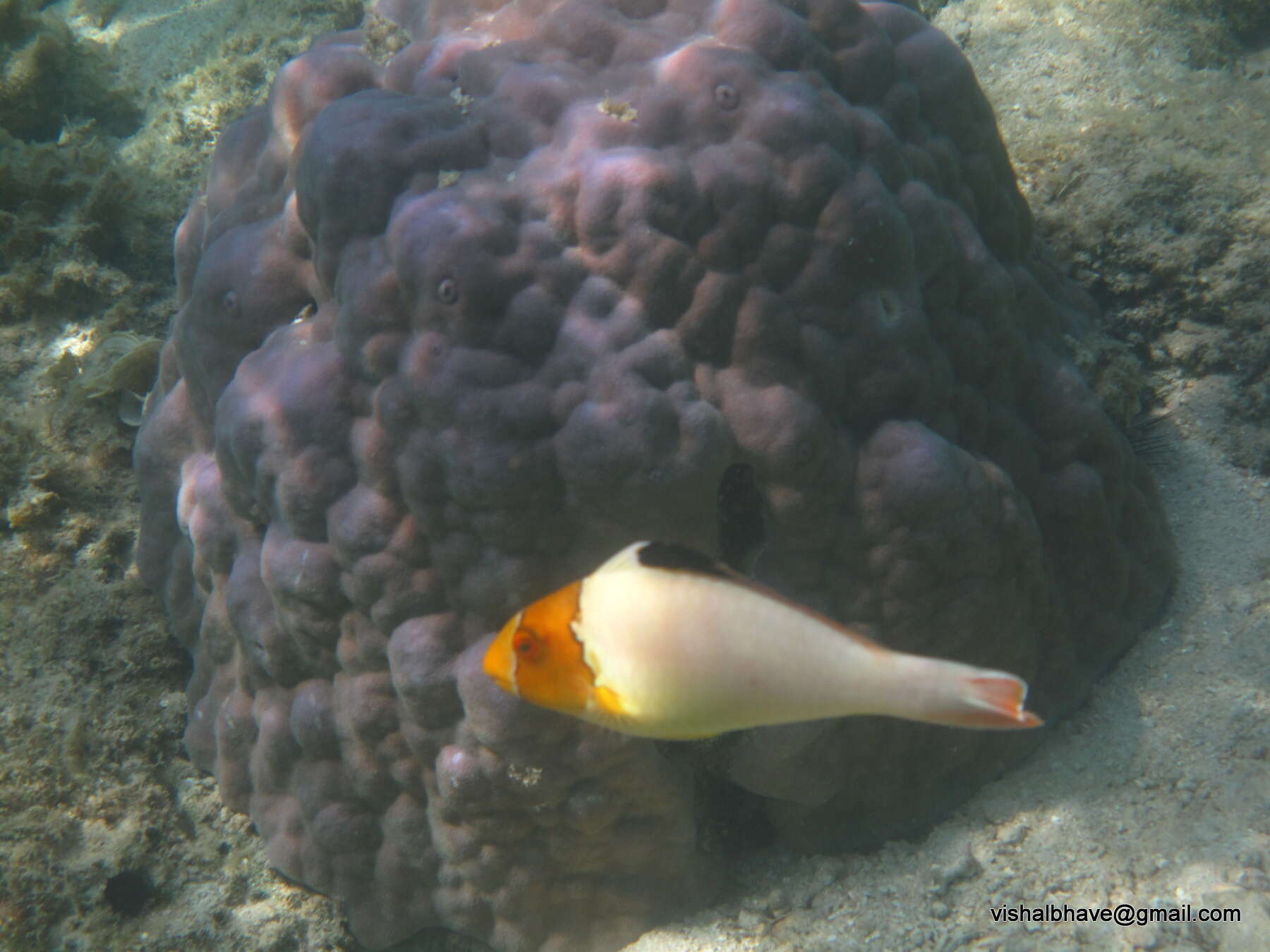
Cetoscarus bicolor (Rüppell, 1829) (Bicolour parrotfish)
Occurs in clear lagoon and seaward reefs . Juveniles usually solitary; adults form harems ; males are territorial. Goes to several changes during growth and very large females change sex to the brightly colored male. Sm...
Read More
Read More
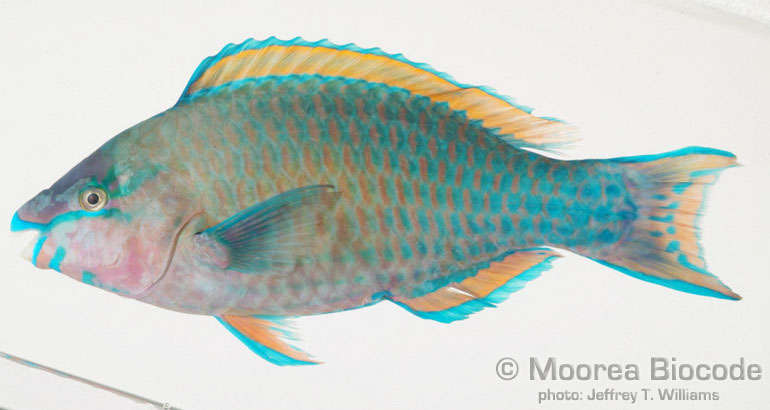
Chlorurus sordidus (Forsskål, 1775) (Daisy parrotfish)
Scarus psittacus Forsskål, 1775 (Common parrotfish)
Inhabit reef flats and lagoon and seaward reefs to at least 25 m depth . Found over corals . Benthopelagic . Initial-phase fish stage usually form small feeding schools . Graze on benthic algae . Secrete a mucus cocoon .
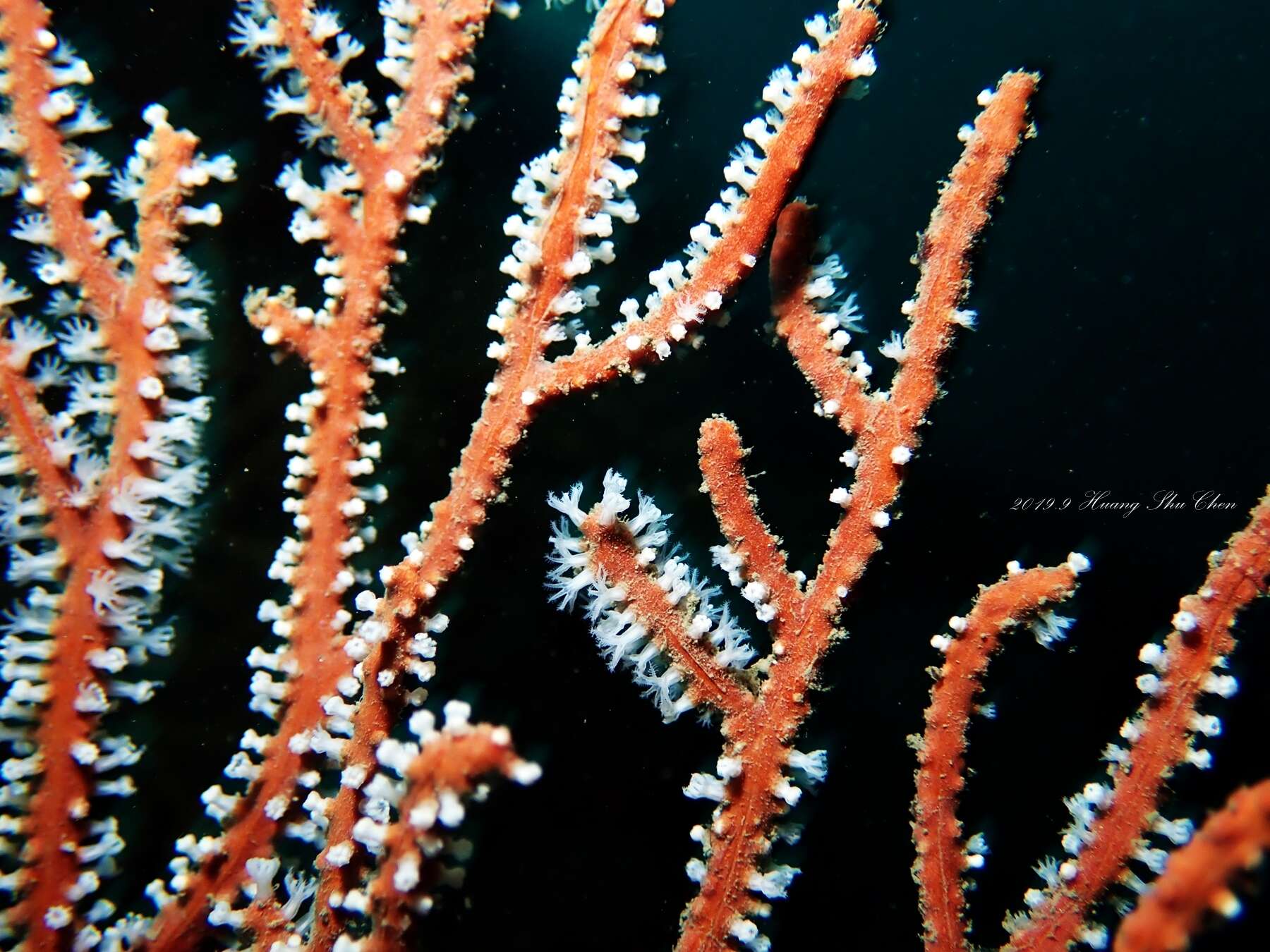
Subergorgia suberosa (Pallas, 1766)
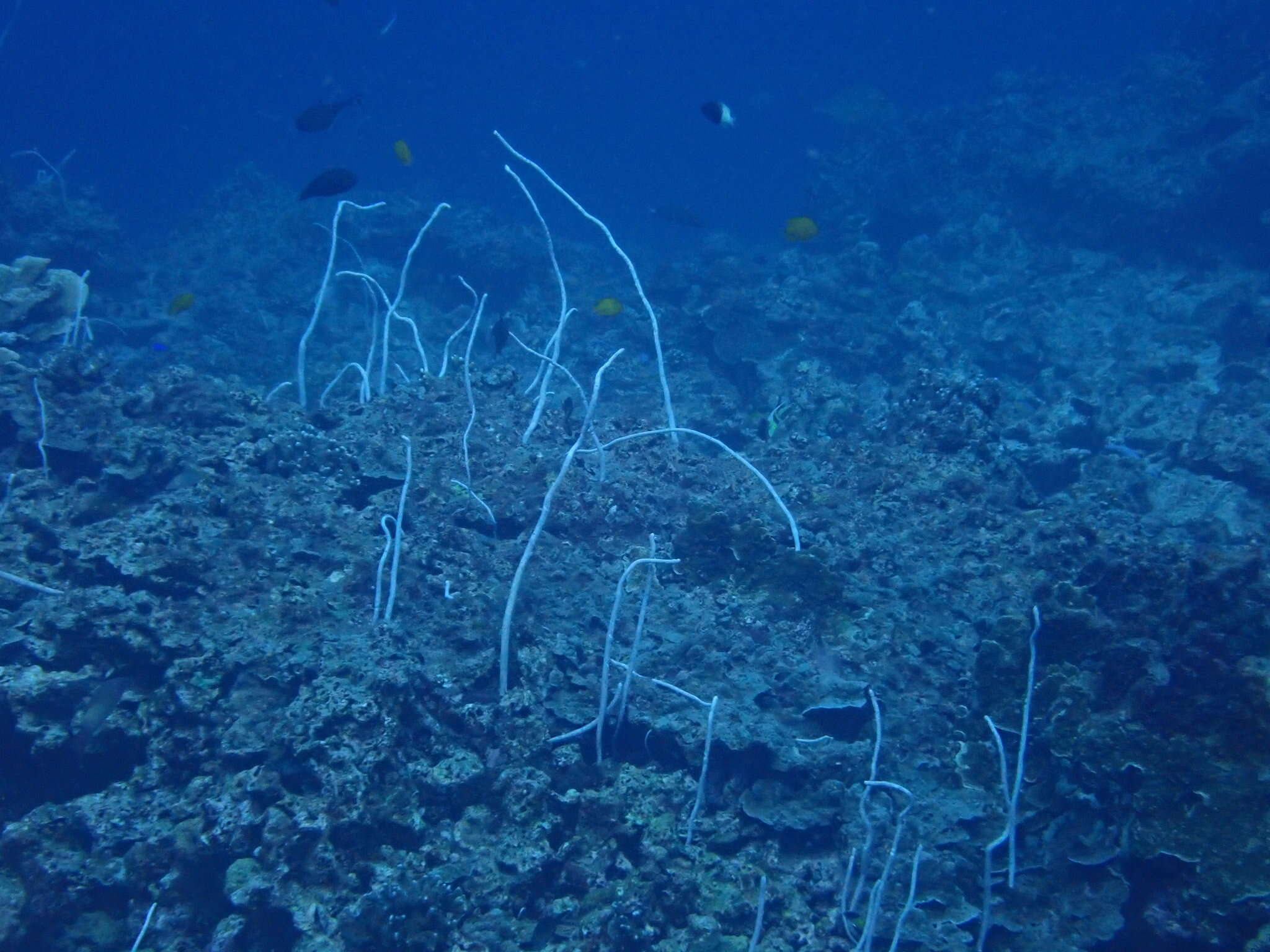
Junceella fragilis (Ridley, 1884)
Chrysogorgia stellata Nutting, 1908
Epinephelus quoyanus (Valenciennes, 1830) (long-finned rock-cod)
Inhabits inshore silty reefs; there are no records from depths greater than 50 m. Feeds on crustaceans, fishes, and worms. The enlarged fleshy pectoral fins appear to have resulted from its habit of sitting on the substrate.
Cephalopholis leopardus (Lacepède, 1801) (red-spotted rock cod)
Occurs in coral-rich areas of lagoon pinnacles, channels, and outer reef slopes. Solitary , a secretive species, usually hiding in caves and crevices in the reefs. One of the smallest species of groupers known. Gut analysis revealed crustacean remains.
Dendrochirus zebra (Cuvier, 1829) (Zebra turkeyfish)
Found on coral, rubble, or rock bottoms of reef flats ; also in coastal to outer reef habitats in sheltered lagoons and in caves, sometimes in small aggregations. Usually shallow, from 3-60m but also reported to 80 m dep...
Read More
Read More
Sunagocia otaitensis (Cuvier, 1829) (flatheads)
Inhabits sand and rubble areas of lagoon and seaward reefs . The species buries itself in the sand for camouflage. Feeds on crabs and prawns, also on fishes.
Parascorpaena mossambica (Peters, 1855) (Mozambique scorpionfish)
Inhabits areas with mixed sand and rubble in reef flats, shallow lagoons, and channels. Hides during the day, ventures out in the open at night. Anterolateral glandular groove with venom gland .
Sebastapistes cyanostigma (Bleeker, 1856) (Yellowspotted scorpionfish)
Found in reef crests with rich coral growth . Typically found among the branches of Pocillopora corals in surge areas of seaward reefs . Also observed between the branches of the fire coral Millepora and Styllophora (Eran Brokovich, pers. comm. 03/02).
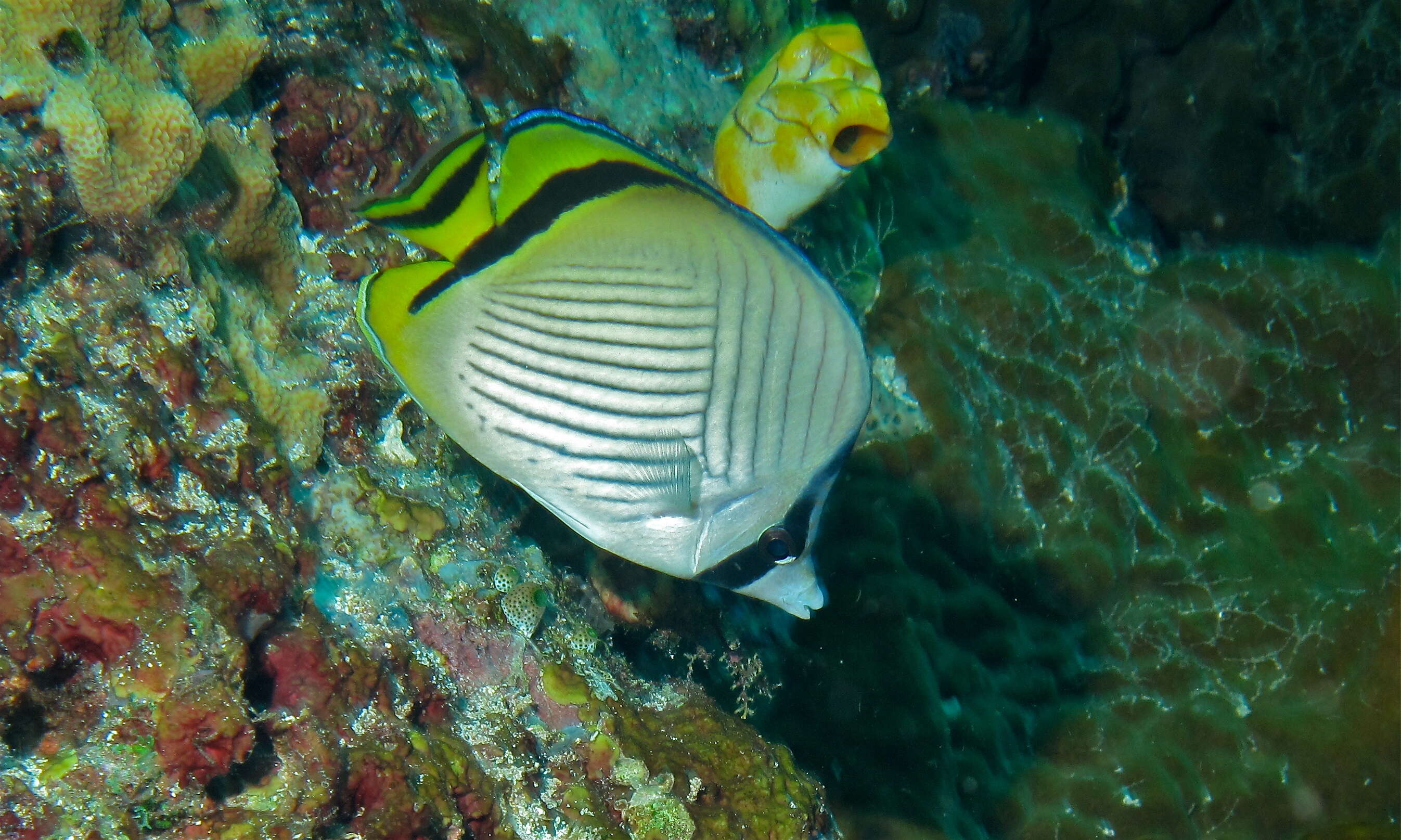
Chaetodon vagabundus Linnaeus, 1758 (Vagabond butterflyfish)
Found in reef flats, lagoon and seaward reefs and sometimes in turbid waters subject to freshwater runoff. Swim in pairs. Omnivorous, feed on algae, coral polyps, crustaceans and worms . Oviparous , monogamous . Stab...
Read More
Read More
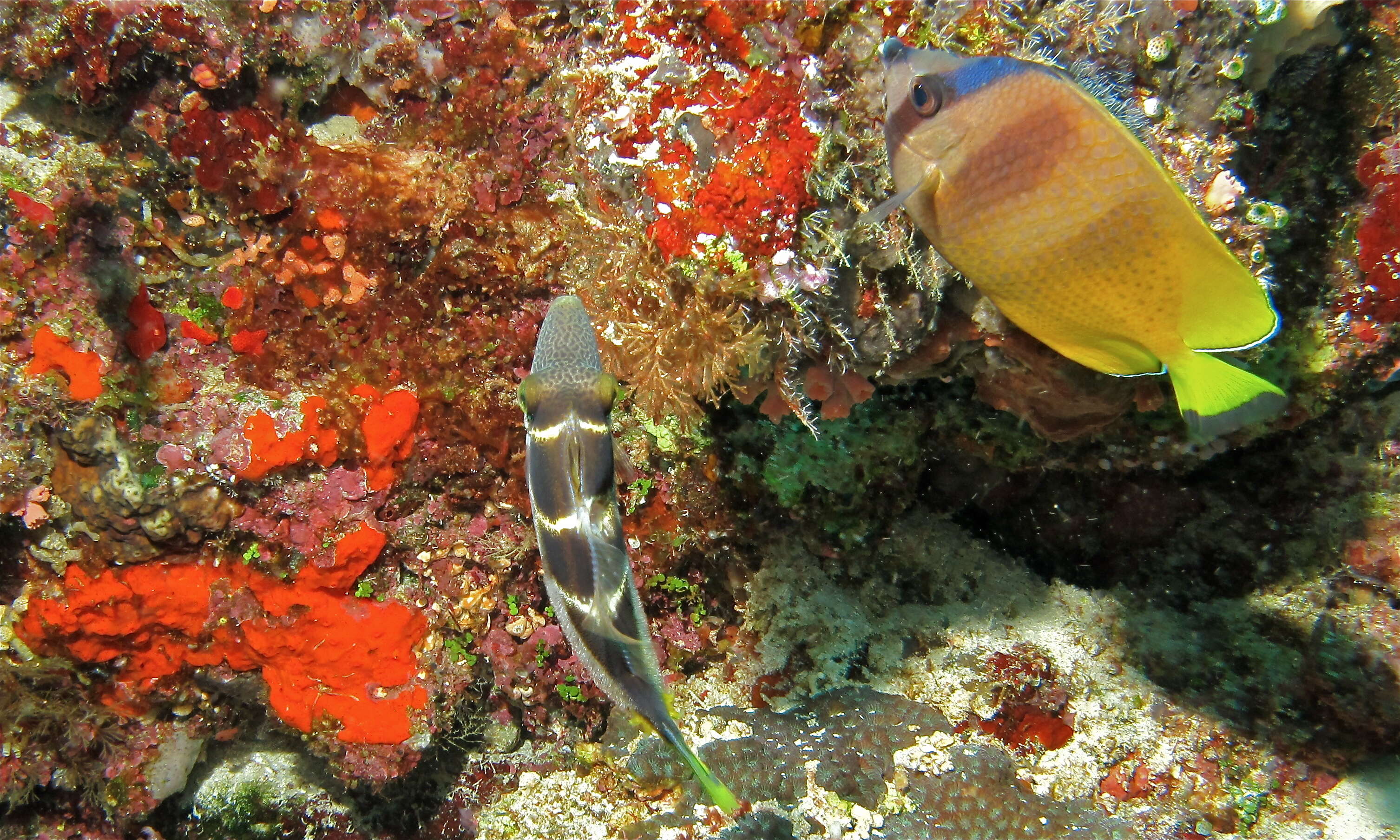
Chaetodon kleinii Bloch, 1790 (Sunburst butterflyfish)
Parachaetodon ocellatus (Cuvier, 1831) (Sixspine butterflyfish)
Occur in pairs on flat sand or silty bottoms on coastal reefs. Adults school in large numbers over open muddy substrates in deep water. Juveniles sometimes in large lagoons with seagrasses in depths of about 5 m or more . Oviparous . Form pairs during breeding .
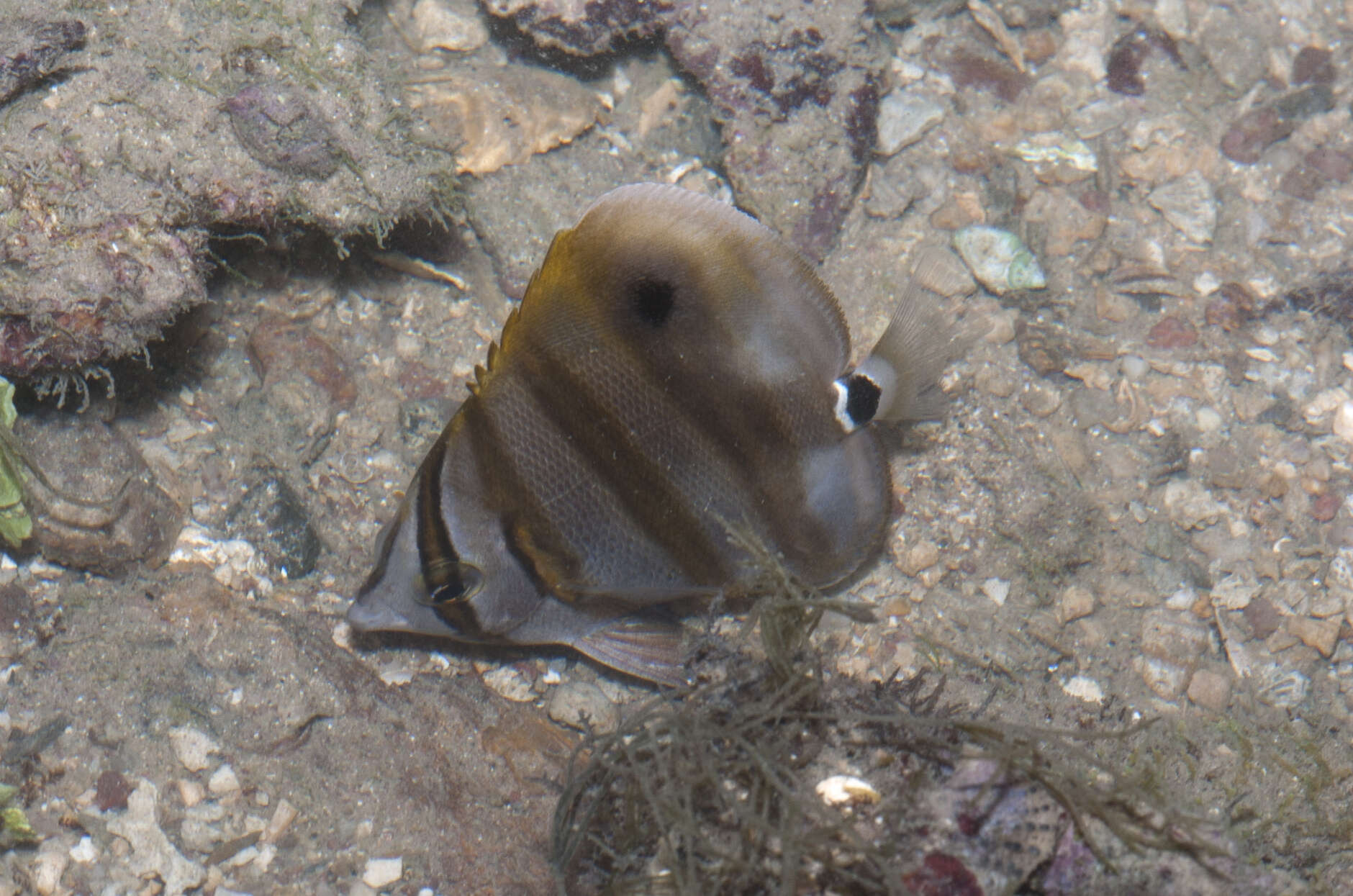
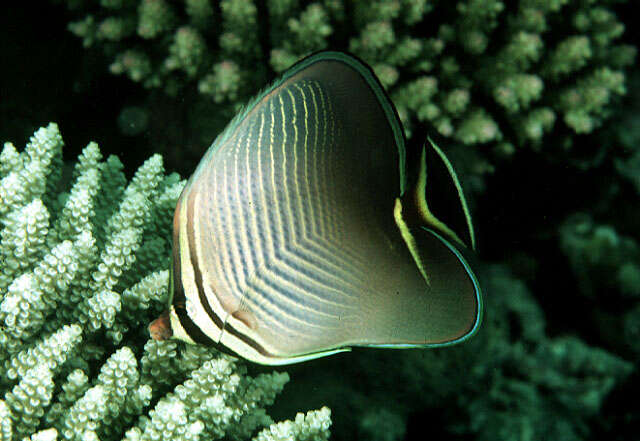
Chaetodon triangulum Cuvier, 1831 (Triangle butterflyfish)
Inhabit lagoon and seaward reefs . Closely associated with Acropora corals, particularly the staghorn variety. Territorial and in pairs . Juveniles solitary among coral branches . Feed mainly on coral polyps and theref...
Read More
Read More
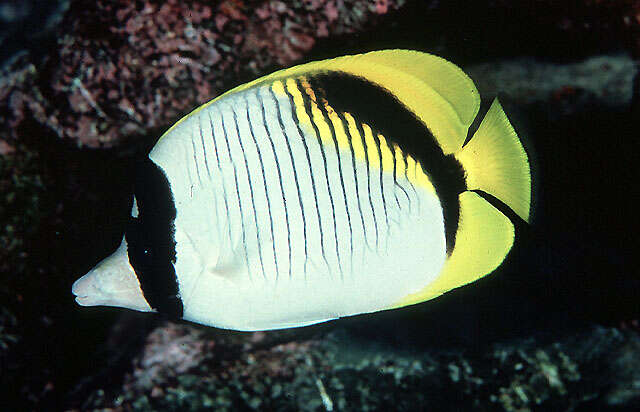
Chaetodon meyeri Bloch and Schneider, 1801 (Scrawled butterflyfish)
Chaetodon lineolatus Cuvier, 1831 (Line butterflyfish)
Occur in lagoon and seaward reefs, usually in pairs in coral rich areas . Benthopelagic . Feed mainly on coral polyps and anemones, but also on small invertebrates and algae . Largest species in the genus . Oviparous . Form pairs during breeding .
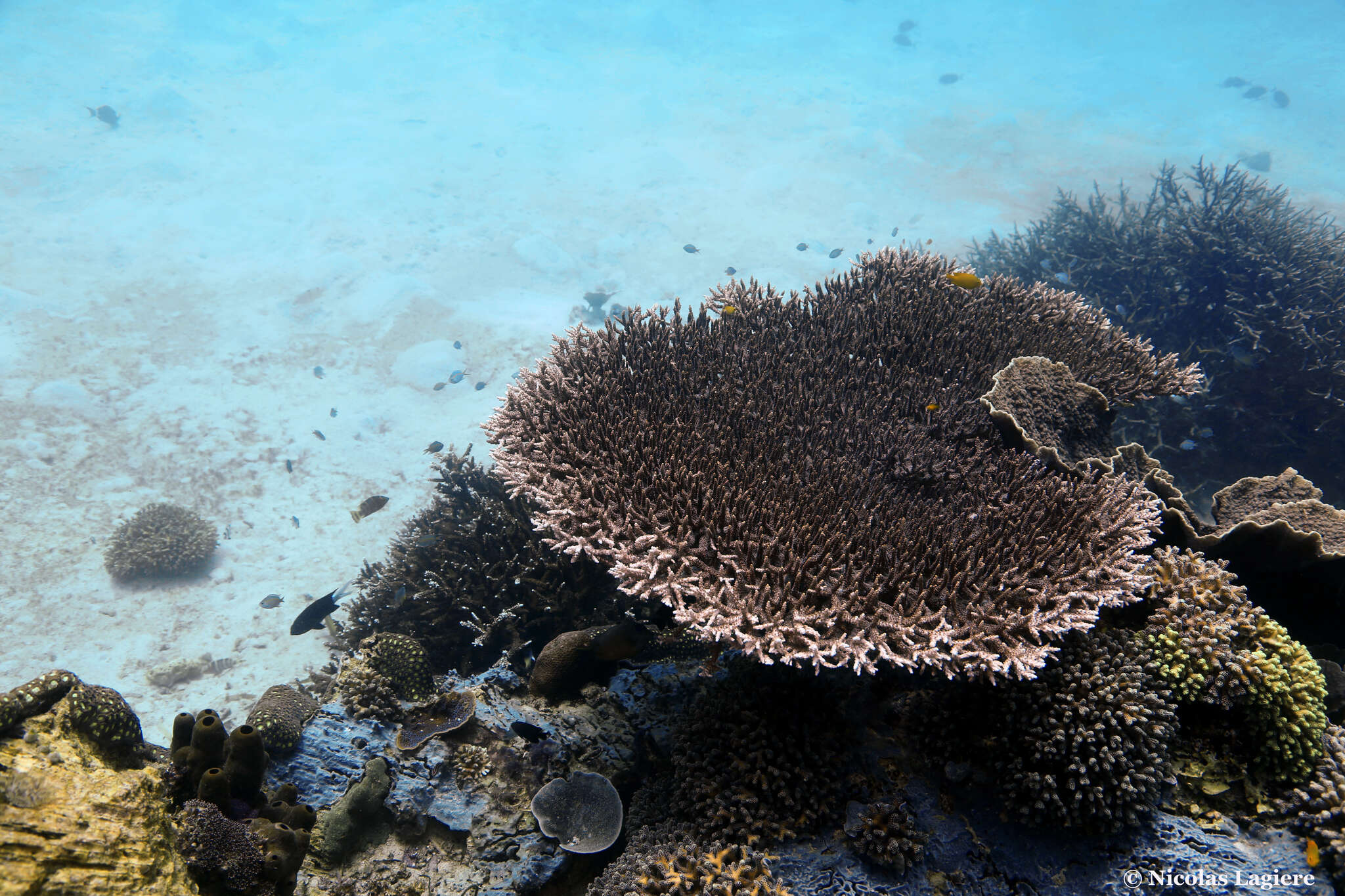
Acropora indonesia Wallace, 1997
zooxanthellate
Seriatopora hystrix Dana, 1846 (Bush coral)
zooxanthellate
Pocillopora verrucosa (Ellis and Solander, 1786) (Cauliflower coral)
zooxanthellate
Pocillopora damicornis (Linnaeus, 1758) (Cauliflower coral)
zooxanthellate
Montipora verrucosa (Lamarck, 1816) (Pore coral)
zooxanthellate
Acropora echinata (Dana, 1846)
zooxanthellate
Goniopora stutchburyi Wells, 1955 (Anemone coral)
zooxanthellate
Symphyllia recta (Dana, 1846) (Sinuous cup coral)
zooxanthellate
Favia favus (Forskål, 1775) (Knob coral)
zooxanthellate
Goniastrea edwardsi Chevalier, 1971 (Lesser star coral)
zooxanthellate
Leptastrea purpurea (Dana, 1846) (Crust coral)
zooxanthellate
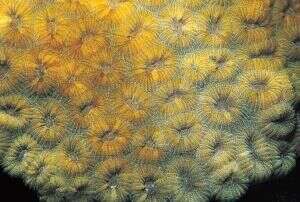
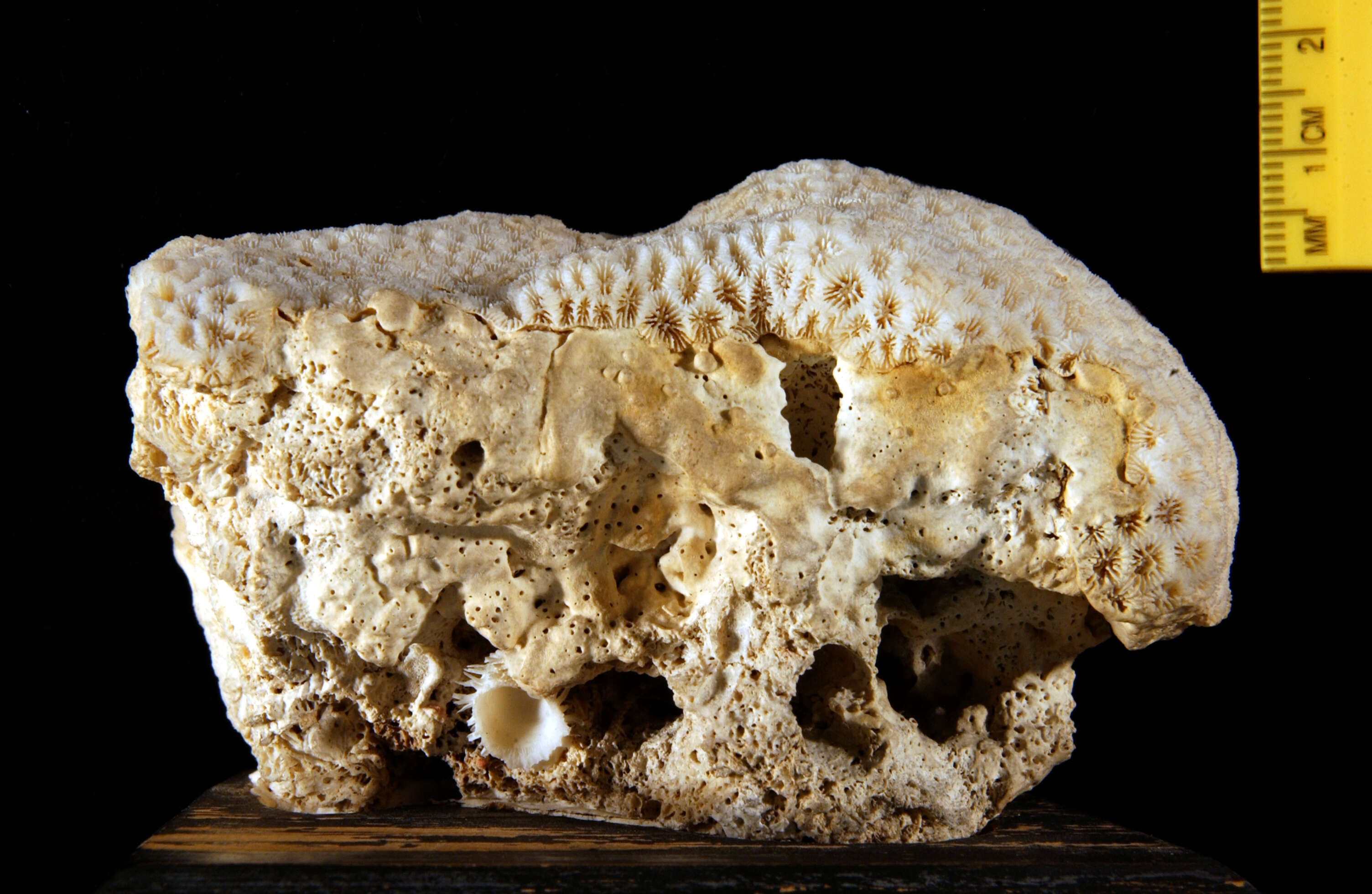
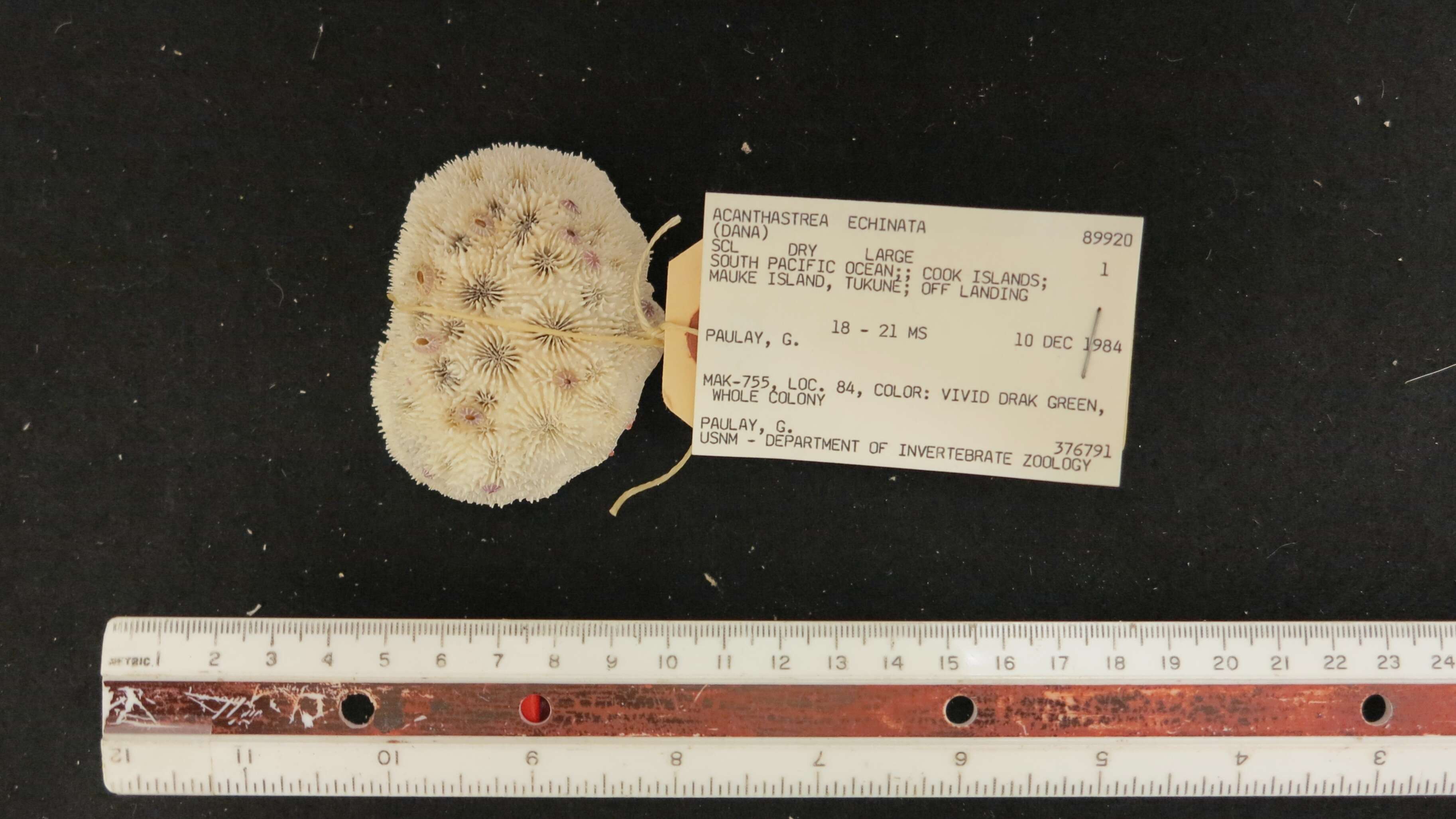
Acanthastrea echinata (Dana, 1846) (Starry cup coral)
zooxanthellate
Platygyra pini Chevalier, 1975 (Lesser valley coral)
zooxanthellate
Favia pallida (Dana, 1846) (Knob coral)
zooxanthellate
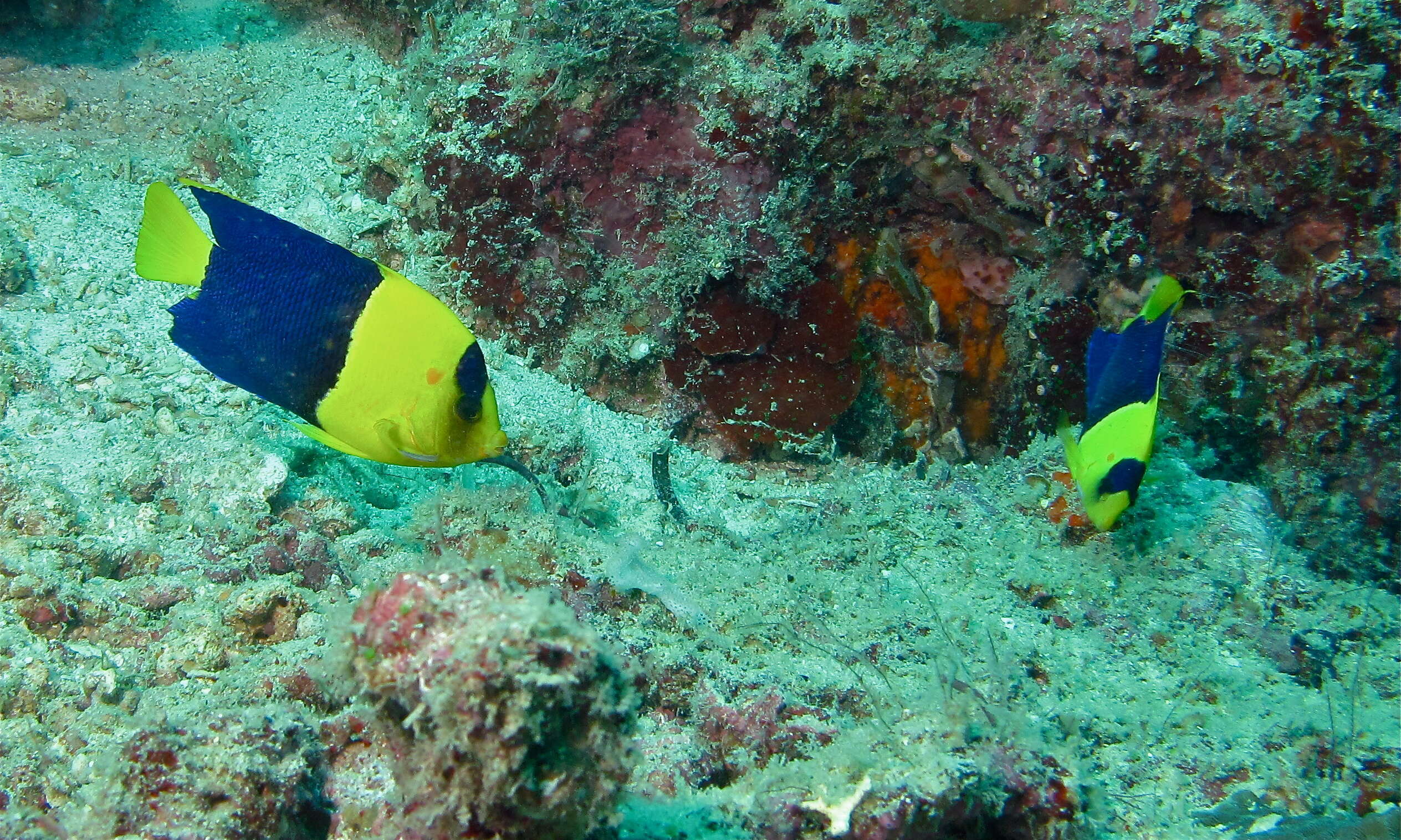
Centropyge bicolor (Bloch, 1787) (Bicolor angelfish)
Inhabits lagoon, channel, or protected seaward reef slopes, drop offs, coral and rubble areas . Usually in pairs or in small groups. Feeds on algae, small crustaceans and worms. Darts from one hiding place to the next. Commonly exported through the aquarium trade .
Apolemichthys trimaculatus (Cuvier, 1831) (Flagfish)
Inhabits lagoon and seaward reefs ; found near coral . Feeds mainly on sponges and tunicates . Juveniles secretive and occur below 25 m . Adults in small but loose groups at moderate depths . Frequently exported through the aquarium trade .
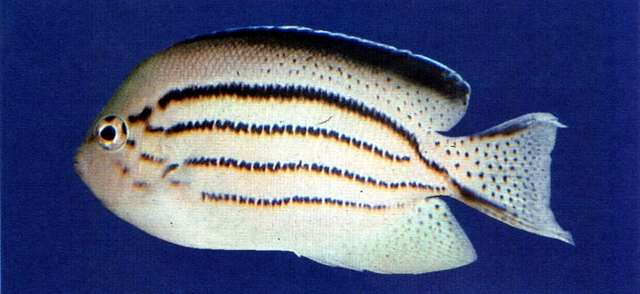
Genicanthus lamarck (Lacepède, 1802) (Blackstriped angelfish)
Inhabit shallow reef crests and deep reefs adjacent to steep slopes. Form aggregations to feed in midwater well above the bottom; harems of 3-7 individuals. Feeds on plankton. Frequently exported through the aquarium trade .
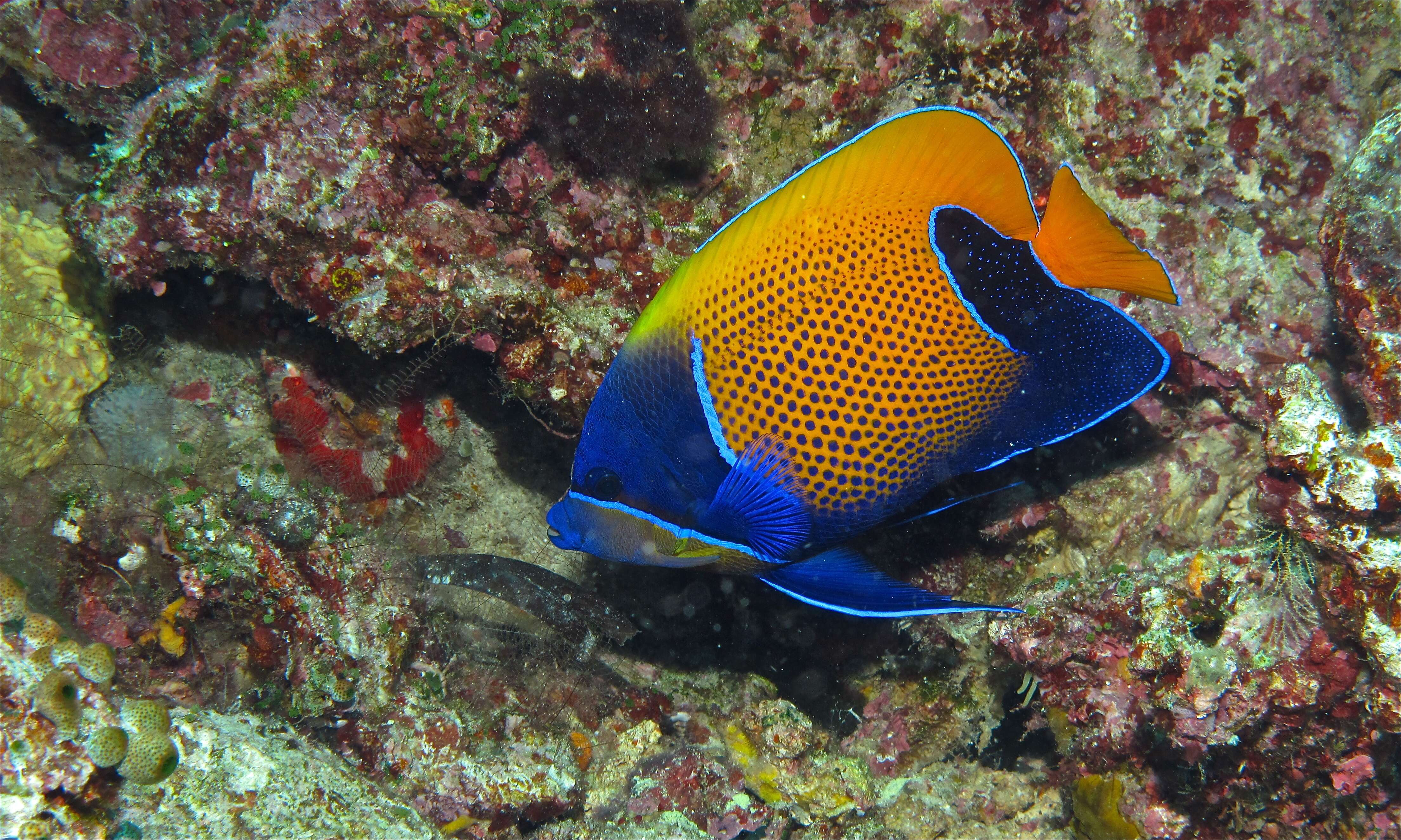
Pomacanthus navarchus (Cuvier, 1831) (Majestic angelfish)
Occurs in coral rich areas of clear lagoons, channels, and protected outer reef slopes. Changes to adult pattern is dramatic, and intermediate stage are rarely seen . Often solitary. Feeds on sponges and tunicates. Uncommon . Highly prized aquarium export .
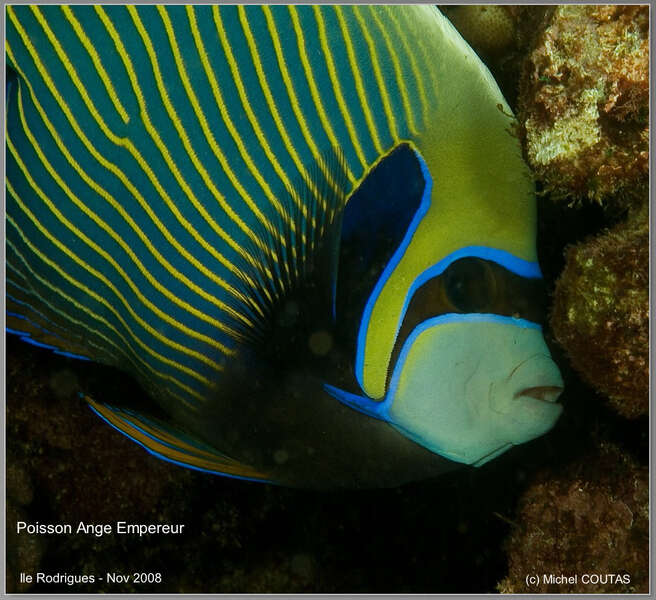
Pomacanthus imperator (Bloch, 1787) (Angel fish)
Juveniles are encountered under ledges, or in holes of outer lagoon patch reefs or semi-protected areas of exposed channels and outer reef flats. Subadults move to reef front holes and surge channels. Large adults inhabi...
Read More
Read More
Balistapus undulatus (Park, 1797) (Orange-lined triggerfish)
Occurs in coral-rich areas of deep lagoon and seaward reefs from the lower surge zone to at least 50 meters, Ref. 48637. Feeds on a variety of benthic organisms such as algae, echinoderms, fishes, mollusks, tunicates, spo...
Read More
Read More
Arothron hispidus (Linnaeus, 1758) (White-spotted puffer)
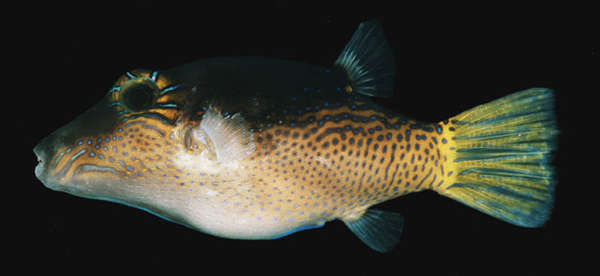
Arothron reticularis (Bloch & Schneider, 1801) (Reticulated pufferfish)
Occurs in shallow water reefs near sand or seaweed areas. Also found in estuaries and protected muddy bays; juveniles in mangroves and entering the lower reaches of streams . Adults at moderate depths, often laying on th...
Read More
Read More
Canthigaster janthinoptera (Bleeker, 1855) (Honeycomb toby)
Canthigaster epilampra (Jenkins, 1903) (Lantern toby)
Inhabits outer reef slopes, generally at depths greater than 24 m, but also seen below 6 m . Benthopelagic . Solitary or paired. Feeds on mollusks, echinoderms, brachiopods, and filamentous algae .
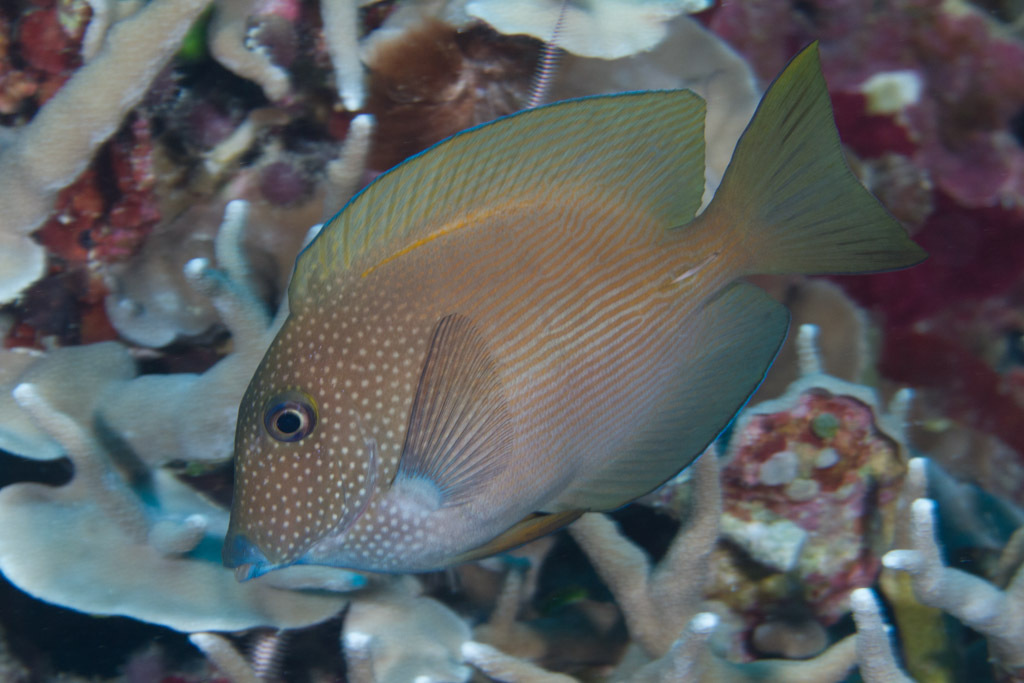
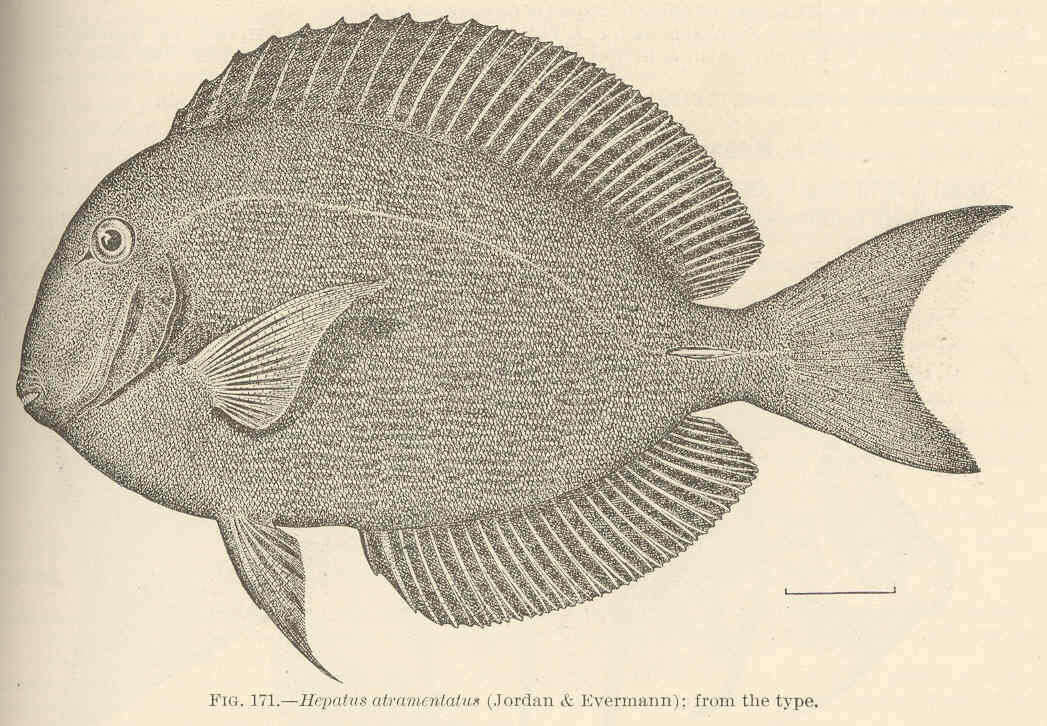
Ctenochaetus striatus (Quoy and Gaimard, 1825) (Striated surgeonfish)
Inhabits reef flats and lagoon and seaward reefs to a depth of over 30 m. Occurs over coral , rock, pavement, or rubble substrates. May occur singly or in small to very large, often mixed-species aggregations . Feeds on...
Read More
Read More
Acanthurus olivaceus Bloch and Schneider, 1801 (Orangespot surgeonfish)
Inhabit seaward reefs, in areas of bare rock or mixed rubble and sand, from 9 to at least 46 m depth; juveniles inhabit protected bays and lagoons, singly or in small groups in as little as 3 m . Benthopelagic . Adults o...
Read More
Read More
Acanthurus nigroris Valenciennes, 1835 (Bbuelined surgeonfish)
Inhabits clear lagoon and seaward reefs; often in areas with mixed coral, pavement, rubble and sand substrates . Benthopelagic . Occurs singly or in small groups . Feeds on filamentous algae, diatoms and fine algal film...
Read More
Read More
Acanthurus nigricans (Linnaeus, 1758) (backsurgeonfish)
Sargocentron praslin (Lacepède, 1802) (Dark-striped squirrelfish)
Inhabits reef flats and shallow protected reefs, often in dead reef areas . Secretive during the day .
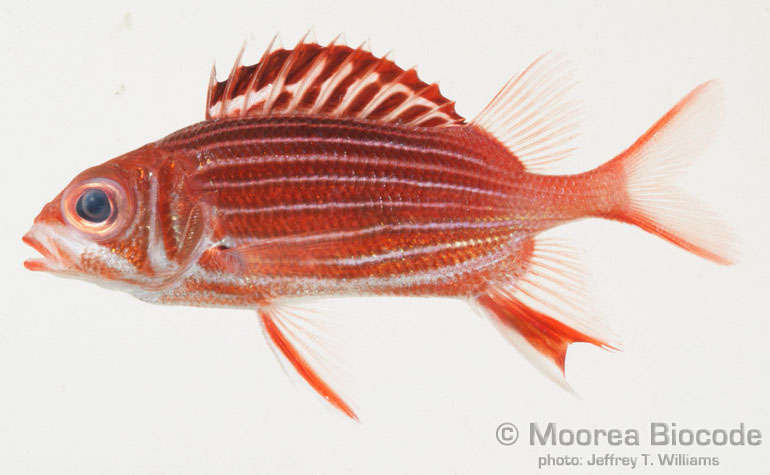
Sargocentron diadema (Lacepède, 1802) (Crown squirrelfish)
A common species that inhabits shallow coral reefs and lagoon and seaward reefs to depths of 30 m or more. Benthopelagic . Occurs under ledges or in crevices during the day and feeds on isopods; at night it roams over o...
Read More
Read More
Sargocentron caudimaculatum (Rüppell, 1838) (Silverspot squirrelfish)
One of the most common of the squirrelfishes that occurs in outer reef areas, also encountered in lagoons and drop-offs from less than 2 to 40 m; either solitary or in groups . Nocturnal, feeds mainly on benthic crabs and shrimps.
Sphyraena flavicauda Rüppell, 1838 (Yellowtail barracuda)
Inhabits lagoon and sheltered seaward reefs ; also found in bays . Often schools on coastal reefs .
Share on Social Networks
- Facebook:

personalize your shared text as well as its destination (wall, page...) or send as a private message to a friend
- Twitter: Tweet personalize your tweet
- Google Plus:
Direct link to this dive
- Long link:
- Short link:


 We are participating today in the startup contest Techcrunch Disrupt. Support Diveboard by voting for us!
























































































2nd dive of day, nice ledges and walls along cliff area dive site called Mile Long. Very nice area. Drop in south swim then reverse and back to boat . short dive, tired.
multilevel, some solo