


 Beachnutts


 Philippines
-
Nº1002
 Date: 2022-04-24 - 04:24
-
 Max Depth: 12.5m Duration: 88mins
Dive Location

- Temp: Surf 26°C Bottom 26°C
- Dive type : Recreational, Reef, Photo
- Visibility: Average Water: Salt
Specific gear used
- BCD: Oceanic - OceanPro
- Camera: Canon - SD940
- Compass:
- Computer: Oceanic - OCS
- Fins: Scubapro - Jet Fins
- Knife: Scuba MAx - folding
- Mask: Cressi - Liberty
- Regulator: SEAC - Synchro
- Wet suit: Blue Ocean - Diveskin
- Weights: 4.1 kg
Dive reviews
| Overall review | ||
| Dive difficulty | ||
| Marine life quality |
Dive Shop & Buddies
 Dive with Blake Auge

Link to this spot:
- Spot:
- Country:
- Area:
- Body of water:
Dive Profile
- 1. Air
- 10L Aluminium 207 → 24 bar
- Average depth: 8.3m
Data provided by EOL.org

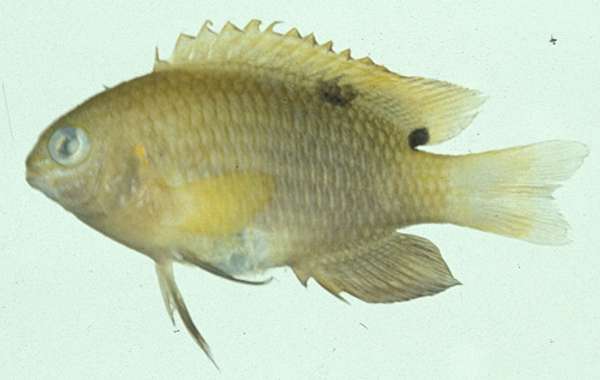


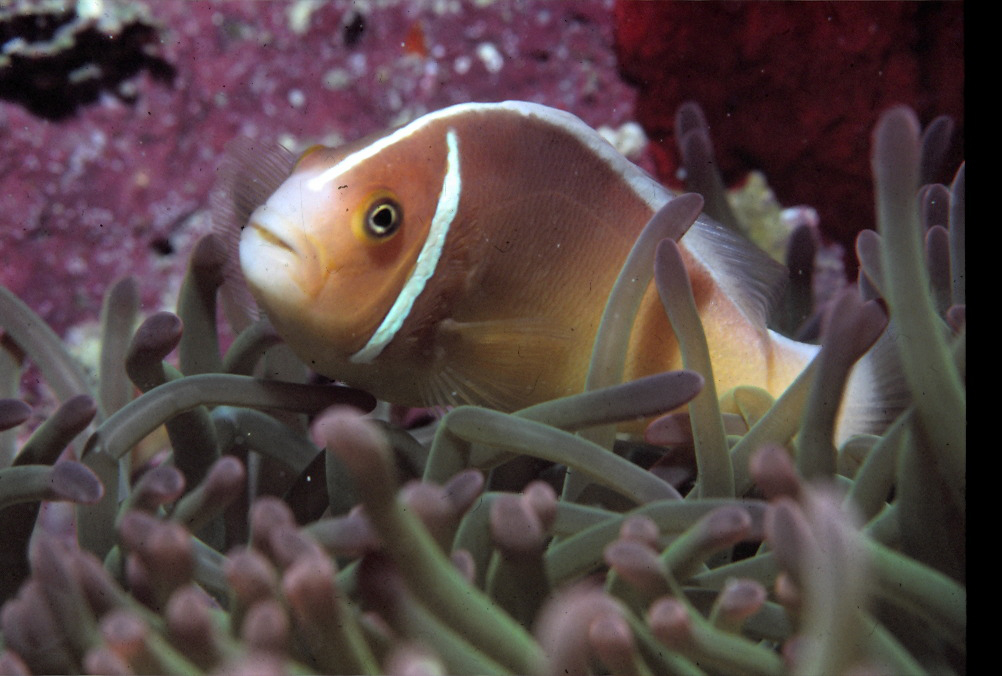
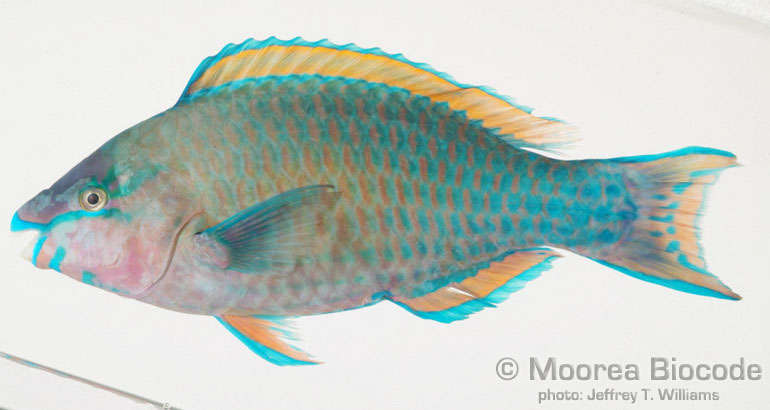
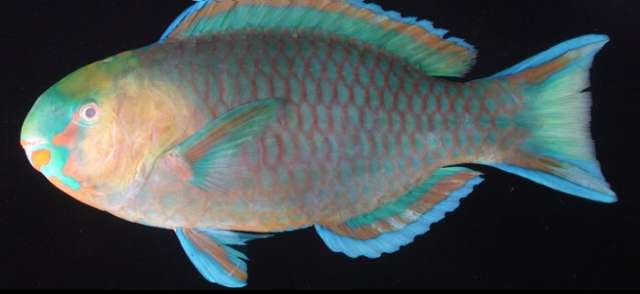
Species Identified
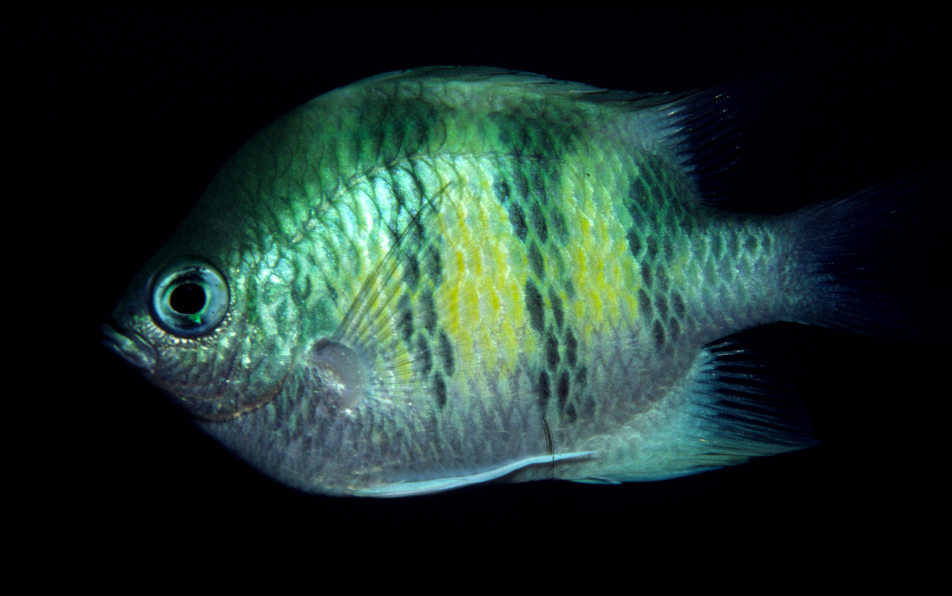
Amblyglyphidodon curacao (Bloch, 1787) (Black-snouted sergeant-major)
Inhabits lagoons, coastal embayments, reef passages and outer reefs. Juveniles often found among Sarcophyton and Sinularia soft corals. Feeding aggregations are frequently observed over growths of the staghorn coral Acro...
Read More
Read More
Dascyllus aruanus (Linnaeus, 1758) (black-and-white damselfish)
Territorial, inhabit shallow lagoon and subtidal reef flats. Form large aggregations above staghorn Acropora thickets or in smaller groups above isolated coral heads. Feed on zooplankton, benthic invertebrates, and algae...
Read More
Read More
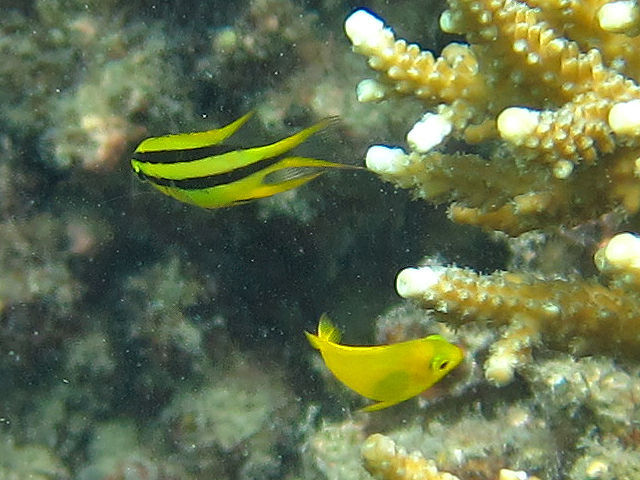
Neoglyphidodon nigroris (Cuvier, 1830) (Yellowfin damsel)
Two forms: long-tailed and black as adults occurs in the Andaman Sea, ranging east to western Bali and north to Japan. Second form, probably valid as N. xanthurus occurs in the rest of the West Pacific and the two overla...
Read More
Read More
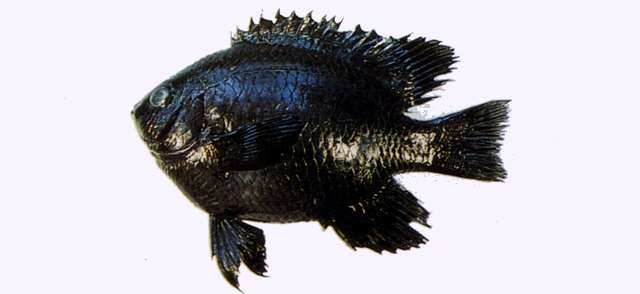
Neoglyphidodon melas (Cuvier, 1830) (black damselfish)
Found in coral-rich areas of lagoon and seaward reefs and usually associated with soft corals on which it feeds . Occur singly or in pairs . Juveniles are encountered in around staghorn Acropora corals . Adults often near Tridacna clams and may feed on their feces .
Chrysiptera unimaculata (Cuvier, 1830) (Onespot demoiselle)
Found solitarily or in small groups among coastal algal reefs, rubble or over open beach-rock of reef flats exposed to moderate surge and feeds mainly on benthic algae .
Lutjanus lemniscatus (Valenciennes, 1828) (Yellowstreaked snapper)
Inhabits offshore reefs and muddy habitats. Juveniles are sometimes found in the vicinity of coral reefs, often located close to the shore where silting is moderate and visibility is reduced. Adults usually very deep . Feeds on fishes and a variety of benthic invertebrates.
Premnas biaculeatus (Bloch, 1790) (Spinecheek anemonefish)
Inhabits lagoon and seaward reefs , found mainly in protected coastal waters and lagoons. Typically found in pairs in which males are much smaller than females . Feeds primarily on zooplankton and benthic algae . Has been reared in captivity . Associated with the anemone Entacmaea quadricolor .
Amphiprion perideraion Bleeker, 1855 (False skunk-striped anemonefish)
Inhabits lagoon and seaward reefs . Mainly diurnal. Non-burrowing. Monogamous . A protandrous hermaphrodite . Associated with the anemones: Heteractis magnifica , Heteractis crispa, Macrodactyla doreensis, and Sticho...
Read More
Read More
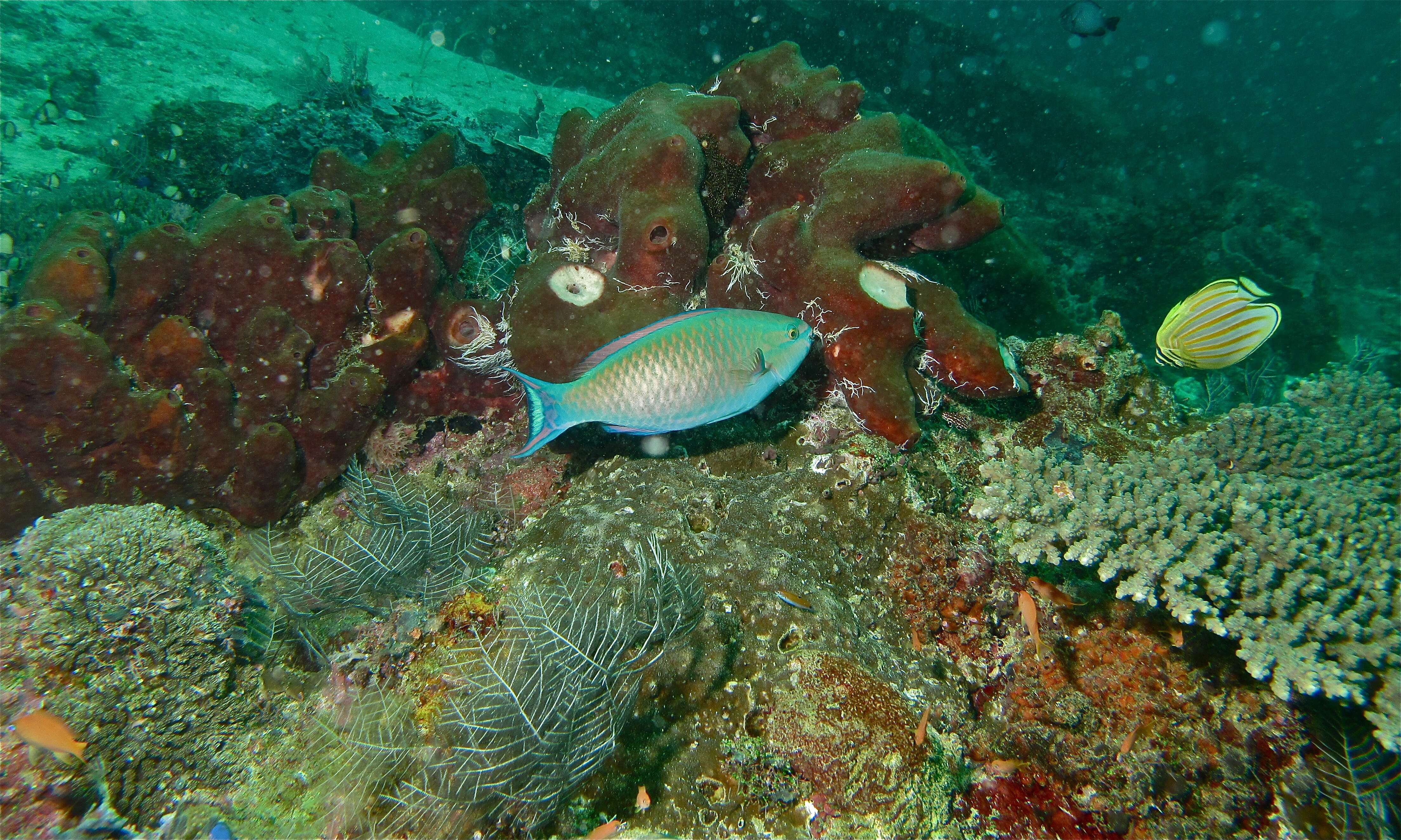
Scarus psittacus Forsskål, 1775 (Common parrotfish)
Inhabit reef flats and lagoon and seaward reefs to at least 25 m depth . Found over corals . Benthopelagic . Initial-phase fish stage usually form small feeding schools . Graze on benthic algae . Secrete a mucus cocoon .
Scarus spinus (Kner, 1868) (Greensnout parrotfish)
Inhabits coral-rich areas of outer lagoon and seaward reefs . Usually solitary . Females usually in small groups with a male nearby; they may mix with females of similar species . An uncommon fish patchily distributed through much of its range.
Scarus tricolor Bleeker, 1847 (Tricolour parrotfish)
Inhabits lagoon and seaward reefs, in areas with dense coral growth up to at least 30 m. Usually solitary, sometimes in groups . Feeds on benthic algae .
Share on Social Networks
- Facebook:

personalize your shared text as well as its destination (wall, page...) or send as a private message to a friend
- Twitter: Tweet personalize your tweet
- Google Plus:
Direct link to this dive
- Long link:
- Short link:


 We are participating today in the startup contest Techcrunch Disrupt. Support Diveboard by voting for us!
























































































Davao Boat Club and marina
Single dive, multilevel
clear breezy choppy \
solo dive
High tide around 12:24pm
no current start and end, but mild current during middle of dive