


 Beachnutts


 Philippines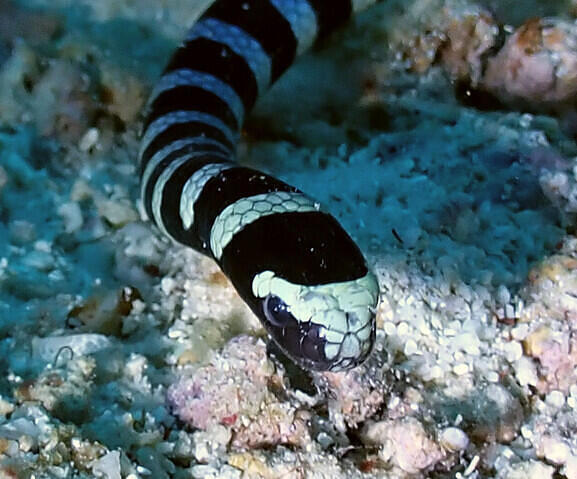
-
Nº171
 Date: 2025-04-06 - 01:13
-
 Max Depth: 22.3m Duration: 78mins
Dive Location

- Surface interval:106 mins
- Temp: Surf 27°C Bottom 27°C
- Dive type : Recreational, Reef, Photo
- Visibility: Good Water: Salt
Specific gear used
- BCD: Scubapro - Glide Plus
- Boots: Orca - Dive shoes
- Camera: Olympus - TG6
- Computer: Oceanic - OCS
- Fins: Force Fins - XL Blue Force
- Knife: Scuba MAx - folding
- Lift bag: ScubaMax - SMB
- Mask: Promate - Scope
- Regulator: SEAC - Synchro
- Wet suit: Blue Ocean - Diveskin
- Weights: 3.2 kg
Dive reviews
| Overall review | ||
| Dive difficulty | ||
| Marine life quality |
Dive Shop & Buddies
 Dive with Blake Auge
 Dive buddies:
Reymar Tano,
Eric Cembrano,
Beachnutts
Dive buddies:
Reymar Tano,
Eric Cembrano,
Beachnutts

Link to this spot:
- Spot:
- Country:
- Area:
- Body of water:
Dive Profile
- 1. Air
- 10L Aluminium 207 → 34 bar
- Average depth: 14.8m
Data provided by EOL.org
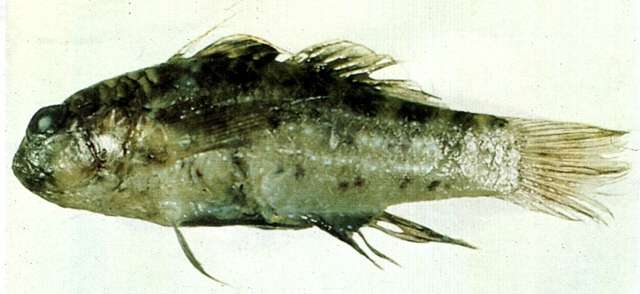
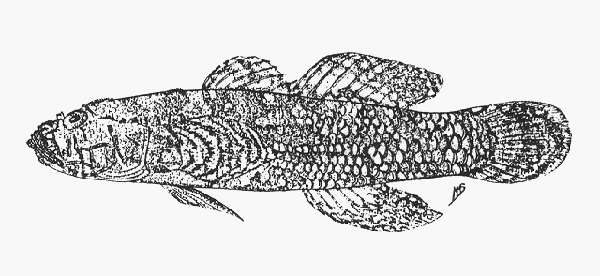
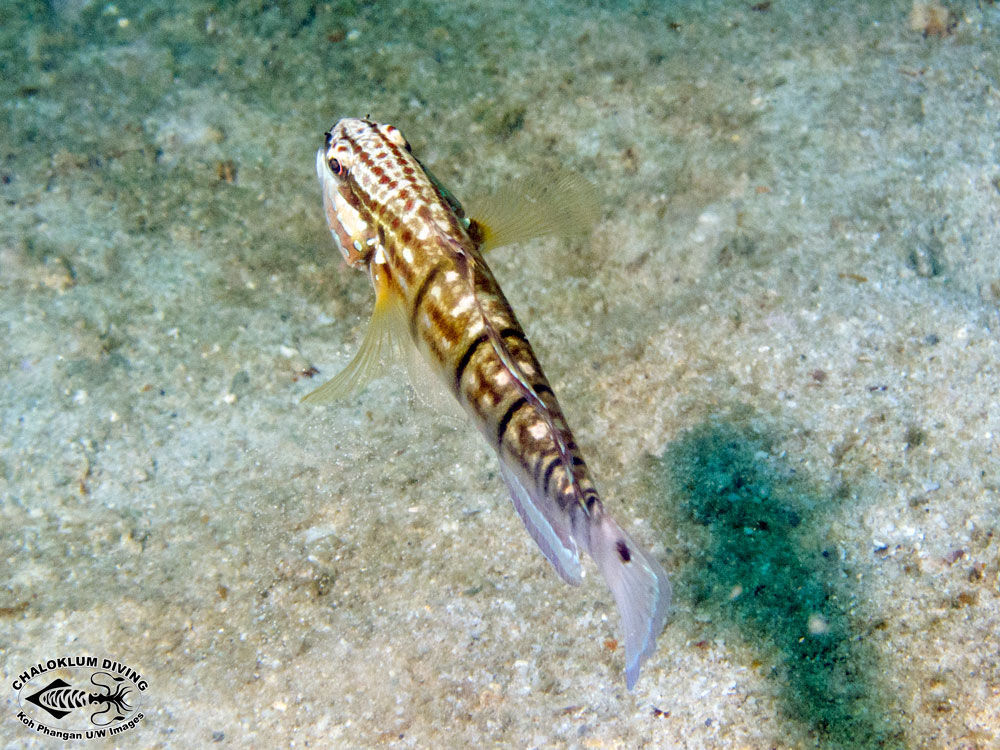




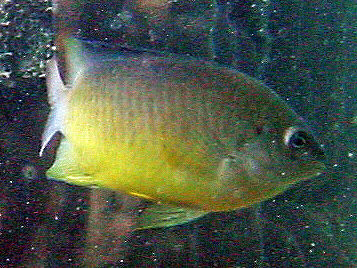
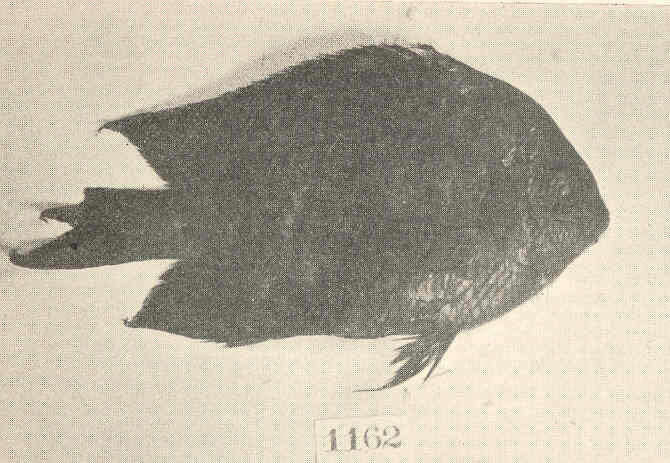

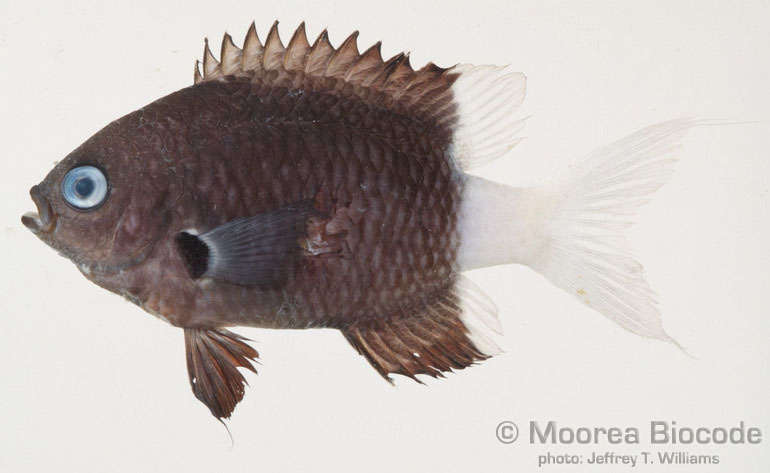

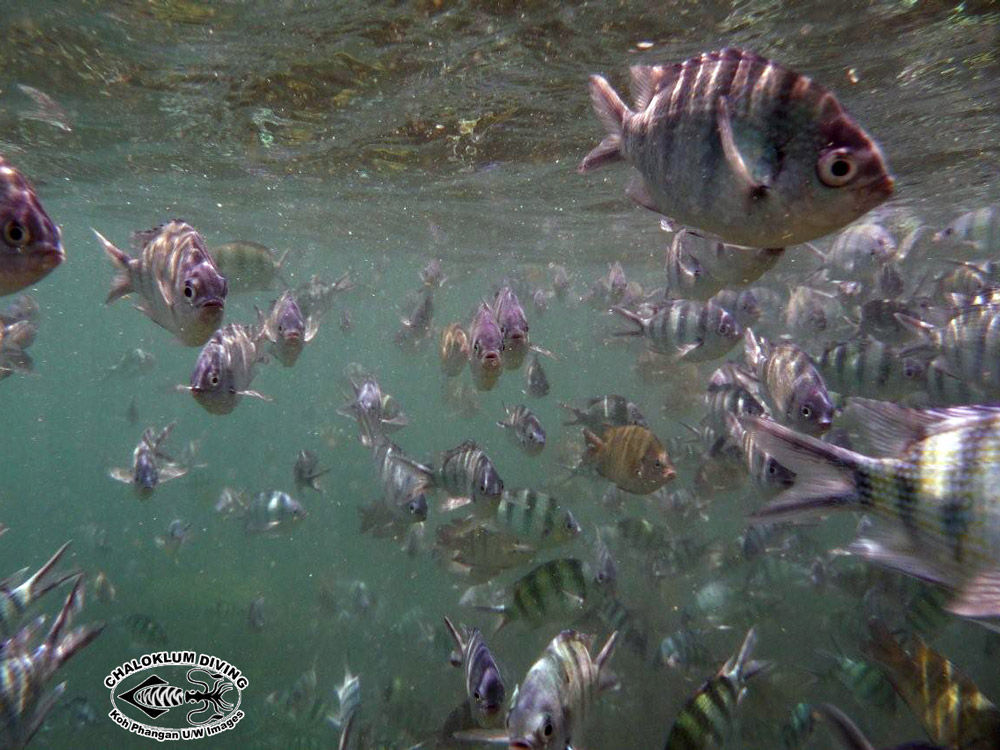

Species Identified
Asterropteryx semipunctata Rüppell, 1830 (Starry goby)
Found on algal-coated reef rock and rubble of inner flats and turbid lagoons . Takes refuge in burrows or holes in the reef . Benthic .
Callogobius flavobrunneus (Smith, 1958) (Slimy goby)
Amblygobius phalaena (Valenciennes, 1837) (Banded goby)
Adults inhabit coastal reefs and lagoons on sand and rubble margins of algal reefs and sometimes near seagrass beds . Feed by sifting mouthfuls of sand and expelling it through the gills, to capture small invertebrates, o...
Read More
Read More
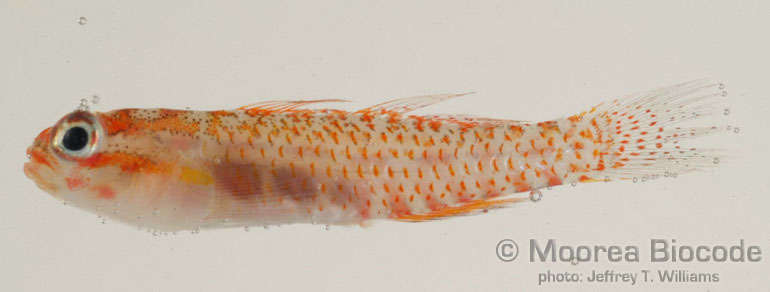
Eviota albolineata Jewett & Lachner, 1983 (Spotted fringefin goby)
Occurs in shallow lagoon and channel reefs at depths usually less than 3 m.
Lutjanus fulviflamma (Forsskål, 1775) (Dory snapper)
Inhabit coral reefs . Often in large aggregations with Lutjanus kasmira and Lutjanus lutjanus . Juveniles are sometimes found in mangrove estuaries or in the lower reaches of freshwater streams. Adults usually school on...
Read More
Read More
Engyprosopon grandisquama (Temminck and Schlegel, 1846) (Largescale flounder)
Found on sandy and muddy areas of the continental shelf. Feeds on crustaceans, polychaetes, and other benthic animals . Marketed fresh and sometimes dried .
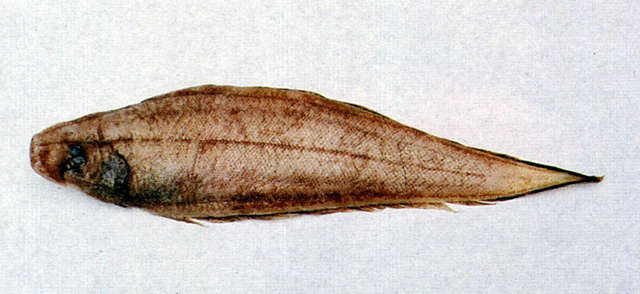
Cynoglossus suyeni Fowler, 1934 (Dadali)
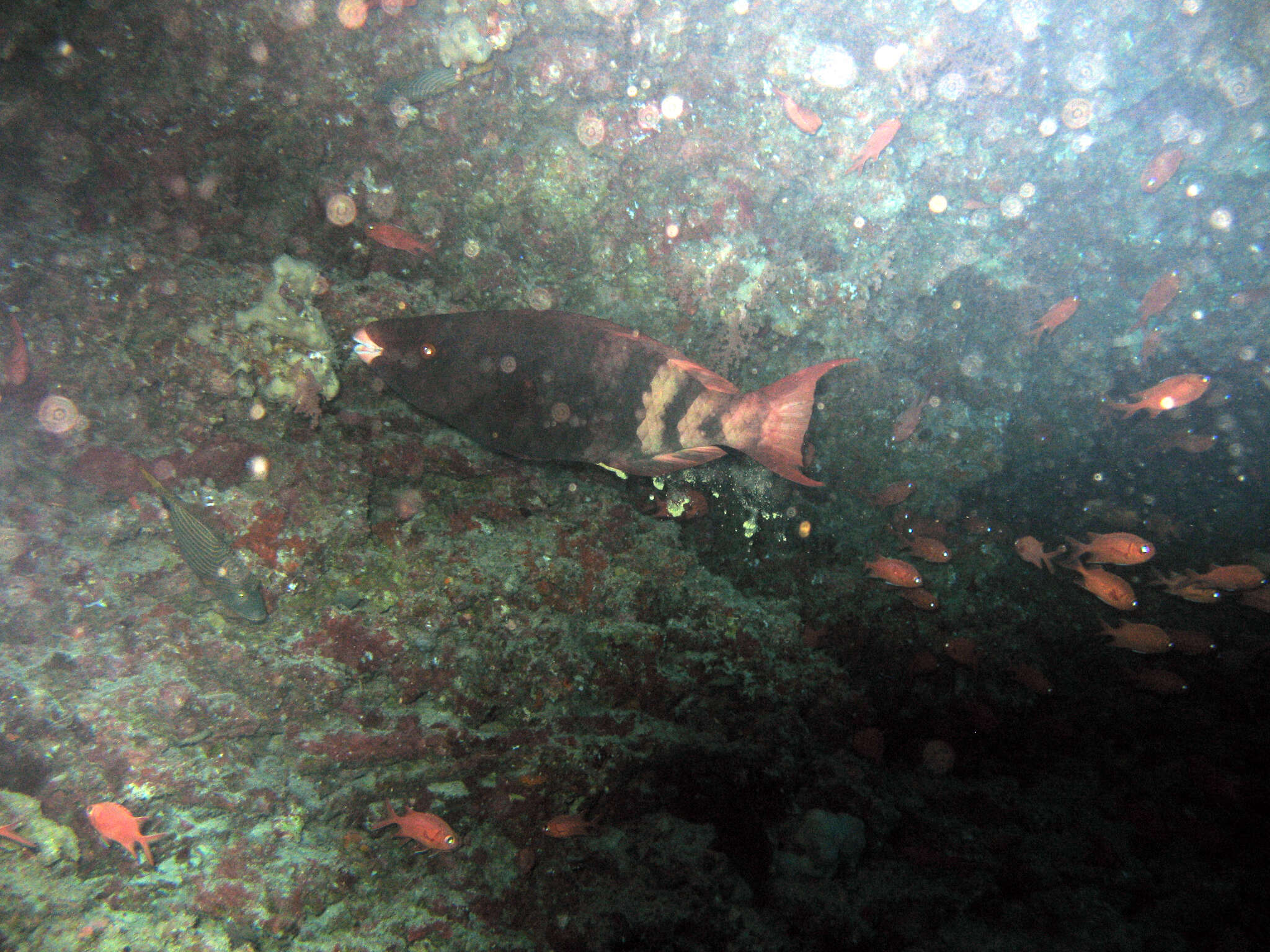
Scarus caudofasciatus (Günther, 1862) (Redbarred parrotfish)
Inhabits steep outer reef slopes . Solitary and wary species . Caught with nets and other kinds of artisanal gear. Mainly sold fresh.
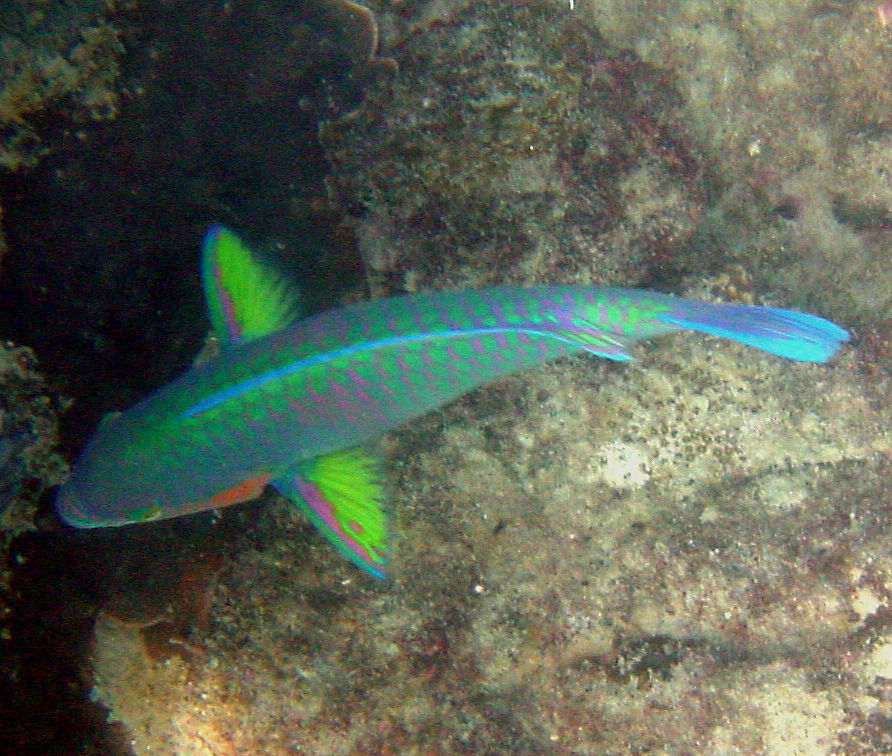
Scarus rivulatus Valenciennes, 1840 (Rivulated parrotfish)
Inhabits rocky and coral reefs from tidal pools to at least 10 m deep. Form schools with 30 to 40 individuals. Grazes on benthic algae and corals . Reproductively active terminal males become bicolored .
Scarus chameleon Choat and Randall, 1986 (Chameleon parrotfish)
Inhabits outer reef flats and exposed lagoon and seaward slopes from a depth of 3 to at least 30 m . Feeds mainly on algae . Females often in schools of mixed species when feeding, males usually seen separate .
Scarus forsteni (Bleeker, 1861) (Forsten's parrotfish)
Often found on exposed outer lagoon and seaward reefs, usually in rich coral habitats. Generally solitary. In Hong Kong live fish markets .
Scarus ghobban Forsskål, 1775 (Blue-barred parrotfish)
Scarus flavipectoralis Schultz, 1958 (Yellowfin parrotfish)
Inhabits lagoon and channel reefs, usually deeper 20 m .
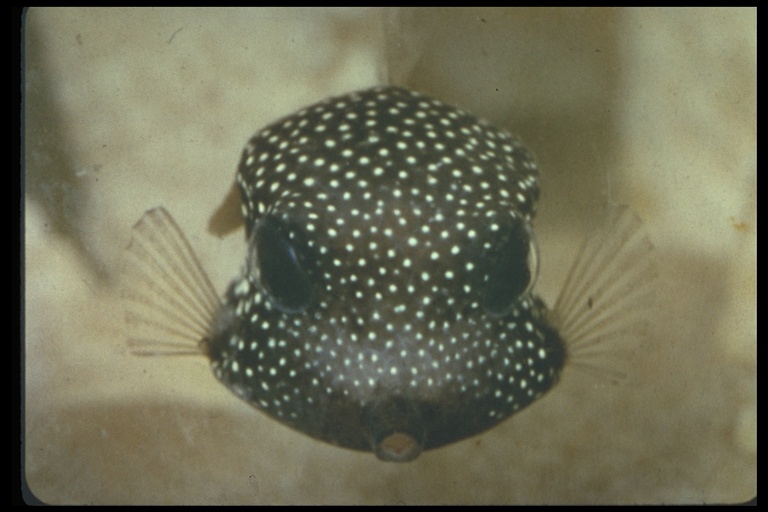
Ostracion meleagris Shaw, 1796 (pahu)
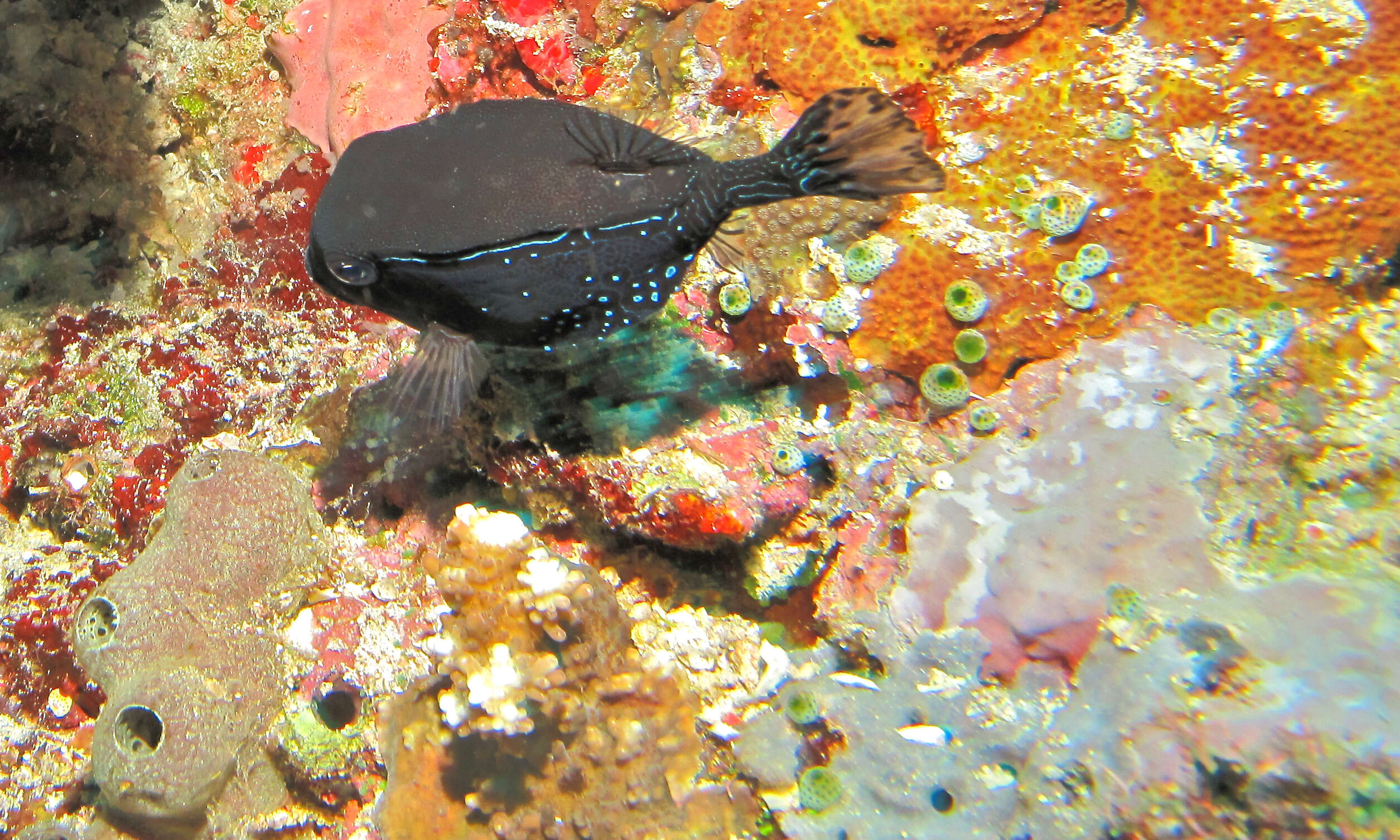
Ostracion solorensis Bleeker, 1853 (Reticulate boxfish)
Inhabits clear coastal reefs in rich invertebrate habitat on shallow crests or upper zone of slopes to about 15 meters depth . Relatively uncommon inhabitant of coral rich areas of seaward reefs. Sexually dimorphic .
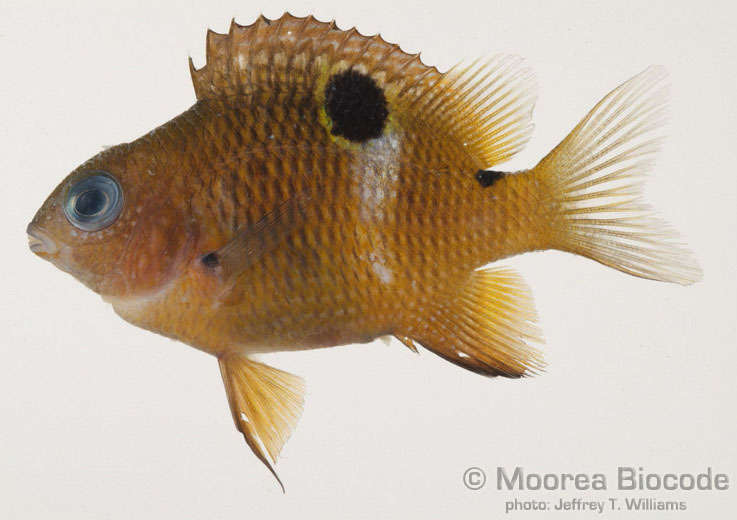
Amblyglyphidodon curacao (Bloch, 1787) (Black-snouted sergeant-major)
Inhabits lagoons, coastal embayments, reef passages and outer reefs. Juveniles often found among Sarcophyton and Sinularia soft corals. Feeding aggregations are frequently observed over growths of the staghorn coral Acro...
Read More
Read More
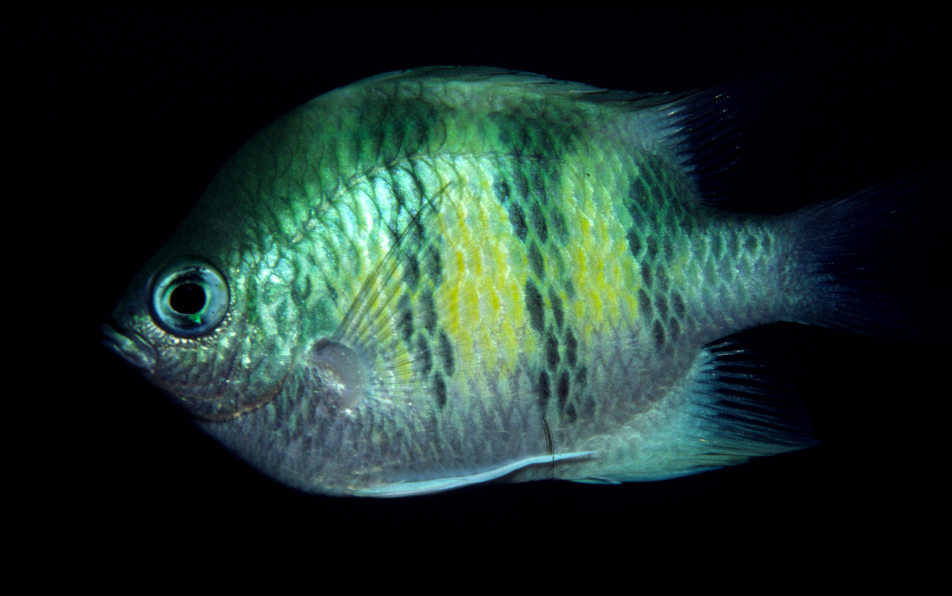
Pomacentrus philippinus Evermann and Seale, 1907 (Philippine damsel)
Occurs in lagoons, steep-sided channels, and seaward reefs from 2 to over 12 m . Usually found in groups off the sides of vertical drop-offs and overhanging ledges .
Pomacentrus chrysurus Cuvier, 1830 (Whitetail damsel)
Inhabits sandy areas of lagoons and inshore reefs around rock or coral outcrops. Feeds primarily on algae.
Acanthochromis polyacanthus (Bleeker, 1855) (Spiny chromis)
Inhabits inshore and offshore coral reefs . Also found in harbors, lagoons and outer reef slopes. The only pomacentrid species that lacks a pelagic larval stage. One of the very few marine fishes where fry are guarded b...
Read More
Read More
Chromis atripes Fowler and Bean, 1928 (Dark-fin chromis)
Inhabits coral rich areas of outer reef passes and slopes. Occurs singly or in small groups near the bottom.
Chromis margaritifer Fowler, 1946 (Chocolate dip)
Usually seen singly or in small groups on coastal reefs, amongst mixed algae-coral reef or rocky reefs . Found on exposed seaward reefs; less abundant in lagoons and channels. Feeds on zooplankton.
Stegastes fasciolatus (Ogilby, 1889) (Pacific gregory)
Abudefduf sexfasciatus (Lacepède, 1801) (Natal sergeant)
Inhabits inshore and offshore coral or rocky reefs. Also in shallow coastal reef flats or crests, usually where lots of tall soft corals or hydroid colonies are present . Feeds on zooplankton and algae and aggregates high in the water column .
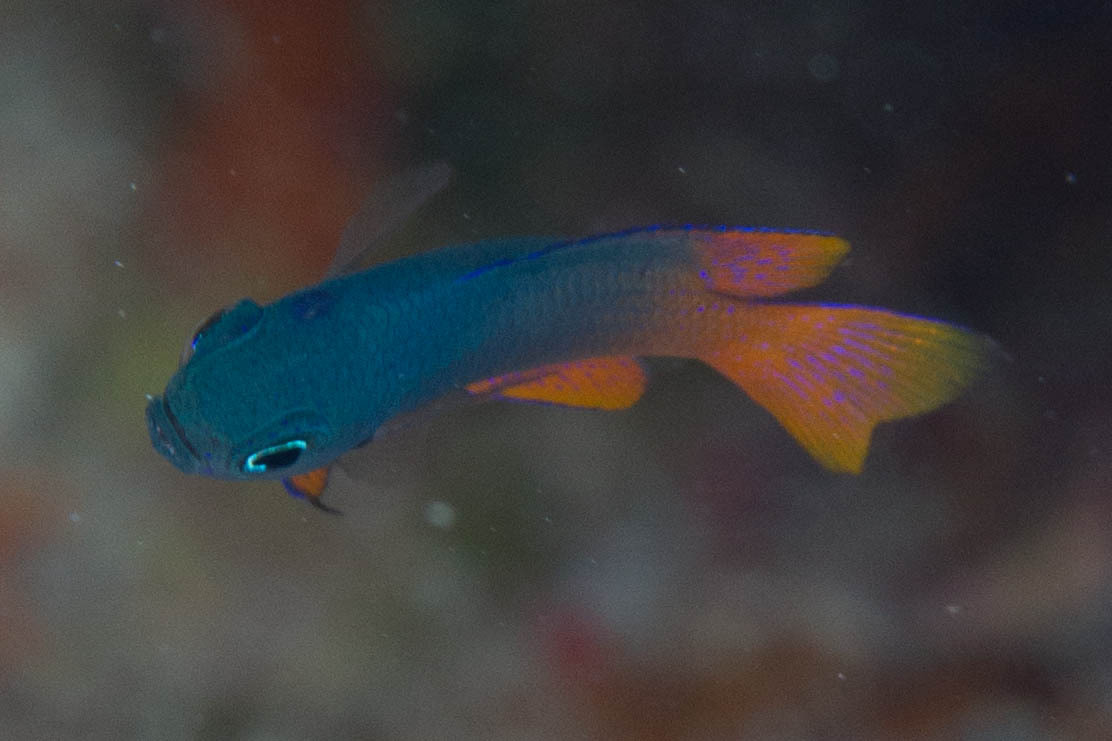
Pomacentrus alexanderae Evermann and Seale, 1907 (Alexander's damsel)
Occur in lagoon, inshore, and offshore reefs . Usually seen solitary, often swimming well above substrate . Feed on algae, barnacle nauplii, copepods, fish eggs, and small gastropods.
Plectroglyphidodon leucozonus (Bleeker, 1859) (Singlebar devil)
Inhabits surge-swept shorelines and seaward reef margins. Juveniles often occur in pockets of the intertidal reef crest, while adults are found in ridges between surge channels . Feeds on benthic algae. Juveniles found ...
Read More
Read More
Chrysiptera brownriggii (Bennett, 1828) (Surge demoiselle)
Occurs in rubble-strewn surge channels, the outermost reaches of exposed reef flats, and the upper submarine terrace at 12 meters. Territorial but generally occurs in groups, and remains close to shelter. Feeds mainly on benthic algae and small crustaceans .
Pomacentrus littoralis Cuvier, 1830 (Smoky damsel)
Inhabits rock, rubble or coral reefs usually inshore. Visits reefs submerged by high tides. Occurs in small loose groups or solitary .
Chromis delta Randall, 1988 (Deep-reef chromis)
Inhabits steep outer reef slopes with rich coral growth. Occurs singly or in small groups and remains close to shelter, often at the entrance of large caves or near its ceiling .
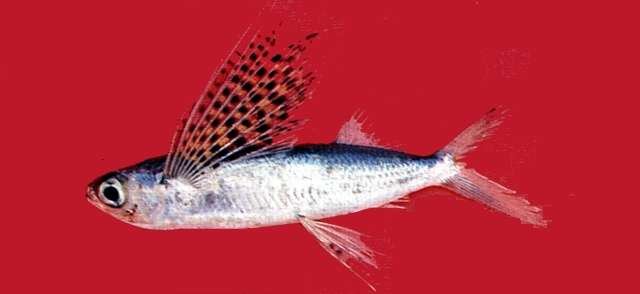
Cypselurus poecilopterus (Valenciennes, 1847) (spotted flyingfish)
Inhabits neritic surface waters, rare in the open ocean . Capable of leaping out of the water and gliding for long distances above the surface .
Share on Social Networks
- Facebook:

personalize your shared text as well as its destination (wall, page...) or send as a private message to a friend
- Twitter: Tweet personalize your tweet
- Google Plus:
Direct link to this dive
- Long link:
- Short link:


 We are participating today in the startup contest Techcrunch Disrupt. Support Diveboard by voting for us!
























































































2 dive 2 tanker aboard Budas
Drop in offshore bouy offshore, deep swim to reef on descent, looking for nudis, not many subjects but relaxed dive
back to boat
solo, multilevel