


 Beachnutts



 Philippines
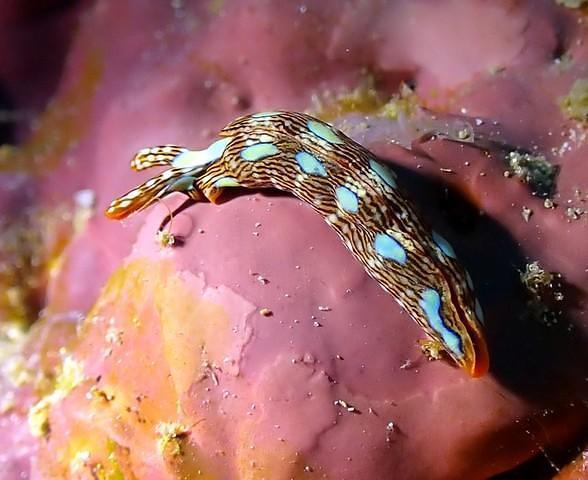
-
Nº107
 Date: 2023-10-29 - 09:39
-
 Max Depth: 24.7m Duration: 86mins
Dive Location

- Temp: Surf 27°C Bottom 27°C
- Dive type : Recreational, Reef, Photo
- Visibility: Excellent Water: Salt
Specific gear used
- BCD: Scubapro - Glide Plus
- Boots: Orca - Dive shoes
- Camera: Olympus - TG6
- Computer: Oceanic - OCS
- Fins: Atomic Aquatics - Blade Fins
- Knife: Scuba MAx - folding
- Lift bag: ScubaMax - SMB
- Light: Sofirn - SD05
- Mask: Promate - Scope
- Regulator: Aqualung - Calypso
- Wet suit: Blue Ocean - Diveskin
- Weights: 3.2 kg
Dive reviews
| Overall review | ||
| Dive difficulty | ||
| Marine life quality |
Recent Divers in Samal island, Davao
Recent Pictures in Samal island, Davao
Dive Shop & Buddies
 Dive with Blake Auge
 Dive buddies:
Maeng,
Mike Tacansan

Link to this spot:
- Spot:
- Country:
- Area:
- Body of water:
Dive Profile
Data provided by EOL.org


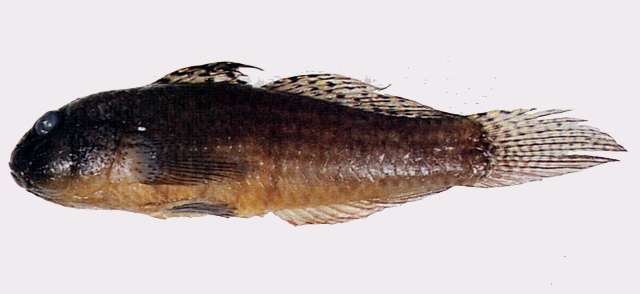


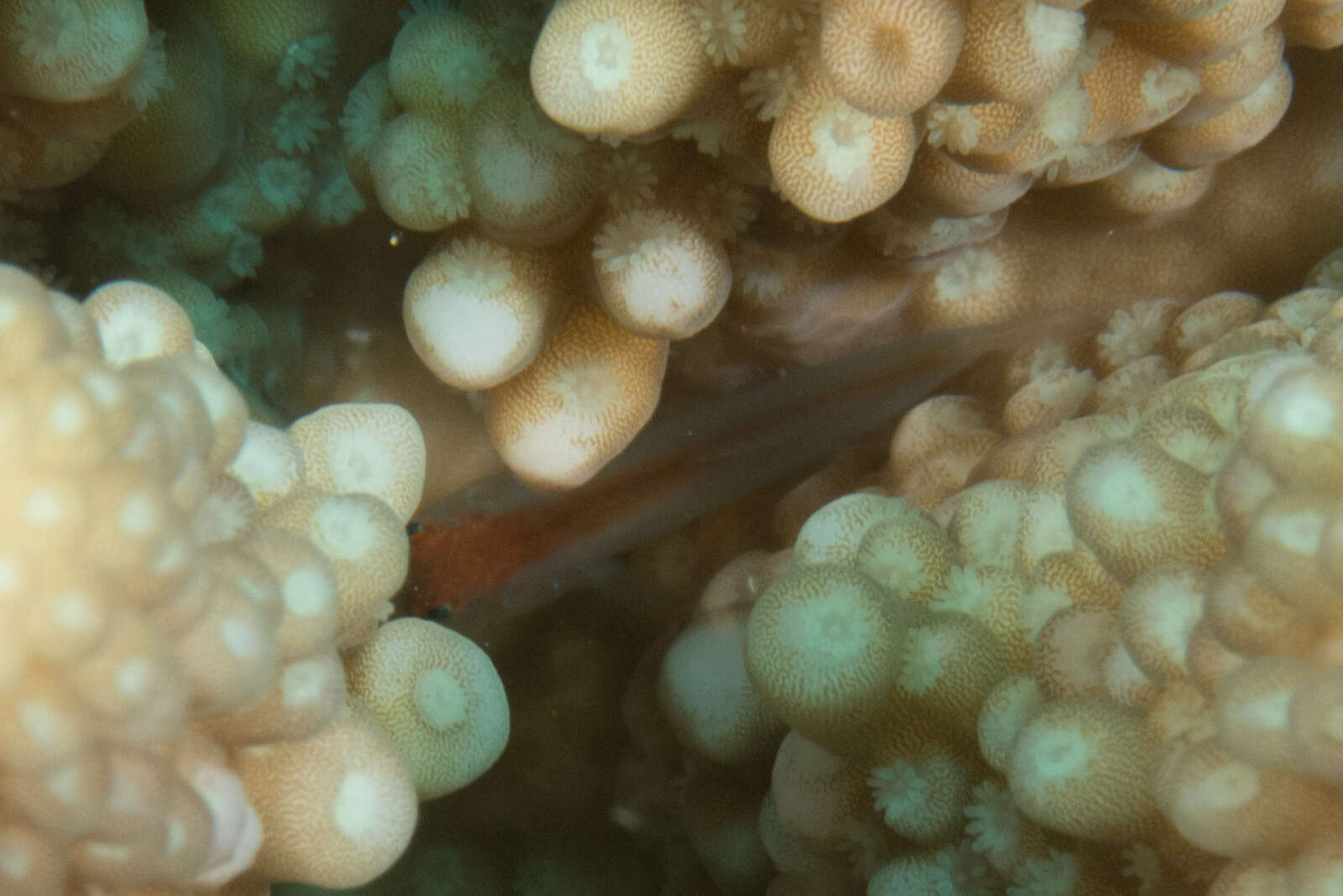







Species Identified
Gobiusculus flavescens (Fabricius, 1779) (Two-spotted goby)
Pomatoschistus norvegicus (Collett, 1902) (Norway goby)
Found offshore on mud and coarse shell deposits . Can hybridize with Pomatoschistus lozanoi .
Exyrias puntang (Bleeker, 1851) (Puntang goby)
Inhabits muddy bottoms of shallow, turbid marine to brackish coastal inlets and estuaries. Also lives in shallow coastal waters, large tidal pools, mangroves, siltty lagoons and brackish lakes .
Glossogobius celebius (Valenciennes, 1837) (Celebes goby)
Adults live in clear streams, usually close to the sea . They occur mainly in fresh water, but larvae in marine environment .
Fusigobius maximus (Randall, 2001)
Cabillus atripelvicus Randall, Sakamoto & Shibukawa, 2007
Gobiosoma grosvenori (Robins, 1964) (rockcut goby)
Inhabits shallow, rocky areas.
Gobiodon rivulatus (Rüppell, 1830) (orangespotted goby)
Marine species usually living on coral reefs but also recorded from pools, freshwater streams or lagoon mouths . Found on tabletop Acropora corals ; a coral-commensal species . Monogamous . The male takes care of eggs ...
Read More
Read More
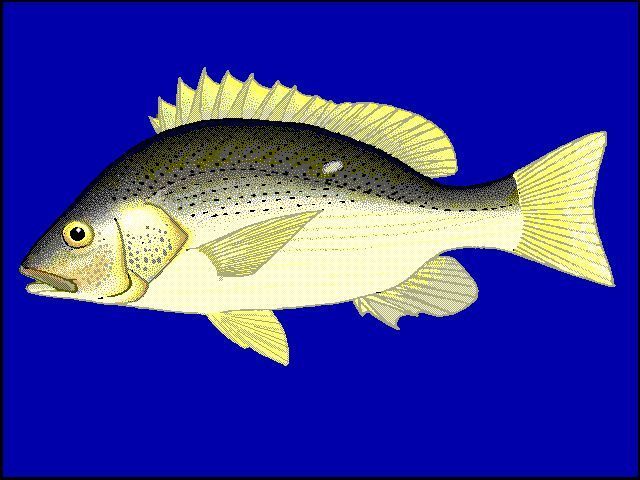
Macolor macularis Fowler, 1931 (Black-and-white snapper)
Inhabits steep slopes of lagoon, channel, or seaward reefs . Juveniles occur singly on protected reef slopes with feather stars, in staghorn corals or large sponges; adults commonly occur on deep reef slopes and may be in...
Read More
Read More
Lutjanus stellatus Akazaki, 1983 (star snapper)
Occurs in the vicinity of coral and rocky reefs. Usually found solitarily or in small groups. In Hong Kong live fish markets .
Lutjanus novemfasciatus Gill, 1862 (black snapper)
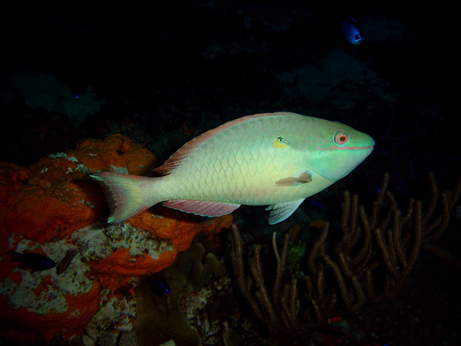
Scarus chameleon Choat and Randall, 1986 (Chameleon parrotfish)
Inhabits outer reef flats and exposed lagoon and seaward slopes from a depth of 3 to at least 30 m . Feeds mainly on algae . Females often in schools of mixed species when feeding, males usually seen separate .
Sparisoma aurofrenatum (Valenciennes, 1840) (Black parrot)
Inhabits coral reefs, young usually in adjacent seagrass beds. Often rests on the bottom . Feeds on plants. Solitary or in small groups. A protogynous hermaphrodite .
Sparisoma chrysopterum (Bloch and Schneider, 1801) (Blisterside)
Occurs in coral reefs and adjacent habitats, the young especially in seagrass beds. Juveniles or primary-phase adults rapidly assume a mottled pattern with which they blend with the substratum when they come to rest on the bottom. Feeds on benthic algae and seagrasses.
Scarus festivus Valenciennes, 1840 (Festive parrotfish)
Found in clear lagoon and seaward reefs . Feeds on benthic algae .
Scarus hoefleri (Steindachner, 1881) (Guinean parrotfish)
Inhabits rocky coastal areas . A herbivorous species with specialized pharyngeal bones and muscles . Occurs in shallow water .
Calotomus spinidens (Quoy and Gaimard, 1824) (Spinytooth parrotfish)
Found in coastal bays and deep lagoons . Inhabits seagrass beds or dense beds of algae. Well-camouflaged and easily overlooked . Feeds on these or the associated epiphytes. Caught nets and other types of artisanal gear.
Scarus obishime Randall and Earle, 1993 (Obishime)
Usually seen at depths of 25 m or more. Feeds on benthic algae during daytime.
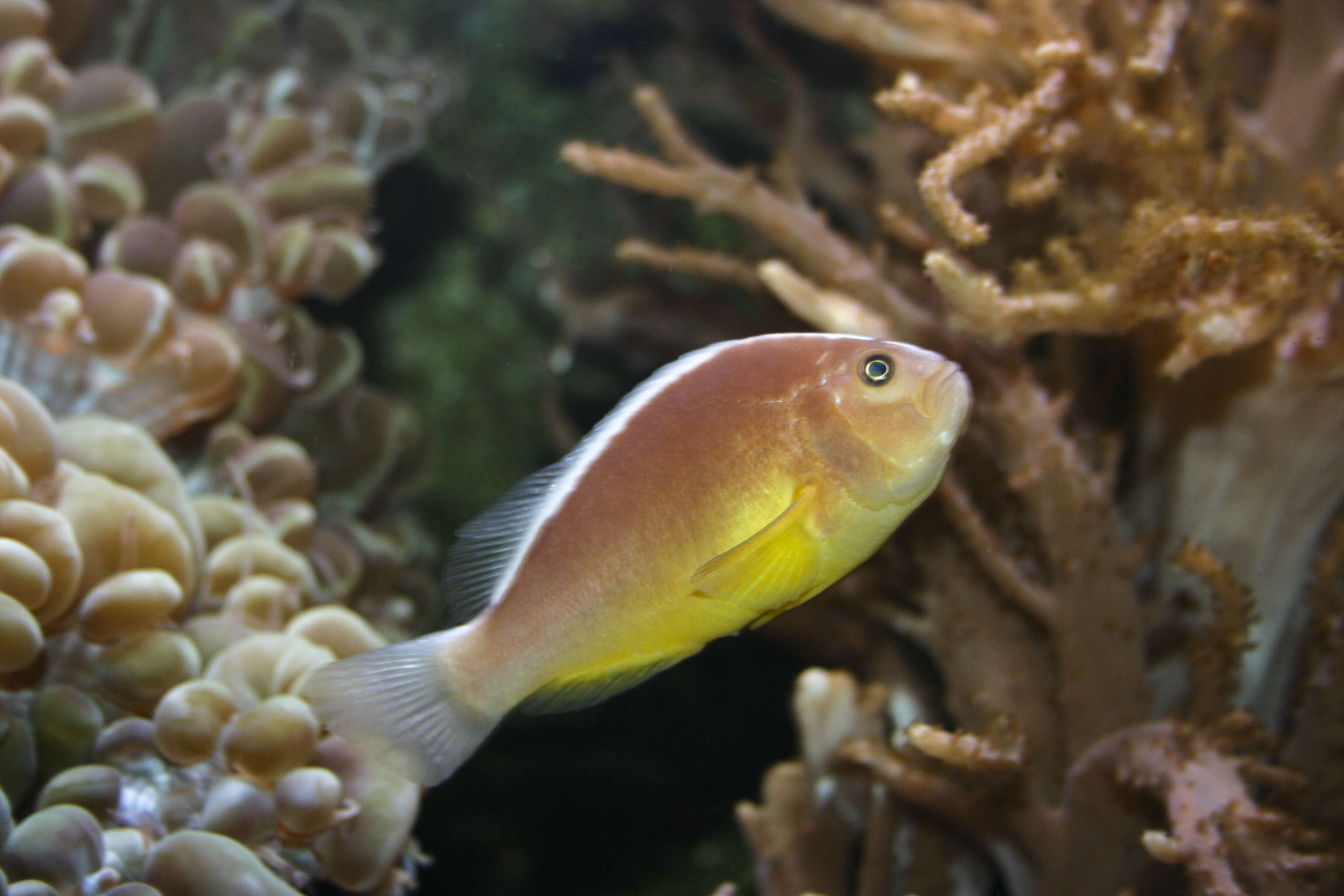
Amphiprion frenatus Brevoort, 1856 (oneband anemonefish)
Found in lagoon reefs and embayment. Monogamous , protandrous hermaphrodite . Associated with the anemone Entacmaea quadricolor . Has been reared in captivity .
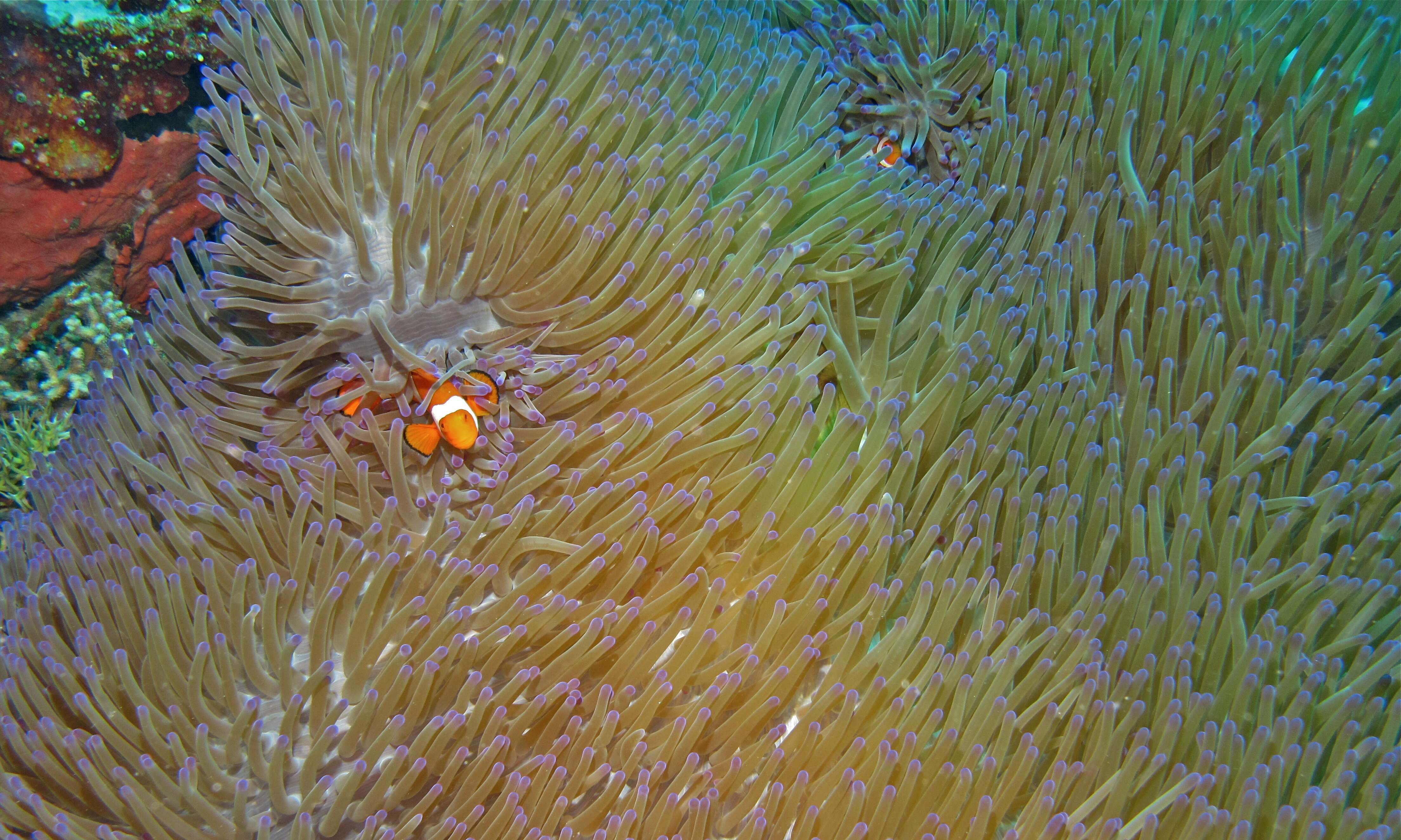
Amphiprion ocellaris Cuvier, 1830 (false clown anemonefish)
Premnas biaculeatus (Bloch, 1790) (Spinecheek anemonefish)
Inhabits lagoon and seaward reefs , found mainly in protected coastal waters and lagoons. Typically found in pairs in which males are much smaller than females . Feeds primarily on zooplankton and benthic algae . Has been reared in captivity . Associated with the anemone Entacmaea quadricolor .
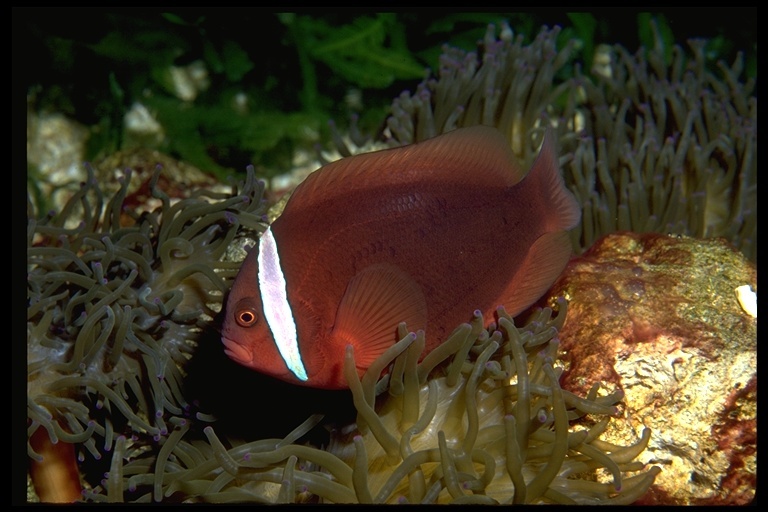
Amphiprion akallopisos Bleeker, 1853 (skunk-stripe anemonefish)
Found in shallow inshore reef habitats, often in strong current zones to about 15 m depth . Are protandrous hermaphrodites . Each pair is monogamous . Each anemone with a large female, a smaller functional male and seve...
Read More
Read More
Amphiprion chrysopterus Cuvier, 1830 (Two-banded anemonefish)
Inhabits passages and outer reef slopes. Known to occur at 25°C. Feeds chiefly on planktonic copepods, algae, echiuroid and sipunculoid worms, and pelagic tunicates. Associated with the anemones: Entacmaea quadricolor,...
Read More
Read More
Chlopsis dentatus (Seale, 1917) (Mottled false moray)
Uropterygius macrocephalus (Bleeker, 1864) (Needle-tooth moray)
Share on Social Networks
- Facebook:

personalize your shared text as well as its destination (wall, page...) or send as a private message to a friend
- Twitter: Tweet personalize your tweet
- Google Plus:
Direct link to this dive
- Long link:
- Short link:


 We are participating today in the startup contest Techcrunch Disrupt. Support Diveboard by voting for us!
























































































1st dive 2 tanker aboard Datu Budas
Flat, calm beautiful day. Clear water, sunny skies, hot