


 Beachnutts


 Philippines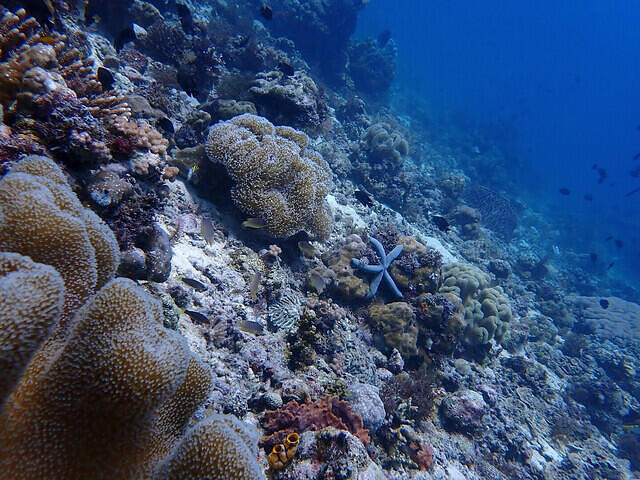
-
Nº180
 Date: 2025-07-03 - 11:21
-
 Max Depth: 10.4m Duration: 84mins
Dive Location

- Temp: Surf 28°C Bottom 28°C
- Dive type : Recreational, Reef, Photo, Exploration
- Visibility: Excellent Water: Salt
Specific gear used
- BCD: Scubapro - Glide Plus
- Boots: Orca - Dive shoes
- Camera: Olympus - TG6
- Compass:
- Computer: Oceanic - OCS
- Fins: Scubapro - Jet Fins
- Knife: Scuba MAx - folding
- Lift bag: ScubaMax - SMB
- Light: Sofirn - SD05
- Mask: Promate - Scope
- Regulator: SEAC - Synchro
- Weights: 3.2 kg
Dive reviews
| Overall review | ||
| Dive difficulty | ||
| Marine life quality |
Recent Divers in Samal island, Davao

Recent Pictures in Samal island, Davao
Dive Shop & Buddies
 Dive with Blake Auge
 Dive buddies:
Beachnutts
Dive buddies:
Beachnutts

Link to this spot:
- Spot:
- Country:
- Area:
- Body of water:
Dive Profile
- 1. Air
- 10L Aluminium 207 → 34 bar
- Average depth: 6.9m
Data provided by EOL.org













Species Identified
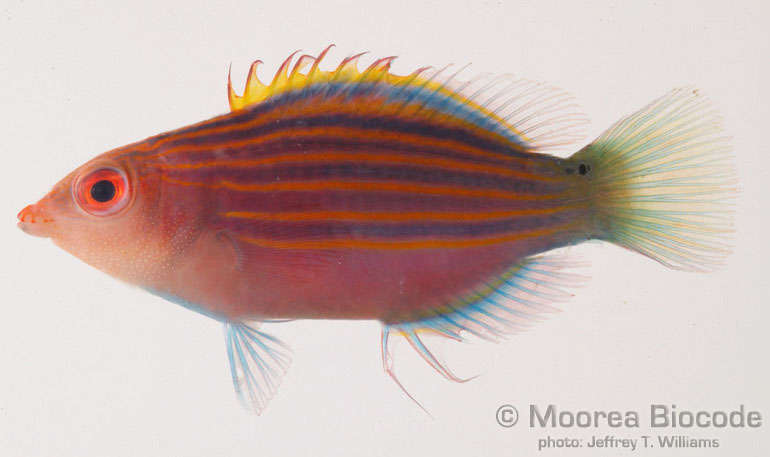
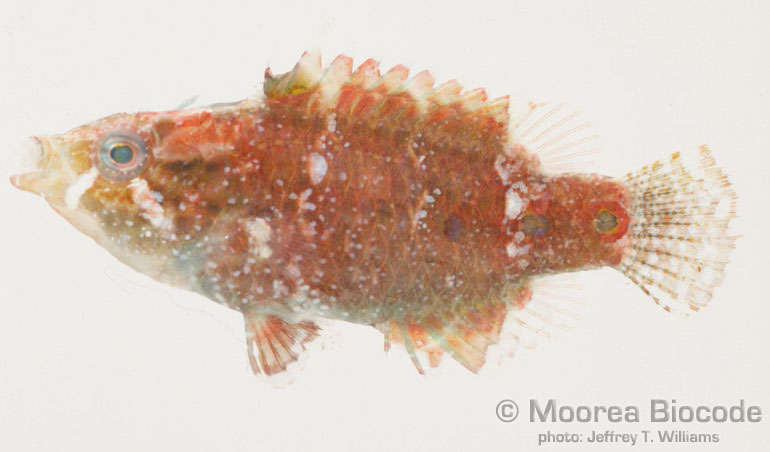
Pseudocheilinus hexataenia (Bleeker, 1857) (Pyjama)
Occurs in seaward reefs among coral branches. Also in clear coastal waters, dense coral habitats on shallow reef crest or slopes to depth of about 20 m. Usually occurs in small loose groups. A shy species, usually swimm...
Read More
Read More
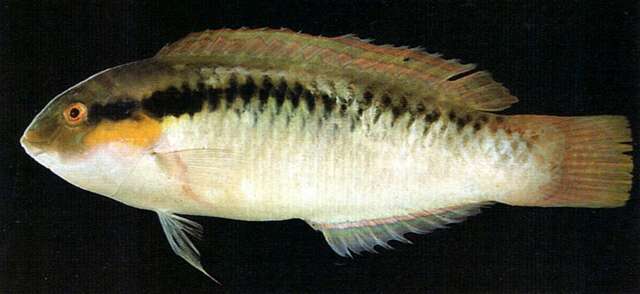
Halichoeres scapularis (Bennett, 1832) (Zigzag wrasse)
Common in shallow lagoons or bays; usually over sand, rubble, or seagrass bottom , rather than on coral reefs. Usually solitary and aggressive towards members of its own species. Feeds on small crustaceans by picking them off the sandy bottom .
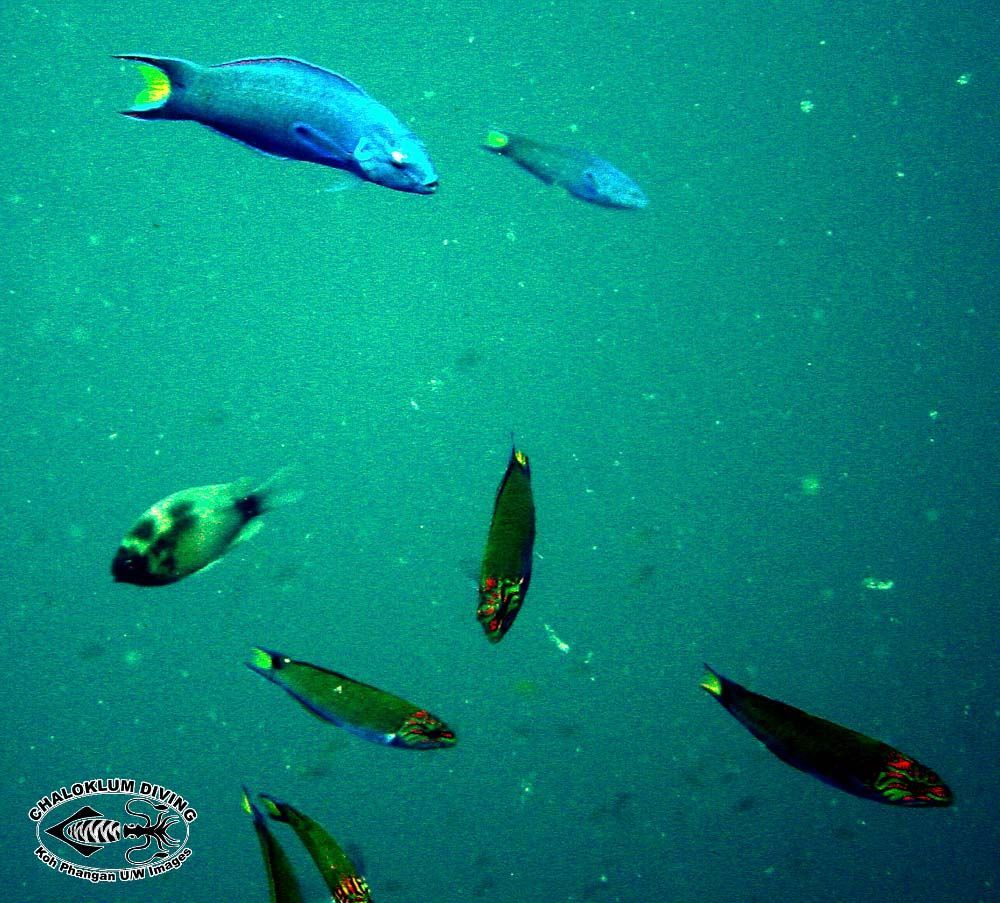
Thalassoma lunare (Linnaeus, 1758) (Blue wrasse)
Occurs in the upper portions of lagoon and coastal reefs, and in protected seaward reefs . Enters estuaries . Usually found on upper portions of ledges and heads . Feeds mainly on small benthic invertebrates and fish eggs . A protogynous hermaphrodite .
Coris gaimard (Quoy and Gaimard, 1824) (dahlia)
Found in areas of mixed coral, sand and rubble of exposed outer reef flats, lagoon and seaward reefs . Benthopelagic . Feeds mainly on mollusks, crabs, and hermit crabs, and occasionally on tunicates and forams .
Cheilinus oxycephalus Bleeker, 1853 (Snooty wrasse)
Found in coral-rich areas of lagoon and seaward reefs at depths of 1 to over 40 m . A secretive species , rarely ventures more than a few centimeters from shelter . A shy species, usually found in pairs when adult .
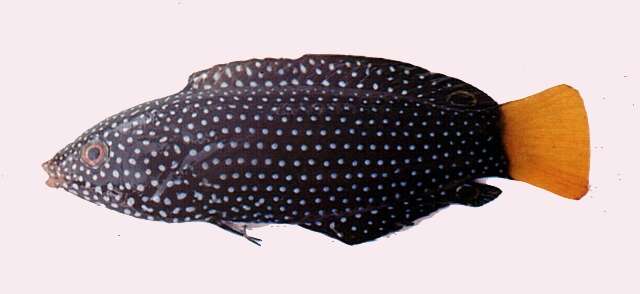
Anampses meleagrides Valenciennes, 1840 (Spotted wrasse)
Found in areas of mixed coral, rubble, consolidated limestone, and sand of seaward reefs; also in soft coral or sponge habitats . Minimum depth reported taken from Ref. 30874.
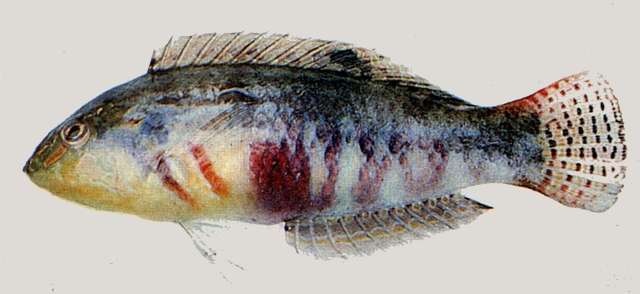
Halichoeres nebulosus (Valenciennes, 1839) (Nebulous wrasse)
Inhabits reef flats, reef margins, and rocky shores . Mainly in inshore weedy areas but has been collected as deep as 40 m .
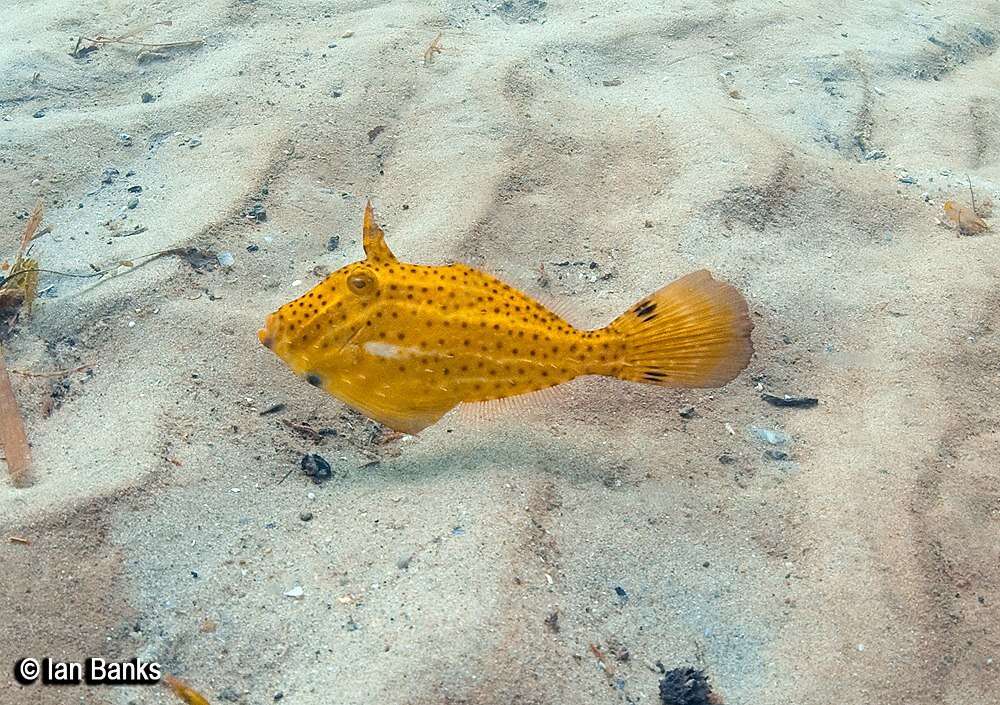
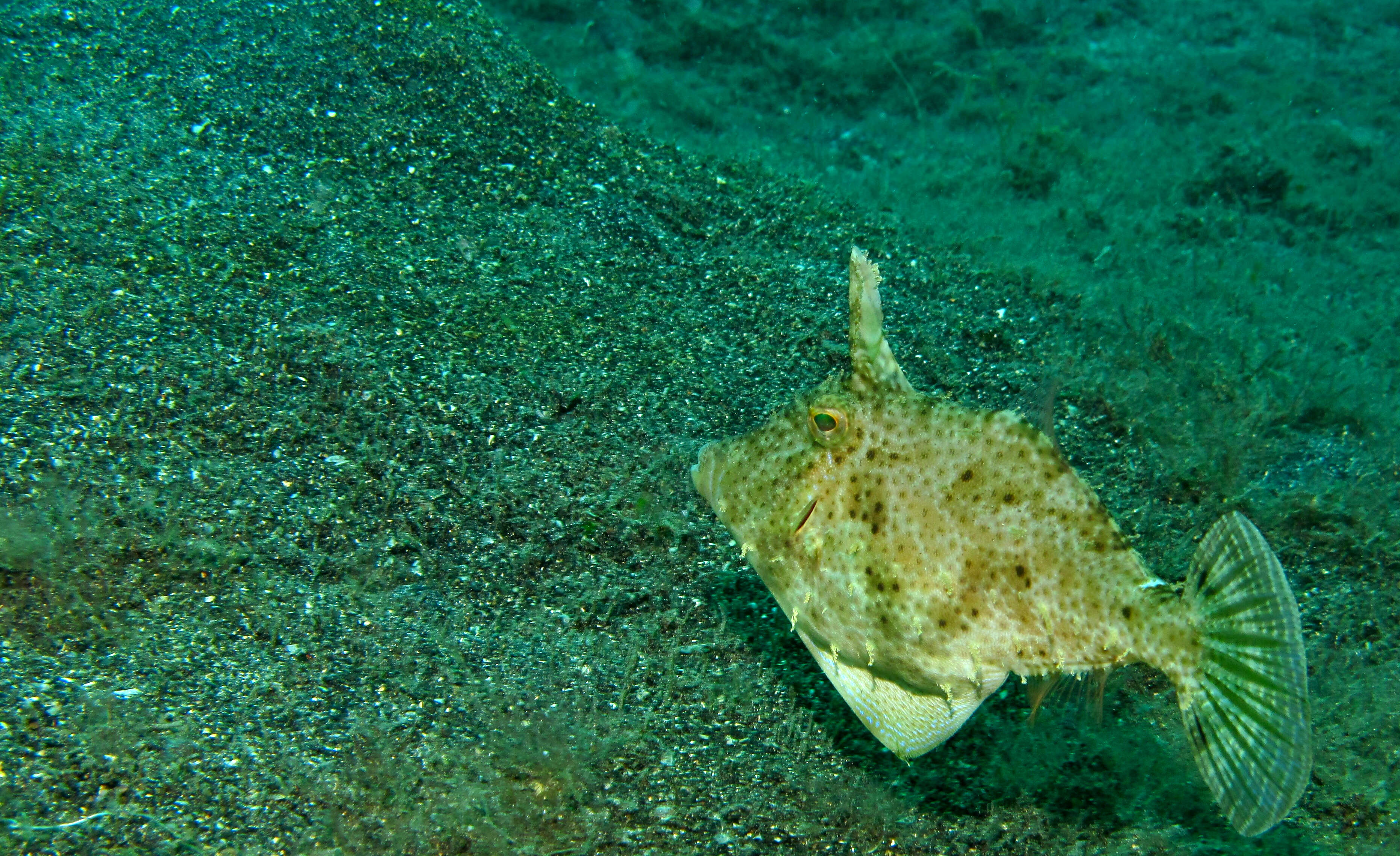
Pseudomonacanthus peroni (Hollard, 1854) (Pot-bellied leatherjacket)
Inhabits trawling grounds .
Pseudomonacanthus macrurus (Bleeker, 1857) (Strap-weed file-fish)
Inhabits shallow coastal algal reefs and estuaries. Adults are often in pairs .
Paramonacanthus nipponensis (Kamohara, 1939) (Japanese leatherjacket)
Inhabits deep muddy substrates from about 30 meters depth, but some individuals were found drifting with large Sargassum rafts over deep water, well away from the shore .
Heteractis crispa (Hemprich and Ehrenberg in Ehrenberg, 1834) (Leathery sea anemone)
Actinodendron arboreum (Quoy and Gaimard, 1833)
burrowing
Cheiraster gazellae Studer, 1884
Thalassianthus senckenbergianus Kwietniewski, 1896
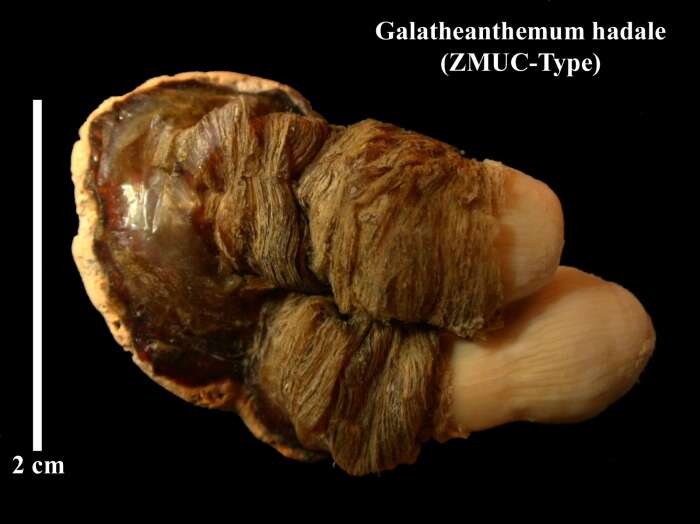
Galatheanthemum hadale Carlgren, 1956
Halcampella maxima Hertwig, 1888
Acanthaster planci (Linnaeus, 1758) (crown-of-thorns starfish)
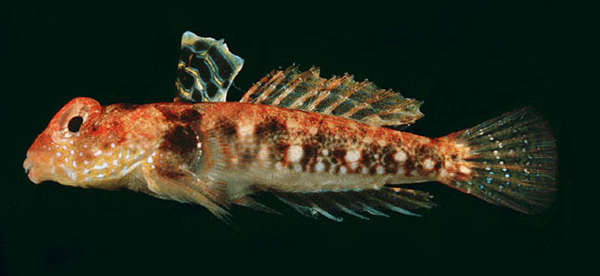
Callionymus enneactis Bleeker, 1879 (Mangrove dragonet)
Occurs in sand and mud bottoms from brackish mangrove areas to a depth of 15 m in coral reef lagoons .
Diplogrammus xenicus (Jordan & Thompson, 1914) (Kobu-numeri)
Found on sandy bottoms of rocky or coral reefs.
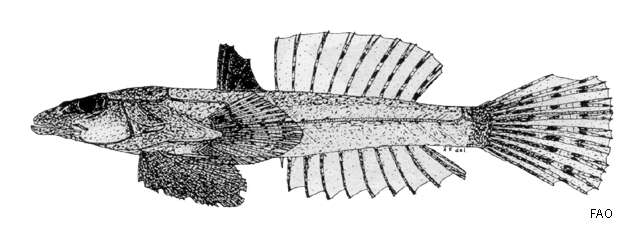
Eleutherochir opercularis (Valenciennes, 1837) (Flap-gilled dragonet)
Inhabits shallow sandy and muddy bottoms in the sea, but also enters mouths of rivers and may live even in freshwater .
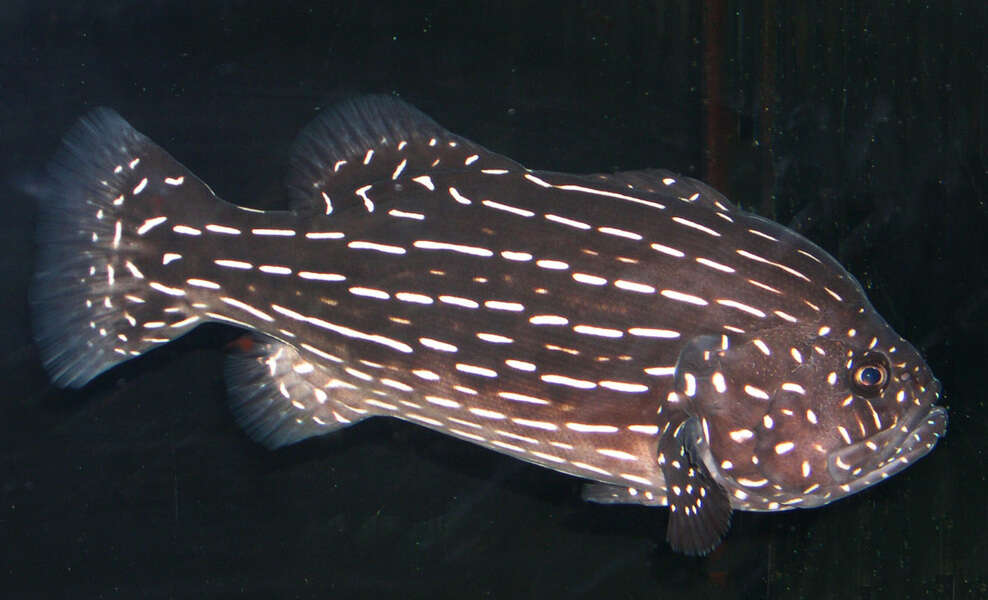
Grammistes sexlineatus (Thunberg, 1792) (Sixline soapfish)
Inhabits coastal waters over corals and rocky substrates . Usually hides beneath ledges and small caves during the day . Small juveniles have only two white stripes, dividing with growth into numerous lines. The lines b...
Read More
Read More
Pseudanthias randalli (Lubbock & Allen, 1978) (Randall's fairy basslet)
Occurs in caves or coral rubble areas along steep drop-offs or channel walls . Benthopelagic . Found in small groups .
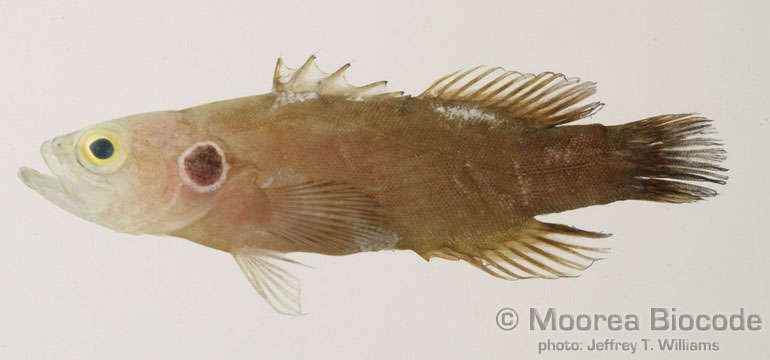
Grammistops ocellatus Schultz, 1953 (Ocellate soapfish)
Found on coral heads of lagoon and seaward reefs from 3 to at least 15 m .
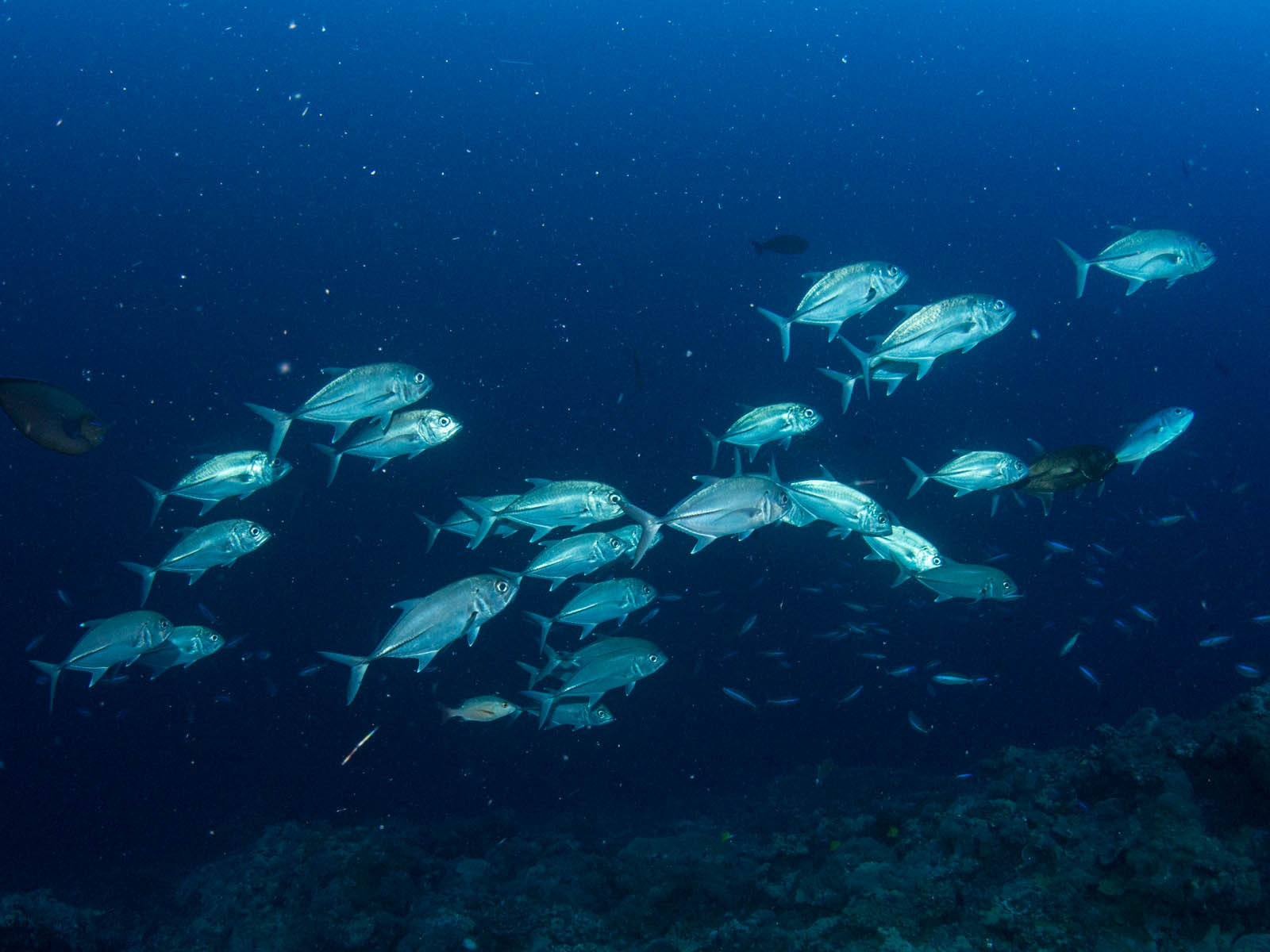
Caranx sexfasciatus Quoy and Gaimard, 1825 (Bayad)
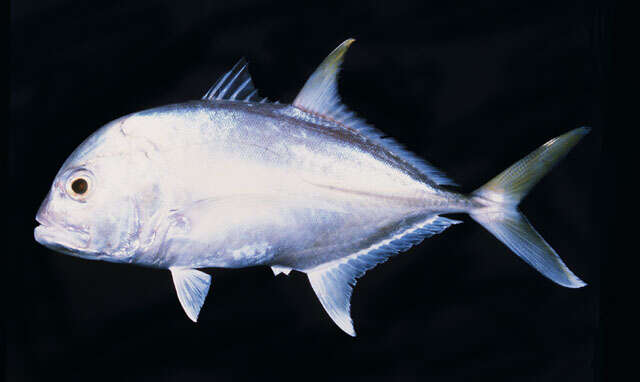
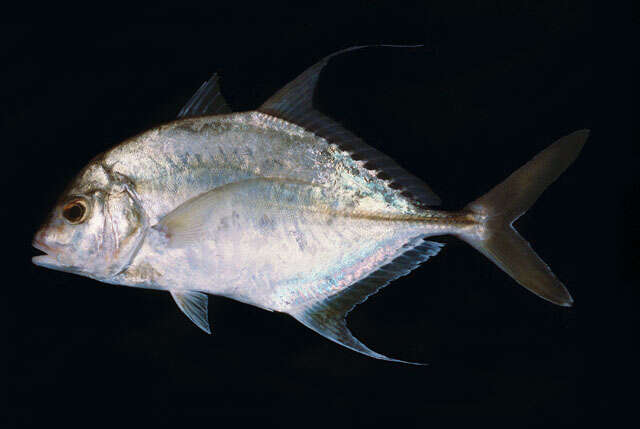
Caranx ignobilis (Forsskål, 1775) (Giant trevally)
Pelagic over sand and rock . Adults occur singly and inhabit clear lagoon and seaward reefs . Juveniles found in estuaries. Feed on crustaceans and fishes at night . Large individuals may be ciguatoxic. The largest t...
Read More
Read More
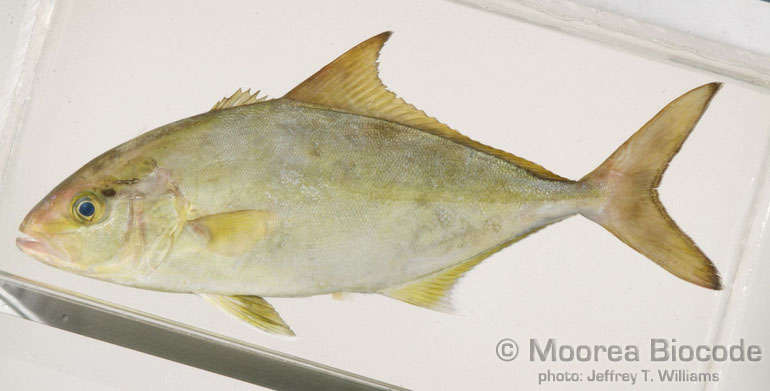
Seriola rivoliana Valenciennes, 1833 (Pacific amberjack)
Carangoides dinema Bleeker, 1851 (Shadow trevally)
Inhabits coastal waters. Occurs singly or in large schools at a depth of 15 m or less along steep drop-offs.
Naucrates ductor (Linnaeus, 1758) (Pilot-fish)
Oceanic species with a semi-obligate commensal relationship with sharks, rays, other bony fishes and turtles . Young are usually associated with jellyfish and drifting seaweed . Feed on scraps of host's left over, pa...
Read More
Read More
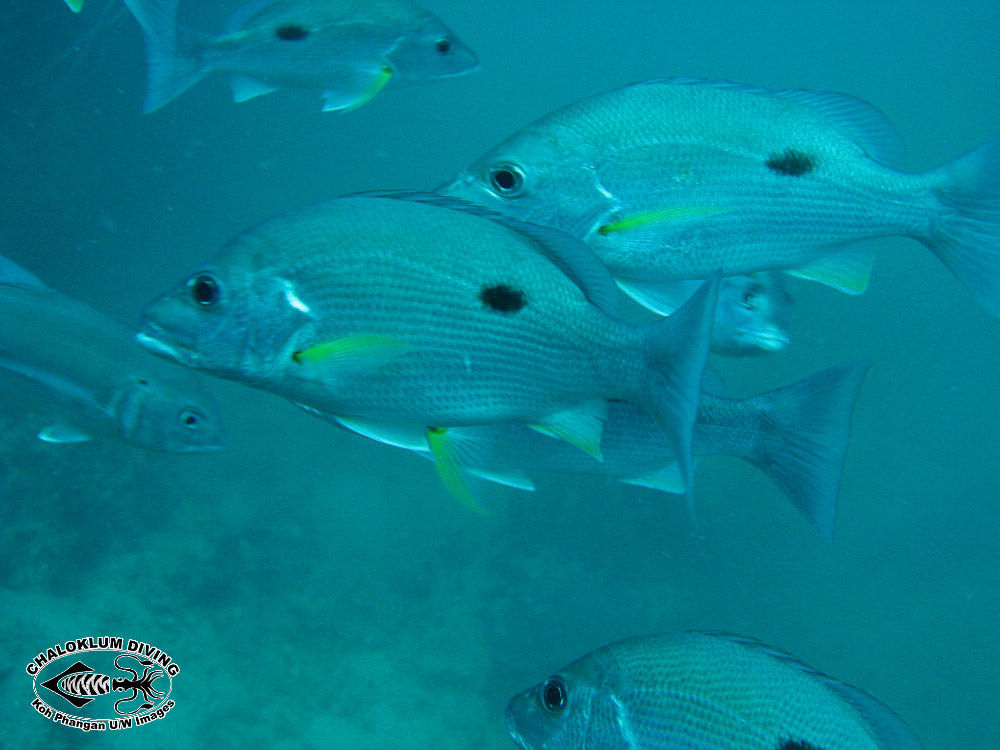
Lutjanus fulviflamma (Forsskål, 1775) (Dory snapper)
Inhabit coral reefs . Often in large aggregations with Lutjanus kasmira and Lutjanus lutjanus . Juveniles are sometimes found in mangrove estuaries or in the lower reaches of freshwater streams. Adults usually school on...
Read More
Read More
Lutjanus russellii (Bleeker, 1849) (Russell's snapper)
Inhabit offshore coral reefs and also inshore rocky and coral reefs . Juveniles frequent mangrove estuaries and lower reaches of freshwater streams . Adults on clear outer reefs at moderate depths, usually over 20 m, and...
Read More
Read More
Lutjanus vitta (Quoy and Gaimard, 1824) (Brownstripe red snapper)
Inhabits the vicinity of coral reefs, also areas with flat bottoms and occasional low coral outcrops, sponges, and sea whips. Occurs singly or in groups of up to about 30 individuals. Feeds on fishes, shrimps, crabs and other benthic invertebrates.
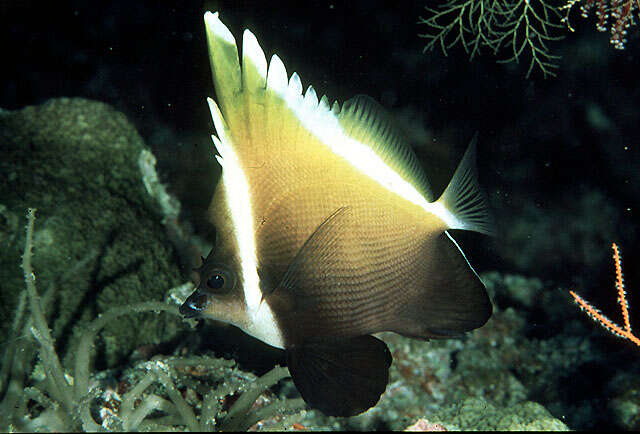
Heniochus varius (Cuvier, 1829) (Horned bannerfish)
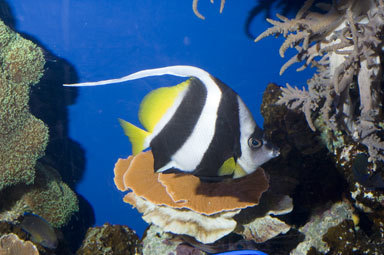
Occur in deep lagoons and steep outer reef slopes, with mixed algae and coral growth . Solitary or in small groups. Feed on corals and other invertebrates . Oviparous . Form pairs during breeding . Maximum depth reported taken from Ref. 48636.
Chaetodon vagabundus Linnaeus, 1758 (Vagabond butterflyfish)
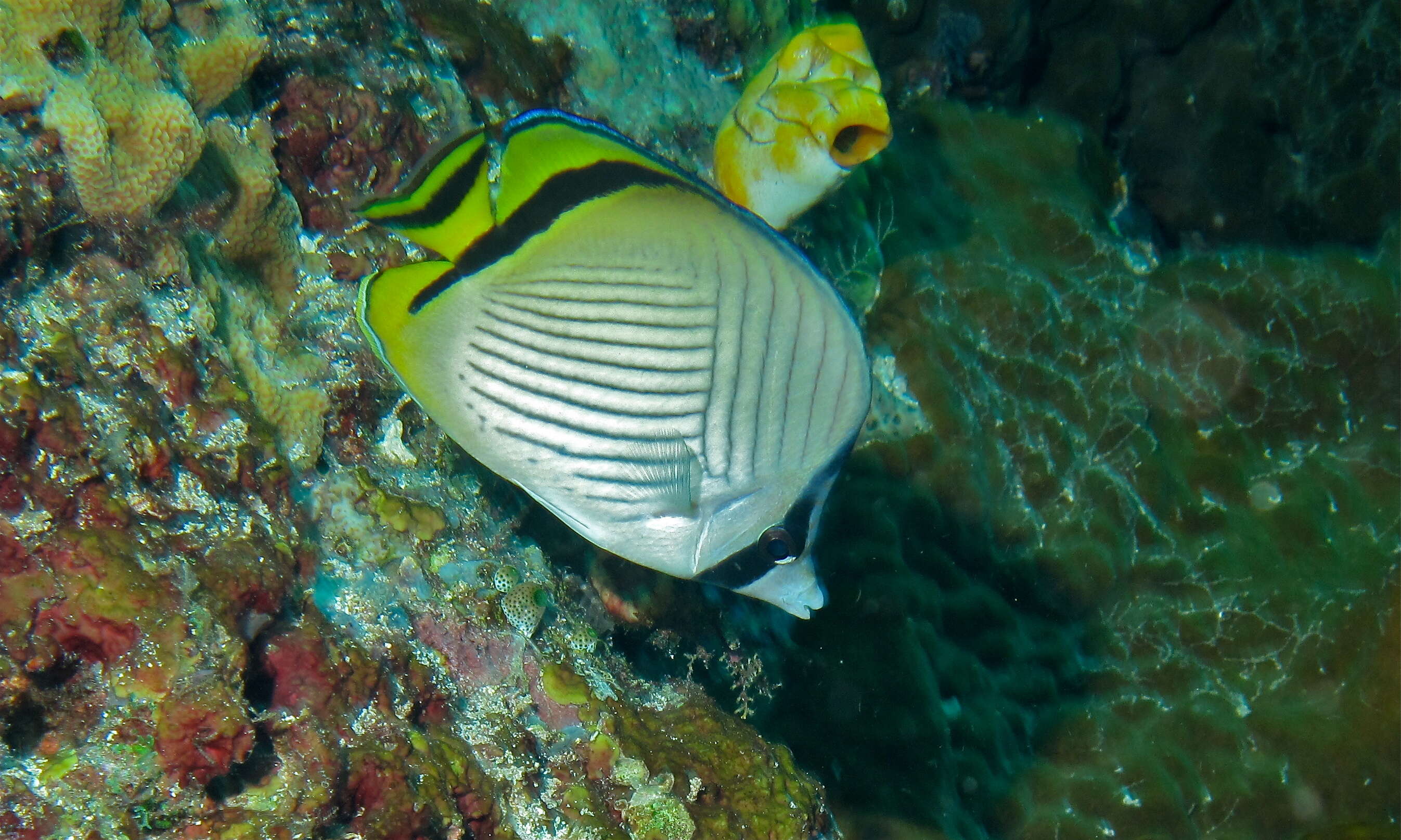
Found in reef flats, lagoon and seaward reefs and sometimes in turbid waters subject to freshwater runoff. Swim in pairs. Omnivorous, feed on algae, coral polyps, crustaceans and worms . Oviparous , monogamous . Stab...
Read More
Read More
Chaetodon speculum Cuvier, 1831 (Mirror butterflyfish)
In coastal reef slopes rich with hydroids and anemones. Small juveniles secretive in coral thickets . Usually solitary and relatively uncommon. Feed on coral polyps and invertebrates . Oviparous , monogamous . Form pairs during breeding .
Heniochus acuminatus (Linnaeus, 1758) (Pennant coralfish)
Inhabit deep, protected lagoons and channels, and the deeper parts of outer reef slopes. Juveniles are often solitary while adults occur in pairs . A planktivorous species that generally remains within a few meters of th...
Read More
Read More
Chaetodon bennetti Cuvier, 1831 (Bluelashed butterflyfish)
Occur in lagoon and seaward reefs in areas with rich coral growth . Juveniles may be found in shallow Acropora thickets . Adults occur in pairs . Omnivorous. Feed on coral polyps . Oviparous . Form pairs during breed...
Read More
Read More
Paracirrhites forsteri (Schneider, 1801) (Blackside hawkfish)
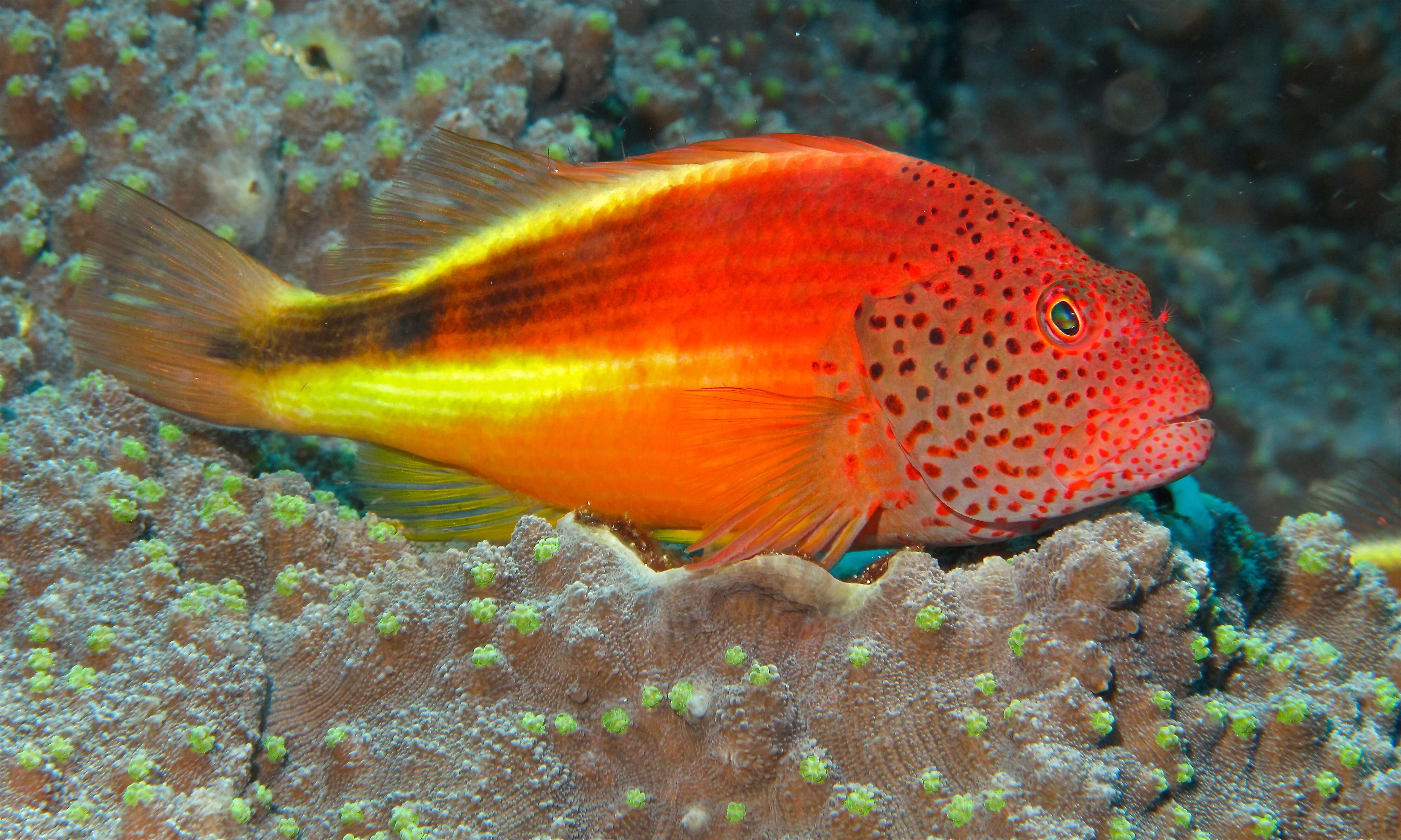
Inhabits clear lagoon or seaward reefs to at least 33 m depth , but may venture very deep. Occurs openly on coral and soft-bottom habitats, occasionally in pairs . Benthic . Tends to perch on outermost branches of Stylo...
Read More
Read More
Cirrhitichthys oxycephalus (Bleeker, 1855) (Coral hawkfish)
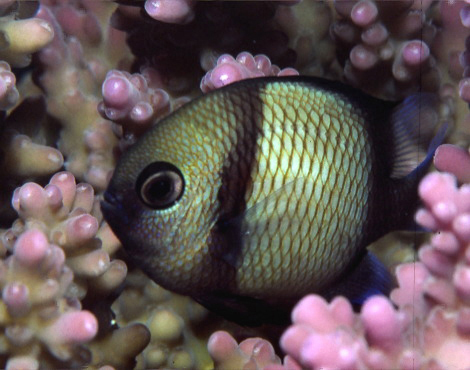
Neoglyphidodon melas (Cuvier, 1830) (black damselfish)
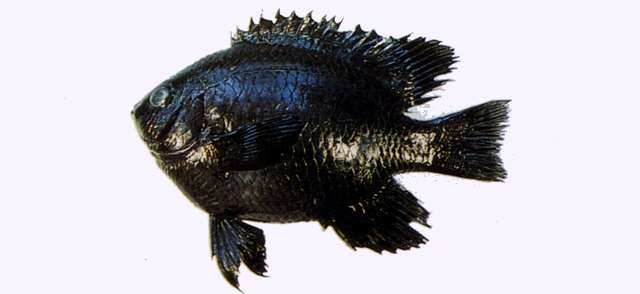
Found in coral-rich areas of lagoon and seaward reefs and usually associated with soft corals on which it feeds . Occur singly or in pairs . Juveniles are encountered in around staghorn Acropora corals . Adults often near Tridacna clams and may feed on their feces .
Dascyllus reticulatus (Richardson, 1846) (twostriped damselfish)
Occurs in outer lagoon and seaward reefs. Inhabits branching coral heads, particularly Pocillopora eydouxi. Forms schools, often in silty habitats . Male prepares a nest by cleaning with its mouth a rock or coral surface where the female will attach the eggs .
Pomacentrus amboinensis Bleeker, 1868 (Ambon damsel)
An ubiquitous species found in lagoons, coastal reefs, passages and outer reef slopes. Inhabits sandy areas around coral or rock outcrops or other protective shelter. Usually in small groups . Feeds primarily on algae, but also takes zooplankton. Has been reared in captivity (Ref. 35404.
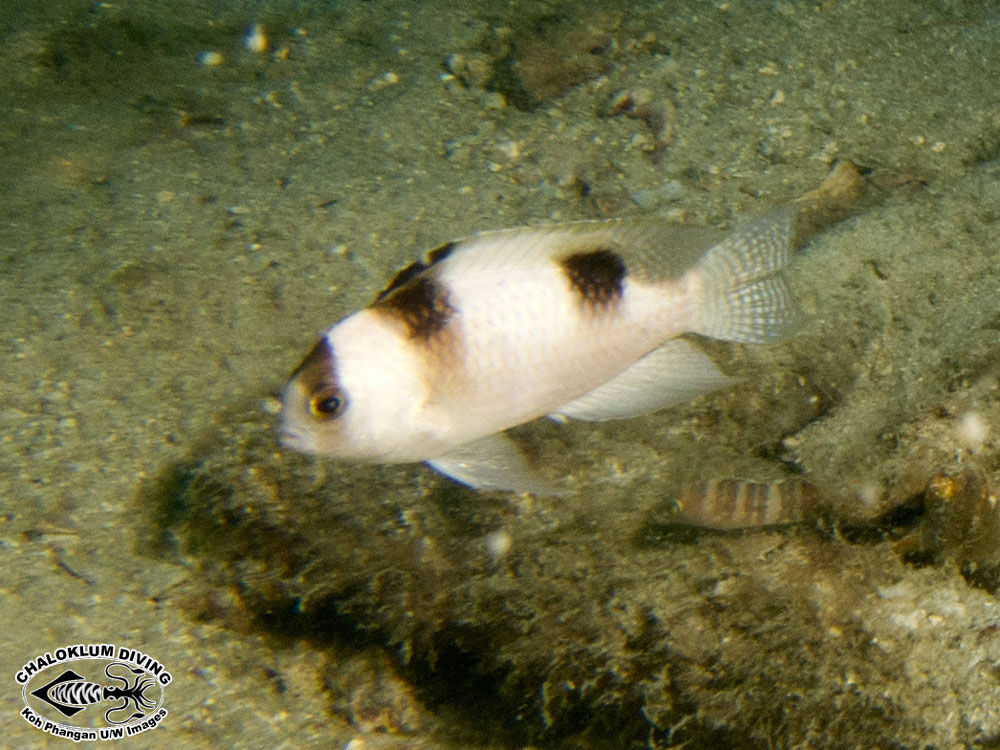
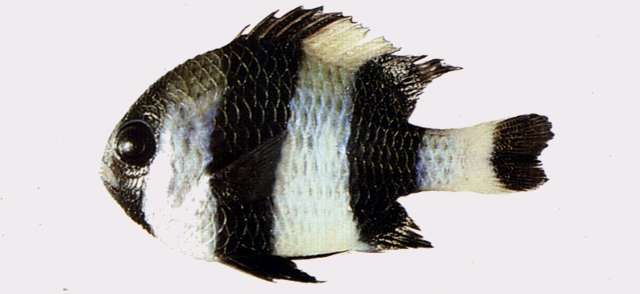
Dischistodus fasciatus (Cuvier, 1830) (Banded damsel)
Inhabits silty lagoon and coastal reefs around coral outcrops and seagrass beds . Often adjacent to clear mangrove coasts among rubble and Sargassum algae, to a few meters depth .
Pomacentrus tripunctatus Cuvier, 1830 (Threespot damsel)
A shallow water species, solitary, in holes of small rocks on sandy bottom with coral rubbles. Inhabits shallow bays, silty coastal reefs and harbors with sparse coral and algal growth. Feeds mainly on benthic algae.
Dascyllus melanurus Bleeker, 1854 (blacktailed humbug)
Schooling species, inhabits sheltered lagoons, harbors and inlets. Also in somewhat open substrates with outcrops of Acropora corals . Often associated with small coral heads. Feeds on a variety of plankton, including l...
Read More
Read More
Pomacentrus simsiang Bleeker, 1856 (Blueback damsel)
Occurs singly or in small aggregations at slightly turbid areas of lagoon and coastal reefs. Feeds mainly on benthic algae.
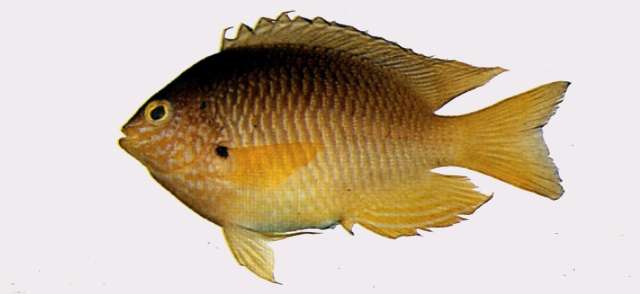
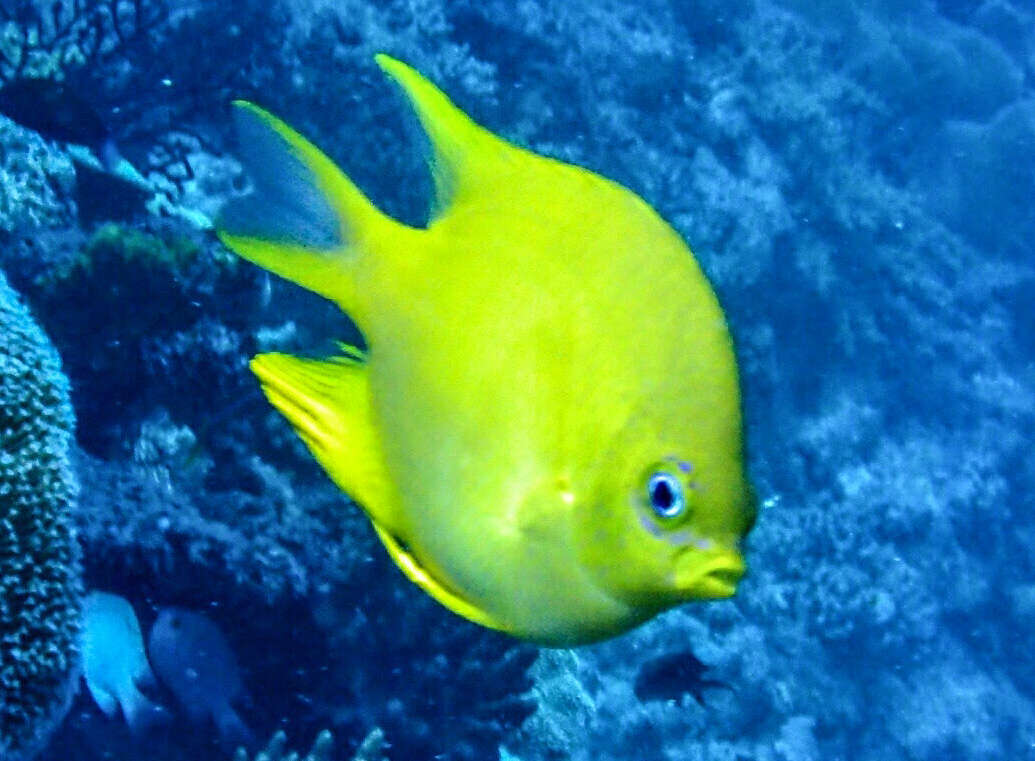
Amblyglyphidodon aureus (Cuvier, 1830) (Golden damsel)
Occurs in steep outer reef, occasionally in deep lagoons and along channel walls, usually in current prone habitats and where there are abundant gorgonian and long sea-whip corals on which they lay and guard eggs. Juvenil...
Read More
Read More
Chromis atripes Fowler and Bean, 1928 (Dark-fin chromis)
Inhabits coral rich areas of outer reef passes and slopes. Occurs singly or in small groups near the bottom.
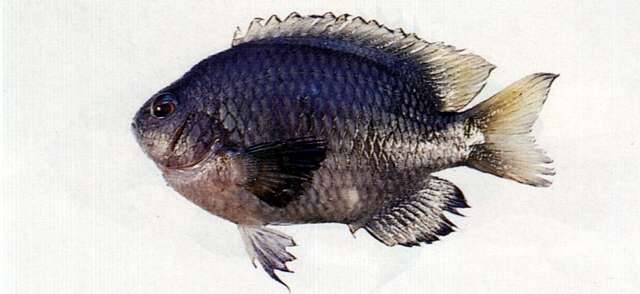
Pomacentrus littoralis Cuvier, 1830 (Smoky damsel)
Inhabits rock, rubble or coral reefs usually inshore. Visits reefs submerged by high tides. Occurs in small loose groups or solitary .
Acanthochromis polyacanthus (Bleeker, 1855) (Spiny chromis)
Inhabits inshore and offshore coral reefs . Also found in harbors, lagoons and outer reef slopes. The only pomacentrid species that lacks a pelagic larval stage. One of the very few marine fishes where fry are guarded b...
Read More
Read More
Eretmochelys imbricata (LINNAEUS) 1766 (Hawksbill Turtle)
Hawksbills may take decades to mature and it could be between 20 to 40 years before they are ready to breed . Upon reaching sexual maturity, a female will typically lay up to five clutches of around 100 to 140 eggs in one ...
Read More
Read More
Share on Social Networks
- Facebook:

personalize your shared text as well as its destination (wall, page...) or send as a private message to a friend
- Twitter: Tweet personalize your tweet
- Google Plus:
Direct link to this dive
- Long link:
- Short link:


 We are participating today in the startup contest Techcrunch Disrupt. Support Diveboard by voting for us!
























































































Shore entry single dive day @ San Remigio Cove, Alorro Beach, Pangubatan, Samal, Philippines.
Habagat waves onshore making entries and exits very challenging. Soft deep sand on beach hard to walk.
swim out over shallow rocks until water clears and bottom opensup to beautiful shallow reefs and coral formations. exploration dive, conservative because solo and first time at location known for strong currents.
No problems long dive with photos , needed assistance to exit on beach with the 2-3 foot waves, surge during entire dive
SOLO, multilevel
highlight Green Sea Turtle swimming over Corals